
Reviewed · WALKING TOURS
Évora: Private walking tour, By Local Guide
Évora’s old center is compact, but its story runs from Celtic roots and Roman rule to Portugal’s Renaissance kings. This private walk gives you a guide at your side to explain the layers, point out details you might miss, and adjust the pace to your interests. Guides such as João, Elsa, and Paulo have been praised for clear English, humor, and strong command of local history.
I like the one-to-one format, especially if you want to ask questions about architecture, religion, or Portugal’s past without keeping pace with a large group. I also like the useful orientation: the walk can show you where to return for cathedral interiors, shops, restaurants, and further exploring. The main catch is simple: the monuments are viewed from outside, and a 6:30 PM start may find several interiors already closed.
In This Review
- Key points at a glance
- Why Évora works so well as a walking tour
- Starting at Praça do Giraldo
- Rua 5 de Outubro and Alentejo crafts
- Évora Cathedral from the outside
- The Roman Temple, or Templo de Diana
- Igreja da Graça and Portuguese Renaissance style
- Dom Manuel’s Palace and the final return
- What the private guide changes
- Is $74.82 per person good value?
- Choosing the right time and preparing for the walk
- Who should book this Évora walk?
- Final verdict: book it for the interpretation
- FAQ
- How long does the private Évora walking tour last?
- Is the tour private?
- What language is offered?
- Where does the tour begin?
- Where does the tour end?
- Are monument entrance tickets included?
- What sights are included in the route?
- Can I cancel for a full refund?
Key points at a glance
- A genuinely private walk: Your guide works only with your party, making it easier to ask questions and request a different pace.
- Six central stops in 90 minutes: The route links Giraldo Square, Rua 5 de Outubro, the cathedral, Roman Temple, Igreja da Graça, and Dom Manuel’s Palace.
- Strong history focus: Expect discussion ranging from early Celtic settlement and Roman Évora to Portuguese Renaissance and Mannerist architecture.
- Useful for first-time orientation: The walk helps you decide which monuments, shops, and restaurants deserve more of your time afterward.
- No interior admissions: Cathedral and church entry fees are not included, and the tour itself focuses on streets and exterior views.
- Best value for a small group: At $74.82 per person, the private setup makes more financial sense when shared by several people, especially if a group discount applies.
Why Évora works so well as a walking tour
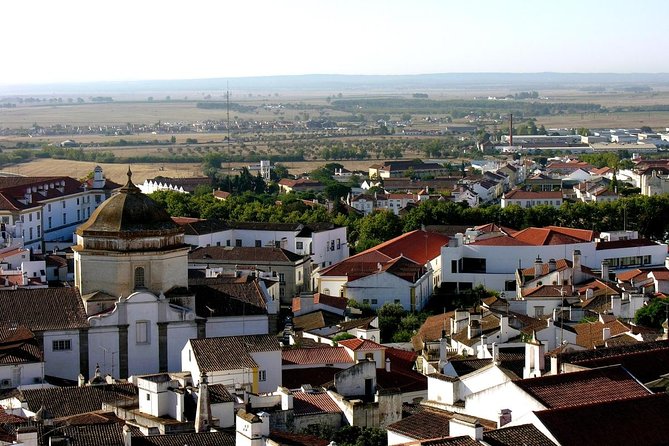
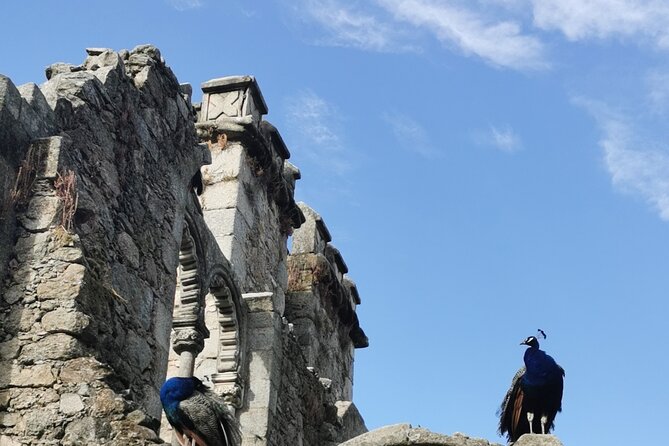
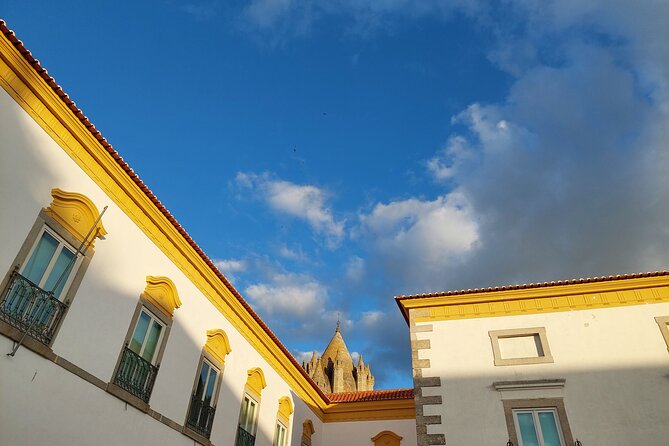
Évora rewards slow looking. A whitewashed wall may sit beside a Roman column, while a graceful Manueline window appears a few streets from a church built in the Renaissance. The important sights are close together inside the historic center, so this route can cover a lot without transport.
The guide’s role matters here. On your own, you can see the cathedral, temple, and palace. A good guide helps connect them. You learn why the city developed where it did, how different periods changed its buildings, and how Évora fits into the wider story of Portugal.
The experience lasts about an hour and a half, with roughly 15 minutes at each of six stops. That is enough time for a well-shaped introduction, not enough for a full museum day. I would treat it as a historical primer and orientation walk rather than your complete Évora visit.
More Private Tours in Arrábida
- Évora: Private walking tour with tickets to main monuments
★ 5.0 · 223 reviews - Private Lisbon Arrabida Wine Tour: Food & Wines, Mountain and Sea
★ 5.0 · 907 reviews - Private Wine Tasting in the Setúbal Wine Region, from Lisbon
★ 5.0 · 611 reviews
Starting at Praça do Giraldo
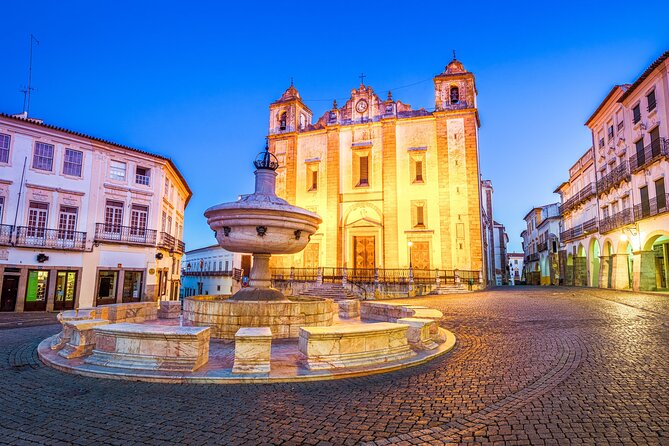
The meeting point is the fountain at Giraldo Square, at Praça do Giraldo 7. This is a sensible place to begin because the square is a natural center of old Évora and a useful reference point for the rest of your visit.
The first 15 minutes introduce Évora’s place in Portuguese history. Expect the guide to use the square’s buildings and monuments to explain the city’s development, rather than giving a detached lecture. That makes the opening practical: you begin to read the streets around you as evidence of changing rulers, styles, and civic life.
This is also where the private format starts paying off. If you already know some Roman or Portuguese history, you can move toward architecture or political events. If you are starting from scratch, you can ask for the basic timeline before the walk continues.
Rua 5 de Outubro and Alentejo crafts
The next stop, Rua 5 de Outubro, shifts attention from major monuments to local workmanship. You will see examples of typical Alentejo handicrafts and get a sense of how regional traditions appear in everyday shops and streets.
This is a useful pause in a route otherwise centered on grand buildings. Évora is not only a collection of historic façades. Its identity also comes through objects made and sold in the Alentejo, and this short stop gives you a practical way to notice that side of the city.
The limitation is time. Fifteen minutes is enough for an introduction, but not for serious shopping or a careful survey of local products. If a particular shop catches your eye, make a note of it and return later. The guide can also be a useful source of suggestions, with several guide accounts noting helpful advice about shops and places to eat.
Évora Cathedral from the outside
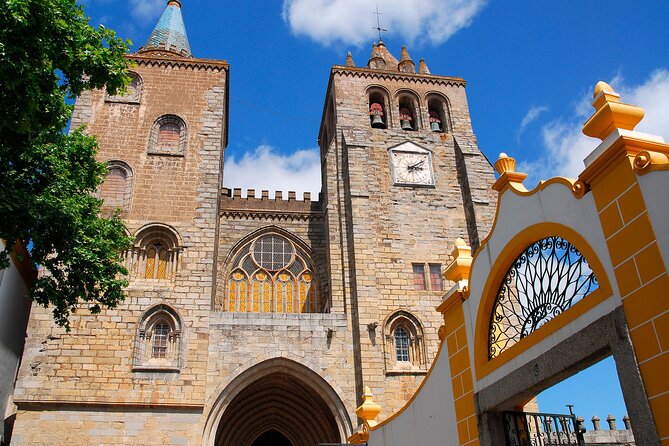
The cathedral receives its own 15-minute stop. You will examine the exterior and hear about the building’s historical and architectural setting, but entrance is not part of the tour.
That distinction deserves attention when you book. This is not a cathedral visit with access to the interior, religious art, or upper areas. You are getting context and an outside explanation. If you want to go inside, plan to do so after the walk, and check opening hours for your chosen date.
The cathedral is one of the places where a guide can add real value even without entry. Exterior stonework and architectural forms can be hard to interpret at first glance. A guide can direct your attention to what matters, then give you the background needed to understand why the building looks as it does.
Timing is especially important here. A late afternoon or evening departure may be pleasant in hot weather, but the interior sites may already be closed. One person who took a 6:30 PM tour felt the experience offered too little beyond exteriors. The operator’s information is clear that interiors are excluded, but you should still choose your start time with your own sightseeing plans in mind.
More Private Tours in Évora
- Private Day Tour With Guide to Évora and Monsaraz
★ 5.0 · 134 reviews - Tour Évora and Alentejo in a private tour
★ 5.0 · 124 reviews - Évora: Private tour with entrance tickets to main monuments
★ 5.0 · 57 reviews - Private Evora Heritage and Alentejo Wine Tour from Lisbon
★ 4.5 · 31 reviews
The Roman Temple, or Templo de Diana
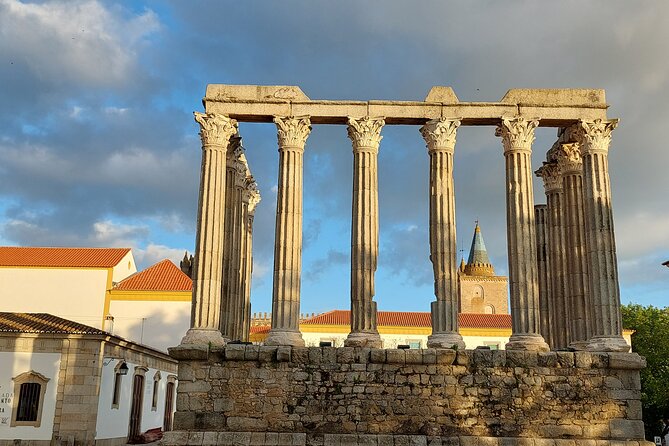
The Roman Temple of Évora is another 15-minute stop. The guide provides its historical and cultural setting, helping you understand the monument as part of the city’s long Roman chapter.
The stop is free, so there is no admission issue here. It is also one of the easier monuments to appreciate from the street, though the surrounding ruins and building relationship benefit from explanation. Ask questions if you want to connect Roman Évora with the later city you are seeing around it.
The guide lineup appears to include people with different strengths. João has been described as an advanced history student with a particular interest in antiquities, and one guide account praised his ability to trace Évora from early Celtic settlement through modern Portugal. That sort of background should suit anyone who wants more than a quick date and name.
Still, the temple stop is short. You will not get an archaeological seminar in 15 minutes. Think of it as a focused explanation that gives the monument a place in the larger story.
Igreja da Graça and Portuguese Renaissance style
The route then reaches Igreja da Graça, a major example of Portuguese Renaissance and Mannerist construction. The guide explains the church’s cultural and architectural setting, but entry is not included.
For architecture fans, this may be one of the most rewarding stops because it moves beyond the familiar Roman and medieval headlines. Renaissance and Mannerist design can be easier to understand when someone points out the shift in proportion, decoration, and visual goals. You will also see how Portugal developed its own expression within broader European styles.
Again, treat the visit as exterior interpretation. If you want to see the interior, you will need to return independently and pay any applicable entrance fee. The walk does not bundle tickets, which keeps the basic route straightforward but means you must budget extra if you plan to enter several monuments.
Dom Manuel’s Palace and the final return
The final stop is the exterior of Dom Manuel’s Palace. The guide explains the building’s historical and cultural role and interprets what you can see from outside.
This provides a fitting close because the palace connects the city to royal Portugal and to the period associated with Manueline architecture. By this point, the route has moved from civic space and local crafts to religious buildings, Roman remains, and royal power. The sequence gives you a useful framework for seeing Évora as a city shaped by several eras rather than one single period.
The tour ends back at the Giraldo Square meeting point. That is convenient if you want to continue with dinner, return to a monument, or simply use the square as your base for further walking. The guide may also help you decide what deserves a second look, especially if you have another day in town.
What the private guide changes
A private guide is not automatically better than a group tour, but it changes the way the time works. You are not waiting for a large party, and the guide can respond to your interests. One guide, for example, adjusted the route to suit a party’s needs. Other accounts describe thoughtful answers, a good sense of humor, and explanations that did not feel dull.
João, Elsa, and Paulo are names connected with especially warm praise. João is noted for history and antiquities, Elsa for bringing Évora’s story to life with enthusiasm, and Paulo for explaining architectural details that are easy to miss. The provider may assign a different guide, so do not book on the assumption that one particular person is guaranteed unless your confirmation says so.
English is offered. Several guide accounts specifically point to fluent, clear English, which matters when the subject includes architectural terms, dynastic history, and cultural detail. The format also suits a family or small group with mixed interests, since you can ask the guide to spend more time on the parts that matter to you.
Is $74.82 per person good value?
The listed price is $74.82 per person. For a solo visitor, that is a fairly serious spend for 90 minutes, particularly because admission tickets are not included. For a couple or small group, the calculation is more favorable because you are paying for a private guide rather than a seat in a large shared walk. Group discounts are available, though the exact reduction is not given here.
I see the value in three things: personal attention, historical interpretation, and time saved in figuring out the old center yourself. If you are interested in history or architecture, the guide’s explanations may be worth more to you than a longer but less focused stroll.
The value is weaker if you only want to see the exteriors and already have a good guidebook. Since the route is compact and the monuments are close together, an independent walk can cover the same streets. You are paying for interpretation and conversation, not for access to special rooms or included attractions.
I would book it early if it suits your plans. The experience is often reserved about 34 days ahead, which suggests that private morning and daytime slots may fill well before a Portugal trip. Confirmation is provided at booking, and you can use a mobile ticket.
Choosing the right time and preparing for the walk
A morning start is a smart choice if you want the best chance of returning to monuments while they are open. It also gives you the rest of the day to explore interiors, shop, or eat after the guide has shown you where to go.
An evening start can be more comfortable during hot weather. One guide account specifically liked the cooler conditions later in the day. The tradeoff is that the cathedral and church may be closed, even though their exteriors remain part of the route.
Wear comfortable shoes and bring water, especially in warm weather. The physical requirement is described as moderate, and the walk stays in the historic center, but old streets can still be tiring. Service animals are allowed, and the meeting point is near public transportation.
The tour requires good weather. If poor conditions cause cancellation, you are offered another date or a full refund. For your own cancellation, you need to cancel at least 24 hours before the start time for a full refund. Changes or cancellations inside that window are not accepted.
Who should book this Évora walk?
I would recommend it to first-time visitors who want a clear introduction before exploring alone. It also fits history fans, architecture students, families who prefer a private pace, and anyone making a day trip from Lisbon who wants to use limited time well.
The walk is particularly useful if you want to ask questions. You can discuss Roman remains, Renaissance design, Alentejo crafts, Portuguese kings, or the details of a building that catches your eye. That conversation is the main reason to choose this over a self-guided route.
I would hesitate if your priority is entering every major monument. The advertised experience does not include interior visits or admission tickets, and a late start can leave you with exterior views only. In that case, book the walk early and schedule cathedral and church visits afterward, or choose an independently planned sightseeing day with tickets arranged separately.
Final verdict: book it for the interpretation
This is a strong introduction to Évora, with a private format, a compact route, and guides who appear comfortable explaining both broad history and small architectural details. The 4.9 rating from 87 ratings and 98 percent recommendation rate fit the experience’s main strengths: clear English, enthusiasm, flexibility, and personal attention.
Book it if you want Évora to make more sense than it would from a quick walk past the sights. Choose a daytime start if interiors matter, and remember that the $74.82 price pays for the guide rather than admission. If you accept that boundary, this is a useful and personable way to get your bearings in the city.
FAQ
How long does the private Évora walking tour last?
The tour lasts approximately 1 hour and 30 minutes.
Is the tour private?
Yes. The guide is assigned exclusively to your party, and only your group participates.
What language is offered?
The tour is offered in English.
Where does the tour begin?
It begins at the Giraldo Square Fountain, Praça do Giraldo 7, 7000-508 Évora, Portugal.
Where does the tour end?
The activity ends back at the meeting point in Giraldo Square.
Are monument entrance tickets included?
No. Entrance tickets are not included, and the tour visits the monuments from outside. The cathedral and Igreja da Graça are specifically described as exterior visits.
What sights are included in the route?
The route includes Praça do Giraldo, Rua 5 de Outubro, Évora Cathedral, the Roman Temple of Évora, Igreja da Graça, and Dom Manuel’s Palace.
Can I cancel for a full refund?
Yes, if you cancel at least 24 hours before the experience start time. Cancellations made less than 24 hours in advance are not refunded. If poor weather causes the activity to be canceled, you are offered a different date or a full refund.
More Walking Tours in Évora
- Évora: Flexible Walking Tour in Historic Center
★ 4.4 · 13 reviews
More Walking Tours in Arrábida
- Évora Walking Tour
★ 5.0 · 35 reviews - Skip the Lines & Sip the Wines: Évora’s Ultimate Walking Tour!
★ 5.0 · 19 reviews
Fresh finds around Setubal District
- Dolphin Watching at the Arrabida (Lisbon region)★ 5.0 · 51 reviews
- Tour Arrábida / Azeitão★ 5.0 · 68 reviews
- Half Day Megaliths Cromlech Tour from Evora by Archaeologists★ 5.0 · 69 reviews
- Lisbon: Kayaking and snorkeling in Sesimbra with photos!★ 5.0 · 74 reviews
- Arrábida: Guided Transparent Kayaking Tour★ 5.0 · 81 reviews
- Sesimbra Discovery by Kayak★ 5.0 · 84 reviews
- Lisbon: Try Scuba Diving in Arrabida Marine Reserve with photos★ 5.0 · 99 reviews
- Arrábida Secret Beaches and Caves with Snorkeling Stop★ 5.0 · 109 reviews
Walking Tours, compared.
Lisbon: History, Stories and Lifestyle Walking Tour
Read our review →
Best of Lisbon Small-Group Guided Walking Tour
Read our review →
Lisbon: Food and Wine Small Group Walking Tour
Read our review →
Best of Lisbon Walking Tour: Rossio, Chiado & Alfama
Read our review →
Sintra & Cascais Day Tour with Pena Palace Entry and Gardens Walk
Read our review →
Lisbon Roots – Small group Food & Culture Walking Tour w/tastings
Read our review →
Lisbon: Starter Walking Tour to the highlights in German
Read our review →Browse the lists this tour appears in