
Reviewed · AUDIO TOURS
Explore the Highlights of Evora: Self-Guided GPS and Audio Tour
Évora’s best sights form a neat walking circuit, and this GPS-guided audio tour gives you a simple way to connect them without joining a group. You begin at Giraldo Square and pass grand royal buildings, a medieval Jewish quarter, the Roman Temple, and the long Agua de Prata Aqueduct.
I like the freedom to pause, wander, and set your own pace. I also like the low price of $8.05 per person, which makes it a useful choice for a half-day in town. The main concern is the app: one person lost much of a short visit trying to download it on site, while another found the directions accurate but the information at the sights too brief.
In This Review
- Key points to know
- Giraldo Square gives you a useful starting point
- Banco de Portugal shows Évora’s modern changes
- São Francisco Church reveals Portugal’s royal wealth
- The park and Royal Palace add a royal chapter
- The Jewish Quarter brings a quieter side of old Évora
- The city wall offers a broad view of Évora’s shape
- Agua de Prata Aqueduct explains how Évora got water
- Cadaval Palace mixes several periods in one building
- The Roman Temple closes the historical arc
- How the GPS and audio format works in practice
- Is $8.05 a fair price for this walk?
- Who should choose this Évora experience?
- Should you book this GPS audio walk?
- FAQ
- Where does the Évora audio tour begin?
- Where does the activity end?
- How long does the self-guided tour take?
- What sights are included?
- How does the GPS audio tour provide directions?
- Can I use the tour in my own language?
- Is this a group tour with a live guide?
- Is the tour suitable for most people?
- What is the cancellation policy?
Key points to know
- A two to three-hour walking circuit links Évora’s major central sights.
- GPS directions guide you in real time, with spoken information, map tracking, and text on the screen.
- The route includes the Roman Temple, São Francisco Church, and Royal Palace, three of Évora’s most important historic stops.
- You walk through the old Jewish Quarter and along sections of the city wall, adding atmosphere beyond the headline monuments.
- The tour is private in practice, since only your own group uses the activity.
- Download and test the tour before you reach Évora, since a failed download can eat into a short sightseeing day.
Giraldo Square gives you a useful starting point
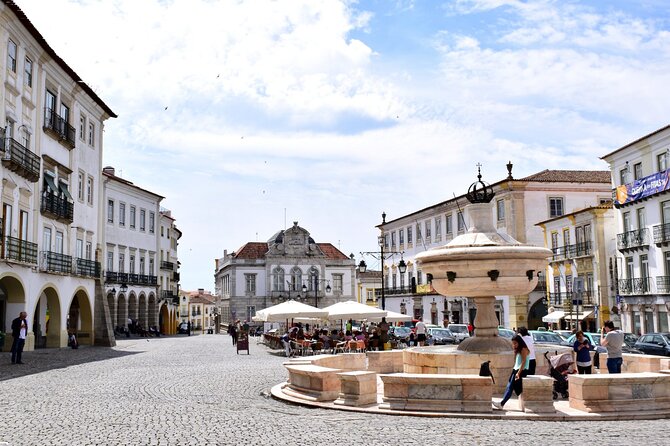
The tour begins at the fountain in Praça do Giraldo, Évora’s central square. This is the right place to get your bearings. The square has been the heart of the city since the 14th century, and its open cafés and relaxed feel make it a pleasant launch point for a walk.
The square carries the name of Geraldo Sem Pavor, a Portuguese figure linked to the Christian reconquest of Évora. It also holds the 16th-century Palácio de Dom Manuel, a fine example of the change from Gothic to Renaissance design.
You will hear about the old town hall that once occupied the square. It was later demolished when Santo Antão Church was built, a reminder that Évora’s present-day center has changed many times. The tour’s GPS system should help you move from the square to the next stop without constantly checking a paper map.
This opening section is more useful for orientation than for a long history lesson. If you want detailed architectural analysis, bring a guidebook or plan extra time at the buildings. The audio gives you the basic story and keeps the walk moving.
More Arrábida coast days:
- Setúbal: Dolphin Watching Tour
★ 4.8 · 801 reviews - Sesimbra: Arrábida Dolphin and Whale Watching tour with biologist
★ 5.0 · 248 reviews - Observation of Dolphins and Whales with Marine Biologist in Arrábida
★ 5.0 · 224 reviews
Banco de Portugal shows Évora’s modern changes
From Giraldo Square, the route passes the Banco de Portugal building. It is one of the most photographed buildings in Évora, though its story is less medieval than the surrounding streets.
During the 19th century, Évora went through major urban changes. The Banco de Portugal branch now occupies ground that once held the prison and old town hall. That shift gives you a quick look at how an old city adapts to modern institutions.
I appreciate this stop because it breaks up the parade of palaces and churches. Évora is not only a preserved medieval center. It is also a living city whose public buildings have been replaced, reused, and altered over time.
The drawback is that this is mainly an exterior viewing point. You should not expect a museum visit or a lengthy stop inside the bank. Think of it as a short architectural pause along the route.
São Francisco Church reveals Portugal’s royal wealth
The walk continues past Igreja de São Francisco, whose original building dates from 1224. The first church was built by the Franciscan Order and was deliberately plain, with little decoration or costly material.
That changed dramatically near the end of the 15th century. Portugal had become a major trading power, and the church was rebuilt with much greater display. The interior still reflects that period of wealth and confidence.
You can enter the church for free, according to the tour information. I strongly suggest doing so if it is open during your visit. The exterior alone does not tell the full story, and the contrast between the humble Franciscan beginnings and the ornate later interior is one of the more interesting parts of the route.
Allow extra time here if church interiors matter to you. The self-guided format will not force you onward, so you can pause the audio and look around. That freedom is one of the best reasons to choose this tour rather than a tightly timed group walk.
The park and Royal Palace add a royal chapter
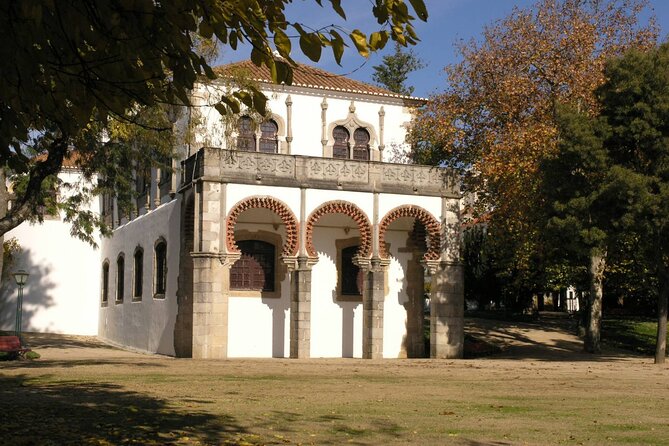
The route then reaches a park with a statue of Vasco da Gama and the former Royal Palace of Évora. The palace is also called the Royal Palace of São Francisco or the Palace of King Manuel I.
The building began as a 13th-century monastery and later became a residence for Portugal’s royal family. In 1865, it became an archaeological museum. Its position within the garden makes it one of the city’s most attractive buildings, with greenery around a structure tied to several different periods of Portuguese history.
This is a good place to slow down. The park offers a change from narrow streets and stone façades, while the palace helps explain Évora’s connection to Portugal’s monarchy. The tour gives you a route and context, but you may want to check opening arrangements separately if you hope to enter a museum or palace interior. The supplied information confirms the building’s former use and museum history, but not current admission details.
The Vasco da Gama statue is a smaller stop, yet it helps place Évora within Portugal’s wider national story. You get a royal residence, a public park, and a reminder of the country’s maritime age in one short section.
More Évora and Alentejo days:
- Évora: Private walking tour with tickets to main monuments
★ 5.0 · 223 reviews - Évora: Private walking tour, By Local Guide
★ 5.0 · 87 reviews - Half Day Megaliths Cromlech Tour from Evora by Archaeologists
★ 5.0 · 69 reviews - Évora Walking Tour
★ 5.0 · 35 reviews
The Jewish Quarter brings a quieter side of old Évora
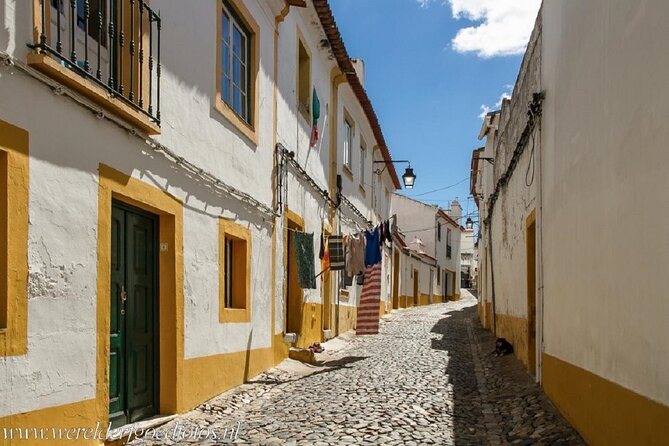
The walk passes through the heart of Évora’s former Jewish Quarter. In its earlier days, this was one of the largest and most prosperous Jewish neighborhoods in Portugal.
The route does not promise a separate museum or an extended lecture here. Its value is in seeing the area as part of the city’s street plan. You move from major monuments into a quarter where the scale feels more personal and residential.
I like this part of the walk because it gives you a sense of how different communities shaped the city. It also helps prevent the tour from becoming a simple checklist of famous façades.
Keep your expectations measured. The audio content may be short at some stops, and one French-language user found that the directions were plentiful but the explanations in front of important sites were limited. If you want a fuller account of Jewish life in Évora, you will need another source alongside the app.
The city wall offers a broad view of Évora’s shape
The route follows the Évora wall, described as about six kilometers long, with its oldest section dating from the third century. You are not simply looking at one isolated gateway or fortified fragment. The wall gives you a way to understand the size and outline of the old city.
One person estimated the complete outing at roughly three miles of walking. That makes the experience manageable for most people who are comfortable walking for a few hours, but it is not a sit-down sightseeing activity. Wear shoes suited to old stone streets and allow time for pauses.
The wall section is valuable because it connects the sights. From inside the center, Évora can feel like a series of separate lanes and plazas. Along the fortifications, you get a clearer idea of how the historic core was enclosed.
The route description says you walk along the wall, not that you circle the entire six-kilometer length. Do not plan on a full wall circuit unless the app directs you farther than expected. The total activity is listed at about two to three hours.
Agua de Prata Aqueduct explains how Évora got water
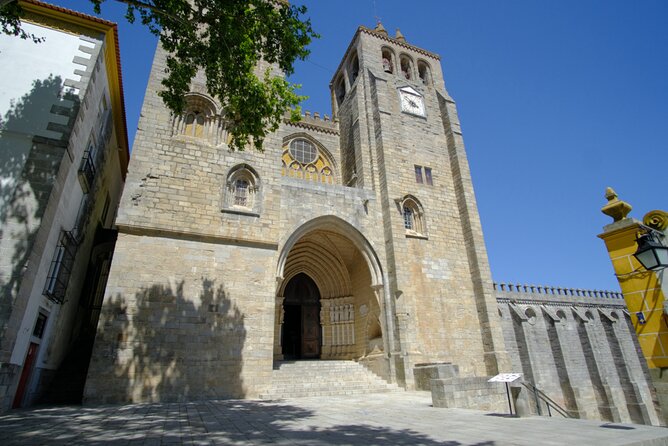
The Agua de Prata Aqueduct is one of the route’s more practical pieces of history. It stretches for 18 kilometers, and its tallest arch reaches 26 meters. The aqueduct once connected to the fountain in Praça do Giraldo, where your walk began.
That connection gives the opening square a second meaning. The fountain was not just a decorative feature. It was tied to a major system that brought water into the city.
The aqueduct also helps you look beyond royal decoration and Roman remains. Cities survive through water, walls, trade, and public works. This stop shows the engineering behind Évora’s daily life.
You may find the aqueduct more impressive from certain angles than others, and the tour does not promise a separate site visit or interior access. Still, it is an important stop for understanding how the city functioned. The GPS route is especially useful here because the aqueduct’s length and urban setting can make it harder to understand from a single viewpoint.
Cadaval Palace mixes several periods in one building
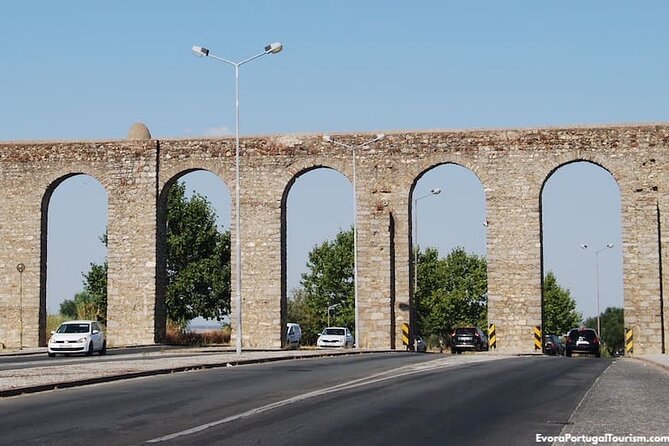
Opposite the Roman Temple, Cadaval Palace brings together Mudéjar, Gothic, and Manueline design. It was built in the 14th century on the ruins of a Moorish castle in the center of Évora.
That combination of styles is the point. Instead of presenting the city as one clean historical period, the palace shows layers of Islamic, medieval, and Portuguese royal influence. Its position opposite the Roman Temple also makes the contrast easy to see.
This is a strong stop for anyone interested in architecture. You can compare the palace’s changing forms with the ancient structure across the way, then continue to the most famous ruin in town.
The activity does not include a confirmed palace admission or guided interior visit. Treat Cadaval Palace as an exterior sight unless the app or local signs provide current access information. The self-guided format gives you flexibility, but it also means you must decide how long to spend at each place.
The Roman Temple closes the historical arc
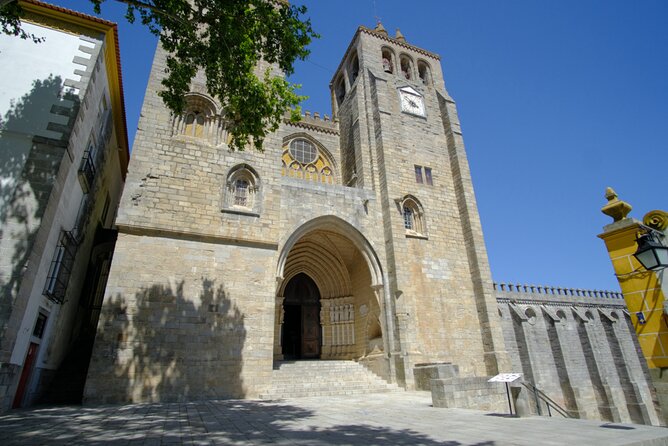
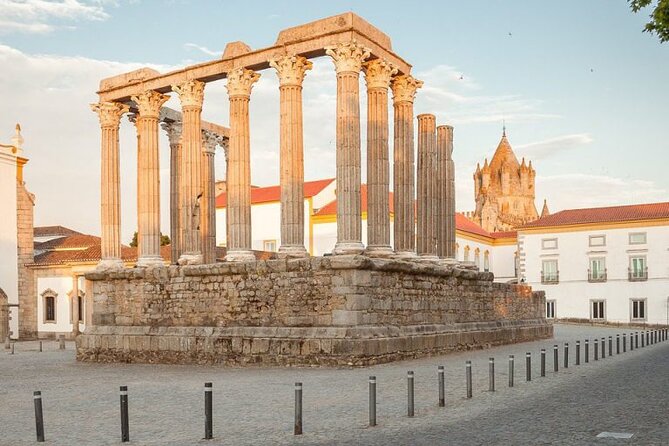
The Roman Temple is Évora’s calling card and the final major stop listed on the walk. It is about 2,000 years old and one of Portugal’s most important ancient ruins.
Its columns provide the clearest visual link to Roman Évora. After seeing the medieval square, royal palace, Jewish Quarter, Christian church, walls, and aqueduct, you finish with the ancient structure that reaches farther back than all of them.
The temple is also a good place to pause the audio and simply look. No app can replace the impact of seeing the stone columns in person, especially beside Cadaval Palace and the surrounding old-town buildings.
Because the tour ends back at Giraldo Square, the Roman Temple is not the end of your time in Évora. You can continue exploring after the circuit, return to a church or palace that caught your eye, or use the central square for a break.
How the GPS and audio format works in practice
The app uses your location to give directions at the right points along the route. You can hear the information in your own language, read the text on the screen, and follow the route on a map.
That setup suits you if you prefer not to keep pace with a guide. You can stop for photographs, enter São Francisco Church, linger in the park, or take a break without holding up a group.
The GPS function has been praised as accurate, which matters in Évora’s winding center. Good directions reduce the need to stop at every corner and search for the next street.
The audio side appears less consistent. One user found the app accurate and loved moving at a personal pace. Another found too many route instructions and too little explanation at the sights. A separate technical problem prevented one person from using the tour at all after a failed download at the site.
My practical advice is simple: download and open the experience before arriving in Évora. Confirm that the map, audio, and written text work. Do not wait until your sightseeing window begins, especially if you have only a few hours in town.
If two people use the tour on separate phones, start the app carefully and check that both devices are synchronized. One user found that the information did not start at the same time on two phones, so one person heard content before the other.
Is $8.05 a fair price for this walk?
At $8.05 per person, this is inexpensive for a two to three-hour route through Évora. You are paying mainly for navigation and a basic audio introduction, not for a live historian, reserved entries, transportation, or a private vehicle.
That distinction matters. If you want someone to answer questions, explain small details, and adjust the route to your interests, a live guide will offer more. If you want a low-cost way to cover the center without arranging a group tour, the price is attractive.
The value is strongest for a first visit with limited planning time. The route connects many of Évora’s major sights, and the map can keep your walk organized. It is weaker if you already know the city or want long, detailed commentary at every monument.
The activity is private in the sense that only your group participates, but it is not a private live guide. You travel independently with the app. Most people can participate, service animals are allowed, and the starting point is near public transportation.
The published hours are 7:00 AM to 7:00 PM daily from March 1, 2024, through June 17, 2026. Confirmation is sent at booking. Free cancellation is available if you cancel at least 24 hours before the local start time. Inside that window, the payment is not refunded and changes are not accepted.
Who should choose this Évora experience?
I would choose it if you want a flexible half-day walk and are comfortable using your phone for directions. It is also a good fit for a couple or small group that does not want to match a guide’s pace.
It suits first-time visitors who want the major names covered: Giraldo Square, São Francisco Church, the Royal Palace, the Jewish Quarter, the wall, the aqueduct, Cadaval Palace, and the Roman Temple.
I would be more cautious if you need rich commentary at every stop, dislike app-based tours, or have a very limited window in Évora and cannot risk a download problem. Test the app before you go, and keep a simple backup map or written list of the sights.
The route includes several historic streets and about three miles of walking according to one estimate, so plan for steady movement. The ability to pause helps, but the experience still requires you to stay on your feet for much of the visit.
Should you book this GPS audio walk?
Book it if your priority is low-cost independence. The route covers an impressive range of Évora’s past, from Roman columns and a Moorish castle site to royal buildings, Christian art, Jewish streets, medieval defenses, and a major water system.
Skip it if you want a live person, detailed answers, or guaranteed technical ease without preparation. The app’s accurate directions are its clearest strength, while the short explanations and download risk are the main limitations.
For the price, I see this as a useful framework for exploring Évora, not a complete substitute for a full guided tour. Prepare the app before arrival, leave room to enter São Francisco Church and pause at the Roman Temple, and you will get the most from this simple walking circuit.
FAQ
Where does the Évora audio tour begin?
It begins at the fountain in Giraldo Square, Praça do Giraldo 7, 7000-508 Évora, Portugal.
Where does the activity end?
The walk ends back at the meeting point in Giraldo Square.
How long does the self-guided tour take?
The estimated duration is two to three hours.
What sights are included?
The route includes Giraldo Square, Banco de Portugal, São Francisco Church, the park and Royal Palace, the former Jewish Quarter, Évora’s city wall, the Agua de Prata Aqueduct, Cadaval Palace, and the Roman Temple.
How does the GPS audio tour provide directions?
The GPS tracks your location and gives directions and information at the appropriate time. You can also follow the route on a map and read the text on the screen.
Can I use the tour in my own language?
Yes. The tour provides spoken information in your own language, along with text on the screen.
Is this a group tour with a live guide?
No. It is a private activity for your group, using GPS and audio rather than a live guide.
Is the tour suitable for most people?
Most people can participate. Service animals are allowed, and the starting point is near public transportation.
What is the cancellation policy?
You can receive a full refund if you cancel at least 24 hours before the local start time. Cancellations or changes made within 24 hours are not accepted for a refund.
More Audio Tours in Setubal District
- Sintra: Castle of the Moors & Quinta Entry with Audio Guides
★ 4.3 · 252 reviews - Unforgettable Sintra Tour E-CAR GPS audio-guided route that informs and entertains!
★ 5.0 · 235 reviews - Sintra: Castle of the Moors Skip-the-Line Ticket+Audio Guide
★ 4.4 · 191 reviews - Sintra: Castle of the Moors E-Ticket and Audio Guide
★ 4.3 · 158 reviews
More Self-Guided Tours in Setubal District
- Lisbon: São Jorge Castle E-Ticket and Audio Guide
★ 4.3 · 2,182 reviews - Sintra: Quinta da Regaleira E-Ticket and Audio Guide
★ 4.2 · 1,731 reviews - Lisbon: Tram 28 Entry Ticket & Audio Guide with 24-Hour Pass
★ 4.0 · 930 reviews - Lisbon: Jerónimos Monastery E-Ticket and Audio Guide
★ 3.7 · 660 reviews
Fresh finds around Setubal District
- Half-Day boat experience – Comporta – Troia – Setubal★ 5.0 · 7 reviews
- Private Tour in Arrabida Region★ 5.0 · 7 reviews
- Ribeiro do Cavalo Beach Taxi Boat Transfer Round Trip★ 4.5 · 7 reviews
- Sailboat in Arrábida, Setúbal★ 5.0 · 7 reviews
- Soft Coasteering – Arrábida Port★ 5.0 · 7 reviews
- Explore Sesimbra Sports Fishing★ 5.0 · 8 reviews
- Eco – Try Dive★ 5.0 · 8 reviews
- Lisbon Guided Tour with Live Fado Show and Traditional Dinner★ 4.5 · 8 reviews
Audio Tours, compared.

Lisbon: São Jorge Castle E-Ticket and Audio Guide
Read our review →
Sintra: Quinta da Regaleira E-Ticket and Audio Guide
Read our review →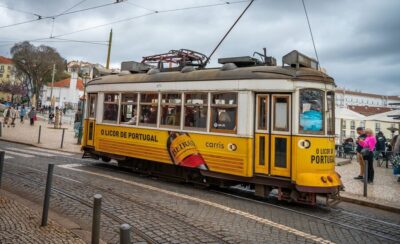
Lisbon: Tram 28 Entry Ticket & Audio Guide with 24-Hour Pass
Read our review →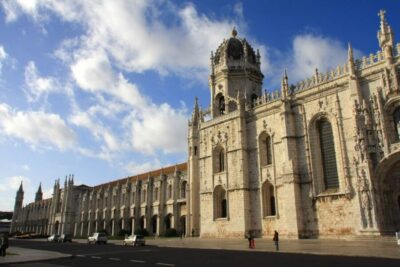
Lisbon: Jerónimos Monastery E-Ticket and Audio Guide
Read our review →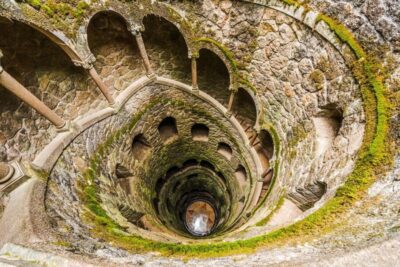
Sintra: Castle of the Moors & Quinta Entry with Audio Guides
Read our review →
Unforgettable Sintra Tour E-CAR GPS audio-guided route that informs and entertains!
Read our review →
Sintra: Castle of the Moors Skip-the-Line Ticket+Audio Guide
Read our review →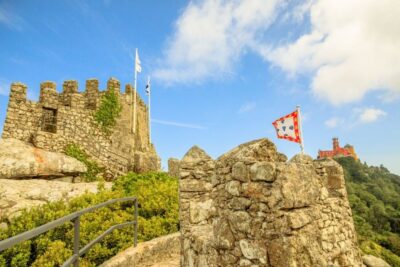
Sintra: Castle of the Moors E-Ticket and Audio Guide
Read our review →Browse the lists this tour appears in