
Reviewed · HISTORICAL TOURS
Lisbon: History, Stories and Lifestyle Walking Tour
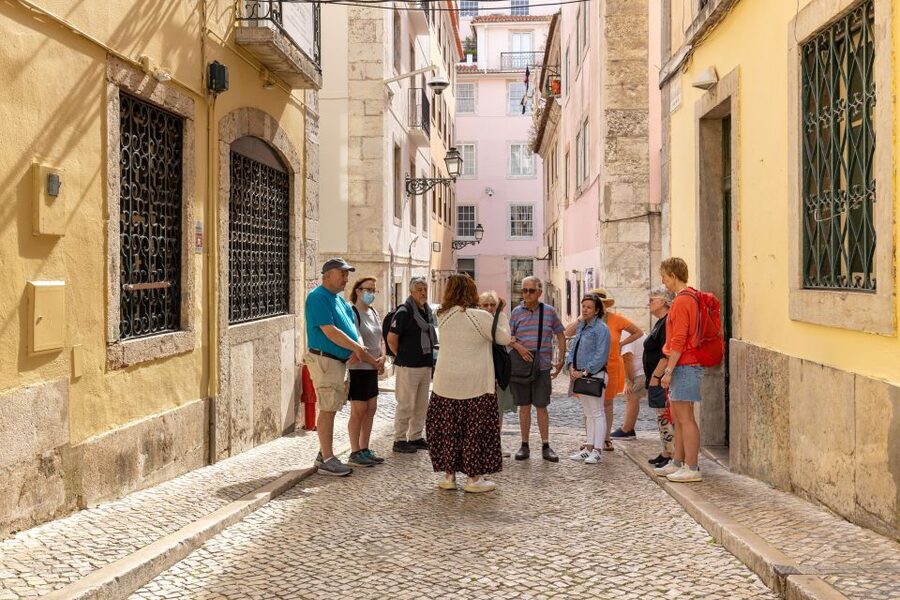
Lisbon’s story makes the most sense when you walk it downhill, then climb back up through the old lanes. This tour links Bairro Alto, Baixa, and Alfama with city views, churches, the Carnation Revolution, and a short ride on one of Lisbon’s famous trams.
I like the mix of big sights and small local details, especially the São Pedro de Alcântara viewpoint and the stop for a bica and pastel de nata. I also like the range of guides, including Paulo, Ricardo, Beatrice, Anna, and João, who bring personal stories and practical advice. The main tradeoff is the terrain: Lisbon is hilly, with narrow streets, steps, and uneven paving, even though the pace includes plenty of stops.
In This Review
- Key Points at a Glance
- Why This Walking Tour Works as a First Look at Lisbon
- Starting in Sixteenth-Century Bairro Alto
- Looking Across Lisbon from São Pedro de Alcântara
- São Roque Church and Its Surprising Interior
- Downhill to Carmo and the Story of 1974
- Santa Justa and the Rebuilt Baixa
- The Tram Ride Toward Portas do Sol
- Portas do Sol and the View over Alfama
- Walking Through Alfama’s Narrow Streets
- Lisbon Cathedral, Built After the Moorish Reconquest
- Coffee, Cake, and the Pace of the Afternoon
- Guides, Languages, and Practical Details
- Who Should Book This Lisbon Walk?
- FAQ
- How long does the Lisbon History, Stories and Lifestyle Walking Tour last?
- What is included in the tour price?
- Is hotel pickup and drop-off included?
- Which languages are available?
- Does the tour include a tram ride?
- Can I cancel or pay later?
Key Points at a Glance
- A three-hour city orientation: Cover several central districts and learn how Lisbon fits together before exploring on your own.
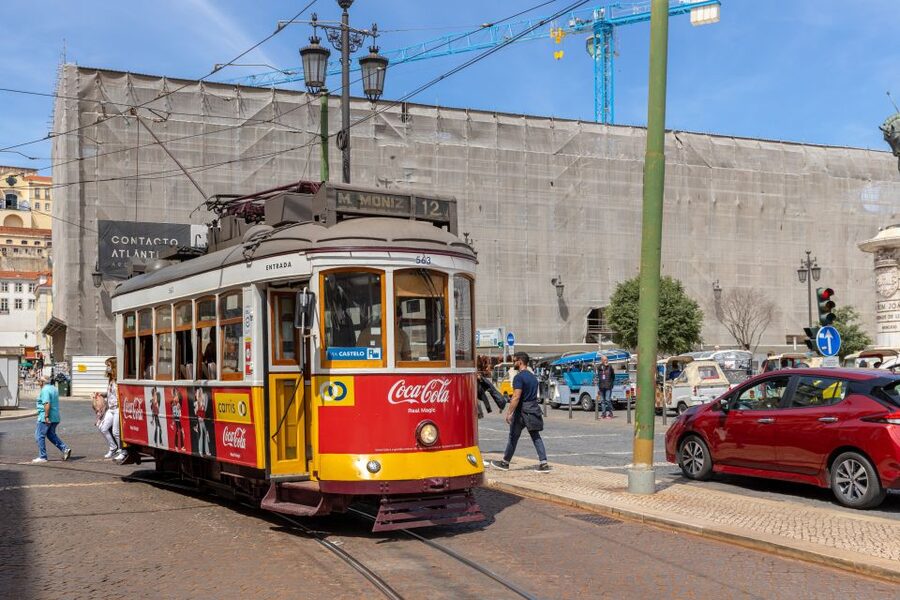
- A tram ride included: Ride up toward Portas do Sol, a simple but memorable way to experience Lisbon’s steep streets.
- History with human detail: Hear about the 1755 earthquake, Moorish Lisbon, Catholic traditions, and the 1974 Carnation Revolution.
- Strong city views: Look across Baixa and the Tagus River from São Pedro de Alcântara, then see Alfama from Portas do Sol.
- Coffee and pastry included: Take a short break for coffee, often described as a bica, and cake such as a pastel de nata.
- Best for first-time visitors: The route gives you bearings, neighborhood context, and ideas for where to return later.
Why This Walking Tour Works as a First Look at Lisbon
Lisbon can feel confusing at first. The city is spread across hills, its districts change character quickly, and the most interesting sights are often found down a side street rather than on a grand avenue.
This tour gives you a useful framework. You move through Bairro Alto, the central Baixa area, and Alfama, seeing how the city grew, suffered disaster, rebuilt itself, and changed again in modern times. You are not just ticking off churches and viewpoints. You are learning why the streets look the way they do.
The format also helps you get your bearings early in a visit. After three hours, you will have seen enough of the central city to decide where you want to return for a longer look. You may want more time in Alfama, another visit to Carmo, or an evening in Bairro Alto.
At $29 per person, the tour offers good value if you want an introduction rather than a deep visit to every monument. The price includes the guide, walking route, tram trip, coffee, and cake. It does not include hotel pickup or drop-off, and the individual interiors or attractions described along the way may not function as full, ticketed visits.
More Walking Tours in Lisbon
- Best of Lisbon Small-Group Guided Walking Tour
★ 5.0 · 4,869 reviews - Lisbon: Food and Wine Small Group Walking Tour
★ 4.9 · 4,082 reviews - Best of Lisbon Walking Tour: Rossio, Chiado & Alfama
★ 4.9 · 2,700 reviews
Starting in Sixteenth-Century Bairro Alto
The route begins in Bairro Alto, a district dating from the 16th century. Its name means upper neighborhood, and its position on a hill immediately tells you something about Lisbon. This is a city built upward, with the best views often requiring a climb.
You start by looking at how the district changed over time. After the 1755 earthquake, families from the Baixa and nearby Bairro districts moved into or helped renew this area. That gives the first part of the walk a useful theme: Lisbon is not a city preserved in one neat historical period. It has repeatedly adapted to fire, earthquake, politics, tourism, and daily life.
Bairro Alto is also associated with nightlife and fado houses, but the tour places it in a broader setting. You hear about the district as a living neighborhood, not just an evening entertainment zone.
Your guide matters here. The best guides on this route, including Paulo and Beatrice on various departures, have been praised for combining dates and facts with humor and local perspective. Paulo, in particular, has shared personal memories connected with growing up in Lisbon and living through the 1974 revolution as a child. That kind of story can make a political event feel less remote.
Looking Across Lisbon from São Pedro de Alcântara
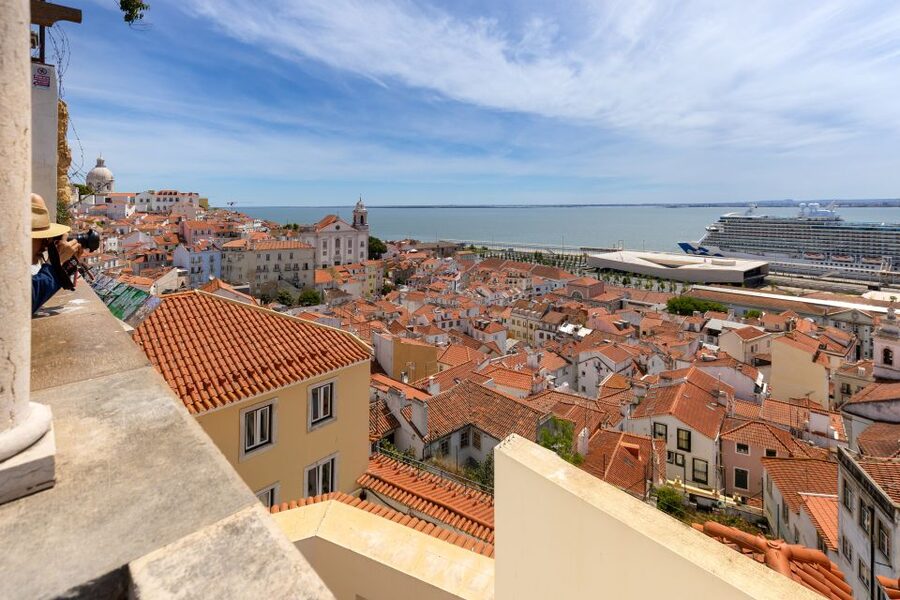
The garden at Miradouro São Pedro de Alcântara is one of the tour’s strongest stops. From here, you can look across the Baixa district toward the south bank of the Tagus River.
A viewpoint is more useful when someone explains what you are seeing. Your guide can connect the streets below with the city’s rebuilding after the earthquake and point out how Lisbon’s hills shape its neighborhoods. You get a visual map before continuing downhill.
This is also a natural pause for photographs. The stop helps break up the walk, which is important in Lisbon. You will be walking on slopes, but the tour is not presented as a nonstop march. Stops for views, buildings, and explanations keep the rhythm manageable.
The view is weather dependent. On a clear day, the Tagus and the lower city should read clearly. On a rainy or windy day, the stop may be shorter or less rewarding. Still, one of the tour’s strengths is its ability to adjust. Anna has been praised for changing the plan when heavy rain and a tram breakdown disrupted the original route.
São Roque Church and Its Surprising Interior
São Roque Church has a plain, austere exterior. That makes the interior more striking. Inside, gilding, tiles, and paintings show the decorative power of Mannerist and Baroque art.
The church is one of the places where a guide adds real value. If you walk past alone, the façade may not signal how much detail is inside. The explanation helps you notice the contrast between the restrained outside and the elaborate interior.
This stop also adds variety to the tour. You are not looking only at city streets and viewpoints. You move between urban history, religious art, architecture, and everyday neighborhoods.
The visit is best understood as part of the walking route rather than a lengthy church tour. The full experience covers several districts in three hours, so the guide must keep each stop moving. If you want an extended study of the church’s art, you will need to return independently.
More history-first plans:
- Lisbon: Live Fado Show with Port Wine in Historic Center
★ 4.7 · 4,166 reviews - Lisbon: Fado Show with Wine in a Historic Venue
★ 4.8 · 1,294 reviews - Explore Lisbon by Tuk Tuk: History and Viewpoints
★ 5.0 · 840 reviews - Lisbon: Daytime or Sunset Boat Cruise with History and Wine
★ 4.9 · 819 reviews
Downhill to Carmo and the Story of 1974
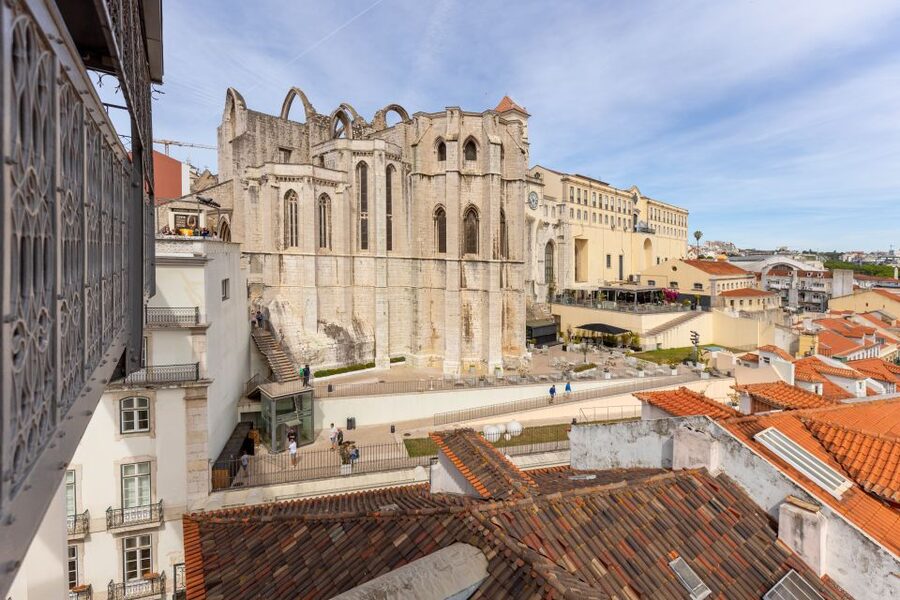
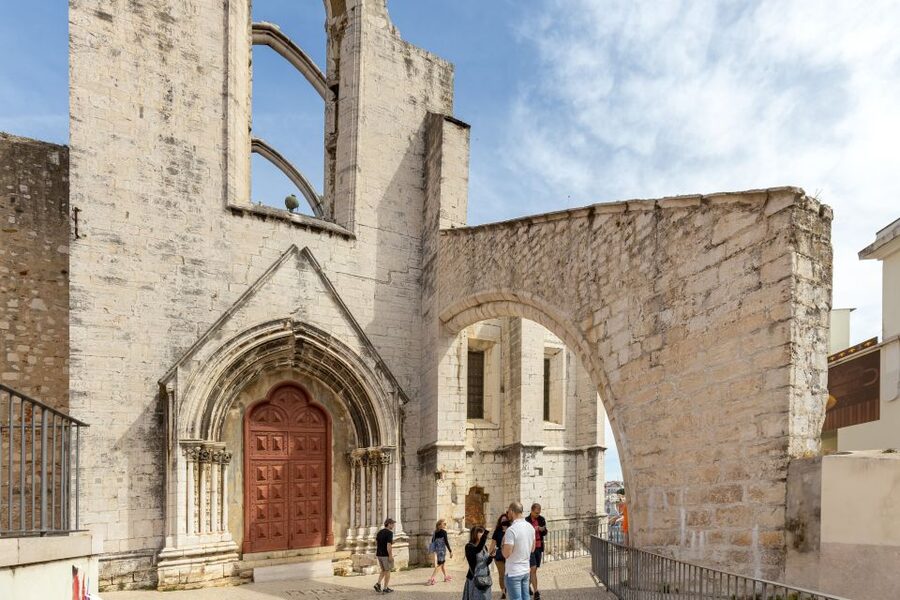
The route then heads toward the Carmo convent and church, important examples of Lisbon’s Gothic architecture. Their ruined appearance is tied to the 1755 earthquake, giving you a direct reminder that the disaster was not just a date in a textbook. It changed the city’s buildings, streets, and social life.
Carmo also carries modern political meaning. The Carnation Revolution began here in 1974, ending almost five decades of dictatorship in Portugal. The tour uses this place to connect architecture with recent history.
This is one of the most useful parts of the route for visitors who know only the postcard version of Lisbon. You learn that Portugal’s past is not limited to explorers, tiled buildings, and old churches. The country also has a recent political story that still shapes how people remember the city.
Guides such as Paulo and Magdalena have been praised for explaining the revolution in a clear and engaging way. You do not need a detailed background in Portuguese politics to follow the story. The setting does much of the work.
Santa Justa and the Rebuilt Baixa
A little farther on, you reach the Santa Justa elevator. Its Gothic Revival design makes it one of Lisbon’s most recognizable structures. The iron lift connects different levels of the city and provides a major viewpoint over the central streets.
The elevator is a good example of Lisbon’s habit of solving practical problems with memorable design. The hills are not simply scenic. They affect how people move around, and the city’s lifts, trams, and steep streets are part of everyday life.
The tour also passes through Baixa, the heart of central Lisbon. This is where you can begin to see the order created by post-earthquake rebuilding, with broader streets and a different feel from the tight lanes of Alfama.
You should keep your expectations realistic. Seeing the Santa Justa elevator does not necessarily mean riding it or spending time at its upper platform. The advertised experience includes a tram trip, not a guaranteed elevator ride, so confirm the exact plan if the lift is a personal priority.
The Tram Ride Toward Portas do Sol
The tram segment adds a welcome change of pace. Instead of walking every hill, you board an iconic Lisbon tram and travel uphill from the castle area toward Portas do Sol.
One departure has been identified as tram number 12, but the exact tram or route can vary. Public transport is part of the city’s character, and the ride gives you a brief taste of how Lisbon handles its hills and tight historic streets.
The tram can also be the least predictable part of the outing. It is a working public transport system, not a private vehicle reserved for the group. Delays, crowding, weather, or mechanical problems can affect the plan. That is not a reason to avoid the tour, but you should allow some flexibility.
The strongest guides handle changes calmly. Anna adapted when the tram broke down during a rainy tour, turning a problem into a different version of the route. That flexibility is worth more than a rigid promise to follow every step exactly.
Portas do Sol and the View over Alfama
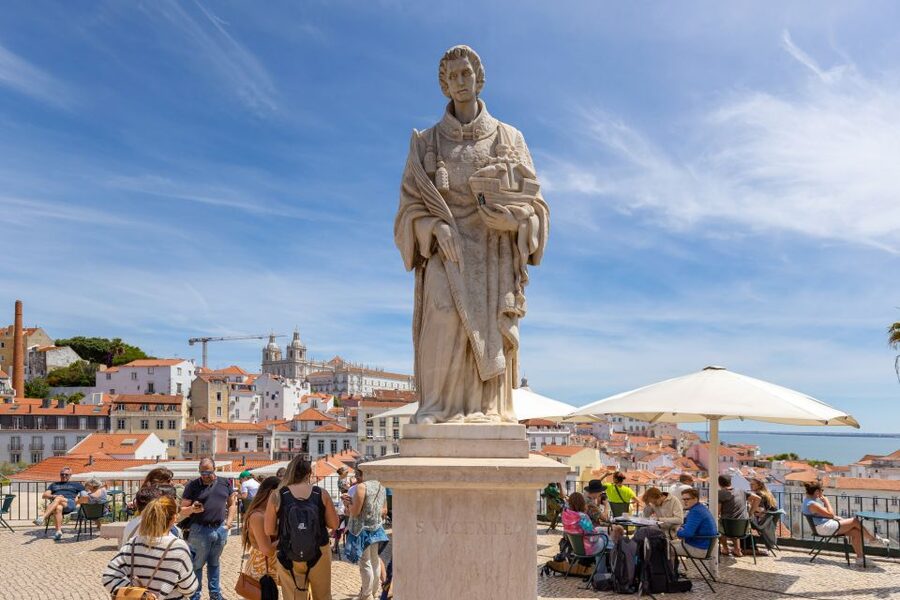
Portas do Sol gives you another fine view, this time toward Alfama and the river. From here, you can see several landmarks in one sweep, including the Monastery of São Vicente de Fora, the National Pantheon, and the dense old quarter running down toward the Tagus.
This stop helps you understand Alfama before entering it. From above, the neighborhood looks like a tight cluster of lanes and roofs. On foot, it becomes more personal and more confusing, which is exactly why a guide is useful.
You may also get practical suggestions for places to revisit. Ricardo is known for offering recommendations along with historical explanations, and several guides have helped visitors choose where to return for food, music, or further sightseeing.
The view is also a reminder that Lisbon rewards pauses. You do not need to rush from one attraction to the next. A few minutes at a miradouro can show you the relationship between the river, the hills, and the old districts better than a long list of isolated facts.
Walking Through Alfama’s Narrow Streets
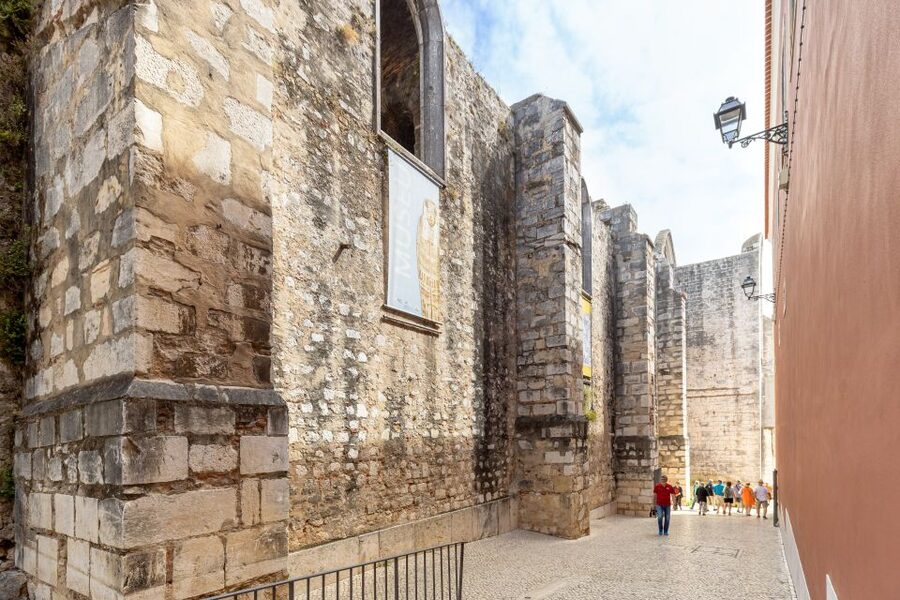
Alfama is the oldest and one of the most picturesque parts of Lisbon. Its lanes are narrow, its route is irregular, and its traditional character is easy to miss if you only pass through quickly.
The tour explains Alfama as a place of daily life, fado houses, and religious festivals. Saint Anthony is especially important in Lisbon, and the neighborhood’s popular celebrations help explain the city’s strong connection to local saints and community traditions.
This is the section where comfortable shoes matter most. The ground can be uneven, and the route includes hills and steps. The pace is generally easy, with regular stops, and one guide has been praised for accommodating older members of a group without leaving others waiting for long. Still, you should be prepared to walk.
Alfama is not a polished outdoor museum. That is part of its appeal. You see a neighborhood shaped by centuries of use, with streets that do not always follow an obvious plan. Your guide helps turn the maze into a story.
Lisbon Cathedral, Built After the Moorish Reconquest
The walk ends at Lisbon Cathedral, built in 1150, three years after the city was taken back from the Moors. The cathedral has been altered many times, so its appearance combines several architectural styles.
Ending here gives the tour a fitting final chapter. You have moved through Lisbon’s older districts, learned about the city’s Islamic and Christian past, seen the effects of the earthquake, and heard about the 20th-century revolution. The cathedral gathers several eras into one place.
As with São Roque and Carmo, the main value is the explanation. A guide can point out changes that are easy to overlook when you are simply taking photographs. If you want a full interior visit, check what is included in your particular departure, since the tour is built around a broad route rather than long monument visits.
Coffee, Cake, and the Pace of the Afternoon
Coffee and cake are included, often described as an espresso or bica with a pastel de nata. The short break is more than a snack. It gives you a chance to sit, ask questions, and absorb the route.
It also adds a taste of ordinary Lisbon without turning the tour into a food walk. You should not book this expecting a full meal or a long series of tastings. The pastry stop is a simple, welcome pause.
The pace has received especially strong praise. The tour covers a lot of ground, but the stops and tram ride prevent it from feeling like a three-hour endurance test. Some departures run slightly over time, so do not schedule a tight booking immediately afterward.
The experience works for solo visitors, couples, and small groups. One solo participant found it a good way to meet people, while smaller departures have sometimes felt almost private. Private and small-group options are available, though the exact group size depends on the option you book.
Guides, Languages, and Practical Details
Live guides may lead the tour in Portuguese, Spanish, Italian, German, French, or English. The personality of the guide will shape the experience, but the recurring strengths are clear: strong command of Lisbon’s past, humor, patience, and practical suggestions.
Names that have received particularly warm praise include Paulo, Ricardo, Beatrice, Anna, João, Lucia, Helena, and Raquel. You cannot assume a particular guide will lead your departure, but these names give you a sense of the local team behind the experience.
Meeting points vary by the option booked, so check your confirmation carefully. Hotel pickup and drop-off are not included.
The tour costs $29 per person and lasts three hours. For that price, the combination of a live guide, tram ride, coffee, and pastry makes sense for a first visit. It is less suitable if you have already spent several days in central Lisbon and want a specialist tour focused on one church, one neighborhood, or one historical period.
Free cancellation is available up to 24 hours before the tour for a full refund, and you can reserve now and pay later. Those terms help if your Lisbon schedule is still shifting.
Who Should Book This Lisbon Walk?
I would choose this tour early in a Lisbon visit, especially if you want a broad introduction before deciding how to use the rest of your time. It is also a good fit if you care about history but prefer stories and street-level context to a formal lecture.
You should be comfortable walking hills and uneven streets. The regular stops make the route manageable for many people who are not especially fit, but this is still Lisbon, and the city does not flatten itself for anyone.
Book it if you want:
- A first look at Bairro Alto, Baixa, and Alfama
- A guide who can connect old history with the 1974 revolution
- A short ride on a classic Lisbon tram
- Good viewpoints and practical orientation
- Coffee and a pastel de nata built into the route
- The flexibility of a small or private group option
Consider another experience if you want extensive time inside each monument, a food-focused outing, or a completely flat route. For most first-time visitors, though, this is a sensible and well-priced way to meet Lisbon on foot, by tram, and through the stories of its people.
FAQ
How long does the Lisbon History, Stories and Lifestyle Walking Tour last?
The tour lasts three hours. Some departures may run slightly over, so allow extra time after the scheduled finish.
What is included in the tour price?
The $29 price includes a live guide, the walking tour, a tram trip, coffee, and cake.
Is hotel pickup and drop-off included?
No. Hotel pickup and drop-off are not included, and the meeting point may vary depending on the option booked.
Which languages are available?
The live tour guide may provide the tour in Portuguese, Spanish, Italian, German, French, or English.
Does the tour include a tram ride?
Yes. A tram trip is included, traveling uphill toward Portas do Sol. The precise tram or route can depend on conditions and the option booked.
Can I cancel or pay later?
You can cancel up to 24 hours in advance for a full refund. Reserve now and pay later is also available.
Fresh finds around Lisbon
- Sanctuary of Fátima and Coimbra City Tour★ 4.5 · 51 reviews
- Sintra/Lisbon: Sintra & Quinta da Regaleira Tour with Ticket★ 4.4 · 51 reviews
- Jeronimos Monastery Guided Tour – Small Groups – Tickets Included★ 5.0 · 51 reviews
- Lisbon: Private Christmas Lights Tour by Eco Tuk Tuk★ 4.9 · 51 reviews
- Peniche: Berlengas Island Catamaran Tour – Round Trip★ 4.6 · 51 reviews
- Half day Spa Water Therapy experience at THE SPA at Corinthia Lisbon★ 4.5 · 51 reviews
- Lisbon: Private Tuk-Tuk Tour for 2 hours★ 4.7 · 51 reviews
- Premium Lisbon Airport Transfer to Lisbon★ 5.0 · 51 reviews
Historical Tours, compared.
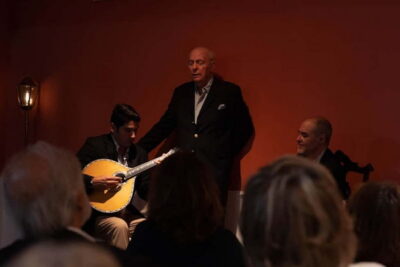
Lisbon: Live Fado Show with Port Wine in Historic Center
Read our review →
Lisbon: Fado Show with Wine in a Historic Venue
Read our review →
Explore Lisbon by Tuk Tuk: History and Viewpoints
Read our review →
Lisbon: Daytime or Sunset Boat Cruise with History and Wine
Read our review →
Private Tuk Tuk Tour Through Lisbon’s Historical Streets
Read our review →
Lisbon Sunset Sailing with Portuguese Wine and History
Read our review →
Lisbon: Guided Tuk-Tuk Tour Along the Historic Tram Line 28
Read our review →
Private Lisbon-Arrábida Wine Tour: 3 Wineries, Coast & Heritage
Read our review →Browse the lists this tour appears in