
Reviewed · ALFAMA & OLD TOWN WALKS
Best of Lisbon Walking Tour: Rossio, Chiado & Alfama
Lisbon’s story makes the most sense when you walk it from Rossio to Alfama. This $23 tour connects grand squares, earthquake-rebuilt streets, tiled lanes, and the city’s famous hills, while a local guide explains how Portugal’s past still shapes daily life. I like that it ends at Praça do Comércio, so you finish with a clear sense of Lisbon’s historic center rather than being dropped back where you started.
I love the mix of serious history and small tastes along the way, especially the pastel de nata and wine stop. I also like the practical feel of the tour: guides such as Filipa, Daniel, Maria, Martin, Carlos, Joana, and Guilherme are praised for answering questions and offering restaurant and shortcut tips. The main consideration is the walking itself. Hills, uneven streets, and three hours on your feet are part of the deal, and the tour does not include entrance fees.
In This Review
- Key points to know before you book
- Starting beneath Lisbon’s statue of Pedro IV
- St. Dominic’s Square and the city’s difficult memories
- Rossio Station and its neo-Manueline doorway
- Carmo Square and the Carnation Revolution
- Viewpoints, Chiado, and Lisbon’s polished side
- Baixa and the city rebuilt after disaster
- Alfama, tiled façades, and the sound of Fado
- Finishing at Praça do Comércio
- What the $23 price really covers
- Which guide style should you expect?
- Who will get the most from this walk?
- Practical details for a smoother morning
- Should you book the Best of Lisbon Walking Tour?
- FAQ
- How long does the Lisbon walking tour last?
- Where does the tour start?
- Where does the tour finish?
- Which Lisbon neighborhoods are included?
- What food and drink are included?
- Is the tour conducted in English?
- Can I cancel the booking?
Key points to know before you book
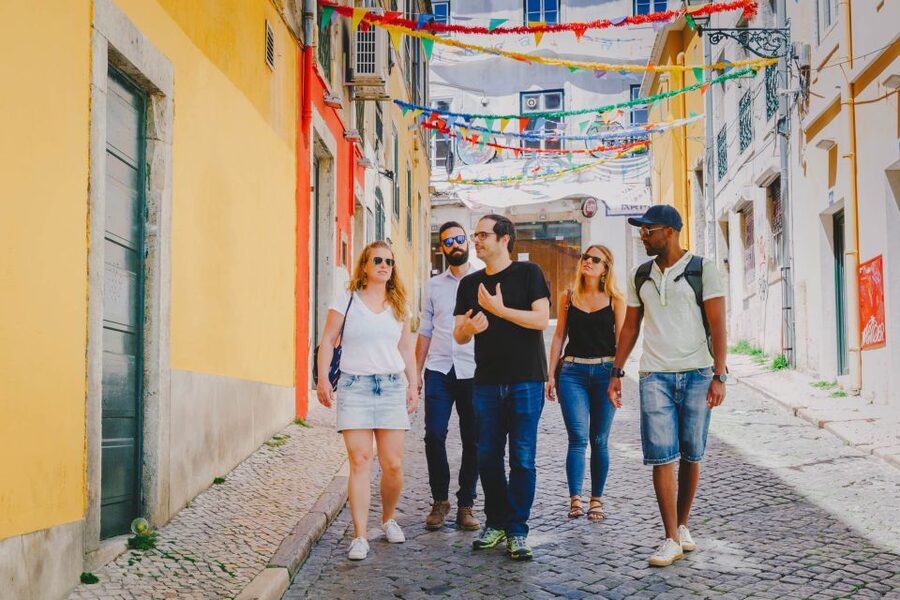
- Rossio to Alfama in three hours: Cover several central districts without arranging separate visits or transport between them.
- History you can see under your feet: Hear about the 1755 earthquake, the Carnation Revolution of 1974, and Portugal’s return to independence while standing in the places where events unfolded.
- Three included tastings: Your booking includes a pastel de nata, another local snack, and a wine tasting. The snack has been described as a codfish cake, with green wine served on some tours.
- A useful first-day orientation: The route helps you understand where Baixa, Chiado, Alfama, Rossio, and Praça do Comércio fit together.
- Strong guide-led experience: The English-speaking guides are repeatedly praised for humor, local advice, clear explanations, and an easygoing way with questions.
- Wear proper shoes: This is a real city walk, not a flat stroll through one square.
Starting beneath Lisbon’s statue of Pedro IV
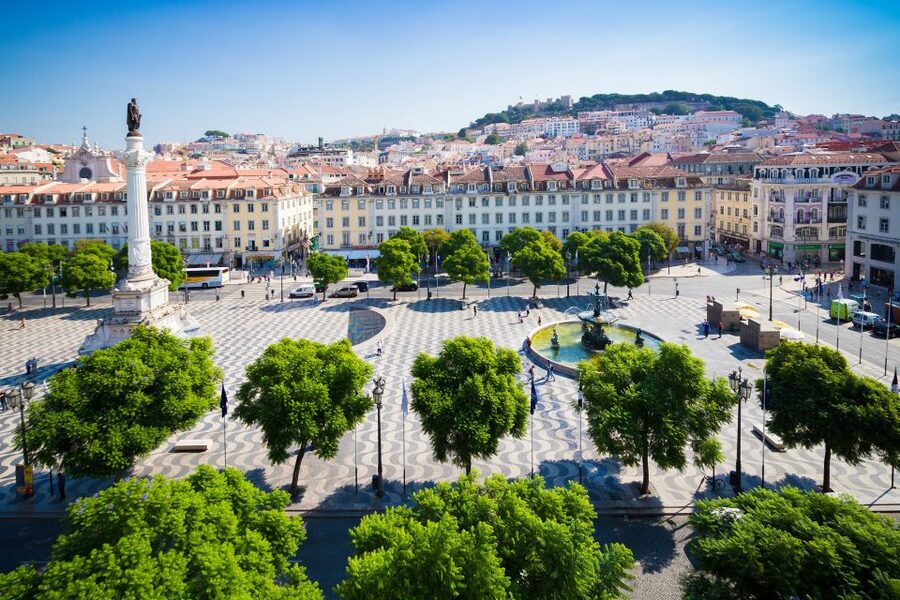
Meet near the statue of Dom Pedro IV in Rossio Square, one of the easiest central meeting points in Lisbon. The square is a good place to begin because it sits between the older quarters and the more orderly streets of Baixa.
Your guide uses Rossio to explain how Lisbon’s center developed. Look down at the familiar black-and-white pavement pattern, then across at the surrounding buildings and the statue in the middle of the square. The setting gives you an immediate sense of Lisbon’s blend of open public spaces, ornate façades, and steep streets.
The first stop takes about 15 minutes. That is enough time for orientation and photographs without using up the morning before the real walking begins. From here, you continue to nearby St. Dominic’s Square, a smaller place with a heavier story.
More Walking Tours in Lisbon
- Lisbon: History, Stories and Lifestyle Walking Tour
★ 4.8 · 10,902 reviews - Best of Lisbon Small-Group Guided Walking Tour
★ 5.0 · 4,869 reviews - Lisbon: Food and Wine Small Group Walking Tour
★ 4.9 · 4,082 reviews
St. Dominic’s Square and the city’s difficult memories
St. Dominic’s Square is a brief photo stop, but it adds a human side to the city’s history. Lisbon’s public spaces are not only pretty backdrops. They have witnessed celebrations, unrest, religious events, and painful episodes.
Your guide provides the context as you move through the square, rather than asking you to memorize a long list of dates. This tour works best when the guide connects each place to a story, and the strongest comments about the experience point to that style: clear information, local anecdotes, and enough humor to keep the group moving.
You will not spend a long time here. That is useful if you want a broad introduction to Lisbon rather than a single-site lecture, but visitors seeking a detailed historical tour of every monument may find the treatment brief.
Rossio Station and its neo-Manueline doorway
Rossio Railway Station is one of the visual treats near the start of the route. Its façade features intricate neo-Manueline decoration, with curling stonework and pointed arches that make the station look more like a palace than a place for commuter trains.
The tour includes a photo stop and an explanation from your guide. You may not enter the station as part of the scheduled experience, and entrance fees or formal guiding inside attractions are not included. Still, the exterior is easy to appreciate from the square, and the stop gives you a quick introduction to Portugal’s taste for maritime-inspired decoration.
This is also a good moment to settle into the pace. The tour is built around frequent short stops, so you are not walking continuously for three hours. You will listen, take pictures, then move on. Comfortable shoes still matter, since the route covers several neighborhoods and includes hills.
Carmo Square and the Carnation Revolution
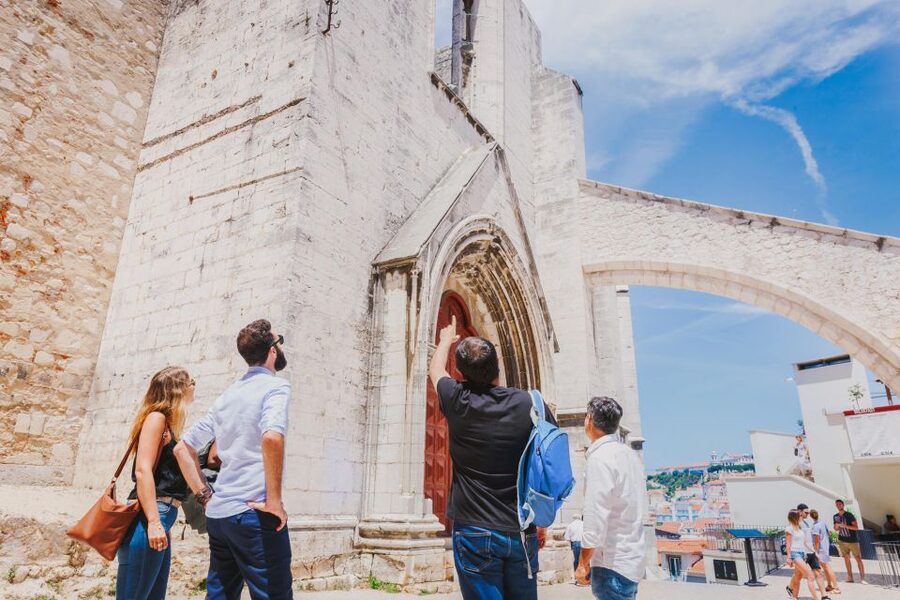
At Largo do Carmo, the subject shifts from architecture to modern political history. Here you learn about the Carnation Revolution of April 1974, the peaceful military uprising that ended 48 years of dictatorship in Portugal.
The square is an especially effective place for this story because it connects national events with a real, walkable setting. Your guide can explain the role of the military and the public mood surrounding the change in government, while you stand among the old buildings of central Lisbon.
Several guides have been praised for presenting political history in an engaging way instead of turning the tour into a dry classroom lesson. That matters here. The Carnation Revolution is important, but many visitors arrive knowing only that carnations were involved. A good explanation turns a famous phrase into a story you can remember.
The stop lasts about 15 minutes and includes time for pictures. From Carmo, the route continues toward a viewpoint, giving your legs and camera a different kind of reward.
More old-town wanders:
- Alfama Tour in Lisbon Old Town
★ 5.0 · 4,936 reviews - Private Lisbon Sightseeing Tuk-Tuk Tour: Alfama, Belém & More
★ 5.0 · 4,277 reviews - Lisbon: Hills, Alfama, and Mouraria Tour by Electric Bike
★ 4.8 · 3,438 reviews - Lisbon Small-Group Food Tour with 18 Tastings in Alfama District
★ 5.0 · 1,967 reviews
Viewpoints, Chiado, and Lisbon’s polished side
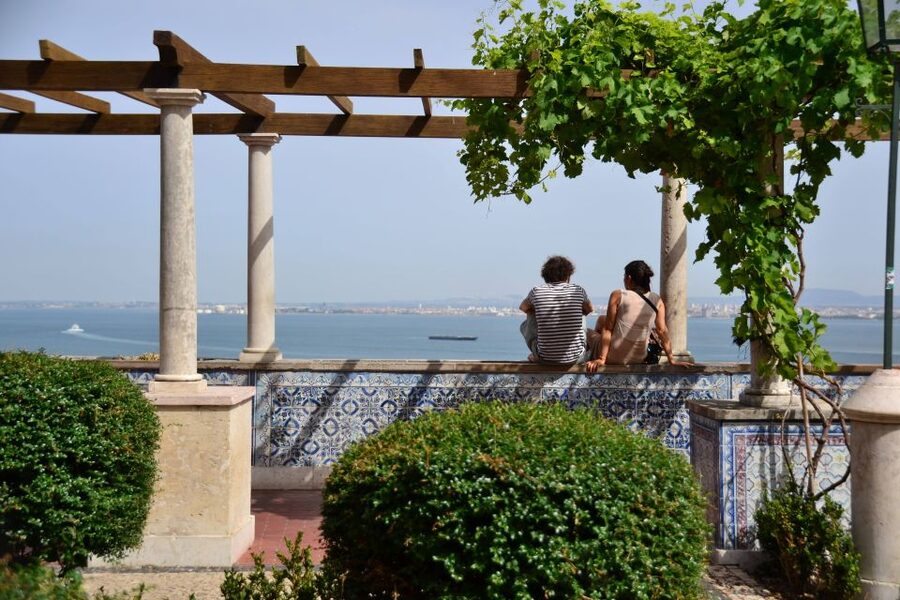
The route includes a viewpoint stop with scenic views along the way. The exact viewpoint can vary, so you should think of it as a chance to see the city from above rather than a guaranteed visit to one named terrace.
Lisbon’s hills are part of its character, but the height comes with effort. You get a better sense of how the neighborhoods climb away from the river, and the viewpoint helps make the city map in your head. This is one reason I would take the tour early in a stay. After three hours, streets that seemed scattered begin to connect.
Chiado brings a change of mood. This elegant district is associated with old cafés, boutiques, theatres, and bookstores. The tour passes through the neighborhood while your guide points out the character of the streets and explains how Chiado fits into central Lisbon.
You should not expect a shopping visit or long stops inside the cafés and stores. Chiado is presented as part of the walking route, not as free time for browsing. That is a fair trade for a three-hour overview, though you may want to return on your own if you enjoy literary landmarks, cafés, or local shops.
Baixa and the city rebuilt after disaster
Baixa is the clearest example of Lisbon being planned rather than simply growing over centuries. The district was rebuilt after the 18th-century earthquake according to new urban rules, with straighter streets and construction methods designed to reduce the danger from future earthquakes.
Your guide explains the connection between the disaster and the grid of streets you see today. This is one of the tour’s most useful lessons because Baixa can look simple at first glance. Once you understand why the streets are broad and orderly, the district becomes a practical history lesson.
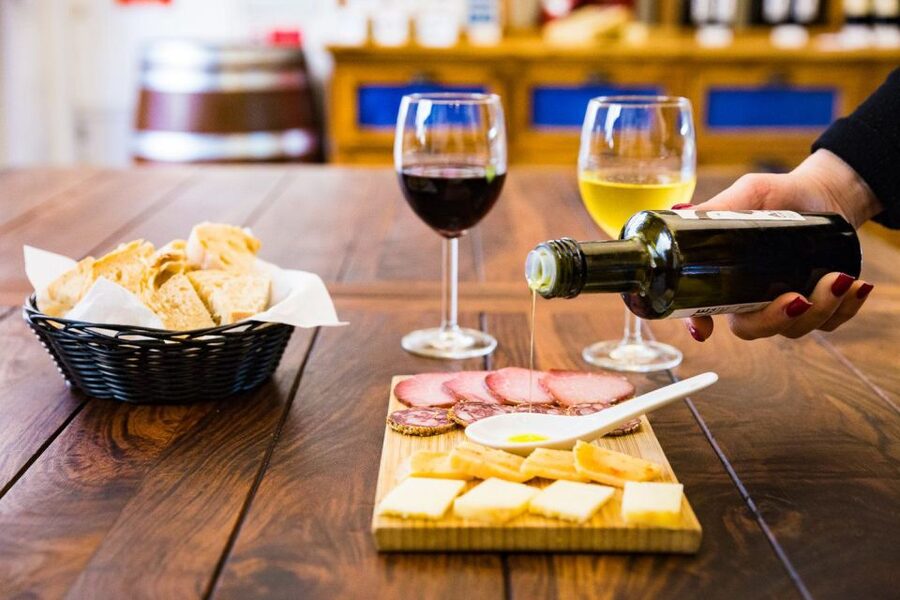
The Baixa portion includes a food tasting and a separate photo and walking stop. The tasting is modest, not a meal, but it breaks up the sightseeing and gives you a local flavor without adding much time. The included pastel de nata is the obvious star. This small egg custard tart is one of Portugal’s essential treats, and trying one during the walk helps you recognize what to order later.
Some departures also provide a savory snack described as a codfish cake, along with green wine. The portions are intended as tastes, so do not arrive expecting lunch. If you have dietary restrictions, the supplied information does not specify alternatives, so ask before booking if that matters to you.
Alfama, tiled façades, and the sound of Fado
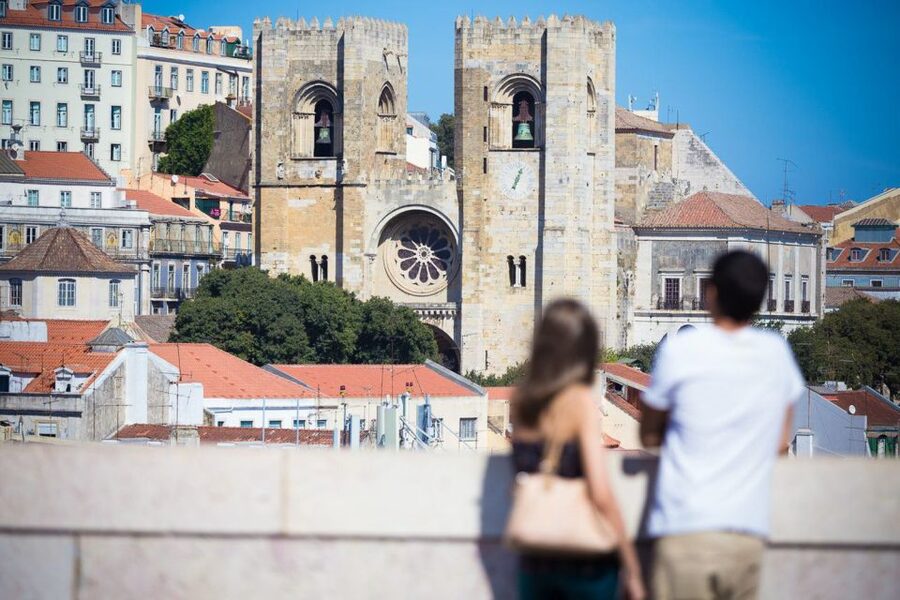
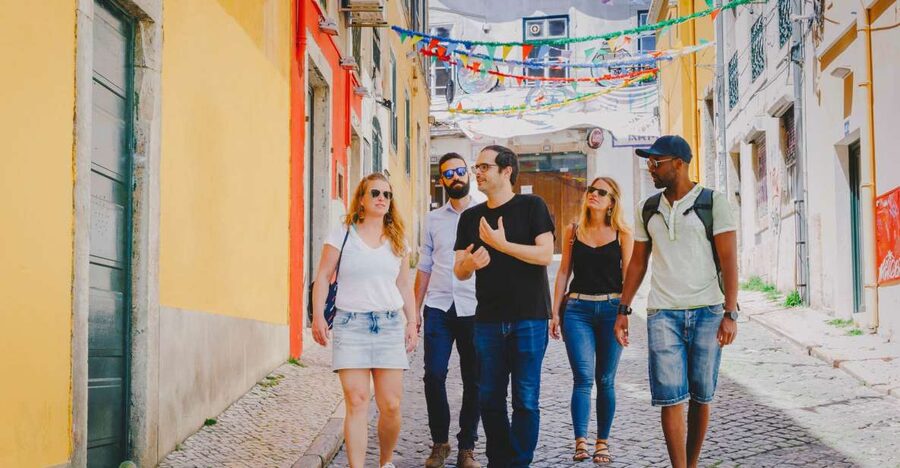
The route then heads into Alfama, Lisbon’s oldest neighborhood. Here the planned streets of Baixa give way to alleys, bends, steps, and lanes that follow the shape of the hillside.
Alfama is where the tour feels most distinct from a standard central-city overview. You are not only looking at famous buildings. You are walking through a neighborhood whose tight street plan and old façades create a much more intimate sense of Lisbon.
Your guide introduces Fado, the Portuguese musical genre closely associated with Lisbon. The tour does not promise a full Fado concert, so you should not book it as a substitute for an evening performance. Instead, you get an introduction to what Fado means in the city and how it fits Alfama’s cultural identity.
The neighborhood stop lasts around 30 minutes, longer than several earlier stops. That extra time helps, since Alfama needs room for its winding route and changing views. It also includes the snack and wine tasting, giving the final section a relaxed local touch.
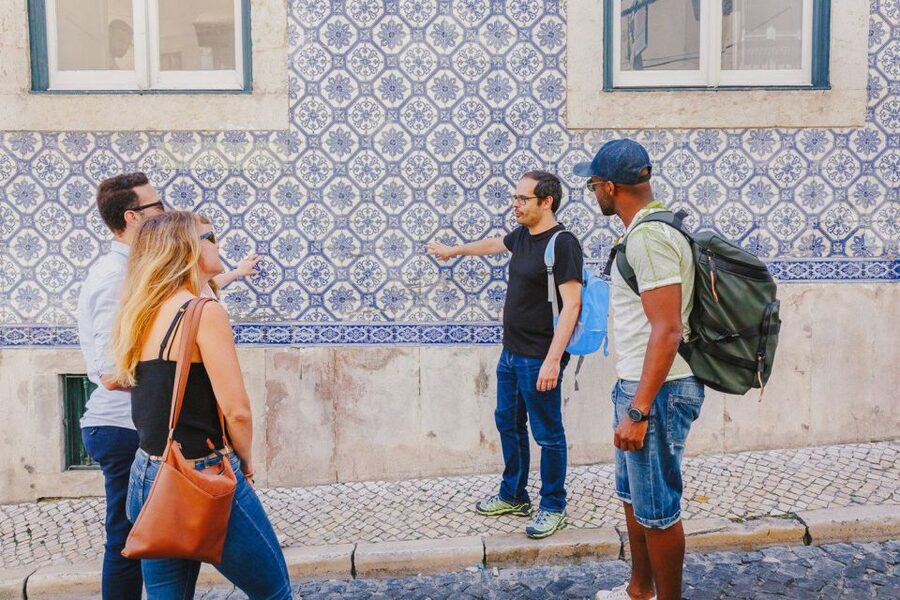
One useful question to ask your guide concerns the tiled façades in Alfama. A recent tour experience specifically praised this detail, and it is the sort of small observation that can change how you see the neighborhood. Tiles are not just decoration here. They are part of the visual language of Lisbon, and the guide can explain why so many buildings use them.
Alfama also brings the tour’s biggest practical challenge. Streets may be steep or uneven, and the route is not designed for anyone hoping to avoid hills. You should wear comfortable shoes and clothes, bring water, and keep your hands free for the walk.
Finishing at Praça do Comércio
The tour ends at Terreiro do Paço, better known as Praça do Comércio. This enormous riverside square was once the entrance hall of Lisbon, and its open shape makes a strong finish after the narrow streets of Alfama.
The square gives you room to pause and place the city in context. You have moved from Rossio’s central bustle through Baixa’s planned streets, across Chiado’s refined quarter, and into Alfama’s older lanes. Ending by the river makes the route feel complete.
This location is also useful for the rest of your day. The tour does not include onward transport, restaurant reservations, or attraction entry, but Praça do Comércio is a clear reference point for continuing your own sightseeing. Your guide may also offer suggestions for restaurants and shortcuts, a feature repeatedly praised by people who wanted help planning the next few days.
What the $23 price really covers
At $23 per person, this is a strong-value introduction to Lisbon if you want a guide, a coherent route, and small tastings. You are paying for three hours of local explanation rather than admission to a major monument, so the value depends on how much you want historical context and orientation.
The included food and wine add a little extra value, but they should not be the main reason you book. A pastel de nata, a small savory bite, and a taste of wine are pleasant touches. The real product is the walk and the guide’s ability to connect places that you might otherwise see as separate stops.
The tour does not include entrance fees or guiding inside attractions. That keeps the price low, but it also means you will need to budget separately for any museums, churches, or monuments you visit later.
The booking terms are flexible: you can cancel up to 24 hours before the tour for a full refund, and you can reserve now and pay later. The advertised duration is three hours, though some guides may run a little over when questions and conversation keep the group going.
Which guide style should you expect?
The guide assigned to your departure will vary. Names praised in recent feedback include Filipa, Filipe, Martin, Carlos, Caterina, Maria, Daniel, Joana, Guilherme, Natalia, Ricardo, and José. The most consistent strength is not a particular script. It is the guide’s ability to explain Lisbon clearly while keeping the group involved.
Daniel is noted for humor and for using his own Portuguese cultural background to explain the city. Maria is praised for energy, local recommendations, and a surprise in Alfama. Filipa is described as well paced, while Ricardo has been known to extend the experience beyond three hours because of his entertaining style.
That variation is worth understanding. This is a live guide experience, so the tone may be more conversational with one person and more structured with another. The English-language tour is a good fit if you enjoy asking questions and learning through stories. If you prefer a silent walk or a fixed audio guide, this may feel too social.
The reported rating is 4.9 from about 2,700 reviews, which supports the view that guide quality is a major part of the experience. Still, the route itself remains the same basic strength: it gives you a practical first look at Lisbon’s central districts.
Who will get the most from this walk?
I would recommend it most strongly for a first visit, especially if you want help understanding Lisbon’s layout before exploring alone. The tour gives you place names, neighborhood connections, food ideas, and useful orientation in one morning or afternoon.
It also suits history-minded visitors who want more than photographs. The earthquake rebuilding of Baixa and the Carnation Revolution at Carmo Square give the tour a good range, from urban design to 20th-century politics. The introduction to Fado and the time in Alfama add cultural context without requiring an evening performance.
Food lovers will enjoy the tasting stops, but this is not a food tour. The samples are small and serve as punctuation between sights. Families and older visitors should consider the hills and uneven paving before booking, since the activity requires comfortable walking for three hours.
I would be less likely to choose it if I had only one short visit and wanted to spend that time inside Lisbon’s major paid attractions. No entrance tickets are included, and the tour moves past many sights rather than taking you inside them.
Practical details for a smoother morning
Meet at the statue of Dom Pedro IV in Rossio Square. Give yourself enough time to find the statue, since Rossio is a busy central area and the group will begin from that point.
Wear shoes you can trust on hills and stone paving. Comfortable clothing is requested, and a light rain layer is sensible because the tour operates outdoors. The experience has gone ahead in heavy rain, so do not assume poor weather automatically changes the schedule.
The tour is in English and uses a live local guide. Pets are not allowed. Check the start time when booking, since several starting times may be available depending on the date.
Bring a small bottle of water and keep your belongings compact. You will be stopping for photos and tastings, then moving through crowded central streets and narrow Alfama lanes.
Should you book the Best of Lisbon Walking Tour?
Book it if you want a reasonably priced, story-led introduction to Lisbon that combines Rossio, Baixa, Chiado, and Alfama in one route. The strongest reasons are the clear city orientation, the guide’s local advice, the Carnation Revolution stop, and the simple pleasure of eating a pastel de nata while learning where you are.
Skip it if hills are a serious problem, if you want substantial time inside monuments, or if you are looking for a full meal-based food tour. For most first-time visitors who enjoy walking, $23 buys a useful foundation for the rest of your Lisbon stay.
FAQ
How long does the Lisbon walking tour last?
The scheduled duration is three hours. Some tours may last slightly longer if the guide spends extra time answering questions or speaking with the group.
Where does the tour start?
It starts at Rossio Square, near the statue of Dom Pedro IV.
Where does the tour finish?
The tour finishes at Terreiro do Paço, also called Praça do Comércio.
Which Lisbon neighborhoods are included?
The route includes Rossio, Restauradores, Chiado, Baixa, and Alfama, with stops at several squares, viewpoints, and historic sites.
What food and drink are included?
The booking includes one pastel de nata, one snack tasting, and one wine tasting. The snack has been described as a codfish cake, and green wine may be served.
Is the tour conducted in English?
Yes. The activity includes a live English-speaking local guide.
Can I cancel the booking?
You can cancel up to 24 hours in advance for a full refund. You can also reserve now and pay later.
Fresh finds around Lisbon
- Sanctuary of Fátima and Coimbra City Tour★ 4.5 · 51 reviews
- Sintra/Lisbon: Sintra & Quinta da Regaleira Tour with Ticket★ 4.4 · 51 reviews
- Jeronimos Monastery Guided Tour – Small Groups – Tickets Included★ 5.0 · 51 reviews
- Lisbon: Private Christmas Lights Tour by Eco Tuk Tuk★ 4.9 · 51 reviews
- Peniche: Berlengas Island Catamaran Tour – Round Trip★ 4.6 · 51 reviews
- Half day Spa Water Therapy experience at THE SPA at Corinthia Lisbon★ 4.5 · 51 reviews
- Lisbon: Private Tuk-Tuk Tour for 2 hours★ 4.7 · 51 reviews
- Premium Lisbon Airport Transfer to Lisbon★ 5.0 · 51 reviews
Alfama & Old Town Walks, compared.

Private Lisbon Sightseeing Tuk-Tuk Tour: Alfama, Belém & More
Read our review →
Lisbon: Hills, Alfama, and Mouraria Tour by Electric Bike
Read our review →
Lisbon Small-Group Food Tour with 18 Tastings in Alfama District
Read our review →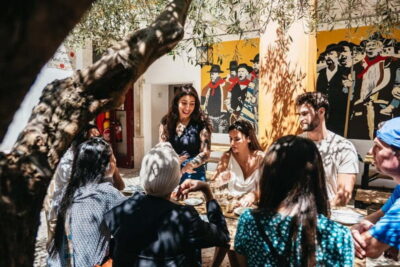
Lisbon: Baixa District Food Tour with Dinner and Drinks
Read our review →
Lisbon E-Bike Tour Commerce Square, Mouraria and Alfama
Read our review →
Lisbon: Old Town TukTuk Tour and Scenic Viewpoints in Alfama
Read our review →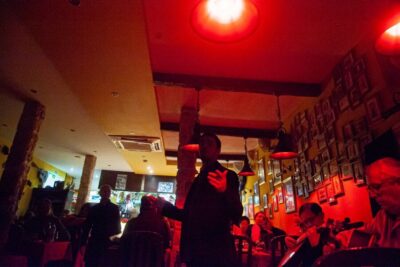
Lisbon: Alfama Tour and Live Fado with Traditional Dinner
Read our review →Browse the lists this tour appears in