
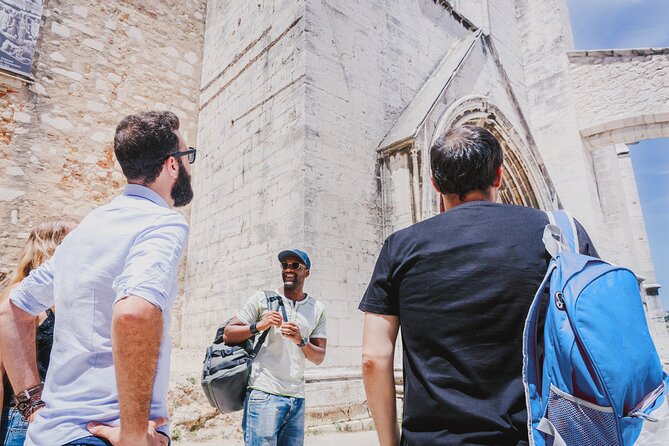
Reviewed · WALKING TOURS
Best of Lisbon Small-Group Guided Walking Tour
Lisbon’s story comes alive as you walk from Rossio to Alfama, passing earthquake-rebuilt streets, a revolution site, a Manueline-style railway station, and narrow lanes linked with fado. This is a fast, useful introduction to the city rather than a tour built around one major monument.
I like the small group limit of 14, which gives you room to ask questions and keep close to the guide. I also like the food breaks: a pastel de nata early on, followed by wine and a tapa near the end. The main drawback is the route’s length and hills. You cover a lot in three to four hours, but you do not enter museums or major monuments, and Lisbon’s slopes still require sturdy shoes.
In This Review
- Key points at a glance
- A useful first look at Lisbon
- Rossio begins the city story
- Restoration, railways, and Portugal’s independence
- Carmo Square and the Carnation Revolution
- Chiado, cafés, and Lisbon’s literary side
- Baixa explains the 1755 earthquake
- Alfama brings in fado and older Lisbon
- Commerce Square closes beside the Tagus
- What the pace and group size mean
- Food, timing, and what is not included
- Who should book this walk
- Should you book the Best of Lisbon walk?
- FAQ
- How long does the Best of Lisbon Small-Group Guided Walking Tour last?
- Where does the tour begin?
- Where does the tour end?
- What language is the tour offered in?
- How many people can join the group?
- Is a local guide included?
- Is food included?
- Does the tour include hotel pickup?
- Are museum or monument entry fees included?
- How physically demanding is the walk?
- Can I cancel for a full refund?
Key points at a glance
- Four Lisbon districts in one walk: Rossio, Chiado, Baixa, and Alfama give you a useful first map of the city.
- History with a clear thread: The route links Portuguese independence, the 1755 earthquake, and the 1974 Carnation Revolution.
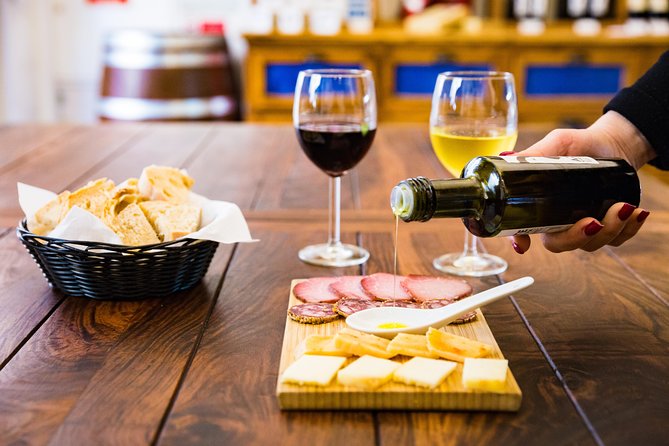
- Food is part of the lesson: You receive a pastel de nata, plus a wine tasting and tapa.
- Small group, maximum 14: You get more chance to ask about restaurants, transport, and places to visit later.
- Views without a separate sightseeing ticket: The route uses public viewpoints and passes the Santa Justa Lift.
- Best for a first visit: It gives you orientation and practical ideas, though independent Lisbon experts may find the stops familiar.
A useful first look at Lisbon
At $23.94 per person, this is an unusually modest price for a three to four hour guided walk with food and wine included. You are not paying for entry to a palace or museum, but you are paying for a local guide who connects scattered sights into one story.
That value is strongest if you have only a short stay or want to begin your trip with a city overview. A guide can explain how Baixa’s straight streets relate to the 1755 earthquake, why Alfama feels so different, and how Lisbon’s public lifts help with the hills. You can then return to the places that interest you most.
The tour is offered in English and uses a mobile ticket. It begins at Praça Dom Pedro IV, better known as Rossio Square, and ends at Praça do Comércio beside the Tagus. Hotel pickup is not included, so you need to reach the starting point yourself.
The group size matters here. Lisbon’s old streets can be tight, and a group capped at 14 is easier to manage than a large crowd spread across a pavement. Guides named in the feedback include José, Maria, Felipe, Filipa, Joana, Catarina, Carlos, Franco, and Guillermo. Their strongest qualities are clear English, enthusiasm, patience, and practical recommendations.
More Walking Tours in Lisbon
- Lisbon: History, Stories and Lifestyle Walking Tour
★ 4.8 · 10,902 reviews - Lisbon: Food and Wine Small Group Walking Tour
★ 4.9 · 4,082 reviews - Best of Lisbon Walking Tour: Rossio, Chiado & Alfama
★ 4.9 · 2,700 reviews
Rossio begins the city story
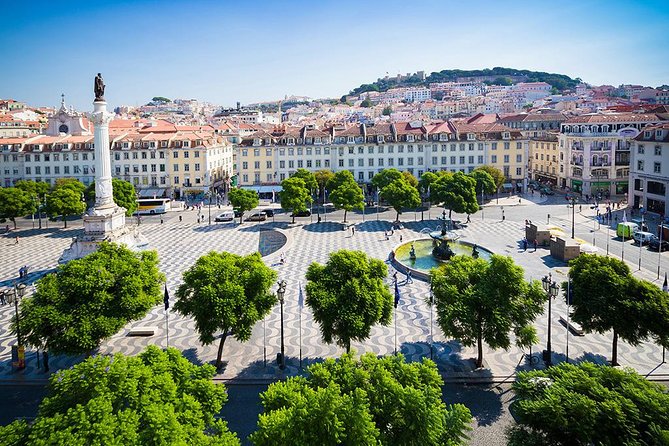
You meet your guide in Rossio, Lisbon’s central square in the Baixa district. Its official name is Praça Dom Pedro IV, but most people use Rossio. The square’s Portuguese paving is arranged in wave patterns, a small detail that rewards a pause before the walking begins.
Your guide explains how this 19th-century square was made and how its design echoes the nearby ocean. It is a good opening because the square is both a meeting place and a lesson in Lisbon’s public spaces.
The first stops are short. You see Igreja de São Domingos, a church by São Domingos Square, then move toward one of Lisbon’s grand avenues. The itinerary allows only a few minutes at some locations, so expect exterior views and spoken context rather than long visits inside.
Rossio is also a practical place to begin. It sits near public transportation and places you close to several central neighborhoods. If you arrive early, you can use the time to locate the meeting point without rushing.
Restoration, railways, and Portugal’s independence
Restauradores Square focuses on Portugal’s return to independence from Spain in 1640 after 60 years of Spanish rule. The central obelisk, opened in 1886, records battles from the Portuguese Restoration War.
This is one of the tour’s helpful history links. Instead of treating the obelisk as background decoration, the guide gives you a reason to look up and read its purpose. The stop is brief, but the story helps explain an important part of Portugal’s national identity.
Nearby, Rossio Central Station brings a different kind of history. Its facade borrows from 16th-century Manueline design, while the railway itself reflects 19th-century engineering. You may hear a train heading into the tunnel toward Sintra, and the guide explains how this transport link was built.
I like this contrast between war memorial and railway station. One tells you about political independence; the other shows how Lisbon connected itself to the surrounding region. You will not board a train or enter a museum here, but the stop can help you decide if a later trip to Sintra fits your plans.
Carmo Square and the Carnation Revolution
Largo do Carmo is a small square with two major connections. The first is the old Carmo convent, founded in the 14th century. The second is the Carnation Revolution of 1974, when Portugal’s 48-year dictatorship collapsed.
The square is one of the most meaningful stops because the guide connects architecture with modern politics. You learn how the revolution unfolded and why this quiet-looking spot became part of Portugal’s recent story.
The tour then passes the Santa Justa Lift, one of central Lisbon’s most recognizable structures. The lift is useful as a viewpoint, but this walk does not include a ride or a separate entrance. The route may use public elevators and escalators when available, which can make the hills easier, though you should not expect to avoid all climbing.
Some of the best views come from this part of the walk. Bring a camera, but remember that the tour keeps moving. If you want a long visit to the lift or a ride to the upper platform, plan to return later on your own.
More walking routes in Lisbon:
- Age of Discoveries Walking Tour in Belém
★ 5.0 · 1,513 reviews - Sintra & Cascais Day Tour with Pena Palace Entry and Gardens Walk
★ 5.0 · 962 reviews - Lisbon Roots – Small group Food & Culture Walking Tour w/tastings
★ 5.0 · 910 reviews - Lisbon: Starter Walking Tour to the highlights in German
★ 4.9 · 781 reviews
Chiado, cafés, and Lisbon’s literary side

Chiado feels more polished than Alfama, with boutiques, theaters, bookstores, and old cafés lining its streets. The neighborhood developed in the 19th century for Lisbon’s intellectual and wealthy circles.
This is a good place to notice facades and street life rather than hunt for one headline sight. Your guide may point out details you could pass without a second look, including older shop fronts and cafés that give Chiado its old-fashioned air.
The walking pace is one of the tour’s strengths. Guides such as Maria and Filipa are praised for keeping the group interested while answering questions. José is also described as especially attentive to solo participants, a useful quality if you are traveling alone and want to feel part of the group.
Do not expect a shopping tour. You pass the neighborhood’s main character, but there is no extended time for browsing. If Chiado becomes your favorite area, note the streets and return after the walk.
Baixa explains the 1755 earthquake
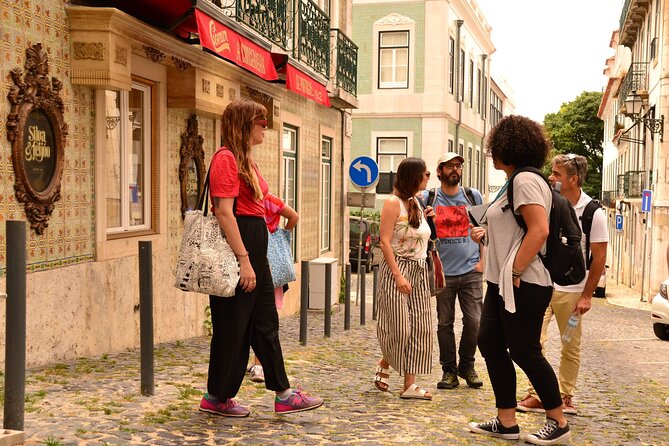
From Chiado, you continue down Rua Augusta, the main street through the city center, into Baixa. Here the tour shifts from neighborhood atmosphere to urban planning.
Baixa was rebuilt after the great 18th-century earthquake, using a more orderly street plan and new anti-seismic building methods. The design was unusually practical for its time. Streets are straighter, blocks more regular, and the area feels very different from the winding lanes of Alfama.
This section gives you the best explanation of how Lisbon was remade. The earthquake is not treated as a single tragic event, but as the reason the center looks the way it does today. You also hear about the rules and building solutions used in the reconstruction.
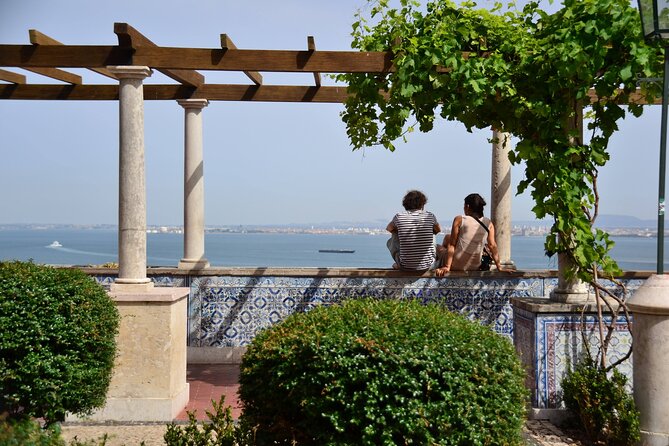
A viewpoint at Miradouro Chão do Loureiro adds a change of pace. You get a panoramic look across the city, with time for photos. Since the viewpoint is reached during a walking route, the stop is included without adding another ticket or transfer.
Baixa is relatively flat, which makes this part easier on your legs. Even so, the full route includes slopes and steps in other districts. Comfortable shoes are not optional advice here. They are the sensible choice.
Alfama brings in fado and older Lisbon

Alfama is the route’s most atmospheric district. It is one of Lisbon’s oldest neighborhoods, with narrow streets, winding passages, and Moorish influence. Fado restaurants sit between the alleys, giving the guide a natural setting for explaining Portugal’s famous melancholic music.
You will not attend a fado performance on this tour. Instead, you learn how fado fits into local culture while walking through the streets where fado restaurants operate. That distinction matters if you are hoping for a full music evening. The walk offers orientation, not a concert.
Alfama also changes the physical feel of the tour. Baixa is planned and broad; Alfama is irregular and uphill. The route allows about 20 minutes here, but the walking itself adds more time. Guides are praised for allowing breaks and setting a manageable pace, including on rainy days.
This is also where the local advice can be most useful. A guide can suggest how to plan a later visit to Alfama, where to look for fado, and how to navigate the district without treating every narrow lane as a dead end. The tour does not promise a secret corner at every turn, but it does help you understand the shape and character of the neighborhood.
Commerce Square closes beside the Tagus
The final stop is Praça do Comércio, the grand waterfront square also known as Terreiro do Paço. The square once held the Royal Ribeira Palace, which was destroyed in the 1755 earthquake. It was then rebuilt as part of the Pombaline plan for central Lisbon.
The guide explains how the square served as a reception area for people arriving from the Atlantic. That detail gives the open space a purpose beyond its impressive arcades and riverfront setting.
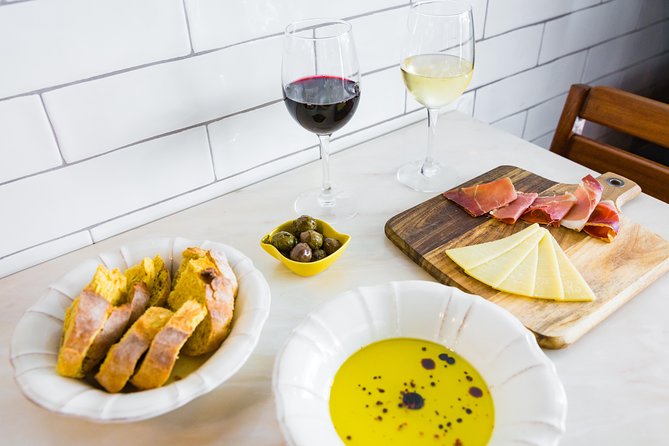
This is where the included wine tasting and tapa fit especially well. The food is not a full meal, so do not arrive hungry enough to expect lunch. Think of it as a pleasant sample and a chance to pause after the walk.
The tour ends here, leaving you in a useful spot for the rest of your day. You can continue along the waterfront, return to Baixa, or use what you learned to choose your next neighborhood. The end point is not the same as the start, so plan your onward route before the tour begins.
What the pace and group size mean
The advertised duration is about three to four hours. That is enough time to cover a large part of central Lisbon, but not enough for long interior visits, extended shopping, or unhurried photography at every stop.
Some itinerary stops last only five minutes, while Alfama, Baixa, and Rossio receive more time. I would treat this as a moving introduction. You see many places, hear the main story, and mark the spots worth revisiting.
The maximum of 14 people is a real benefit for this format. You can usually hear the guide more easily, ask questions without stopping a large crowd, and get recommendations suited to your plans. The walk still depends on everyone keeping a reasonable pace.
You need moderate physical fitness. The route combines flat Baixa streets with Lisbon’s slopes and older uneven lanes. Public elevators and escalators may help at points, but the experience remains an active half-day walk.
Food, timing, and what is not included
The included pastel de nata is a small but useful touch. It introduces one of Portugal’s best-known pastries without requiring you to schedule a separate bakery stop.
The wine tasting and tapa add a second local flavor break. Exact food details are not specified, so do not book this as a culinary tour. The tastings support the sightseeing rather than replace a meal.
Food and drinks beyond the stated inclusions are not covered. Entry to museums and monuments is also excluded. This keeps the base price low, but it means you will pay separately if you later decide to ride the Santa Justa Lift, enter a museum, or visit another attraction.
I would book it near the start of your Lisbon stay. The route gives you a working map of the center and a list of places to explore later. It also helps you avoid spending your first day walking past important sights without understanding why they matter.
Who should book this walk
You are a strong match if this is your first time in Lisbon, your visit is short, or you prefer learning the city through stories rather than a bus window. It is also a good choice if you want an English-speaking guide and a small group without paying for a private tour.
Solo visitors may appreciate the social format and the care some guides give to people traveling alone. Couples and families with older children can also use it as a shared orientation before exploring at their own pace.
You may want something else if you already know central Lisbon well. The tour focuses on the classic squares, lift, Baixa, Chiado, and Alfama. It does not include Lisbon Cathedral, even from the outside, according to one point of feedback, and it does not focus on less familiar districts.
Cancellation is free up to 24 hours before the start time. Inside that window, the payment is not refunded. The tour also requires a minimum number of participants, and if that minimum is not reached, you are offered another date or experience, or a full refund.
Should you book the Best of Lisbon walk?
I would book this tour for a first or short visit, especially on your first full day. For $23.94, you get several hours of guiding, a useful route through four key areas, a pastry, wine, and a tapa. The strongest value is the context: the guide explains how independence, dictatorship, earthquake reconstruction, fado, and waterfront trade all fit into one city.
Choose it with realistic expectations. You will walk a lot, stop briefly at many sights, and pay separately for monument entry. If you want a broad, friendly introduction with plenty of chances to ask questions, this is a smart buy. If you want deep time inside churches and museums or a less familiar side of Lisbon, use this as a first orientation and plan a more focused tour afterward.
FAQ
How long does the Best of Lisbon Small-Group Guided Walking Tour last?
The tour lasts approximately three to four hours.
Where does the tour begin?
It begins at Praça Dom Pedro IV, also called Rossio Square, at 1100 Lisbon, Portugal.
Where does the tour end?
The tour ends at Praça do Comércio, with the postal code 1100-148, beside the Tagus River.
What language is the tour offered in?
The tour is offered in English.
How many people can join the group?
The group has a maximum of 14 travelers.
Is a local guide included?
Yes. A local guide is included.
Is food included?
A pastel de nata pastry, a wine tasting, and a tapa are included. Other food and drinks are not included unless specifically stated.
Does the tour include hotel pickup?
No. Hotel pickup and drop-off are not included.
Are museum or monument entry fees included?
No. Entry to museums and monuments is not included.
How physically demanding is the walk?
You should have a moderate level of physical fitness. The route includes substantial walking through central Lisbon, including hills and winding streets in Alfama.
Can I cancel for a full refund?
Yes, if you cancel at least 24 hours before the experience start time. Cancellations made less than 24 hours before the start are not refunded.
Fresh finds around Lisbon
- Sanctuary of Fátima and Coimbra City Tour★ 4.5 · 51 reviews
- Sintra/Lisbon: Sintra & Quinta da Regaleira Tour with Ticket★ 4.4 · 51 reviews
- Jeronimos Monastery Guided Tour – Small Groups – Tickets Included★ 5.0 · 51 reviews
- Lisbon: Private Christmas Lights Tour by Eco Tuk Tuk★ 4.9 · 51 reviews
- Peniche: Berlengas Island Catamaran Tour – Round Trip★ 4.6 · 51 reviews
- Half day Spa Water Therapy experience at THE SPA at Corinthia Lisbon★ 4.5 · 51 reviews
- Lisbon: Private Tuk-Tuk Tour for 2 hours★ 4.7 · 51 reviews
- Premium Lisbon Airport Transfer to Lisbon★ 5.0 · 51 reviews
Walking Tours, compared.
Lisbon: History, Stories and Lifestyle Walking Tour
Read our review →
Lisbon: Food and Wine Small Group Walking Tour
Read our review →
Best of Lisbon Walking Tour: Rossio, Chiado & Alfama
Read our review →
Sintra & Cascais Day Tour with Pena Palace Entry and Gardens Walk
Read our review →
Lisbon Roots – Small group Food & Culture Walking Tour w/tastings
Read our review →
Lisbon: Starter Walking Tour to the highlights in German
Read our review →
Browse the lists this tour appears in