Reviewed · MUSEUMS
Tiles and Tales: Workshop and National Tile Museum Visit
Portuguese tiles are not just pretty decoration. They tell you who built a house, what period it belongs to, and how Portugal absorbed ideas from Arabic, European, and local craftsmen. This tour lets you see that story on Lisbon’s streets, then paint a tile of your own in Azeitão.
I like two things right away: the private door-to-door transport removes a fair amount of fuss, and the workshop gives you something more lasting than another set of photographs. The 25th of April Bridge adds a fine opening view, and lunch in Sesimbra can turn the middle of the day into a pleasant seaside break.
The main drawback is cost. At $102.12 per person, the price can be good for a private eight-hour outing with transport and guides, but food, drinks, and shipping are extra. Museum hours, traffic, and the pace of your guide can also affect how much time you get at each stop.
In This Review
- Key points to know before booking
- Why this tile tour is different from a standard Lisbon outing
- Lisbon’s façades and the view from the 25th of April Bridge
- Azeitão workshop: from tile-making lesson to hands-on painting
- Lunch in Sesimbra, with the sea as your backdrop
- The National Tile Museum and Portugal’s long ceramic story
- How much value do you get for $102.12?
- Who will enjoy this most?
- Practical advice for a smoother day
- Should you book this tile experience?
- FAQ
- How long does the Tiles and Tales experience last?
- What is included in the price?
- Is lunch included?
- Can I paint my own tile?
- Can the finished tile be shipped home?
- Is the tour private?
- What happens if the National Tile Museum is temporarily closed?
Key points to know before booking
- Paint your own azulejo in Azeitão: You learn about tile production, then decorate a tile that can be fired and sent to you.
- See Lisbon as a tile gallery: Your guide points out façades and examples from different periods before you reach the workshop.
- Cross the 25th of April Bridge: The trip begins with broad views across Lisbon and the Tagus River.
- Choose your lunch setting: Stop in the fishing village of Sesimbra for seafood and ocean views, or return to Lisbon for lunch.
- Explore the National Tile Museum: A guided introduction is followed by time to look around on your own.
- Book early if you want the tile in hand: Shipping can take at least three days, and sending it home by FedEx may cost more.
Why this tile tour is different from a standard Lisbon outing
Lisbon gives you plenty of grand viewpoints, old churches, and tram rides. This experience takes a more focused route. Its subject is the azulejo, the painted ceramic tile that appears on homes, churches, palaces, shops, and public buildings all over Portugal.
You begin around 9:00 a.m. with pickup at your hotel, apartment, port, or airport, though some central addresses may require meeting at a nearby point. From there, your driver-guide uses the ride to introduce the city through its tilework. That is important because the workshop and museum make more sense once you have seen tiles in their everyday setting.
The outing is private, so only your group takes part. That gives you room to ask questions and adjust the pace. Guides named in the tour feedback include Nuno, Raquel, Ariana, Tiago, Philip, and others. Nuno is especially associated with the tile theme, while Raquel’s fine arts background helped her connect the craft with Portuguese art and culture.
The advertised duration is about eight hours. Actual timing can shift. One account describes a shorter day, while other accounts describe a full day with the workshop, Sesimbra, and museum. Traffic, lunch, museum closing time, and time spent painting all matter.
A handful more Lisbon ideas to compare
- Lisbon: Pastel de Nata Baking Class
★ 4.9 · 2,106 reviews - Lisbon: Traditional Portuguese Cooking Class
★ 4.9 · 592 reviews - Pastel de Nata Pastry Class: Bake and Enjoy Your Own Treats
★ 5.0 · 485 reviews
Lisbon’s façades and the view from the 25th of April Bridge
The bridge crossing is more than a transfer. Looking east and west from the 25th of April Bridge gives you a wide view of Lisbon and the Tagus, helping you understand the city’s position on the river.
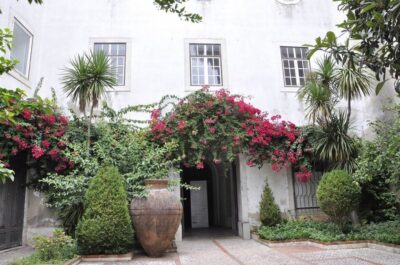
As you drive, your guide points out tiled façades and explains how colors, patterns, and techniques changed over time. You may see older decorative work alongside contemporary tile installations and newer buildings. This street-level introduction is one of the strongest parts of the experience because it teaches you what to notice later at the workshop and museum.
I like this approach better than starting with a long museum lecture. You see the tile first as part of daily life. Later, when you encounter a particular technique or pattern indoors, you already have a visual reference.
The quality of this part depends heavily on the person behind the wheel. A guide such as Nuno, Tiago, or Raquel can make the drive feel like a moving art lesson, answering questions about Portugal as well as tile. One poor experience involved a driver getting lost several times after problems with the navigation system, which shortened the museum visit. That appears to be an exception, but it is a useful reminder that timing and guide quality matter on a long private tour.
Azeitão workshop: from tile-making lesson to hands-on painting
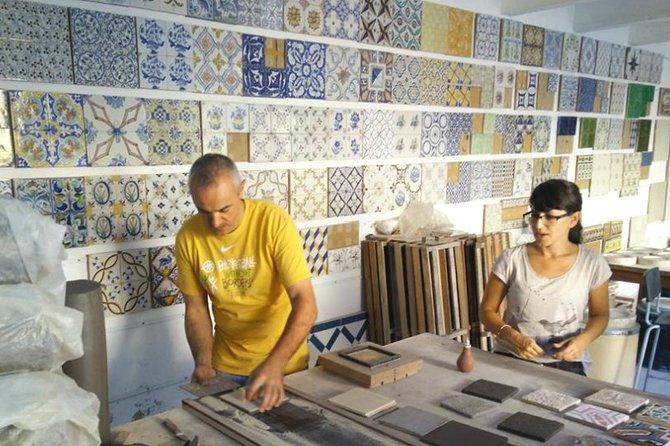
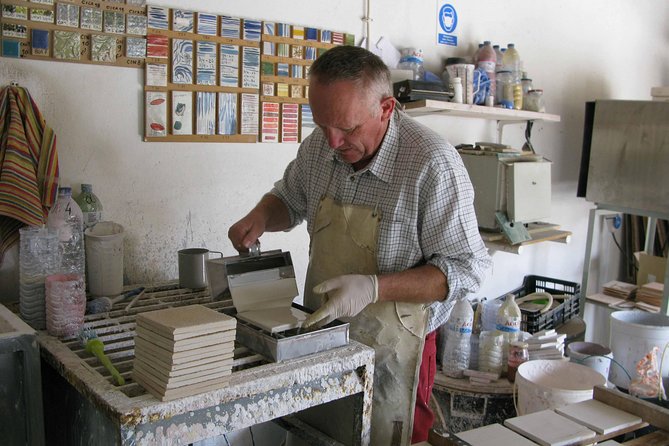
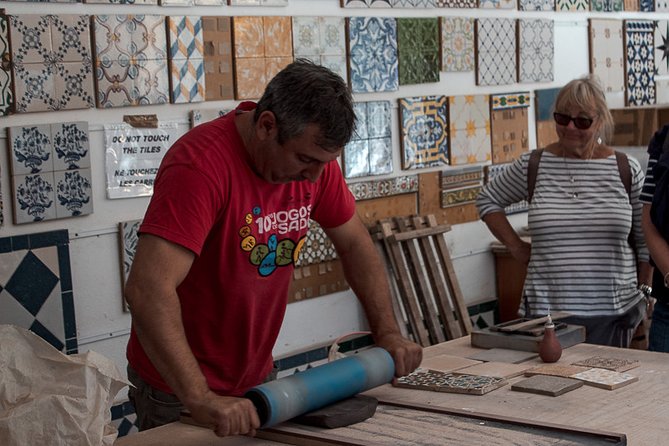
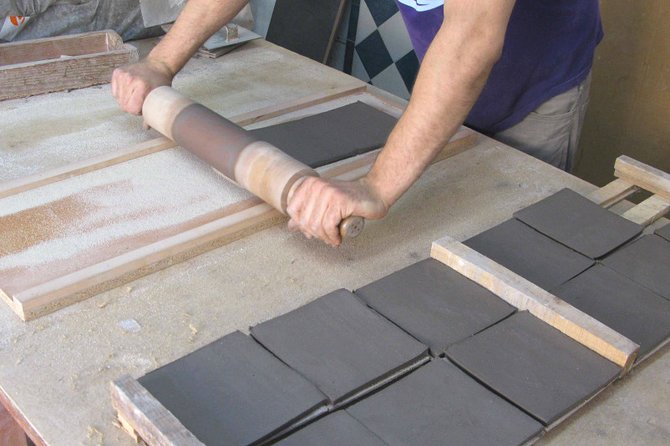
Azulejos de Azeitão is the practical heart of the day. You spend roughly two hours learning how tiles are made and seeing examples of different styles and techniques. The setting is a working tile facility rather than a polished museum, so expect an active craft space, not a formal exhibition hall.
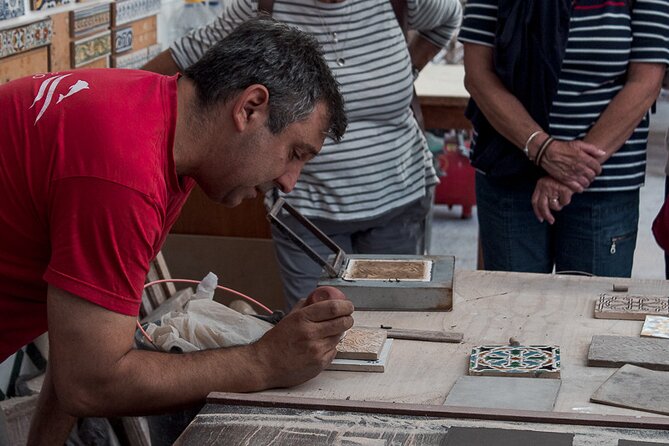
That working quality is part of the appeal. You can watch artisans at work and see how much labor goes into a small ceramic surface. The workshop staff explain the process, show examples, and then give you a tile to paint.
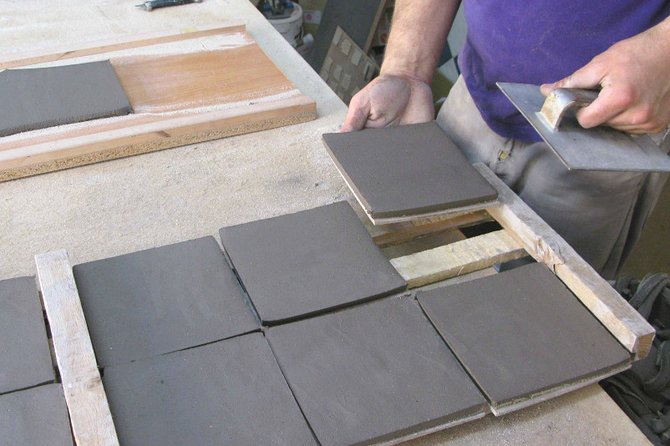
Here is one important distinction: you generally paint and glaze a prepared tile rather than make the clay tile from scratch. If you arrive expecting to mold, shape, and fire raw clay, reset your expectations. The creative part is decorating the surface, and that still gives you a clear sense of the craft.
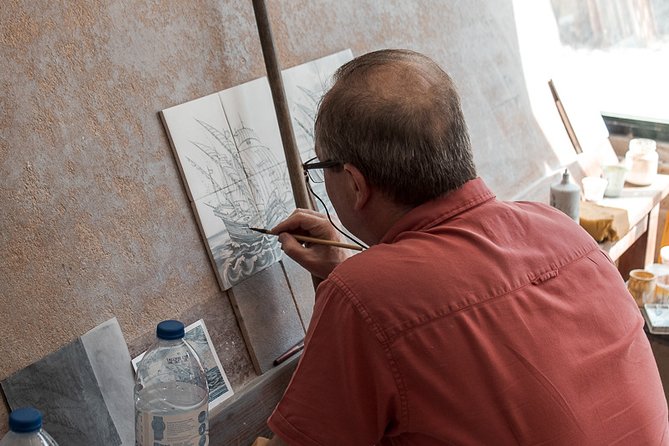
You may be offered a pattern to follow, with brushes and paint provided. Some people simply enjoy the included design. Others see more elaborate tiles at the workshop and decide to order a larger or more detailed piece. The staff have been described as helpful when visitors wanted a different design.
I would not worry too much about artistic skill. The activity is meant to be approachable, and several accounts describe pleasantly surprising results. Your guide may help explain what you are doing, but the amount of direct instruction can vary. If you want more help, ask early rather than waiting until your tile is half painted.
Afterward, the tile is fired. It can be sent to your hotel or home country, but the shipping details need care. One especially useful point is that delivery in Lisbon may require a hotel or another address with a front desk. A private rental without someone available to receive packages may not work.
The turnaround can be at least three days. Holiday periods, including Easter, can add delays. If you are leaving Portugal soon, ask the workshop about shipping before you begin. Sending the tile to the United States by FedEx may involve an additional fee. For a souvenir made by your own hand, the extra cost may be worthwhile, but it should not come as a surprise.
Lunch in Sesimbra, with the sea as your backdrop
After Azeitão, the day can continue to Sesimbra, a fishing village south of Lisbon. This gives the tour a welcome change of rhythm. You have spent the morning looking closely at small painted surfaces, then you get time by the water, a walk, and lunch.
The lunch itself is not included, so you pay separately. Guides have recommended seafood, including cuttlefish, and one account describes a restaurant overlooking the ocean. Another notes that a smaller restaurant might offer better value than a pricier seafood stop.
That flexibility is useful. You can choose a full meal, a lighter bite, or simply spend more time walking if you prefer. But you should budget for the stop and tell your guide what kind of meal suits you. You are not locked into one included menu.
Sesimbra also provides a good pause in an otherwise structured day. Families and couples may like the open air and slower pace. Solo visitors can ask the guide to join them for lunch, as one guide did, though that depends on the circumstances and is not a formal promise of the tour.
Weather can affect this section. If the day is cool or wet, the village may feel less inviting, and time outdoors will be limited. Still, the coastal stop helps keep the outing from becoming eight straight hours of indoor art.
Nearby in Lisbon, a different day entirely:
- Lisbon City Center Tour – The Unmissable Lisbon
★ 5.0 · 22,234 reviews - Lisbon: Sintra, Pena, Regaleira, Cabo da Roca & Cascais
★ 4.7 · 19,656 reviews - Sintra: Pena Palace and Park Entrance Ticket
★ 4.2 · 17,410 reviews - Lisbon: Jerónimos Monastery Entrance Ticket
★ 4.1 · 14,164 reviews
The National Tile Museum and Portugal’s long ceramic story
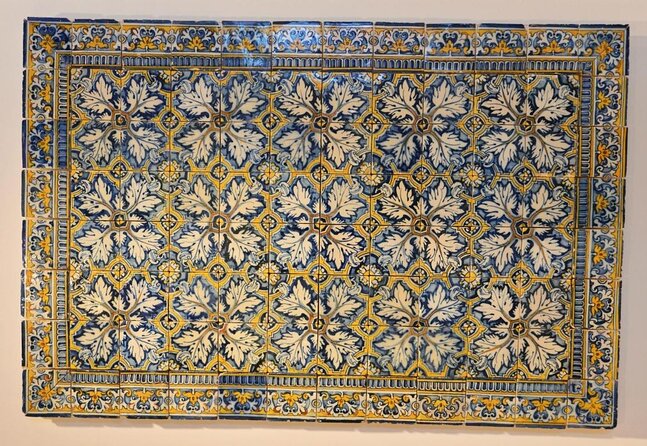
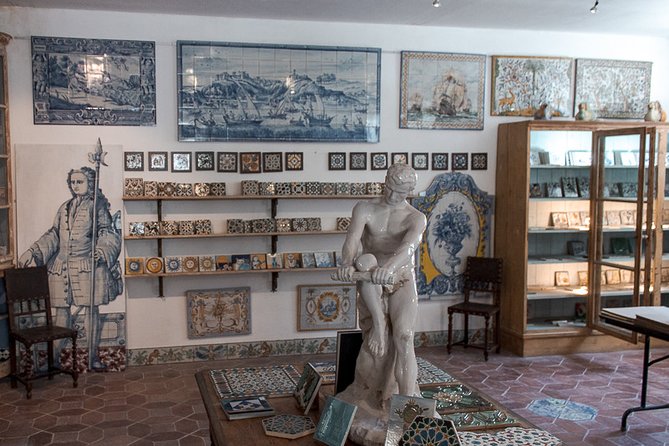
The National Tile Museum gives you the historical framework behind what you saw in Lisbon and Azeitão. The collection includes old and well-preserved Portuguese tiles, allowing you to follow the craft from its early influences through later Portuguese styles.
Your guide provides an introduction, then you have about an hour and a half to explore. This balance works well. A guide can point out techniques and explain why certain pieces matter, but you also need quiet time to look at the patterns yourself.
The museum is particularly valuable for anyone who has already spent the morning observing façades. You will recognize ideas more easily, and the sequence from street to workshop to museum gives the subject a clear shape. You are not just admiring blue-and-white panels. You are seeing how materials, design, religion, architecture, and outside influences shaped Portuguese decoration.
Some visitors found the guided portion a little fast in the oldest galleries, while still having enough time afterward to explore independently. If early tilework matters most to you, say so at the start. A private tour gives you a better chance of steering the emphasis.
There is also an important practical warning. The museum has sometimes closed temporarily for maintenance and improvement work. In that case, the provider has used Fronteira Palace as an alternative, where tile decoration remains a major part of the visit. Confirm the museum’s operating status before booking or shortly before departure, especially if the museum is the chief reason you want this experience.
How much value do you get for $102.12?
The stated price is $102.12 per person. For an eight-hour private experience, that includes hotel pickup and drop-off, a driver-guide, a local guide, WiFi in the van, bottled water, the workshop visit, and museum admission.
That package can represent solid value if you are traveling as a small group and want to combine several stops without arranging a rental car or public transport. The private format is the key. You are paying not only for admission, but also for a full day of transport and personal explanation.
Still, the price is not all-inclusive. Lunch and other food or drinks are extra. Shipping your painted tile is also separate, and home delivery can cost more than Lisbon delivery. Check the final booking total carefully, since one account reported a large difference between an initial displayed price and the amount eventually charged. The stated current price is the figure to use, but online pricing can change by date, group size, or booking conditions.
Group discounts may improve the value for several people traveling together. Solo visitors receive the benefit of a private guide but may find the per-person price harder to justify.
Who will enjoy this most?
I would choose this experience if you like art, craft, architecture, or local history and want more than a quick look at Lisbon’s tiled buildings. It also suits people who enjoy making something, even if they do not consider themselves artistic.
It is a good fit for:
- Couples who want a full day outside the usual city-center route
- Families with children old enough to take part in a careful painting activity
- Visitors fascinated by Portuguese architecture and decorative arts
- People who prefer private transport and flexible conversation
- Anyone who wants a physical souvenir rather than another shop purchase
It may not suit you if you want a fast, tightly timed sightseeing day or if you dislike spending time in a working craft facility. The workshop is hands-on, but you are painting a prepared tile, not completing every stage of ceramic production.
The tour is also less attractive if your budget is tight. You can see tile façades in Lisbon for little or no cost, and the museum can be visited separately. The extra money here buys transport, access to Azeitão, personal guidance, and the making of your own tile.
Practical advice for a smoother day
Contact the provider before the tour to confirm pickup. Some addresses cannot be reached directly, so you may need to walk to a nearby meeting point.
Wear comfortable clothing that allows you to work at a table for a while. The painting activity is not strenuous, but an eight-hour day with driving, walking, lunch, and museum time calls for practical shoes.
Ask these questions before setting out:
- Is the National Tile Museum open on your date?
- Is lunch planned in Sesimbra or Lisbon?
- How much does shipping cost?
- Can the finished tile be delivered to your accommodation?
- What happens if you leave Portugal before the tile is ready?
If you care most about the workshop, book early in your stay. That gives the tile more time to be fired and delivered. The experience is generally available in English, and children must be accompanied by an adult. Most people can take part, but the day still involves getting in and out of a van and moving through a museum.
Free cancellation is available if you cancel at least 24 hours before the start time. Changes or cancellations inside that window are not accepted for a refund.
Should you book this tile experience?
Book it if you want to understand why Lisbon’s tiles matter, not simply photograph them. The strongest combination is the street viewing in Lisbon, the Azeitão workshop, and the museum afterward. You see the craft in daily use, meet the making process, then place it in a historical setting.
I would especially recommend it to anyone who enjoyed the tile façades around Lisbon and found themselves asking how they were made. Guides such as Nuno and Raquel have brought extra art knowledge and local feeling to the day, though the experience can depend on the assigned guide and careful timing.
Skip it if you only want a short museum visit, if the listed cost strains your budget, or if you expect to make a ceramic object entirely from raw clay. For everyone else, this is a thoughtful way to spend a day beyond central Lisbon, with a handmade reminder of Portugal on its way home.
FAQ
How long does the Tiles and Tales experience last?
The advertised duration is approximately eight hours, with a stated 9:00 a.m. start. The exact finish can vary depending on traffic, lunch, workshop time, and museum hours.
What is included in the price?
The price includes a driver-guide, local guide, hotel pickup and drop-off, WiFi in the van, bottled water, the tile workshop visit, and admission to the National Tile Museum.
Is lunch included?
No. Food and drinks, including lunch, are not included. Lunch may be arranged in Sesimbra or Lisbon.
Can I paint my own tile?
Yes. At Azulejos de Azeitão, you learn about tile production and paint your own tile. The activity generally involves decorating a prepared tile rather than forming one from raw clay.
Can the finished tile be shipped home?
Yes. The tile can be shipped to your hotel or home country, but shipping costs may be extra. Lisbon delivery may require a hotel or another address with a front desk, and delivery can take at least three days.
Is the tour private?
Yes. Only your group participates in the private tour or activity.
What happens if the National Tile Museum is temporarily closed?
The museum has occasionally closed for maintenance and improvement work. In that situation, Fronteira Palace has been used as an alternative, so confirm the planned stop before your visit.
Fresh finds around Lisbon
- Lisbon: Tuk Tuk City Tour★ 3.6 · 7 reviews
- Fatima Full day Private Tour★ 5.0 · 7 reviews
- Lisbon: Highlights and Hidden Gems Tour★ 5.0 · 7 reviews
- Private Tour to Evora and Monsaraz from Lisbon★ 5.0 · 7 reviews
- Discover Sintra Beauty with a Guided Journey from Lisbon★ 5.0 · 7 reviews
- Nazaré: Beaches of Nazaré Guided E-Bike Tour★ 4.9 · 7 reviews
- Private Half-Day Tour to Sintra★ 3.4 · 7 reviews
- Lisbon: Sunset and Wine Catamaran Tour★ 5.0 · 7 reviews
Museums, compared.

Lisbon: Banksy Museum Permanent Exhibition Entry Ticket
Read our review →
Lisbon: Belem, Jeronimos Monastery, and Coach Museum Tour
Read our review →
Lisbon: MAAT Gallery and MAAT Central Entry Tickets
Read our review →

Lisbon SL Benfica Stadium & Museum Tour with Scarf
Read our review →
Lisbon: Customized Luz Stadium and Guided Museum Tour
Read our review →