
Reviewed · MUSEUMS
Lisbon: National Tile Museum Entry Ticket
The National Tile Museum is far more than a room full of blue-and-white squares. It occupies the former Madre de Deus Convent, where 15th-century tiles, a decorated church, a grand cloister, and carved giltwood interiors give the collection a proper setting. The top-floor Lisbon panorama is one of the best reasons to come.
I like the clear chronological route, which shows how Portuguese tile-making changed over the centuries. I also like the modest price, about $11 per person, especially since you get art, architecture, and a historic religious building in one visit. The main drawback is practical: this is a self-guided museum, and many individual pieces have limited labels, so an audio guide or your own reading can add a lot.
In This Review
- Key points at a glance
- Why the setting matters at Madre de Deus
- Beginning with how tiles are made
- Following the collection through the centuries
- The church, chapel, and convent interiors
- Saving the Lisbon panorama for last
- How long to allow and when to go
- Ticket value at about $11
- The café and gardens as part of the stop
- Who will enjoy this museum most
- Practical advice before you enter
- Should you book the National Tile Museum ticket?
- FAQ
- How much does admission to the National Tile Museum cost?
- How long is the ticket valid?
- What are the museum’s opening hours?
- Which days is the museum closed?
- Is this a skip-the-line ticket?
- Where do I enter?
- Is the museum wheelchair accessible?
- What should I bring?
Key points at a glance
- Tiles from the 15th century to today: Follow Portuguese azulejos through changing styles, colors, subjects, and techniques.
- A museum inside a former convent: The Madre de Deus setting is part of the experience, not just a container for the collection.
- The Lisbon panorama: Save time for the large tile display depicting Lisbon, one of the museum’s most memorable sights.
- More than azulejos: The collection also includes ceramics, porcelain, and faience from the 17th to the 21st century.
- A manageable visit: Most people should allow around 90 minutes, with extra time for the church, gardens, café, and gift shop.
- Plan around the hours: It opens Tuesday through Sunday, closes from 1:00 to 2:00 pm, and admits the last visitor at 5:30 pm.
Why the setting matters at Madre de Deus
The National Tile Museum was founded in 1965 and became a national museum in 1980. It now occupies the former Convent of Madre de Deus, founded by Queen D. Leonor in 1509.
That background changes the tone of the visit. You are not simply moving through white galleries with framed objects. You pass through an old religious complex shaped by several building campaigns, each adding another layer of art and decoration.
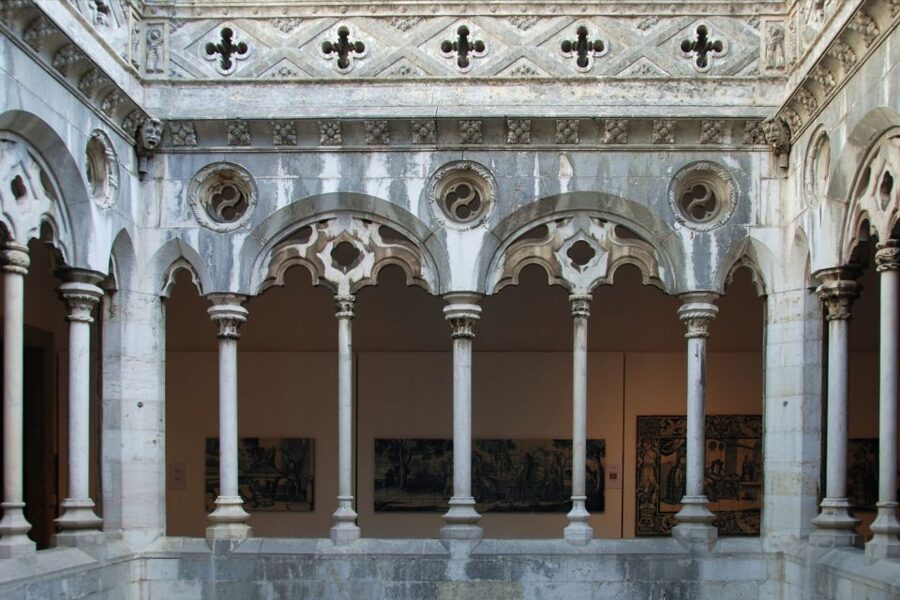
The 16th-century Mannerist cloister is an early highlight. Its orderly design gives you a quiet place to pause before the more crowded displays. The museum also includes the convent church, where painted and tiled decoration covers the interior in a way that is difficult to grasp from photographs alone.
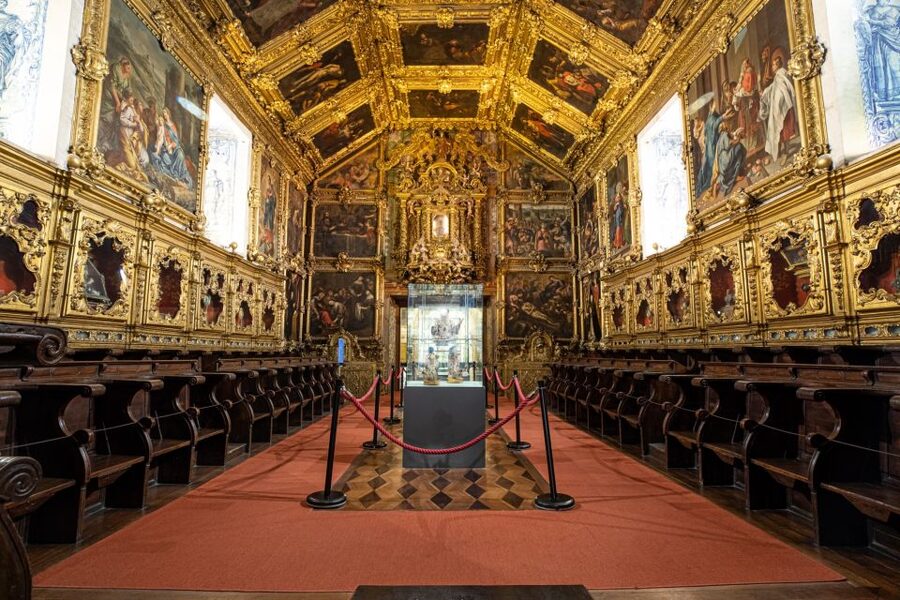
The sacristy adds another memorable room, with a Brazilian wood display cabinet and carved wood frames around paintings. The high choir carries elaborate carved giltwood decoration, while the Chapel of Saint Anthony has an 18th-century Baroque interior and paintings by André Gonçalves.
This is why I would not rush through in search of the tile displays alone. The architecture explains how decorative art worked in Portugal. Tiles were not merely souvenirs or small household details. In churches and convents, they helped shape the entire room.
A handful more Lisbon ideas to compare
- Lisbon: Luz Stadium Tour & SL Benfica Museum Ticket w/Scarf
★ 4.7 · 3,264 reviews - Lisbon: Banksy Museum Permanent Exhibition Entry Ticket
★ 4.7 · 506 reviews - Lisbon: Belem, Jeronimos Monastery, and Coach Museum Tour
★ 4.8 · 478 reviews
Beginning with how tiles are made
The permanent exhibition starts with the basic materials and techniques used to manufacture tiles. This is a smart beginning because it gives you a way to look at the objects that follow.
Instead of seeing only color and pattern, you can start noticing how the surface was built and how makers handled decoration. The route then proceeds in chronological order, making it easier to follow the changes from the late 15th century through the present.
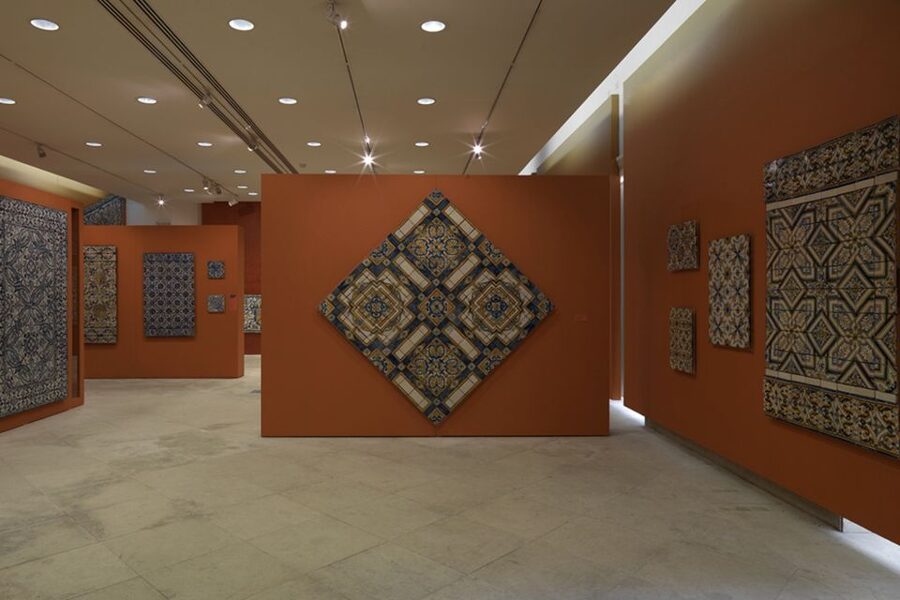
The displays cover traditional Portuguese tile work, but the museum also looks at related ceramics, porcelain, and faience from the 17th to the 21st century. That broader collection keeps the visit from feeling repetitive. You see how tile-making fits within Portugal’s wider ceramic tradition.
I would spend a few minutes at the opening section even if you are eager to reach the famous panels. It helps younger visitors and anyone new to azulejos understand what they are seeing. Two teenagers in one family found the museum more interesting than expected, which makes sense: the museum explains a practical craft before asking you to appreciate its artistic details.
Following the collection through the centuries
The chronological arrangement gives the museum its backbone. You move from early examples toward later styles, seeing how patterns and subjects changed over time.
The collection includes examples from the second half of the 15th century to the present day. That long span matters because Portuguese tiles are not one fixed style. The visual language changes across different periods, with shifts in color, subject, scale, and decoration.
The monarchy explanations are also easy to follow. If you enjoy connecting art to political and cultural periods, these short sections help you keep your place in the story of Portugal.
Some displays are large enough to read as scenes rather than isolated tiles. You may find religious subjects, decorative arrangements, and broad wall panels that show how tiles could turn an entire surface into a picture. The appeal is not only in each individual square. It is in the way repeated pieces form a larger image.
The museum’s weakness is that not every tile or panel has extensive information beside it. If you want detailed notes about every piece, you may find the labels too brief. An audio tour can help, but it requires downloading an app and using your own headphones. Bring them if you prefer guided context while moving at your own pace.
The church, chapel, and convent interiors
The church is one of the visit’s strongest surprises. Its decoration gives you a chance to see tiles working alongside paintings, carved wood, and gilded surfaces.
The Chapel of Saint Anthony is especially useful for understanding the Baroque taste of the 18th century. It is not a separate attraction with its own ticket. It is part of the museum, so build enough time into your visit to look closely rather than treating it as a quick passage between galleries.
The high choir adds another change of pace. Its carved giltwood decoration is more visually heavy than the clean lines of the cloister, and it shows how much ornament the former convent contains.
The sacristy is worth noting for its Brazilian wood cabinet and carved frames. These details broaden the visit beyond azulejos and show how objects, furniture, paintings, and architecture were combined in religious spaces.
Some displays may strike you as unusual, especially if you are expecting only a straightforward tile collection. That is part of the museum’s character. It feels like a historic building still carrying traces of its earlier purpose, not a modern gallery stripped of context.
Nearby in Lisbon, a different day entirely:
- Lisbon City Center Tour – The Unmissable Lisbon
★ 5.0 · 22,234 reviews - Lisbon: Sintra, Pena, Regaleira, Cabo da Roca & Cascais
★ 4.7 · 19,656 reviews - Sintra: Pena Palace and Park Entrance Ticket
★ 4.2 · 17,410 reviews - Lisbon: Jerónimos Monastery Entrance Ticket
★ 4.1 · 14,164 reviews
Saving the Lisbon panorama for last
The large Lisbon city display on the top floor is a practical reason to follow the route rather than wandering randomly. Set aside time for it near the end.
It gives you a broad view of how tile panels can record a place. The scale is important. After studying individual examples and smaller arrangements, you finally see an extensive scene built from ceramic pieces.
I would not make this a rushed final glance just before closing. The panorama is one of the museum’s most praised features, and it rewards a little time to examine the many scenes and details. If you are interested in Lisbon’s past, it may be the part that stays with you after the smaller displays begin to blur together.
How long to allow and when to go
The ticket is valid for one day, but this is not a guided tour with a fixed duration. You enter at the main entrance, show your ticket on arrival, and explore at your own pace.
Allow about one and a half hours for the museum itself. Add time if you want to sit in the café, visit the gardens, browse the shop, or study the church and panorama carefully. You can make it a brisk visit, but doing so would reduce the value of the ticket.
Opening hours are Tuesday through Sunday, from 10:00 am to 1:00 pm and from 2:00 pm to 6:00 pm. Last entry is at 5:30 pm. The midday closure matters, so do not arrive at 1:15 pm expecting to walk straight in.
The museum closes on January 1, Easter Sunday, May 1, June 13, and December 25. Check the available starting times before booking, even though the ticket itself is valid for one day.
A morning visit gives you the longest uninterrupted stretch before the midday closure. If you arrive later, make sure you enter by 5:30 pm and leave enough time for the upper-floor panorama.
Ticket value at about $11
At around $11 per person, this is good value if you have an interest in art, design, architecture, or Portuguese culture. You get access to a collection covering more than five centuries, plus a former convent, church, chapel, cloister, gardens, and café.
The value is even better on a rainy day. The museum gives you several indoor rooms and a clear route, so you are not trying to force sightseeing between showers.
It is less essential if your Lisbon plans are already packed with major historic sites and you have little interest in decorative art. The museum is not a quick photo stop. Its rewards come from looking, reading, and noticing how the building and collection fit together.
The ticket is described as non-refundable. Also, the ticket information does not include skip-the-line entry, so I would not book it solely to avoid a queue. Some booking experiences may have allowed faster entry, but you should rely on the stated terms and expect to show your ticket at the main entrance.
The café and gardens as part of the stop
The on-site café is a useful part of the plan, not just an afterthought. You can use it to pause after the galleries, and the garden seating gives you a calmer setting after the dense decoration inside.
One practical tip is to consider eating before the museum if you are visiting at a busy time. The café can fill up, and stopping first may make the visit easier if you need lunch or a drink before exploring.
The gardens also help break up the visual intensity of the interiors. After rooms filled with tiles, paintings, carved wood, and gilding, a quieter outdoor space gives your eyes a rest.
Bring water and wear comfortable shoes. The museum is accessible for wheelchair users, but you should still plan for a building with historic interiors and several distinct areas.
Who will enjoy this museum most
I would recommend this ticket to:
- Anyone curious about Portugal’s azulejo tradition
- Art and architecture lovers
- Families with older children or teenagers
- Visitors looking for a rainy-day activity
- People who enjoy historic religious buildings
- Anyone who wants a quieter cultural stop away from Lisbon’s busiest sights
You do not need to arrive as a tile expert. The opening section introduces the materials and methods, and the chronological route gives you a simple structure to follow.
If you want a fully guided experience, this ticket may feel limited. There is no named guide included, and the audio option requires your own device and headphones. If you prefer wandering freely, that lack of a guide is an advantage.
Practical advice before you enter
Take a passport or ID card, as identification may be requested. Bring a camera, water, comfortable shoes, and comfortable clothing.
Enter through the main entrance and show your ticket on arrival. The activity ends back at the same meeting point because there is no separate transport or guided route.
Take your time in the church and chapel, not just the main tile galleries. Look for the transitions between materials: ceramic beside painted canvas, gilded carving near patterned walls, and furniture set against the convent’s older structure.
If you use the audio tour, download the required app before arriving and bring your own headphones. Without it, you can still follow the collection, but some objects may offer less explanation than you want.
Should you book the National Tile Museum ticket?
Yes, if you want a reasonably priced cultural stop that combines Portuguese tile-making with a historic convent and decorated church. The Lisbon panorama, cloister, and Baroque chapel make this much more varied than the name suggests.
Book it if you can spare around 90 minutes, especially on a rainy day or during a slower afternoon. Skip it only if your schedule is extremely tight or if self-guided museums rarely hold your attention.
The ticket is simple, accessible, and good value. Just plan around the midday closure, do not assume it guarantees skip-the-line access, and bring headphones if you want extra help with the story.
FAQ
How much does admission to the National Tile Museum cost?
The entry ticket costs $11 per person.
How long is the ticket valid?
The ticket is valid for one day. Check availability for the starting times offered when you book.
What are the museum’s opening hours?
The museum is open Tuesday through Sunday from 10:00 am to 1:00 pm and from 2:00 pm to 6:00 pm. Last entry is at 5:30 pm.
Which days is the museum closed?
The museum is closed on January 1, Easter Sunday, May 1, June 13, and December 25.
Is this a skip-the-line ticket?
No. The ticket information specifically says it is not a skip-the-line entry ticket, so you should not count on priority access.
Where do I enter?
Enter through the main entrance of the National Tile Museum and show your ticket on arrival. The activity ends back at the meeting point.
Is the museum wheelchair accessible?
Yes, the activity is listed as wheelchair accessible.
What should I bring?
Bring a passport or ID card, comfortable shoes, a camera, water, and comfortable clothes. If you want to use the audio tour, bring your own headphones because the audio option requires an app and personal headphones.
Fresh finds around Lisbon
- Sanctuary of Fátima and Coimbra City Tour★ 4.5 · 51 reviews
- Sintra/Lisbon: Sintra & Quinta da Regaleira Tour with Ticket★ 4.4 · 51 reviews
- Jeronimos Monastery Guided Tour – Small Groups – Tickets Included★ 5.0 · 51 reviews
- Lisbon: Private Christmas Lights Tour by Eco Tuk Tuk★ 4.9 · 51 reviews
- Peniche: Berlengas Island Catamaran Tour – Round Trip★ 4.6 · 51 reviews
- Half day Spa Water Therapy experience at THE SPA at Corinthia Lisbon★ 4.5 · 51 reviews
- Lisbon: Private Tuk-Tuk Tour for 2 hours★ 4.7 · 51 reviews
- Premium Lisbon Airport Transfer to Lisbon★ 5.0 · 51 reviews
Museums, compared.

Lisbon: Banksy Museum Permanent Exhibition Entry Ticket
Read our review →
Lisbon: Belem, Jeronimos Monastery, and Coach Museum Tour
Read our review →
Lisbon: MAAT Gallery and MAAT Central Entry Tickets
Read our review →

Lisbon SL Benfica Stadium & Museum Tour with Scarf
Read our review →
Lisbon: Customized Luz Stadium and Guided Museum Tour
Read our review →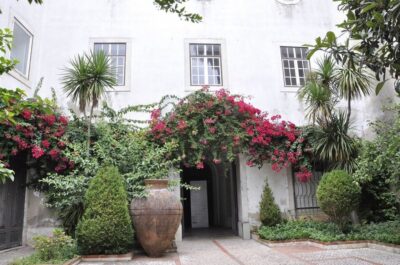
Lisbon: National Tile Museum E-Ticket & Audio Guide
Read our review →
Browse the lists this tour appears in