Reviewed · TOURS
Lisbon: Highlights and Hidden Gems Tour
Lisbon’s past is written into its streets on this 2.5-hour walk. You move from Graça and São Vicente to the Castle area and down to Praça do Comércio, passing Roman remains, Moorish walls, dictatorship-era history, and damage from the 1755 earthquake along the way.
I like the small group of no more than eight, which makes it easier to follow a guide into tight old lanes and ask questions. I also like the way the tour connects famous sights with less obvious details, including a buried street, old workers’ housing, and a portrait of Fado singer Amália Rodrigues.
The main drawback is that this is a history-led walking tour, not a broad introduction to modern Lisbon. You will walk for about two and a half hours over hilly, uneven streets, so comfortable shoes are essential. It is not suitable for wheelchair users, people with mobility impairments, or children under five.
In This Review
- Five details that shape the experience
- Graça begins the story above Lisbon
- São Vicente monastery and royal connections
- Amália Rodrigues appears in street art
- The Castle area reveals medieval Lisbon
- Roman ruins and Lisbon before Portugal
- A prison and the harder chapters of Lisbon
- The 1755 earthquake is visible in the streets
- Baixa leads to Praça do Comércio
- Why the small group matters
- What $40 buys you in Lisbon
- Who should book this walk?
- Should you book the Lisbon Highlights and Hidden Gems Tour?
- FAQ
- Where does the Lisbon Highlights and Hidden Gems Tour start?
- Where does the tour end?
- How long does the tour last?
- What languages is the tour offered in?
- How large is the group?
- What food or drink is included?
- Is the tour suitable for wheelchair users?
- Is the tour suitable for young children?
- Can I cancel for a full refund?
Five details that shape the experience
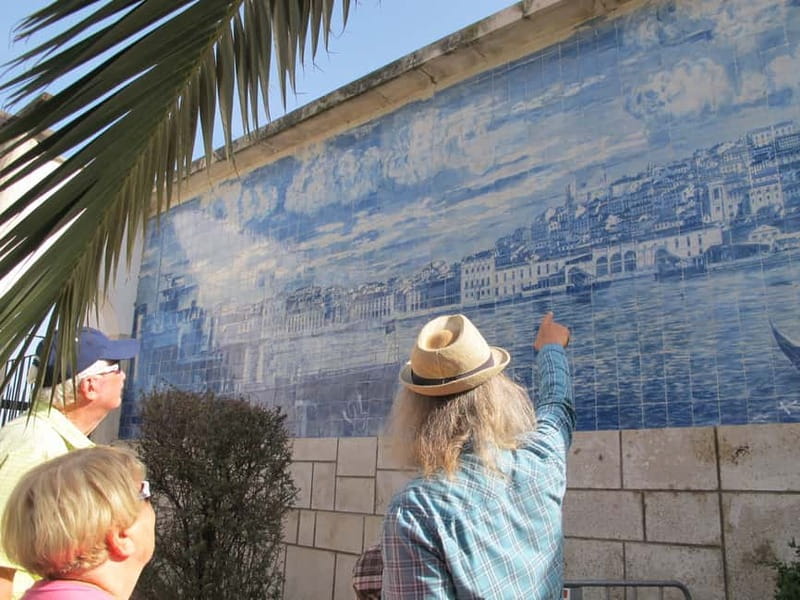
- A 3,000-year story: Follow Lisbon from Celtic, Roman, Visigothic, and Arab periods into the age of Portuguese explorers and the modern city.
- Peter’s personal guiding style: Expect a well-organized, history-focused walk led in English or French.
- A small group of eight or fewer: The format suits questions, close-up views, and narrow streets.
- Earthquake evidence in Baixa: See a buried street and buildings designed to resist future earthquakes.
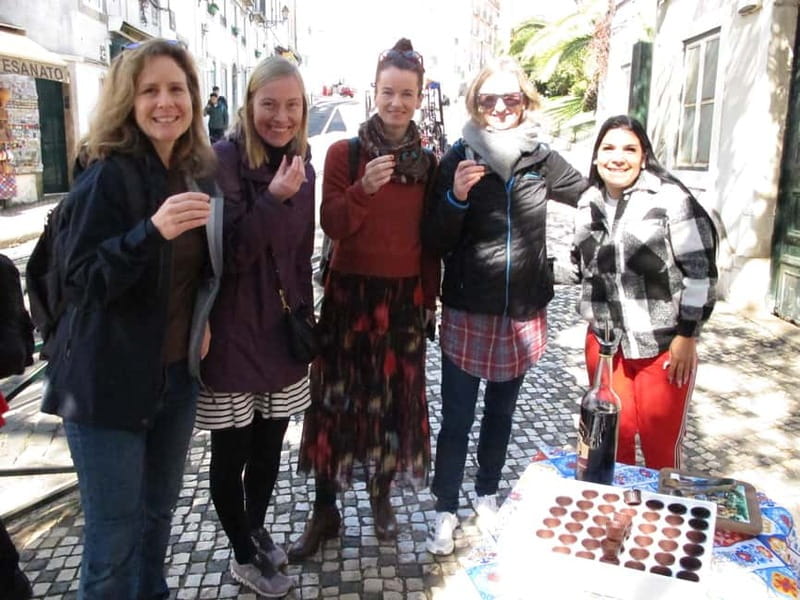
- A local taste at the end: Choose a pastel de nata or a small glass of ginjinha, Lisbon’s cherry liqueur.
Graça begins the story above Lisbon
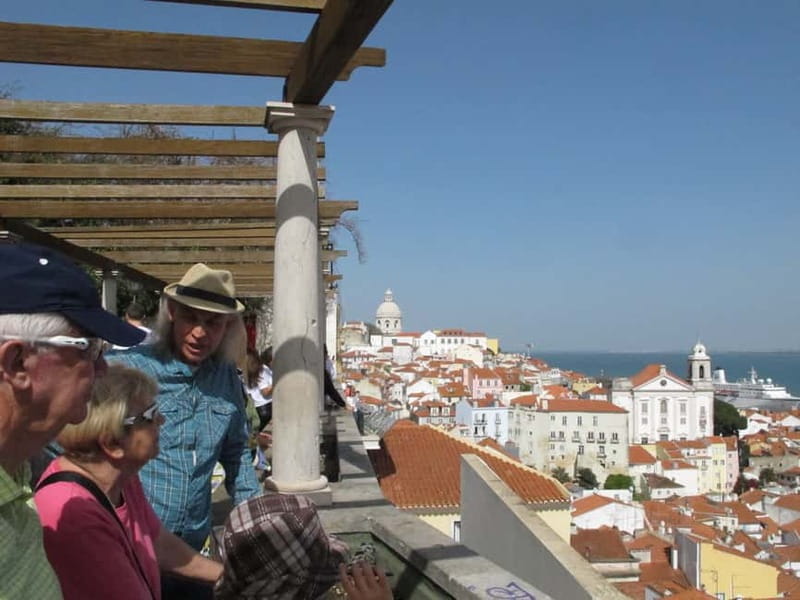
The tour starts in or near the Graça area, though the exact meeting point depends on the option you book. This is a useful starting place because Graça gives you more than postcard views. You begin among old streets, a church, and former workers’ housing, with the city’s everyday past placed beside its grander monuments.
I like this opening because it sets the tone early. You are not simply being marched from one famous building to another. The walk asks how people lived, worked, worshipped, and rebuilt their city.
Graça also helps explain Lisbon’s layered character. The city was not made in one period. Its streets carry traces of several peoples and powers, and the guide links those periods rather than treating them as separate facts to memorize.
Peter leads the walk in English or French. The most useful thing to expect from him is structure. The route covers a lot of ground and a large amount of history, so a clear guide matters. You will hear stories about Lisbon and its inhabitants as the walk moves from one district to the next.
A handful more Lisbon ideas to compare
- Lisbon City Center Tour – The Unmissable Lisbon
★ 5.0 · 22,234 reviews - Lisbon: Sintra, Pena, Regaleira, Cabo da Roca & Cascais
★ 4.7 · 19,656 reviews - Lisbon: Jerónimos Monastery Entrance Ticket
★ 4.1 · 14,164 reviews
São Vicente monastery and royal connections
From Graça, the route continues toward São Vicente monastery. The monastery is an important stop for understanding Portugal’s religious and royal past. The Portuguese royal family is buried here, as is the Queen of England identified in the tour description.
This is not just a quick exterior glance. The monastery gives the history a human scale. Royal power, religious life, burial customs, and national identity all meet in one place.
The tour does not present Lisbon as a collection of isolated monuments. Instead, you hear how different eras shaped the city and how Portugal’s rulers and residents fit into that story. That approach is particularly useful if this is your first visit and you want a framework for later sightseeing.
Keep in mind that the experience is primarily a walking and storytelling tour. The supplied details do not promise admission to every interior or a long visit inside each monument, so you should think of São Vicente as one part of a moving historical route rather than a stand-alone monastery visit.
Amália Rodrigues appears in street art
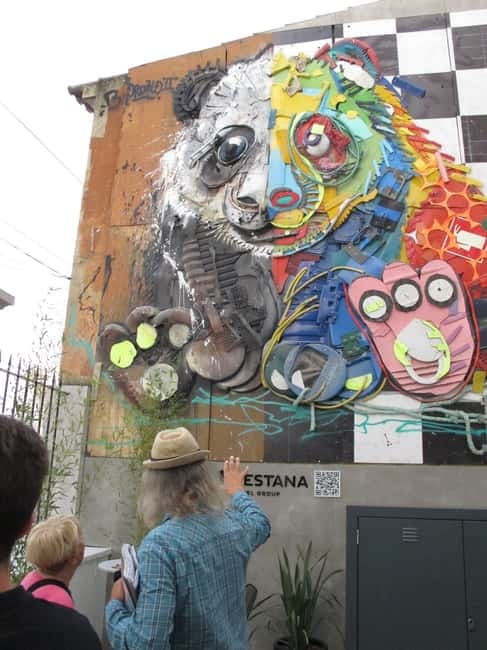
As you walk, the city’s walls become part of the tour. One notable piece is a portrait of Amália Rodrigues, the famous Fado singer. It adds a modern cultural note to a route otherwise filled with churches, walls, ruins, and royal history.
I like this contrast. Lisbon’s story does not end with medieval kings or the earthquake. Street art and Fado show how the city continues to express its identity in public spaces.
The artwork also gives you a break from dates and dynasties. A good walking tour needs that change of pace. You may be listening to a story about an old monastery one moment and looking at a large portrait connected to Portuguese music the next.
The route’s street art is not presented as a separate art tour. It works as a bridge between old Lisbon and the city you see today. If your main goal is galleries, design studios, or a long survey of contemporary art, this will not be enough. If you like seeing modern details woven into a historical walk, it is a useful touch.
The Castle area reveals medieval Lisbon
The route then heads into the Castle area, where Lisbon’s medieval character becomes more visible. You see sections of the old city walls, along with the Cathedral and its stables.
The walls help you picture the shape of the old settlement. They are not merely stone backdrops for photographs. They show how the city was protected and how important the Castle area was to Lisbon’s development.
The Cathedral adds another layer to the story. Its presence beside older defensive remains helps show how religious and military power shared the same urban core. The stables are a smaller detail, but they fit the tour’s broader aim: to point out how people used these historic spaces, not just what the buildings look like.
You should expect some uphill walking and uneven surfaces in this part of Lisbon. The tour is not suitable for people with mobility impairments, and that limitation matters here. Wear shoes with firm soles, and do not plan this as a relaxed stroll on flat pavement.
Nearby in Lisbon, a different day entirely:
- Sintra: Pena Palace and Park Entrance Ticket
★ 4.2 · 17,410 reviews - Lisbon: History, Stories and Lifestyle Walking Tour
★ 4.8 · 10,902 reviews - Lisbon: Sunset Boat Party Cruise with DJ and Open Bar
★ 4.5 · 10,378 reviews - Lisbon: Pena Palace, Sintra, Cabo da Roca, & Cascais Daytrip
★ 4.7 · 9,981 reviews
Roman ruins and Lisbon before Portugal
One of the strongest parts of the route is its long timeline. You hear about Celts, Romans, Visigoths, Arabs, and Portuguese people, with each period adding something to the city’s shape and character.
The Roman theatre ruins are a key stop. They remind you that Lisbon was an important settlement long before Portugal became the country you know today. Seeing Roman remains in the middle of the modern city makes the timeline easier to grasp than a list of names in a guidebook.
The walk also covers Moorish walls. These remains help explain the influence of Arab rule on Lisbon and make the Castle area feel less like a single medieval chapter. The city was repeatedly changed by new rulers, new building methods, and new needs.
I would choose this tour if you enjoy understanding why a city looks the way it does. Peter’s approach is especially suited to history-minded visitors. One earlier guest described the tour as almost entirely history-based, which is a useful warning for anyone seeking food markets, shopping, nightlife, or a modern city overview.
A prison and the harder chapters of Lisbon
The route does not limit itself to celebrated monuments. You also see a prison linked to Portugal’s dictatorship. This is an important inclusion because Lisbon’s past includes political repression as well as exploration, royal ceremony, and religious power.
The stop gives the tour a more serious tone. It reminds you that historic streets are not only scenes of beauty. They also held people who lost their freedom and communities shaped by political change.
The supplied details do not identify the prison by name or provide a long account of its interior, so you should expect context from the guide rather than a full museum visit. Still, the stop broadens the story and prevents the walk from becoming a parade of triumphs.
This is another reason to book early in your Lisbon stay if you want help planning the rest of your visit. The tour gives you a basic map of the city’s major historical forces, from ancient settlement to dictatorship and recovery.
The 1755 earthquake is visible in the streets
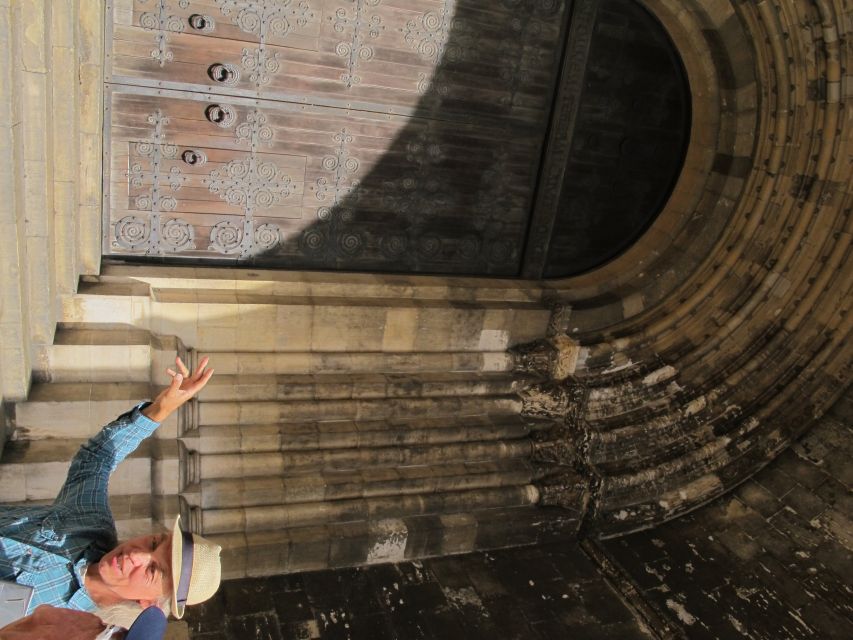
Lisbon’s 1755 earthquake is one of the tour’s central subjects. You see damage from the disaster, including a buried street. That physical evidence makes the event far easier to understand than a brief mention in a history book.
The earthquake reshaped Lisbon in both physical and political ways. As the walk continues into Baixa, you see buildings designed with earthquake resistance in mind. This turns architecture into evidence of recovery and planning.
I find this section particularly useful because it explains why parts of central Lisbon feel so different from the older Castle district. The contrast is not accidental. Baixa was rebuilt after the earthquake with a more ordered street plan and construction methods meant to reduce future destruction.
The buried street is the sort of detail that can be easy to miss on your own. It is not necessarily a grand monument, but it gives the disaster a direct, almost unsettling presence. You see how an old city can remain physically present beneath the one built afterward.
Baixa leads to Praça do Comércio
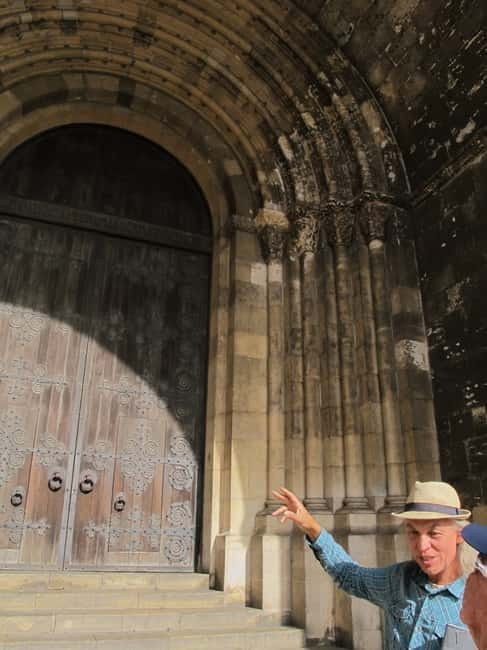
The route finishes at Praça do Comércio, one of Lisbon’s grandest public squares. The square occupies the former site of the Royal Palace, so the final stop brings together royal power, urban rebuilding, and the city’s relationship with the riverfront.
You learn what happened here over the centuries and what the statues represent. That explanation matters because a large European square can otherwise become just a place for photographs and a coffee stop.
The ending is well chosen. After starting among older neighborhoods and moving through Roman, Moorish, medieval, royal, and earthquake-related history, you finish in a space that represents Lisbon’s rebuilt center.
The activity information says the tour ends back at the meeting point, so confirm the precise arrangement for your selected option when booking. The listed meeting point may vary by option. Do not assume the route ends at the exact place where you began without checking those details.
Why the small group matters
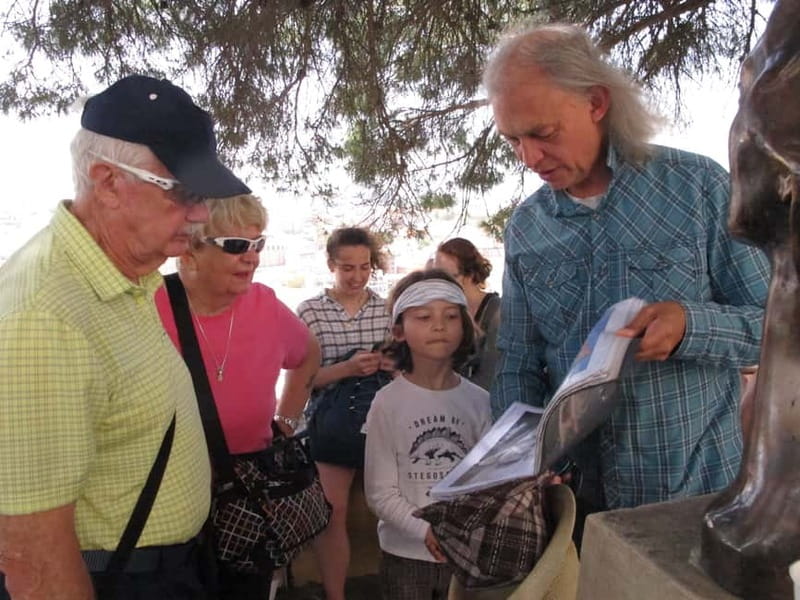
The group is limited to eight participants. That is a meaningful advantage on a route through old Lisbon, where narrow streets and compact historic spaces can make a large group awkward.
A small group also changes the feel of the guiding. You can ask Peter to explain a detail, clarify a date, or connect one stop with something you noticed earlier. The format is less anonymous than a large city walk.
The duration is listed as two and a half hours, though the tour has also taken close to three hours in practice. Plan your schedule with a little breathing room, particularly if you have a timed meal or museum booking afterward.
The pace will suit you best if you are happy to keep walking while listening. This is not a hop-on, hop-off experience, and there is no transport between districts included in the supplied details.
What $40 buys you in Lisbon
At $40 per person, this tour sits in a reasonable range for a small-group city walk, especially because the group is capped at eight and the route covers several historic districts.
The value comes from the connections. You are not paying only to see the Cathedral, the Castle walls, or Praça do Comércio. You are paying for a guide to link those places into a single story and point out details you could easily pass without noticing.
A pastel de nata or ginjinha is included. The pastel de nata gives you a classic Portuguese cream tart, while ginjinha is a cherry liqueur associated with Lisbon. You choose one rather than receiving both, so do not expect a full food tour or several tastings.
The price will make the most sense for you if history is a main reason for visiting Lisbon. If you want a culinary tour, extensive interior visits, or a focus on contemporary neighborhoods, another activity may offer better value.
Who should book this walk?
I would recommend it to first-time Lisbon visitors who want a clear introduction to the city’s past. It also suits returning visitors who have seen the headline sights but want more context for the Castle district, earthquake rebuilding, and old neighborhood streets.
The tour is a good fit for:
- History fans who enjoy long timelines and political change
- Visitors who prefer small groups and direct questions
- People interested in Roman, Moorish, medieval, royal, and earthquake-era Lisbon
- Anyone who wants to see street art alongside historic buildings
- English or French speakers comfortable with a long city walk
I would hesitate if you need step-free access, have trouble with hills or uneven pavement, or want a relaxed route with frequent breaks. It is also not designed for children under five.
Book it near the beginning of your stay if possible. The walk can help you understand how Graça, the Castle area, Baixa, and Praça do Comércio relate to one another. You will then have better context for exploring those districts on your own.
Should you book the Lisbon Highlights and Hidden Gems Tour?
Book this tour if you want Lisbon explained through places that span thousands of years, from Roman ruins and Moorish walls to earthquake repairs and modern street art. Peter’s organized, history-first approach and the eight-person limit make it a strong choice for curious walkers who prefer substance over a quick checklist.
Skip it if your priority is food, nightlife, shopping, or a flat and easy route. At $40, the tour is good value for the right audience, but its value depends on enjoying history and walking. Bring sturdy shoes, allow close to three hours, and choose the pastel de nata or ginjinha as a small, fitting finish to a serious and rewarding city introduction.
FAQ
Where does the Lisbon Highlights and Hidden Gems Tour start?
The meeting point may vary depending on the option you book. Check the details for your selected option before setting out.
Where does the tour end?
The activity ends back at the meeting point.
How long does the tour last?
The listed duration is two and a half hours. One account of the experience describes spending three hours on the walk, so allow some extra time in your schedule.
What languages is the tour offered in?
The live guide offers the tour in English or French.
How large is the group?
The tour is limited to eight participants.
What food or drink is included?
You can choose either a pastel de nata, a Portuguese cream tart, or ginjinha, a cherry liqueur.
Is the tour suitable for wheelchair users?
No. The tour is not suitable for wheelchair users or people with mobility impairments.
Is the tour suitable for young children?
The tour is not suitable for children under five years old.
Can I cancel for a full refund?
Yes. You can cancel up to 24 hours in advance for a full refund. You can also reserve now and pay later.
Fresh finds around Lisbon
- Lisbon: Tuk Tuk City Tour★ 3.6 · 7 reviews
- Fatima Full day Private Tour★ 5.0 · 7 reviews
- Private Tour to Evora and Monsaraz from Lisbon★ 5.0 · 7 reviews
- Discover Sintra Beauty with a Guided Journey from Lisbon★ 5.0 · 7 reviews
- Private Half-Day Tour to Sintra★ 3.4 · 7 reviews
- Lisbon: Sunset and Wine Catamaran Tour★ 5.0 · 7 reviews
- Nazaré: Beaches of Nazaré Guided E-Bike Tour★ 4.9 · 7 reviews
- From Lisbon: Évora Private Historic Discovery Tour★ 4.7 · 7 reviews
Tours, compared.
Lisbon City Center Tour – The Unmissable Lisbon
Read our review →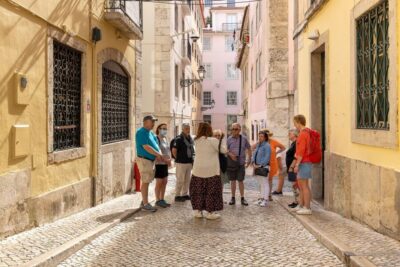
Lisbon: History, Stories and Lifestyle Walking Tour
Read our review →
True 4Hour Private Tuk Tuk Tour: Discover Lisbon with a Local!
Read our review →
Winner 2025 Undiscovered Lisbon Food & Wine Tour by Eating Europe
Read our review →
Lisbon: Sintra, Pena, Cabo da Roca, Cascais Tour with Pickup
Read our review →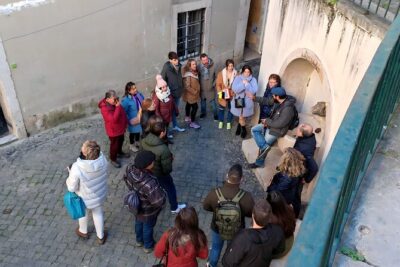

Best of Lisbon Small-Group Guided Walking Tour
Read our review →