
Reviewed · MUSEUMS
Lisbon: National Tile Museum E-Ticket & Audio Guide
Lisbon’s National Tile Museum turns a familiar city decoration into a full story about Portugal. Inside, you’ll see the famous Mickey Mouse tile panel, diamond patterns, Mudéjar designs, and the graceful Dona Leonor Chapel, all tied to the country’s long tile-making tradition.
I like the freedom to move at my own pace, and I like having the audio guide available offline, so you do not need a live guide or a constant internet connection. The main drawback is that the app’s narration may not follow the museum route in a clear order, and some visitors found themselves skipping ahead to match the room they were viewing.
In This Review
- Key points to know before you go
- Why Lisbon’s tile museum deserves your time
- Arriving with the $16 e-ticket
- Getting the audio guide ready
- Starting with Portugal’s tile-making story
- Reading the Mudéjar-patterned tiles
- The Dona Leonor Chapel and the museum’s sense of place
- The Mickey Mouse panel and other memorable displays
- Courtyard, café area, and a useful pause
- How much time should you allow?
- Accessibility and practical limits
- Is the audio guide worth using?
- Cancellation, booking, and value
- Who should book the National Tile Museum ticket?
- FAQ
- How much does the National Tile Museum ticket cost?
- How long does the visit take?
- Is the audio guide included?
- Do I need to bring a phone and headphones?
- Can I cancel the booking?
- Is the museum wheelchair accessible?
- Should you book it?
Key points to know before you go
- The Mickey Mouse panel gives the museum a playful surprise: It is one of the most memorable pieces in a collection that otherwise reaches back through centuries of religious and decorative art.
- The Dona Leonor Chapel is a major highlight: Its tiles and setting give you a better sense of how tilework functioned in historic Portuguese interiors.
- You receive an English audio guide for your smartphone: Download the app and content before arrival, then listen at your own pace.
- The ticket costs $16 per adult: That price includes museum entry, skip-the-line service, offline maps, text, and audio narration.
- Plan for roughly one to two hours: You can move quickly, but the audio content and detailed displays may tempt you to stay longer.
- The guide needs a modern phone: Allow about 100 to 150 MB of storage, and bring your own headphones.
Why Lisbon’s tile museum deserves your time

Lisbon’s patterned façades can make tiles seem like decoration alone. The National Tile Museum shows you that they are also records of religion, trade, taste, technology, and daily life.
The museum traces Portugal’s tile industry from its medieval past through later periods and into the modern day. You are not simply looking at isolated squares of painted ceramic. You are seeing how designs changed, how outside influences reached Portugal, and how tilework became part of the country’s visual identity.
That makes this a useful stop early in a Lisbon visit. Afterward, you will look at tiled churches, house fronts, railway stations, and stairways with a sharper eye. Even if you know little about ceramics, the displays give you a way to read the city’s surfaces.
The visit is self-guided, which suits the museum well. You can spend a few minutes on a large panel, pause for a closer look, or skip a section if the audio is moving too slowly. The tradeoff is that you must manage your own route and phone.
A handful more Lisbon ideas to compare
- Lisbon: Luz Stadium Tour & SL Benfica Museum Ticket w/Scarf
★ 4.7 · 3,264 reviews - Lisbon: National Tile Museum Entry Ticket
★ 4.6 · 868 reviews - Lisbon: Banksy Museum Permanent Exhibition Entry Ticket
★ 4.7 · 506 reviews
Arriving with the $16 e-ticket
The adult ticket costs $16 per person and includes entry to the National Tile Museum, skip-the-line service, and an English audio guide. For a museum visit lasting one to two hours, that is a reasonable price if you plan to use the narration and want the convenience of arranging admission ahead of time.
The ticket is especially useful if you dislike dealing with an admission desk in an unfamiliar city. Your ticket arrives by email, and the instructions explain how to download the app and audio content. Check your spam folder if the message does not appear promptly.
Do not treat skip-the-line access as a guarantee of instant entry. The information for this activity warns that long queues can still form at the entrance, so you may need to wait. Free and reduced-price tickets must be obtained at the museum and do not receive skip-the-line privileges.
Children up to 12 years old enter free. Since the booking is made per device rather than per participant, think about how many phones will actually be used for the audio guide. If two people plan to listen separately, you should account for the device requirement when booking.
Getting the audio guide ready
The audio guide works through an app on your own phone. You need an Android device running version 5.0 or later, or an iPhone with a supported iOS system. It does not work with Windows Phones, iPhone 5 or 5C and older models, several older iPads, or the first-generation iPad Mini.
Set aside about 100 to 150 MB of storage before downloading the content. I would also download everything before leaving your accommodation, rather than trying to sort it out at the museum entrance.
Bring your own headphones. They are not included, and the ticket does not provide a smartphone. You can listen through your phone’s speaker, but headphones make it easier to follow the narration without disturbing other people.
The offline content includes text, audio narration, and maps. That is a practical feature because you do not need to depend on a mobile signal once inside. It also lets you replay sections as often as you wish.
The app is generally easy to use, but the route may take a little getting used to. The narration does not always move in the same order as your walk through the museum. If you begin at the first track and then follow the rooms physically, you might find yourself listening to information about a different section.
My advice is simple: look at the app’s room or image options before starting. Match the audio to the section you are standing in, and use the skip function freely. The guide is not a timed group tour, so there is no prize for listening to every track in sequence.
Starting with Portugal’s tile-making story
The opening part of the visit sets up the larger story of Portugal’s tile industry. The audio guide explains the subject through short stories, facts, and less familiar details, moving from the medieval period toward modern times.
This background helps you understand why the museum matters. Instead of treating each tile as a pretty object, you can think about the role of tilework in Portuguese buildings and decoration. The museum becomes a place where art and national history meet.
The narration is designed for independent listening. You can replay a section, pause it while studying a panel, or move ahead when your attention starts to wander. That flexibility is valuable for families and mixed-interest groups, since one person can spend longer with a display while another moves on.
The audio guide is not a live guide, so it cannot answer questions or adjust its explanation to your interests. Wall labels provide additional information, and they are useful if the app feels confusing or if you decide to explore without headphones.
Nearby in Lisbon, a different day entirely:
- Lisbon City Center Tour – The Unmissable Lisbon
★ 5.0 · 22,234 reviews - Lisbon: Sintra, Pena, Regaleira, Cabo da Roca & Cascais
★ 4.7 · 19,656 reviews - Sintra: Pena Palace and Park Entrance Ticket
★ 4.2 · 17,410 reviews - Lisbon: Jerónimos Monastery Entrance Ticket
★ 4.1 · 14,164 reviews
Reading the Mudéjar-patterned tiles
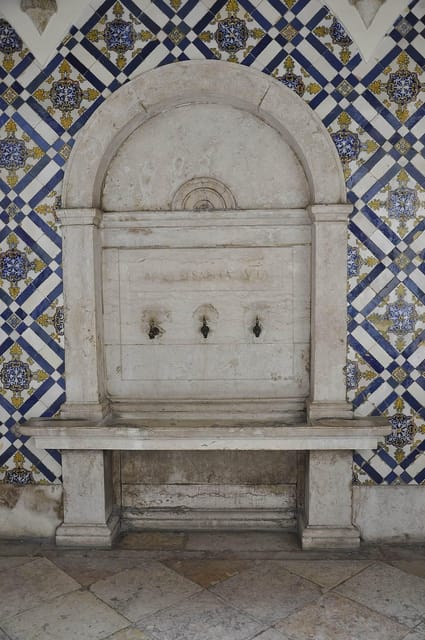
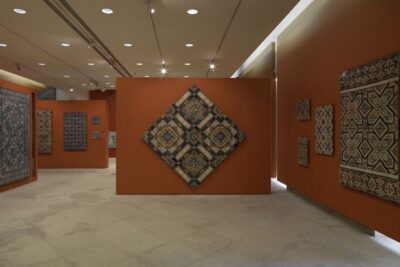
The Mudéjar-patterned tiles introduce one of the museum’s most important visual ideas: Portuguese tile design did not develop in isolation. Geometric patterns and decorative forms reflect the cultural exchanges that shaped the Iberian Peninsula.
Look closely at the repetition and geometry. These designs reward patience because the overall effect comes from many small units working together. The audio guide gives you historical context, while the panels themselves provide the visual evidence.
This is a good place to slow down if you enjoy pattern, architecture, or design. You do not need specialist knowledge to appreciate the order of the compositions. The museum’s displays make it possible to compare patterns and see how a decorative system can change the feel of an entire room.
If you have only an hour, you may need to be selective. The collection contains enough material to occupy more than the shortest visit, especially if you listen to most of the audio. One person reported being able to spend at least three hours here, so the advertised one to two hours should be treated as a useful target, not a strict limit.
The Dona Leonor Chapel and the museum’s sense of place
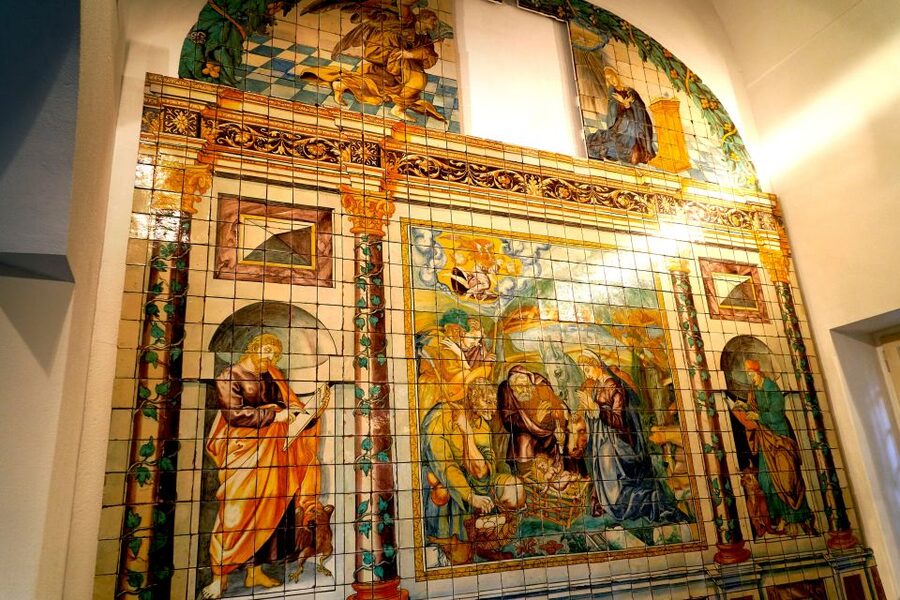
The Dona Leonor Chapel gives the visit a different mood. Rather than viewing tiles only as movable works of art, you see them in a religious setting, where decoration, ceremony, and architecture work together.
Allow time to look beyond the individual tile surfaces. Notice how the patterns relate to the walls and the chapel’s shape. This is one of the places where the museum’s setting helps explain why tilework became so important in Portuguese interiors.
The chapel also breaks up the display sequence. After rows of panels and historical examples, a complete architectural space gives you a better idea of the finished effect. The audio guide adds useful background, but you may want a quiet moment to look without narration.
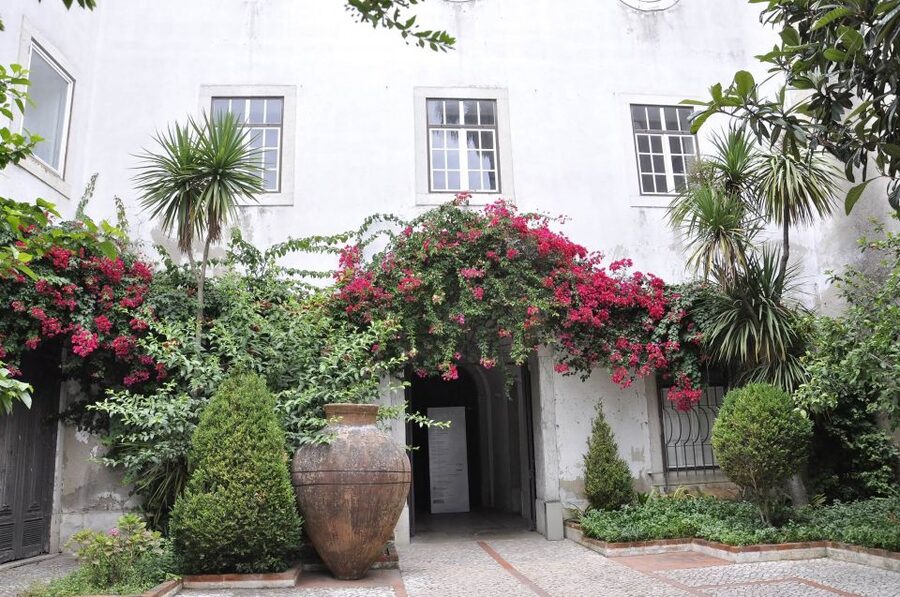
The museum itself helps tell the story. The experience is not just a collection of objects placed in cases. Rooms, chapel spaces, courtyard views, and decorative surfaces all contribute to the visit.
The Mickey Mouse panel and other memorable displays
The Mickey Mouse tile panel is an unexpected highlight. In a museum concerned with centuries of Portuguese tilework, the panel provides a playful modern note and proves that tile art is not limited to old religious or geometric designs.
I would save enough attention for the diamond-patterned panel as well. Its appeal comes from repetition and structure rather than a single character or scene. Together, these displays show the range of the collection, from historic patterns to more familiar modern imagery.
The museum’s strength is this contrast. You can move from medieval material to later decorative work and then encounter something as surprising as the Mickey Mouse panel. That change keeps the visit from feeling like a long sequence of similar blue-and-white walls.
The audio guide’s short stories are most useful when they help you connect these different periods. You can listen for the facts that explain how Portuguese tilemaking changed, then compare those ideas with what you see in front of you.
Courtyard, café area, and a useful pause
A pretty garden area near the cafeteria provides a natural place to rest. Tables and chairs are available, and you can use the space for a drink or food break.
This matters because the museum can easily take longer than planned. A short pause helps if you are listening to a lot of audio or visiting with someone who wants more time at particular displays. It also gives you a chance to review the map and decide which sections you still want to see.
The courtyard adds another visual change after the interior rooms. You are not simply rushing from one exhibit to the next, and the pause can make the visit feel more relaxed.
Food and drink arrangements are not detailed here, so I would treat the area as a convenient place to sit rather than plan your entire meal around it.
How much time should you allow?

The official duration is one to two hours. I would allow two hours if you want to use the audio guide, study the major panels, see the chapel, and take a short pause.
You can shorten the visit by reading selected labels and focusing on the best-known displays. The Mickey Mouse panel, diamond-patterned panel, Mudéjar designs, and Dona Leonor Chapel give you a clear set of priorities.
If you enjoy art, architecture, or decorative history, plan extra time. The audio guide can be replayed, and there is no need to follow a fixed group schedule. One person found that three hours would have been easy to fill, which tells you the one-hour visit is more of a highlights tour.
Starting times vary, so check availability when booking. The activity ends back at the meeting point, though the exact meeting point can vary by option.
Accessibility and practical limits
The museum is wheelchair accessible, which makes this a practical choice for visitors who need step-free access. The activity is listed for small groups of up to 10 participants, although the actual museum experience remains largely independent because the guide plays on your phone.
You should follow any instructions from museum staff, since the course of the visit may change. The supplied information also warns that entrance queues may still occur, even with the skip-the-line service.
This experience suits solo visitors, couples, families with older children, and anyone who prefers not to keep pace with a live guide. It is less suitable if you do not have a compatible smartphone, dislike downloading apps, or want a guide to explain the collection in person.
For families, remember that children up to 12 enter free. The paid audio guide arrangement is based on devices, not simply the number of people in your party, so decide in advance whether everyone will share one phone or listen separately.
Is the audio guide worth using?
The audio guide contains plenty of information and gives the museum’s displays a stronger sense of connection. It is especially helpful if you want historical context rather than a quick look at attractive patterns.
Still, it is not essential. The wall labels provide adequate information, and some people may prefer to use a free museum download available on arrival. That option may suit you if you want basic background without paying for a separate audio experience.
The main issue is navigation. Since the narration may not match the physical route perfectly, you need to select the room or image that corresponds to your location. If you simply press play and walk forward, you may feel behind the museum’s sequence.
I would use the guide selectively. Listen to the introduction, choose the tracks connected to the displays you care about, and skip anything that does not fit your pace. That approach gives you the best value from the ticket and avoids turning a pleasant museum visit into a phone-management exercise.
Cancellation, booking, and value
You can cancel up to 24 hours in advance for a full refund. That gives you useful flexibility if your Lisbon plans change.
At $16, the ticket is a fair buy for visitors who value advance entry arrangements, offline content, and the freedom to explore without a live guide. It is less compelling if you already plan to use free labels or a museum download and do not care about the added narration.
The price also reflects convenience rather than a long guided tour. You are paying for admission, skip-the-line service, maps, text, and audio content, not personal attention. If you understand that distinction, you can judge the value clearly.
Who should book the National Tile Museum ticket?
Book it if you want a focused Lisbon museum visit with a strong visual theme and an optional audio layer. It is a particularly good match for people interested in architecture, decorative art, religious spaces, Portuguese culture, and the way design changes across time.
It also works well for independent visitors who want to pause, replay, skip, and choose their own route. The courtyard, chapel, unusual Mickey Mouse panel, and geometric tilework give you several different kinds of interest in a relatively compact visit.
Think twice if you want a live expert beside you or if your phone cannot run the app. You should also be comfortable adjusting the audio tracks yourself, since the narration may not guide you perfectly from room to room.
FAQ
How much does the National Tile Museum ticket cost?
The adult ticket costs $16 per person. Children up to 12 years old enter free.
How long does the visit take?
The listed duration is one to two hours. You can spend longer if you listen to more of the audio content or study the displays closely.
Is the audio guide included?
Yes. An English smartphone audio guide is included, along with offline text, audio narration, and maps.
Do I need to bring a phone and headphones?
Yes. A compatible Android or iOS smartphone is required, and you must bring your own headphones. The ticket does not provide either item.
Can I cancel the booking?
Yes. You can cancel up to 24 hours in advance for a full refund.
Is the museum wheelchair accessible?
Yes. The museum is wheelchair accessible. Entry queues may still occur, even with the skip-the-line service.
Should you book it?
I would book this ticket if you want an easy, self-guided introduction to Portugal’s tile tradition and like having historical commentary available on demand. The Dona Leonor Chapel, Mudéjar patterns, diamond-patterned panel, and Mickey Mouse display give the visit enough variety to hold your attention.
Choose it with realistic expectations. The audio guide is useful but not perfectly ordered, and the museum can take longer than the advertised one to two hours. Download the app before you arrive, check that your phone is supported, and plan to use the room selections rather than blindly following the audio from beginning to end.
For $16, it is a solid choice for an independent museum visit, especially if skip-the-line convenience and offline audio matter to you. If you are happy with wall labels and prefer not to manage an app, you can still enjoy the museum without the added guide.
More Audio Tours in Lisbon
- Lisbon: São Jorge Castle E-Ticket and Audio Guide
★ 4.3 · 2,182 reviews - Sintra: Quinta da Regaleira E-Ticket and Audio Guide
★ 4.2 · 1,731 reviews - Lisbon: Tram 28 Entry Ticket & Audio Guide with 24-Hour Pass
★ 4.0 · 930 reviews - Lisbon: Jerónimos Monastery E-Ticket and Audio Guide
★ 3.7 · 660 reviews
Fresh finds around Lisbon
- Jeronimos Monastery Guided Tour – Small Groups – Tickets Included★ 5.0 · 51 reviews
- Sanctuary of Fátima and Coimbra City Tour★ 4.5 · 51 reviews
- Sintra/Lisbon: Sintra & Quinta da Regaleira Tour with Ticket★ 4.4 · 51 reviews
- Lisbon: Private Christmas Lights Tour by Eco Tuk Tuk★ 4.9 · 51 reviews
- Peniche: Berlengas Island Catamaran Tour – Round Trip★ 4.6 · 51 reviews
- Half day Spa Water Therapy experience at THE SPA at Corinthia Lisbon★ 4.5 · 51 reviews
- Lisbon: Private Tuk-Tuk Tour for 2 hours★ 4.7 · 51 reviews
- Premium Lisbon Airport Transfer to Lisbon★ 5.0 · 51 reviews
Museums, compared.

Lisbon: Banksy Museum Permanent Exhibition Entry Ticket
Read our review →
Lisbon: Belem, Jeronimos Monastery, and Coach Museum Tour
Read our review →
Lisbon: MAAT Gallery and MAAT Central Entry Tickets
Read our review →

Lisbon SL Benfica Stadium & Museum Tour with Scarf
Read our review →
Lisbon: Customized Luz Stadium and Guided Museum Tour
Read our review →
Browse the lists this tour appears in