
Reviewed · COOKING CLASSES
Private Lisbon Market Tour & Portuguese Cooking Class with Paula
The best part of this experience happens before the cooking begins. Paula meets you at the Cacilhas ferry stop, walks with you through Almada, and shops for ingredients at the neighborhood market where she has bought food for decades. You are not just following a recipe. You are seeing how a local chooses fish, produce, and pantry staples.
I especially like the private format and the choice between Portuguese and Portuguese-Goan dishes. I also like the ferry ride, which gives you a quick change of scene and fine views of Lisbon from the Tagus. The main consideration is that this is a real home kitchen, not a polished cooking school. Paula has a cat, her family shares the home, and the apartment may feel cluttered.
In This Review
- Key points to know
- Crossing the Tagus to Cacilhas
- Shopping beside the Cacilhas market
- Paula’s home kitchen and cooking studio
- Choosing Portuguese and Goan dishes
- What you actually learn at the stove
- The meal at the end
- A personal experience with a strong host
- Is $99 a fair price?
- Who should book this Almada food experience?
- Should you book it?
- FAQ
- Where does the cooking experience begin?
- What time does the activity start?
- How long does the experience last?
- Is this a private activity?
- What kinds of dishes can I learn to make?
- Does Paula teach in a professional cooking school?
- Can I cancel for a full refund?
Key points to know
- Start with a short ferry ride: Meet Paula in Cacilhas, across the river from central Lisbon.
- Shop at a neighborhood market: Choose ingredients with a host who knows the vendors personally.
- Pick your cooking direction: Make Portuguese classics, Goan dishes, or a mix of both.
- Learn in a private home: Only your own group takes part, with a relaxed and personal pace.
- Expect a full meal: The class includes appetizers, a main dish, dessert, and coffee or tea.
- Allow some flexibility: Sessions can run longer than the planned four and a half hours.
Crossing the Tagus to Cacilhas
This experience begins at 10:00 a.m. at the Cacilhas ferry stop in Almada. From Lisbon, you take the ferry from Cais do Sodré across the Tagus. The ride takes roughly seven to ten minutes, depending on how you count the boarding and crossing time.
I like this start because it makes the morning feel different from a standard Lisbon food walk. You leave the familiar central streets, cross the river, and arrive in a working town with its own daily rhythm. The ferry is also simple to use, and one review noted that a Lisbon transport pass worked for the crossing.
Paula meets you at the ferry exit. From there, you walk about ten minutes through central Cacilhas toward her home. The route may include the riverside and former fish-related buildings, and Paula uses the walk to explain the area and get to know your group.
This is useful for families and couples who prefer an experience that begins slowly. You are not rushed straight into a lesson. The walk gives Paula a chance to adjust the menu, learn about your tastes, and explain what you are seeing.
A handful more Lisbon ideas to compare
- Lisbon Market and Food Tour with Cooking Class and Lunch
★ 5.0 · 117 reviews
Shopping beside the Cacilhas market
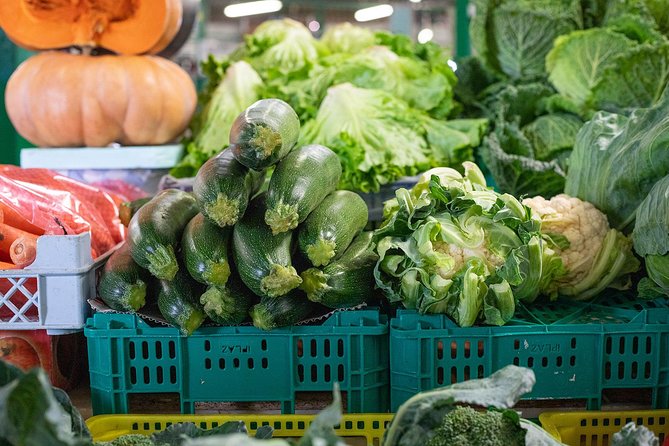
Paula’s apartment is only a few meters from the neighborhood’s covered market. That location shapes the whole experience. Instead of arriving with every ingredient already measured, you see where the food comes from and help choose what will go into your meal.
The market is not presented as a grand attraction. It is a local place where people buy fish, fruit, vegetables, and other everyday foods. Paula has shopped there for many years, and the personal connections are part of the appeal. You may see stallholders greet her, and you can watch how a resident selects fresh food.
Several sessions have included fresh fruit, fish, clams, and other ingredients chosen on the day. One particularly useful lesson involved identifying bad clams. That sort of practical advice is hard to pick up from a printed recipe.
The market may also feel less tidy or polished than a food hall aimed at tourists. That is worth knowing before you book. If you want staged tastings and immaculate displays, this may not be your ideal stop. If you like seeing the ordinary food-buying side of a place, the market adds real value.
Paula’s home kitchen and cooking studio
After shopping, you cook with Paula either in her apartment kitchen or at her cooking studio table across the street. This is an in-home cultural experience, not a professional class in a culinary school.
That distinction matters. The setting is intimate and informal. You can ask questions, talk about food, and hear about Paula’s family, work, neighborhood, and connection to Goan cooking. Several sessions have felt more like cooking with a welcoming relative than attending a formal lesson.
The trade-off is comfort and order. Paula has a cat, and the home can be cluttered because she lives with family. One dissatisfied participant found the apartment dirty and felt that the cat dominated the space. Another felt the session became chaotic when Paula was also preparing food for other people.
I would treat this as an important fit question. You need to be comfortable with a lived-in home and a host-led pace. The experience is strongest when you value conversation and local contact as much as spotless surroundings and strict instruction.
Choosing Portuguese and Goan dishes
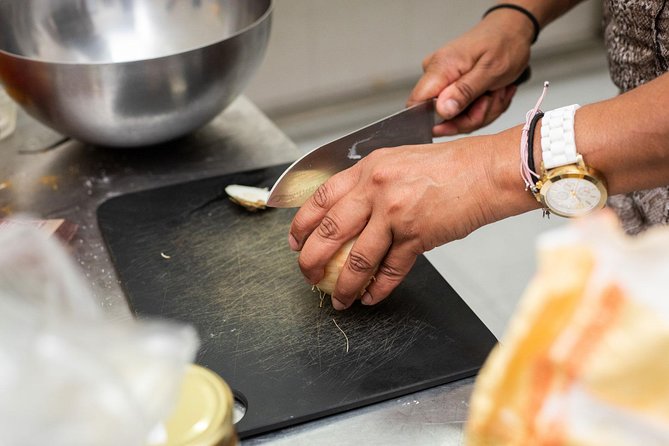
Paula generally helps you choose a menu of two or three dishes. The sample meal includes two starters, a main course, dessert, and a drink.
For the starters, you might make:
- Pataniscas de bacalhau, Portuguese cod fritters
- Goan bojas, gram flour fritters with onion and cumin seeds
For the main dish, you may choose a Portuguese or Goan recipe. Possibilities include bacalhau à brás, bacalhau com natas, or a Goan curry such as crab or fish curry. Different sessions have included grouper, clams, chorizo, basmati rice, and fresh bread, so the exact menu can change with your preferences and the market ingredients.
The choice is a major advantage. You are not forced into a fixed menu if you dislike a certain fish, spice, or ingredient. Paula has adjusted recipes for food preferences, and she asks you to communicate about the menu ahead of time.
Goan food is the unusual feature here. Lisbon has plenty of opportunities to eat cod, sardines, custard tarts, and other Portuguese staples. A chance to connect Portuguese cooking with Goan flavors gives the class a wider cultural frame. The food reflects Paula’s own background rather than a generic restaurant version of either cuisine.
If you mainly want a classic Portuguese lesson, choose a Portuguese main such as bacalhau com natas. If you have an interest in Indian coastal cooking or Goan family food, ask Paula about a fish or crab curry. You can also combine the two traditions.
Nearby in Lisbon, a different day entirely:
- Lisbon City Center Tour – The Unmissable Lisbon
★ 5.0 · 22,234 reviews - Lisbon: Sintra, Pena, Regaleira, Cabo da Roca & Cascais
★ 4.7 · 19,656 reviews - Sintra: Pena Palace and Park Entrance Ticket
★ 4.2 · 17,410 reviews - Lisbon: Jerónimos Monastery Entrance Ticket
★ 4.1 · 14,164 reviews
What you actually learn at the stove
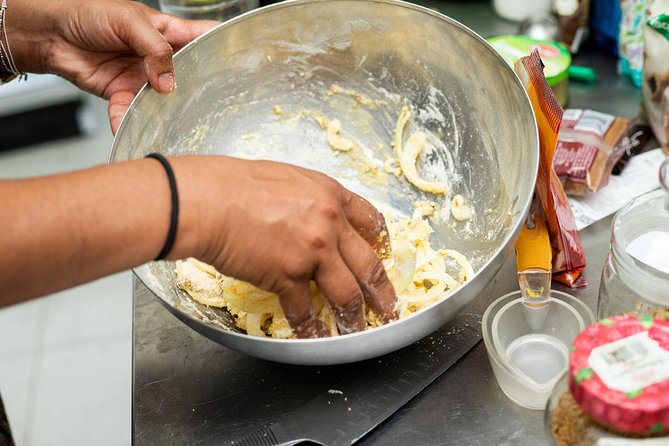
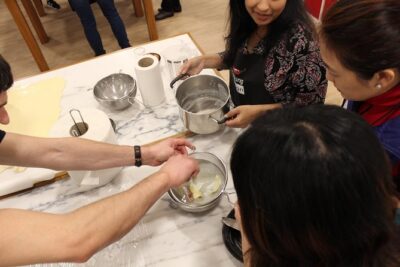
The instruction is practical rather than academic. Paula explains how to handle ingredients, season food, and work through each stage of the meal. Past lessons have covered whisking methods, puff pastry, custard making, and cooking fish in salt.
That last technique is especially useful if you want to take home a method rather than just a recipe. Paula also shares small kitchen judgments, such as how to assess shellfish and how to work with pastry without overcomplicating it.
You should not expect a printed curriculum or a rigid sequence of timed demonstrations. The lesson develops around your menu and the ingredients available. If you are an experienced cook, you may still pick up techniques and local habits. If you are a beginner, Paula’s patient, hands-on style can make the food feel manageable.
The pace has varied. Some sessions have lasted well beyond four and a half hours because conversation and cooking continued naturally. That can be a pleasure, but it can also be a problem if you have an afternoon reservation or a fixed sightseeing plan.
I would keep the rest of your day open. This is best treated as the main event, not a quick lunch squeezed between two museum visits.
The meal at the end
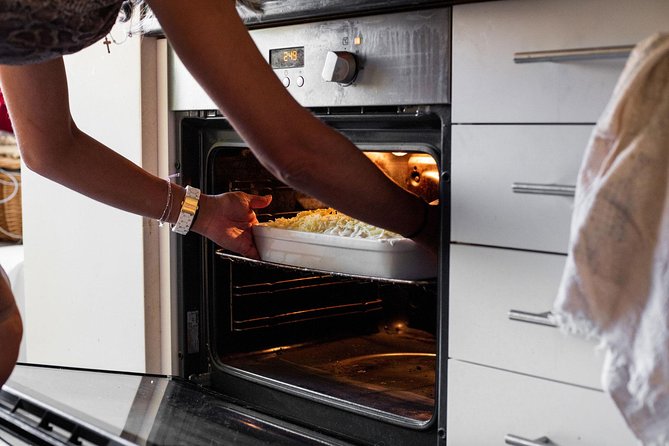
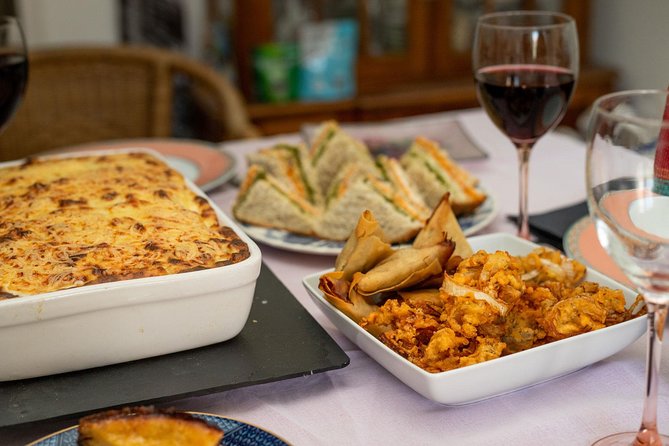
Once the dishes are ready, you sit together at Paula’s dining table or at the table in the cooking studio. You eat what you prepared, with dessert and coffee or tea to finish.
Past menus have included pastel de nata, and pastry is one of Paula’s particular strengths. The custard-making lesson has been a highlight for many people, especially those who want to recreate the famous Portuguese tart at home. Other meals have ended with a full spread of curry, rice, clams, bread, and sweets.
The meal is not an afterthought. It is where the market visit, cooking lesson, and conversation come together. You can ask about ingredients, compare Portuguese and Goan flavors, and get suggestions for other parts of Lisbon.
Wine has been included in some sessions, but it is not listed as a guaranteed part of the standard description. Coffee or tea is the safer expectation.
The food should be understood as home cooking. Portions, presentation, and timing will not be as uniform as they would be in a restaurant. That is part of the charm for many people, but it may disappoint anyone looking for a polished chef-led performance.
A personal experience with a strong host
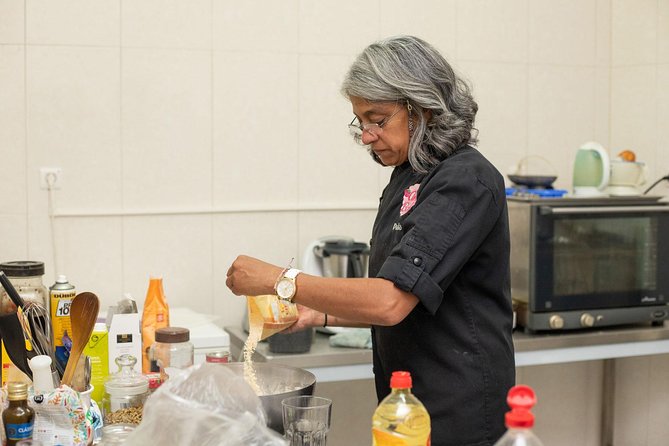
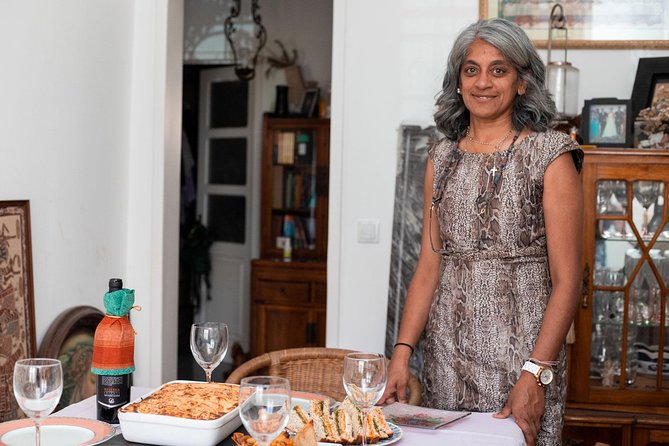
Paula is the heart of this activity. She is not only teaching recipes. She is showing you her part of Almada and telling stories about food, family, work, and community.
Her connection to the area is clear from the market walk. People know her, and she takes time to explain the buildings, shops, and food traditions around Cacilhas. The best sessions seem to come from the exchange between host and visitor. You bring your own questions and food interests, and Paula adapts the day around them.
She has also been praised for working well with children. Families have found ways for everyone to take part, and picky eaters can often be accommodated through menu choices. Couples have used the experience as a special honeymoon activity, while repeat visitors to Lisbon have chosen it as a break from the usual sights.
The personal side can go too far for some people. If you prefer a quiet class with little conversation, this may feel unfocused. Paula’s warmth is a central part of the product, so book it because you want contact with a local person, not simply because you want to learn one cod recipe.
Is $99 a fair price?
At $99 per person, this is not the cheapest meal in Lisbon. You can eat very well for less, and a conventional cooking school may offer a more controlled classroom.
The value comes from the combination of services. Your price covers a private experience for your own group, a ferry trip, a guided neighborhood walk, a market visit, ingredient selection, cooking instruction, and a substantial meal with dessert and coffee or tea.
For a four-and-a-half-hour activity, that is a fair price if you care about the host and cultural side of the day. It is especially good value for a small group that would otherwise pay for several separate activities. Group discounts may also be available.
I would not book it for the setting alone. The apartment is not guaranteed to look like a studio kitchen, and the day may be less organized than a professional class. I would book it for Paula’s attention, the market access, the menu flexibility, and the chance to see Almada through someone who lives there.
The experience is highly sought after, with bookings commonly made about 45 days ahead. That does not mean you must plan half a year in advance, but I would reserve early if you have a narrow Lisbon schedule.
Who should book this Almada food experience?
I would recommend it most strongly to:
- Couples seeking a personal half-day activity
- Families who want children included in the cooking
- Repeat visitors who have already seen central Lisbon’s main sights
- Home cooks interested in practical techniques
- People curious about both Portuguese and Goan food
- Anyone who values conversation and local stories
It is less suitable if you need a fully accessible, formal cooking school environment, though service animals are allowed and the meeting point is near public transportation. The available details do not describe the exact accessibility of the apartment or studio, so ask Paula directly if stairs, seating, or kitchen access matter to you.
You should also contact Paula through WhatsApp with questions about the menu or meeting location. This is the best way to discuss allergies, dislikes, and your preferred Portuguese or Goan dishes before the day.
The activity is offered in English and uses a mobile ticket. It begins and ends at the Cacilhas meeting point, so remember to plan your return ferry to Lisbon after the session.
Should you book it?
Book this if you want a human-scale food experience rather than a polished cooking demonstration. The ferry crossing, local market, flexible menu, and home meal give you a side of the Lisbon area that a standard food tour may miss.
Skip it if you want a spotless professional kitchen, exact timing, or a tightly scripted lesson. The informal home setting can be cluttered, and the pace may become scattered if other household cooking is happening.
For most people who enjoy food, stories, and a little unpredictability, Paula’s class is a strong choice. Keep your schedule loose, tell her what you like to eat, and arrive ready to cross the river for more than a recipe.
FAQ
Where does the cooking experience begin?
It begins at Dá Cacilhas, LG Alfredo Dinis, 2800-252 Almada, Portugal. Paula meets you at the Cacilhas ferry stop.
What time does the activity start?
The scheduled start time is 10:00 a.m.
How long does the experience last?
The planned duration is approximately four hours and 30 minutes. Some sessions may continue longer because the cooking and conversation develop at a relaxed pace.
Is this a private activity?
Yes. Only your own group participates in the tour and cooking experience.
What kinds of dishes can I learn to make?
You can learn two or three Portuguese and Portuguese-Goan dishes. Options can include cod fritters, Goan bojas, bacalhau à brás, bacalhau com natas, Goan fish or crab curry, and pastel de nata.
Does Paula teach in a professional cooking school?
No. This is an in-home cooking and cultural experience in Paula’s home kitchen or at her cooking studio table across the street.
Can I cancel for a full refund?
Yes, if you cancel at least 24 hours before the scheduled start time. Cancellations or changes made less than 24 hours before the start are not eligible for a refund.
More Workshops in Lisbon
- Lisbon: Pastel de Nata Baking Class
★ 4.9 · 2,106 reviews - Lisbon: Traditional Portuguese Cooking Class
★ 4.9 · 592 reviews - Pastel de Nata Pastry Class: Bake and Enjoy Your Own Treats
★ 5.0 · 485 reviews - Lisbon: 2-Hour Pastel de Nata Cooking Class
★ 4.8 · 461 reviews
Fresh finds around Lisbon
- Sanctuary of Fátima and Coimbra City Tour★ 4.5 · 51 reviews
- Sintra/Lisbon: Sintra & Quinta da Regaleira Tour with Ticket★ 4.4 · 51 reviews
- Jeronimos Monastery Guided Tour – Small Groups – Tickets Included★ 5.0 · 51 reviews
- Lisbon: Private Christmas Lights Tour by Eco Tuk Tuk★ 4.9 · 51 reviews
- Peniche: Berlengas Island Catamaran Tour – Round Trip★ 4.6 · 51 reviews
- Half day Spa Water Therapy experience at THE SPA at Corinthia Lisbon★ 4.5 · 51 reviews
- Lisbon: Private Tuk-Tuk Tour for 2 hours★ 4.7 · 51 reviews
- Premium Lisbon Airport Transfer to Lisbon★ 5.0 · 51 reviews
Cooking Classes, compared.
Lisbon Portuguese Cooking Class with 3-Course Dinner
Read our review →
Traditional Portuguese Cooking Class in Lisbon
Read our review →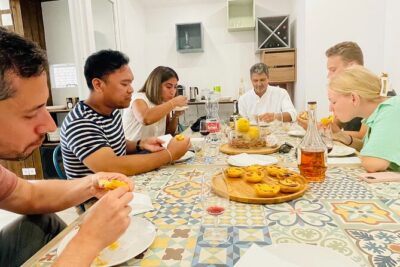
Browse the lists this tour appears in