
Reviewed · COOKING CLASSES
Portuguese Cooking Class in Lisbon
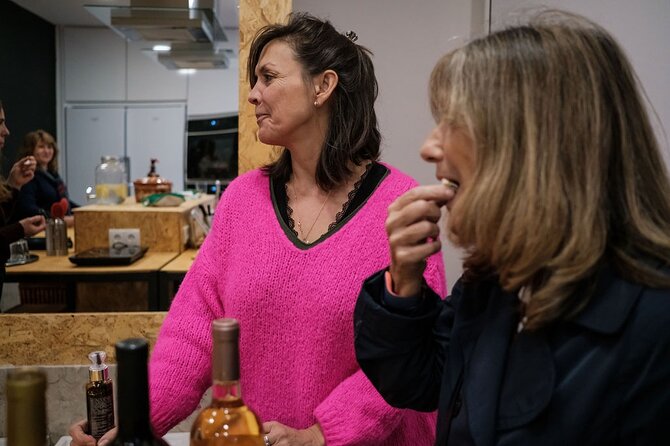
Lisbon Affair turns a meal into a social evening. You work with a small group, nibble on Portuguese cheese, ham, and bread, then prepare a three-course menu with chefs such as Beatrice, Bea, Bernardo, and Fabio. The best part is that you do not simply watch a demonstration. You chop, stir, season, and sit down to eat what you made.
I like the mix of hands-on cooking and cultural context, especially when the chef explains why a dish matters in Portuguese home cooking. I also like the practical finish: digital recipes arrive by email, so your meal can have a second life at home. The main caution is time. This is a full 3.5-hour session, and cooking at a relaxed group pace means you should not schedule anything immediately afterward.
In This Review
- Key points to know before booking
- What the Lisbon cooking class is really like
- Starting with cheese, ham, bread, and Portuguese conversation
- Cooking a seasonal Portuguese starter
- The main course: fish, seafood, meat, or a vegetarian alternative
- Dessert takes patience, and that matters
- The chefs make or break the evening
- The social side is part of the value
- Is $114.93 a fair price?
- Timing, accessibility, and booking advice
- Who should book this Lisbon experience?
- Should you book the Portuguese Cooking Class in Lisbon?
- FAQ
- Where does the Portuguese cooking class take place?
- How long does the cooking class last?
- Is the class offered in English?
- How many people can join the class?
- What food is included?
- Are drinks included?
- Can I cancel for a full refund?
Key points to know before booking
- Three courses, cooked by you: Prepare a seasonal starter, a typical Portuguese main dish, and a traditional dessert rather than watching a chef do all the work.
- A small class of up to 12 people: The group size gives you a fair chance to take part, though the experience can feel social and lively when the class is full.
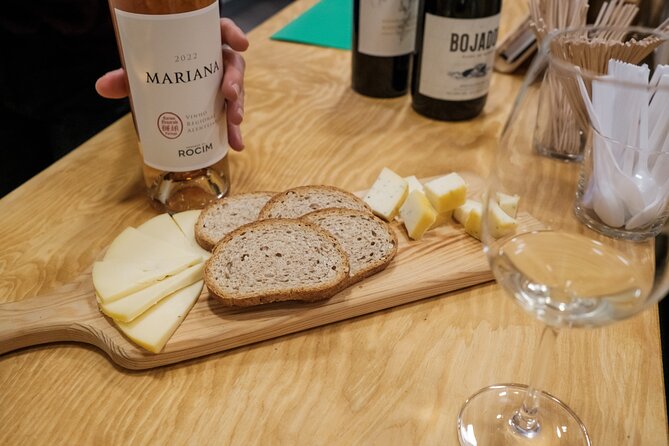
- Portuguese wine and local snacks included: Cheese, ham, bread, wine, water, soft drinks, coffee, and tea are provided.
- Menus change with the season: The main course may feature fish, seafood, or meat, with vegetarian alternatives available.
- English-speaking local chefs: Beatrice, Bernardo, and other Lisbon Affair chefs bring cooking instruction together with stories about ingredients and traditions.
- Budget about three and a half hours: The class ends where it starts at Lisbon Affair, on Avenida de Roma, and no private transport is included.
What the Lisbon cooking class is really like
This is not a quick pastel de nata lesson followed by a photo and goodbye. It is a long, shared meal built around preparation, conversation, and a proper sit-down lunch or dinner.
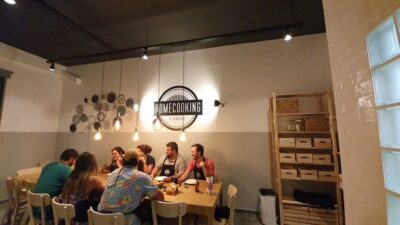
You arrive at Lisbon Affair, at Avenida de Roma 87B, in Lisbon. The class is conducted in English and limited to 12 people. That size matters. You are not lost in a large demonstration kitchen, and the chef can usually give individuals a task suited to their comfort level.
The mood is meant to be informal. Portuguese snacks and drinks get the group settled while the chef introduces the menu. Depending on the session and the menu, you might hear about Lisbon, Portuguese food traditions, herbs, local ingredients, and the cultural background of the dishes before work begins.
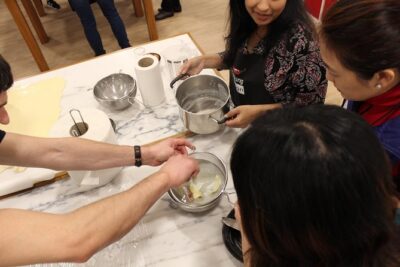
The cooking itself is shared. One person may prepare part of the starter, another may handle vegetables or sauce, and someone else may take on dessert. A well-run class gives everyone a role, including children and beginners. You do not need professional kitchen skills, and the class is designed for a range of abilities.
The class then moves to the table for the meal you prepared. That transition is important. You are not rushing off after the last instruction. You get time to eat, drink Portuguese wine, and talk with people from different countries.
A handful more Lisbon ideas to compare
- Lisbon: Pastel de Nata Baking Class
★ 4.9 · 2,106 reviews - Lisbon: Traditional Portuguese Cooking Class
★ 4.9 · 592 reviews - Lisbon: 2-Hour Pastel de Nata Cooking Class
★ 4.8 · 461 reviews
Starting with cheese, ham, bread, and Portuguese conversation
The sample starter is a cheese and ham board with Portuguese bread. It is simple, but it serves a useful purpose: you have something to eat while the class gets organized, and you begin tasting local products before cooking.
This is also the most social part of the evening. If you arrive alone, the shared board and group assignments give you an easy way to talk with the people beside you. If you arrive as a couple or family, the class still gives you a chance to meet people outside your own party.
Alcoholic drinks are included for participants aged 18 and over, in line with Portuguese law. Wine is served in moderation throughout the experience. Non-alcoholic drinks are available, along with bottled water, soda, coffee, and tea.
I would not treat the opening snacks as a replacement for lunch or dinner. They are a welcome bite, not the main meal. If you have an early class and tend to get hungry, eat something light beforehand, particularly because the cooking and dining portion takes several hours.
Cooking a seasonal Portuguese starter
The first prepared course can change with the season. That is a good sign for a cooking class, since fresh produce and seafood are not identical throughout the year. It also means you should not book expecting one fixed starter unless the menu has been confirmed for your date.
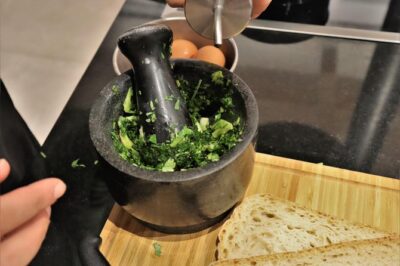
The chef explains the ingredients and the reason for the preparation method. You may learn how Portuguese cooks use herbs, bread, fish, shellfish, or vegetables to build flavor without relying on complicated equipment or hard-to-find products.
That practical approach is one of the class’s strongest features. The recipes use ingredients that home cooks can understand and, in many cases, find outside Portugal. You are learning a dish, but also learning how to think about seasoning, timing, and texture.
The class is hands-on, but the exact amount of work can vary with the menu and the size of the group. If you want to participate actively, speak up early and volunteer for a task. In a full class, a few people may naturally take the lead unless the chef makes a point of rotating jobs.
The main course: fish, seafood, meat, or a vegetarian alternative

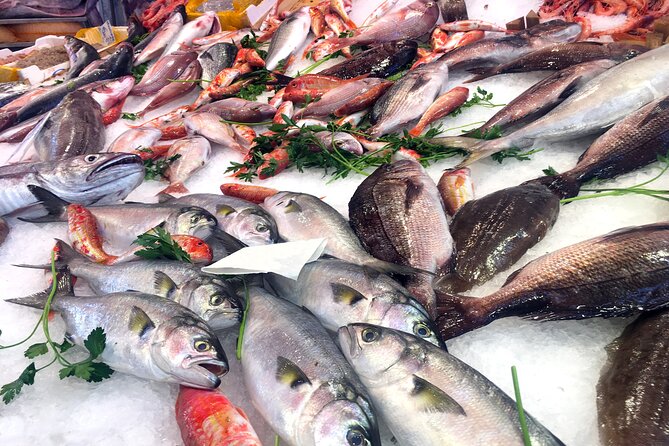
The main dish is typically Portuguese, but it is not fixed in the information provided. It may be based on fish, seafood, or meat. Vegetarian options are available, and the class has adapted menus for dietary preferences in individual sessions.
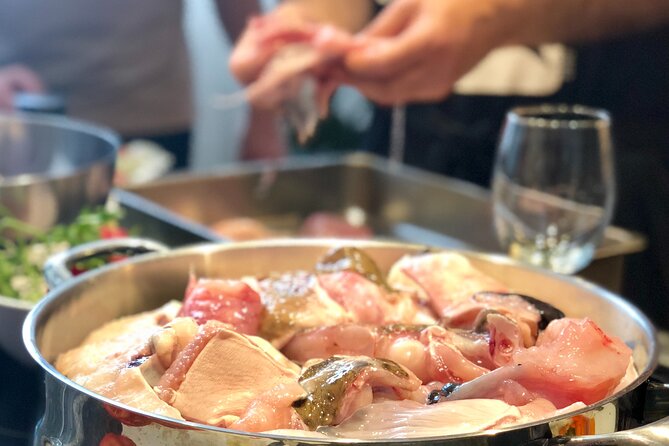
Examples of dishes prepared in past classes include clams, a cod casserole, and vegetarian Portuguese dishes. These examples give you a sense of the range, but they should not be treated as a promise of the menu on your date.
Cod is a useful window into Portuguese food culture. It appears in countless preparations, and a casserole can show you how a familiar ingredient becomes a generous family-style dish. Clams offer a different lesson, with a focus on freshness, timing, and a light treatment of seafood.
Vegetarians should notify the provider when booking or as early as possible. The class can accommodate vegetarian diners, but the menu needs planning. The same advice applies if you avoid pork, have allergies, or need other changes. One family had its menu adjusted because it did not eat pork, and a separate class prepared a fully vegetarian meal.
Families can also make this work. A 16-year-old and teenagers have taken part successfully, and children can be given manageable kitchen jobs. Still, this is a real cooking class, not a children’s entertainment program, so young participants need to be comfortable following instructions and staying with the group.
Nearby in Lisbon, a different day entirely:
- Lisbon City Center Tour – The Unmissable Lisbon
★ 5.0 · 22,234 reviews - Lisbon: Sintra, Pena, Regaleira, Cabo da Roca & Cascais
★ 4.7 · 19,656 reviews - Sintra: Pena Palace and Park Entrance Ticket
★ 4.2 · 17,410 reviews - Lisbon: Jerónimos Monastery Entrance Ticket
★ 4.1 · 14,164 reviews
Dessert takes patience, and that matters
Dessert is a traditional Portuguese sweet, with pastéis-style custard mentioned in the cooking experience and poached pears appearing in one menu. The exact dessert can change, just like the starter and main course.
This is where the class may feel slower than expected. A proper dessert can require cooling, stirring, resting, or careful attention to texture. One session included an unusually long period of work on rice pudding, which left one participant frustrated. That appears to have been an isolated poor fit between teaching style and expectations, but it points to a real issue: the pace can be deliberate.
You should come ready to work, but not worried about perfection. This is marketed for beginner to intermediate cooks, and the point is to understand the process well enough to repeat it. If you prefer a fast class with many separate dishes, this may feel too drawn out. If you enjoy learning why a recipe works, the slower pace can be useful.
The payoff is practical. Digital recipes are sent by email after the class, so you can make the dessert again for friends or family. That follow-up is especially valuable for custard and other dishes where technique matters more than a long list of ingredients.
The chefs make or break the evening
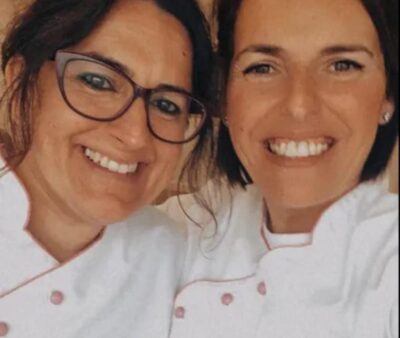
The chefs are central to the experience. Beatrice, often called Bea, receives especially strong praise for her warmth, humor, and ability to involve the whole table. Bernardo is described as engaging with both adults and teenagers, while Fabio, Flavio, and Renardo have also led highly regarded sessions.
The teaching style is personal rather than formal. Expect stories about Portuguese cooking, explanations of ingredients, and tips that go beyond simply reading a recipe. A good chef can make a basic task feel meaningful by explaining how it fits into Portuguese food culture.
That said, the experience depends heavily on the individual chef and group dynamic. Most sessions appear to aim for a welcoming, family-style mood, but one poor experience described a tense atmosphere and overly strict instruction. If you dislike group classes or want complete control over the kitchen, a private lesson may suit you better.
Private sessions can occur when booking conditions result in a smaller party. They may also make it easier to arrange vegetarian food or avoid pork, but you should confirm what is possible rather than assume a private class is guaranteed.
The social side is part of the value
The food is only half the point. You cook beside people from around the world, share wine, and sit down together at the end. This works well for solo visitors, couples, and families who want an evening activity that feels more personal than a standard restaurant meal.
I like this format because the conversation has a natural rhythm. You are busy with a knife or saucepan at first, then you have an easy topic at the table once the food is ready. Several classes have ended with people feeling unusually connected, which is not something a restaurant dinner can promise.
The tradeoff is that you cannot control the group. A class of 11 or 12 may be warm and funny, or it may include people with very different levels of interest. The chef’s ability to share tasks and keep everyone involved matters a great deal.
If you are shy, do not worry about arriving without companions. The structure gives you something to do immediately. If you are traveling with a large family group, make sure you are willing to share the spotlight rather than cook only with your own party.
Is $114.93 a fair price?
At $114.93 per person, this is not the cheapest meal in Lisbon. You can eat well in the city for far less, especially at a casual restaurant. The value here comes from the instruction, the ingredients, the drinks, and the time spent learning how the meal comes together.
You receive a three-course lunch or dinner, Portuguese wine for adults, snacks, water, soft drinks, coffee, and tea. You also leave with recipes and a better sense of Portuguese ingredients. For a visitor who would otherwise book a meal plus a separate cultural activity, the price can make sense.
The strongest value is for people who cook at home. A recipe you can repeat is worth more than a one-time tasting, and the menu uses traditional dishes rather than generic international food. If you only want to eat Portuguese food and have no interest in preparing it, spend the money at a good restaurant instead.
Private transportation is not included. You are responsible for reaching Avenida de Roma 87B, and the activity ends back at the meeting point. The venue is near public transportation, which helps, but leave time to get there. One group arrived under pressure because of traffic, so do not cut it close.
Timing, accessibility, and booking advice
Allow the full three hours and 30 minutes. The class may run at a relaxed pace, and the meal is part of the activity. Do not book a museum entrance, airport transfer, or evening show immediately after it.
Confirmation is provided when you book, and the activity accepts mobile tickets. Service animals are allowed. The maximum group size is 12 people, though the exact number on your date may be smaller.
The class is offered in English. If you need a specific dietary adjustment, contact Lisbon Affair before the session. Vegetarian options are available, and past classes have adjusted menus for people who do not eat pork, but clear advance notice is the sensible approach.
You can cancel for a full refund if you do so at least 24 hours before the local start time. Changes or cancellations inside that window are not accepted for a refund. The minimum number of participants also matters: if the class is canceled because that minimum is not met, you are offered another date or experience, or a full refund.
Who should book this Lisbon experience?
I would choose this class if you want food to be part of your sightseeing, not just something served at the end of the day. It suits curious cooks, solo visitors, couples, families with older children, and anyone who enjoys meeting people over a shared meal.
It is also a good pick if you want to take Portuguese cooking home with you. The digital recipes, practical methods, and focus on traditional dishes make the class more useful than a one-off tasting.
I would hesitate if you need a tightly timed activity, dislike alcohol-centered social settings, or expect to prepare every dish shown during the introduction. Some traditional options may be presented while the group works on a practical three-course menu, so ask for clarity if the exact dishes are important to you.
Should you book the Portuguese Cooking Class in Lisbon?
For most visitors who enjoy cooking, yes. The combination of a small group, local chefs, Portuguese food stories, wine, and a full meal offers more substance than a simple demonstration.
Book it early if your dates are fixed. It is often reserved several weeks ahead, with average booking taking place about 37 days before the class. Choose a time when you can stay for the entire meal, arrive with dietary needs clearly stated, and expect a friendly but genuine kitchen session rather than a polished restaurant show.
The best reason to book is simple: you get to understand Portuguese food by making it. You leave full, carrying recipes, and with a better idea of how Portugal tastes beyond the tourist menu.
FAQ
Where does the Portuguese cooking class take place?
The class starts and ends at Lisbon Affair, located at Avenida de Roma 87B, 1700-344 Lisboa, Portugal.
How long does the cooking class last?
The experience lasts approximately three hours and 30 minutes, including the cooking and shared meal.
Is the class offered in English?
Yes. Local trained chefs conduct the hands-on class in English.
How many people can join the class?
The maximum group size is 12 participants.
What food is included?
You prepare a three-course Portuguese meal: a seasonal appetizer, a typical Portuguese main dish based on fish, seafood, or meat, and a traditional Portuguese dessert. Vegetarian options are available.
Are drinks included?
Yes. Alcoholic beverages, bottled water, soda, coffee, and tea are included. Alcohol is served only to participants aged 18 and over and in moderation. Non-alcoholic options are available.
Can I cancel for a full refund?
Yes. You can receive a full refund by canceling at least 24 hours before the experience start time, based on local time. Cancellations or changes made less than 24 hours before the start are not refunded or accepted.
Fresh finds around Lisbon
- Sanctuary of Fátima and Coimbra City Tour★ 4.5 · 51 reviews
- Sintra/Lisbon: Sintra & Quinta da Regaleira Tour with Ticket★ 4.4 · 51 reviews
- Jeronimos Monastery Guided Tour – Small Groups – Tickets Included★ 5.0 · 51 reviews
- Lisbon: Private Christmas Lights Tour by Eco Tuk Tuk★ 4.9 · 51 reviews
- Peniche: Berlengas Island Catamaran Tour – Round Trip★ 4.6 · 51 reviews
- Half day Spa Water Therapy experience at THE SPA at Corinthia Lisbon★ 4.5 · 51 reviews
- Lisbon: Private Tuk-Tuk Tour for 2 hours★ 4.7 · 51 reviews
- Premium Lisbon Airport Transfer to Lisbon★ 5.0 · 51 reviews
Cooking Classes, compared.
Lisbon Portuguese Cooking Class with 3-Course Dinner
Read our review →
Traditional Portuguese Cooking Class in Lisbon
Read our review →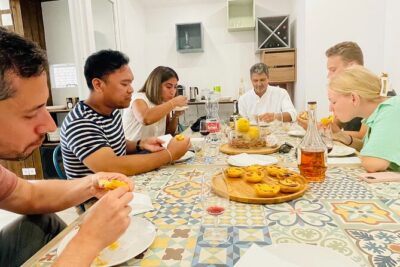
Browse the lists this tour appears in