
Reviewed · WALKING TOURS
Lisbon: Street Art Walk
Lisbon’s street art is not confined to one polished gallery. It appears on stairways, old walls, side streets, and overlooked corners of Graça and Mouraria. This three-hour walk takes you to works by Obey Giant, Vhils, Bordalo II, Add Fuel, and other artists, while connecting the art to Lisbon’s old neighborhoods.
I like the artist-led insight and the chance to see freshly painted spots that you might miss on your own. I also like the small group size, which can reach only 10 people, and the personal souvenir at the end. The main caution is the uphill terrain. Lisbon goes up and down, and this is not a good choice if stairs or steep streets are difficult for you.
In This Review
- Key points at a glance
- Why Lisbon’s street art deserves a walking tour
- Meeting your guide at Largo da Graça
- Graça: major murals among old streets
- Mouraria and Alfama: art with a neighborhood view
- The International Women’s Day street art gallery
- Caracol da Graça and the freshest walls
- What the guide adds to the art
- Is three hours the right length?
- What $40 gets you
- Who should book this walk?
- My verdict: a strong choice for art-focused visitors
- FAQ
- Where does the Lisbon Street Art Walk begin?
- How long does the tour last?
- Who leads the tour?
- What street art might I see?
- Is the tour suitable for people with mobility impairments?
- What should I bring?
Key points at a glance
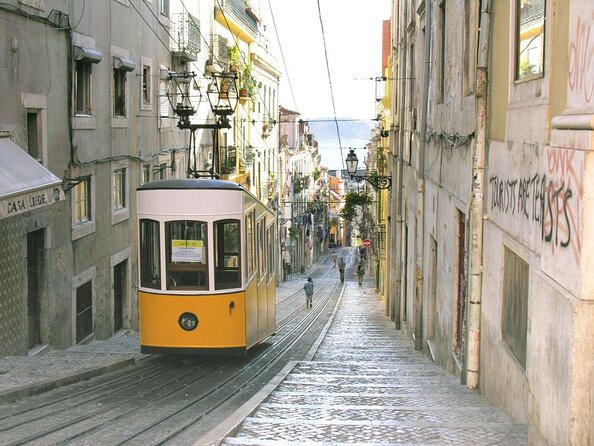
- Graça and Mouraria walls: Explore old Lisbon neighborhoods where major murals share space with small, easy-to-miss works.
- Artist-guide perspective: Your guide is Mr.Red, with many bookings identifying him as Igor. One booking names Iwan, so confirm the guide’s name when you reserve.
- Major names on the route: Look for Obey Giant, Vhils, Bordalo II, Add Fuel, Mário Belem, Aka Corleone, Ozearv, and Daniel Eime.
- Fresh work at Caracol da Graça: You may see newly painted pieces and, if timing is lucky, artists working on site.
- Useful street-art context: Learn how murals differ from tagging, how techniques and meanings shape a work, and why outdoor art may be painted over.
- Small-group value: The $40 price covers a private guide, three hours, secret art locations, neighborhood orientation, and a souvenir.
Why Lisbon’s street art deserves a walking tour
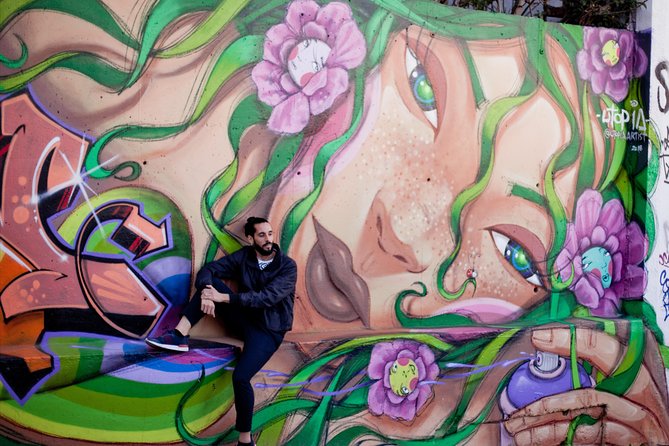
Lisbon rewards people who look in two directions at once. A painted doorway may sit below eye level, while a giant mural climbs the side of an apartment block above you. The city’s steep lanes and worn walls make a natural setting for street art, but they also make it hard to know where to go.
That is where this walk earns its place. You are not simply shown a series of colorful walls. The guide explains the artists, the methods, the subjects, and the unwritten rules of working in public space. You get help separating planned street art from random tagging, a distinction that can change how you read the city.
I especially like the link between art and place. Graça, Mouraria, and the historical Alfama area are not just backdrops for murals. Their narrow streets and older buildings help explain why artists choose certain walls and why the art feels woven into daily life rather than placed behind glass.
The route also has a sense of discovery. Some locations are described as secret artistic places, and the art can change over time. A wall you see today may be painted over later. That temporary quality is part of the point.
More Walking Tours in Lisbon
- Lisbon: History, Stories and Lifestyle Walking Tour
★ 4.8 · 10,902 reviews - Best of Lisbon Small-Group Guided Walking Tour
★ 5.0 · 4,869 reviews - Lisbon: Food and Wine Small Group Walking Tour
★ 4.9 · 4,082 reviews
Meeting your guide at Largo da Graça
The walk begins at the Coreto da Graça, the bandstand at Largo da Graça, in front of Desgraça Restaurant. You should arrive 10 minutes early. This is a busy neighborhood meeting point, and arriving with time to spare is wiser than trying to locate the group at the last minute.
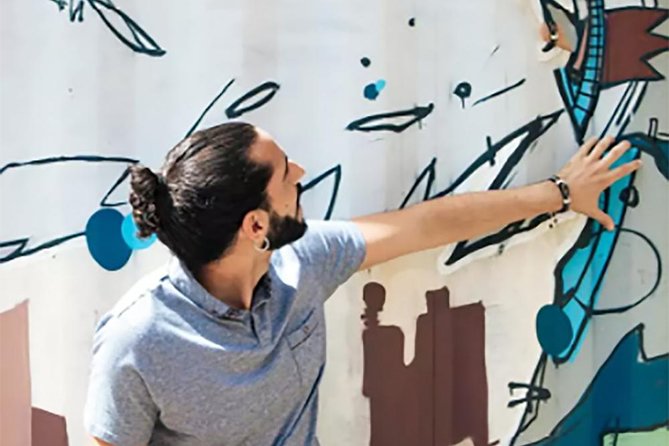
Your guide is described as Mr.Red and as an artist. Many bookings identify the guide as Igor, while one names Iwan, so I would confirm the guide’s name before the day of the tour. The important practical point is that you are not getting a general city guide with a few mural facts added on. The tour is led by someone connected to the art scene and able to discuss the work from an artist’s point of view.
The tour is offered privately or in a small group of up to 10 people. That matters here. Street art is best discussed in front of the work, and a smaller group makes it easier to stop on narrow streets, ask questions, and hear the explanation without being pushed to the back.
Graça: major murals among old streets
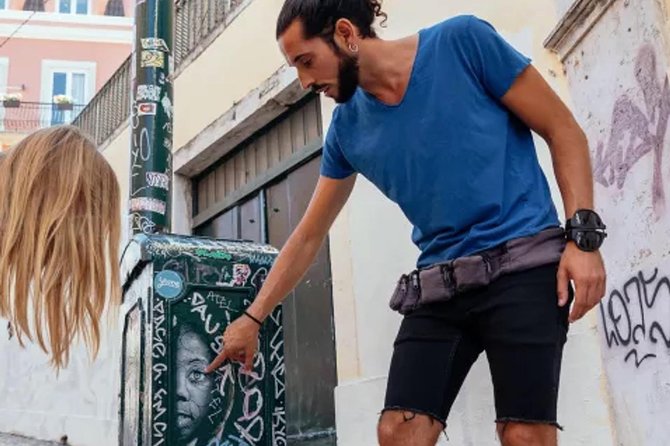
Graça is one of the main areas for the walk. The neighborhood gives you a useful introduction to Lisbon’s street art because large commissioned works and smaller pieces appear alongside old residential buildings.
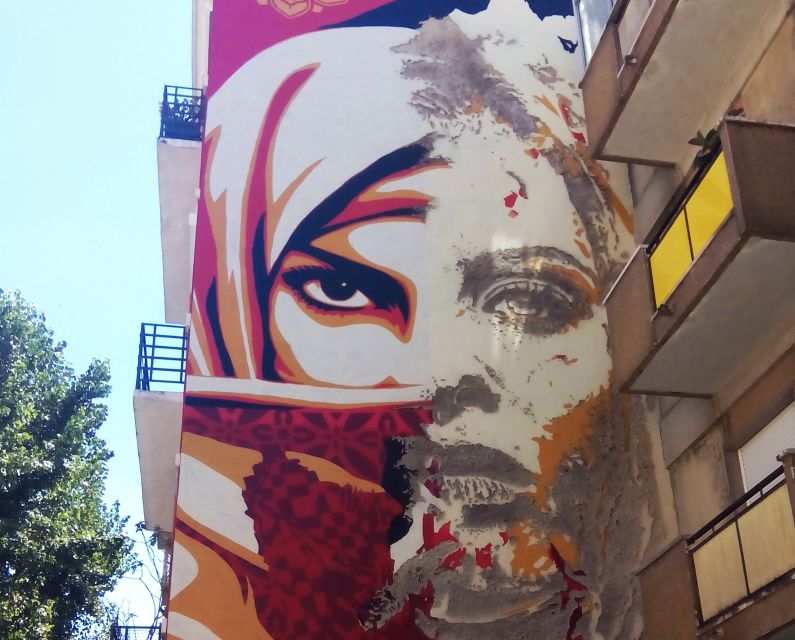
You can expect to see work connected with Obey Giant, Vhils, Bordalo II, Ozearv, and Daniel Eime. These names represent different approaches to public art. The value of the guide is in showing you what to look for: scale, materials, portrait technique, repeated symbols, surface texture, and the way a piece responds to its wall.
Vhils is especially interesting in this setting because his work is associated with carved and distressed surfaces rather than a simple painted image. Bordalo II is known for using discarded materials in animal sculptures and public works. The tour gives you a chance to consider how a piece is built, not only what it depicts.
You may also see works by Add Fuel, Mário Belem, and Aka Corleone. The route is not presented as a museum checklist, and the exact selection can change. Outdoor art is exposed to weather, construction, new commissions, and paint from other artists. Think of the named artists as a guide to the scene, not a promise that every listed work will look exactly as expected on the day.
That changing quality is a strength, but it can also frustrate anyone hoping for a fixed collection. If you need a guaranteed list of intact murals, ask about current conditions before booking.
Mouraria and Alfama: art with a neighborhood view

The walk also moves through Mouraria and gives you an overview of the historical Alfama district. These areas help place the art within Lisbon’s older urban fabric.
You will be walking through streets shaped by slopes, tight corners, older facades, and everyday local life. The guide uses the route to connect the artwork with Lisbon’s past and present. One of the most useful ideas from the tour is that street art cannot be separated from its surroundings. The wall, the street, the nearby buildings, and the people passing by all affect how the work is seen.
This part of the walk is valuable even if you already know a little about murals. You get orientation in neighborhoods that can feel confusing on your own, along with a reason to look beyond the most obvious sights. Keep watching the walls, doors, stairs, and upper floors. The tour specifically asks you to look up and down because art may be placed where a casual passerby would never notice it.
The tradeoff is physical effort. Graça, Mouraria, and Alfama are hilly, and the route includes climbing. Comfortable shoes are essential. Sunglasses, sunscreen, and comfortable clothing are also sensible, since this is an outdoor walk with no guarantee of shade.
A handful more Lisbon ideas to compare
- Lisbon: Street Art Tour
★ 4.9 · 1,324 reviews - Lisbon: Kickstart Street Art Walking Tour
★ 4.9 · 717 reviews - Lisbon: Street Art Tuk Tuk Tour
★ 4.9 · 372 reviews - LISBON Street Art Tour
★ 5.0 · 371 reviews
The International Women’s Day street art gallery
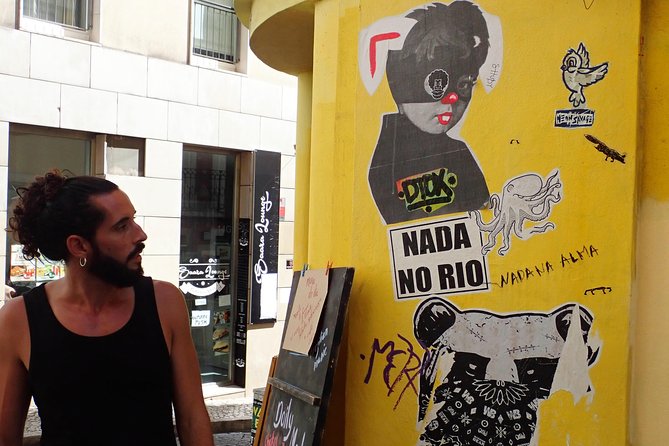
One of the more unusual stops is a street art gallery connected with International Women’s Day 2025. This gives the walk a clear social and cultural angle rather than making it only a hunt for famous names.
A themed project like this can show how public art is used to address identity, equality, and community concerns. The guide can help you understand the work in context, including the difference between an image made for a particular message and one created mainly for visual effect.
Because the project is tied to a specific date, its condition and availability may change. Treat it as a noteworthy possibility rather than a permanent museum stop. That uncertainty is typical of outdoor art and worth keeping in mind when you book.
Caracol da Graça and the freshest walls
Caracol da Graça is highlighted as a place to find some of the newest art. If you are lucky, you may even see artists painting there.
This is one of the strongest reasons to choose a guided walk instead of relying on a self-guided map. A guide who follows the local scene can take you to places that are not obvious from a standard sightseeing route. Fresh work also gives you a better sense of street art as an active practice, not a collection frozen in time.
There is no promise that artists will be working during your visit. You should also expect the art here to change. A newly painted piece may be unfinished, replaced, or altered by the time you arrive. That is not a flaw in the experience. It is simply how public art works.
If you enjoy photography, this stop may be a highlight, but remember that the tour is a walking experience rather than a dedicated photo session. You will need to keep pace with the group and remain aware of the narrow streets.
What the guide adds to the art
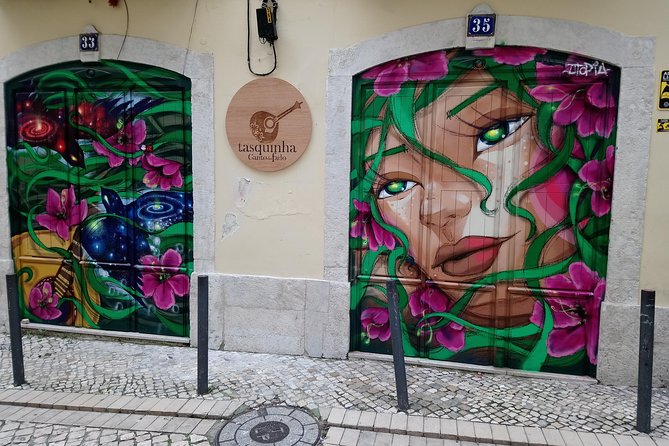
The strongest praise for this experience focuses on the guide’s passion, personality, and ability to explain the scene. That matches what you should want from a street art walk.
A good guide helps you see more than a big image on a wall. You learn about the artist’s purpose, the techniques used, the meaning behind a piece, and the rules or taboos that shape work in public spaces. You also get a clearer idea of why artists cannot become too attached to a wall. Their work may be tagged, covered, removed, or painted over.
The guide is also described as offering extra tips through WhatsApp, films, and artist Instagram accounts. I would not treat those extras as the main reason to book, but they can help you keep exploring after the three hours are over.
The personal style matters too. Several descriptions of the experience point to an entertaining guide who makes the walk feel social rather than academic. That should appeal to you if you want facts delivered with stories and conversation. If you prefer a quiet, highly structured art lecture, the informal approach may feel less predictable.
Is three hours the right length?
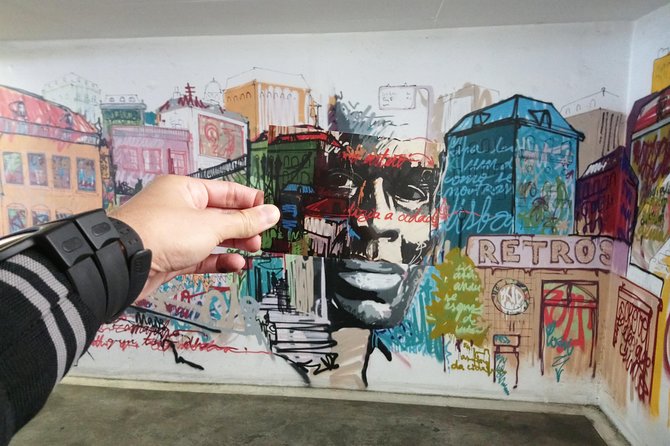
Three hours gives the guide time to cover several neighborhoods and explain the art rather than rushing from wall to wall. You get a broader view of Lisbon’s street-art scene and an overview of the old city areas at the same time.
Still, one booking found the walk a little long and felt two hours would have been enough. That is a fair concern. Street art fans may want the full three hours, especially if the guide is explaining technique and local customs. Someone with only a passing interest may feel ready to stop earlier.
Your energy level matters. The uphill streets make three hours feel more demanding than the clock suggests. Plan this for a day when you are comfortable walking, not immediately after a long excursion.
What $40 gets you
At $40 per person, the price is reasonable if you care about the subject and want a private or small-group guide. You are paying for three hours of local guidance, access to less obvious locations, neighborhood orientation, and an art souvenir. The guide’s artist background adds value because the discussion goes beyond naming murals.
The price is less attractive if you only want to photograph a few famous walls. You could see some public art without paying for a tour, although you would likely miss the context and the newer or less obvious spots.
There are no monument or gallery entrance fees included, but none are promised as part of the route. Hotel pickup and drop-off are not included either. You meet at Largo da Graça and begin on foot, so factor in your own transport to the starting point.
The flexible booking terms are useful for a city break. You can reserve and pay later, and cancellation is free up to 24 hours before the activity for a full refund. Check the available start times when booking, since the exact schedule is not fixed in the information provided.
Who should book this walk?
I would choose this tour if you already like murals, photography, illustration, design, or urban culture. It is also a good fit if you have visited Lisbon’s main sights and want to see a different side of the city.
Families with older children may enjoy the visual nature of the route, provided everyone can manage steep streets. The private format can help a group set a comfortable pace, though the walk remains physically demanding.
You should think twice if you have mobility impairments or dislike hills. The activity is specifically not recommended for people with mobility difficulties. Large luggage and big bags are not allowed, so leave those at your accommodation.
For clothing, keep it simple: comfortable shoes, light comfortable clothes, sunglasses, and sunscreen. Bring only what you need for several hours on foot.
My verdict: a strong choice for art-focused visitors
Book this Lisbon Street Art Walk if you want the stories behind the walls, not just a list of mural locations. The guide’s own artistic experience, the small group format, and stops in Graça, Mouraria, Alfama, and Caracol da Graça give the tour real value.
I would be especially keen to take it early in a Lisbon visit. The neighborhood overview can help you understand the old city, while the artist tips may lead you to more work during the rest of your stay.
Skip it if you want a short, flat stroll or if you are satisfied with independent sightseeing. For everyone else, $40 buys a focused look at a changing part of Lisbon that is easy to miss when you stick to the usual monuments.
FAQ
Where does the Lisbon Street Art Walk begin?
Meet your guide in front of the Coreto da Graça at Largo da Graça, in front of Desgraça Restaurant in the Graça neighborhood.
How long does the tour last?
The walk lasts three hours. Starting times vary, so check availability when booking.
Who leads the tour?
The guide is presented as Mr.Red and as an artist. Many booking details identify the guide as Igor, while one identifies the guide as Iwan. Confirm the guide’s name when you reserve.
What street art might I see?
The route may include work by Obey Giant, Vhils, Bordalo II, Add Fuel, Mário Belem, Aka Corleone, Ozearv, and Daniel Eime. The tour also visits newer spots such as Caracol da Graça.
Is the tour suitable for people with mobility impairments?
No. The walk includes climbing in Lisbon’s steep neighborhoods and is not recommended for people with mobility impairments.
What should I bring?
Wear comfortable shoes and clothing, and bring sunglasses and sunscreen. Large bags and luggage are not allowed.
Fresh finds around Lisbon
- Sanctuary of Fátima and Coimbra City Tour★ 4.5 · 51 reviews
- Sintra/Lisbon: Sintra & Quinta da Regaleira Tour with Ticket★ 4.4 · 51 reviews
- Jeronimos Monastery Guided Tour – Small Groups – Tickets Included★ 5.0 · 51 reviews
- Lisbon: Private Christmas Lights Tour by Eco Tuk Tuk★ 4.9 · 51 reviews
- Peniche: Berlengas Island Catamaran Tour – Round Trip★ 4.6 · 51 reviews
- Half day Spa Water Therapy experience at THE SPA at Corinthia Lisbon★ 4.5 · 51 reviews
- Lisbon: Private Tuk-Tuk Tour for 2 hours★ 4.7 · 51 reviews
- Premium Lisbon Airport Transfer to Lisbon★ 5.0 · 51 reviews
Walking Tours, compared.
Lisbon: History, Stories and Lifestyle Walking Tour
Read our review →
Best of Lisbon Small-Group Guided Walking Tour
Read our review →
Lisbon: Food and Wine Small Group Walking Tour
Read our review →
Best of Lisbon Walking Tour: Rossio, Chiado & Alfama
Read our review →
Sintra & Cascais Day Tour with Pena Palace Entry and Gardens Walk
Read our review →
Lisbon Roots – Small group Food & Culture Walking Tour w/tastings
Read our review →
Lisbon: Starter Walking Tour to the highlights in German
Read our review →Browse the lists this tour appears in