
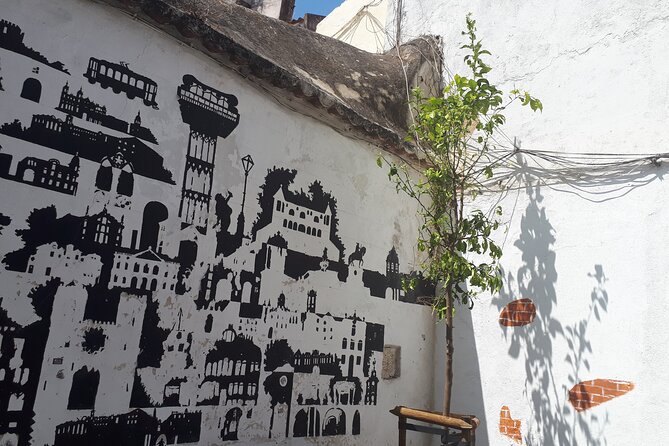
Reviewed · STREET ART
Lisbon: Street Art Tour
Lisbon’s street art is not just decoration on old walls. It is a way to read the city, from Portugal’s past to the social and political ideas shaping it now. This three-hour walk takes you through Bairro Alto, Chiado, Baixa, Mouraria, and Graça, with a guide who explains why each work belongs where you find it.
I like two things here: the route shows both famous murals and tiny pieces you could easily miss, and it connects art to the neighborhoods around it. Guides such as Erica, Maria, and Laith are praised for clear storytelling and a real feel for the subject. The main catch is simple: this is a hilly walk on uneven ground, so comfortable shoes and a fair level of fitness matter.
In This Review
- Key points to know before you book
- Why Lisbon’s street art deserves a walking tour
- Starting on Rua Luz Soriano in Bairro Alto
- Chiado and Baixa: art in Lisbon’s central streets
- Mouraria: where art and community meet
- Finishing in Graça with hills and larger views
- What makes the guides valuable
- Is three hours too long?
- The $40 price and what you receive
- Small groups and a more personal pace
- Practical advice for a better walk
- Who should book this Lisbon street-art tour?
- FAQ
- Where does the Lisbon Street Art Tour meet?
- How long does the tour last?
- Which neighborhoods does the tour visit?
- What language is the tour offered in?
- Are food and drinks included?
- Does the tour include hotel pickup and drop-off?
- What should I bring?
- Is the tour suitable for wheelchair users?
- Can I cancel the tour for a refund?
Key points to know before you book
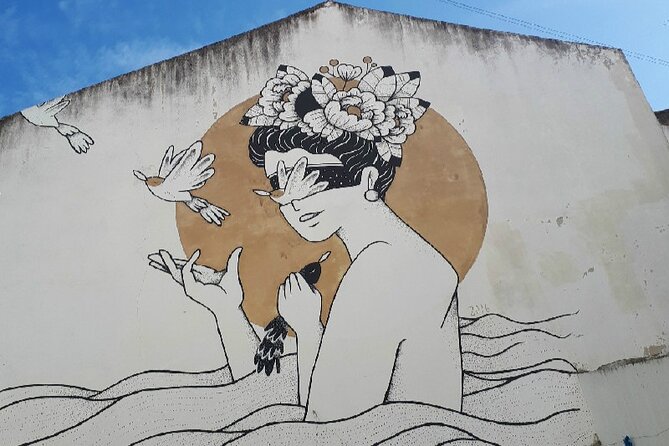
- Five central neighborhoods: See Lisbon through the changing streets of Bairro Alto, Chiado, Baixa, Mouraria, and Graça.
- Small details as well as giant murals: The guide points out work you would likely pass without noticing.
- Art with context: Learn about artists, techniques, Portuguese history, local communities, and the social role of street art.
- A small-group feel: The experience is designed to stay away from large groups, and some departures may feel almost private.
- Three hours on foot: The route includes hills, cobbles, and unpaved or uneven terrain.
- Good value at $40: You pay for a local guide who helps you understand an entire art scene, not just a string of photo stops.
Why Lisbon’s street art deserves a walking tour

You can find painted walls all over Lisbon, but simply spotting them is only half the fun. Street art changes quickly. A mural may cover an older piece, a small stencil may be gone within months, and a work that looks playful may carry a political or social message.
That is where a guide earns the $40 fee. Instead of wandering from one large mural to another, you get help reading the city’s walls. The tour explains artists, styles, methods, and the relationship between art and the communities that live around it.
I especially like the way the route treats street art as more than graffiti. The discussion can include large painted walls, smaller works, street sculptures, and the details tucked into narrow lanes. You may also hear about how artists relate to one another and how their work fits into Lisbon’s changing creative scene.
The guides bring different strengths. Erica is often praised for her storytelling, art background, and ability to explain small details. Maria is described as warm and well informed about both art and Lisbon’s past. Laith is noted for his links with the local street-art scene and for blending serious ideas with humor. Your guide may vary, so do not book expecting one specific person unless the provider confirms it.
A handful more Lisbon ideas to compare
- Lisbon: Kickstart Street Art Walking Tour
★ 4.9 · 717 reviews - Lisbon: Street Art Tuk Tuk Tour
★ 4.9 · 372 reviews - LISBON Street Art Tour
★ 5.0 · 371 reviews
Starting on Rua Luz Soriano in Bairro Alto
The meeting point is at Rua Luz Soriano 67, in front of the Interpress building. This is in the Bairro Alto area, a useful place to begin because the neighborhood gives you an immediate sense of Lisbon’s layered streets and strong visual character.
The Bairro Alto portion lasts about an hour, making it the longest stop apart from Graça. That extra time lets the guide set up the story properly. You are not rushed from wall to wall. Expect time to look closely, ask questions, and discuss how the work relates to the streets around it.
Bairro Alto can be steep and paved with uneven stones. Pay attention to your footing while looking up at walls. This is one of those tours where you may spend as much time tilting your head toward balconies and building facades as you do watching the pavement.
The area is also a good introduction to the tour’s mix of scales. You might see major murals that are easy to photograph, then turn into a side street for a modest piece that would be invisible without a guide. That contrast is one of the walk’s best features.
Chiado and Baixa: art in Lisbon’s central streets

From Bairro Alto, the route continues into Chiado for about 20 minutes. Chiado is one of Lisbon’s most central districts, so this part of the walk helps you see how street art interacts with a more established urban setting.
The shorter stop does not mean the art is less important. Here, the guide can help you compare styles and explain how public art changes the feel of a street. You also begin to notice the difference between work designed to dominate a wall and work that rewards a closer look.
The route then moves into Baixa de Lisboa for another 20 minutes. Baixa’s broad streets and formal city layout create a useful contrast with Bairro Alto’s tighter lanes and Graça’s hills. Instead of treating Lisbon as one uniform city, the walk shows how each district gives art a different setting and audience.
The central sections are also where you may appreciate the guide’s practical value most. Lisbon is full of visual distractions, from tiled facades to grand squares and shopfronts. A trained eye can direct you toward pieces that might otherwise blend into the background.
Mouraria: where art and community meet
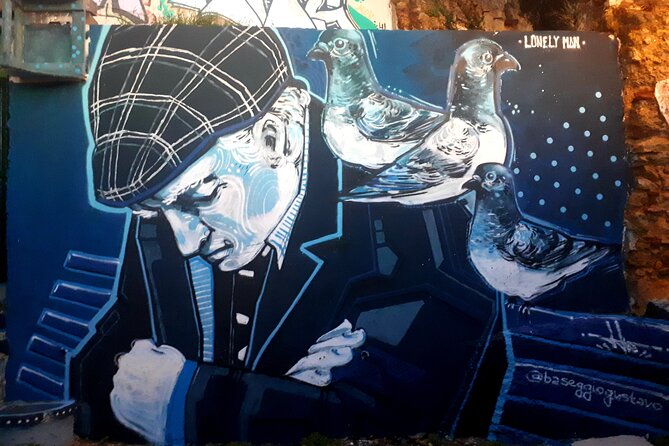
Mouraria receives about 30 minutes on the route. This is a particularly useful stop for understanding street art as part of local culture rather than as a collection of attractive walls.
The guide discusses the social and cultural setting of the neighborhood and shows how artists respond to the streets they work in. That context makes the art feel less like an object placed for visitors and more like part of an ongoing conversation.
This is also a good section for questions. Several guides are praised for explaining the meaning behind works without turning the walk into a lecture. If you are curious about politics, community identity, artistic choices, or the difference between commissioned work and unauthorized pieces, this is a natural place to ask.
Mouraria also adds another physical challenge. Lisbon’s central districts are not flat, and you will be walking between stops. The pace is generally manageable, but the route is not designed for sitting or taking long breaks. If three hours of city walking sounds tiring, consider this a sightseeing walk with an art theme, not a light stroll.
Nearby in Lisbon, a different day entirely:
- Lisbon City Center Tour – The Unmissable Lisbon
★ 5.0 · 22,234 reviews - Lisbon: Sintra, Pena, Regaleira, Cabo da Roca & Cascais
★ 4.7 · 19,656 reviews - Sintra: Pena Palace and Park Entrance Ticket
★ 4.2 · 17,410 reviews - Lisbon: Jerónimos Monastery Entrance Ticket
★ 4.1 · 14,164 reviews
Finishing in Graça with hills and larger views
The final section takes about an hour in the Graça Historic District. Ending here makes sense. Graça brings the route into a hillier, more residential part of Lisbon and gives the walk a different mood from the central streets.
You can expect more discussion of how neighborhoods shape the meaning of public art. The guide may also point out striking large-scale works and explain the techniques used by different artists. This is where the tour’s focus on both art and city views comes together.
Graça is rewarding, but it is also the part that most clearly tests your legs. The tour information warns about unpaved and uneven terrain, and the hills are not a minor detail. Wear shoes with good grip, bring water, and avoid carrying a large bag. Oversize luggage is not allowed, and it would be awkward on a walk through narrow streets anyway.
The finish in Graça can be useful for the rest of your day. There is no hotel drop-off, and the tour does not provide transport back to your accommodation. One guide has helped a participant find a tram option from the area, but you should still plan your own onward route before starting.
What makes the guides valuable
The strongest part of this experience is the explanation between the stops. You are not just shown a wall and given an artist’s name. The guide may explain the technique, the artist’s approach, the political or cultural background, and the way local people view the work.
Erica receives particularly strong praise for being an engaging storyteller and for noticing details in both major murals and small pieces. Maria is described as approachable and able to move between art, neighborhood history, and practical Lisbon advice. Laith is praised for his personal connection to artists and for making the experience feel informal and welcoming.
The tone seems to suit curious beginners as well as people who already follow street art. You do not need a specialist vocabulary. The explanations cover styles and methods in plain terms, while the historical and social context gives experienced art fans something more to think about.
Guide quality can vary on any tour, and the published information names more than one guide. Still, the repeated praise for enthusiasm, clarity, and storytelling is a strong sign that the human element is central to the experience.
Is three hours too long?
Three hours of walking may sound like a lot, especially in Lisbon’s hills. In practice, the route is broken into neighborhoods and frequent viewing stops, so you are not walking nonstop for three hours. The time includes pauses to look at art and listen.
That said, this is not suitable for every visitor. You must be able to walk over uneven ground, and the tour is not suitable for wheelchair users. Anyone with limited mobility should think carefully before booking.
Rain does not automatically ruin the experience. The walk can continue in wet weather, but art is easier to appreciate in dry conditions, and slippery cobbles add another concern. Check the forecast and wear shoes that can handle Lisbon’s stone streets.
The route’s length is worthwhile if you like seeing a city on foot. It also means you should not schedule a major attraction immediately afterward if you want time to rest, eat, or make your way from Graça.
The $40 price and what you receive
At $40 per person, this is not the cheapest way to see Lisbon’s walls. You can walk through the same neighborhoods on your own for free. The question is what you would miss without the guide.
The answer is quite a lot. The tour helps you find pieces in unexpected corners, understand techniques, place the artists within Lisbon’s creative community, and connect the work to Portugal’s past and present. It also removes the work of researching a changing art scene before your visit.
For someone who already knows Lisbon well, the route may still offer a fresh view. The walk is not limited to one street-art district. It moves through five areas, showing how the art changes with the setting. For a first visit, it can also help you get oriented beyond the standard postcard sights.
The value is strongest for art lovers, photographers, students of urban culture, and anyone who enjoys seeing how residents use public space. If you only want a quick photo beside a famous mural, $40 may feel high. If you want to understand what you are looking at, it is a fair price for three hours of guiding.
Small groups and a more personal pace
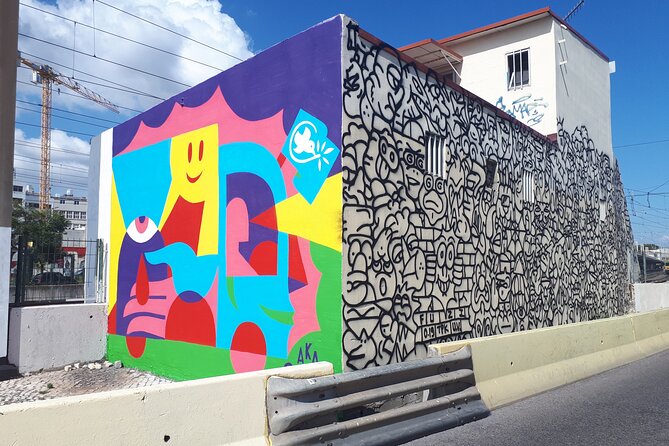
The experience is advertised as being away from large crowds and groups. Group size can vary, but several departures have been described as small, and some have operated almost like private walks. That matters because street-art tours work better when everyone can gather close to a wall and ask questions.
A smaller group also lets the guide adjust the pace. One guide checked that the walking speed suited the group, and guides have been praised for learning names quickly and keeping conversation open.
Do not assume every departure will be private. The safest expectation is a guided walking group that aims for a personal feel. If you want a guaranteed private tour, confirm that before paying.
Practical advice for a better walk
Wear comfortable shoes with firm soles. Lisbon’s cobbles, slopes, and uneven paths are the biggest practical issue, and fashionable but flimsy footwear will make the last hour harder.
Keep your luggage small. Oversize bags are not allowed, and a compact day bag is easier when you are moving through narrow streets and looking upward.
Bring water and dress for the weather. Food and drinks are not included, so handle refreshments yourself before or after the tour. Since the route ends in Graça, it is sensible to know how you will continue from there.
If you are new to Lisbon, consider taking this walk early in your stay. It can change the way you see the city for the rest of your visit. Several people found themselves noticing street art they would previously have walked past, which is perhaps the best result a street-art tour can offer.
Who should book this Lisbon street-art tour?
I would recommend it to anyone who wants an active introduction to Lisbon’s neighborhoods and creative culture. It is especially well suited to visitors who enjoy stories, close observation, and the chance to ask questions rather than simply collect photos.
You should also book if you have already taken a conventional history tour and want a different way to understand Portugal. The street art provides a modern route into subjects such as culture, politics, community life, and the changing identity of Lisbon.
I would hesitate if you have difficulty walking uphill or over uneven surfaces, need wheelchair access, or dislike spending three hours outdoors. The tour is also less useful if you only want a short, self-guided look at the city’s biggest murals.
For most reasonably fit visitors, the combination of art, history, local voices, and lesser-seen streets makes this a strong use of half a day. You finish with more than photographs. You learn how to look.
FAQ
Where does the Lisbon Street Art Tour meet?
Meet the guide at Rua Luz Soriano 67, in front of the Interpress building.
How long does the tour last?
The activity is advertised as a three-hour walking tour. The route includes Bairro Alto, Chiado, Baixa de Lisboa, Mouraria, and Graça.
Which neighborhoods does the tour visit?
The route covers Bairro Alto, Chiado, Baixa de Lisboa, Mouraria, and the Graça Historic District.
What language is the tour offered in?
The live tour guide speaks English.
Are food and drinks included?
No. Food and drinks are not included in the tour price.
Does the tour include hotel pickup and drop-off?
No. Hotel pickup and drop-off are not included.
What should I bring?
Bring comfortable shoes. You should also be prepared to walk on unpaved or uneven terrain.
Is the tour suitable for wheelchair users?
No. The activity is not suitable for wheelchair users, and participants must be able to walk on uneven ground.
Can I cancel the tour for a refund?
Yes. You can cancel up to 24 hours in advance for a full refund. You can also reserve now and pay later, subject to the booking terms.
Fresh finds around Lisbon
- Sanctuary of Fátima and Coimbra City Tour★ 4.5 · 51 reviews
- Sintra/Lisbon: Sintra & Quinta da Regaleira Tour with Ticket★ 4.4 · 51 reviews
- Jeronimos Monastery Guided Tour – Small Groups – Tickets Included★ 5.0 · 51 reviews
- Lisbon: Private Christmas Lights Tour by Eco Tuk Tuk★ 4.9 · 51 reviews
- Peniche: Berlengas Island Catamaran Tour – Round Trip★ 4.6 · 51 reviews
- Half day Spa Water Therapy experience at THE SPA at Corinthia Lisbon★ 4.5 · 51 reviews
- Lisbon: Private Tuk-Tuk Tour for 2 hours★ 4.7 · 51 reviews
- Premium Lisbon Airport Transfer to Lisbon★ 5.0 · 51 reviews
Street Art, compared.


3-Hour Guided Street Art Walking Tour of Lisbon
Read our review →


Lisbon Street Art – Private Guided Tour in a Electric Tuk Tuk
Read our review →Browse the lists this tour appears in