
Reviewed · WALKING TOURS
Walking tour: Lisbon in the Shadows of World War II
Lisbon’s World War II story is less about battlefields than about people waiting for visas, spies trading information in cafés, and a neutral dictatorship trying to control a city filled with fear. This three-hour walk brings that uneasy period into the streets between Marquês de Pombal and Cais do Sodré.
I like the focus on ordinary places, including pensions, aid groups, cafés, and hotel lobbies, rather than only grand monuments. I also like the human detail, from refugees trapped in Lisbon to figures such as Josephine Baker, Alfred Döblin, and Leslie Howard. The main drawback is that this is a serious, talk-heavy walk, and the route may not suit anyone with mobility problems despite the activity also being described as wheelchair accessible.
In This Review
- Key points
- Why wartime Lisbon makes such a compelling walking tour
- Starting at Praça Marquês de Pombal and Parque Eduardo VII
- Avenida da Liberdade and the wartime city center
- Restauradores Square and stories in public view
- Baixa, Chiado, and the cafés where news traveled
- Praça Dom Pedro IV and the human side of exile
- Espionage, surveillance, and the threat of invasion
- Ending at Cais do Sodré and the river
- Price, group size, and what you receive
- Who should book this Lisbon history walk?
- Practical advice before you go
- Should you book Lisbon in the Shadows of World War II?
- FAQ
- Where does the tour start?
- Where does the tour end?
- How long does the walking tour last?
- Which languages are available?
- Is food included?
- Can I cancel the booking?
Key points
- Lisbon as a wartime waiting room: Learn why refugees gathered in neutral Portugal while waiting for visas and passage out of Europe.
- Espionage in everyday places: Historic cafés such as Café Chave d’Ouro and Pastelaria Suiça provide the setting for stories of British, German, and American agents.
- A route through central Lisbon: Walk from Praça Marquês de Pombal down Avenida da Liberdade, through Baixa and Chiado, to the river.
- The Estado Novo in focus: Understand how António de Oliveira Salazar’s dictatorship handled refugees, surveillance, and wartime pressure.
- A well-prepared guide: Leonor Abrantes leads the tour in English or German and may use extra historical material during the walk.
- A useful city-center finish: The tour ends at Cais do Sodré, close to the Time Out Market for a snack or light meal.
Why wartime Lisbon makes such a compelling walking tour
Lisbon escaped direct wartime destruction, but it did not escape the war. Portugal remained officially neutral under Salazar’s Estado Novo regime, making the capital one of the few places in Europe where refugees, diplomats, journalists, smugglers, and spies from opposing sides could cross paths.
That neutrality gave Lisbon two very different identities. For people fleeing Nazi persecution, it could be a temporary refuge and a place of great anxiety. Many had to wait for documents, visas, money, or a ship. The city became a waiting room and, at times, a sad paradise: safer than the countries they had left, but hardly a place where they could settle freely.
For intelligence agents, Lisbon offered access to shipping routes, embassies, hotels, newspapers, and international visitors. British, German, and American operatives moved through the same city while Portuguese political police watched them. This is the kind of setting that works well on foot because the story is tied to streets and public places rather than a single museum room.
You will not spend three hours looking at military hardware or battlefield remains. Instead, the guide connects familiar central Lisbon locations to the people who passed through them. That makes this a good choice if you enjoy political history, personal stories, and the way major events alter an ordinary city.
More Walking Tours in Lisbon
- Lisbon: History, Stories and Lifestyle Walking Tour
★ 4.8 · 10,902 reviews - Best of Lisbon Small-Group Guided Walking Tour
★ 5.0 · 4,869 reviews - Lisbon: Food and Wine Small Group Walking Tour
★ 4.9 · 4,082 reviews
Starting at Praça Marquês de Pombal and Parque Eduardo VII
Meet in front of Café A Padaria Portuguesa at Praça Marquês de Pombal 12. This is a practical central starting point, and the nearby café can help you arrive early with a coffee or pastry, though food and drinks are not included in the tour.
The opening focus is the former Hotel Aviz, once one of Lisbon’s best-known hotels during the wartime period. Hotels mattered because they brought together diplomats, wealthy refugees, journalists, officials, and people whose real purpose in the city was not always obvious. A hotel could be a place of safety, but it could also be a place where information changed hands.
From here, the walk moves into Parque Eduardo VII for about 15 minutes. The park offers an open setting and a broad view down toward the city and river. In a tour about a crowded wartime capital, this pause provides useful visual orientation before you enter the central streets.
I would not expect a long photo stop here. The value is the guide’s explanation and the view, not a special World War II monument. Wear comfortable shoes, since the route soon becomes a steady urban walk through Lisbon’s central districts.
Avenida da Liberdade and the wartime city center
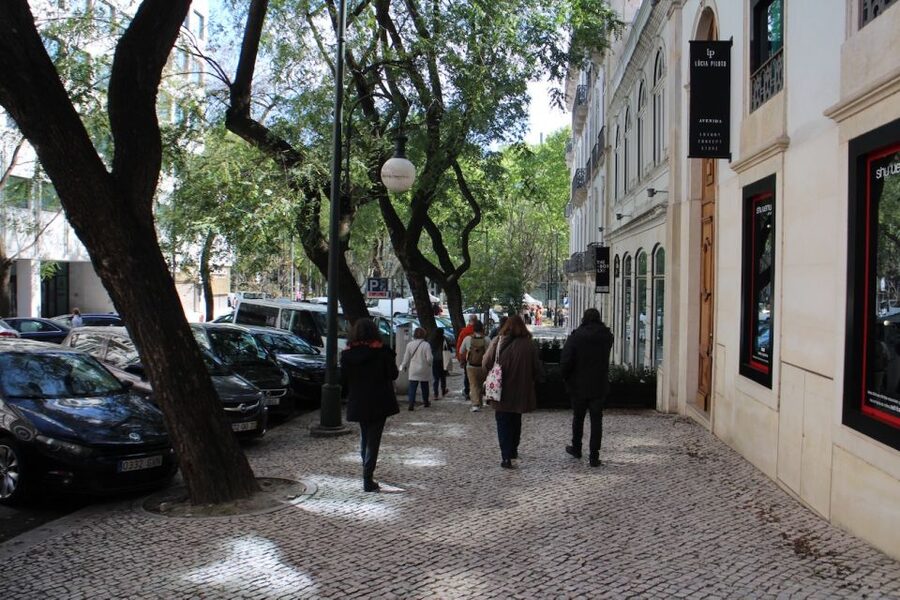
The next section follows Avenida da Liberdade for about 20 minutes. This grand avenue is one of Lisbon’s main ceremonial routes, lined with broad pavements, trees, shops, hotels, and public buildings. In wartime, such a prominent avenue offered a very different experience from a quiet residential street. It was a place to see and be seen.
The guide uses this part of the route to explain how refugees experienced Lisbon and where they found practical help. Not everyone arriving in Portugal could afford a major hotel. Humble pensions and aid organizations became important to people waiting for permission to continue their journeys.
This is where the tour’s social history becomes especially useful. You learn not only that refugees arrived, but also what waiting meant. A person could be physically safe and still have no clear future. A family might need documents, contacts, money, and a way out, while police attention and political restrictions made every step harder.
The avenue is also a good place to hear about the Estado Novo’s refugee policies. Portugal’s neutrality did not mean an open-door policy. The government had its own priorities and controls, and the tour examines those decisions rather than presenting Lisbon as a simple sanctuary.
Restauradores Square and stories in public view
At Restauradores Square, the guided portion lasts about 15 minutes. This is a natural place to think about Lisbon as a meeting point for people with very different aims. Refugees passed through hoping to leave. Spies watched events and contacts. Local authorities tried to keep order and protect the regime.
The square’s central location also makes the contrast clear. The wartime story was not confined to back rooms. People living normal lives could see foreign visitors, hear rumors, and sense that the city was connected to events far beyond Portugal.
The tour’s approach is strongest when it links public streets to private worries. Lisbon residents were not all equally aware of what was happening, and the city’s cafés and hotels could feel ordinary one moment and politically charged the next. You get a sense of how international conflict can enter daily life without a single shot being fired nearby.
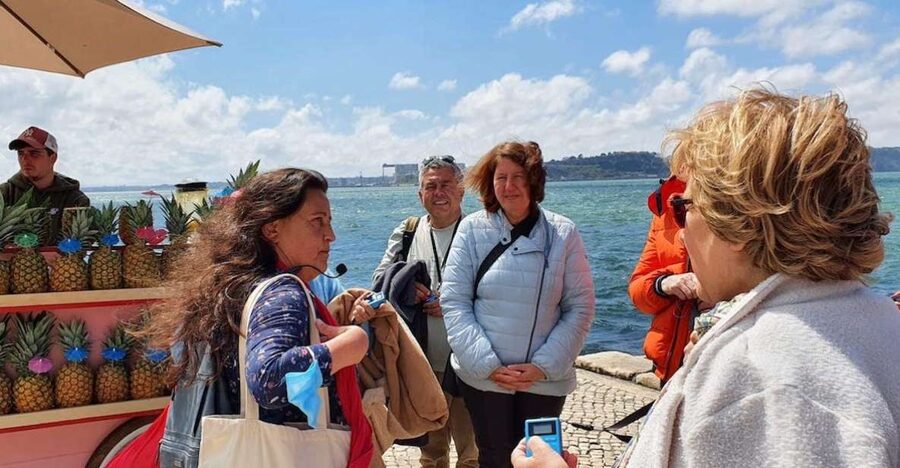
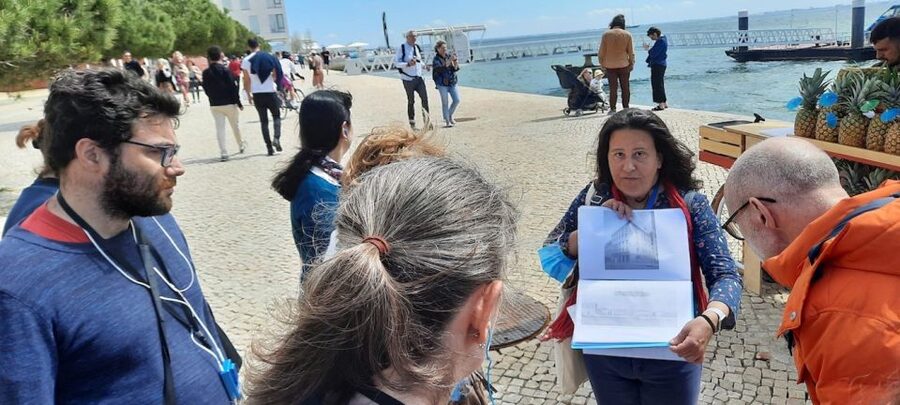
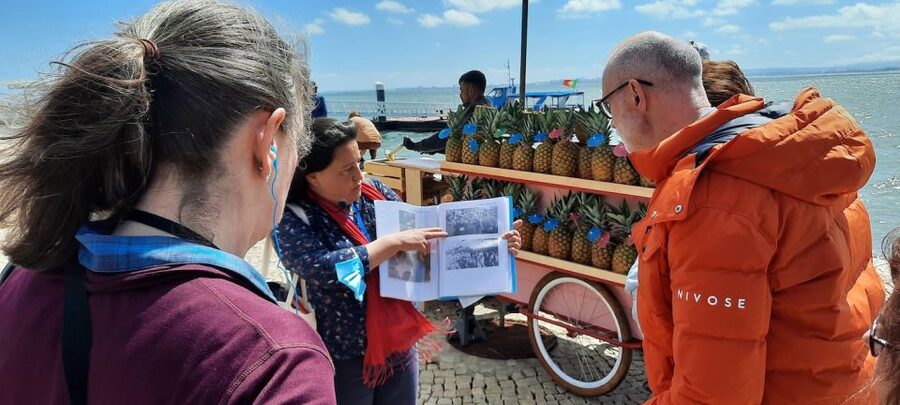
Because the walk is guided in English or German, ask questions as you go if a particular refugee story or political detail catches your attention. The supplied information identifies Leonor Abrantes as the guide, and one specific booking experience praised her preparation with extra material. That suggests you may see documents, images, or other supporting items beyond the spoken route, though the exact material can vary.
More walking routes in Lisbon:
- Best of Lisbon Walking Tour: Rossio, Chiado & Alfama
★ 4.9 · 2,700 reviews - Age of Discoveries Walking Tour in Belém
★ 5.0 · 1,513 reviews - Sintra & Cascais Day Tour with Pena Palace Entry and Gardens Walk
★ 5.0 · 962 reviews - Lisbon Roots – Small group Food & Culture Walking Tour w/tastings
★ 5.0 · 910 reviews
Baixa, Chiado, and the cafés where news traveled
The Baixa section is short, about 10 minutes, but it helps connect the route’s major themes. This district is one of Lisbon’s central commercial areas, so it is a fitting place to discuss how news, rumors, and foreign contacts circulated through the city.
From Baixa, the route reaches Chiado for about 15 minutes. Here the focus turns to cafés such as Café Chave d’Ouro and Pastelaria Suiça. These were not merely places to sit with a pastry. Cafés offered access to newspapers, conversation, and a steady flow of people from different countries.
During the war, news could bring excitement and fear in equal measure. Reports from the front changed the mood. A café conversation could involve political opinion, personal news, or information that someone else wanted to overhear. The presence of agents from opposing factions added another layer of tension.
I like this part because it avoids the usual trap of treating espionage as a world of glamorous code names and dramatic escapes. The more useful question is how spying fits into ordinary urban life. A café, hotel, train station, or port can become important simply because people pass through it.
You should keep your expectations practical. The tour does not include food or drinks, and the description does not promise entry into these cafés. You will hear about their role as you pass through the city, rather than receiving a café tasting or a dedicated indoor visit.
Praça Dom Pedro IV and the human side of exile
The route continues to Praça Dom Pedro IV, commonly known as Rossio Square, for around 15 minutes. This is one of central Lisbon’s best-known public spaces, and it works well as a stage for stories of refugees waiting for their next move.
The people connected with wartime Lisbon were not all anonymous. Josephine Baker, Alfred Döblin, Leslie Howard, and other public figures passed through the city by choice or circumstance. Their accounts offered outside views of Lisbon and its inhabitants, sometimes admiring and sometimes unsettling.
These personal impressions matter because they show how unusual Lisbon could feel to someone arriving from occupied or threatened Europe. The city was safer than many places, yet it was not free from fear, official control, or uncertainty. Public figures could attract attention, while ordinary refugees often had fewer resources and fewer options.
At this point, the tour should feel less like a list of famous names and more like a portrait of a city under pressure. You are tracing different kinds of movement: people escaping persecution, agents seeking information, and locals trying to maintain a normal routine.
The pace may feel slow if you prefer a standard sightseeing walk that covers monuments quickly. That is not a flaw so much as a matter of fit. The route gives time to listen and connect places to stories, so this is better for an engaged audience than for someone who wants nonstop photo stops.
Espionage, surveillance, and the threat of invasion
Lisbon’s neutral status did not make it politically relaxed. British, German, and American spies worked in and around the city, while the Portuguese political police monitored activity. The tour explores this shadow world without leaving the main streets.
The city also had to prepare for the possibility of an Axis invasion. Important monuments and buildings were considered in plans for protection against possible bombing. That detail adds a practical layer to the tour. War planning was not only about soldiers and weapons. It affected buildings, public spaces, official behavior, and the appearance of security.
I find this part valuable because it helps you read Lisbon differently after the tour. A familiar square or avenue can become evidence of a city trying to look calm while preparing for a crisis. The absence of fighting in the streets does not mean residents felt fully secure.
The political context is important here. Salazar’s Estado Novo was an authoritarian regime, and its position on refugees, surveillance, and neutrality cannot be understood simply as benevolent or cynical. The guide’s job is to show the competing pressures: humanitarian need, diplomatic risk, domestic control, and the fear of invasion.
Ending at Cais do Sodré and the river
The walk ends at Cais do Sodré, near the river. This is a practical finish because it leaves you close to transport, the waterfront, and the Time Out Market. A snack or light meal afterward is easy to arrange, although it is not part of the tour.
The river is also a fitting final setting. During the war, departure mattered as much as arrival. For many refugees, Lisbon was valuable because it offered a possible route onward, not because it was their intended home.
The final location gives the tour a natural sense of movement. You begin near one of the city’s grand northern avenues and finish beside the water, having followed the path from hotels and public squares to cafés, historic districts, and the port-side city.
Since the tour lasts three hours, you can plan another activity afterward. I would leave a little breathing room rather than booking something at the exact finish time. The walk takes place rain or shine, so bring suitable clothing and shoes for the forecast.
Price, group size, and what you receive
The listed price is $170 per group of up to six people. For a full group, that works out to roughly $28 per person for a three-hour private experience. For two people, the effective cost is much higher, but you also get a more personal format than a large public walking tour.
The activity is described as a private group, with small-group information also listing up to 12 people. Since the price specifically covers up to six, confirm the exact group limit when booking if your party is larger or if privacy is important to you.
Value depends on your interests. If you want a general introduction to Lisbon, there are less specialized ways to spend three hours. If you care about World War II, refugee routes, dictatorship, or espionage, the focused subject gives the walk a clear purpose and makes the price easier to justify.
The guide’s preparation is another reason the cost may make sense. Leonor Abrantes leads the experience in English or German, and the tour can include supplemental historical materials. One booking described the three hours as enjoyable and informative, with the guide arriving well prepared. That is exactly what you want from a subject that depends on context rather than dramatic physical attractions.
Who should book this Lisbon history walk?
You should consider this tour if you:
- Enjoy European political and social history.
- Want to understand Lisbon’s role in World War II beyond its official neutrality.
- Prefer a guide-led walk to reading plaques or visiting a museum alone.
- Are interested in refugees, exile, diplomacy, and espionage.
- Have already seen Lisbon’s main sights and want a more focused subject.
- Are comfortable walking for three hours in changing weather.
It may not suit you if you want a relaxed café crawl, a food tour, or a short route with frequent sitting breaks. The subject is serious, and the experience depends on listening carefully.
The mobility information needs attention. The tour is marked wheelchair accessible, but it is also listed as unsuitable for people with mobility impairments. That is a direct contradiction, so contact the provider before booking if this affects you. Do not assume that an accessible listing guarantees an easy route over Lisbon’s streets and surfaces.
Practical advice before you go
Arrive at the meeting point in front of Café A Padaria Portuguesa at Praça Marquês de Pombal 12. The description does not include hotel pickup, so you need to make your own way there.
Wear walking shoes and prepare for rain or sun. The route covers Parque Eduardo VII, Avenida da Liberdade, Restauradores, Baixa, Chiado, Rossio, and Cais do Sodré, with several stretches on public streets and squares.
Bring water, since food and drinks are not included. You can save your appetite for the finish near the Time Out Market, which is within walking distance of Cais do Sodré.
The tour can be booked with free cancellation up to 24 hours in advance, and the reserve-now, pay-later option keeps your plans flexible. Availability and starting times vary, so check those details for your date.
Should you book Lisbon in the Shadows of World War II?
Book it if you want the Lisbon that existed behind the postcard view: a neutral capital filled with people waiting for escape, agents watching one another, cafés carrying news, and a dictatorship trying to control the uncertainty. The route is specific, thoughtful, and grounded in places you can still see.
I would especially recommend it to repeat visitors and history-minded first-timers who do not need another standard tram or monument tour. Skip it if your priority is food, nightlife, or a light introduction to the city. For the right audience, the $170 private-group price buys more than a walk. It gives you a way to understand why Lisbon mattered so much during Europe’s darkest years.
FAQ
Where does the tour start?
It starts in front of Café A Padaria Portuguesa at Praça Marquês de Pombal 12.
Where does the tour end?
The tour ends at Cais do Sodré, near the river and within walking distance of the Time Out Market.
How long does the walking tour last?
The tour lasts three hours.
Which languages are available?
The live guide is available in English or German.
Is food included?
No. Food and drinks are not included, though you can find a snack or light meal near the Time Out Market after the tour.
Can I cancel the booking?
You can cancel up to 24 hours in advance for a full refund. The reserve-now, pay-later option is also available.
Fresh finds around Lisbon
- Lisbon: Tuk Tuk City Tour★ 3.6 · 7 reviews
- Fatima Full day Private Tour★ 5.0 · 7 reviews
- Lisbon: Highlights and Hidden Gems Tour★ 5.0 · 7 reviews
- Private Tour to Evora and Monsaraz from Lisbon★ 5.0 · 7 reviews
- Discover Sintra Beauty with a Guided Journey from Lisbon★ 5.0 · 7 reviews
- Private Half-Day Tour to Sintra★ 3.4 · 7 reviews
- Lisbon: Sunset and Wine Catamaran Tour★ 5.0 · 7 reviews
- Nazaré: Beaches of Nazaré Guided E-Bike Tour★ 4.9 · 7 reviews
Walking Tours, compared.
Lisbon: History, Stories and Lifestyle Walking Tour
Read our review →
Best of Lisbon Small-Group Guided Walking Tour
Read our review →
Lisbon: Food and Wine Small Group Walking Tour
Read our review →
Best of Lisbon Walking Tour: Rossio, Chiado & Alfama
Read our review →
Sintra & Cascais Day Tour with Pena Palace Entry and Gardens Walk
Read our review →
Lisbon Roots – Small group Food & Culture Walking Tour w/tastings
Read our review →
Lisbon: Starter Walking Tour to the highlights in German
Read our review →Browse the lists this tour appears in