
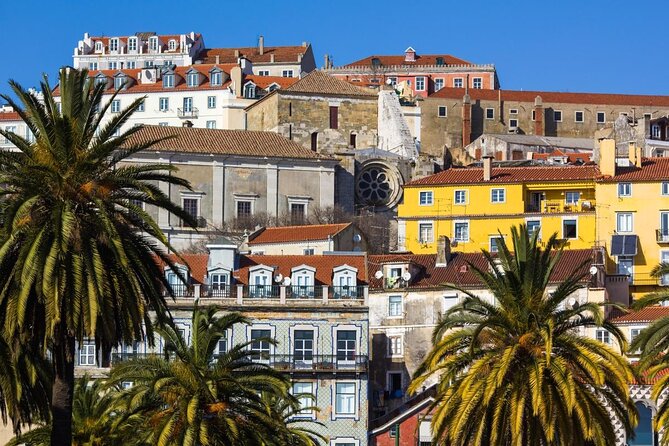
Reviewed · ALFAMA & OLD TOWN WALKS
Small-Group Alfama Walking Tour
Lisbon reveals itself best on foot, and this tour begins high above the city before winding downhill through Alfama’s narrow lanes. You’ll see the Castle of Saint George, Mouraria, the Tagus, old churches, a working neighborhood, and the waterfront in one well-shaped three-hour route. The small group, capped at eight, keeps the walk personal.
I like the two excellent viewpoints at the start and near the middle, plus the way guides such as Andriy and Rui connect Portugal’s past with present-day life. I also like the mostly downhill route and the chance to see Alfama beyond its postcard facades. The catch is the steep climb to the meeting point at Miradouro da Graça, along with steps and uneven streets during the walk.
In This Review
- Key points at a glance
- Starting above Lisbon at Miradouro da Graça
- Graça’s convent, terraces, and working-class stories
- São Vicente de Fora and the Tuesday or Saturday market
- The National Pantheon and Alfama’s everyday streets
- Santo Estêvão and Alfama’s best views
- São Miguel, the cathedral, and Saint Anthony
- Why the small group changes the walk
- Is $39.50 a fair price?
- Who should book this Alfama walk?
- Should you book it?
- FAQ
- How long is the Small-Group Alfama Walking Tour?
- Where does the tour begin?
- Where does the tour end?
- How large is the group?
- What language is offered?
- Is the Feira da Ladra flea market included every day?
- Are entrance fees included?
- Is the walk suitable for people with difficulty walking?
- What is the cancellation policy?
Key points at a glance
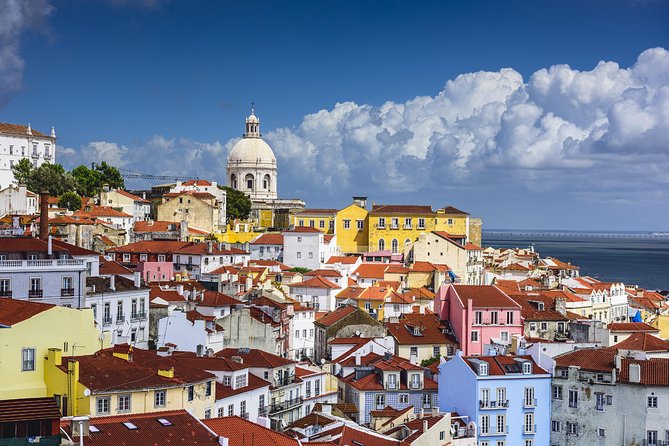
- Two hilltop viewpoints: Start at Miradouro da Graça and later pause at Miradouro de Santo Estevão for broad city and Alfama views.
- A maximum of eight people: You can ask questions easily, and a solo visitor may receive especially direct attention.
- Feira da Ladra on market days: The famous Thieves Market appears in the route on Tuesdays and Saturdays.
- Churches with different stories: See São Vicente de Fora, São Miguel, Lisbon Cathedral, and Saint Anthony’s Church.
- Mostly downhill, but not flat: The route is manageable for many walkers, though the starting hill, stairs, and cobbles matter.
- A useful $39.50 introduction: The fee includes a local professional guide and escort, but not food, drinks, hotel transfers, or cathedral admission.
Starting above Lisbon at Miradouro da Graça
Meet your guide at Miradouro da Graça, officially named Miradouro da Graça, Sophia de Mello Breyner Andresen. This is more than a meeting point. It gives you an instant visual map of Lisbon.
From the terrace, you can look toward downtown, the Castle of Saint George, Mouraria, and the Tagus River. A short introduction follows before the group sets off. That opening view helps the rest of the walk make sense, since you’ll spend the next few hours descending through the old quarters spread below you.
The practical issue is getting there. If you walk to the meeting point from a lower part of Lisbon, you’ll face a serious uphill approach. One useful tip is to use a taxi or another form of transport if steep climbs are a problem. The tour itself is largely downhill, but you should not confuse that with an easy, flat stroll.
More Walking Tours in Lisbon
- Lisbon: History, Stories and Lifestyle Walking Tour
★ 4.8 · 10,902 reviews - Best of Lisbon Small-Group Guided Walking Tour
★ 5.0 · 4,869 reviews - Lisbon: Food and Wine Small Group Walking Tour
★ 4.9 · 4,082 reviews
Graça’s convent, terraces, and working-class stories
The first church stop is Igreja e Convento da Graça, one of Lisbon’s oldest churches and convents. Augustinian monks lived here until 1834, giving the site a long religious connection to the neighborhood.
The listed visit is brief, about 10 minutes, so think of it as a guided introduction rather than a long church tour. Your guide supplies the context that a quick look from the street cannot. Andriy, praised for connecting historical Portugal with modern Lisbon, has been especially appreciated for explaining how places fit into the larger story.
The route then moves through a charming small street lined with houses, broad terraces, bougainvillea, and other flowers. This is one of the pleasant contrasts of the walk. Lisbon’s old districts are not only grand monuments. They are also residential lanes where daily life carries on above cafés, shops, and stone steps.
You’ll also hear about trade union activism in Lisbon. That detail matters because it keeps the tour from becoming a parade of kings and churches. The social history of the city, including work and political activity, gives Alfama and its neighboring districts a more grounded character.
São Vicente de Fora and the Tuesday or Saturday market
Igreja de São Vicente de Fora brings another major historical stop. The church is dedicated to Saint Vincent the Deacon, Lisbon’s patron saint, and its importance reaches beyond its impressive exterior.
The stop lasts around 10 minutes. That is enough for an explanation and a look, but not enough for a slow, detailed interior visit. If you want to spend a long time inside every church, this tour may feel brisk. If you want a broad introduction to several sites, the short pauses keep the route moving.
Next comes Feira da Ladra, Lisbon’s old flea market. Its name translates as Thieves Market, and the market is included when the tour runs on Tuesdays or Saturdays. You’ll have about 15 minutes to take in its atmosphere and browse for local curiosities.
Do not count on a long shopping session. One account of the route notes that a Saturday market visit left little time to shop, and some people may prefer more time in Alfama’s lanes. I see the market as a useful snapshot rather than the main event. It gives you a look at a less polished side of Lisbon, with the freedom to browse without building the whole tour around purchases.
The National Pantheon and Alfama’s everyday streets
The National Pantheon follows, with an exterior visit of about five minutes. Its monumental dome and scale make it easy to spot, and the building serves as a mausoleum for important Portuguese men and women.
The short stop is best for orientation and photographs. Admission is not included, and the itinerary specifies an exterior visit, so you should not expect an indoor tour here. That clear limitation is worth noting if the Pantheon is high on your must-see list.
Then the route enters Alfama itself for about 30 minutes. This is the heart of the experience. Your guide introduces you to the neighborhood and the everyday life of its inhabitants, not just its famous viewpoints.
Alfama is made for wandering. Its lanes are narrow and intimate, with sudden turns, small doorways, old facades, and steps that reveal new angles at every few minutes. The walk’s small size matters here. A group of four or six can stop without blocking the street in the same way a large tour group might.
Guides such as Andriy and Rui have been praised for answering questions at length and sharing stories that do not usually appear in standard history books. That is the value of a local-led walk: you get a sense of how history, neighborhood identity, food, traditions, and modern life overlap.
You may also have a chance to pause for a snack at a small café, but food and drinks are not included. Treat that as an optional moment, not a promised part of the package.
More old-town wanders:
- Alfama Tour in Lisbon Old Town
★ 5.0 · 4,936 reviews - Private Lisbon Sightseeing Tuk-Tuk Tour: Alfama, Belém & More
★ 5.0 · 4,277 reviews - Lisbon: Hills, Alfama, and Mouraria Tour by Electric Bike
★ 4.8 · 3,438 reviews - Best of Lisbon Walking Tour: Rossio, Chiado & Alfama
★ 4.9 · 2,700 reviews
Santo Estêvão and Alfama’s best views
Miradouro de Santo Estêvão is one of the route’s strongest stops. The viewpoint offers a fine look over Alfama, while the tiny streets around it show why the district feels so different from Lisbon’s broad central avenues.
The official stop is only about five minutes, but the view can help you understand the route you have just walked. You are not simply crossing from attraction to attraction. You are moving through a compact old quarter shaped by hills, lanes, churches, and long-settled homes.
The tour also includes an exterior look at a building connected with Alfama’s relationship to Fado music. Fado is one of the clearest cultural links between Lisbon’s neighborhoods and its musical identity, so this stop gives the subject a physical setting.
Do not expect a Fado performance. The point is learning about the connection, not attending a show. If Fado is a major interest, use the guide’s explanation as a starting point for a separate evening plan.
São Miguel, the cathedral, and Saint Anthony
Igreja de São Miguel is another exterior stop. The church survived the earthquake of 1755, one of Lisbon’s defining historical events, and the guide explains its place in the old district.
Again, this is a short pause of about five minutes. The benefit is variety. You see several churches with different roles and stories without spending the entire morning inside religious buildings.
Lisbon Cathedral receives a more substantial visit. You’ll have about 10 minutes for a detailed interior tour, though admission is not included in the price. Check the ticket cost when planning your budget, since this is one of the extra expenses beyond the tour fee.
The cathedral is a useful final religious stop because it brings together the city’s long Catholic tradition and its central place in Lisbon’s old quarters. The guide can help you notice details that are easy to miss during a quick independent visit.
The final attraction is the Church of Saint Anthony, built on the site where Saint Anthony was born. The visit lasts about 15 minutes and admission is included. This gives the tour a stronger ending than simply finishing after a viewpoint or street walk.
The route ends at Praça do Comércio, the broad waterfront square. That is a practical finish. You can continue along the river, find food, or connect with other parts of central Lisbon without having to climb back into Alfama.
Why the small group changes the walk
The maximum group size is eight, but the actual group can be smaller. It may be four people, six people, or even one solo participant. That range makes a real difference in an old neighborhood where streets are tight and stopping points are small.
With Andriy, the guide is described as especially strong in English, with interests that include Portuguese history, international relations, and economics. Rui is also praised for answering questions, giving people time to look around, and taking photographs for a solo participant. The guide names and descriptions suggest that this is not a script-only outing. You can ask about modern Portugal as well as Alfama’s past.
The pace appears considerate rather than rushed. One especially useful point is that the guide allows time to view sites instead of pushing the group straight onward. Still, three hours covers a lot: viewpoints, several churches, a market, Alfama, Fado connections, and the waterfront. Expect a well-paced overview, not an exhaustive tour of every building.
English is the only listed language. A mobile ticket is provided, and confirmation arrives at booking. The meeting and end points are fixed, so plan around the start at Graça and the finish at Praça do Comércio.
Is $39.50 a fair price?
At $39.50 per person, this is a reasonable price for a three-hour guided walk with a maximum of eight people. The fee includes local taxes, a local professional guide, and a tour escort or host. You are paying for interpretation, route planning, and the chance to ask questions, not just for access to monuments.
The value is strongest if you are new to Lisbon or want a clear introduction before exploring on your own. The guide connects viewpoints, churches, neighborhood life, trade union history, and Fado in one route. That saves you from piecing together the district’s story from separate guidebook entries.
The value is weaker if you mainly want free time at the Feira da Ladra, long interior visits, or a dedicated Fado activity. Food, drinks, hotel pickup, hotel drop-off, and Lisbon Cathedral admission are extra. The National Pantheon and several churches are viewed from outside.
The tour is booked, on average, 47 days ahead. That suggests you should reserve early if your Lisbon dates are fixed, especially because the group is limited to eight people.
Who should book this Alfama walk?
I would choose this tour for a first or early visit to Lisbon, especially if you want history explained in plain language and prefer a small group to a large city tour. It also suits solo visitors. A group of one can receive unusually direct attention, and Rui has been noted for helping a solo participant with photographs.
It is a good match for curious walkers who enjoy neighborhood detail: flowers on terraces, narrow lanes, church survival after the 1755 earthquake, old markets, and the link between Alfama and Fado. It also works well for people who want context before returning to the area alone.
I would think twice if you have difficulty walking. The route has hills, stairs, and uneven streets, even though much of it is downhill. Children must be accompanied by an adult, service animals are allowed, and the route is near public transportation. The experience requires good weather, so a poor-weather cancellation leads to another date or a full refund.
Free cancellation is available up to 24 hours before the start time. After that point, the payment is not refunded, and late changes are not accepted.
Should you book it?
Book this walk if you want an efficient, personal introduction to Alfama with strong views and a guide who can explain both old Portugal and life in Lisbon today. The small group and downhill route add real value, while the ending at Praça do Comércio makes the rest of your day easy to plan.
Skip it if you want a slow shopping trip, a full tour inside every church, or a flat route. For most reasonably mobile visitors, though, $39.50 buys a useful three hours in one of Lisbon’s most rewarding districts, with enough local detail to make a later solo wander much more meaningful.
FAQ
How long is the Small-Group Alfama Walking Tour?
The tour lasts approximately three hours.
Where does the tour begin?
You meet the guide at Miradouro da Graça, Calçada da Graça, 1100-265 Lisboa, Portugal.
Where does the tour end?
The walk ends at Praça do Comércio, 1100-148, Lisbon.
How large is the group?
The tour has a maximum of eight people.
What language is offered?
The tour is offered in English.
Is the Feira da Ladra flea market included every day?
The market stop is included on Tuesdays and Saturdays, when Feira da Ladra operates as part of the route.
Are entrance fees included?
Most listed stops are free or exterior visits. Admission to Lisbon Cathedral and the National Pantheon is not included, and the National Pantheon stop is exterior only.
Is the walk suitable for people with difficulty walking?
The tour is not recommended for people with difficulty walking. The route includes hills, stairs, and uneven streets, although much of the walk is downhill.
What is the cancellation policy?
You can cancel at least 24 hours before the start time for a full refund. Cancellations or changes made less than 24 hours before the start are not refunded or accepted. If poor weather cancels the tour, you are offered another date or a full refund.
Fresh finds around Lisbon
- Lisbon: Tuk Tuk City Tour★ 3.6 · 7 reviews
- Fatima Full day Private Tour★ 5.0 · 7 reviews
- Lisbon: Highlights and Hidden Gems Tour★ 5.0 · 7 reviews
- Private Tour to Evora and Monsaraz from Lisbon★ 5.0 · 7 reviews
- Discover Sintra Beauty with a Guided Journey from Lisbon★ 5.0 · 7 reviews
- Private Half-Day Tour to Sintra★ 3.4 · 7 reviews
- Lisbon: Sunset and Wine Catamaran Tour★ 5.0 · 7 reviews
- Nazaré: Beaches of Nazaré Guided E-Bike Tour★ 4.9 · 7 reviews
Alfama & Old Town Walks, compared.

Private Lisbon Sightseeing Tuk-Tuk Tour: Alfama, Belém & More
Read our review →
Lisbon: Hills, Alfama, and Mouraria Tour by Electric Bike
Read our review →
Best of Lisbon Walking Tour: Rossio, Chiado & Alfama
Read our review →
Lisbon Small-Group Food Tour with 18 Tastings in Alfama District
Read our review →
Lisbon: Baixa District Food Tour with Dinner and Drinks
Read our review →
Lisbon E-Bike Tour Commerce Square, Mouraria and Alfama
Read our review →
Lisbon: Old Town TukTuk Tour and Scenic Viewpoints in Alfama
Read our review →Browse the lists this tour appears in