
Reviewed · ALFAMA & OLD TOWN WALKS
Alfama Tour in Lisbon Old Town
Alfama is best understood on foot, one steep lane and worn stone stairway at a time. This tip-based walking tour takes you from Casa dos Bicos through fountains, churches, viewpoints, and old neighborhood squares, with guides such as Hugo, Cecilia, Claudia, Belen, and Nina bringing the stories to life.
I like the mix of major sights and small details, especially the old fountains, Nuno Saraiva’s Lisbon mural, and the chance to hear Fado explained through saudade. I also like the practical local advice at the end. The catch is simple: Alfama is hilly, with stairs and uneven paving, and the meeting point can be hard to spot among nearby churches and tour groups.
In This Review
- Key points to know before you book
- Why this Alfama walk is worth your afternoon
- Starting at Casa dos Bicos
- Fountains that tell Alfama’s story
- Quiet squares and old neighborhood customs
- São Miguel and Lisbon’s popular celebrations
- Climbing toward Santo Estêvão
- Portas do Sol and Santa Luzia views
- Sé Cathedral and Santo António
- Fado, saudade, and a little ginjinha
- How the guides shape the experience
- What to bring and who should book
- Is this Alfama tour a good buy?
- FAQ
- How long does the Alfama Tour last?
- What time does the tour start?
- Where does the Alfama Tour meet?
- Is the tour free?
- Does the tour enter Lisbon Cathedral?
- Is the walk suitable for people with limited mobility?
Key points to know before you book
- Tip-based pricing: The listed booking price is only $3.62 per person, and a tip at the end is expected.
- A two-and-a-half-hour Alfama walk: You visit 12 places, including Portas do Sol, Santa Luzia, Lisbon Cathedral, and Santo António.
- Strong storytelling: Guides connect Moorish rule, the Jewish quarter, dictatorship, empire, migration, and Fado.
- A taste of local life: The walk may include a small serving of ginjinha, sometimes in a chocolate cup.
- Real physical effort: Expect steep grades, stairs, and cobbled lanes. Comfortable walking shoes are essential.
- Small-group feel with a limit of 25: Some departures are much smaller, which helps with questions and pacing.
Why this Alfama walk is worth your afternoon
I like this tour because it treats Alfama as a living neighborhood, not just a collection of photo stops. You get the grand views, but you also pause in quiet squares where guides explain old customs, neighborhood life, and the forces that shaped Lisbon.
The route is offered in English and lasts about two hours and 30 minutes. The listed start time is 3:30 pm, making it a useful choice for your first afternoon in Lisbon or for a day when you want something more structured after lunch.
The booking price of $3.62 looks almost too low, but this is a fully tip-based experience. You are expected to decide what the walk was worth and pay the guide at the end. That arrangement can offer excellent value, especially when the guide is as engaging as Hugo, Cecilia, Mariam, Laura, Jessica, Claudia, or Belen. It also means you should budget for a proper tip rather than treating the advertised price as the complete cost.
The tour has a 4.9 rating from 4,936 reviews, with 99 percent of people recommending it. Those numbers do not remove the need to read the practical details, but they do match the main strength of the experience: the guides tend to make the past clear, funny, and personal.
More old-town wanders:
- Private Lisbon Sightseeing Tuk-Tuk Tour: Alfama, Belém & More
★ 5.0 · 4,277 reviews - Lisbon: Hills, Alfama, and Mouraria Tour by Electric Bike
★ 4.8 · 3,438 reviews - Best of Lisbon Walking Tour: Rossio, Chiado & Alfama
★ 4.9 · 2,700 reviews
Starting at Casa dos Bicos
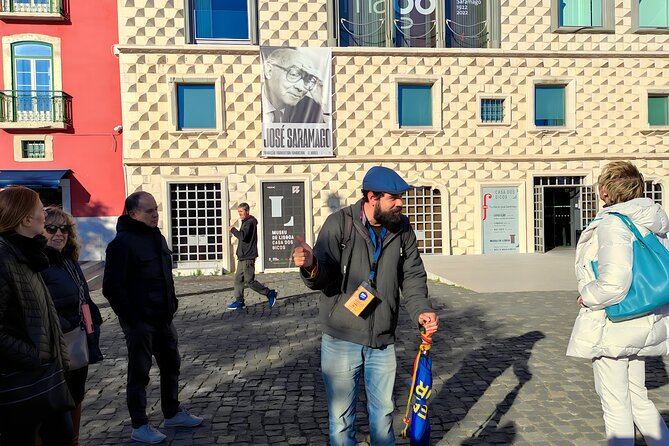
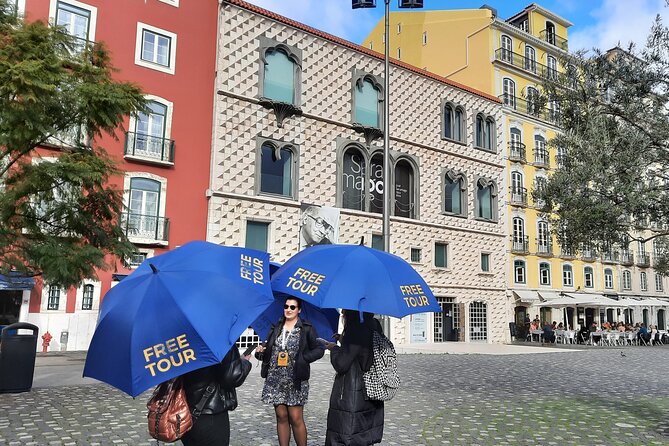
The meeting point is at Rua dos Bacalhoeiros 12A, near Casa dos Bicos, the striking building with its diamond-shaped stone facade. Look for the blue umbrellas, which identify the starting point.
The opening stop lasts about 15 minutes, and admission to Casa dos Bicos is not included. The point here is less about entering a museum and more about setting the scene before you climb into Alfama.
This is also the place where you should get organized. Check your shoes, water, camera, and phone before the group starts moving uphill. One practical issue is finding the guide. The meeting area can be confusing because several groups gather nearby and two churches are close together. Arrive early, look carefully for the blue umbrellas, and do not rely on a vague map pin alone.
Fountains that tell Alfama’s story
The first part of the walk moves into Alfama’s older layers through its public water sources.
At Chafariz D’El Rei, you spend around 10 minutes learning about a fountain believed to be Lisbon’s first public fountain. Built in the 13th century, it used water from the Alfama hillside. This is a useful reminder that the district grew around practical needs as much as grand buildings.
Next comes Largo do Chafariz de Dentro, Alfama’s central plaza. It was once called Chafariz dos Cavalos, or Horse Fountain, and its current name refers to its position within the old Fernandina wall. The stop is free and lasts about 10 minutes.
I find these stops valuable because they give you a way to read the neighborhood. Alfama’s narrow lanes can seem random at first. Stories about water, walls, and old public spaces help explain why the district feels so different from the broad streets of central Lisbon.
Quiet squares and old neighborhood customs
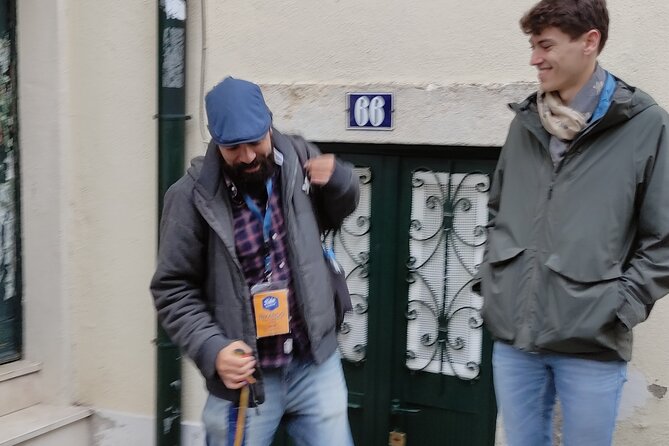
The route continues to Largo de São Rafael and Largo do Salvador, with about 10 minutes at each place.
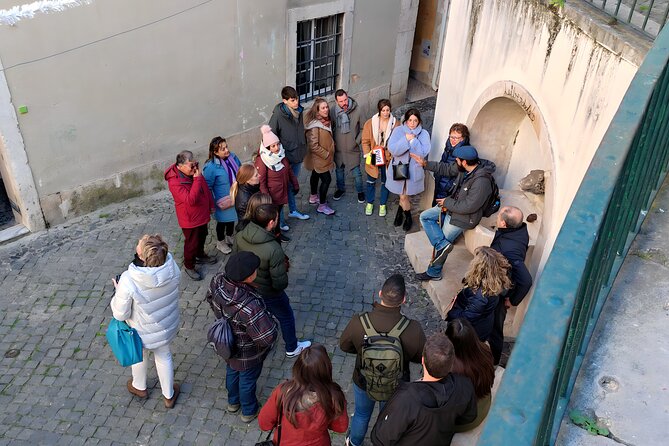
Largo de São Rafael sits beside an ancient wall and is presented as a place where memories of old Alfama still linger. At Largo do Salvador, you sit and listen to stories tied to culture and long-standing customs. These pauses are not packed with formal monuments, and that is the point.
You get time to look at the buildings, listen, and ask questions. Several guides are praised for adjusting the pace to the group, stopping in shaded spots, and allowing time for photographs or a restroom break. That matters in Alfama, where a short distance on the map can take real effort.
If you prefer a fast tour that checks off landmarks, this section may feel slow. I see it as one of the tour’s better qualities. The quieter squares give you a sense of how the neighborhood works beyond the viewpoints.
A handful more Lisbon ideas to compare
- Lisbon City Center Tour – The Unmissable Lisbon
★ 5.0 · 22,234 reviews - Lisbon: Sintra, Pena, Regaleira, Cabo da Roca & Cascais
★ 4.7 · 19,656 reviews - Lisbon: Jerónimos Monastery Entrance Ticket
★ 4.1 · 14,164 reviews - Lisbon: History, Stories and Lifestyle Walking Tour
★ 4.8 · 10,902 reviews
São Miguel and Lisbon’s popular celebrations
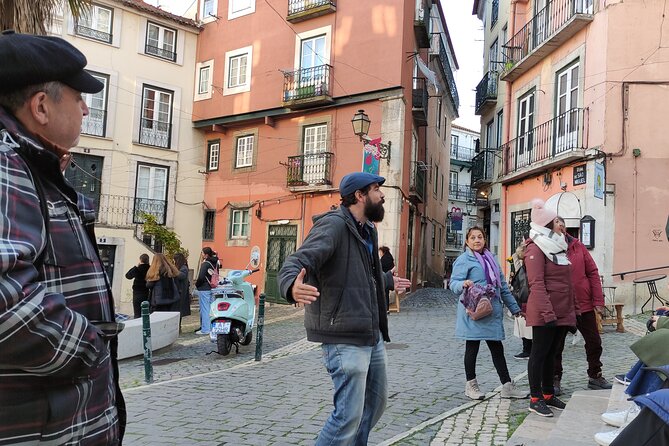
Igreja de São Miguel and its square receive about 15 minutes. The church and surrounding space are linked with Lisbon’s Popular Saints festivities, a major part of the city’s traditional celebrations.
This stop helps connect architecture with local life. You are not simply looking at a church facade. You are hearing how a public square becomes a place for celebration, memory, and neighborhood identity.
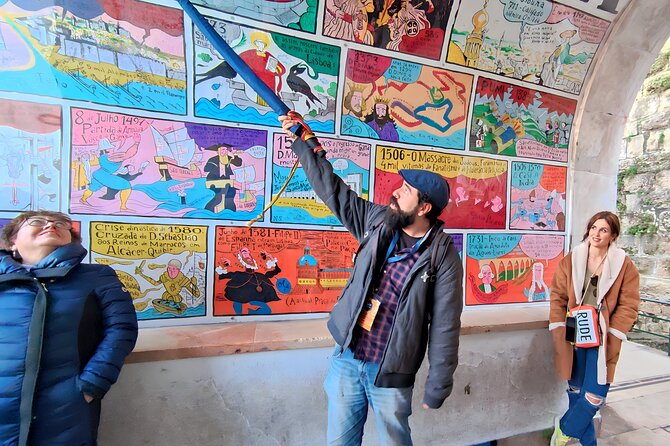
The tour continues to the History of Lisbon mural by Nuno Saraiva, with about 10 minutes at the site. This is one of Alfama’s most recognizable murals and gives the walk a modern visual break after the older churches and fountains.
The mural is especially useful if you like history presented in a quick, visual way. Your guide can point out how Lisbon’s past is remembered and interpreted in public art. It also makes a good photo stop without requiring an admission ticket.
Climbing toward Santo Estêvão
The walk now enters Alfama’s maze of lanes and climbs toward the Miradouro de Santo Estêvão. The stop lasts about 15 minutes, depending on the group’s pace.
This is where the physical side of the tour becomes more obvious. The route includes steep grades, stairs, and cobbled surfaces. One person who found the hills challenging still described the guide as patient, while another participant in their late seventies managed to keep up because the pace was adjusted.
That tells you what to expect. You do not need to race, but you do need moderate physical fitness. Wear shoes with firm soles, and take the climbs seriously if your knees, balance, or stamina are limited. Service animals are allowed, and the tour operates near public transportation, but the walking route itself remains demanding.
At Santo Estêvão, the reward is a quieter view over the district. It is a good place to catch your breath and see how the lanes you just walked fit together.
Portas do Sol and Santa Luzia views
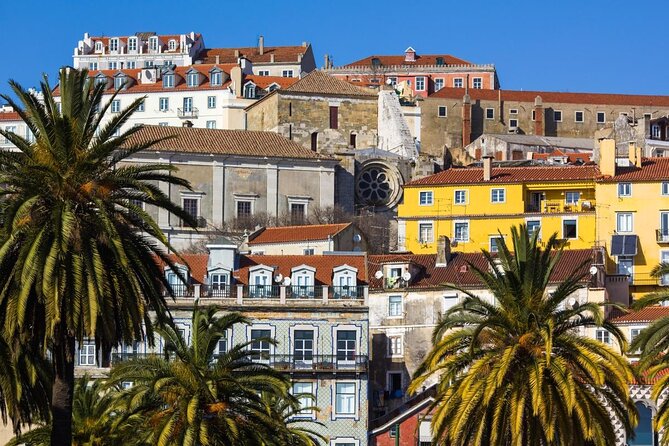
Miradouro das Portas do Sol is one of the tour’s major visual highlights. You spend about 10 minutes on this broad balcony overlooking Alfama. It is the sort of place that explains why Lisbon photographs so well: rooftops, church domes, and the city’s layered slopes spread out below you.
Bring a camera, but also listen to the guide. The view is easy to admire on your own, while the local explanation gives it context. The tour may discuss the neighborhood’s Moorish past, the 1755 earthquake, and the way Alfama’s lanes escaped some of the straightening that changed other parts of Lisbon.
The next stop is Miradouro de Santa Luzia, another 10-minute visit. Its tiled walls, terrace, and view make it one of Lisbon’s most romantic spots. It can be busy, so you may not get a quiet corner for long. Still, the stop earns its place because it combines art, architecture, flowers, and a clear view over Alfama.
These viewpoints are a strong reason to choose an afternoon departure. The listed start time is 3:30 pm, though light and conditions vary by season. You should not book this walk only for a particular sunset, since the tour timing and pace are not designed around a guaranteed sunset view.
Sé Cathedral and Santo António
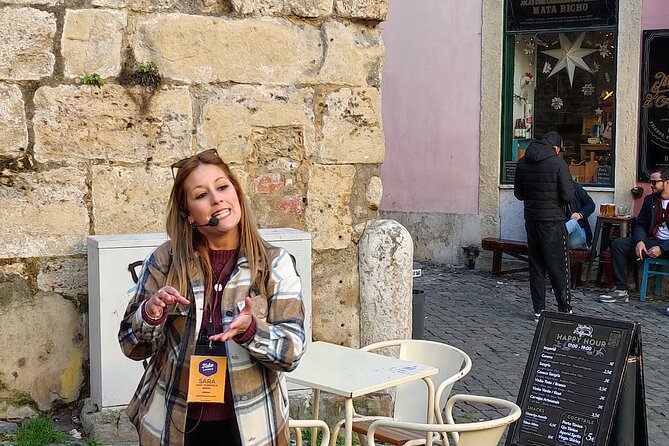
The walk continues to Lisbon Cathedral, known locally as Sé de Lisboa. Construction began in the 12th century, making it the oldest and most important church in the city.
You spend about 15 minutes outside. Entry is not included, and the cathedral admission price is listed as €5. The tour does not go inside, so plan a separate visit if you want to see the interior.
That arrangement keeps the walking tour focused and avoids adding another paid visit to an already full route. Still, you should not expect an in-depth cathedral tour. Your guide’s role here is to explain the building’s place in Lisbon’s story and point out what to notice from the outside.
The final stop is the Church of St. Anthony, or Santo António, with about 15 minutes. Santo António is Lisbon’s cherished saint, and the church offers a fitting ending for a tour centered on the city’s customs and identity.
The route ends in a different location from the starting point. The exact end point should be checked in your booking details, especially if you have a dinner reservation, a timed entry, or a long trip back to your hotel.
Fado, saudade, and a little ginjinha
The most memorable part of this experience may be what happens between the official stops. The guides do more than list dates and names. Hugo, for example, is described as explaining Fado as an emotional tradition shaped by longing, resilience, and migration, rather than presenting it as simple background music.
The idea of saudade can be hard to translate. A good guide gives it meaning through stories about absence, desire, memory, and the lives of people who left or arrived in Lisbon. That kind of explanation helps you listen differently if you later attend a Fado performance.
Some guides also add a taste of ginjinha, Lisbon’s cherry liqueur. The tasting may happen at a doorway or through a small local seller, and it has sometimes been served in a chocolate cup. This is not listed as a formal inclusion, so do not book the tour expecting food or drinks. Any ginjinha is an occasional extra, not part of the guaranteed package.
Food and beverages are not included. The guides do provide many suggestions for eating, listening to music, and making better use of your time in Lisbon. I would treat those recommendations as one of the walk’s practical benefits.
How the guides shape the experience
The guide makes a major difference on a story-led walk. Cecilia is praised for her energy, singing, and Alfama history. Laura is noted for clear explanations of architecture and the city’s past. Mariam is described as an excellent storyteller, while Fernanda is remembered for humor and strong engagement.
Claudia’s approach appears especially useful for mixed groups. She is described as attentive, willing to pause in shady areas, and careful with the pace. Belen is praised for making Moorish and modern history easy to follow. Nina receives strong marks for clear English, humor, and a pleasant style.
You should expect a passionate and informative guide, but individual personalities will differ. Some guides may sing, add a tasting, or spend more time on Fado. Others may focus more on architecture, political history, or neighborhood customs.
Group size can reach 25 people, though some departures are much smaller. A group of six, for example, allows plenty of questions and makes narrow lanes easier to manage. A full group will feel less intimate, especially at busy viewpoints.
What to bring and who should book
Bring comfortable walking shoes, water, and a light layer. Lisbon’s weather can change, and one guide completed the route during heavy rain, but wet cobbles make the hills harder. A small umbrella may help, though it can be awkward in a close group on narrow streets.
This tour suits you if you want:
- A first look at Alfama with local context
- Stories about culture, Fado, and neighborhood life
- A low upfront cost with flexible tipping
- Viewpoints and old streets in one route
- Suggestions for the rest of your Lisbon stay
It is less suitable if you want a fully accessible route, a slow museum visit, or a tour without stairs. The physical demands are real, and the cathedral interior is not part of the walk.
The cancellation terms are straightforward. You can cancel at least 24 hours before the start for a full refund. Cancellations or changes inside 24 hours are not refunded, and the company may cancel if the minimum number of participants is not reached. In that case, you are offered another date or experience, or a full refund.
Is this Alfama tour a good buy?
I would book this walk early in a Lisbon stay, especially if you want help understanding Alfama before exploring it alone. The route gives you major viewpoints, old fountains, churches, public art, and useful cultural context in one afternoon.
The value depends on your tip. At $3.62, the upfront price is minimal, but the guide is the heart of the experience and should be paid accordingly. I would also arrive early at Rua dos Bacalhoeiros 12A, find the blue umbrellas, and wear the best walking shoes you brought.
Book it if you want stories, local advice, and a thoughtful introduction to Lisbon’s oldest neighborhood. Skip it if steep streets are a serious problem or if you prefer to explore entirely at your own pace. For most active visitors, this is a smart and unusually affordable way to get oriented in Alfama.
FAQ
How long does the Alfama Tour last?
The walking tour lasts approximately two hours and 30 minutes.
What time does the tour start?
The listed start time is 3:30 pm. The experience also describes morning or afternoon tour options, so check the specific departure shown when booking.
Where does the Alfama Tour meet?
The meeting point is Rua dos Bacalhoeiros 12A, 1100-070 Lisboa, Portugal. Look for the blue umbrellas.
Is the tour free?
The tour uses a pay-what-you-want, tip-based format. The listed booking price is $3.62 per person, and a tip at the end is welcomed and expected.
Does the tour enter Lisbon Cathedral?
No. The group visits Lisbon Cathedral from outside. Entry is not included, and the listed admission cost is €5.
Is the walk suitable for people with limited mobility?
The tour requires moderate physical fitness and includes steep grades, stairs, and cobbled lanes. Service animals are allowed, but the route may be difficult if hills or steps are a serious concern.
Fresh finds around Lisbon
- Sanctuary of Fátima and Coimbra City Tour★ 4.5 · 51 reviews
- Sintra/Lisbon: Sintra & Quinta da Regaleira Tour with Ticket★ 4.4 · 51 reviews
- Jeronimos Monastery Guided Tour – Small Groups – Tickets Included★ 5.0 · 51 reviews
- Half day Spa Water Therapy experience at THE SPA at Corinthia Lisbon★ 4.5 · 51 reviews
- Lisbon: Private Christmas Lights Tour by Eco Tuk Tuk★ 4.9 · 51 reviews
- Peniche: Berlengas Island Catamaran Tour – Round Trip★ 4.6 · 51 reviews
- Lisbon: Private Tuk-Tuk Tour for 2 hours★ 4.7 · 51 reviews
- Premium Lisbon Airport Transfer to Lisbon★ 5.0 · 51 reviews
Alfama & Old Town Walks, compared.

Private Lisbon Sightseeing Tuk-Tuk Tour: Alfama, Belém & More
Read our review →
Lisbon: Hills, Alfama, and Mouraria Tour by Electric Bike
Read our review →
Best of Lisbon Walking Tour: Rossio, Chiado & Alfama
Read our review →
Lisbon Small-Group Food Tour with 18 Tastings in Alfama District
Read our review →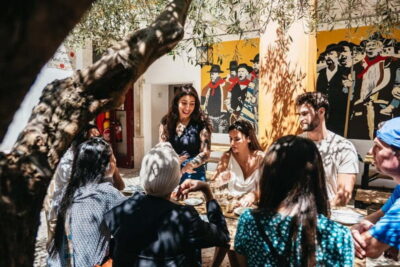
Lisbon: Baixa District Food Tour with Dinner and Drinks
Read our review →
Lisbon E-Bike Tour Commerce Square, Mouraria and Alfama
Read our review →
Lisbon: Old Town TukTuk Tour and Scenic Viewpoints in Alfama
Read our review →
Lisbon: Alfama Tour and Live Fado with Traditional Dinner
Read our review →Browse the lists this tour appears in