
Reviewed · WALKING TOURS
Secret Lisbon Walking Tour
Lisbon’s best stories are often tucked behind plain doors. This walk takes you from a secret monastery crypt and graves hidden underfoot to the old haunts of freemasons, spies, Jewish refugees, and Fado musicians. I like the way the route treats Lisbon as a city of clues, not just viewpoints. I also like the limited group size, capped at eight, which gives you room to ask questions and hear the guide clearly.
The main drawback is that this is not a gentle, flat stroll. You will cover historic central neighborhoods on foot, and the tour is not suitable for people with mobility impairments or children under five. The entrance choice can also matter: the experience includes entry to Independence Palace or the Doll’s Hospital, and one past participant found the choice was not offered.
In This Review
- Key details before you book
- Starting with Lisbon’s buried secrets
- Freemasons, street art, and the road to Mouraria
- Cemeteries, an old well, and the Doll’s Hospital
- Roman tracks and a medieval hospital
- Inside Independence Palace and its secret garden
- The 1506 massacre and the burned Dominican Church
- Rossio Square’s wartime spies and refugees
- A Roman-era street and Lisbon’s Roaring Twenties
- Finishing at a Moorish-style former palace
- How the $41 price compares
- Timing, pace, and who will enjoy it
- Guide style and group size
- Should you book the Secret Lisbon Walking Tour?
- FAQ
- How long does the Secret Lisbon Walking Tour last?
- How much does the tour cost?
- What languages are available?
- How large is the group?
- What is included in the tour?
- Is the tour suitable for young children?
- Is the tour suitable for people with mobility impairments?
- Can I cancel the booking?
Key details before you book
- A 2017 discovery beneath Nossa Senhora da Graça: Begin with the city’s past, then head into a medieval monastery and its secret crypt.
- Lisbon’s earliest Fado setting: In Mouraria, hear how the city’s great Fado tradition began about 200 years ago.
- Stories beneath your feet: Walk over concealed graves, visit another medieval cemetery, and hear about Lisbon’s oldest well.
- Spies, refugees, and cafés at Rossio: Learn how Jewish refugees and wartime spies used the square’s cafés during World War II.
- A rare look inside Independence Palace: Visit its quiet secret garden, a place few people enter.
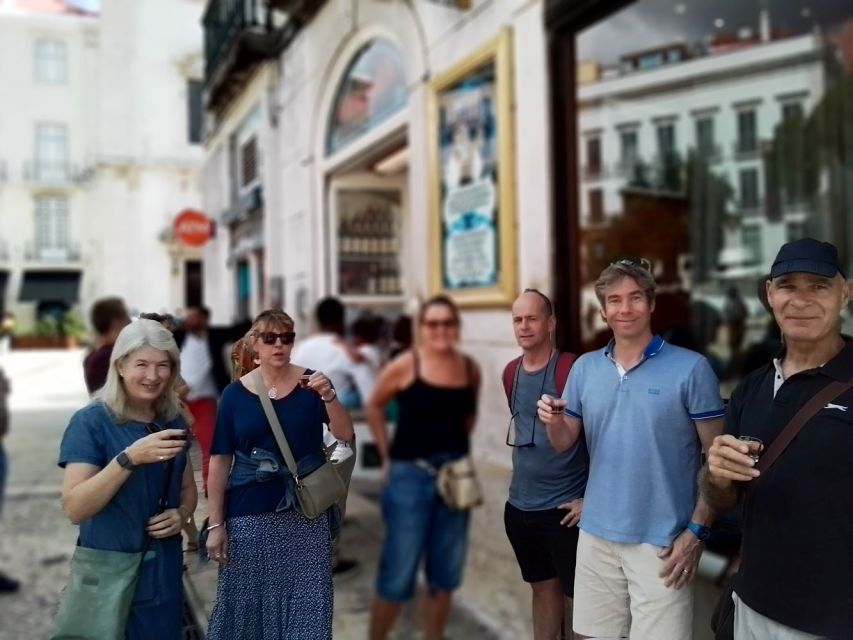
- A sweet or spirited finish: The tour includes either a pastel de nata or a serving of ginjinha.
Starting with Lisbon’s buried secrets
The walk opens with a short history of Lisbon, giving you the basic timeline before the stranger stories begin. That is useful here. Without a little context, a crypt, an old well, or a burned church can feel like an isolated oddity. With it, the stops connect into a picture of a city repeatedly rebuilt, divided, and reshaped.
At Nossa Senhora da Graça, the focus shifts from broad history to one very specific mystery. The medieval monastery contains a secret crypt and was the site of a startling discovery in 2017. The tour does not simply point at an old religious building and move on. You hear what was found and why the discovery changed the way this place is understood.
This is one of the strongest parts of the route for anyone who enjoys archaeology, religious history, or the odd fact that never appears on a standard sightseeing circuit. The setting also gives the walk an immediate sense of age. Lisbon’s familiar streets can look modern at first glance, but the stories here reach below the pavement.
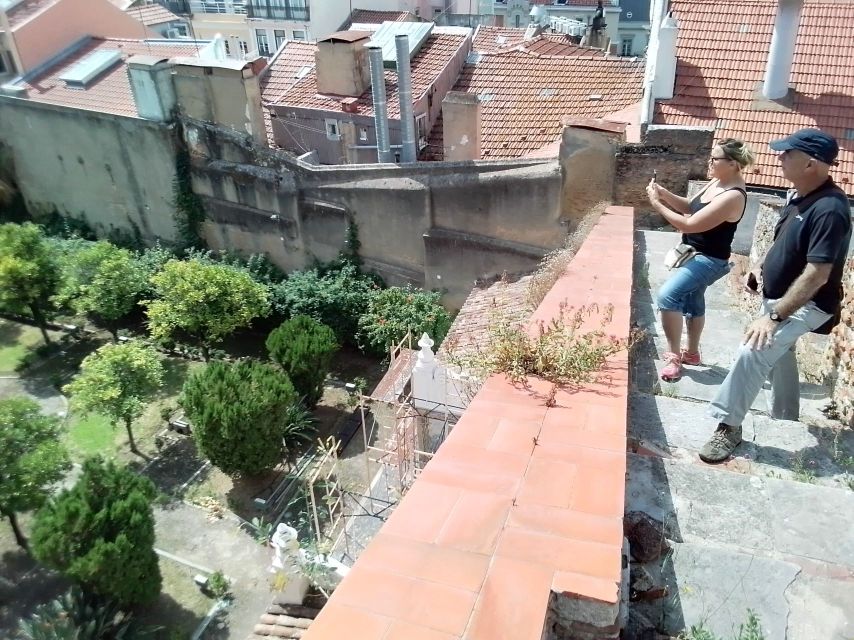
From the monastery, you walk over graves hidden near the building. That detail sounds dramatic because it is. It also makes a useful point about Lisbon: layers of earlier life are not always marked with grand signs. Sometimes they survive as a patch of ground, a wall, or a place people cross every day without knowing what lies below.
More Walking Tours in Lisbon
- Lisbon: History, Stories and Lifestyle Walking Tour
★ 4.8 · 10,902 reviews - Best of Lisbon Small-Group Guided Walking Tour
★ 5.0 · 4,869 reviews - Lisbon: Food and Wine Small Group Walking Tour
★ 4.9 · 4,082 reviews
Freemasons, street art, and the road to Mouraria
The route next brings in the city’s freemason connections, including an old hangout. This gives the tour a different mood from the monastery. Instead of focusing only on kings, churches, and official events, the guide introduces the private groups and coded networks that helped shape urban life.
Stories of spies and freemasons can easily become foggy if a guide leans too hard on mystery. Here, the value depends on the explanation. The small group helps, since you can stop and ask what is known, what is tradition, and what is simply a good Lisbon tale. Peter, one of the guides associated with the experience, is praised for answering questions, keeping the tone light, and explaining subjects with clear structure.
On the way down toward Mouraria, you pass striking street art. This is a welcome change of pace. The tour does not treat old Lisbon as a museum sealed in the past. Street art shows the city still making its own marks, while the stories around you reach back centuries.
Mouraria is an important stop because it connects place and music. You visit the area where Lisbon’s great Fado tradition began about 200 years ago. Fado is often presented through polished venues and evening performances, but this part of the walk gives you the neighborhood setting behind the music.
I like this approach because it adds social context. You are not just told that Fado is sad or soulful. You are shown the part of Lisbon where the tradition took root, then given a sense of how a local street and community can matter as much as a formal concert hall.
Cemeteries, an old well, and the Doll’s Hospital
Nearby, the tour visits another medieval cemetery and tells you about the people connected with it. This section is likely to appeal to anyone who prefers everyday history over a list of famous names. Cemeteries reveal how a city treated its dead, where different communities lived, and how much of the past has disappeared beneath later buildings.
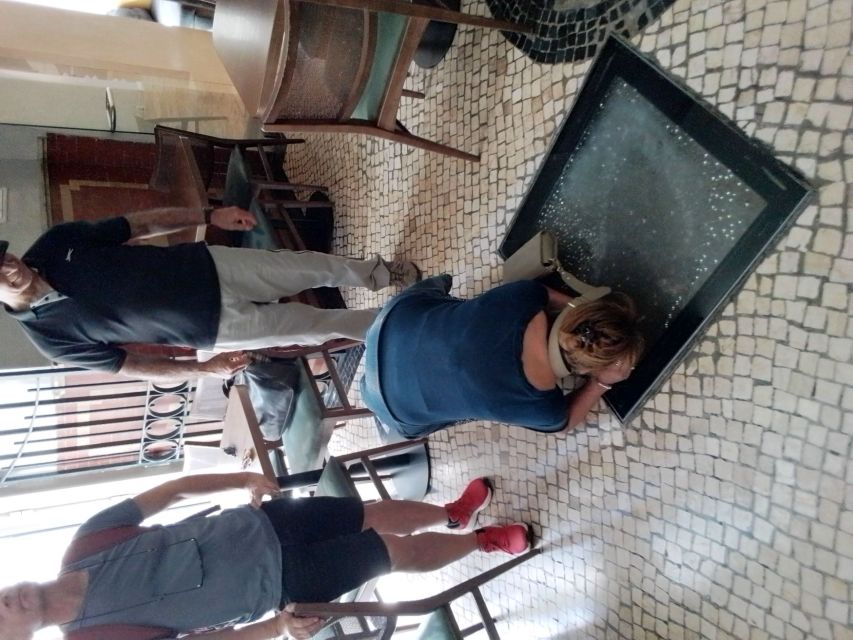
The route also finds Lisbon’s oldest well, now tucked inside a hotel. That is exactly the kind of stop this tour is built around. You may walk past the building without any clue that an old water source survives within it. The guide turns an ordinary modern address into a piece of the city’s earlier life.
Then comes the Doll’s Hospital. The name alone makes it memorable, but the stop has a practical historical angle too. You learn how the establishment began and see its secret door. The visit may be charming, curious, or slightly odd, depending on your taste.
One point deserves attention before you reserve. The experience includes entrance to Independence Palace or the Doll’s Hospital, and a past participant said there was no choice between the two. The wider route description includes both places, but the included entry may depend on the option booked or the guide’s plan. If one of these matters more to you, check the exact option and meeting details before paying.
Roman tracks and a medieval hospital
The tour continues to the site of a Roman hippodrome. You will not be watching races there today, of course, but the location adds another deep layer to the walk. Lisbon’s current streets sit over traces of Roman life, medieval institutions, religious buildings, and later commercial districts.
The next stop is the site of a medieval hospital. Together, the hippodrome and hospital help widen the story beyond royal Lisbon. They show how the city worked as a place of public events, care, illness, and daily movement.
I find this section valuable because it helps you read the city beneath its façades. Lisbon can sometimes seem like a collection of scenic streets and tiled buildings. This route keeps reminding you that the ground itself has a past.
More walking routes in Lisbon:
- Best of Lisbon Walking Tour: Rossio, Chiado & Alfama
★ 4.9 · 2,700 reviews - Age of Discoveries Walking Tour in Belém
★ 5.0 · 1,513 reviews - Sintra & Cascais Day Tour with Pena Palace Entry and Gardens Walk
★ 5.0 · 962 reviews - Lisbon Roots – Small group Food & Culture Walking Tour w/tastings
★ 5.0 · 910 reviews
Inside Independence Palace and its secret garden
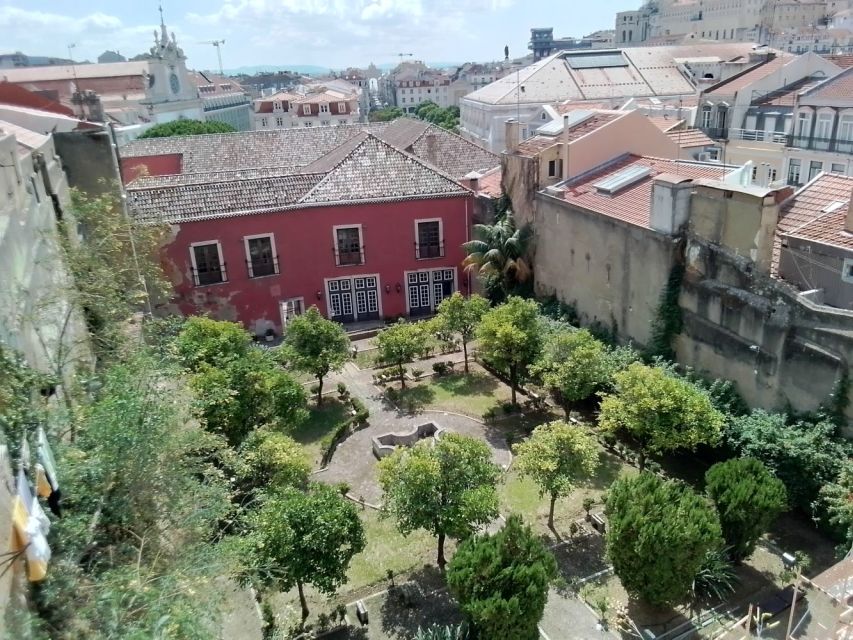
Independence Palace is one of the tour’s most unusual access points. You enter a former palace and see its secret garden, a place described as rarely visited. The appeal is not simply that the building is old. It is that you get away from the standard public squares for a moment and step into a quieter private setting.
The palace also fits the broader theme of the walk. Lisbon’s major history is often linked with grand royal sites, yet the details are found in side rooms, enclosed gardens, and buildings that are easy to miss from the street.
Because the entrance arrangement can vary, confirm whether your booking includes Independence Palace or the Doll’s Hospital. If you do enter the palace, the garden is likely to be the highlight for people who want a pause from the busy streets. If your option includes the Doll’s Hospital instead, you still receive a distinctive stop, but the experience is more curious and local than grand.
The 1506 massacre and the burned Dominican Church
At Largo dos Domingos, the guide tells the story of the massacre of Lisbon’s Jews in 1506. This is a painful part of the city’s past, and it deserves a serious tone. The tour places the event in the actual setting rather than reducing it to a distant date in a textbook.
You also visit the burned-out Dominican Church. The damaged church gives the story a physical presence. Its condition helps you think about violence, persecution, and the ways disasters can remain visible in an urban center.
This is not a tour that avoids difficult subjects. Along with spies, secret societies, and hidden doors, it includes religious persecution and the destruction of a Jewish community. I appreciate that balance. Lisbon’s past is not only palaces, pastries, and pleasant views, and you should expect some sections to be sobering.
Rossio Square’s wartime spies and refugees
At Rossio Square, the focus shifts to World War II. You hear how spies and Jewish refugees used the cafés around the square. This is an especially good use of a familiar place. Rossio is one of Lisbon’s most recognizable public spaces, but the wartime stories give you a new way to look at its cafés and entrances.
The human scale matters here. Instead of only discussing governments and battles, the tour considers people moving through Lisbon, seeking safety, exchanging information, or waiting for a chance to continue their journey.
For me, this is where the tour’s unusual subjects come together. A monastery crypt, a Fado neighborhood, a freemason meeting place, and a wartime café may seem unrelated. The link is that each story reveals activity taking place just outside the official version of the city.
A Roman-era street and Lisbon’s Roaring Twenties
From Rossio, you walk down one of Lisbon’s oldest streets, with origins reaching back to Roman times. The street later became a setting for casinos and nightclubs during Lisbon’s Roaring Twenties.
That contrast is fun. Earlier stops focus on graves, churches, and medieval institutions. Here, the city becomes more social and nocturnal. You hear about entertainment, gambling, and the nightlife that gave Lisbon its own version of the 1920s.
The walk’s storytelling works best when the guide connects these periods to the street in front of you. Ask questions if you want more detail about the clubs or the people who used them. The guide language is English or French, and Peter is noted for speaking French well, using humor, and making the material accessible without losing the historical point.
Finishing at a Moorish-style former palace
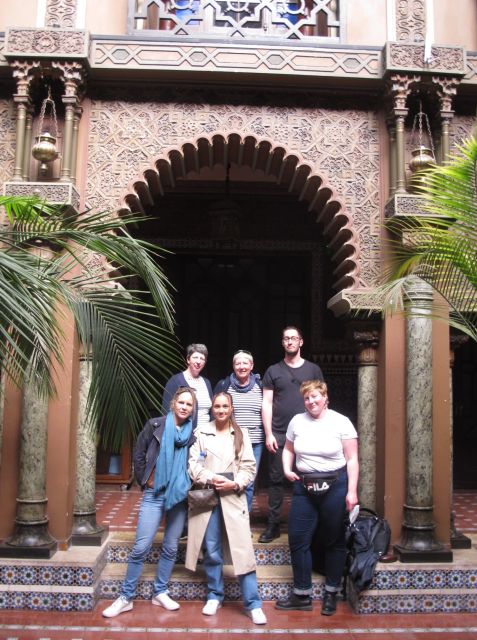
The final stop is a beautiful former palace decorated in the Moorish style. It provides a visual change after the sober stories of the Dominican Church and the wartime cafés. The finish also gives the tour a sense of place rather than ending on an ordinary street corner.
The overall route concludes at Praça do Comércio, the vast riverside square built on the former site of Lisbon’s Royal Palace. That location is a useful final anchor. After spending hours with hidden stories, you finish at one of the city’s most open and recognizable spaces.
The contrast is deliberate and satisfying. You begin with concealed spaces and buried remains, then end at a grand square associated with royal power and Lisbon’s public face.
How the $41 price compares
At $41 per person, this is not the cheapest way to walk around central Lisbon. But the price includes a 2.5-hour guided route, a small group limited to eight, entrance to Independence Palace or the Doll’s Hospital, and a pastel de nata or ginjinha.
That makes the value fairly strong if you enjoy guided history and unusual access. You are paying for the guide’s preparation and the connections between stops, not just for a walk from one square to another. The small group is important here because many of the sites are intimate, and the subject matter invites questions.
The value is less clear if you prefer to explore at your own pace or only want Lisbon’s major monuments. This is a story-led experience. You will spend time on topics that some people love and others may find niche, including freemasonry, hidden graves, wartime spies, and the Doll’s Hospital.
The included drink or pastry is a pleasant extra, but it should not be the reason you book. The real value is the access and the guide’s ability to make overlooked places matter.
Timing, pace, and who will enjoy it
The tour lasts 2.5 hours, long enough to cover a lot without taking an entire day. Still, you should expect steady walking through old central neighborhoods. The experience is not suitable for people with mobility impairments, and children under five cannot join.
Older children may enjoy the secret doors, crypts, spies, and strange stories. Peter has used a more playful approach for children, but the formal age restriction still applies to children under five. If you are traveling with a family, consider the walking pace and the serious subject matter at Largo dos Domingos.
This tour suits you best if you:
- Enjoy history that includes ordinary people and overlooked places
- Like asking questions and following a guide’s story
- Have already seen Lisbon’s main squares and want something different
- Prefer a small group to a large city tour
- Can manage several hours of walking on historic streets
- Speak English or French
It is less suitable if you want a relaxed, mostly seated activity, a panoramic sightseeing tour, or guaranteed control over every included entrance.
Guide style and group size
The guide can lead in English or French. Peter receives particular praise for his French, humor, patience, and ability to answer questions. He has also been described as sending a message before the meeting, helping when a meeting point was misunderstood, and welcoming the group with care.
Meeting points may vary depending on the option you book, so read that detail closely. A small group of up to eight is a real advantage for a route with secret doors and interiors. It also means the experience can feel more like a conversation than a lecture.
The score is 4.9 from nine reviews, with praise focused on the historical structure, unexpected discoveries, guide personality, language skills, and the unusual route. One less enthusiastic response found the Doll’s Hospital less appealing and disliked not having a choice of entry. That is a fair warning: the tour’s oddball stops are part of its charm, but they will not suit every taste.
Should you book the Secret Lisbon Walking Tour?
Book it if you want Lisbon’s side streets to tell you something unexpected. The crypt, hidden graves, Fado origins, Jewish history, wartime cafés, and secret garden create a route with plenty of variety.
I would especially recommend it early in your stay if you want a guide to help you understand central Lisbon beyond its famous viewpoints. You will also get better value if you care about stories and access more than ticking off major monuments.
Skip it if your mobility is limited, you dislike walking, or you want to choose every stop in advance. Before booking, check the meeting point and the included entry option. For most curious walkers, though, $41 is a reasonable price for a small, carefully themed tour that shows you a Lisbon many standard routes pass by.
FAQ
How long does the Secret Lisbon Walking Tour last?
The tour lasts 2.5 hours.
How much does the tour cost?
The listed price is $41 per person.
What languages are available?
The tour is offered in English and French.
How large is the group?
The group is limited to eight participants.
What is included in the tour?
The experience includes the 2.5-hour walking tour, entrance to Independence Palace or the Doll’s Hospital, and either a pastel de nata or ginjinha.
Is the tour suitable for young children?
Children under five are not permitted. The guide has also used a more playful format for children, but the stated age restriction still applies.
Is the tour suitable for people with mobility impairments?
No. The activity is not suitable for people with mobility impairments.
Can I cancel the booking?
You can cancel up to 24 hours in advance for a full refund. A reserve-now, pay-later option is also available.
Fresh finds around Lisbon
- Lisbon: Tuk Tuk City Tour★ 3.6 · 7 reviews
- Fatima Full day Private Tour★ 5.0 · 7 reviews
- Lisbon: Highlights and Hidden Gems Tour★ 5.0 · 7 reviews
- Private Tour to Evora and Monsaraz from Lisbon★ 5.0 · 7 reviews
- Discover Sintra Beauty with a Guided Journey from Lisbon★ 5.0 · 7 reviews
- Private Half-Day Tour to Sintra★ 3.4 · 7 reviews
- Lisbon: Sunset and Wine Catamaran Tour★ 5.0 · 7 reviews
- Nazaré: Beaches of Nazaré Guided E-Bike Tour★ 4.9 · 7 reviews
Walking Tours, compared.
Lisbon: History, Stories and Lifestyle Walking Tour
Read our review →
Best of Lisbon Small-Group Guided Walking Tour
Read our review →
Lisbon: Food and Wine Small Group Walking Tour
Read our review →
Best of Lisbon Walking Tour: Rossio, Chiado & Alfama
Read our review →
Sintra & Cascais Day Tour with Pena Palace Entry and Gardens Walk
Read our review →
Lisbon Roots – Small group Food & Culture Walking Tour w/tastings
Read our review →
Lisbon: Starter Walking Tour to the highlights in German
Read our review →Browse the lists this tour appears in