
Reviewed · WALKING TOURS
Private Tour: Best of Lisbon Walking Tour
Lisbon reveals itself best on foot, and this private route links the city’s grand squares with the narrow lanes of Alfama. I like the mix of major landmarks and local context, plus the chance to pause for a pastel de nata, tapas, and wine instead of treating the city like one long outdoor museum.
I also like the private format. Guides such as Natalia, José, André, Ricardo, and Margarida have been praised for adapting the pace, answering questions, and suggesting smart ways to spend the rest of your stay. The catch is the terrain: Lisbon is hilly, and three hours on uneven streets may test anyone with limited mobility.
In This Review
- Key details before you book
- Why this route works on your first day
- Rossio and the stories behind Lisbon’s central squares
- Carmo, Santa Justa, and the city’s changing skyline
- Chiado and Baixa, two faces of central Lisbon
- Chão do Loureiro and the climb toward Alfama
- King José I and the grand finish at Praça do Comércio
- The food stops are small but useful
- What the private format is really worth
- Who will enjoy this walk most
- Practical details that affect your day
- Should you book the Best of Lisbon Walking Tour?
- FAQ
- How long is the Best of Lisbon Walking Tour?
- Is hotel pickup included?
- What food and drink are included?
- Is this a private tour?
- Is the tour offered in English?
- How much walking is involved?
Key details before you book
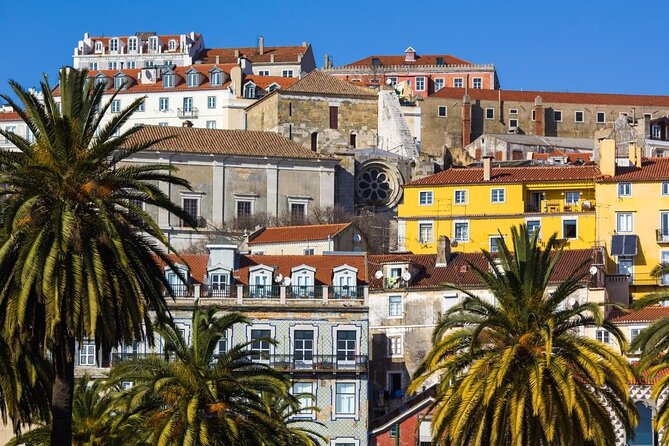
- A strong first-day orientation: The route covers Rossio, Restauradores, Baixa, Chiado, Alfama, and Praça do Comércio in one half-day.
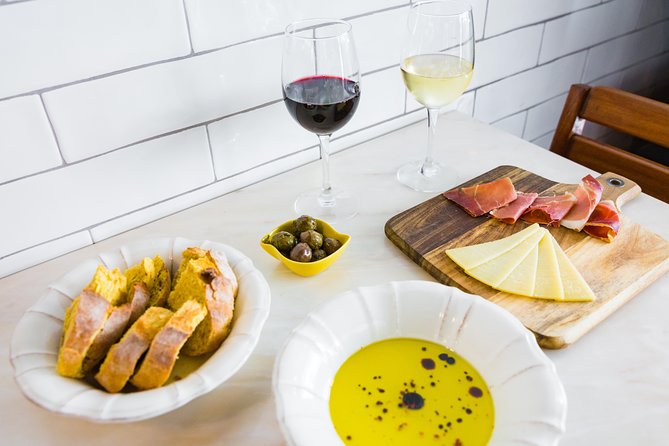
- Three local tastings included: You receive a pastel de nata, tapas, and one glass of wine.
- A genuinely private experience: Only your group participates, so the guide can adjust the pace and focus.
- History with a wide time span: You’ll hear about the 1755 earthquake, the Carnation Revolution, World War II, royal Lisbon, and the city’s older religious sites.
- Several useful viewpoints: The route includes the Santa Justa area and Miradouro Chão do Loureiro.
- Expect hills and walking: A moderate fitness level is advised, though guides may offer easier shortcuts or places to sit when practical.
Why this route works on your first day
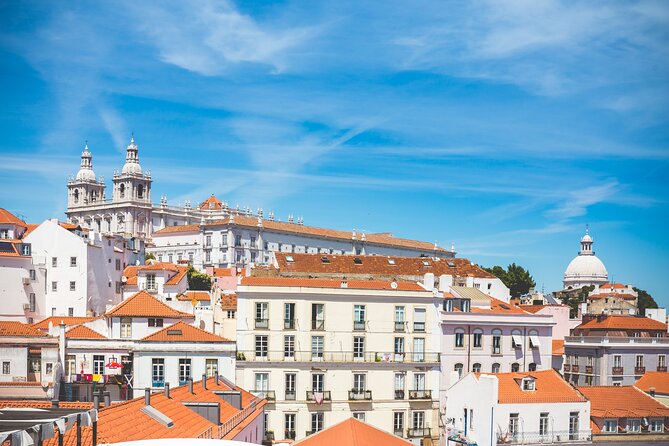
This tour gives you a useful mental map of central Lisbon without asking you to commit a full day. You begin at Praça Dom Pedro IV, usually called Rossio, and finish at Praça do Comércio beside the Tagus. That eastward walk takes you through the city’s central districts in a logical order.
I like this kind of introduction because it helps you sort Lisbon into neighborhoods. Rossio and Baixa feel formal and planned. Chiado adds cafés, shops, and an artistic edge. Alfama is older, tighter, and more confusing in the best possible way. By the end, you have a sense of where to return for a longer look.
The private setting matters here. A guide can spend more time on your questions, pause when someone needs a break, or move faster when a site is less interesting to your group. Several guides are praised for offering route shortcuts, explaining the city’s elevators, and sharing practical tips for a short stay.
The tour is offered in English and lasts about three hours. The listed price is $96.79 per person. That is not the cheapest way to see Lisbon, especially for one person, but the value improves as your group grows because you are paying for a private guide rather than joining a large shared walk. Group discounts are also offered.
More Walking Tours in Lisbon
- Lisbon: History, Stories and Lifestyle Walking Tour
★ 4.8 · 10,902 reviews - Best of Lisbon Small-Group Guided Walking Tour
★ 5.0 · 4,869 reviews - Lisbon: Food and Wine Small Group Walking Tour
★ 4.9 · 4,082 reviews
Rossio and the stories behind Lisbon’s central squares
At Praça Dom Pedro IV, the tour starts in one of Lisbon’s main gathering places. The square honors King Peter IV, and its location makes it a sensible meeting point for exploring the central city.
You will spend about 15 minutes here, enough to discuss the square’s name, role, and place in Lisbon’s public life without getting bogged down in dates. This is also where hotel pickup may happen if your hotel is within a short walk. If it is farther away, you need to meet at Rossio itself.
Nearby Largo de São Domingos adds a darker note. Its church has suffered repeated damage over the centuries, and the guide explains Lisbon’s massacre. This stop is brief, but it reminds you that the city’s past is not only palaces and pretty tiles.
At Praça dos Restauradores, the central obelisk marks Portugal’s restoration of independence. The guide explains what the monument celebrates and why the square carries that name. It is a good example of how Lisbon places national history right in the middle of daily city life.
The short stop at Rossio Station shifts from monuments to architecture and wartime history. The station is one of Lisbon’s best-known buildings, and the tour connects it with the city during World War II. You may only have ten minutes here, but the stop helps show how Lisbon functioned as a European crossroads during a tense period.
Carmo, Santa Justa, and the city’s changing skyline
Largo do Carmo is one of the most layered stops on the walk. The setting is tied both to the 14th-century convent and to the Carnation Revolution, the peaceful military uprising that changed Portugal in 1974.
That combination gives your guide plenty to work with. You can hear about medieval Lisbon, religious architecture, and modern political change in one small square. The tour allows about 15 minutes here, which should give you time to look around and ask questions.
From there, you reach the Elevador de Santa Justa, one of the historic center’s most recognizable structures. The tour includes about ten minutes in the area, with time to admire the view. The description promises a panoramic look from the elevator area, but it does not say that a ride is included.
That distinction is worth noting. Lines for Lisbon’s famous lifts can be long, and one person specifically found it disappointing not to ride a tram because of queues. This experience is primarily a walking tour, not a guarantee of rides on the city’s public elevators or trams. Your guide may explain the best ways to use them later, and several guides are praised for their practical elevator advice.
Chiado and Baixa, two faces of central Lisbon
Chiado is presented as Lisbon’s bohemian and artistic neighborhood. The tour spends about ten minutes here, enough for an introduction rather than a deep look at its shops, theaters, cafés, or cultural sites.
That short timing is helpful if you want a broad first look, but it also points to the tour’s main limitation: you see many districts, yet you do not explore each one in depth. If Chiado interests you, save time later for returning on your own.
Baixa de Lisboa receives only about five minutes, but its importance is larger than that brief stop suggests. The district was rebuilt after the 18th-century earthquake under new urban rules and anti-seismic ideas. Its ordered streets and broad design reflect an ambitious attempt to make the rebuilt city safer and easier to navigate.
Your guide can help you notice that Baixa is not simply a shopping center. It is a planned response to disaster. Once you understand that, the straight streets and formal squares feel less ordinary.
This is one reason a private guide can be useful. You can ask why the streets look so different from Alfama, or how the earthquake changed Lisbon’s political and physical shape. Guides including Ricardo, Claudia, Miguel, and Luís have been praised for explaining both past events and present-day city life in clear English.
More walking routes in Lisbon:
- Best of Lisbon Walking Tour: Rossio, Chiado & Alfama
★ 4.9 · 2,700 reviews - Age of Discoveries Walking Tour in Belém
★ 5.0 · 1,513 reviews - Sintra & Cascais Day Tour with Pena Palace Entry and Gardens Walk
★ 5.0 · 962 reviews - Lisbon Roots – Small group Food & Culture Walking Tour w/tastings
★ 5.0 · 910 reviews
Chão do Loureiro and the climb toward Alfama
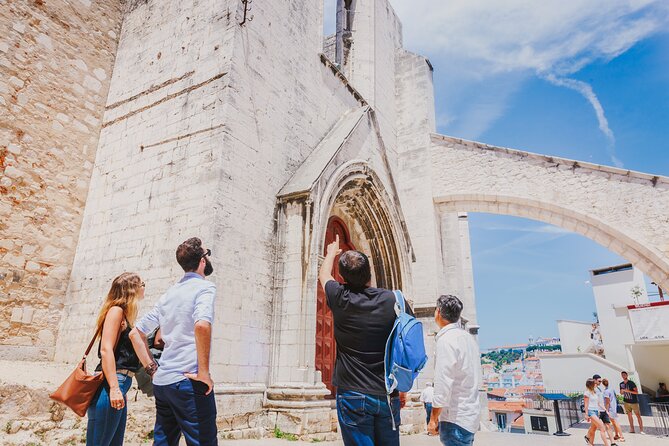
Miradouro Chão do Loureiro provides a panoramic pause. Lisbon is a city of hills, and a viewpoint gives you a quick sense of how the streets rise and fall around the central districts.
The stop lasts about ten minutes. That is enough for photographs and orientation, though not a long, quiet lookout session. Bring sensible shoes, since the route includes hills, stairs, and uneven surfaces.
Then comes Alfama, the longest stop of the tour at about 30 minutes. This is the oldest neighborhood on the route, with narrow streets and alleys that can feel far removed from the orderly grid of Baixa.
Alfama is where the walking format earns its keep. A bus can show you the district’s outline, but it cannot give you the same sense of its tight lanes and sudden turns. Your guide helps you understand how to move through the neighborhood and points out the contrast between old Lisbon and the rebuilt center.
Still, do not mistake 30 minutes for a full Alfama visit. You will get an introduction, not a complete neighborhood tour. If you want more time for churches, music venues, viewpoints, or wandering, plan to return later.
The hills are the practical issue. One guide adapted the route for people who found the climbs difficult, using easier options and finding places to sit. That is encouraging, but you should still expect active walking. Tell the provider about your needs when booking, and do not assume every steep section can be removed.
King José I and the grand finish at Praça do Comércio
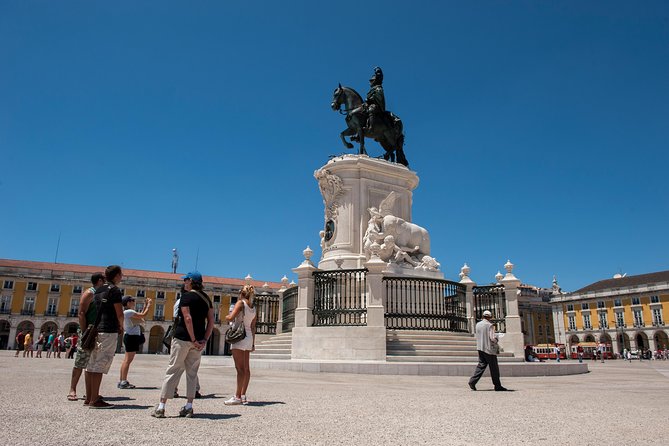
The tour then turns toward the statue of José I. He was king during the Lisbon earthquake, so this is another chance to connect a monument with the disaster that reshaped the city.
The guide explains José I’s role and the events around the earthquake. With about ten minutes here, you will receive context rather than an extended monument study.
The final stop is Praça do Comércio, also known as Terreiro do Paço. The square was connected with the residence of José I and now forms one of Lisbon’s great open spaces by the river. Its position links the city to the water and to the wider world.
Ending here makes practical sense. You finish in a central area with a strong visual impression of Lisbon’s public face. The walk starts with Rossio’s inland city energy and ends beside the Tagus, where the city opens outward.
The stated end point is Praça do Comércio 574. Since the tour does not return you to your hotel, plan your next move from there. The route’s endpoint is convenient for continuing your day, but you should not treat hotel transport as part of the finish.
The food stops are small but useful
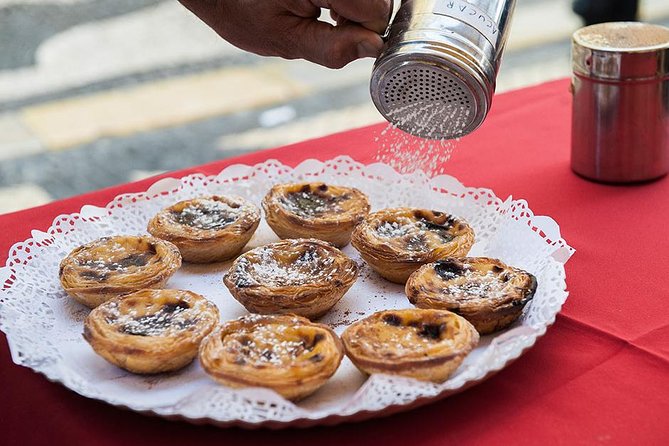
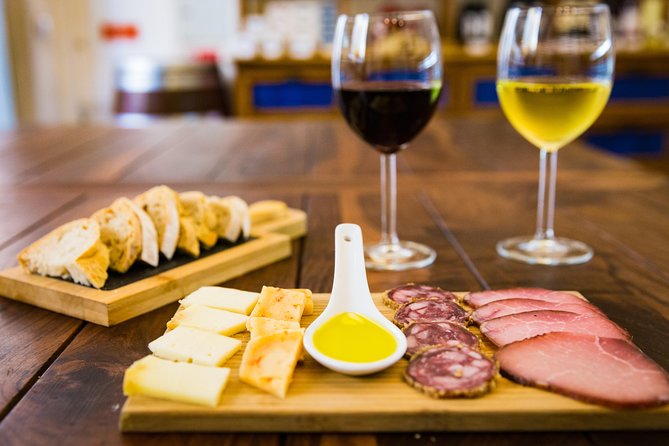
The included food is modest, yet it adds welcome rhythm to the walk. You receive a pastel de nata, tapas, and one glass of wine. These are tasting stops, not a full meal, so do not book the tour expecting lunch.
The custard tart is a particular highlight of the experience. A good pastel de nata gives you a quick taste of one of Portugal’s best-known pastries while you are already moving through the city.
The tapas and wine provide a second pause and a chance to discuss Portuguese food and drink with your guide. One review specifically praised the pastry, tapas, and green wine. The included glass is useful for sampling without committing to a full restaurant stop.
The listing also says food and drinks are not included unless specified. In practical terms, the listed pastry, tapas, and glass of wine are included, but anything beyond those items is your responsibility. If you need a full meal or have dietary concerns, plan accordingly.
What the private format is really worth
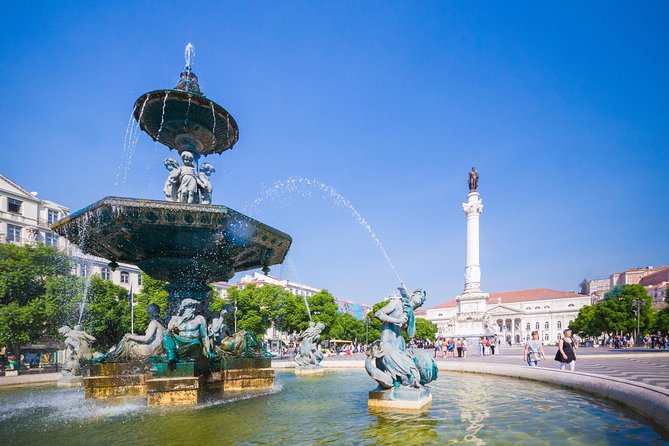
A private guide gives you flexibility, but the value depends on how you use it. If you are a couple or a small group that wants a quick overview, $96.79 per person may feel high compared with a free or shared walking tour.
The calculation changes for a family or group, especially with the available group discounts. You get a dedicated English-speaking guide, rather than a fixed lecture delivered to a large crowd. The guide can answer your questions, adjust the pace, and point out shortcuts.
The strongest part of the experience is not simply the number of sights. It is the link between them. A guide can explain why the earthquake led to Baixa’s ordered streets, why Praça dos Restauradores celebrates independence, and why Alfama feels so different from the rebuilt center.
The route also gives you planning help. Luís is praised for saving visitors time during a 48-hour stay by explaining shortcuts. Ricardo and Miguel are praised for practical advice about getting around Lisbon. André is noted for answering many questions and sharing useful information for the rest of the visit.
Guide quality can vary, as it does with any guide-led experience. The named guides receiving especially warm praise include Natalia, José, William, João, Ricardo, Luís, Daniel, Catarina, André, Anna, Inês, Jorge, Margarida, Miguel, Claudia, Ana, Tiago, and Pedro. That range suggests a broad guide team, but you may not be able to select a particular person.
Who will enjoy this walk most
I would choose this tour if you are visiting Lisbon for the first time and want a clear overview before exploring on your own. It is also a good fit if you have only a short stay and want to identify which neighborhoods deserve more of your time.
Families may appreciate the private format, especially when children need breaks or prefer stories to long museum visits. The guide can also shape the conversation around your interests, from architecture and politics to food and local customs.
It suits people who enjoy walking but do not want to solve Lisbon’s hills alone. A guide can explain the elevators and shortcuts, though you still need moderate fitness.
I would think twice if you want a slow, detailed visit inside monuments, or if your main goal is to ride trams and elevators. The experience focuses on outdoor sights, neighborhood orientation, and conversation. It also may feel rushed if you want extended time in Alfama or Chiado.
The tour is recommended by 99 percent of participants and carries a 4.9 rating from 167 reviews. Those figures point to a very strong experience, but the 3 out of 5 assessment is useful too: the route may not show enough local neighborhood life for everyone, and the hills can be hard. That is the fair tradeoff for covering so much central Lisbon in one half-day.
Practical details that affect your day
The meeting point is Praça Dom Pedro IV 41 in Rossio. Hotel pickup is offered only when the hotel is a short walk from the original meeting point. If your hotel is outside that limit, you must reach Rossio yourself.
Confirmation arrives within 48 hours of booking, subject to availability. The tour is near public transportation, which helps you reach the start and continue from the finish.
Wear comfortable shoes and expect slopes, stairs, and uneven streets. The provider advises a moderate fitness level. Some guides have offered easier routes or seating for people who need it, but the route remains a walking experience.
Free cancellation is available up to 24 hours before the start time for a full refund. Cancellations or changes made less than 24 hours in advance are not accepted for a refund, and the cutoff follows Lisbon local time.
Should you book the Best of Lisbon Walking Tour?
Book it if you want a private introduction with food, views, and useful city advice. Put it near the start of your stay, ideally on your first or second day, so you can use the guide’s suggestions for the rest of your time.
The tour is especially good for first-time visitors, families, short stays, and small groups willing to pay for personal attention. It gives you the broad structure of Lisbon, from royal squares and earthquake planning to Alfama’s old lanes.
Skip it if you want a relaxed deep visit to one district, a full meal, or guaranteed rides on Lisbon’s famous transport. For everyone else, the route offers a sensible introduction, provided you are ready for hills and understand that many stops are brief.
FAQ
How long is the Best of Lisbon Walking Tour?
The tour lasts approximately three hours. The route includes 12 stops, beginning at Praça Dom Pedro IV and ending at Praça do Comércio.
Is hotel pickup included?
Hotel pickup is offered only for hotels within a short walk of the original meeting point. If your hotel is outside that area, you need to meet at Praça Dom Pedro IV, also known as Rossio.
What food and drink are included?
The tour includes one pastel de nata, tapas, and one glass of wine. Other food and drinks are not included unless specifically stated.
Is this a private tour?
Yes. Only your group participates, allowing the guide to adjust the pace and respond to your interests.
Is the tour offered in English?
Yes. The experience is offered in English.
How much walking is involved?
You should expect a moderate walking experience through central Lisbon, including hills, stairs, narrow streets, and uneven surfaces. A moderate level of physical fitness is recommended.
Fresh finds around Lisbon
- Jeronimos Monastery Guided Tour – Small Groups – Tickets Included★ 5.0 · 51 reviews
- Sanctuary of Fátima and Coimbra City Tour★ 4.5 · 51 reviews
- Sintra/Lisbon: Sintra & Quinta da Regaleira Tour with Ticket★ 4.4 · 51 reviews
- Lisbon: Private Christmas Lights Tour by Eco Tuk Tuk★ 4.9 · 51 reviews
- Peniche: Berlengas Island Catamaran Tour – Round Trip★ 4.6 · 51 reviews
- Half day Spa Water Therapy experience at THE SPA at Corinthia Lisbon★ 4.5 · 51 reviews
- Lisbon: Private Tuk-Tuk Tour for 2 hours★ 4.7 · 51 reviews
- Premium Lisbon Airport Transfer to Lisbon★ 5.0 · 51 reviews
Walking Tours, compared.
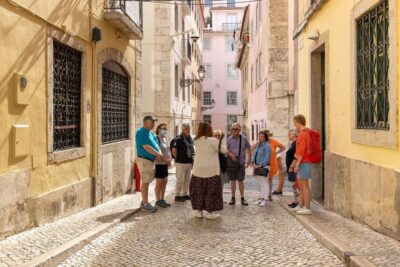
Lisbon: History, Stories and Lifestyle Walking Tour
Read our review →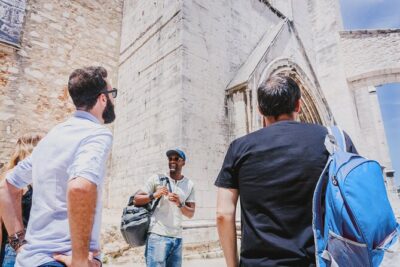
Best of Lisbon Small-Group Guided Walking Tour
Read our review →
Lisbon: Food and Wine Small Group Walking Tour
Read our review →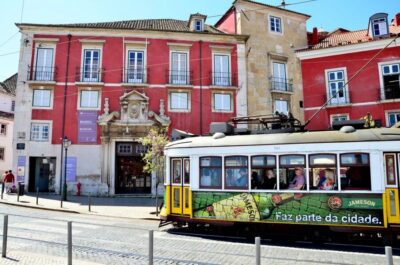
Best of Lisbon Walking Tour: Rossio, Chiado & Alfama
Read our review →
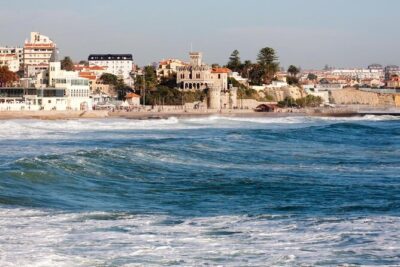
Sintra & Cascais Day Tour with Pena Palace Entry and Gardens Walk
Read our review →
Lisbon Roots – Small group Food & Culture Walking Tour w/tastings
Read our review →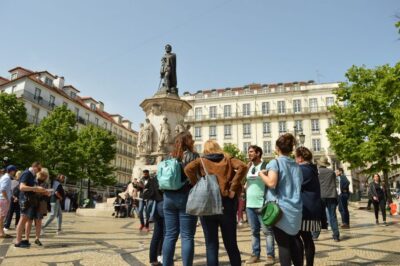
Lisbon: Starter Walking Tour to the highlights in German
Read our review →Browse the lists this tour appears in