
Reviewed · WALKING TOURS
Private group Lisbon Roots, Food & Cultural Walk
Lisbon’s best food stories are often found away from the postcard sights. This private walk links downtown with Mouraria, the city’s birthplace of Fado and one of its most multicultural neighborhoods, while serving more than 10 tastings at six local stops. You get food, wine, and history in one compact outing.
I like the private format, since your guide can adjust the pace and explain Lisbon in a way that fits your group. I also like the food range, which can include appetizers, soup, tapas, Port, dessert, coffee, and tea rather than one long meal in a single restaurant.
The main drawback is the moderate physical effort. The route covers only about 1.2 miles, or 2 kilometers, but old Lisbon adds cobblestones, hills, and steps. The price, $325.60 per person, also makes the most sense for people who value personal guiding and a broad tasting program more than a cheap snack walk.
In This Review
- Key points at a glance
- Why this walk works as a first taste of Lisbon
- Largo de São Domingos and the difficult side of Lisbon
- Rossio, Praça da Figueira, and Lisbon’s public squares
- Santa Justa and the ironwork of downtown
- Entering Mouraria, the birthplace of Fado
- The Chapel of Our Lady of Health
- What you actually eat and drink
- Walking conditions, timing, and meeting details
- Is $325.60 per person good value?
- Who should book this Lisbon food walk?
- Should you book it?
- FAQ
- How long does the Lisbon Roots, Food & Cultural Walk last?
- How far does the tour go?
- Is the tour private?
- How many food tastings are included?
- Are wine and alcoholic drinks included?
- Can dietary restrictions be accommodated?
- Is the tour physically demanding?
- Is hotel pickup included?
- Is admission to the Santa Justa Elevator included?
- Where does the tour begin and end?
Key points at a glance
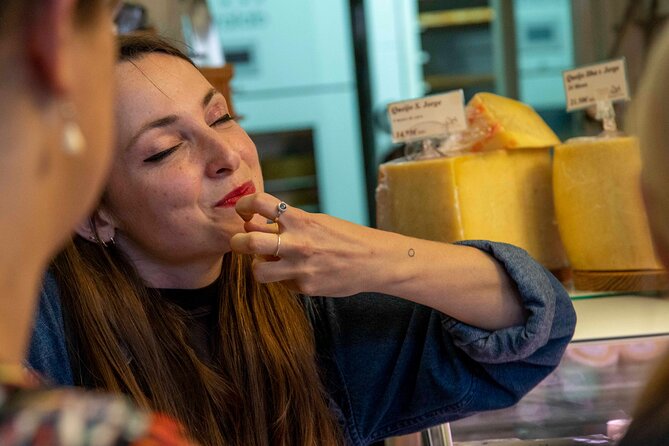
- Six food stops and more than 10 tastings introduce Portuguese staples, drinks, sweets, and outside influences on local cooking.
- Mouraria and Fado provide the cultural center of the walk, with stops tied to Maria Severa, Portuguese guitar, and Lisbon’s African and multicultural communities.
- Private participation means only your own group joins the activity.
- A 3.5-hour route covers about 2 kilometers, though hills and steps make it more demanding than the distance suggests.
- Guides may include Pedro, Dani, Daniel, or Ricardo, all praised for humor, local insight, and a talent for connecting food with Portuguese culture.
- The walk ends at Confeitaria Nacional, near Praça da Figueira, while the meeting point is Largo de São Domingos.
Why this walk works as a first taste of Lisbon
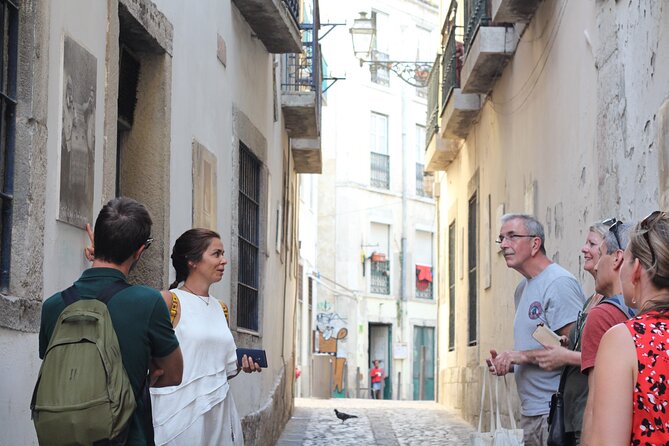
I see this experience as a useful introduction to Lisbon because it does not treat food as a separate subject. The dishes and drinks are tied to neighborhoods, trade, migration, religion, class, and music. That gives you more to remember than a list of snacks.
The route starts in the downtown area and reaches Mouraria, taking you from Lisbon’s medieval beginnings to the present day. Mouraria is especially important because Fado developed in its alleys among working people, and the neighborhood remains known for its mix of communities and cultures.
The food program is broad. You might sample savory dishes, small plates, soup, sweets, coffee, and Portuguese wines or Port. Alcoholic drinks are included, and one useful point to know is that alcohol may appear at several stops. If you prefer not to drink, ask your guide about alternatives at the start.
The private setup matters most for families, couples, and small groups with different interests. A guide can spend more time on a church, shorten a history explanation, or answer questions about places to eat later in your stay. It also avoids the awkwardness of joining a large group that moves at one fixed pace.
More Walking Tours in Lisbon
- Lisbon: History, Stories and Lifestyle Walking Tour
★ 4.8 · 10,902 reviews - Best of Lisbon Small-Group Guided Walking Tour
★ 5.0 · 4,869 reviews - Lisbon: Food and Wine Small Group Walking Tour
★ 4.9 · 4,082 reviews
Largo de São Domingos and the difficult side of Lisbon
The meeting point is Largo de São Domingos, a central square near Rossio. This is a fitting place to begin because it brings together food, faith, immigration, and some of Lisbon’s hardest memories.
The square is used daily by Lisbon’s African community and local residents. It also contains a memorial mural dedicated to tolerance and to Jewish victims of the 1506 massacre. The nearby A Ginjinha shop is famous for cherry liqueur, giving the area a direct link to Lisbon’s drinking culture.
The 1506 massacre is not a comfortable story, but it is an important one. A religious incident during a period of drought, hunger, and plague turned into violence against Lisbon’s Jewish population. The square later became associated with the Portuguese Inquisition, when people condemned by the court waited nearby before execution at Rossio.
I appreciate that the walk includes this material rather than presenting Lisbon as only colorful tiles, pastries, and sunny viewpoints. You should expect the guide to discuss how religion and power shaped the city, not just where to find a good drink.
The São Domingos Church adds another layer. Founded in the 13th century, it suffered damage from earthquakes and a major fire in 1959. Its plain interior still shows traces of that destruction, and the restrained restoration gives the church a strong sense of place without requiring a long indoor visit.
Rossio, Praça da Figueira, and Lisbon’s public squares
From Largo de São Domingos, the walk reaches Rossio, officially Praça de D. Pedro IV. This has been one of Lisbon’s main public squares since the Middle Ages. Revolts, celebrations, bullfights, and executions once took place here, while today it serves as a busy meeting point.
Rossio is a useful stop for understanding how Lisbon works. Flower sellers, shoppers, workers, and people heading between neighborhoods pass through the square. Its patterned pavement and central location make it one of the easiest places to recognize in the city, but the guide helps connect the modern scene with its earlier roles.
Praça da Figueira follows. Before the 1755 earthquake, the site held All Saints Hospital. After the downtown reconstruction led by the Marquis of Pombal, it became Lisbon’s main food market. A covered market opened in 1885 and was later removed, leaving a square now lined with hotels, shops, and cafés.
That former market function fits the food theme well. Lisbon’s eating culture is not limited to grand restaurants. Markets, cafés, pastry shops, taverns, and small counters have long shaped daily life. The walk’s tastings work best when you see them as examples of this everyday food culture.
The square also contains the bronze equestrian statue of King João I. Nearby Rossio Station is worth noticing for its ornate Manueline-style façade, with two horseshoe-shaped entrances and decorative roof details. The station serves trains to Sintra, so you may want to mark it as a practical landmark for another day.
Santa Justa and the ironwork of downtown

The Elevador de Santa Justa is one of Lisbon’s most recognizable structures. Built in 1902 by Raoul de Mesnier du Ponsard, a Portugal-born French architect who apprenticed under Gustave Eiffel, it connects lower downtown with Bairro Alto.
The 45-meter iron tower looks dramatic against the surrounding streets. Its design reflects the age of post-Eiffel engineering, and the upper level offers views toward Rossio, the castle, and the river.
The tour passes the elevator, but admission is not included. The stop itself is listed as very short, so you should not book this walk expecting a ride or an extended visit inside the tower. If you want to use the elevator, plan that separately and check the line before committing to it.
That limitation is not a serious weakness if your goal is food and local context. Santa Justa works well as a visual marker between downtown and the older neighborhoods, and the guide can explain why Lisbon needed vertical connections in a city built across steep slopes.
More walking routes in Lisbon:
- Best of Lisbon Walking Tour: Rossio, Chiado & Alfama
★ 4.9 · 2,700 reviews - Age of Discoveries Walking Tour in Belém
★ 5.0 · 1,513 reviews - Sintra & Cascais Day Tour with Pena Palace Entry and Gardens Walk
★ 5.0 · 962 reviews - Lisbon Roots – Small group Food & Culture Walking Tour w/tastings
★ 5.0 · 910 reviews
Entering Mouraria, the birthplace of Fado
The route turns toward Mouraria, where the character changes quickly. This is the cultural heart of the experience. The neighborhood is associated with Fado, Lisbon’s mournful and expressive song tradition, and with a long history of people arriving from different parts of the world.
At the Monumento Mouraria Berço do Fado, a carved Portuguese guitar honors Mouraria as the cradle of Fado. The monument also recalls Maria Severa, an early Fado singer who lived and died in the neighborhood, along with Fernando Maurício and the many famous and unknown singers who shaped Lisbon’s sound.
This is where a good guide adds real value. Pedro, Dani, Daniel, and Ricardo are among the guides associated with the experience, and the supplied comments repeatedly praise their humor, local perspective, and ability to explain Portuguese culture through food. One account even notes that Pedro has an excellent singing voice, though a performance should not be treated as a promised part of the tour.
Mouraria is also a place to pay attention to present-day Lisbon. Its identity is not frozen in the past. The area is known for its many communities, shops, cafés, and food traditions, making it a useful place to understand how Portuguese cooking has been shaped by contact with Africa, India, South America, and other parts of the Portuguese-speaking world.
The Chapel of Our Lady of Health
The Chapel of Our Lady of Health is small, but its story is unusually strong. Artillerymen from Lisbon’s garrison built it in 1505 and dedicated it to Saint Sebastian, who was connected with protection from war, famine, and plague.
The chapel took its present name in 1569, when it was dedicated to Our Lady of Health. The building was damaged by the 1755 earthquake, although its early 18th-century portal, attributed to João Antunes, survived.
The stop is brief, just a few minutes, and admission is free. Still, it gives the walk a clear link to the fears that shaped old Lisbon. Disease, hunger, war, and earthquakes were not abstract topics for the city’s residents. They affected where people worshipped, how they organized processions, and which saints they asked for help.
A thanksgiving procession still takes place on the first Sunday of May. If your visit coincides with that tradition, the chapel may carry extra meaning, though the tour details do not promise a procession or special access.
What you actually eat and drink
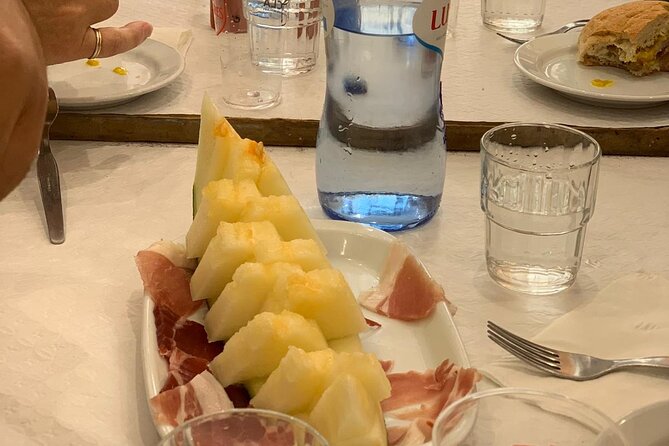
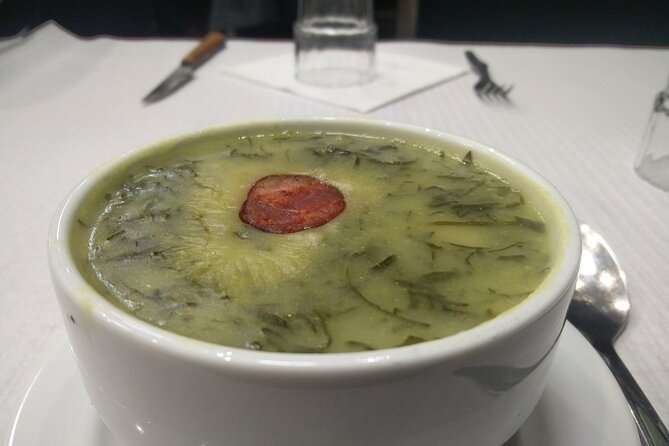
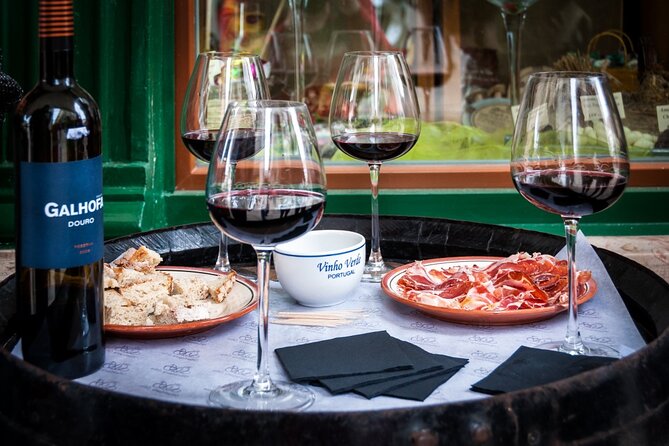
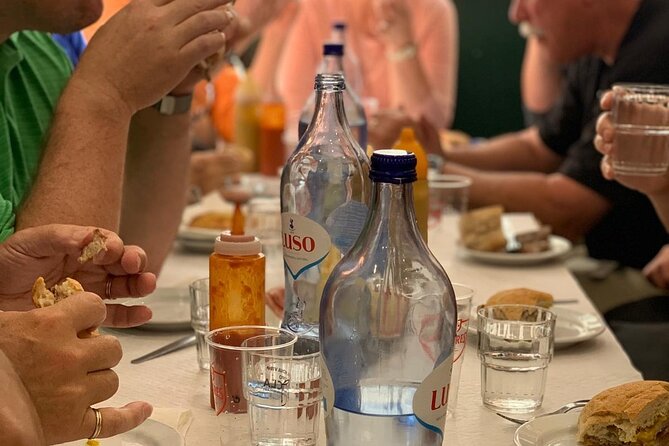
The tour includes food tasting, wine tasting, alcoholic beverages, snacks, and coffee or tea. The exact menu is not fixed in the information provided, and that is sensible for a small local operation, since venues and seasonal offerings can change.
The food examples described through the experience include appetizers, soup, tapas, Port, dessert, and coffee. You should arrive hungry, but do not expect one large sit-down lunch. This is a series of portions spread across several venues, with walking and conversation between them.
The range is the real advantage. You can compare savory and sweet flavors, see how wine and Port fit into Portuguese meals, and notice how local food reflects centuries of overseas contact. The guide can also explain what you are eating instead of leaving you to guess at unfamiliar ingredients.
Dietary planning is important. You must provide restrictions when booking because the tastings cannot be adapted on the day if the company has not been told in advance. Vegetarian needs have been accommodated in some bookings, but you should still record your requirements clearly rather than assume every dish can be changed.
Alcohol deserves a second mention. Since wine and other alcoholic drinks are included, you may receive several pours during the walk. If you do not drink, have medical concerns, or simply want to keep your head clear for the history, ask about nonalcoholic choices before the first tasting.
Walking conditions, timing, and meeting details
The activity lasts about three and a half hours and covers roughly 1.2 miles. That sounds easy on paper, but Lisbon’s old streets make the route a moderate workout. Expect cobblestones, uphill walking, and steps going down.
Comfortable shoes are essential. You should also allow extra time before the start, since the meeting point is Largo de São Domingos and the route begins in a busy central area. Pickup is offered in the general tour features, but the detailed meeting information says hotel pickup and drop-off are not included, so confirm the arrangement when booking rather than assume door-to-door service.
The listed end point is Confeitaria Nacional at Praça da Figueira. This is a useful finish because you are close to Rossio, public transport, shops, cafés, and the Green Line metro station. The exact end point also makes the walk easy to combine with more downtown sightseeing.
The experience is private, but no maximum group size is supplied. Only your own party participates, which should make the walk more personal, though a larger private party may still take longer at food stops and move less quickly through narrow streets.
Is $325.60 per person good value?
At $325.60 per person, this is not a budget food stroll. You are paying for a private guide, about three and a half hours of attention, more than 10 tastings, wine and other drinks, and a cultural route through several important parts of Lisbon.
The price is easier to justify if you are sharing it with a group that wants a custom experience. It can replace several separate decisions about where to eat, which neighborhoods to visit, and how to understand Fado and Lisbon’s past. A strong guide can also save you from spending your first day inside places aimed mainly at tourists.
The value is weaker if you mainly want a full meal or a quick list of cheap snacks. You also need to remember that transportation to and from attractions is not included, and Santa Justa elevator admission is extra.
For a first visit, I would place this walk early in your stay. You can use the food suggestions and restaurant advice afterward, and the neighborhood orientation will help you make sense of downtown and Mouraria. The experience is particularly useful for people who want context with their meal rather than food without a story.
Who should book this Lisbon food walk?
I would recommend it most strongly to couples, families, and small groups who want their own guide. It also suits people visiting Lisbon for the first time, since the route introduces major squares while adding places you might otherwise pass without understanding.
Food-focused travelers will appreciate the variety, especially if you enjoy small portions across different venues. History lovers will find plenty to discuss, from the 1506 massacre to the 1755 earthquake and the damaged São Domingos Church.
Families with older children can benefit from the mix of walking, food, music, and short stops. The moderate fitness requirement matters, though. Very young children, anyone with difficulty on cobblestones, or anyone seeking a completely flat route may find the hills and steps tiring.
The tour is also a good fit for visitors who prefer conversation to formal sightseeing. The guide names connected with the experience, including Pedro, Dani, Daniel, and Ricardo, are repeatedly associated with humor, warmth, and clear explanations. Guide quality can vary on any date, but the human element is central to what you are buying here.
Should you book it?
Book this walk if you want Lisbon explained through its food, music, communities, and complicated past. The best reasons are the private format, the six tasting stops, the Mouraria focus, and the chance to ask a local guide practical questions while you walk.
Skip it if you want a cheap food sample, a full restaurant meal, or a completely easy route. At this price, you should value personal attention and cultural background. Tell the company about dietary restrictions at booking, arrive ready for hills, and schedule it early in your visit so the food advice can shape the rest of your time in Lisbon.
Free cancellation is available up to 24 hours before the start time. Inside that window, the payment is not refunded and changes are not accepted.
FAQ
How long does the Lisbon Roots, Food & Cultural Walk last?
The walk lasts approximately 3 hours and 30 minutes.
How far does the tour go?
The route covers about 1.2 miles, or 2 kilometers.
Is the tour private?
Yes. Only your group participates in this activity.
How many food tastings are included?
The experience includes six food stops and more than 10 tastings.
Are wine and alcoholic drinks included?
Yes. Wine tasting and alcoholic beverages are included, along with food tastings, snacks, coffee, and tea.
Can dietary restrictions be accommodated?
You must provide dietary restrictions in the booking form. The tastings cannot be adapted on the day if the company is not informed in advance.
Is the tour physically demanding?
It requires a moderate fitness level. You will walk on cobblestones, go uphill, and climb down steps typical of old Lisbon.
Is hotel pickup included?
Hotel pickup and drop-off are not included in the stated inclusions. Pickup is offered as a tour feature, so confirm the arrangement when booking.
Is admission to the Santa Justa Elevator included?
No. Admission to the Elevador de Santa Justa is not included.
Where does the tour begin and end?
The walk begins at Largo de São Domingos and ends at Confeitaria Nacional, Praça da Figueira 18B.
Fresh finds around Lisbon
- Sanctuary of Fátima and Coimbra City Tour★ 4.5 · 51 reviews
- Sintra/Lisbon: Sintra & Quinta da Regaleira Tour with Ticket★ 4.4 · 51 reviews
- Jeronimos Monastery Guided Tour – Small Groups – Tickets Included★ 5.0 · 51 reviews
- Lisbon: Private Christmas Lights Tour by Eco Tuk Tuk★ 4.9 · 51 reviews
- Peniche: Berlengas Island Catamaran Tour – Round Trip★ 4.6 · 51 reviews
- Half day Spa Water Therapy experience at THE SPA at Corinthia Lisbon★ 4.5 · 51 reviews
- Lisbon: Private Tuk-Tuk Tour for 2 hours★ 4.7 · 51 reviews
- Premium Lisbon Airport Transfer to Lisbon★ 5.0 · 51 reviews
Walking Tours, compared.
Lisbon: History, Stories and Lifestyle Walking Tour
Read our review →
Best of Lisbon Small-Group Guided Walking Tour
Read our review →
Lisbon: Food and Wine Small Group Walking Tour
Read our review →
Best of Lisbon Walking Tour: Rossio, Chiado & Alfama
Read our review →
Sintra & Cascais Day Tour with Pena Palace Entry and Gardens Walk
Read our review →
Lisbon Roots – Small group Food & Culture Walking Tour w/tastings
Read our review →
Lisbon: Starter Walking Tour to the highlights in German
Read our review →Browse the lists this tour appears in