
Reviewed · COOKING CLASSES
Portuguese ‘Petiscos’ Cooking Class
The best part of this Lisbon cooking class is that you do not simply watch a chef prepare Portuguese food. You help make up to five small dishes, then sit down together to eat them with wine or beer. Caldo Verde, cod fritters, pica-pau, chorizo, and other familiar petiscos may appear, depending on the season.
I like the friendly, hands-on format and the chance to learn dishes you can repeat at home. I also like the small-group setup, with a listed limit of eight people and a maximum of ten noted in the booking details. The main consideration is that the menu changes, so you cannot count on preparing every dish shown in the sample list.
In This Review
- Key points at a glance
- Cooking Portuguese food at a shared table
- Starting with Caldo Verde and Portuguese basics
- Cod fritters, pica-pau, and the main cooking work
- From cooking lesson to long Portuguese meal
- What the chefs add to the experience
- Is $102.12 a fair price?
- Location, timing, and practical details
- Who should book this Lisbon class?
- Should you book the Portuguese Petiscos Cooking Class?
- FAQ
- Where does the Portuguese Petiscos Cooking Class meet?
- How long does the class last?
- How much does the class cost?
- Is the class taught in English?
- Do I need cooking experience?
- How many dishes will I prepare?
- Is food and drink included?
- Can people under 18 drink alcohol during the class?
- Can I cancel for a full refund?
Key points at a glance
- Five dishes in one class: Prepare up to five seasonal Portuguese petiscos, including Caldo Verde.
- Beginner-friendly instruction: You receive step-by-step guidance, with no prior cooking skill required.
- A meal, not just a lesson: Finger food, wine, beer, water, juices, coffee, and tea help turn the class into a full social meal.
- Small class setting: The advertised experience is limited to eight people, though the additional information allows up to ten.
- Belém meeting point: The class begins and ends at R. Aliança Operária 54 in Lisbon.
- Recipes for home cooking: The recipes are available afterward, though one participant had trouble finding the online cookbook.
Cooking Portuguese food at a shared table
Petiscos are Portugal’s answer to the small-plate meal. They are made for passing around, pairing with a drink, and eating slowly with friends. That makes this class more than a recipe lesson. You get a useful introduction to how Portuguese food fits into everyday social life.
The food is usually straightforward, but straightforward does not mean dull. A soup, fritter, egg dish, or quick meat preparation can show you how Portuguese cooks make good use of modest ingredients. The fun comes from the combination: several dishes, a drink in hand, and a table where everyone samples the results.
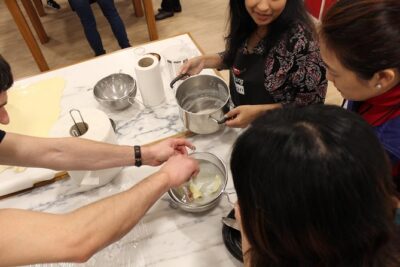
You will work with an instructor rather than try to follow a recipe on your own. The chefs explain each stage and the reason behind important techniques. That matters for a beginner. You are not only told what to do, but given enough context to understand why the dish works.
The class is offered in English. Past sessions have been led by chefs including Pedro and Miguel, and the teaching style described for the experience is patient, social, and practical. Staff also help with cleaning as the class moves along, so you are not left facing a mountain of dirty pans at the end.
More Lisbon food crawls:
- Lisbon: Pastel de Nata Baking Class
★ 4.9 · 2,106 reviews - Lisbon Small-Group Food Tour with 18 Tastings in Alfama District
★ 5.0 · 1,967 reviews - Lisbon: Baixa District Food Tour with Dinner and Drinks
★ 4.9 · 1,870 reviews
Starting with Caldo Verde and Portuguese basics
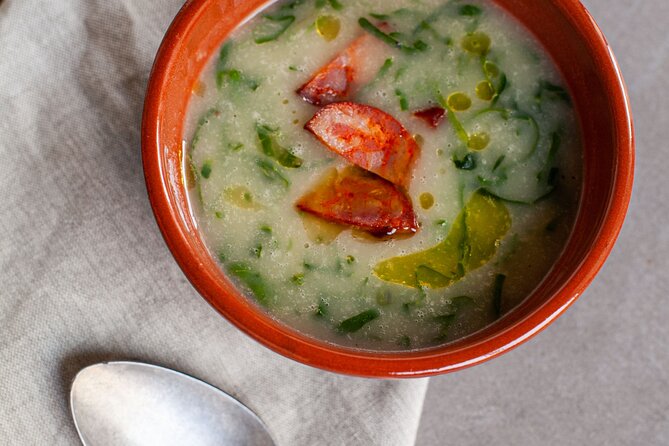
Caldo Verde is the anchor dish. This classic Portuguese soup is commonly associated with potatoes, greens, and a simple, comforting style of cooking. Preparing it gives you an easy way into the class before the work becomes more involved.
The soup is not just filler before the main food. It helps explain the value of learning local cooking in Lisbon. You can taste how a few familiar ingredients become a national favorite, then take the method home for your own kitchen.
The menu can include other starters and small plates such as pica-pau, pataniscas de bacalhau, ovos com farinheira, pastéis de bacalhau, peixinhos da horta, ovos verdes, or flaming chorizo. You will not necessarily make all of these. The class prepares up to five dishes, and the selection changes with the season and available ingredients.
That seasonal approach is good for freshness, but it requires flexible expectations. If you have your heart set on one particular plate, ask about the current menu before booking. The sample dishes are a useful guide, not a promise.
Cod fritters, pica-pau, and the main cooking work

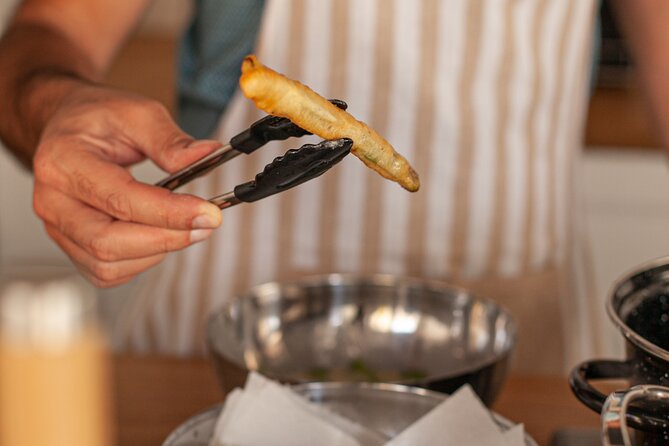
Cod appears often in Portuguese cooking, and you might prepare pataniscas de bacalhau or pastéis de bacalhau. These are substantial fritters rather than tiny decorative bites. You learn how the mixture is put together and how it is shaped and cooked.
One class included cod fritters alongside a beef dish, soup, and smoked chorizo. Another menu included a dried-cod casserole, red beans and rice, and pork ribs. The exact selection can vary widely, which is worth remembering if you are comparing this class with a fixed-menu cooking lesson.
Pica-pau is another possible dish. It is a quick beef preparation served with a mustard and white wine sauce, pickles, or similar sharp flavors. This is the sort of food that makes sense with a cold drink and a table full of shared plates. It is also a useful lesson in balancing salty, sour, and savory tastes.
Other sessions have included eggs with farinheira, green eggs, fried vegetables known as peixinhos da horta, and flaming chorizo. The range gives the class a broad look at Portuguese home-style food rather than focusing on one narrow specialty.
The portions may be larger than the word petiscos suggests. You should arrive hungry. One participant felt the class served enough food for a large meal, and that is helpful information for anyone planning a late lunch or dinner afterward.
From cooking lesson to long Portuguese meal
Once the food is ready, you sit down and eat together. This shared meal is one of the class’s strongest features because it gives the cooking a clear purpose. You are not packing away five separate samples after watching someone else do the work.
Wine and beer are included, along with non-alcoholic choices such as water, juice, coffee, and tea. Finger food is provided during the cooking period, so you are not waiting on an empty stomach while a soup simmers or fritters cook.
Alcohol is not served to anyone under 18. Water, juice, or tea are available instead. The amount of wine may feel modest to some people, so do not book this as a wine tasting. The drinks support the meal, but the food and instruction are the main event.
The social side depends partly on the group. With four or six people, everyone should have a fair chance to contribute. The class can also be a pleasant way to meet people from other countries, especially if you are traveling alone or as a couple.
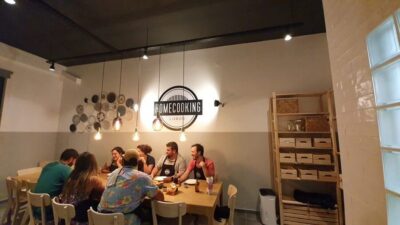
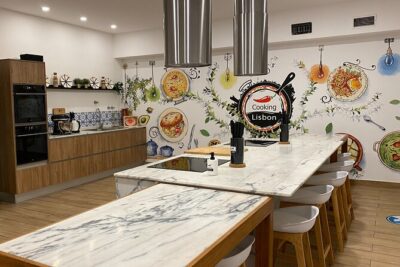
The kitchen has been described as clean, bright, and spacious enough for each participant to work with a partner. That setup makes a real difference. A cramped demonstration kitchen can leave you watching from the edge, while a proper station lets you chop, stir, shape, and ask questions.
A handful more Lisbon ideas to compare
- Lisbon: Traditional Portuguese Cooking Class
★ 4.9 · 592 reviews - Lisbon: 2-Hour Pastel de Nata Cooking Class
★ 4.8 · 461 reviews - Lisbon Portuguese Cooking Class with 3-Course Dinner
★ 5.0 · 445 reviews - Traditional Portuguese Cooking Class in Lisbon
★ 5.0 · 287 reviews
What the chefs add to the experience
A good cooking class depends on the instructor, and this experience benefits from having chefs who explain more than the mechanics. Miguel, for example, has been praised for explaining the background of each dish and showing why certain techniques matter. Pedro has also led relaxed classes where everyone had a chance to contribute.
You should expect a practical lesson rather than a formal culinary school session. The tone is social, and the aim is to make traditional food approachable. That is a strong match for anyone who wants to cook with confidence but does not need professional training.
The cultural explanations add useful context. You learn why petiscos are shared, how drinks fit into the meal, and how Portuguese food uses local traditions without turning the class into a lecture. The best moments come when the explanation is tied to what you are doing with your hands.
Several dishes can be prepared at once, so the class may feel busy in a good way. A pastry or other item may be started early so it has time to bake while you work on savory dishes. Pastel de nata appeared in one session, though it is not part of every stated sample menu. If custard tarts are a priority, confirm the current plan.
Is $102.12 a fair price?
At $102.12 per person, this is not the cheapest meal in Lisbon. You can eat petiscos for far less in a neighborhood café or tasca. The price makes more sense when you count the instruction, ingredients, drinks, several dishes, kitchen use, and a prepared meal lasting about three hours.
I see the value in the amount of food and the number of recipes. You are not paying for a quick demonstration followed by one small tasting. You take part in making several dishes, eat a large shared meal, and gain methods you can use at home.
The class is also a reasonable choice early in a Lisbon visit. It introduces food customs, ingredients, and dishes before you spend the rest of your trip ordering from menus. It can help you recognize Caldo Verde, cod preparations, chorizo, and other Portuguese staples when you see them elsewhere.
Still, the value is weaker if you dislike group activities, rarely cook at home, or want a tightly fixed menu. You may also find the price high if your main goal is simply to eat Portuguese food. In that case, a meal at a local restaurant costs less and takes less time.
The experience is often booked about 65 days ahead, so popular dates may disappear well before your trip. That is a useful planning signal, especially if you are visiting during a busy period.
Location, timing, and practical details
The meeting point is R. Aliança Operária 54, 1300-049 Lisboa, in the Belém area. The class ends at the same location. It is near public transportation, but the information provided does not specify the exact route or travel time from your hotel, so check your own map before setting off.
Allow roughly three hours from the start. Do not schedule a museum visit, river cruise, or long cross-town transfer too close to the end. Cooking times can vary, and you will want enough breathing room to enjoy the meal rather than watch the clock.
A mobile ticket is provided, and the activity is offered in English. Confirmation is normally issued at booking. If you book within 12 hours of the start time, confirmation comes as soon as possible and depends on availability.
Free cancellation is available until 24 hours before the start time for a full refund. Changes or cancellations inside that window are not accepted for a refund. The class also needs a minimum number of participants, so if the provider cancels for that reason, you receive a different date or experience, or a full refund.
Who should book this Lisbon class?
I would choose this for first-time visitors who want an edible introduction to Portugal, couples looking for a shared activity, and families with beginner cooks. The class suits people who enjoy asking questions, working with their hands, and eating at a communal table.
It is also a good fit for anyone who wants recipes to take home. The recipes are made available afterward, although you may need to locate them on the provider’s website rather than expect a printed booklet. Save the recipe page before leaving if you want an easy reference later.
This is less suited to strict vegetarians unless you confirm the menu in advance. Several possible dishes feature cod, beef, pork, chorizo, or farinheira, and no dietary alternatives are specified in the information provided.
You should also think twice if you want a pastry-only lesson. Pastel de nata has appeared in a class, but one chef noted that a separate class focuses on baking. The petiscos session is centered on savory food with possible seasonal variations.
Should you book the Portuguese Petiscos Cooking Class?
Book it if you want to learn several Portuguese dishes, eat a generous meal, and spend an evening in a small, friendly kitchen. The hands-on format, careful instruction, and shared table give you more than a standard food tasting.
Before booking, confirm the current menu if you have dietary restrictions or a must-try dish. Also remember that the group size information gives both eight and ten as limits, so the class is small but not necessarily private.
For the right person, $102.12 buys a useful cooking lesson, drinks, dinner, and a better understanding of Portuguese food culture. If you prefer a quick restaurant meal or a fixed recipe list, spend your money elsewhere. If you want to bring a little of Lisbon’s kitchen home with you, this is a strong choice.
FAQ
Where does the Portuguese Petiscos Cooking Class meet?
The class begins at R. Aliança Operária 54, 1300-049 Lisboa, Portugal. It ends back at the same meeting point.
How long does the class last?
The experience lasts approximately three hours.
How much does the class cost?
The listed price is $102.12 per person.
Is the class taught in English?
Yes. The experience is offered in English.
Do I need cooking experience?
No. The class is designed for beginners, and the chefs guide you through the preparation steps.
How many dishes will I prepare?
You will learn to prepare up to five seasonal Portuguese petiscos, including Caldo Verde. The menu can change during the year.
Is food and drink included?
Yes. Finger food, Portuguese wine and beer, and non-alcoholic drinks such as water, juice, coffee, and tea are included.
Can people under 18 drink alcohol during the class?
No. Alcoholic drinks are not served to participants under 18. Water, juice, or tea are available instead.
Can I cancel for a full refund?
Yes, if you cancel at least 24 hours before the experience starts. Cancellations or changes made less than 24 hours in advance are not refunded or accepted.
More Workshops in Lisbon
- Pastel de Nata Pastry Class: Bake and Enjoy Your Own Treats
★ 5.0 · 485 reviews - Lisbon: Azulejos’ Design Create Your Own Tile Workshop
★ 4.9 · 420 reviews - Lisbon: Surfing Lesson on Costa de Caparica Beach
★ 5.0 · 322 reviews - Lisbon: 1.5-Hour Surf Lesson
★ 4.8 · 257 reviews
Fresh finds around Lisbon
- Lisbon: Tuk Tuk City Tour★ 3.6 · 7 reviews
- Fatima Full day Private Tour★ 5.0 · 7 reviews
- Lisbon: Highlights and Hidden Gems Tour★ 5.0 · 7 reviews
- Private Tour to Evora and Monsaraz from Lisbon★ 5.0 · 7 reviews
- Discover Sintra Beauty with a Guided Journey from Lisbon★ 5.0 · 7 reviews
- Private Half-Day Tour to Sintra★ 3.4 · 7 reviews
- Lisbon: Sunset and Wine Catamaran Tour★ 5.0 · 7 reviews
- Nazaré: Beaches of Nazaré Guided E-Bike Tour★ 4.9 · 7 reviews
Cooking Classes, compared.

Lisbon Portuguese Cooking Class with 3-Course Dinner
Read our review →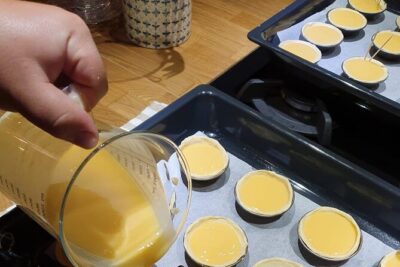
Traditional Portuguese Cooking Class in Lisbon
Read our review →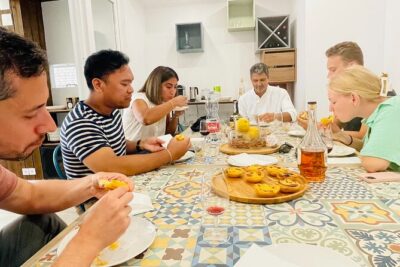

Browse the lists this tour appears in