
Reviewed · COOKING CLASSES
Pastel de Nata Cooking Class in a Lisbon Pastry Shop
The best part of this Lisbon experience is that you do not simply eat a pastel de nata. You learn why the flaky shell is tricky, how the custard comes together, and what it takes to make Portugal’s favorite pastry by hand. Filipa teaches in English at Casa dos Ovos Moles, a working pastry shop in the center of town.
I like the tiny six-person group, which gives you a real chance to handle the dough and ask questions. I also like the Portuguese touches: a glass of port, a shot of ginjinha, and a lesson that connects baking with local life. The main consideration is price. At $99.72 per person, this is a costly pastry lesson, and you work as a group rather than making an entire batch alone from start to finish.
In This Review
- Key points at a glance
- Why pastel de nata is worth a lesson
- Meeting Filipa at Casa dos Ovos Moles
- The first taste: port and ginjinha
- Making the pastry from scratch
- Fresh tarts at the end
- A compact class with a social side
- Location and timing in a Lisbon day
- Is $99.72 a fair price?
- What to tell the host before you arrive
- Who should book this pastry class?
- Final verdict: book it for the craft, not just the tart
- FAQ
- How long does the pastel de nata class last?
- What time does the class begin?
- Where does the experience meet?
- Where does the activity end?
- How many people can join the class?
- Is the class taught in English?
- Are children allowed to participate?
- What drinks are included?
- Can I cancel for a full refund?
Key points at a glance
- Hands-on pastry work: Learn the dough, custard, and shaping techniques behind pastel de nata.
- Filipa leads the class: Her patient, funny teaching style suits beginners and families.
- Small group of six: Everyone gets a turn, though the work is shared rather than fully individual.
- Portuguese drinks included: Taste port wine and ginjinha alongside the finished tarts.
- Central Lisbon meeting point: Meet at Calçada do Sacramento 25, near public transportation.
- Plan ahead: The class is often reserved about 64 days before the date.
Why pastel de nata is worth a lesson
You can buy custard tarts all over Lisbon for a few euros. That makes a $99.72 cooking class seem hard to justify at first glance. The value here is not the number of pastries you eat. It is the chance to understand a food that appears simple but demands careful technique.
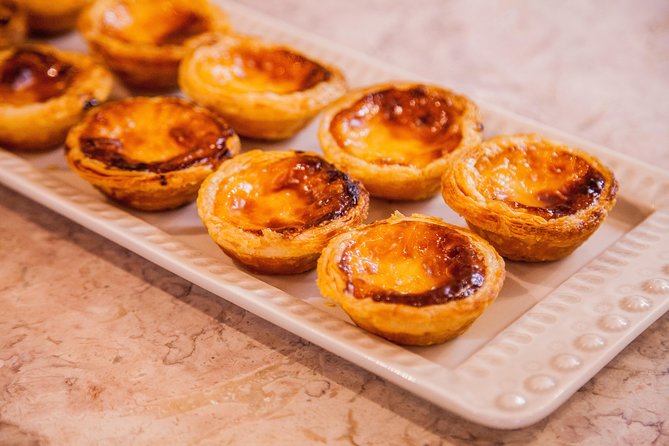
Pastel de nata has two parts that look easy until you try them: laminated pastry and baked custard. The dough must be moved and shaped without tearing. The custard needs the right balance and texture. The finished tart should have crisp layers outside and a soft, creamy center.
That contrast is the lesson’s real subject. You learn why the professional baker makes the work look simple, even when your own first attempt feels less graceful. The class turns an everyday snack into a small piece of Portuguese food culture.
I like this kind of cooking class because it gives you a better eye for the food you eat later. After learning the work involved, you will probably pay closer attention to the pastry shell, the custard, and the way the tart has been baked.
More Lisbon food crawls:
- Lisbon: Pastel de Nata Baking Class
★ 4.9 · 2,106 reviews - Lisbon Small-Group Food Tour with 18 Tastings in Alfama District
★ 5.0 · 1,967 reviews - Lisbon: Baixa District Food Tour with Dinner and Drinks
★ 4.9 · 1,870 reviews
Meeting Filipa at Casa dos Ovos Moles
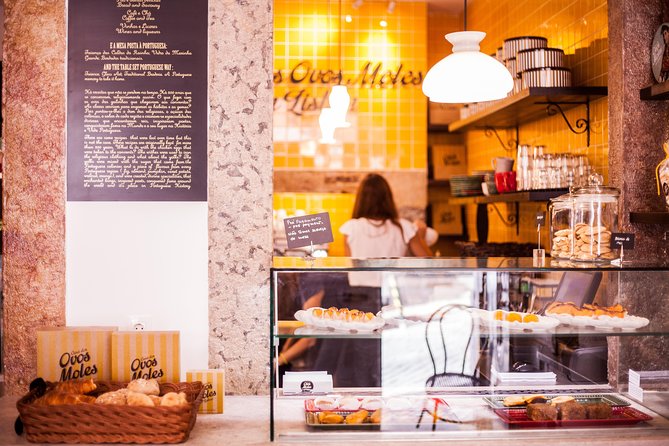
The class begins at 3:00 p.m. at Casa dos Ovos Moles, located at Calçada do Sacramento 25, 1200-393 Lisboa. The pastry shop is in a handy central area of Lisbon, with public transportation nearby. The class also ends at the same place, so you do not need to arrange a second pickup point.
The setting matters. This is not a large cooking school where you stand at a separate station in a polished studio. It takes place in an established pastry shop, giving the lesson a more local and practical feel. You are learning in a place connected to the business of making and selling Portuguese sweets.
Filipa is both the instructor and the person who gives the class its shape. She explains each stage, demonstrates the finer movements, and corrects mistakes without making beginners feel awkward. Her teaching style is described as warm, patient, friendly, and funny, which is useful when the pastry refuses to behave.
She also makes room for conversation. The class includes stories about pastel de nata and everyday life in Portugal, and she has offered suggestions for places to eat and see in Lisbon. That personal exchange adds value, especially if this is one of your first activities in the city.
The first taste: port and ginjinha
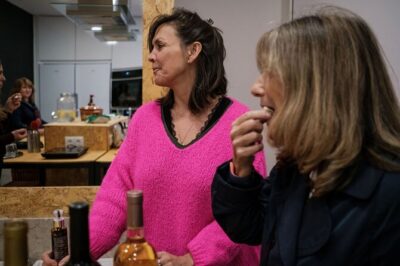
The experience includes a pastel de nata served with port wine and ginjinha, the sour-cherry liqueur commonly associated with Portugal. Wine, an aperitif, coffee, tea, and water are also listed with the menu.
This tasting is not a separate wine tour. It is a small food-and-drink pairing that helps set the mood before or during the baking lesson. Port brings a sweet, fortified wine note, while ginjinha gives you a distinctly Portuguese liqueur to try.
For some people, this is a welcome part of the experience. It gives the class a social rhythm rather than making it feel like a technical demonstration. For others, the drinks may not add much value, especially if you do not drink alcohol. Coffee, tea, and water are available, but the alcoholic tasting is part of the advertised menu.
The class is suitable for children aged 12 and older. Families can take part, though the work is shared across the group, so younger participants may not be active at every moment. The format still allows children to watch, ask questions, and handle selected steps under Filipa’s direction.
Making the pastry from scratch
The strongest part of the class is the process itself. You learn how to prepare the pastry and filling, rather than simply decorating premade shells. The work is done by hand, which gives you a clearer sense of why these tarts require skill even in a busy pastry shop.
The pastry is the demanding part. You need to work it carefully and shape it without breaking the layers. Filipa demonstrates the movements that come naturally to a professional baker, then helps you adjust your technique.
Do not expect to master the dough in one attempt. The class is friendly to beginners, but it does not pretend that professional pastry work is effortless. That honesty is useful. You get to see where the difficulty lies, and you leave with more respect for the craft.
The custard adds a different challenge. It needs to be prepared correctly and brought together with the pastry so the tart has the right balance. Filipa explains the steps as you go, rather than leaving you to follow a recipe without context.
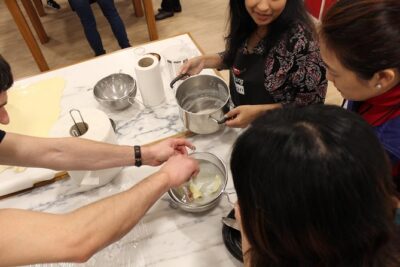
A key detail is that this is a shared group exercise. Each person gets hands-on time, but you do not make a complete individual batch entirely by yourself. One person may shape part of the pastry while another handles a different stage. If you want a private workstation and personal control over every tart, this is not that kind of lesson.
For most people, the shared format is part of the fun. You watch other beginners try the same tricky movements, work together, and compare results. It also keeps the class moving within its roughly 90-minute schedule.
A handful more Lisbon ideas to compare
- Lisbon: Traditional Portuguese Cooking Class
★ 4.9 · 592 reviews - Lisbon: 2-Hour Pastel de Nata Cooking Class
★ 4.8 · 461 reviews - Lisbon Portuguese Cooking Class with 3-Course Dinner
★ 5.0 · 445 reviews - Traditional Portuguese Cooking Class in Lisbon
★ 5.0 · 287 reviews
Fresh tarts at the end
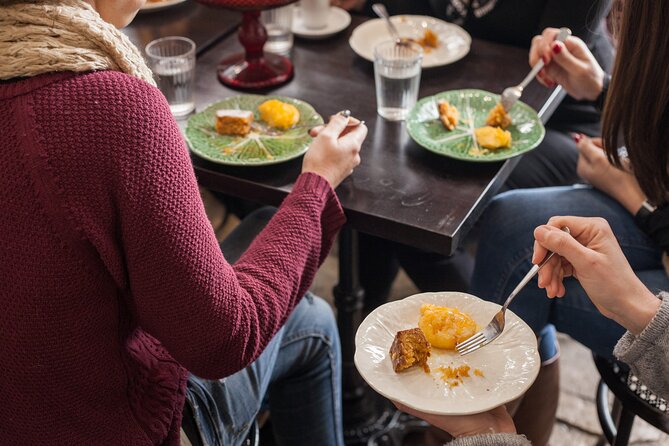
The payoff comes when the pastries are ready to eat. You taste the fresh pastel de nata made during the class, along with the included drinks. Fresh from the oven, the tarts provide an immediate reward for all the careful shaping and filling.
The finished pastries have also been a highlight for people who had already sampled many tarts around Portugal. Some found their class-made pastries better than the shop versions they tried elsewhere. That may partly reflect freshness, but it also shows how satisfying it is to eat something you helped prepare.
You should keep your expectations sensible. This is a short lesson, not a professional pastry qualification. You may need several tries at home before your pastry looks as neat as Filipa’s. Still, you will understand the basic method and the points where care matters most.
A recipe has been emailed after some classes, which is helpful if your goal is to repeat the experience at home. The supplied details do not promise this for every booking, so ask Filipa or the provider if receiving the recipe is important to you.
A compact class with a social side
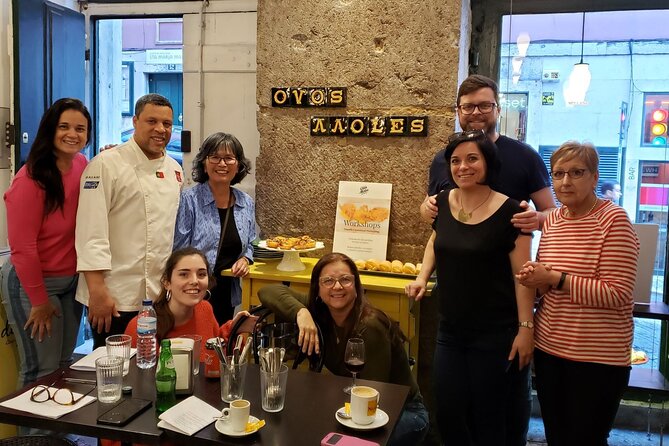
The maximum group size is six. That is small enough for Filipa to watch what you are doing and step in when a technique needs correction. It also creates a natural chance to meet other people over food.
The social side is not forced. You share the work, talk while the pastry is prepared, and eat the results together. That makes this a good choice for couples, parent-and-child trips, and solo visitors who want an activity with some conversation built in.
The small size has one tradeoff. Because the group shares the stages, you may spend part of the lesson watching rather than working. One family found that the children were not always active, even though they stayed interested and learned a great deal. If constant hands-on time is your top priority, ask how the session will divide the tasks.
The English-language format is straightforward for visitors who do not speak Portuguese. Filipa’s patient approach also helps people with little or no baking experience. You do not need to arrive with pastry skills.
Location and timing in a Lisbon day
The 3:00 p.m. start makes this easy to place after a morning of sightseeing. Since the meeting point is in central Lisbon and the activity returns there, you can continue exploring afterward without crossing the city.
One useful pairing is a visit to a nearby castle after the class. The exact walking route is not provided, so check your map on the day, but the meeting point is well placed for continuing your time in the historic center.
The afternoon schedule also avoids asking you to give up a full morning. At about 90 minutes, the class is short enough to fit between major sights, though you should allow extra time if the session runs slightly over or if you want to linger over the finished pastries.
Arrive with the address saved on your phone. The experience provides a mobile ticket, and confirmation is issued when you book. Public transportation is nearby, but no specific route or parking information is provided.
Is $99.72 a fair price?
At $99.72 per person, this is not a budget snack stop. You could eat several pastel de nata for far less money, and you should not book this class simply because you want a cheap dessert.
The price makes more sense if you value the instruction, small group, drinks, and setting. You are paying for access to a pastry professional, hands-on work, local food context, and the chance to repeat the recipe later. The six-person limit is important here. A large class would offer less personal help and make the price harder to defend.
I would also weigh the length. Ninety minutes is enough for a focused introduction, but it is not a full cooking afternoon. If you want multiple dishes, a market visit, or a long meal, choose a broader food tour instead.
The class earns its price most clearly for people who bake at home or enjoy food traditions. It is also good for a special parent-and-child outing or a couple looking for something more personal than another sightseeing stop. If you only want to sample Lisbon’s famous tart, spend the money at a pastry shop instead.
What to tell the host before you arrive
Tell the provider about food allergies, dietary restrictions, or special diets before the class. The experience specifically asks you to communicate these needs, and that is especially important in a pastry lesson involving wheat, dairy, eggs, and alcohol-related tastings.
The supplied information does not spell out substitutions or allergen controls. Do not assume the recipe can be changed. Ask before booking if you have a serious allergy or require a strict dietary adjustment.
The experience welcomes children aged 12 and older. It is family-friendly, but children should be ready to take part in a small-group lesson where some steps are shared and not every participant is active at every second.
Free cancellation is available if you cancel at least 24 hours before the local start time. Changes or cancellations inside that window are not accepted for a refund. The class also needs a minimum number of participants, and if the provider cancels for that reason, you are offered another date or experience, or a full refund.
Who should book this pastry class?
I would choose this for you if you want a personal introduction to one of Portugal’s best-known foods. It suits first-time bakers, food-focused visitors, couples, families with children 12 and older, and solo visitors who enjoy a small social activity.
It is especially useful near the beginning of a Lisbon stay. Filipa can explain the pastry’s place in Portuguese life, and the conversation may help you choose restaurants or other sights for the days ahead.
You may want to skip it if your schedule is tight, your budget is limited, or you dislike shared cooking tasks. You should also think twice if you expect to create a separate full batch by yourself. That is not how this class is arranged.
Final verdict: book it for the craft, not just the tart
I recommend the class for people who want to understand pastel de nata rather than simply eat one. Filipa’s patient instruction, the six-person limit, the working pastry-shop setting, and the fresh pastries at the end give the experience a clear identity.
The price is high, and the group format means you will not personally complete every step alone. But if you enjoy food traditions and want a practical skill to take home, the lesson offers more than a quick tasting. Book early, since it is often reserved about 64 days ahead, and tell the host about dietary needs before you go.
FAQ
How long does the pastel de nata class last?
The experience lasts approximately 1 hour and 30 minutes.
What time does the class begin?
The class starts at 3:00 p.m.
Where does the experience meet?
It begins at Casa dos Ovos Moles, Calçada do Sacramento 25, 1200-393 Lisboa, Portugal.
Where does the activity end?
It ends back at the same meeting point.
How many people can join the class?
The maximum group size is six people.
Is the class taught in English?
Yes. The experience is offered in English.
Are children allowed to participate?
Yes. Children aged 12 and older are welcome, and the activity is family-friendly.
What drinks are included?
The menu includes port wine and ginjinha liqueur with the pastel de nata. Wine, an aperitif, coffee, tea, and water are also listed.
Can I cancel for a full refund?
Yes, if you cancel at least 24 hours before the local start time. Cancellations or changes made less than 24 hours before the experience are not refunded.
More Workshops in Lisbon
- Pastel de Nata Pastry Class: Bake and Enjoy Your Own Treats
★ 5.0 · 485 reviews - Lisbon: Azulejos’ Design Create Your Own Tile Workshop
★ 4.9 · 420 reviews - Lisbon: Surfing Lesson on Costa de Caparica Beach
★ 5.0 · 322 reviews - Lisbon: 1.5-Hour Surf Lesson
★ 4.8 · 257 reviews
Fresh finds around Lisbon
- Lisbon: Tuk Tuk City Tour★ 3.6 · 7 reviews
- Fatima Full day Private Tour★ 5.0 · 7 reviews
- Lisbon: Highlights and Hidden Gems Tour★ 5.0 · 7 reviews
- Private Tour to Evora and Monsaraz from Lisbon★ 5.0 · 7 reviews
- Discover Sintra Beauty with a Guided Journey from Lisbon★ 5.0 · 7 reviews
- Private Half-Day Tour to Sintra★ 3.4 · 7 reviews
- Lisbon: Sunset and Wine Catamaran Tour★ 5.0 · 7 reviews
- Nazaré: Beaches of Nazaré Guided E-Bike Tour★ 4.9 · 7 reviews
Cooking Classes, compared.
Lisbon Portuguese Cooking Class with 3-Course Dinner
Read our review →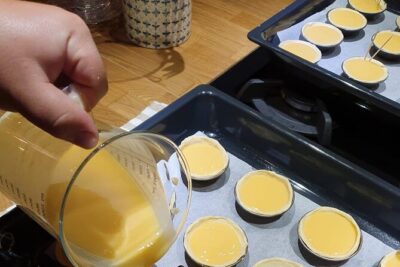
Traditional Portuguese Cooking Class in Lisbon
Read our review →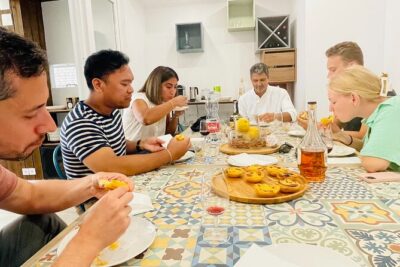
Browse the lists this tour appears in