
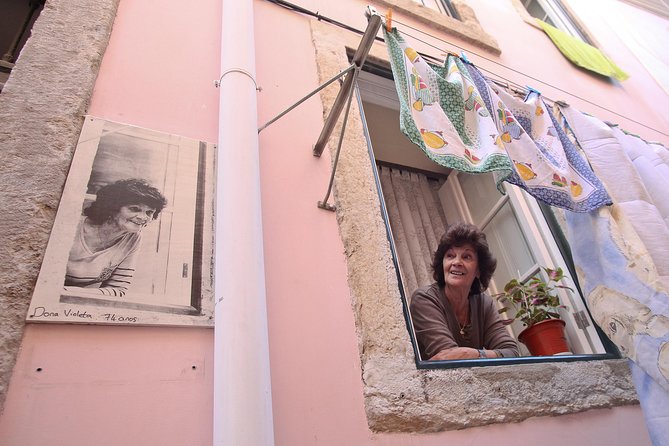
Reviewed · ALFAMA & OLD TOWN WALKS
Mouraria: The Multicultural District – Private Walking tour
Mouraria is where Lisbon’s old walls, Moorish past, Fado legends, immigrant communities, and modern street art meet. This private walk takes you through a district once viewed as a slum and shows how its streets helped shape the city. Guide Luis is especially good at turning local history into a personal story, while adapting the walk to your interests.
I like the private format, since you get a guide focused only on your group rather than a crowd trailing behind. I also like the mix of viewpoints, churches, narrow lanes, public art, and everyday neighborhood life. The main consideration is that this is a history and culture walk, not a food tour, and drinks or snacks cost extra.
In This Review
- Key points to know before booking
- Why Mouraria deserves three hours
- Chão do Loureiro gives you the city at a glance
- Churches and old doors at São Cristóvão
- Casa da Achada links art with civic life
- Largo dos Trigueiros and Camila Watson’s work
- Rua Marquês de Ponte de Lima shows old and new Mouraria
- Nossa Senhora do Socorro and Mouraria’s changing communities
- Largo da Severa and the beginnings of Fado
- Martim Moniz brings Lisbon’s multicultural side forward
- Intendente explains Lisbon’s urban renewal
- What the private price really buys you
- Who will enjoy this walk most
- A practical way to prepare
- Should you book Mouraria: The Multicultural District?
- FAQ
- Where does the tour begin?
- Where does the tour end?
- How long does the tour last?
- Is the tour private?
- What language is offered?
- Is a local guide included?
- Are admission tickets included?
- Are food and drinks included?
- What is the cancellation policy?
Key points to know before booking

- Mouraria’s Moorish beginnings: Learn how the area developed as a Moorish suburb and later became a central Lisbon neighborhood.
- Fado connection: Largo da Severa introduces the district’s claim as a birthplace of Fado music.
- Street art with a social edge: See works linked with artists and cultural projects, including Camila Watson’s work at Largo dos Trigueiros.
- A private three-hour route: Your group has the guide’s full attention, with a pace that can suit your interests.
- A useful start-to-finish route: The walk begins near downtown at Rua dos Fanqueiros and ends at Intendente Metro station.
- A close look at change: Martim Moniz and Intendente offer two different views of Lisbon’s multicultural life and urban renewal.
Why Mouraria deserves three hours
Many visitors focus on Alfama’s lanes or Baixa’s grand streets, then miss Mouraria, the neighborhood between them. That is a shame. Mouraria helps explain how Lisbon became a city shaped by conquest, migration, music, poverty, renewal, and cultural exchange.
The route begins near Rua dos Fanqueiros, a practical location in the lower city. From there, you move uphill toward viewpoints and historic sites before finishing near Intendente. The walk is not a simple loop, so you get a sense of how the districts connect rather than seeing Mouraria as an isolated pocket.
The private setup matters here. Mouraria has layers that are easy to overlook: a church doorway, a remaining section of old fortification, a painted wall, or a square with a name tied to a former resident. Guide Luis can help connect those details. The experience is offered in English, though a multilingual guide may operate the tour.
More Walking Tours in Lisbon
- Lisbon: History, Stories and Lifestyle Walking Tour
★ 4.8 · 10,902 reviews - Best of Lisbon Small-Group Guided Walking Tour
★ 5.0 · 4,869 reviews - Lisbon: Food and Wine Small Group Walking Tour
★ 4.9 · 4,082 reviews
Chão do Loureiro gives you the city at a glance
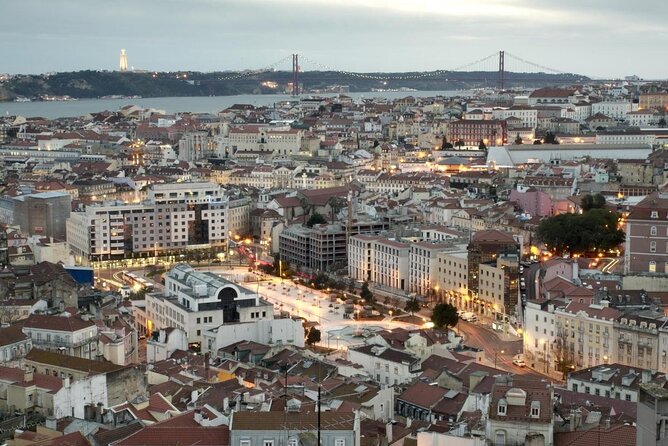
The first stop, Miradouro Chão do Loureiro, is a strong opening. This viewpoint hangs above downtown, in the space between Alfama and Mouraria, and gives you a useful sense of Lisbon’s layout.
You can pause for about 20 minutes here. Admission is free, and the view helps place the rest of the walk. Instead of hearing about Mouraria as a vague historic quarter, you can see how it relates to the lower city and nearby Alfama.
I like starting with a viewpoint because it gives the later streets a frame. Look out across downtown, then pay attention to how the route moves into older, tighter spaces. The stop is brief enough not to slow the walk, but important enough to make the geography clearer.
Churches and old doors at São Cristóvão
The next stop is Igreja Paroquial de São Cristóvão e São Lourenço, where several eras appear close together. The site includes a Mannerist church, a Baroque palace, a Gothic door, and one of Mouraria’s popular squares.
That combination makes this more than a quick church visit. A Mannerist church points to one period of religious design, the Baroque palace to another, and the Gothic door reaches farther back. You get a compact lesson in how Lisbon was built in layers rather than all at once.
Plan on about 20 minutes. Admission is free. The guide’s role is especially useful here because the details may not be obvious if you simply pass through the square alone. You can ask how the church, palace, doorway, and neighborhood fit together.
Casa da Achada links art with civic life
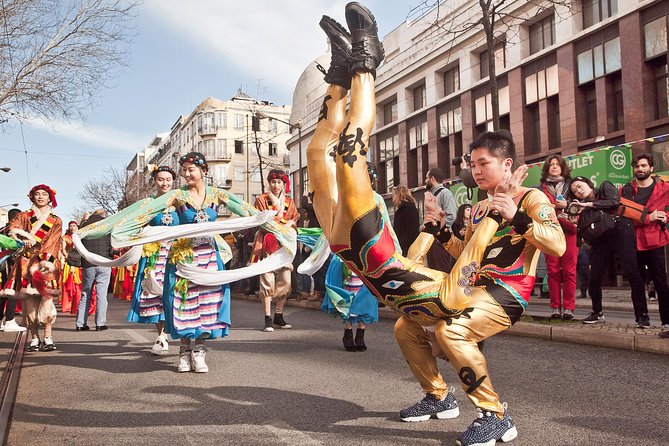
Casa da Achada, Centro Mário Dionísio, shifts the focus from formal religious buildings to social and cultural work. The center is rooted in the legacy of Mário Dionísio and occupies medieval buildings that now sit alongside striking 21st-century street art.
This is one of the more unusual stops. It shows that Mouraria’s story is not frozen in the past. Old structures share space with newer artistic and cultural efforts, and the contrast helps explain the district’s changing identity.
The visit lasts about 15 minutes, with no admission charge. You should not expect a long museum visit based on the listed timing. Instead, treat it as a compact stop where your guide points out the connection between the buildings, the cultural center, and the public art nearby.
More old-town wanders:
- Alfama Tour in Lisbon Old Town
★ 5.0 · 4,936 reviews - Private Lisbon Sightseeing Tuk-Tuk Tour: Alfama, Belém & More
★ 5.0 · 4,277 reviews - Lisbon: Hills, Alfama, and Mouraria Tour by Electric Bike
★ 4.8 · 3,438 reviews - Best of Lisbon Walking Tour: Rossio, Chiado & Alfama
★ 4.9 · 2,700 reviews
Largo dos Trigueiros and Camila Watson’s work
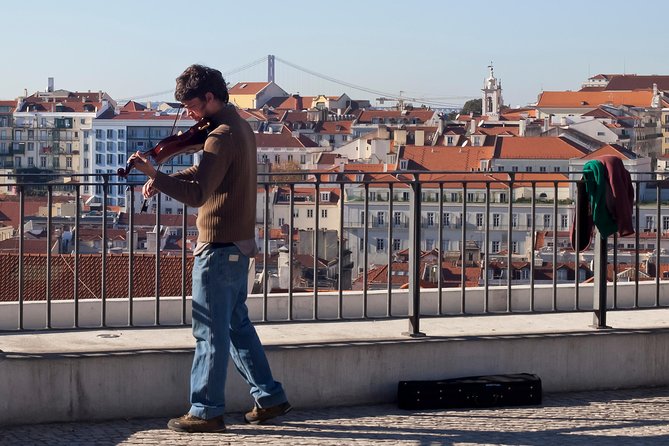
At Largo dos Trigueiros, the route turns its attention to street art associated with Camila Watson. The description of her projects as soulful is apt in a district where public art often carries more weight than simple decoration.
The stop lasts about 15 minutes. It is a good place to slow down and consider how art can change the way you read a street. A painted wall may point toward local memory, community identity, or the people who have shaped the area.
Because this is a private tour, you can spend more time on the art if that is what interests you. If your priority is architecture or Fado, you can keep the stop focused. That flexibility is one of the clearest benefits of booking privately.
Rua Marquês de Ponte de Lima shows old and new Mouraria

Rua Marquês de Ponte de Lima brings together two different versions of the district. It is described as Mouraria’s first modern street, yet it sits among older palaces, churches, and convents.
This contrast is worth noticing. Modernization did not erase everything that came before. Instead, newer streets cut through a district where older religious and defensive structures still shape the view.
The route also includes the only genuine tower of the old remparts, or city walls. That small survival gives you a physical link to the fortified city. Allow about 15 minutes here, although the exact pace will depend on how much attention you and your guide give to the buildings and wall remains.
Nossa Senhora do Socorro and Mouraria’s changing communities

Igreja de Nossa Senhora do Socorro is presented as a hub of Mouraria from the period when the area was a Moorish suburb. It also brings in the legacy of the Company of Christ and the striking presence of what is described as little Punjab.
That makes this one of the most layered stops on the route. You are not only hearing about medieval or religious history. You are also seeing how later communities have made their home in the same streets.
The phrase little Punjab points to the district’s South Asian presence, though the supplied details do not specify a separate visit or a food tasting. Keep your expectations practical: this is a walking stop with interpretation from the guide, not a dedicated culinary excursion.
The church stop lasts about 15 minutes and is free. It is a useful point to ask Luis how the neighborhood’s identity changed over time. His ability to connect the older story with current life was singled out in the feedback, and this stop gives that approach plenty to work with.
Largo da Severa and the beginnings of Fado
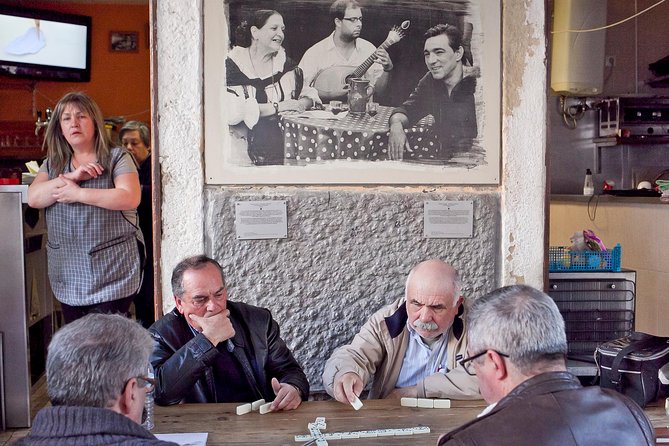
Largo da Severa is the emotional center of the tour for anyone interested in Fado. The square is presented as the cradle of Fado music, giving you a chance to explore how Mouraria became linked with one of Portugal’s best-known musical traditions.
You will spend about 20 minutes here. The value is not a concert. No performance is included. Instead, the guide explains the local connection and places Fado within the streets where the tradition is thought to have originated.
That distinction matters. If you want live music, book a separate Fado evening. If you want to understand why the music is tied to Mouraria, this stop gives you the setting and the story before you hear it elsewhere.
Martim Moniz brings Lisbon’s multicultural side forward
Praça Martim Moniz is one of Lisbon’s most multicultural squares, and it gives the walk a broader present-day focus. After churches, old walls, and Fado, this stop shows how Mouraria continues to be shaped by people from different places.
You have around 20 minutes here. The square is also useful for understanding the district as a living neighborhood rather than a collection of historic sights. The tour does not reduce Mouraria to its Moorish past or musical reputation. It includes the people and cultures that are part of its current identity.
The private format helps if you want to ask direct questions about what you are seeing. The provided details do not promise food sampling or market purchases, so bring your own interest in observation and conversation rather than expecting included refreshments.
Intendente explains Lisbon’s urban renewal
The final stop is Largo do Intendente Pina Manique, a case study in Lisbon urban renewal. It is also the endpoint, close to the underground station with the same name.
This finish gives the tour a clear present-day conclusion. You begin with a high view over the old city, pass through historic and artistic layers, then end in a district associated with change and renewal.
The endpoint is practical. You can continue by Metro after the walk, although the tour does not include onward transport. Since the walk lasts about three hours, ending at a transit point makes it easier to plan the rest of your day.
What the private price really buys you
The price is $32.51 per person, with group discounts listed. A minimum of two people is required, so a pair pays about $65.02 before any group discount. For a private three-hour walk with a local guide, professional guide, and professional photographer guide included, that is a reasonable price if personal attention matters to you.
The value is not in admission savings. Every listed stop is free, and the tour does not include drinks, snacks, or alcoholic beverages. You are paying for the route, the interpretation, and the ability to explore Mouraria with your own guide.
For two people, the private format can be more worthwhile than a large group tour if you want to ask questions or adjust the emphasis. Families and small groups may also find the cost easier to justify, especially when a group discount applies. Adult pricing applies to all adults, so check the total before booking.
The experience is recommended by 100 percent of the available feedback, with a 4.9 rating from 12 reviews. That is a small sample, but the pattern is clear: the strongest praise centers on the guide’s passion, the neighborhood’s story, and the fact that the route would be difficult to recreate on your own.
Who will enjoy this walk most
I would choose this tour if you want to see a side of Lisbon beyond the postcard stops. It suits you especially well if you enjoy:
- Local history that connects Moorish, religious, musical, and modern influences
- Street art and the stories behind public projects
- Fado, but not necessarily a full evening performance
- Small-group or private touring
- Walking routes with free sights rather than paid attractions
- A guide who can respond to your questions and interests
It may be less suitable if you want a food-focused experience, a museum-heavy visit, or a gentle ride with little walking. The route covers several neighborhoods and includes historic streets, viewpoints, churches, and squares. The details do not state the amount of uphill walking, so ask the provider if that is important for you.
Most people can participate, and the tour is near public transportation. Confirmation arrives at booking. You can cancel for a full refund up to 24 hours before the start time, but changes or cancellations inside that window are not accepted for a refund.
A practical way to prepare
Wear shoes suited to Lisbon’s older streets. That advice is based on the route itself, which moves through viewpoints, squares, narrow historic areas, and several districts over three hours.
Start with a clear idea of what you want from the guide. If you care most about Fado, say so early. If street art or urban renewal interests you more, ask for extra context at Casa da Achada, Largo dos Trigueiros, Martim Moniz, and Intendente.
You should also plan food and drinks separately. None are included, though alcoholic drinks are available to purchase. Since the walk begins at Rua dos Fanqueiros 170 and ends at Largo do Intendente Pina Manique, you can arrange a meal before or after rather than expecting one during the tour.
Guide Luis received particular praise for his passion and for adjusting the experience to the needs of the group. A Dutch-language review also noted his explanations of Mouraria, Fado, street art, and narrow streets, while the tour itself is offered in English. A multilingual guide may operate the walk, so confirm the language if English is essential.
Should you book Mouraria: The Multicultural District?
Book it if you want context, conversation, and a closer look at Lisbon’s less polished but more revealing side. The best parts are the private attention, the clear link between Moorish Mouraria and modern multicultural Lisbon, and the range of subjects packed into three hours.
I would not book it expecting a Fado show, a tasting tour, or a polished sightseeing route with major paid monuments. This is a neighborhood walk. Its reward is seeing how old walls, churches, music, migration, street art, and renewal share the same streets.
For a first visit to Lisbon, it works well as a way to understand the city beyond Baixa and Alfama. For a return visit, it offers a focused route through a district you might otherwise cross without fully reading. At $32.51 per person, it is a fair buy for a private introduction, especially for couples or small groups who want to shape the conversation as they go.
FAQ
Where does the tour begin?
It begins at R. dos Fanqueiros 170, 1100-227 Lisboa, Portugal.
Where does the tour end?
The walk ends at Largo do Intendente Pina Manique, near the Intendente underground station.
How long does the tour last?
The tour lasts approximately three hours.
Is the tour private?
Yes. Only your group participates in the activity.
What language is offered?
The tour is offered in English. It may be operated by a multilingual guide.
Is a local guide included?
Yes. A local guide, professional guide, and professional photographer guide are included.
Are admission tickets included?
All listed stops have free admission, so there are no entrance fees for those sites.
Are food and drinks included?
No. Drinks, snacks, and alcoholic drinks are not included. Alcoholic drinks are available to purchase.
What is the cancellation policy?
You can cancel at least 24 hours before the start time for a full refund. Cancellations or changes made less than 24 hours before the start time are not accepted for a refund.
Fresh finds around Lisbon
- Lisbon: Tuk Tuk City Tour★ 3.6 · 7 reviews
- Fatima Full day Private Tour★ 5.0 · 7 reviews
- Lisbon: Highlights and Hidden Gems Tour★ 5.0 · 7 reviews
- Private Tour to Evora and Monsaraz from Lisbon★ 5.0 · 7 reviews
- Discover Sintra Beauty with a Guided Journey from Lisbon★ 5.0 · 7 reviews
- Private Half-Day Tour to Sintra★ 3.4 · 7 reviews
- Lisbon: Sunset and Wine Catamaran Tour★ 5.0 · 7 reviews
- Nazaré: Beaches of Nazaré Guided E-Bike Tour★ 4.9 · 7 reviews
Alfama & Old Town Walks, compared.

Private Lisbon Sightseeing Tuk-Tuk Tour: Alfama, Belém & More
Read our review →
Lisbon: Hills, Alfama, and Mouraria Tour by Electric Bike
Read our review →
Best of Lisbon Walking Tour: Rossio, Chiado & Alfama
Read our review →
Lisbon Small-Group Food Tour with 18 Tastings in Alfama District
Read our review →
Lisbon: Baixa District Food Tour with Dinner and Drinks
Read our review →
Lisbon E-Bike Tour Commerce Square, Mouraria and Alfama
Read our review →
Lisbon: Old Town TukTuk Tour and Scenic Viewpoints in Alfama
Read our review →Browse the lists this tour appears in