
Reviewed · CITY TOURS
Lisbon Walking Tour – The Perfect Introduction to the City
Lisbon’s story comes into focus on foot, especially when you connect the 1755 earthquake, the Carnation Revolution, and the city’s Jewish memorials in one walk. This route moves from Praça do Comércio through Baixa and Chiado to Camões Square, with stops at the Santa Justa Elevator, Carmo ruins, Rossio, São Roque, and Bairro Alto.
I like the strong historical thread, which gives the streets more meaning than a quick photo stop. I also like the practical advice from guides such as Tiago, José, Natalia, and Kate, including food, transport, shortcuts, and places to visit later. The main consideration is the pace: some guides speak very quickly, and the pay-what-you-wish format may feel awkward if you prefer a fixed price.
In This Review
- Key points at a glance
- Starting beneath the orange umbrella at Praça do Comércio
- Baixa’s planned streets and the Santa Justa Elevator
- Rossio, the 1506 massacre, and São Domingos
- Casa do Alentejo and a palace-like pause
- Largo do Carmo and the story of the Carnation Revolution
- Rossio Station, São Roque, and Camões Square
- What the guide adds to the walk
- Price, tipping, weather, and walking effort
- Who should book this Lisbon walking tour?
- Should you book it?
- FAQ
- How long is the Lisbon Walking Tour?
- Where does the tour begin?
- Where does the tour finish?
- What language is the tour offered in?
- Does the tour include a ride on the Santa Justa Elevator?
- How does the pay-what-you-wish price work?
- How many people can join the tour?
- Can I cancel for a full refund?
Key points at a glance
- The route links major Lisbon events: You hear how the 1755 earthquake reshaped Baixa and how the Carnation Revolution unfolded at Largo do Carmo.
- The walk covers central Lisbon efficiently: Praça do Comércio, Rossio, Rua Augusta, Chiado, and Bairro Alto all fit into roughly two and a half hours.
- The Santa Justa Elevator is seen without an admission charge: You get the landmark’s setting and story, though this is not a ride on the elevator.
- Guide quality is central to the experience: Tiago, José, Natalia, Walter, and Kate have each led tours praised for clear stories, humor, and useful local advice.
- The price is only the booking charge: You are expected to decide what to pay the guide afterward, so plan for a tip rather than treating $1.25 as the full cost.
- Rain does not automatically stop the walk: Bring a rain jacket, poncho, or umbrella, since the tour can continue in wet weather.
Starting beneath the orange umbrella at Praça do Comércio
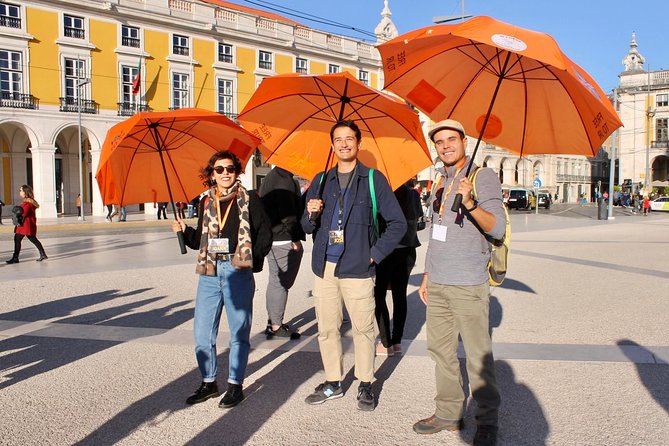
Meet at Praça do Comércio, Lisbon’s grand riverside square. Look for the guide with an orange umbrella between the large arch and the statue of King José I. This is a useful meeting point because the square is easy to identify, but do not arrive at the last second. In a busy open plaza, spotting one umbrella can take a moment.
The first stop is the statue of José I, where the guide sets up the city’s story. From here, the tour moves into Lisbon’s central districts, known as Baixa and Chiado. The opening is less about checking off monuments and more about learning how the city fits together.
Praça do Comércio receives a longer explanation. It is Lisbon’s biggest square, and its broad layout helps you understand the scale of the rebuilding that followed the 1755 earthquake. The tour gives this disaster a central place, explaining how it changed the city and shaped the ordered streets of Baixa.
That focus is one of the walk’s best features. Lisbon can seem like a collection of handsome viewpoints, tiled facades, steep streets, and grand churches. The earthquake story ties those pieces together and gives you a reason to notice the difference between the lower downtown grid and the older neighborhoods on the hills.
More Walking Tours in Lisbon
- Lisbon: History, Stories and Lifestyle Walking Tour
★ 4.8 · 10,902 reviews - Best of Lisbon Small-Group Guided Walking Tour
★ 5.0 · 4,869 reviews - Lisbon: Food and Wine Small Group Walking Tour
★ 4.9 · 4,082 reviews
Baixa’s planned streets and the Santa Justa Elevator
The walk continues to Municipal Square, home of Lisbon’s city hall. This is a short stop, but it helps place modern civic life within the central district. From there, you reach the Santa Justa Elevator, one of Lisbon’s most recognizable landmarks.
The elevator is often photographed from below, where its iron structure rises above the surrounding streets. On this tour, you see the landmark and hear about its place in the city, but the itinerary does not include a ride. That distinction matters if standing in the elevator’s famous upper passage is high on your wish list.
The route then reaches Rua Augusta, the main pedestrian street leading toward Praça do Comércio. Its importance is both practical and visual. It connects the square with the heart of Baixa, and the walk lets you understand how the central district works as a series of linked public spaces rather than isolated sights.
The tour is not designed for long interior visits. Most stops last five to ten minutes, so you should expect explanations, exterior views, and a steady walk. If you want to enter every church or spend time at each monument, use this outing as a first look and return on your own.
Rossio, the 1506 massacre, and São Domingos
Praça Dom Pedro IV, usually called Rossio, is identified here as Lisbon’s oldest square. Its patterned pavement, monumental fountains, and central location make it one of the city’s key meeting places. The guide uses it to explain the movement of people through downtown and the way Lisbon’s public life gathers around its squares.
Near Rossio, the tour pauses at the Memorial to the Victims of the 1506 Jewish Massacre. This is one of the most important stops because it introduces a painful part of Lisbon’s past that is easy to miss when you are focused on scenery. The memorial honors the thousands of Jewish victims killed during the massacre.
The nearby Church of São Domingos adds another layer. It is described as one of Lisbon’s most impressive churches, and its interior has a reputation for a dramatic, fire-scarred appearance. The stop is relatively brief, so listen closely to the explanation and note anything you want to explore later.
The walk also reaches Avenida da Liberdade, Lisbon’s grandest avenue. Five minutes is enough to point out its scale and character, but not enough for a full stroll along the boulevard. Think of this as an orientation stop that shows how the older downtown streets connect with one of the city’s more formal avenues.
Casa do Alentejo and a palace-like pause
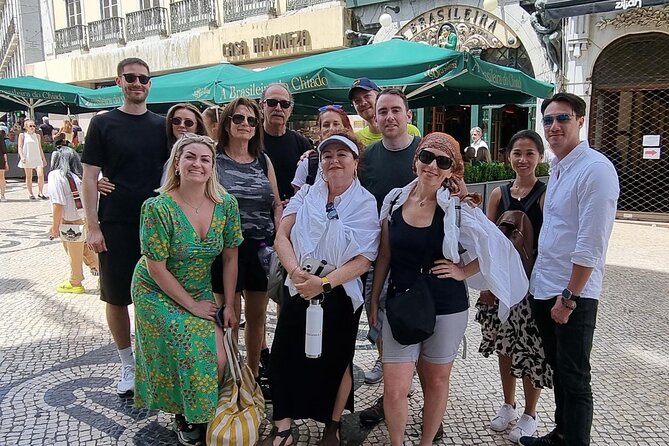
Casa do Alentejo is one of the more unusual stops on the route. The building is presented as one of Lisbon’s most charming houses, and its interiors are known for an ornate, palace-like style. The itinerary allows about ten minutes here, giving the guide time to explain why this place matters.
This is the kind of stop that makes a walking tour useful. You might pass a doorway like this without realizing what lies inside. The guide points out a place that is not as immediately famous as the Santa Justa Elevator or Rossio, giving you another option for a later visit.
The tour’s strength is this mix of headline sights and less obvious locations. You get the major downtown landmarks, but you also receive a short list of places you might not have found on your own. Guides such as Natalia and Kate are especially noted for sharing affordable restaurant suggestions and extra places to visit.
Keep a small note on your phone as you walk. The tour covers a lot of information, and restaurant names, viewpoints, transport advice, and shortcuts can slip away once you move to the next square.
More walking routes in Lisbon:
- Best of Lisbon Walking Tour: Rossio, Chiado & Alfama
★ 4.9 · 2,700 reviews - Age of Discoveries Walking Tour in Belém
★ 5.0 · 1,513 reviews - Sintra & Cascais Day Tour with Pena Palace Entry and Gardens Walk
★ 5.0 · 962 reviews - Lisbon Roots – Small group Food & Culture Walking Tour w/tastings
★ 5.0 · 910 reviews
Largo do Carmo and the story of the Carnation Revolution
Largo do Carmo is one of the most meaningful stops. This is where the Carnation Revolution took place, the 1974 military-led movement that ended decades of dictatorship in Portugal. The square’s peaceful appearance can make the events of that day hard to imagine, which is exactly why a good guide’s storytelling helps.
The nearby Carmo Church ruins bring the 1755 earthquake back into the walk. The roofless Gothic structure remains one of Lisbon’s most striking reminders of the disaster. From here, the earthquake is no longer just a date in a history lesson. You are looking at a surviving fragment of the city that was damaged on that morning.
The ruins are also a good example of the tour’s balance. You see a major sight, but the guide adds political and social context rather than stopping at a photograph. Tiago has received particularly strong praise for animated storytelling about the earthquake, the church, and the Carnation Revolution. José is also known for making historical subjects lively and easy to follow.
One drawback is the amount of information delivered while standing outdoors in a group. If your guide speaks quickly, you may miss details, especially when street noise or an accent makes listening harder. Stay near the guide and ask for a slower explanation if needed.
Rossio Station, São Roque, and Camões Square

Estação do Rossio, the old central station, is another short stop. Its elaborate facade is easy to recognize, and the building gives the route a chance to show how transport has long shaped Lisbon’s center. The visit is brief, so you will mainly get the exterior and the station’s place in the city.
The tour then reaches São Roque Church, one of the few churches in Lisbon to survive the 1755 earthquake. This stop provides a useful contrast with Carmo. One church remains as open ruins, while São Roque survived, helping you see how unevenly the earthquake affected the city.
Praça Luís de Camões marks the end of the walk. The square is one of Lisbon’s best-known meeting points and sits at the edge of Chiado and Bairro Alto. Ending here is practical: you are close to cafes, restaurants, shops, and the nightlife streets of Bairro Alto, and you can continue exploring without retracing the route.
The tour also includes Bairro Alto itself, the city’s famous nightlife area. In daylight, the neighborhood is calmer and easier to read as a network of narrow streets. The guide can help you understand where the evening energy gathers, but this is still an orientation rather than a night out.
What the guide adds to the walk
The route is fixed, but the guide shapes the experience. Names associated with this tour include Tiago, José, Natalia, Walter, Kate, and Kleiber. The strongest guides combine facts with stories, humor, and personal suggestions.
Tiago is repeatedly praised for enthusiasm, storytelling, and restaurant recommendations. José is known for a warm manner and clear explanations. Natalia is noted for making Portuguese history feel connected to the city and for offering inexpensive food suggestions. Walter has also led a family-friendly outing with children and strollers.
The best practical benefit comes at the end of the historical explanations. You can ask where to eat, how to get around, and what to see next. Several guide-led recommendations have been described as useful and affordable, which matters in Lisbon, where a good local suggestion can save both time and money.
There is a clear warning here. At least one guide has been criticized for speaking too fast, even after being asked to slow down. That may be an individual guide issue rather than a feature of every departure, but it is worth knowing. A group of up to 20 people can also make it harder to hear, so stand near the orange umbrella and do not hesitate to ask questions.
Price, tipping, weather, and walking effort
The advertised booking price is $1.25 per person, but this is a pay-what-you-wish walking tour. You pay the guide what you think the experience was worth at the end. In practical terms, treat the low booking price as a reservation fee, not as the complete cost of the tour.
The company explains that guides depend on tips, and one guide reportedly told the group that a minimum of 10 euros per person was expected. That approach can feel uncomfortable because the format is supposed to leave the amount to your judgment. If you prefer to know the full price before you arrive, a fixed-price tour may suit you better.
For value, the model can work well if you want a long introduction to central Lisbon at a very low upfront cost. You receive about two and a half hours of guiding, a useful route, historical context, and local suggestions. Just decide in advance what amount feels fair so you are not caught off guard at the end.
Wear comfortable shoes. The walk is not described as extreme, but it covers a fair distance through central Lisbon and includes the city’s uneven streets and hills. The tour can run in rain, so carry an umbrella or rain poncho if the forecast looks uncertain.
The activity is offered in English and accepts mobile tickets. It is near public transportation, service animals are allowed, and most people can participate. The stated maximum is 20 people, though one departure was described as unexpectedly large, so group size may feel different from one day to another.
Who should book this Lisbon walking tour?
I would choose this tour for a first morning or first full day in Lisbon. The route gives you a working map of Baixa, Rossio, Chiado, and Bairro Alto, while the historical stories help you decide which areas deserve more of your time.
It also suits you if you prefer to learn through stories rather than read a guidebook while walking. The earthquake, Jewish massacre, Carnation Revolution, and survival of São Roque Church give the city a serious backbone.
Families can manage the route, and a guide has handled strollers successfully. Still, two and a half hours is a long period for very young children, especially in rain or if the group pauses often. Ask questions as you go, since guides have shown a willingness to share food and transport advice.
You might skip it if you want a slow photography walk, lengthy church visits, or a guaranteed small group. You should also think twice if a fixed, all-inclusive price matters more to you than a low booking charge and flexible tip.
Should you book it?
Yes, if you want a low-cost, history-focused introduction to central Lisbon and can accept the pay-what-you-wish format. The route covers the essential downtown sights while adding meaningful stops such as the 1506 massacre memorial, Carmo ruins, and Largo do Carmo.
Book it early in your stay, wear good shoes, and bring rain protection. Keep an open mind about the guide assignment, since the strongest experience depends on the individual leading your walk. If you find yourself with Tiago, José, Natalia, Kate, Walter, or another guide who tells the city’s story at a comfortable pace, you will have a useful base for the rest of your Lisbon visit.
FAQ
How long is the Lisbon Walking Tour?
The tour lasts approximately 2 hours and 30 minutes.
Where does the tour begin?
It begins at Praça do Comércio in Lisbon. Look for the guide with an orange umbrella between the large arch and the statue in the center of the square.
Where does the tour finish?
The walk ends around Praça Luís de Camões, also called Camões Square, in the Chiado area.
What language is the tour offered in?
The tour is offered in English.
Does the tour include a ride on the Santa Justa Elevator?
The itinerary includes a stop at the Santa Justa Elevator, but it does not state that an elevator ride is included.
How does the pay-what-you-wish price work?
The booking price is listed as $1.25 per person, and you pay the guide what you feel is appropriate at the end of the tour. The guide may explain the tipping system at the beginning.
How many people can join the tour?
The stated maximum is 20 people.
Can I cancel for a full refund?
Yes. You can cancel at least 24 hours before the experience start time for a full refund. Cancellations or changes made less than 24 hours in advance are not accepted for a refund.
Fresh finds around Lisbon
- Sanctuary of Fátima and Coimbra City Tour★ 4.5 · 51 reviews
- Sintra/Lisbon: Sintra & Quinta da Regaleira Tour with Ticket★ 4.4 · 51 reviews
- Jeronimos Monastery Guided Tour – Small Groups – Tickets Included★ 5.0 · 51 reviews
- Lisbon: Private Christmas Lights Tour by Eco Tuk Tuk★ 4.9 · 51 reviews
- Peniche: Berlengas Island Catamaran Tour – Round Trip★ 4.6 · 51 reviews
- Half day Spa Water Therapy experience at THE SPA at Corinthia Lisbon★ 4.5 · 51 reviews
- Lisbon: Private Tuk-Tuk Tour for 2 hours★ 4.7 · 51 reviews
- Premium Lisbon Airport Transfer to Lisbon★ 5.0 · 51 reviews
City Tours, compared.
Lisbon City Center Tour – The Unmissable Lisbon
Read our review →
Lisbon: Daytime/Sunset/Night City Sailboat Tour with Drink
Read our review →
Lisbon: City Highlights and Viewpoints E-Bike Tour
Read our review →


Lisbon: City Sightseeing Hop-On Hop-Off Bus Tour
Read our review →
Browse the lists this tour appears in