
Reviewed · WALKING TOURS
Lisbon: Walking Tour in the Center (Max 12 Participants)
Lisbon packs a surprising amount into three and a half hours: grand squares, ruined churches, tiled walls, steep lanes, and a riverfront finish. This walk links Baixa, Chiado, Bairro Alto, and Alfama into one clear route, giving you a useful first look at the city rather than leaving you to piece it together street by street.
I like the small group limit of 12, which gives guides such as Pedro, Sara, and Melina room to explain the city and answer questions. I also like the mix of famous sights and ordinary streets, from the Santa Justa Lift to Alfama’s winding lanes. The catch is the hills. You will walk up and down three of Lisbon’s eight hills, so this is not a gentle stroll.
In This Review
- Key points at a glance
- Starting at Rossio Square and entering Baixa
- Santa Justa Lift and the Carmo ruins
- Chiado, Praça Luís de Camões, and the old poets’ quarter
- Bairro Alto and the first viewpoint
- The hills are part of the lesson
- The short tasting stop on Rua Augusta
- Alfama and the Tagus viewpoint
- Finishing beside the Tagus at Praça do Comércio
- How the guides shape the walk
- Is $47 a fair price?
- What to bring and who should book
- Should you book this Lisbon walking tour?
- FAQ
- Where does the Lisbon walking tour begin?
- Where does the tour end?
- How long does the tour last?
- How many people can join the group?
- Which languages are offered?
- How much walking and hill climbing should I expect?
- Is food included?
Key points at a glance
- Three Lisbon hills in one walk: Expect real climbs and descents through the city center.
- A strong first-day route: Rossio, Baixa, Chiado, Bairro Alto, Alfama, and Praça do Comércio all fit into one outing.
- A 12-person maximum: The group size is small enough for a more personal guide-led walk.
- Excellent viewpoints: The route includes São Pedro de Alcântara and an Alfama lookout over the Tagus.
- A German-speaking guide: Pedro, Sara, and Melina are among the guides associated with the tour.
- Useful in poor weather: The tour runs rain or shine, with free cancellation up to 24 hours before departure.
Starting at Rossio Square and entering Baixa
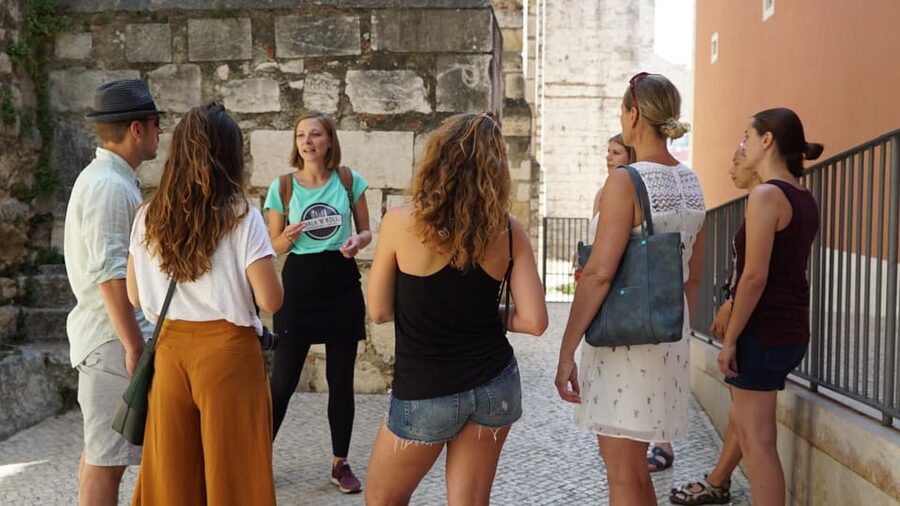
Meet at the north fountain in Rossio Square, between the National Theater and the Royal Statue. Look for a guide in a mint-colored WALK ’N’ ROLL shirt or carrying a matching mint-colored burlap bag.
Rossio is a sensible starting point. It sits at the heart of Lisbon’s lower center, so you can begin with a quick sense of the city’s grand scale before moving into Baixa. The guide introduces the area as you walk, placing the broad streets and formal squares in their historical and cultural setting.
Baixa is Lisbon’s orderly downtown, with a very different feel from the crooked lanes waiting later in the walk. I find this contrast useful. You see how the city moves from planned, open streets to steep neighborhoods shaped by hills and older footpaths.
This opening section is also a good time to ask questions. Since the route covers several districts, a clear explanation early on helps you understand where each quarter fits into Lisbon.
More Walking Tours in Lisbon
- Lisbon: History, Stories and Lifestyle Walking Tour
★ 4.8 · 10,902 reviews - Best of Lisbon Small-Group Guided Walking Tour
★ 5.0 · 4,869 reviews - Lisbon: Food and Wine Small Group Walking Tour
★ 4.9 · 4,082 reviews
Santa Justa Lift and the Carmo ruins
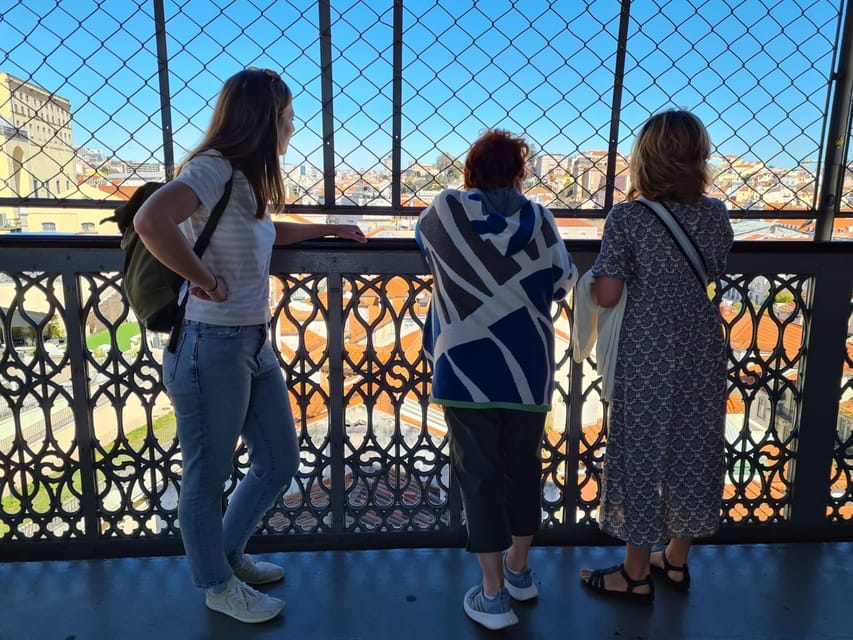
The Santa Justa Lift is one of the route’s most recognizable sights. Its tall iron structure rises above Baixa and connects the lower town with the higher streets around Chiado and Carmo.
The tour includes a guided look at the lift, but it does not say that a ride is included. That matters because you should not book this walk expecting a separate elevator visit. The value here is the guide’s explanation and the chance to see this famous piece of Lisbon from the street.
From there, the walk heads up the first hill toward the Carmo Monastery ruins. The climb is short enough to fit naturally into the route, but it is still a climb. Wear shoes with a firm grip, especially if the stones are wet.
The roofless Carmo ruins are one of Lisbon’s most striking urban sights. Instead of a complete church interior, you look up through open arches at the sky. Your guide uses the remains to explain Lisbon’s past and the forces that shaped the city. It is a memorable stop because the building is dramatic without needing much decoration.
This is also where Lisbon’s famous tiles begin to enter the story. The tour points out some of the city’s attractive tile work, so keep your eyes on walls and building fronts rather than only on the major monuments.
Chiado, Praça Luís de Camões, and the old poets’ quarter
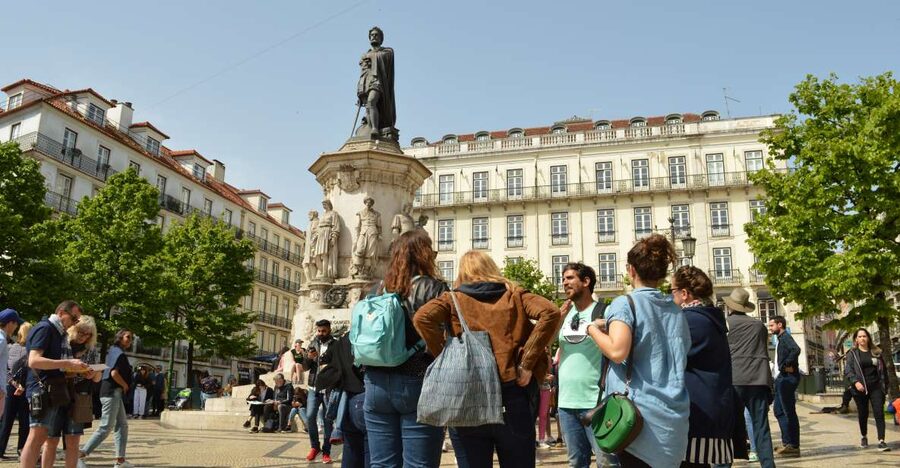
Next comes Chiado, the former poets’ quarter and one of central Lisbon’s best-known districts. The route shifts again, this time from Baixa’s formal streets to a quarter tied to writers, cafés, shops, and city life.
The walk passes through Praça Luís de Camões, a useful landmark between Chiado and Bairro Alto. This part of the tour helps you see Lisbon as a city of neighborhoods, not just a collection of viewpoints and monuments.
I like this middle section because it adds character between the major stops. The guide talks about Portuguese culture and the people who shaped Lisbon, while you continue through streets that are still part of everyday city life.
Do not expect a long stop at every sight. The route covers a lot of ground, and the main goal is to connect several districts in one continuous walk. One piece of direct feedback described the tour as informative and entertaining but suggested that one or two extra sights could have been added. That is a fair tradeoff: you see a broad slice of the center, but no single monument receives the treatment of a dedicated museum tour.
Bairro Alto and the first viewpoint
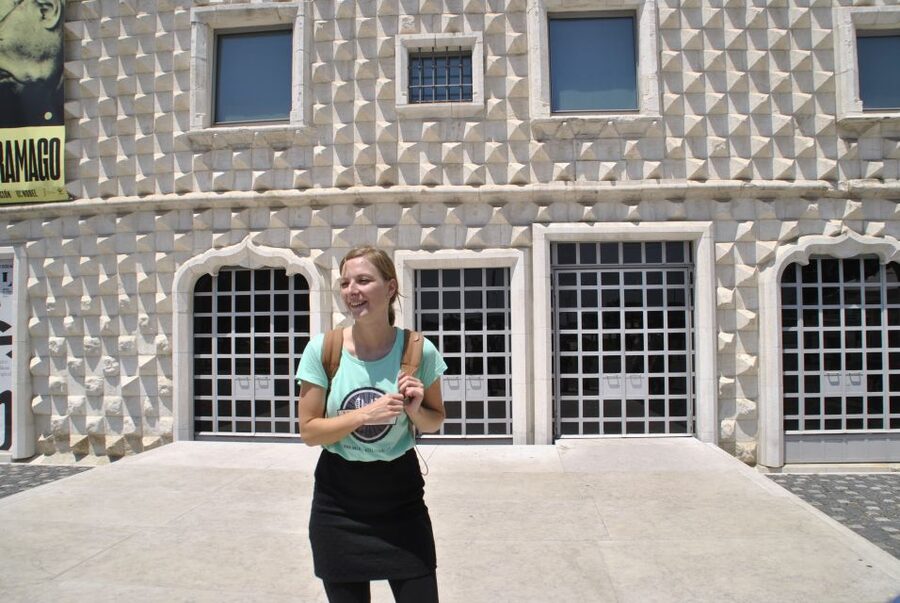
Bairro Alto is known for its residential streets and nightlife. During the day, the neighborhood gives you a look at Lisbon’s older urban fabric. Later, it becomes one of the city’s main evening districts.
The route continues to Miradouro de São Pedro de Alcântara, one of the strongest viewpoints on the walk. From here, you can take in Lisbon’s layered hills and look across toward the city’s other side. It is a good place to pause and understand the terrain you have been walking through.
A 30-minute break is scheduled at the viewpoint. That is welcome because the route is physically demanding. Use the time to drink water, catch your breath, and take in the view without trying to walk and listen at the same time.
The break also makes the pace more manageable. You are not rushing from one hill to the next for the entire three and a half hours. Still, the tour remains a walking tour, not a sightseeing trip with long periods of rest.
More walking routes in Lisbon:
- Best of Lisbon Walking Tour: Rossio, Chiado & Alfama
★ 4.9 · 2,700 reviews - Age of Discoveries Walking Tour in Belém
★ 5.0 · 1,513 reviews - Sintra & Cascais Day Tour with Pena Palace Entry and Gardens Walk
★ 5.0 · 962 reviews - Lisbon Roots – Small group Food & Culture Walking Tour w/tastings
★ 5.0 · 910 reviews
The hills are part of the lesson

Lisbon’s hills are not a minor detail here. The walk covers three of the city’s eight hills, and you should plan for repeated uphill and downhill sections.
I would choose this tour early in your stay if you want to learn the city through your feet. You will quickly understand why viewpoints matter in Lisbon, why neighborhoods feel separated even when they are close on a map, and why comfortable shoes are essential.
Bring water and sunscreen. The tour takes place rain or shine, so a wet day can make the stone streets more slippery and the climbs less pleasant. The tour is not suitable for wheelchair users or people with mobility impairments, and baby strollers and large bags are not allowed.
This is not a criticism of the route. The hills are a major part of Lisbon’s character. But you need to be honest about your walking ability before booking. If you prefer flat streets, a vehicle-based city tour would be a better fit.
The short tasting stop on Rua Augusta

The group returns toward Rua Augusta, where the itinerary includes a brief five-minute tasting stop. A liquor tasting is included, while food is not included.
The stop is short, so treat it as a small cultural extra rather than a meal or a full tasting session. If you want lunch, pastries, or a longer food experience, plan that separately.
This brief pause gives the walk a change of pace before the final sections. It also fits the downtown setting well, since Rua Augusta leads directly toward Lisbon’s grand riverfront square.
Alfama and the Tagus viewpoint

After the central districts, the route reaches Alfama. This is where the walk becomes more winding and intimate, with narrow lanes and a stronger sense of the city’s older street pattern.
Alfama is best experienced slowly, but this tour gives you a guided introduction rather than a full neighborhood exploration. Your guide explains the area as you move through it, helping you notice the layout, the tiles, and the relationship between the hill and the river below.
The route includes an iconic viewpoint overlooking the Tagus. This is one of the walk’s most appealing moments. Lisbon’s river is not a distant backdrop here. It helps explain the city’s position, its waterfront identity, and the way the neighborhoods climb away from the shore.
You may find Alfama the most memorable part of the walk, especially after the wide streets of Baixa and the busier center. The tradeoff is that the time in Alfama is limited by the overall route. If you want to explore its alleys, churches, and small corners in detail, save extra time for a separate visit.
Finishing beside the Tagus at Praça do Comércio
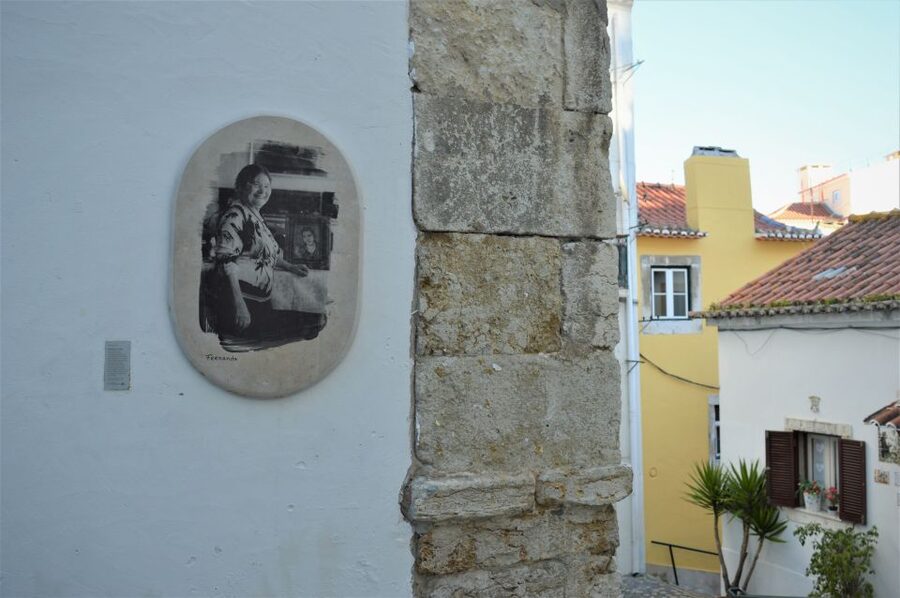
The final stretch leads back down to Rua Augusta and the Arco de Rua Augusta. The tour ends in Praça do Comércio, directly beside the Tagus.
This is a satisfying finish because it brings the route back to one of Lisbon’s grandest open spaces. You begin in Rossio, pass through the hills and old quarters, and end at the river. That gives the walk a clear shape rather than a random list of stops.
Praça do Comércio is also a practical place to continue your day. The tour ends here, not back at Rossio, so plan your next stop accordingly. You can remain by the river, continue through the center, or use the square as a reference point for later sightseeing.
How the guides shape the walk
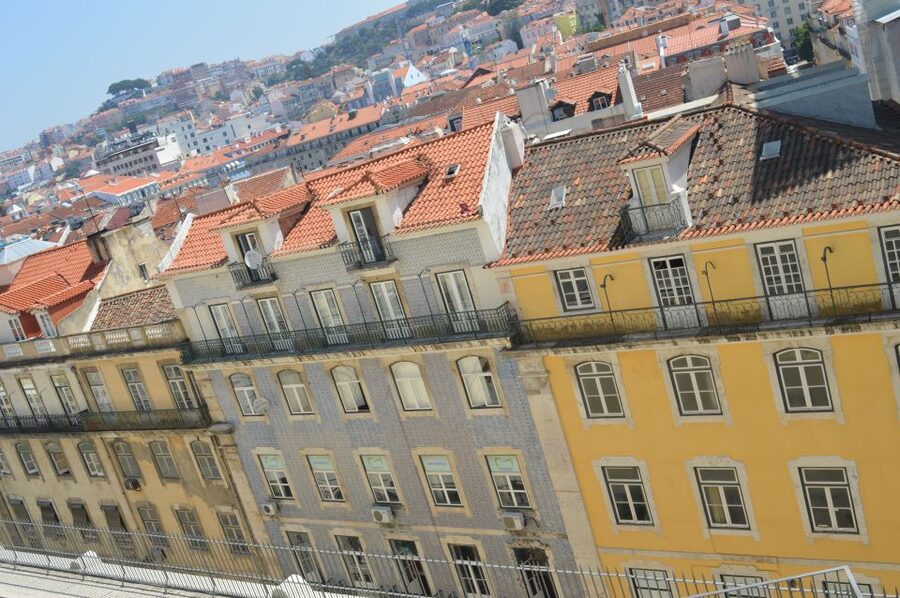
The tour is offered with a live German-speaking guide. Pedro, Sara, and Melina are named guides connected with the experience, and the available feedback points to a style that is both informative and personable.
Pedro received especially strong praise for making the city tour engaging, while Sara was noted for guiding the group through difficult rainy weather with useful explanations and practical suggestions for the rest of a Lisbon stay. Melina was described as giving a lively introduction to the city and its people.
Those details matter because a walking tour depends heavily on the person leading it. The route itself is strong, but the guide determines how much meaning you get from the Carmo ruins, the neighborhoods, and the river views.
The maximum group size is 12. That is a better setup than a large crowd for a route with narrow streets and frequent stops. You can usually stay close enough to hear the guide, and a private option is available if you want the pace and attention tailored to your own group.
Is $47 a fair price?
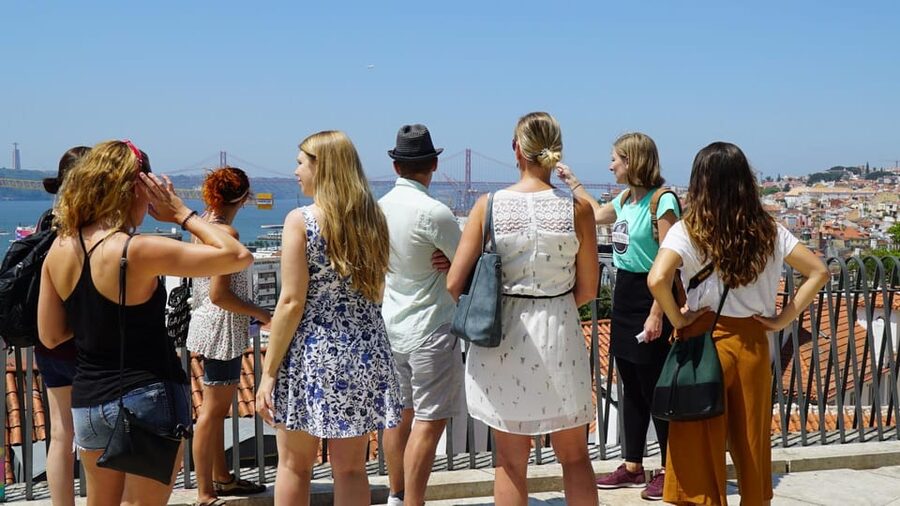
At $47 per person, this is not the cheapest way to see Lisbon, but the price is reasonable if you want a structured introduction to several central districts in one half-day.
You are paying for three and a half hours with a guide, a carefully linked route, a small group cap, a brief liquor tasting, and viewpoints that would take more planning to connect on your own. The tour also gives you useful orientation for the rest of your stay.
The value is weaker if you only want monument entry or a deep visit to one site. The Santa Justa Lift and Carmo Monastery are viewed and explained from the route, but separate admission experiences are not listed as part of the tour. Food is also not included.
For a first visit, I think the price makes sense if you enjoy walking and want context. If you are already familiar with Baixa, Chiado, Bairro Alto, and Alfama, you may prefer a focused food tour, museum visit, or private guide.
What to bring and who should book
Wear comfortable shoes with good traction. Lisbon’s hills and stone streets make footwear more important than stylish clothing.
Bring water and sunscreen, and avoid large bags. Since the walk runs in all weather, check the forecast and dress for rain or heat. The activity does not allow baby strollers or luggage.
I would recommend this tour to:
- First-time visitors who want a city overview on foot
- Travelers who enjoy neighborhood walks and viewpoints
- German-speaking visitors seeking live guidance
- Couples, friends, and families with good walking ability
- Anyone who wants practical ideas for the rest of a Lisbon stay
I would be cautious about booking it if you have limited mobility, dislike hills, need a stroller, or want extensive time inside major monuments. The route is broad and active, not slow and museum-focused.
Free cancellation up to 24 hours before departure and the option to reserve now and pay later make the booking less rigid. Those terms are useful when weather or arrival plans are uncertain, though the tour itself still operates rain or shine.
Should you book this Lisbon walking tour?
Book it if you want to understand Lisbon’s center through its hills, neighborhoods, tiles, viewpoints, and riverfront. The route covers a lot without turning into a rushed checklist, and the 12-person limit gives the guide space to keep the walk personal.
I would choose it for the first or second day of a Lisbon visit. You will leave knowing how Baixa connects to Chiado, why Bairro Alto sits above the lower town, how Alfama reaches toward the Tagus, and which areas deserve a longer return visit.
Skip it if you want a flat route or long interior visits. For active visitors who like a clear introduction, this is a strong-value half-day walk with a memorable finish at Praça do Comércio.
FAQ
Where does the Lisbon walking tour begin?
It begins at the north fountain in Rossio Square, between the National Theater and the Royal Statue.
Where does the tour end?
The walk ends at Praça do Comércio, beside the Tagus River and near the Arco de Rua Augusta.
How long does the tour last?
The tour lasts three and a half hours.
How many people can join the group?
The group experience has a maximum of 12 participants. A private group option is also available.
Which languages are offered?
The live tour guide language listed for this experience is German.
How much walking and hill climbing should I expect?
The route includes walking up and down three of Lisbon’s eight hills. Comfortable shoes, water, and sunscreen are recommended.
Is food included?
Food is not included. A liquor tasting is included, and the route has a brief tasting stop on Rua Augusta.
Fresh finds around Lisbon
- Sanctuary of Fátima and Coimbra City Tour★ 4.5 · 51 reviews
- Sintra/Lisbon: Sintra & Quinta da Regaleira Tour with Ticket★ 4.4 · 51 reviews
- Jeronimos Monastery Guided Tour – Small Groups – Tickets Included★ 5.0 · 51 reviews
- Lisbon: Private Christmas Lights Tour by Eco Tuk Tuk★ 4.9 · 51 reviews
- Peniche: Berlengas Island Catamaran Tour – Round Trip★ 4.6 · 51 reviews
- Half day Spa Water Therapy experience at THE SPA at Corinthia Lisbon★ 4.5 · 51 reviews
- Private Tour Romantic Sintra, Cabo da Roca & Cascais★ 5.0 · 51 reviews
- Lisbon: Private Tuk-Tuk Tour for 2 hours★ 4.7 · 51 reviews
Walking Tours, compared.
Lisbon: History, Stories and Lifestyle Walking Tour
Read our review →
Best of Lisbon Small-Group Guided Walking Tour
Read our review →
Lisbon: Food and Wine Small Group Walking Tour
Read our review →
Best of Lisbon Walking Tour: Rossio, Chiado & Alfama
Read our review →
Sintra & Cascais Day Tour with Pena Palace Entry and Gardens Walk
Read our review →
Lisbon Roots – Small group Food & Culture Walking Tour w/tastings
Read our review →
Lisbon: Starter Walking Tour to the highlights in German
Read our review →Browse the lists this tour appears in