

Reviewed · HISTORICAL TOURS
Lisbon: Street Art and Historical Walking Tour
Lisbon’s street art is not just decoration here. It carries stories about politics, identity, local life, and the artists who made their mark on the city. This three-hour walk begins high at Miradouro da Graça, then winds through Graça, Mouraria, and Alfama as murals and smaller works appear alongside old stone streets.
I like the sharp mix of art and city history, and I like the small group, limited to eight people. Guides such as Rui, Andriy, and Andre are praised for explaining not only what you are looking at, but also why it matters. The trade-off is simple: this is a serious walking tour over uneven streets, so it is not suitable for people with mobility impairments.
In This Review
- Key points to know before booking
- Why Lisbon street art makes a good walking tour
- Beginning above the rooftops at Miradouro da Graça
- Graça, where old streets meet new art
- Mouraria and Alfama beyond the usual postcard route
- Miradouro Portas do Sol and the view toward São Jorge Castle
- The art, artists, and stories behind the walls
- What the three-hour format feels like
- Is $35 a fair price?
- Who will enjoy this walk most
- Practical details that affect your day
- Should you book the Lisbon Street Art and Historical Walking Tour?
- FAQ
- Where does the tour meet?
- How long does the tour last?
- What language is the tour offered in?
- How many people are in the group?
- Which Lisbon neighborhoods does the tour visit?
- Which viewpoints are included?
- Can I see São Jorge Castle?
- Which street artists might I see work by?
- Are meals and drinks included?
- Is the tour suitable for people with mobility impairments?
- Is hotel pickup included?
- Can I cancel for a refund?
Key points to know before booking

- Start with one of Lisbon’s finest views: Meet at Miradouro da Graça, where rooftops, the Tagus, and São Jorge Castle set the scene.
- See major urban artists: The route can include work by Vhils, Nomen, Odeith, and Gonçalo Mar.
- Go beyond the postcard districts: Graça, Mouraria, and Alfama reveal everyday Lisbon as well as famous sights.
- Expect useful context: Your English-speaking guide connects street art with Portuguese culture, history, politics, and city life.
- Small groups make a difference: With no more than eight participants, it is easier to ask questions and keep up.
- Wear proper shoes: Sidewalk cracks, stone tiles, slopes, and traffic crossings make comfort and attention important.
Why Lisbon street art makes a good walking tour
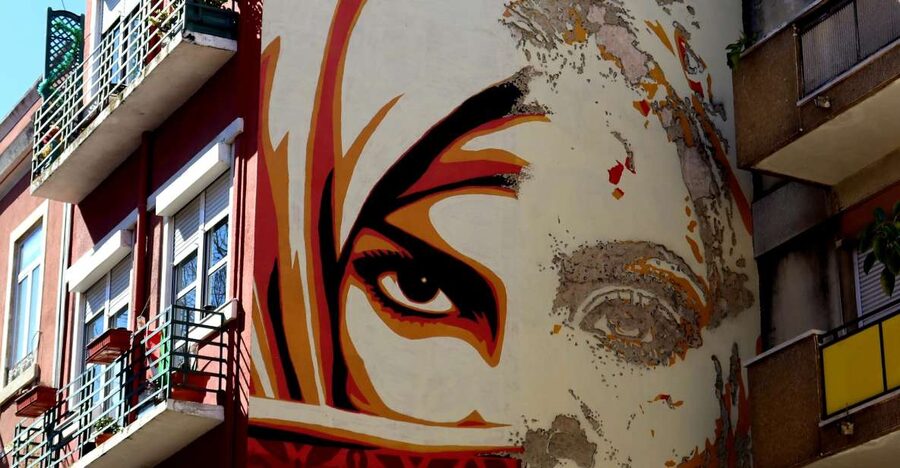
Lisbon is famous for tiled façades, yellow trams, steep lanes, and lookout points. Street art adds another layer, one that changes more quickly than the city’s older monuments. A painted wall can speak about local neighborhoods, public space, politics, or the artist’s own way of seeing Lisbon.
That is why this tour works best when you want more than a gallery visit. You are not simply taken from one wall to another. The guide explains the people and ideas behind the work, then places it within the streets where it was made.
The focus on named artists is useful. Vhils is known for powerful, carved wall pieces, while Nomen, Odeith, and Gonçalo Mar represent different parts of Lisbon’s urban art scene. You should not expect a fixed museum collection, since outdoor art can change, but the route is designed around strong examples by local and international artists.
The guide’s role matters a great deal. Rui is repeatedly singled out for his passion, patience, and command of both art and Portuguese history. Andriy and Andre are also named as guides who explain graffiti and the city with confidence. The best part of the experience is likely to be the conversation: you can ask what is permitted, how artists work in public spaces, and what a particular image means.
More Walking Tours in Lisbon
- Lisbon: History, Stories and Lifestyle Walking Tour
★ 4.8 · 10,902 reviews - Best of Lisbon Small-Group Guided Walking Tour
★ 5.0 · 4,869 reviews - Lisbon: Food and Wine Small Group Walking Tour
★ 4.9 · 4,082 reviews
Beginning above the rooftops at Miradouro da Graça
The meeting point is by the church at Miradouro Sophia de Mello Breyner Andresen, better known as Miradouro da Graça. The address is Calçada da Graça, 1100-265 Lisboa.
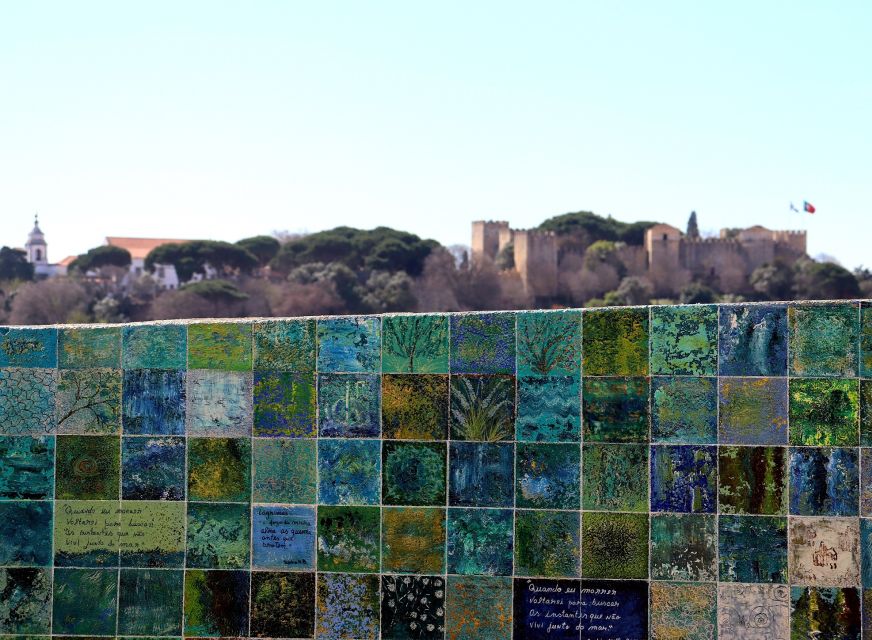
This is a smart place to begin. You meet above the city, not in a cramped central square, and get your bearings before heading into the older neighborhoods. From the lookout, you can see Lisbon’s rooftops, the Tagus, and major landmarks including São Jorge Castle. The broad view helps you understand the city’s hills and the route ahead.
Bring the meeting-point details with you. The formal name and the familiar name are both used, and the church is the clearest landmark. Arrive ready to walk rather than treating this as a casual photo stop.
The first viewpoint also gives the guide a natural opening. You can learn how Lisbon’s quarters fit together, why so many streets rise and fall, and how the older districts differ from the more heavily visited central areas. This context makes the later turns through Alfama and Mouraria easier to follow.
Graça, where old streets meet new art
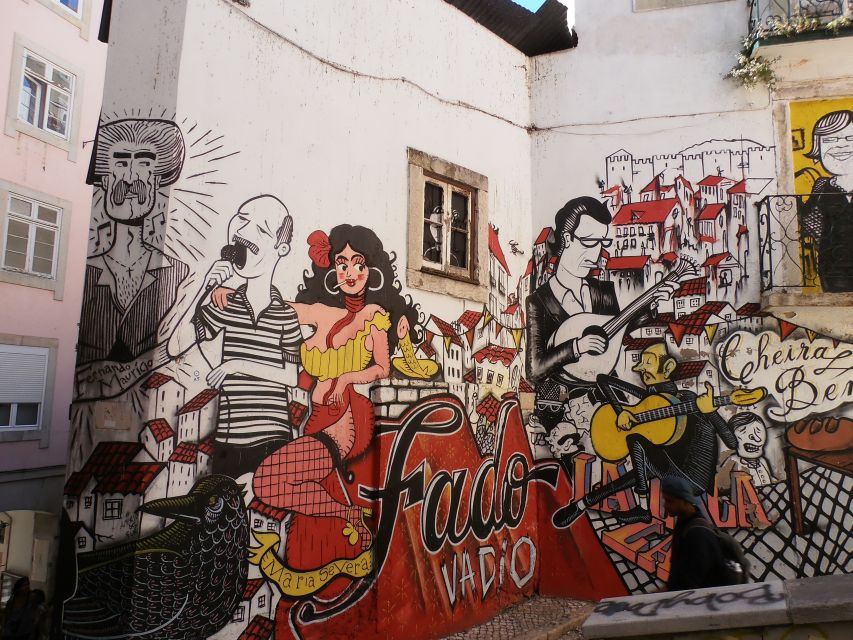
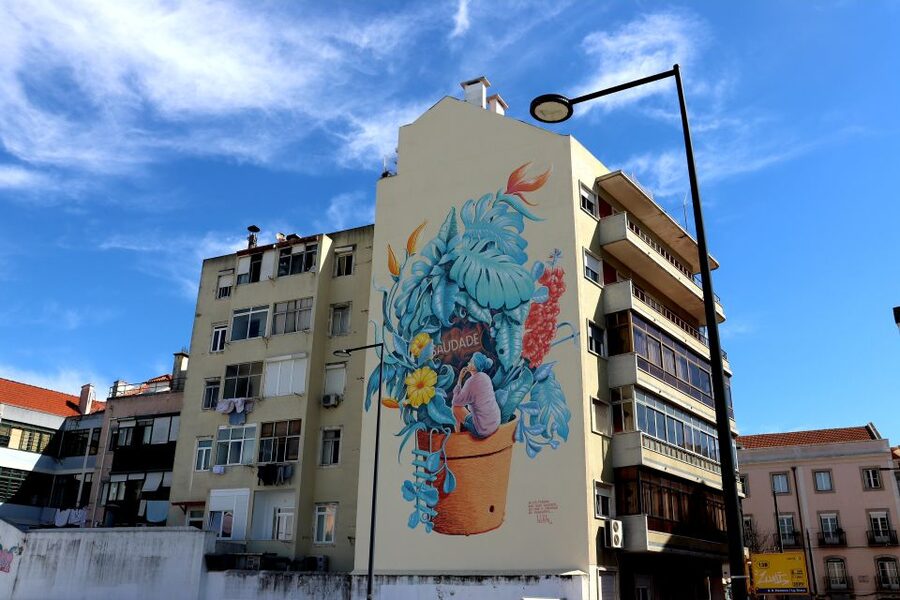
Graça has a strong neighborhood feel, and the tour uses it as an introduction to Lisbon’s street art. You will see how large painted works and smaller pieces fit into streets lined with older buildings, tiled walls, and everyday homes.
This is where the guide’s interpretation can turn a painted surface into something more interesting. A work may reflect the artist’s view of Portugal, react to political events, or use the wall itself as part of the image. The point is not to decide if you like every piece. The point is to learn how public art functions in the city.
You may also notice the tension between preservation and change. Lisbon’s historic streets are valued for their old buildings and traditional details, yet they are also working neighborhoods where artists claim public space. A good guide can help you see both sides without reducing the subject to a simple argument.
The group size helps here. In a group of eight or fewer, you can stop without blocking a large pavement and ask about an artist or technique. Previous praise for the guides often focuses on the right amount of information: enough to make the work clear, but not so much that every stop becomes a lecture.
Mouraria and Alfama beyond the usual postcard route
The route continues toward Mouraria and Alfama, two of the city’s oldest and most culturally important areas. These districts are often associated with narrow lanes and traditional Lisbon, but this walk looks at them through present-day art as well as the past.
Mouraria is especially useful for understanding Lisbon as a city shaped by many communities and layers of culture. Alfama brings you into a maze of old streets, slopes, and viewpoints, where daily life continues alongside famous sights. The walk does not treat these neighborhoods as a stage set. It uses them to discuss how people live, how the city changes, and what public art says about that change.
You should expect uneven paving and occasional obstacles. One detailed account of the walk specifically praised the guide for watching the group around traffic, pavement cracks, and protruding stone tiles. That is a practical strength, but it also tells you to keep your eyes on the ground.
The route has been described as mostly downhill, which may make the three hours easier than a constant uphill climb. Still, Lisbon’s paving can be tiring, and downhill walking has its own strain. Comfortable shoes are not a minor suggestion here. Wear something with a firm sole and good grip.
A handful more Lisbon ideas to compare
- Lisbon: Street Art Tour
★ 4.9 · 1,324 reviews - Lisbon: Kickstart Street Art Walking Tour
★ 4.9 · 717 reviews - Lisbon: Street Art Tuk Tuk Tour
★ 4.9 · 372 reviews - LISBON Street Art Tour
★ 5.0 · 371 reviews
Miradouro Portas do Sol and the view toward São Jorge Castle
Miradouro Portas do Sol is one of the walk’s key viewpoints. It gives you another look across Lisbon and helps connect the winding streets below with the larger city beyond.
The view is valuable because it is not isolated from the rest of the tour. By this point, you have walked through neighborhoods and seen art in its setting. From the lookout, you can pause and understand the relationship between the old quarters, the river, the rooftops, and São Jorge Castle.
The castle is an important visual anchor throughout this part of Lisbon. You may see it from different angles as you move between streets and viewpoints. The guide also uses the castle and surrounding districts to explain Lisbon’s cultural heritage, rather than treating the monument as a quick photograph.
Do not expect entry into São Jorge Castle. The experience is a walking tour with views and exterior sightseeing, not a castle admission tour. If you want to tour the castle inside, plan that separately and allow time for its own visit.
The art, artists, and stories behind the walls
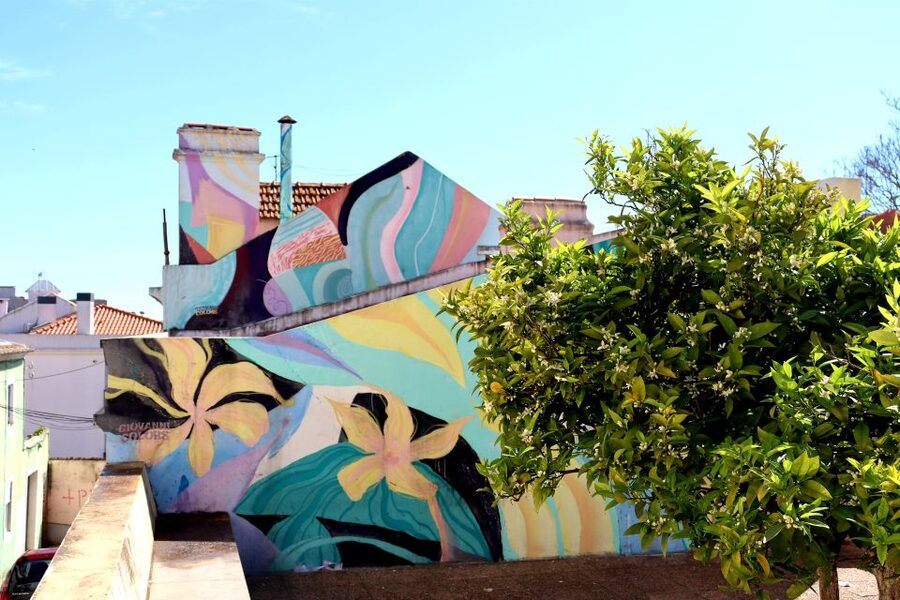
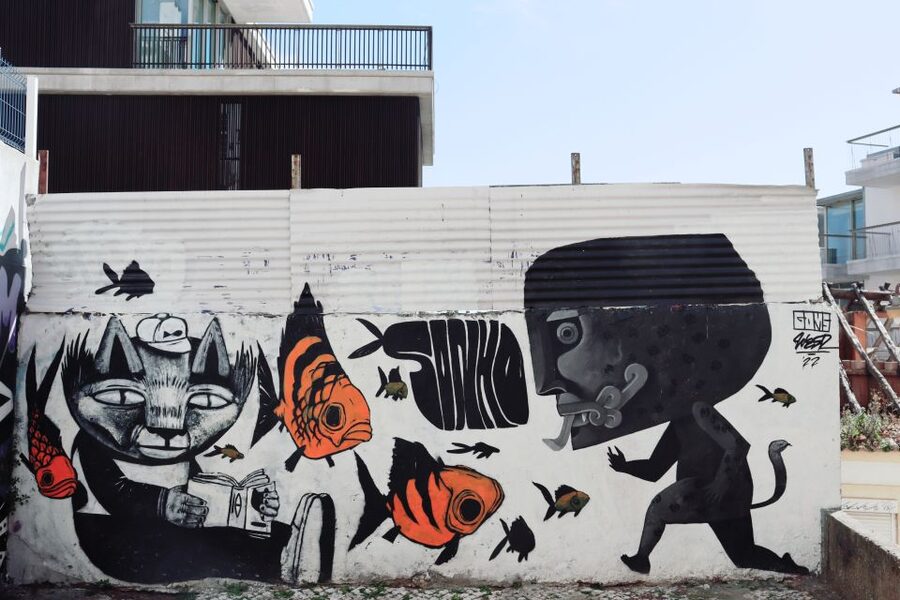
The named artists give the walk a clear focus. Vhils, Nomen, Odeith, and Gonçalo Mar represent the sort of work you can encounter, from large public pieces to art tucked into less obvious corners.
The guide’s explanations are especially helpful if you do not normally follow street art. You do not need an art background to enjoy the route. You may find yourself looking more closely at scale, technique, placement, and the difference between a commissioned work and an unauthorized mark.
The political and literary side of the tour is another reason to choose it. One detailed account described the experience as valuable for people interested not only in art, but also in history, politics, and literature. That suggests a tour with more substance than a list of artist names.
At the same time, outdoor art is temporary. A wall may be repainted, damaged, or changed after your visit. Think of this as a guided reading of Lisbon’s public art scene at a particular moment, not a guaranteed checklist of permanent works.
What the three-hour format feels like
Three hours is long enough to cover several districts and viewpoints without turning the outing into a full-day commitment. The pace appears designed for stops, explanations, photographs, and conversation rather than a hurried march.
One useful feature is the route’s mix of movement and pauses. You get time at Miradouro da Graça and Portas do Sol, then periods of walking through Graça, Mouraria, and Alfama. That variety keeps the tour from feeling like either a lecture or an exhausting trek between distant walls.
The tour is offered in English with a live guide. Since starting times vary, check availability for the day you want. The guide is part of the experience, so this is not the right choice if you prefer to explore silently at your own pace.
Safety deserves a brief note. Lisbon’s hills and narrow streets can bring traffic, rough paving, and sudden changes in level. The guides are praised for helping groups navigate these conditions, but you still need to stay alert, especially while taking photographs.
Is $35 a fair price?
At $35 per person, this is reasonably priced for a three-hour guided walk in a small group. The fee covers the guide and local taxes and fees, but not meals, drinks, or hotel transportation.
The value comes from the combination. A self-guided street art hunt would cost less, but you would miss much of the context about the artists, Portugal, and the neighborhoods. You would also need to find the works yourself, and outdoor pieces are not always easy to spot from a map.
The group limit of eight strengthens the value. A large tour can make street art stops awkward, with people spread across narrow pavements. A small group gives you a better chance to hear the explanation and ask a follow-up question.
This is not the best use of $35 if your main goal is museum art, a food tasting, or interior access to historic buildings. It is a good buy if you want a guided introduction to Lisbon’s public art and less familiar neighborhoods.
Who will enjoy this walk most
I would choose this tour for anyone curious about how a city expresses itself outside formal museums. It suits art fans, photographers, history students, and people who want to see Lisbon beyond the busiest tourist routes.
You do not need prior interest in graffiti. The tour connects the art with history, politics, culture, and daily life, so it can work well for a mixed group. The guides are described as friendly and patient, and one guide adapted the amount of information to the group’s interests.
It is also a good early activity in Lisbon. The viewpoints help you understand the city’s layout, while the guide can point out ideas about what to see and do later. You may leave with a better sense of which districts you want to revisit.
I would think twice if you dislike hills, uneven paving, or three hours on foot. The experience is not suitable for people with mobility impairments, and comfortable shoes are essential. There is no hotel pickup or drop-off, so you must reach the starting point at Graça on your own.
Practical details that affect your day
You receive free cancellation if you cancel at least 24 hours ahead, and the reserve-now, pay-later option can help if your schedule is still moving. Those terms are useful, but the bigger planning issue is the meeting point.
The tour begins at the top of the city rather than in the Baixa area. Allow enough time to reach the church at Miradouro da Graça, and use the full address when checking your route. The lookout’s name may appear as both Miradouro da Graça and Miradouro Sophia de Mello Breyner Andresen.
No food or drinks are included. Carry water, especially on a warm day, and plan your meal before or after the walk. Since the tour lasts three hours, a small snack beforehand may be sensible, though the activity itself does not provide one.
The stated language is English. Group size is limited to eight, and the guide is live rather than prerecorded. These details make the tour more personal, but they also mean you should choose a starting time when you can stay with the group for the full walk.
Should you book the Lisbon Street Art and Historical Walking Tour?
Book it if you want Lisbon explained through its walls, streets, and viewpoints rather than only through major monuments. The strongest reasons are the small group, the blend of street art and history, the route through Graça, Mouraria, and Alfama, and guides such as Rui who bring clear personal interest to the subject.
Skip it if you need step-free access, dislike uneven streets, or want a tour with meals, transport, or interior visits. For most reasonably fit walkers who want a more local view of Lisbon, $35 is a fair price for three hours of informed company and strong city views.
FAQ
Where does the tour meet?
Meet by the church at Miradouro Sophia de Mello Breyner Andresen, also known as Miradouro da Graça. The address is Calçada da Graça, 1100-265 Lisboa, Portugal.
How long does the tour last?
The walking tour lasts three hours.
What language is the tour offered in?
The live tour guide speaks English.
How many people are in the group?
The group is limited to eight participants.
Which Lisbon neighborhoods does the tour visit?
The route includes Graça, Mouraria, and Alfama.
Which viewpoints are included?
The tour begins at Miradouro da Graça and also visits Miradouro Portas do Sol.
Can I see São Jorge Castle?
You can see and admire São Jorge Castle during the walk, but castle admission is not included in the stated activity.
Which street artists might I see work by?
The tour can include works by Vhils, Nomen, Odeith, and Gonçalo Mar.
Are meals and drinks included?
No. Meals and drinks are not included.
Is the tour suitable for people with mobility impairments?
No. The activity is listed as unsuitable for people with mobility impairments. Comfortable walking shoes are recommended.
Is hotel pickup included?
No. Hotel pickup and drop-off are not included.
Can I cancel for a refund?
Yes. You can cancel up to 24 hours in advance for a full refund.
More Historical Tours in Lisbon
- Lisbon: Live Fado Show with Port Wine in Historic Center
★ 4.7 · 4,166 reviews - Lisbon: Fado Show with Wine in a Historic Venue
★ 4.8 · 1,294 reviews - Explore Lisbon by Tuk Tuk: History and Viewpoints
★ 5.0 · 840 reviews - Lisbon: Daytime or Sunset Boat Cruise with History and Wine
★ 4.9 · 819 reviews
Fresh finds around Lisbon
- Lisbon: Tuk Tuk City Tour★ 3.6 · 7 reviews
- Fatima Full day Private Tour★ 5.0 · 7 reviews
- Lisbon: Highlights and Hidden Gems Tour★ 5.0 · 7 reviews
- Private Tour to Evora and Monsaraz from Lisbon★ 5.0 · 7 reviews
- Discover Sintra Beauty with a Guided Journey from Lisbon★ 5.0 · 7 reviews
- Private Half-Day Tour to Sintra★ 3.4 · 7 reviews
- Lisbon: Sunset and Wine Catamaran Tour★ 5.0 · 7 reviews
- Nazaré: Beaches of Nazaré Guided E-Bike Tour★ 4.9 · 7 reviews
Historical Tours, compared.
Lisbon: History, Stories and Lifestyle Walking Tour
Read our review →
Lisbon: Live Fado Show with Port Wine in Historic Center
Read our review →
Lisbon: Fado Show with Wine in a Historic Venue
Read our review →
Explore Lisbon by Tuk Tuk: History and Viewpoints
Read our review →
Lisbon: Daytime or Sunset Boat Cruise with History and Wine
Read our review →
Private Tuk Tuk Tour Through Lisbon’s Historical Streets
Read our review →
Lisbon Sunset Sailing with Portuguese Wine and History
Read our review →
Lisbon: Guided Tuk-Tuk Tour Along the Historic Tram Line 28
Read our review →Browse the lists this tour appears in