Reviewed · GUIDED
Lisbon on foot: From the hills to the river – Dutch guide
Lisbon reveals itself best on foot, and this tour links the city’s high viewpoints with the broad Tagus waterfront in one tidy two-hour route. Dutch guide Gino leads you through Bairro Alto, Chiado, Baixa, and along Ribeira das Naus, mixing major sights with useful local shortcuts and a pastel de nata stop.
I like the 100 percent Dutch commentary, especially if you want clear explanations without translating as you walk. I also like the route’s shape: it begins above the city, passes through old neighborhoods, and ends near Time Out Market, where you can continue with food or a drink. The main drawback is the pace and terrain. There is no proper break, the walk includes hills and descents, and it is not suitable for people with mobility impairments.
In This Review
- Key points at a glance
- Starting above Lisbon at São Pedro de Alcântara
- Bairro Alto and the stories behind Lisbon
- Praça Luís de Camões and the Chiado streets
- Carmo Convent and the 1755 earthquake
- Café A Brasileira and Fernando Pessoa
- Santa Justa Lift and the descent to Baixa
- St. Dominic’s Square and the central streets
- Commerce Square and the Tagus waterfront
- The pastel de nata stop
- Finishing at Time Out Market
- What the $36 price gets you
- Who should book this Lisbon walk
- Practical tips before you go
- Should you book Gino’s Dutch walking tour?
- FAQ
- How long does the walking tour last?
- What language is the tour in?
- Who leads the tour?
- Where does the tour start?
- Where does the tour finish?
- Is food included?
- Does the tour enter the attractions?
- Is the route suitable for people with mobility impairments?
Key points at a glance
- A high-to-low Lisbon route: Begin at São Pedro de Alcântara and finish beside the Tagus.
- Dutch guide Gino: Hear the stories and practical details entirely in Dutch.
- Historic Lisbon in a short walk: Cover Bairro Alto, Chiado, Carmo, Baixa, Commerce Square, and the riverfront.
- Café A Brasileira and Fernando Pessoa: Pause outside one of Lisbon’s famous cafés and its well-known statue.
- Pastel de nata stop: Try the guide’s favorite custard tart during the walk.
- Small groups or private bookings: Choose a shared experience or arrange the walk for your own party.
Starting above Lisbon at São Pedro de Alcântara
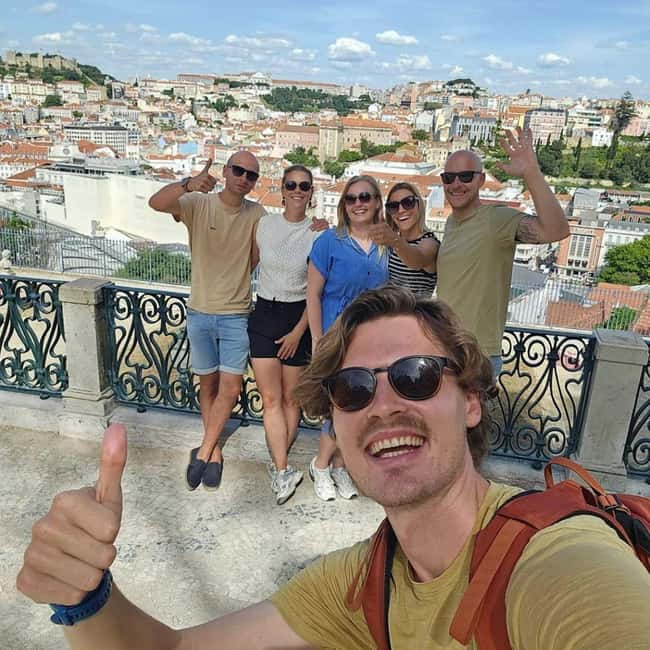
The tour begins at Miradouro de São Pedro de Alcântara, one of Lisbon’s finest lookout points. From here, you get a broad view over the city, with São Jorge Castle prominent across the valley. It is a smart starting place because you can first understand Lisbon’s steep layout before walking through it.
I like beginning at a viewpoint rather than in a crowded square. The city’s hills, rooftops, and layers of neighborhoods make more sense when you see them from above. Gino uses this opening to set the scene for the city’s past and present, so you are not simply ticking off sights as you go.
You should arrive ready to walk from the start. The tour lasts about two hours, and the route is designed as a continuous walk rather than a stop-and-rest outing. Wear shoes with a good grip, bring water, and check the weather before leaving. Lisbon’s sun can be strong, so a hat and sunscreen are sensible additions.
A handful more Lisbon ideas to compare
- Lisbon City Center Tour – The Unmissable Lisbon
★ 5.0 · 22,234 reviews - Lisbon: Sintra, Pena, Regaleira, Cabo da Roca & Cascais
★ 4.7 · 19,656 reviews - Lisbon: Jerónimos Monastery Entrance Ticket
★ 4.1 · 14,164 reviews
Bairro Alto and the stories behind Lisbon
From the viewpoint, the route moves into Bairro Alto. This neighborhood is known for its narrow streets and older urban character, and it gives Gino room to explain how Lisbon developed around its hills and river.
The value here is the commentary. Instead of seeing a street as just a pretty passage, you learn how Lisbon’s neighborhoods connect to the city’s past and daily life. Gino also discusses Portugal’s maritime era, including figures such as Vasco da Gama and Luís de Camões.
That subject suits the route well. Lisbon’s location beside the Tagus helped make it a major port, and the city’s outward-looking past is tied to the river you will reach later. The tour does not take you into museums or monuments, so the guide’s storytelling supplies much of the historical context.
Bairro Alto is also where the walking conditions become clear. Streets may be uneven, and the route includes slopes. This is not a flat city-center stroll. If you prefer a gentler outing, keep the terrain in mind before booking.
Praça Luís de Camões and the Chiado streets
The walk continues toward Praça Luís de Camões and through Chiado. The square honors the Portuguese poet Luís de Camões, whose work is closely linked to Portugal’s national identity and seafaring past.
Chiado gives you a different side of Lisbon from Bairro Alto. Here, the route feels more tied to cafés, shops, public squares, and the city’s cultural life. Gino keeps the explanation in Dutch, which makes it easier to follow the connections between people, places, and events without stopping to translate.
I like this part for orientation. Lisbon can feel confusing when you first arrive, especially with the hills and winding streets. A guide who moves through the city on foot can show you how the upper neighborhoods connect with the lower center, rather than leaving you with isolated points on a map.
The route is also compact enough for a first afternoon in Lisbon. You see important areas without spending half a day inside one attraction. The tradeoff is that you will mainly view sights from outside. Entrance tickets are not included, and the group does not go inside the attractions along the way.
Carmo Convent and the 1755 earthquake
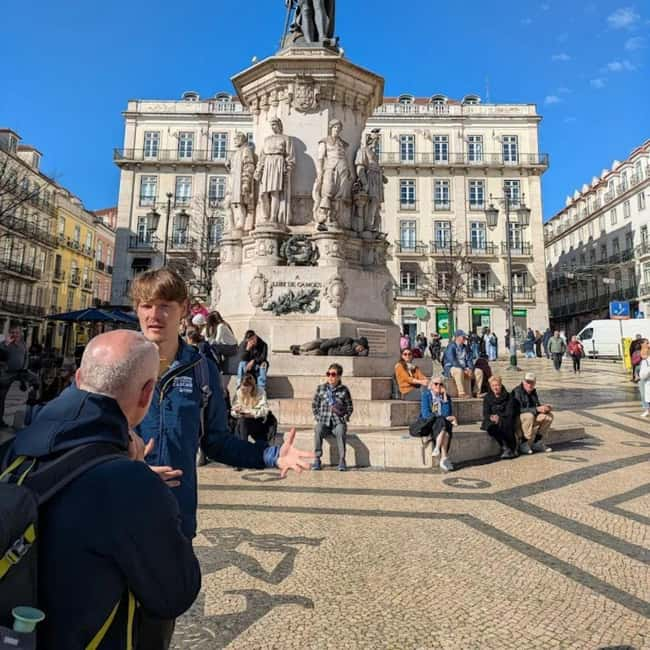
One of the key stops is the Carmo Convent. Its remains help explain the scale of the earthquake that struck Lisbon in 1755. Gino connects the convent and surrounding streets to the rebuilding of the city, giving you a clearer sense of why Baixa looks more ordered than the older hill neighborhoods.
This is one of the strongest parts of the route because the event is not treated as a disconnected history lesson. You are standing in the city center where the disaster and its aftermath changed the shape of Lisbon. The tour then continues toward Baixa, so the contrast between older and rebuilt areas becomes easier to notice.
You should not expect an extended monument visit. The experience is a walking tour, not an admission-based tour of Carmo Convent. If you want to explore the interior in detail, you will need to return on your own and pay any entrance fee separately.
Nearby in Lisbon, a different day entirely:
- Sintra: Pena Palace and Park Entrance Ticket
★ 4.2 · 17,410 reviews - Lisbon: History, Stories and Lifestyle Walking Tour
★ 4.8 · 10,902 reviews - Lisbon: Sunset Boat Party Cruise with DJ and Open Bar
★ 4.5 · 10,378 reviews - Lisbon: Pena Palace, Sintra, Cabo da Roca, & Cascais Daytrip
★ 4.7 · 9,981 reviews
Café A Brasileira and Fernando Pessoa
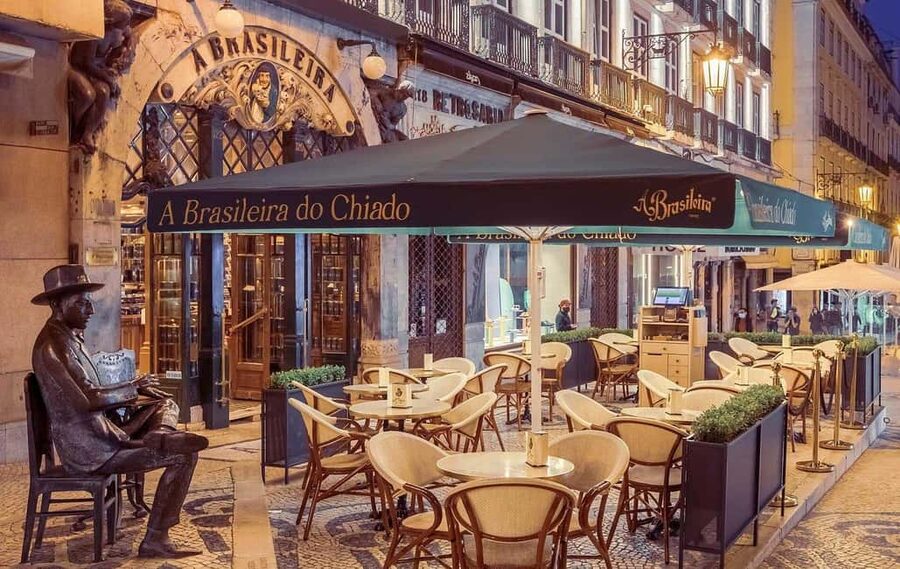
The route reaches Café A Brasileira, one of Lisbon’s most famous cafés. Outside, a statue of Fernando Pessoa gives you a natural photo stop and a chance to hear about one of Portugal’s best-known literary figures.
This is a small stop, but it adds character to the tour. Lisbon’s identity is not only grand squares and royal monuments. It also comes through cafés, writers, street life, and the habit of meeting in central neighborhoods.
You may be tempted to stop for coffee here, but the walk has no scheduled meal or rest break. The planned food stop is a pastel de nata later in the route. If Café A Brasileira interests you, you can return after the tour when you have more time.
Santa Justa Lift and the descent to Baixa

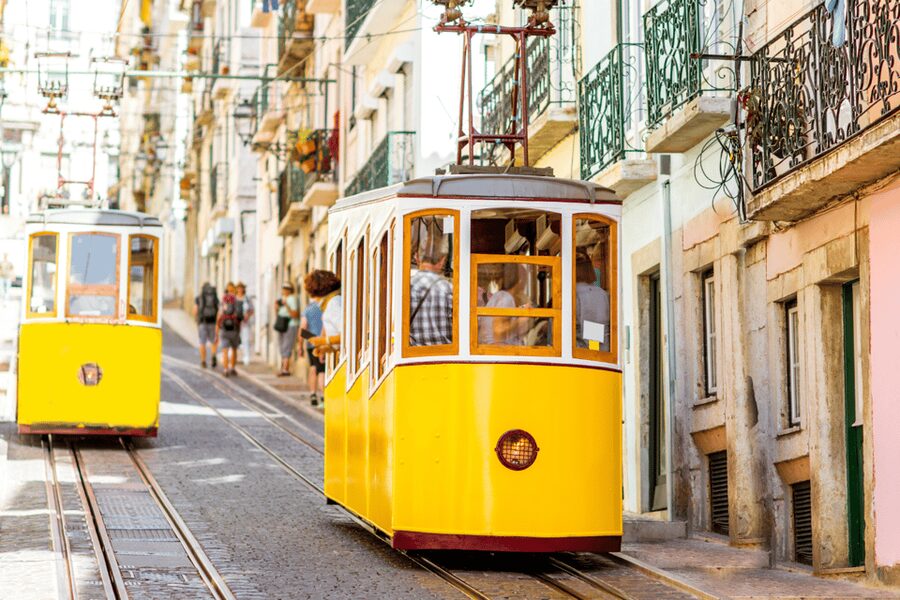
From Chiado, the route descends toward Baixa by way of the Santa Justa Lift. The lift is one of Lisbon’s familiar landmarks, and it provides a useful link between the higher streets and the lower district.
The exact experience of using public lifts can depend on conditions and access at the time. The guide can use local routes to move between levels efficiently, and one past tour included clever shortcuts through public lifts to reach the castle area quickly. That practical sense of the city is useful, especially for anyone still learning how to handle Lisbon’s hills.
Baixa is the most important urban contrast in the walk. After the irregular streets above, you reach a district rebuilt in a more planned form after the 1755 earthquake. Here Gino explains the rebuilding process and points out how the central streets lead toward the river.
There is a short break in Baixa, but do not read that as a long café stop. The tour information describes no formal pause during the walk apart from the pastry stop. Treat the break as a brief chance to regroup.
St. Dominic’s Square and the central streets
St. Dominic’s Square provides another stop in the center of Lisbon. The square sits within an area where everyday city movement, public memory, and historic streets meet.
Gino’s approach is built around stories and small details rather than only the headline facts. One especially useful feature is the way he uses side routes and public connections to help you understand how Lisbon works. That can save time later when you explore on your own.
The tour’s small-group format also matters here. A smaller party is easier to keep together on narrow sidewalks and easier for a guide to address in Dutch. Private bookings are available if you want the pace and conversation tailored to your own group, though the supplied information does not state a separate private-tour price.
Commerce Square and the Tagus waterfront
The walk eventually opens onto Commerce Square, one of Lisbon’s grandest public spaces. Its position beside the Tagus makes it an important visual turning point. You have moved from the city’s hills into a broad riverfront setting.
This is where the earlier discussion of maritime Portugal comes together. The river is not just a scenic finish. It helps explain Lisbon’s growth, its connection to overseas voyages, and the role of the city’s port.
From Commerce Square, the route follows the water along Ribeira das Naus. The riverfront offers a more relaxed walking stretch after the hills and dense streets above, although you should still keep your water bottle handy.
The information provided names the 25th of April Bridge as part of the tour, with scenic views along the way. The bridge is one of Lisbon’s most recognizable modern landmarks, spanning the Tagus with its distinctive red structure. The walk appears to focus on views and explanation rather than crossing the bridge or entering a bridge attraction, so bring your camera for the sightline rather than expecting a dedicated bridge visit.
The pastel de nata stop
A pastel de nata stop adds a simple but worthwhile taste of Lisbon. Gino takes you to the place he considers the best in the city, giving the walk a personal touch rather than treating food as an afterthought.
You receive one of the tour’s clearest practical pleasures here: a chance to taste Portugal’s famous custard pastry while still moving through the city. It is also the only clearly planned food stop, so do not begin the tour expecting a full snack break or meal.
The pastry is included among the highlights, but the supplied information does not clearly state whether its cost is included in the tour price. I would confirm that when booking if the detail matters to you. Either way, plan to eat afterward, since the tour ends at Time Out Market.
Finishing at Time Out Market
The advertised finish is Time Out Market at Cais do Sodré. This is a convenient ending because you can continue directly into a food hall with many choices for a snack or drink.
I like this finish for practical reasons. A two-hour walk can leave you ready for food, and ending near a major dining spot means you do not have to work out your next move immediately. It also gives you a useful base for continuing along the river or exploring Cais do Sodré.
The meeting-point details can vary according to the option booked, so check the exact starting location carefully. The main route description ends at Time Out Market, while the general meeting-point wording says the activity ends back at the meeting point. Because those details do not fully match, confirm the start and finish when you reserve.
What the $36 price gets you
At $36 per person, this tour sits in the reasonable range for a guided two-hour city walk, especially when you want Dutch rather than English commentary. The price covers the walking tour and Dutch-speaking guide, but not hotel pickup, drop-off, entrance fees, or clearly specified food costs.
The value comes from the route and the explanations. You cover several central neighborhoods, major viewpoints, the Carmo Convent area, Café A Brasileira, Baixa, Commerce Square, the 25th of April Bridge views, and the Tagus in a short period. Paying for a guide can be worthwhile if you want the city’s story to connect rather than simply collect photographs.
The tour is also bookable for a private group or as a small-group experience. A private option can make sense for families or friends who want to ask more questions, but compare the final price before deciding. For a short introduction to Lisbon in Dutch, the shared format is likely the better value if available.
Free cancellation is offered up to 24 hours before the start for a full refund, and you can reserve now and pay later. Those terms help if your Lisbon schedule is still shifting.
Who should book this Lisbon walk
I would choose this tour if you speak Dutch and want a friendly orientation soon after arriving in Lisbon. It is especially useful if you want history, neighborhood context, and river views in one compact outing.
It suits people who enjoy walking and do not mind hills, stairs, uneven streets, or a steady pace. It also works well for a first look at central Lisbon before returning to the places you want to explore in more detail.
You may want a different experience if you have limited mobility, need frequent rest stops, or want to enter major attractions. This walk stays outside the sights and does not include hotel transportation. It is also not the best choice if you want a food tour, since the pastry stop is brief and Time Out Market comes at the end rather than forming part of a guided tasting program.
Practical tips before you go
- Wear comfortable walking shoes with reliable grip.
- Carry a water bottle because there is no long refreshment break.
- Bring sunscreen and a hat on sunny days.
- Check the forecast and dress for changing weather.
- Bring a camera for São Pedro de Alcântara, the Tagus, and the 25th of April Bridge.
- Confirm the exact meeting point and finish when booking, since the starting option may vary.
Should you book Gino’s Dutch walking tour?
Book it if you want Lisbon explained in Dutch, prefer a small-group or private walk, and like the idea of moving from a hilltop view to the river in two hours. Gino’s route gives you a useful first map of the city, with strong stops at São Pedro de Alcântara, Carmo, Café A Brasileira, Baixa, and the Tagus.
Skip it if hills are a concern, you need an accessible route, or you want extended visits inside monuments. For Dutch speakers who can handle the terrain, the combination of clear explanations, smart city routes, a pastel de nata, and a convenient Time Out Market finish makes the $36 price a sensible introduction to Lisbon.
FAQ
How long does the walking tour last?
The tour lasts two hours. Starting times depend on availability when you book.
What language is the tour in?
The tour is conducted in Dutch with a live Dutch-speaking guide.
Who leads the tour?
The guide is Gino, from Gino Lisboa.
Where does the tour start?
The starting point may vary depending on the option you book. One listed starting point is Miradouro de São Pedro de Alcântara. Check the confirmed meeting point before setting out.
Where does the tour finish?
The route description finishes at Time Out Market in Cais do Sodré. The general meeting information can vary by booking option, so confirm the final details when reserving.
Is food included?
The tour includes a stop for a pastel de nata, but the provided information does not clearly confirm whether the pastry cost is included. Entrance fees, hotel pickup, and hotel drop-off are not included.
Does the tour enter the attractions?
No. The walk visits sights from the outside, and entrance fees are not included.
Is the route suitable for people with mobility impairments?
No. The tour is not suitable for people with mobility impairments. Comfortable walking shoes, water, weather-appropriate clothing, sunscreen, and a hat are recommended.
Fresh finds around Lisbon
- Lisbon: Tuk Tuk City Tour★ 3.6 · 7 reviews
- Fatima Full day Private Tour★ 5.0 · 7 reviews
- Lisbon: Highlights and Hidden Gems Tour★ 5.0 · 7 reviews
- Private Tour to Evora and Monsaraz from Lisbon★ 5.0 · 7 reviews
- Discover Sintra Beauty with a Guided Journey from Lisbon★ 5.0 · 7 reviews
- Private Half-Day Tour to Sintra★ 3.4 · 7 reviews
- Lisbon: Sunset and Wine Catamaran Tour★ 5.0 · 7 reviews
- Nazaré: Beaches of Nazaré Guided E-Bike Tour★ 4.9 · 7 reviews
Guided, compared.

Best of Lisbon Small-Group Guided Walking Tour
Read our review →

From Lisbon: Fátima, Nazaré, Batalha, and Óbidos Guided Tour
Read our review →
Guided Tour to Sintra, Pena, Regaleira, Cabo da Roca and Cascais
Read our review →
Lisbon: São Jorge Castle E-Ticket and Audio Guide
Read our review →
Sintra: Quinta da Regaleira E-Ticket and Audio Guide
Read our review →
Welcome Lisbon Tour with Local Guide in Private Eco Tuk Tuk
Read our review →