
Reviewed · WALKING TOURS
Lisbon: Jewish Quarter Guided Walking Tour
Lisbon’s Jewish past is easiest to miss when you are admiring the city’s grand squares and tiled lanes. This two-hour walk connects those ordinary-looking places to medieval Jewish quarters, forced conversions, the 1506 Pessah massacre, and the refugees who passed through Lisbon during World War II. Guide Amber receives especially strong praise for making difficult history clear and engaging.
I like the small group limit of 10, which gives you room to ask questions instead of simply following a flag through the city. I also like the route’s broad scope: it links Alfama and the castle hill with Baixa, Rossio, Mouraria, the riverfront, and the modern story of Lisbon’s Jewish community. You should be ready for steep hills and uneven streets, and two hours is enough for context but not for lengthy stops at every location.
In This Review
- Key points to know before booking
- Why Lisbon’s Jewish history needs a walking tour
- Starting at Praça do Comércio and the river
- Alfama and the medieval Jewish quarters
- Baixa and the pressure to become New Christians
- Rossio and the 1506 Pessah massacre
- Mouraria, resistance, and the modern story
- How the guides shape the experience
- Two hours, steep streets, and practical comfort
- Is $57 a fair price for this Lisbon walk?
- Who should book this experience?
- Should you book the Jewish Quarter Guided Walking Tour?
- FAQ
- How long is the Jewish Quarter Guided Walking Tour?
- What language is the tour offered in?
- How large is the group?
- Where does the tour begin?
- Where does the tour end?
- Does the price include food or drinks?
- Can I cancel the tour and receive a refund?
Key points to know before booking
- The route begins at Praça do Comércio: Start beside Lisbon’s grand riverfront square, then trace the Jewish story through the city center.
- Alfama shows the medieval setting: Narrow lanes and steep streets help explain how Jewish quarters developed near the castle hill.
- Rossio carries the darkest chapter: The tour covers the 1506 Pessah massacre and the violence surrounding Lisbon’s Jewish and New Christian communities.
- Forced conversion is part of the story: Baixa becomes a place to understand the pressure placed on Jewish residents to become New Christians.
- The story reaches beyond Portugal: Your guide connects Lisbon’s community with a diaspora that spread across the Atlantic, the Mediterranean, Asia, and northern Europe.
- Amber is a frequent guide: Her clear explanations, historical range, and willingness to answer questions are repeatedly praised, though the tour can be adapted if another guide leads your departure.
Why Lisbon’s Jewish history needs a walking tour
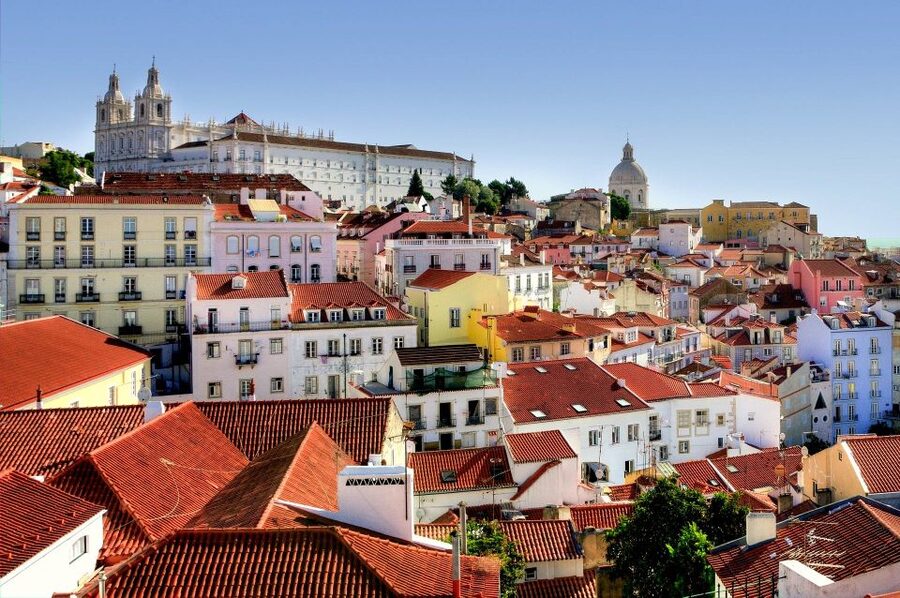
Lisbon does not offer one single, preserved Jewish quarter that you can enter through a gate and inspect room by room. Much of the physical evidence disappeared through earthquakes, rebuilding, religious persecution, and the normal changes of a working city.
That makes a guide useful here. You are not just looking for a synagogue or a museum label. You are learning to read the city itself: a square, a street name, a slope toward the castle, or a riverfront building can become part of a much larger story.
The walk covers the main places connected with Jewish life in medieval and modern Lisbon. It also moves into the story of New Christians, the term used for Jews who were forced to convert, and the long process by which religious divisions were challenged in Portugal.
A strong part of the experience is the way it places Jewish history inside Portuguese history. You hear about community life, persecution, science, culture, food, migration, and political change rather than receiving a narrow list of dates.
More Walking Tours in Lisbon
- Lisbon: History, Stories and Lifestyle Walking Tour
★ 4.8 · 10,902 reviews - Best of Lisbon Small-Group Guided Walking Tour
★ 5.0 · 4,869 reviews - Lisbon: Food and Wine Small Group Walking Tour
★ 4.9 · 4,082 reviews
Starting at Praça do Comércio and the river
The meeting point is Praça do Comércio, Lisbon’s monumental square beside the Tagus. Your guide carries a dark red umbrella or a sign, and you are asked to confirm the meeting details through the WhatsApp or iMessage number connected to your voucher.
Beginning here gives the tour an unusually wide frame. The square is not simply a pretty opening point. The experience presents it as connected to the Exodus and to Lisbon’s role as a port city, a place where people, ideas, and communities moved in and out.
From the square, the route passes through Praça do Município, Rua do Comércio, Casa dos Bicos, and the Ribeira area. These stops help place Jewish life near the river and the commercial heart of Lisbon.
Casa dos Bicos is especially useful as a visual pause. Its unusual diamond-point facade is easy to spot, and its position near the waterfront helps you understand how trade and urban life shaped this part of the city.
Do not expect every stop to provide a clearly marked Jewish monument. The value is in the explanation. A guide can connect streets and buildings to the larger movement of people through Lisbon, including the diaspora that later reached the Atlantic, Mediterranean lands, Asia, and northern Europe.
Alfama and the medieval Jewish quarters
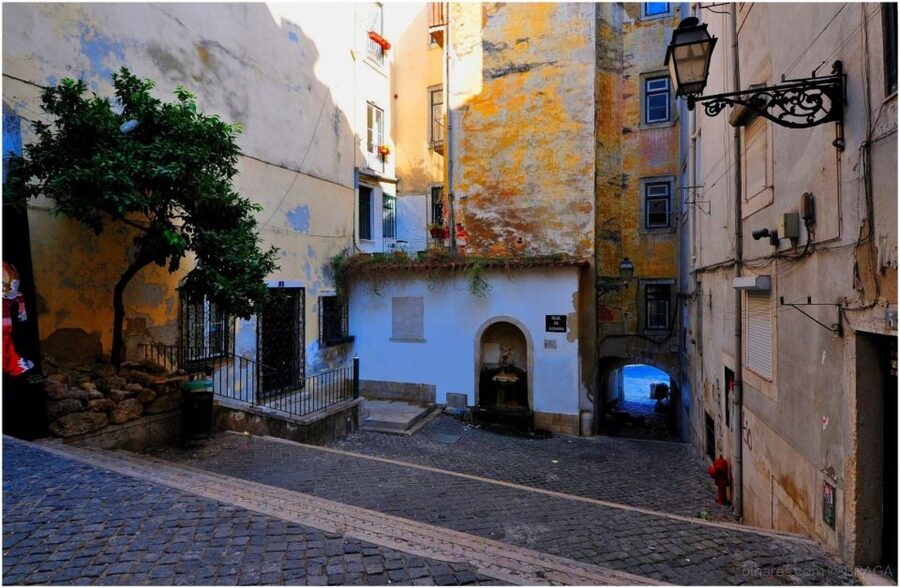
The walk then heads toward Alfama and the castle hill. Alfama’s narrow lanes and steep climbs make it one of the best areas in Lisbon for imagining a medieval city, even though the current streets should not be treated as a perfectly preserved medieval Jewish quarter.
The tour explains the idea of judiarias, the areas where Jewish residents were required or encouraged to live apart from Christians. Medieval segregation was not just a matter of geography. It affected daily contact, work, worship, legal status, and the way a community related to the rest of the city.
This part of the walk benefits from a slow pace. You are likely to pause in small streets rather than spend the whole time at formal sights. Pay attention to the slope and the tight layout. Lisbon’s hills help explain why neighborhoods could feel distinct even when they were physically close.
Alfama does require effort. Several people specifically note the steep hills, so comfortable shoes are important. If you dislike walking uphill or need a fully level route, contact the provider before booking and ask about adapting the starting point or route.
The guide also brings in figures who help explain the period and the contribution of Jewish communities to Portuguese science, culture, and food. That wider view matters. It keeps the tour from presenting Jewish residents only as victims of persecution, although persecution is an essential part of the story.
Baixa and the pressure to become New Christians
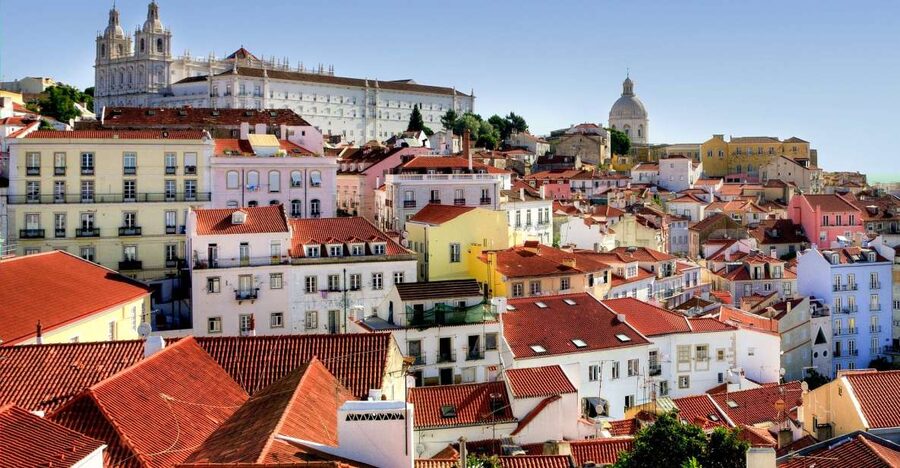
From the castle hill and Alfama, the route moves toward Baixa. This change of setting is useful because Baixa represents a more open, central part of Lisbon, while the earlier streets help you picture the enclosed quarters of the medieval city.
Here the focus turns to forced conversions. Jewish residents were pressured to become Christians, creating the complicated category of New Christians, also known as Conversos. The tour follows this story beyond the moment of conversion, explaining how suspicion and religious division continued for generations.
This is one of the subjects where a good guide makes a real difference. A simple account might say that people converted and leave it there. The tour instead connects conversion with identity, family history, public religion, and the treatment of people whose Jewish ancestry continued to shape how others viewed them.
The Baixa section also adds political context. The route can include the later work of the Marquis of Pombal, whose reforms in the eighteenth century removed formal divisions between Old and New Christians. His rule was not simple or gentle, but his policies changed the legal and social framework that had separated the groups for centuries.
One especially good feature is that the tour does not stop at the medieval period. You get a longer story, stretching from Jewish life in the Iberian Peninsula through forced conversion and into the reforms of the eighteenth century.
More walking routes in Lisbon:
- Best of Lisbon Walking Tour: Rossio, Chiado & Alfama
★ 4.9 · 2,700 reviews - Age of Discoveries Walking Tour in Belém
★ 5.0 · 1,513 reviews - Sintra & Cascais Day Tour with Pena Palace Entry and Gardens Walk
★ 5.0 · 962 reviews - Lisbon Roots – Small group Food & Culture Walking Tour w/tastings
★ 5.0 · 910 reviews
Rossio and the 1506 Pessah massacre
Rossio is one of Lisbon’s most familiar public squares, filled with traffic, shops, cafes, and city life. It is also where the tour addresses the 1506 Pessah massacre, one of the most painful episodes in Lisbon’s Jewish history.
The guide explains the violence in its historical setting and shows how public spaces that feel ordinary today were once connected to persecution and mass suffering. This is not a light sightseeing stop, and the subject deserves attention rather than a rushed explanation between photographs.
The contrast between the busy modern square and the events discussed here is powerful. You are standing in a place that may look like any other central Lisbon plaza, yet the story gives it a different weight.
This portion may be difficult for some people, particularly if you are traveling with young children or prefer tours that avoid disturbing subjects. The activity is designed around history, and the history includes religious violence, forced conversion, and the loss of a visible Jewish presence.
Mouraria, resistance, and the modern story
The route also includes Mouraria and a resistance museum. These stops widen the focus beyond the medieval quarter and help connect Jewish history with the political life of modern Portugal.
The experience covers the passage of Jewish refugees through Lisbon in the 1940s during World War II. That part of the tour matters because Lisbon was not only a place where a historic community lived. It was also a point of movement for people trying to escape war and persecution.
The resistance museum adds another layer of twentieth-century context. The supplied details do not promise an extended museum visit or a specific interior tour, so you should think of it as a location used within the walking route rather than a separate museum experience.
The modern section is valuable, but it is also the area where you may want to ask questions. One suggestion is to include more about the current Jewish population and present-day Jewish activity in Lisbon. If that subject matters to you, ask the guide directly. The tour clearly covers the contemporary presence and the WWII refugee passage, but the exact depth may depend on the guide and the time available.
How the guides shape the experience
Amber is the name most closely associated with the positive feedback about this walk. She is described as articulate, friendly, clear, and able to explain both Portuguese and Jewish history without losing the group.
Her background in history is useful for a subject that can quickly become tangled. The tour covers medieval segregation, conversion, massacres, Pombal’s reforms, migration, and the wider diaspora in only two hours. A guide who can answer follow-up questions adds much more value than a memorized list of stops.
Amber also appears to adapt the route to individual interests. One departure included extra places and less obvious locations after the guide asked what the participant wanted to see. The tour can be tailored to different time frames and starting points, although you should arrange that in advance rather than assume every departure will follow a custom route.
Small groups improve the experience. With no more than 10 participants, you can ask about a family name, a historical figure, a place connected with the diaspora, or the meaning of a term you have heard before. On one quiet departure, the group became a private tour for a couple, showing how group size can vary with demand and weather.
The activity is offered in English with a live guide. The guide’s skill matters especially because so little visible evidence remains in some areas. One stop may be a street corner or a public square, but a clear explanation can make it meaningful.
Two hours, steep streets, and practical comfort
Two hours is a sensible length for an introduction. You can cover a large part of central Lisbon without giving up half a day, and you still have time afterward for a museum, meal, or independent walk.
The tradeoff is depth. You will pass many locations, but you will not have time for long visits at each one. The route is best understood as a guided orientation to Lisbon’s Jewish history, not as a full archaeological examination of every site.
Wear shoes with good grip. The castle hill and Alfama involve steep streets, and Lisbon’s paving can be tiring even when the distance is not great. The tour description does not promise food or drink, so bring water and plan your meal before or after the walk.
The tour ends back at the meeting point. That is convenient if you want to continue around Praça do Comércio or Baixa, but it means you should not expect a drop-off in another neighborhood.
Starting times vary, so check availability when choosing your date. Contact the number on your voucher through WhatsApp or iMessage to confirm where to meet, especially because the guide may use a dark red umbrella or sign to identify the group.
Cancellation is flexible: you can cancel up to 24 hours ahead for a full refund. You can also reserve now and pay later, which helps if your Lisbon schedule is still changing.
Is $57 a fair price for this Lisbon walk?
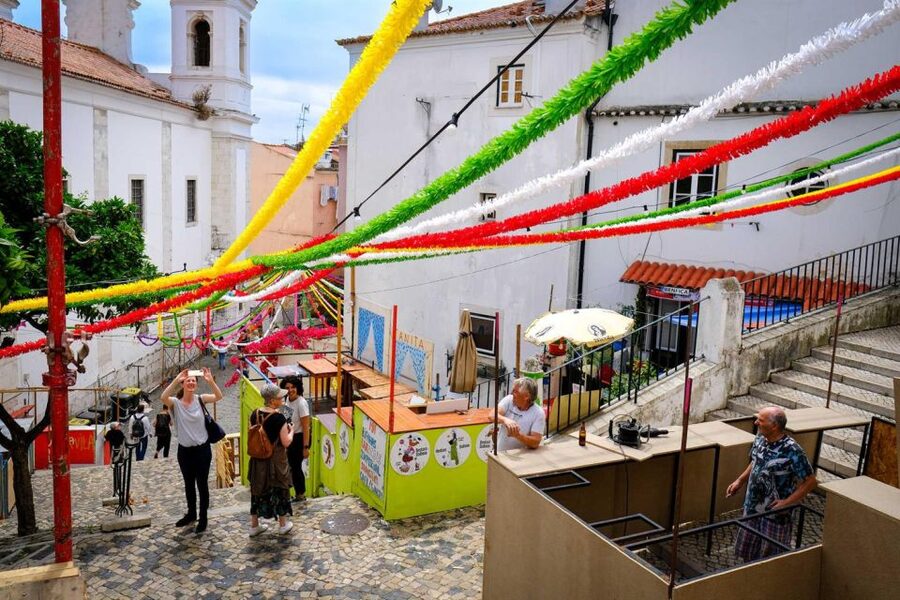
At $57 per person, this is not the cheapest walking tour in Lisbon. The price makes more sense if you want a focused subject, an English-speaking guide, a small group, and a route that links several neighborhoods rather than staying in one square.
The value comes mainly from interpretation. Lisbon has limited visible evidence of its former Jewish communities, so walking alone will not provide much explanation. You may recognize Praça do Comércio, Rossio, Alfama, and Baixa, but you are unlikely to connect them into one story without preparation.
The price is less compelling if you want museum admissions, food, drinks, or a long visit inside historic buildings. The guide is included, but food and drinks are not. The tour also moves at city walking speed, so you are paying for historical context and conversation rather than tickets to major attractions.
I would consider it good value for a first visit if Jewish history is a major reason for your trip, especially if you want to understand Portugal’s connection to the wider diaspora. If you have already studied Lisbon’s Jewish past and want only preserved buildings or formal collections, check the exact route before booking. The experience spends much of its time in public streets and squares.
Who should book this experience?
This walk suits you if you enjoy history explained in place, can manage Lisbon’s hills, and want more than the standard tram rides and viewpoints. It is particularly useful for visitors researching family history or trying to understand Sephardic and Portuguese Jewish connections across Europe and beyond.
It also works for people who know little about the subject. The guide places Jewish history within the wider story of Lisbon, so you do not need a specialist background to follow the route.
You may want another type of activity if you need a level, accessible walk, prefer entertainment over difficult history, or expect a large number of preserved Jewish buildings. The tour itself acknowledges that not much physical evidence remains, and that absence is part of what the guide helps you understand.
For the best experience, arrive ready to listen and ask questions. Ask about the modern Jewish community if that is important to you, and tell the guide if you have a particular family, period, or neighborhood you want to explore.
Should you book the Jewish Quarter Guided Walking Tour?
Book it if you want an informed two-hour introduction to Lisbon’s Jewish past and are happy to learn through streets, squares, and historical storytelling. Amber’s clear delivery and strong command of Portuguese and Jewish history are major reasons to choose it, while the small group makes discussion possible.
Skip it if your priority is a long indoor visit, a food component, or a completely flat route. For most history-minded visitors, though, the tour offers a useful way to see familiar Lisbon places with fresh meaning, from the riverfront at Praça do Comércio to the difficult story remembered around Rossio.
FAQ
How long is the Jewish Quarter Guided Walking Tour?
The tour lasts two hours. Starting times vary, so check availability for the date you want.
What language is the tour offered in?
The live guided tour is offered in English.
How large is the group?
The tour is limited to 10 participants.
Where does the tour begin?
It begins at Praça do Comércio in Lisbon. The guide will have a dark red umbrella or a sign, and you should contact the number on your voucher through WhatsApp or iMessage to confirm the meeting details.
Where does the tour end?
The activity ends back at the meeting point.
Does the price include food or drinks?
No. The guide is included, but food and drinks are not.
Can I cancel the tour and receive a refund?
Yes. You can cancel up to 24 hours in advance for a full refund. You can also reserve now and pay later.
Fresh finds around Lisbon
- Lisbon: Tuk Tuk City Tour★ 3.6 · 7 reviews
- Fatima Full day Private Tour★ 5.0 · 7 reviews
- Lisbon: Highlights and Hidden Gems Tour★ 5.0 · 7 reviews
- Private Tour to Evora and Monsaraz from Lisbon★ 5.0 · 7 reviews
- Discover Sintra Beauty with a Guided Journey from Lisbon★ 5.0 · 7 reviews
- Private Half-Day Tour to Sintra★ 3.4 · 7 reviews
- Lisbon: Sunset and Wine Catamaran Tour★ 5.0 · 7 reviews
- Nazaré: Beaches of Nazaré Guided E-Bike Tour★ 4.9 · 7 reviews
Walking Tours, compared.
Lisbon: History, Stories and Lifestyle Walking Tour
Read our review →
Best of Lisbon Small-Group Guided Walking Tour
Read our review →
Lisbon: Food and Wine Small Group Walking Tour
Read our review →
Best of Lisbon Walking Tour: Rossio, Chiado & Alfama
Read our review →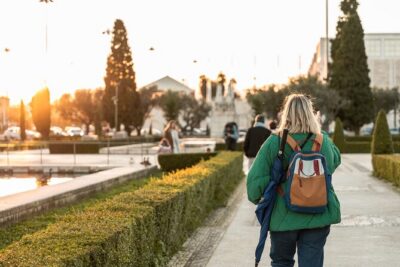
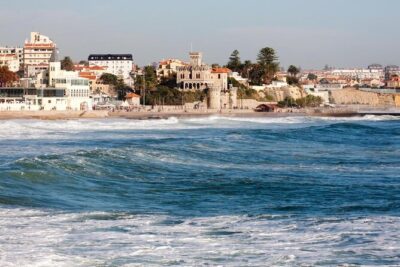
Sintra & Cascais Day Tour with Pena Palace Entry and Gardens Walk
Read our review →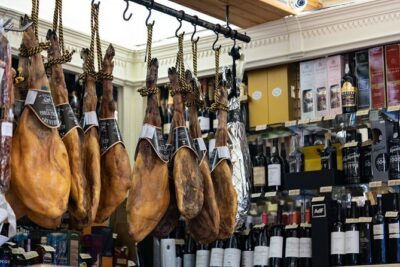
Lisbon Roots – Small group Food & Culture Walking Tour w/tastings
Read our review →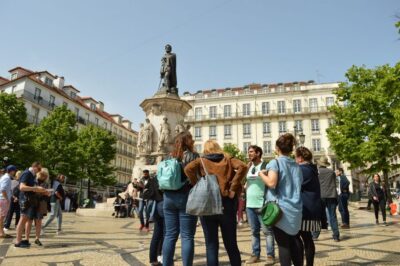
Lisbon: Starter Walking Tour to the highlights in German
Read our review →Browse the lists this tour appears in