
Reviewed · ALFAMA & OLD TOWN WALKS
Lisbon Downtown & Alfama with a guide Walking tour
Lisbon’s oldest streets are best understood on foot, and this tour takes you from the grand waterfront of Praça do Comércio into Alfama’s steep lanes, old churches, and lookout points. I like the contrast: one moment you are in a broad, orderly square rebuilt after the 1755 earthquake, and soon after you are threading through a medieval quarter that survived it.
I especially like the small-group format, capped at 20 people, and the chance to hear local context instead of simply collecting photographs. Guides including Bruno, Marina, Miguel, and Ines have been praised for their history, humor, patience, and ability to adjust the pace. The main catch is important: the details describe a two-hour walk, while some promotional wording calls it a full-day tour and includes sights from a longer vehicle-based Lisbon excursion. Confirm the exact route and duration before booking.
In This Review
- Key points to know before you go
- Start at Rua dos Douradores and head toward the river
- Praça do Comércio and the Augusta Street Arch
- Baixa, Chiado, and the city’s layered past
- Alfama, Lisbon’s oldest quarter
- Viewpoints, churches, and the National Pantheon
- Lisbon Cathedral and the Saint Anthony tradition
- Small plazas, old gates, and a canned-fish stop
- What the guide experience is likely to be like
- Is the $3 price good value?
- Practical advice for a smoother walk
- Should you book it?
- FAQ
- How long does the walking tour last?
- Where does the tour start?
- Where does the tour end?
- What departure times are available?
- Is the Fado Museum included?
- Does the tour include food and drinks?
- Is this tour suitable for people who do not walk quickly?
- What happens if bad weather is expected?
Key points to know before you go
- Praça do Comércio sets the historical stage: Learn how Lisbon’s royal riverside square changed after the 1755 earthquake.
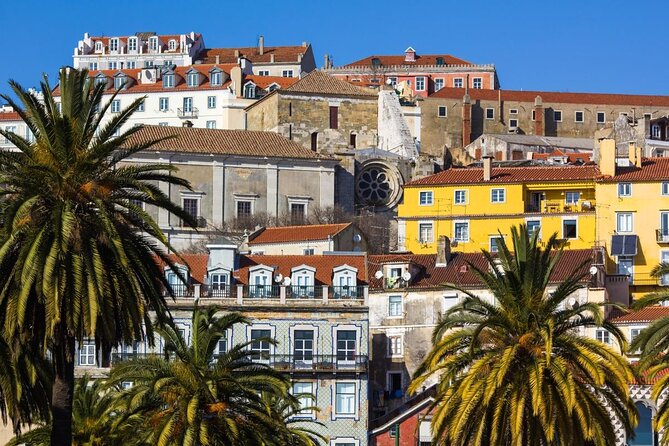
- Alfama is the heart of the walk: Expect narrow lanes, stone paving, climbs, old walls, and fine views.
- The route covers many landmarks from outside: The cathedral, National Pantheon, Fado Museum, churches, and viewpoints are included as sights, but entry tickets are not listed.
- Guides are the main strength: Bruno, Marina, Miguel, and Ines are noted for clear explanations, friendly pacing, and useful city advice.
- This is a real walking tour: Wear good shoes, carry water, and prepare for hills and uneven streets.
- The $3 price is unusually low: It offers excellent value if you want an orientation walk, but check what version of the tour you are actually booking.
Start at Rua dos Douradores and head toward the river
The meeting point is at Rua dos Douradores, near the Baixa grid. You can choose a morning departure at 9:45 or an afternoon departure at 1:45. The walk ends at Rossio Square, so you finish in a useful central location rather than being returned to the starting point.
That beginning matters. Baixa is not simply a pleasant shopping district. Its straight streets and regular blocks were part of the rebuilding ordered by the Marquis of Pombal after the 1755 earthquake destroyed much of central Lisbon. Your guide can help you read the city plan as you walk, rather than seeing only cafés, tiled façades, and souvenir shops.
The route is also a good first look at Lisbon’s geography. The city rises sharply from the Tagus, and the walk links the lower downtown area with Alfama’s hills. I would not treat the advertised two hours as a casual stroll. Lisbon’s paving can be slippery and uneven, and the route includes a considerable amount of walking.
More Walking Tours in Lisbon
- Lisbon: History, Stories and Lifestyle Walking Tour
★ 4.8 · 10,902 reviews - Best of Lisbon Small-Group Guided Walking Tour
★ 5.0 · 4,869 reviews - Lisbon: Food and Wine Small Group Walking Tour
★ 4.9 · 4,082 reviews
Praça do Comércio and the Augusta Street Arch
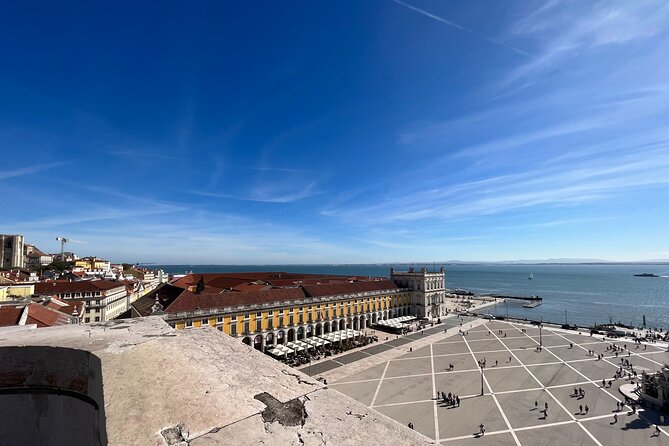
The broad Praça do Comércio, also called Terreiro do Paço, is the tour’s big opening view. Its yellow buildings wrap around three sides of the square, while the south side faces the Tagus. Before the earthquake, this was the site of the Paço da Ribeira, the royal palace. After the disaster, the palace was gone and the square was rebuilt as part of modern Baixa.
This is one of the places where a guide adds real value. Without context, the square can feel like a grand photo stop. With context, you see how royal power, trade, government, and disaster shaped the city. The square later became home to important state departments, giving it a role beyond its handsome appearance.
Walk toward the Augusta Street Arch and look up. Its sculptures and symbols celebrate Portugal’s past and cultural figures. The arch frames the route into Baixa and gives Rua Augusta a ceremonial entrance. You do not need a ticket simply to admire the square, and admission to this stop is listed as free.
The open space can be exposed to sun and wind. If you take the afternoon departure in summer, sunscreen and water are sensible. In cooler months, the riverside air can feel chilly, so bring a jacket.
Baixa, Chiado, and the city’s layered past
The walk passes through Baixa and toward Chiado, two central districts with very different moods. Baixa is planned, broad, and orderly. Chiado is more associated with shops, cafés, literary connections, and a livelier street scene. Your guide’s job here is less about checking off a monument and more about connecting the streets to Lisbon’s cultural life.
One stop is a building originally built in 1521 and now used by the José Saramago Foundation. The foundation is devoted to the work of José Saramago, Portugal’s only Nobel Prize winner in literature. Even if you do not enter, the stop gives the walk a literary thread and reminds you that Lisbon’s identity is shaped by writers as much as by kings and churches.
The tour also includes the Fado Museum. Fado is Portugal’s traditional guitar-led music, closely linked with Lisbon’s neighborhoods and emotional storytelling. The museum preserves that musical tradition and its cultural influence. The supplied details do not promise admission, so plan to see it as an exterior stop unless your guide says otherwise.
A useful detail from the guide experience is the personal touch. Marina has been known to play a little Fado from her phone while explaining the music. That is not a guaranteed part of every departure, but it shows how a good guide can turn a museum stop into something you can hear and feel, not just photograph.
Alfama, Lisbon’s oldest quarter
Alfama is the main event. Its dense bedrock helped the quarter survive the 1755 earthquake, leaving a maze of lanes that feels very different from Pombaline Baixa. You will pass residential streets, old stone walls, small plazas, tiled buildings, and sudden openings toward the river.
This is where comfortable shoes matter most. The route is not a flat promenade. You may walk uphill, downhill, and over polished cobblestones. The physical level is described as moderate, but that means you should be ready to walk steadily for much of the outing.
Alfama rewards slow looking. A doorway, a saint’s tile panel, or a narrow stairway may carry more character than a major monument. A guide can also help you avoid treating the quarter as a stage set. It remains a residential neighborhood, and a respectful pace is better than stopping in the middle of a lane.
The route includes views from the old Cerca Moura, the Moorish city wall. From this area, you can look toward several key Lisbon landmarks. Its position between São Jorge Castle and the cathedral makes it a useful point for understanding how the old city was protected and arranged.
More old-town wanders:
- Alfama Tour in Lisbon Old Town
★ 5.0 · 4,936 reviews - Private Lisbon Sightseeing Tuk-Tuk Tour: Alfama, Belém & More
★ 5.0 · 4,277 reviews - Lisbon: Hills, Alfama, and Mouraria Tour by Electric Bike
★ 4.8 · 3,438 reviews - Best of Lisbon Walking Tour: Rossio, Chiado & Alfama
★ 4.9 · 2,700 reviews
Viewpoints, churches, and the National Pantheon
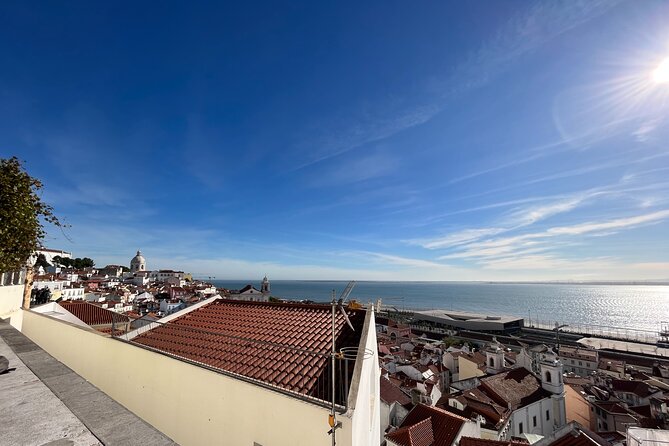
Several stops focus on elevated views. One viewpoint is connected with an old gate in the Moorish wall, while another has a church originally built by the Knights of the Order of Malta in the 12th century. These are valuable pauses because Lisbon makes more sense when seen from above. You can track the Tagus, the tiled roofs, the castle area, and the dense older quarters below.
The National Pantheon is another major sight. The building took more than 280 years to complete and now serves as the resting place of important Portuguese figures. It sits among Alfama’s lanes, so the approach is part of the experience. You see how monumental architecture and ordinary neighborhood life exist side by side.
Again, check the ticket arrangement. The tour includes a professional guide and lists the main stops, but it does not include entrance fees to paid attractions. If you want to go inside the Pantheon, cathedral, or Fado Museum, ask whether the schedule allows it and budget for your own admission.
The Feira da Ladra, Lisbon’s traditional flea market, is included when the route and day line up. It operates on Tuesdays and Saturdays in and around Campo de Santa Clara. You might find household objects, old books, vintage items, and assorted curiosities, but the market is not guaranteed to be active on other days. If the market is a priority, choose one of those two days.
Lisbon Cathedral and the Saint Anthony tradition

The cathedral, known as the Sé, was commissioned by King Afonso I in 1150 on the site of a former Moorish mosque. Repeated collapses, repairs, and changes left it with a mix of architectural styles. That layered appearance is exactly why a guide’s explanation helps. You are not looking at one clean period building, but at centuries of rebuilding in stone.
Nearby is the church built on the supposed birthplace of Saint Anthony of Lisbon. Saint Anthony is linked with marriage and newlyweds, and one local tradition involves single women throwing a coin toward his statue in hope of marrying within a year. It is a small, human detail that gives the old quarter a bit of humor.
The itinerary also refers to a monastery that influenced later church building in Portugal and remained in use until religious orders were abolished in the early 19th century. These religious stops can feel repetitive if you are already planning several church visits, but they are useful for understanding how much of Alfama’s public life was organized around faith, charitable work, and religious institutions.
Small plazas, old gates, and a canned-fish stop
The walk includes a small plaza within about 500 meters of São Jorge Castle and a place known as the Door of the Sea. The latter was once a main city entrance from the beach and harbor when Lisbon was fortified. These are not necessarily grand sights, but they show how the old city connected its defensive walls with the river.
A family-owned grocery store specializing in canned fish adds a distinctly Portuguese commercial detail. Canned seafood is a serious part of the country’s food culture, and a specialist shop gives you a practical souvenir option. It also breaks up the succession of monuments with something tied to daily life and local shopping.
Do not count on food or drinks being included. The advertised inclusions cover the guide, insurance under Portuguese law, five self-guided walks in the Vox City app, and multilingual audio commentary in English, French, Italian, Spanish, Chinese, and German. Food, drinks, tips, personal expenses, and your mobile device are excluded.
What the guide experience is likely to be like
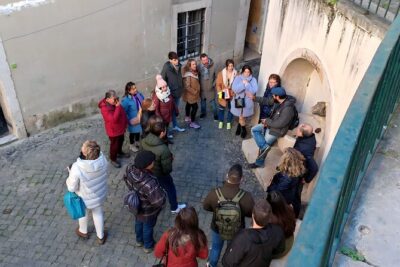
The guide can make or break a walking tour. Bruno is praised for explaining Portuguese history and pointing out small details in Lisbon’s narrow streets. Marina is noted for adjusting the pace for a slower walker and using music to explain Fado. Miguel is described as personable and good at offering city advice, while Ines is praised for staying informative even in rain.
Those examples suggest a friendly, flexible style rather than a rigid lecture. You should still remember that guides vary, and the exact person leading your departure may be different. The group limit of 20 is reasonable, though it is not an intimate private walk. Ask questions early if you want more detail on food, Fado, public transport, or neighborhoods to revisit later.
Some comments connected to a separate full-day Lisbon tour mention vans, lunch, Belém, custard tarts, the Water Museum, and hotel pickup. Those features do not match the stated walking-tour details here. Do not assume they are included in this experience. The only reliable plan for this booking is the downtown and Alfama route beginning at Rua dos Douradores and ending at Rossio.
Is the $3 price good value?
At $3, this is priced more like an orientation walk than a premium guided tour. If the departure runs as described, you receive a live guide, a route through several of Lisbon’s most important historic areas, audio material in several languages, and access to five self-guided walks through the app. That is excellent value for a first morning or afternoon in the city.
The low price also means you should keep expectations sensible. You are not buying a private guide, guaranteed monument entry, meals, transport, or a full-day sightseeing package. The value is in the route and the explanations. Afterward, you can return to the cathedral, Pantheon, Fado Museum, or a viewpoint that caught your attention.
Free cancellation is available if you cancel at least 24 hours before the start time. Cancellations inside 24 hours are not refunded, and the company may cancel if too few people book, offering another date, another experience, or a full refund.
Practical advice for a smoother walk
Wear trainers or other shoes with a firm grip. Lisbon’s stone streets can be hard on your feet, and the hills are more demanding than the short duration suggests. Carry water, use sunscreen in summer, and bring a warm jacket in winter.
The tour runs in English, Spanish, and Portuguese throughout the year. The audio commentary is also listed in French, Italian, Chinese, and German, but ask how that commentary is used on your particular departure. You need your own mobile device to use the app, and there is no hotel pickup or drop-off.
The route is near public transport, which helps you reach the starting point. Since you end at Rossio Square, you can continue into central Lisbon afterward. If you are short on time, take note of the sights you want to revisit instead of trying to enter everything during the walk.
Should you book it?
Book this tour if you want a cheap, guided first look at central Lisbon and Alfama, especially if you value stories, viewpoints, and local details more than long interior visits. It suits first-time visitors with moderate fitness who want help making sense of the city before exploring alone.
I would choose it on a Tuesday or Saturday if Feira da Ladra interests you. I would also confirm the actual duration and inclusions before paying, since the wording mixes a two-hour walking route with claims that belong to a longer full-day outing.
Skip it if you need hotel pickup, guaranteed entry to major monuments, a flat route, or a fully planned day with lunch and transport. For everyone else, the price makes it a sensible way to get your bearings, hear about Lisbon’s past, and find the corners of Alfama you will want to explore at your own pace.
FAQ
How long does the walking tour last?
The tour is listed as approximately two hours. Some descriptions use full-day wording, so confirm the exact duration and route with the operator before booking.
Where does the tour start?
It starts at Rua dos Douradores, 16, in Lisbon. The listed meeting point is Rua dos Douradores, 1100 Lisboa, Portugal.
Where does the tour end?
The walking tour ends at Rossio Square, Praça do Rossio, 1100-200 Lisbon.
What departure times are available?
The stated meeting times are 9:45 in the morning and 1:45 in the afternoon.
Is the Fado Museum included?
The Fado Museum is listed as a stop on the route. Entry tickets are not listed among the inclusions, so confirm whether the visit is exterior-only or includes admission.
Does the tour include food and drinks?
No. Food and drinks are not included unless specifically stated at booking.
Is this tour suitable for people who do not walk quickly?
The tour requires a moderate level of physical fitness and a considerable amount of walking. Guides may adjust the pace, but the route includes Lisbon’s hills and uneven paving.
What happens if bad weather is expected?
The tour normally does not cancel for adverse weather such as heavy rain unless official organizations issue warnings or alerts. Contact the company at least 24 hours before the activity to check whether it will run.
Fresh finds around Lisbon
- Sanctuary of Fátima and Coimbra City Tour★ 4.5 · 51 reviews
- Sintra/Lisbon: Sintra & Quinta da Regaleira Tour with Ticket★ 4.4 · 51 reviews
- Jeronimos Monastery Guided Tour – Small Groups – Tickets Included★ 5.0 · 51 reviews
- Lisbon: Private Christmas Lights Tour by Eco Tuk Tuk★ 4.9 · 51 reviews
- Peniche: Berlengas Island Catamaran Tour – Round Trip★ 4.6 · 51 reviews
- Half day Spa Water Therapy experience at THE SPA at Corinthia Lisbon★ 4.5 · 51 reviews
- Lisbon: Private Tuk-Tuk Tour for 2 hours★ 4.7 · 51 reviews
- Premium Lisbon Airport Transfer to Lisbon★ 5.0 · 51 reviews
Alfama & Old Town Walks, compared.

Private Lisbon Sightseeing Tuk-Tuk Tour: Alfama, Belém & More
Read our review →
Lisbon: Hills, Alfama, and Mouraria Tour by Electric Bike
Read our review →
Best of Lisbon Walking Tour: Rossio, Chiado & Alfama
Read our review →
Lisbon Small-Group Food Tour with 18 Tastings in Alfama District
Read our review →
Lisbon: Baixa District Food Tour with Dinner and Drinks
Read our review →
Lisbon E-Bike Tour Commerce Square, Mouraria and Alfama
Read our review →
Lisbon: Old Town TukTuk Tour and Scenic Viewpoints in Alfama
Read our review →Browse the lists this tour appears in