
Reviewed · WALKING TOURS
Lisbon by Night: Guided Walking Tour – The Unholy Secrets
Lisbon’s handsome squares and tiled streets have a shadowy side. This 105-minute walk follows that darker trail from Rossio through Baixa and onward to Alfama, using theatrical storytelling to explore the Inquisition, the 1506 New Christian massacre, the Aljube prison, earthquakes, and notorious figures such as Marquês de Pombal. I like the way the tour connects famous places with the less comfortable stories beneath them. I also like its clear route, which helps you get your bearings on a first night in Lisbon.
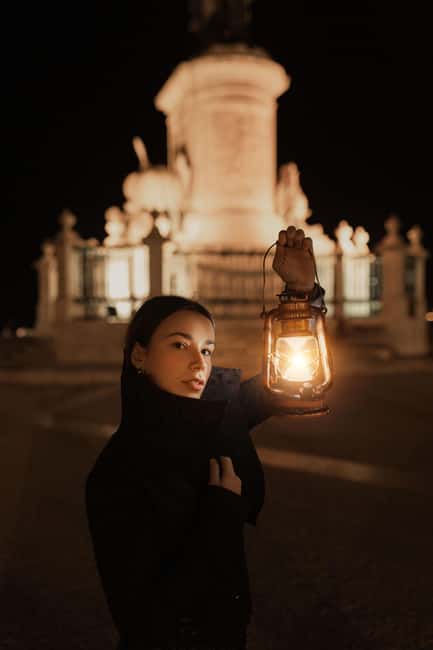
The guide is part historian, part performer, and the lantern makes the meeting point easy to spot beside the old Joalharia Ferreira Marques jewelry shop. The main drawback is the walking: you cover hills and uneven historic streets at a fairly brisk pace, so this is not a good fit if you have mobility limits or dislike walking after dark.
In This Review
- Key points at a glance
- Rossio after dark: where the story begins
- Baixa and the stories beneath the rebuilt city
- The Inquisition and Lisbon’s uneasy past
- Aljube prison and the human scale of history
- Narrow lanes and uphill walking in Alfama
- Why the guide matters more than the subject
- Is $23 a fair price?
- Who should book this walk?
- Booking details that affect your evening
- Should you book Lisbon by Night: The Unholy Secrets?
- FAQ
- How long does Lisbon by Night: The Unholy Secrets last?
- Where does the tour meet?
- Where does the tour finish?
- What language is the tour conducted in?
- What subjects does the tour cover?
- Are monument entrance fees included?
- What should I bring?
- Is the tour suitable for wheelchair users or people with mobility impairments?
Key points at a glance
- A lantern-led start in Rossio: Meet beside Joalharia Ferreira Marques on the south side of Praça Dom Pedro IV.
- Dark stories with real historical weight: The focus includes the Inquisition, the 1506 massacre, the Aljube prison, earthquakes, and political power.
- A theatrical English speaking guide: Guides such as Maria, Amanda, Andreia, Clara, and Ameira have led sessions, with storytelling and character work at the center.
- A useful first-night route: The walk links Rossio, Baixa, and Alfama, helping you recognize places you may revisit during your stay.
- A final stretch toward Alfama: The tour finishes in one of Lisbon’s oldest quarters, with the route passing through narrow lanes and uphill sections.
- Good value for history fans: At $23 per person, you pay for a focused performance and guided context rather than monument admission.
Rossio after dark: where the story begins
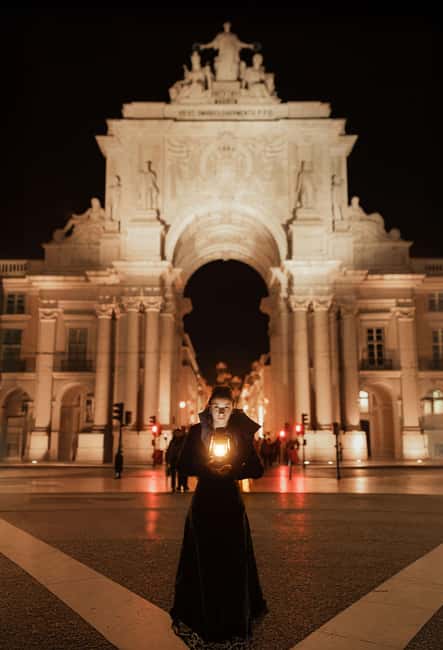
The meeting point is on the south side of Rossio Square, at Praça Dom Pedro IV 7. Look for the guide next to Joalharia Ferreira Marques, an old jewelry store. The lantern is the key marker, which is especially useful in a busy square at night.
Rossio is a fitting place to begin. It is one of central Lisbon’s main public spaces, but the tour uses it as a doorway into stories that are far less polished than the surrounding architecture. You start in the middle of the city, then move away from the broad square toward streets where the past feels closer and less arranged for visitors.
I would book this early in your Lisbon stay if you want to learn the city’s layout while hearing its difficult stories. The route passes through central areas and continues to Alfama, so you can note restaurants, viewpoints, and streets worth returning to later. One person especially appreciated the food tips offered along the way, making the walk useful beyond its historical theme.
The tour is listed as a night experience, but the key appeal is not simply darkness or ghost stories. It presents political violence, religious persecution, imprisonment, disaster, and social conflict. That gives the evening more substance than a standard spooky walk.
More Walking Tours in Lisbon
- Lisbon: History, Stories and Lifestyle Walking Tour
★ 4.8 · 10,902 reviews - Best of Lisbon Small-Group Guided Walking Tour
★ 5.0 · 4,869 reviews - Lisbon: Food and Wine Small Group Walking Tour
★ 4.9 · 4,082 reviews
Baixa and the stories beneath the rebuilt city
From Rossio, the group walks through Baixa de Lisboa. This part of the route matters because modern central Lisbon reflects a major break in the city’s past. The tour brings in the tragic earthquakes that reshaped Lisbon and the rise of Marquês de Pombal, a powerful figure linked with the city’s reconstruction and government.
You should expect the guide to use the streets as a backdrop rather than take you inside monuments. Entrance fees are not included, and the experience is built around narration at public places. That keeps the price at $23, but it also means you are buying an outdoor storytelling performance, not a series of museum visits.
The Baixa section is likely to appeal to you if you enjoy seeing how political decisions affect ordinary streets. Lisbon’s grander central spaces can look orderly today. The stories add a harder edge, showing how disaster and power altered the city and its people.
The narration is designed to be vivid. Guides may adopt characters, shift tone, or act out moments from the past. Maria has been praised for combining dramatic skill with historical explanation, while Amanda has been described as an especially strong storyteller who answered questions and helped with directions after the walk. Andreia has also led sessions with a balance of historical events and their unsettling aftermath.
That performance style is important to the value of the tour. A guide who simply lists dates would make this subject heavy going. Here, you are asked to picture people caught in events rather than memorize a string of facts.
The Inquisition and Lisbon’s uneasy past
The Portuguese Inquisition is one of the central themes. The tour frames it as part of Lisbon’s social and political past, with attention to terror, accusation, and the human cost of religious control. This is not a light subject, and the tone can be intense.
The tour also addresses the 1506 New Christian massacre, one of the darkest episodes connected with Lisbon. The subject gives the walk a serious purpose. You are not just hearing legends attached to old lanes. You are being asked to consider how fear, prejudice, and public violence shaped the lives of people in the city.
I like this approach because it puts famous Lisbon sights into a wider setting. A square or alley can look picturesque, but its past may include conflict that is easy to miss on a daytime sightseeing route. The guide’s job is to make that connection without turning the evening into a lecture.
The experience does not lean only on ghosts. The focus includes local legends and lost souls, but the historical material carries much of the walk. That balance suits you if you want a creepy atmosphere with evidence based stories behind it. If you are expecting a nonstop parade of supernatural tales, you may find the historical focus more serious than expected.
The English language presentation is live, so you can ask questions as you go. The available guide names include Maria, Amanda, Andreia, Clara, Ameira, and others. The individual style may vary, but the experience depends heavily on the guide’s ability to act, explain, and keep the group moving.
Aljube prison and the human scale of history
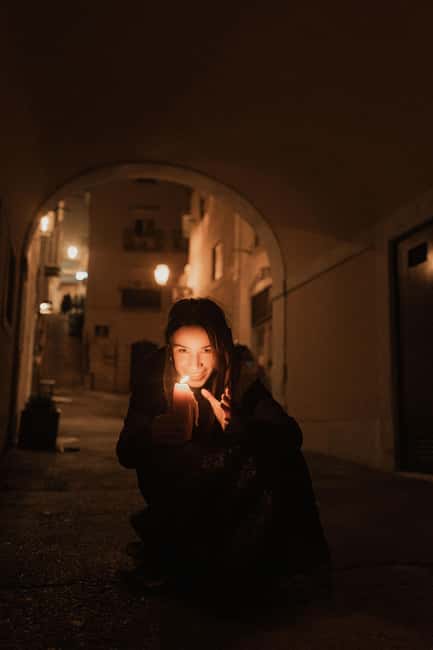
The Aljube prison stories bring the tour closer to individual suffering. Instead of treating Lisbon’s past as a series of grand events, this part focuses attention on confinement and the people caught inside a system of punishment.
That shift is useful. The earthquake and the rise of Pombal deal with large forces. Prison stories remind you that history is also made up of fear, silence, waiting, and personal loss. The theatrical style can make these accounts memorable, but you should be prepared for serious subject matter rather than harmless entertainment.
This is also where a guide’s tone matters most. Amanda, Maria, and Andreia have each been singled out for making difficult material accessible and engaging. A strong guide can explain the context, then let the story carry its emotional weight without overdoing the drama.
The tour does not include entry into the prison or other monuments. You hear about places and events from the streets. If you want interior access, archival displays, or a detailed academic treatment of the Inquisition, you will need to add a museum or specialist visit separately.
More walking routes in Lisbon:
- Best of Lisbon Walking Tour: Rossio, Chiado & Alfama
★ 4.9 · 2,700 reviews - Age of Discoveries Walking Tour in Belém
★ 5.0 · 1,513 reviews - Sintra & Cascais Day Tour with Pena Palace Entry and Gardens Walk
★ 5.0 · 962 reviews - Lisbon Roots – Small group Food & Culture Walking Tour w/tastings
★ 5.0 · 910 reviews
Narrow lanes and uphill walking in Alfama
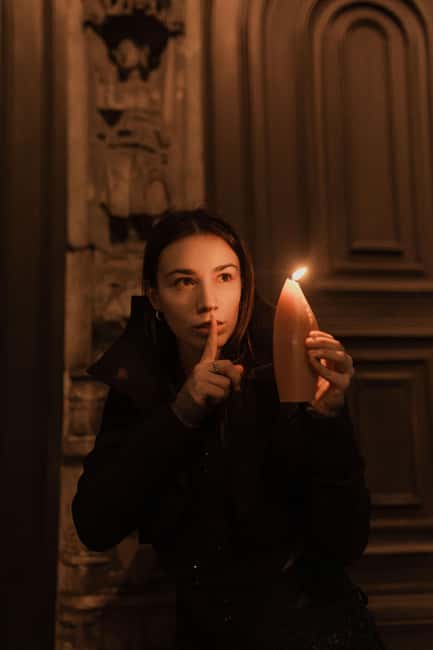
The route finishes in Alfama, Lisbon’s old hillside quarter. Getting there means narrower lanes and uphill walking. One account described the walk as moderate with one good hill, while another specifically warned that the group moved quickly between points and climbed slopes.
Take the practical warning seriously. Wear comfortable shoes, as requested, and avoid treating this as a gentle stroll. Historic-center pavement can be uneven, and night conditions make it harder to watch every step while listening. The activity is not suitable for wheelchair users or people with mobility impairments.
Alfama gives the final part a fitting setting. Its winding streets and older fabric suit tales of medieval life, forgotten plots, and souls said to linger in the city. The route’s atmosphere changes as you leave the broad central streets and enter tighter passages.
One particularly appealing detail is the possibility of ending near a viewpoint over the Tagus River. The exact stopping place may depend on the route and guide, so I would not book this solely for a promised panorama. Still, finishing in or around Alfama gives the walk a satisfying sense of arrival and leaves you well placed to continue exploring the quarter.
You may also receive practical local suggestions during the route. Food recommendations and directions back toward the meeting area have been part of the experience for some groups. These small details can be handy on a first evening, when you are still learning how the central districts fit together.
Why the guide matters more than the subject
The tour’s advertised material is strong, but the guide determines how much you get from it. The best sessions require someone who can keep the facts clear while using performance in a controlled way.
Maria is associated with animated character work and a lively response to bad weather. Amanda has been praised for historical explanation, questions, and storytelling. Andreia has been noted for a personable manner and a good balance between events and their eerie aftermath. Clara and Ameira have also led sessions described as engaging and dramatic.
These names are useful when you are comparing availability, but you should not assume you can request a particular person unless that option is offered when you book. The guide roster can change. What you can expect is an English speaking storyteller and a theatrical presentation rather than a standard audio guide.
Rain does not necessarily ruin the experience, but it does make the walking more demanding. Several sessions took place in wet or windy weather and still worked because the guide kept the group involved. Even so, take a light rain layer and protect your shoes if the forecast looks poor. Water bottles are not included, so bring your own.
Is $23 a fair price?
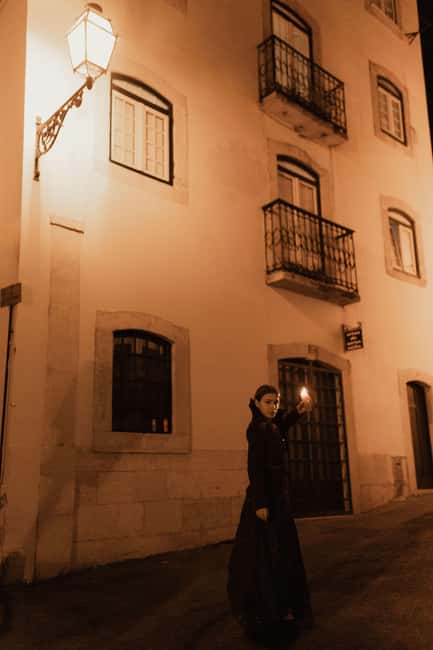
At $23 per person, this is priced above a basic free walking tour tip, but the comparison is not quite like for like. You are paying for 105 minutes of a themed route, a live guide, research based storytelling, and theatrical delivery.
The value is strongest if you enjoy history presented as a performance. A good guide can help you remember the Inquisition, the 1506 massacre, the prison stories, and the earthquake period more easily than a list of dates on a page. The tour also saves you the work of linking Rossio, Baixa, and Alfama yourself.
The price is less attractive if you mainly want monument access or a broad introduction to Lisbon’s art and architecture. There are no included admissions, food, or drinks. The subject also has a fairly narrow focus, so you will not get a complete survey of Portuguese culture.
I would call it fair value for a first or second night, especially if your group likes historical storytelling. It gives you a route, a mood, and a set of subjects that can shape what you notice for the rest of your visit. One person felt it was slightly expensive for a walking tour, but also found that it delivered more practical value than simply reading a book.
Who should book this walk?
I would recommend it to you if you like:
- Serious history with an eerie edge
- Guides who act out characters and scenes
- Small-group walking experiences, when the departure happens to be small
- Getting your bearings in central Lisbon on your first evening
- Stories about religion, politics, disaster, imprisonment, and social conflict
- Exploring Alfama after seeing the city center
Families with young children should consider the subject and nighttime timing carefully. The material includes terror, massacres, imprisonment, and lost souls. It may suit older children and teenagers who enjoy dark history, but the provided information does not specify a minimum age.
You should skip it if you need step-free access, use a wheelchair, or find hills and uneven streets difficult. It is also not ideal if you want a relaxed pace, indoor comfort, or a tour centered on monuments and architecture.
Booking details that affect your evening
The activity lasts 105 minutes, or 1 hour 45 minutes. It is described in some material as an immersive two-hour walk, but the stated duration is 105 minutes, so allow roughly two hours once you include gathering the group and finishing in Alfama.
Meet at Praça Dom Pedro IV 7, beside Joalharia Ferreira Marques, on Rossio’s south side. The guide carries a lantern. The tour is conducted in English, and the listed inclusions are the walking tour, the live storyteller, and theatrical narration.
You do not pay for monument admission, and water is not supplied. Bring comfortable shoes and your own bottle. The booking terms allow free cancellation up to 24 hours before departure, and you can reserve now and pay later, which helps if your Lisbon schedule is still changing.
Should you book Lisbon by Night: The Unholy Secrets?
Book it if you want Lisbon presented through difficult, dramatic stories rather than a standard list of sights. The strongest reason to go is the combination of real historical events and theatrical delivery, particularly the material on the Inquisition, the 1506 massacre, the Aljube prison, and the city’s earthquakes.
Choose a dry evening if possible, wear solid shoes, and book it near the start of your stay so the route can help you plan later walks. At $23, it is a sensible buy for history fans and curious first-time visitors who enjoy a little darkness with their sightseeing.
Skip it if you want indoor sites, a slow stroll, or a full overview of Lisbon’s monuments. For the right audience, though, this is a memorable way to see the old center, hear its uncomfortable truths, and finish among Alfama’s winding streets.
FAQ
How long does Lisbon by Night: The Unholy Secrets last?
The tour lasts 105 minutes, or 1 hour and 45 minutes.
Where does the tour meet?
Meet at Praça Dom Pedro IV 7, next to Joalharia Ferreira Marques on the south side of Rossio Square. The guide will be holding a lantern.
Where does the tour finish?
The walk finishes in Alfama.
What language is the tour conducted in?
The live tour guide speaks English.
What subjects does the tour cover?
The tour covers Lisbon’s darker past, including the Portuguese Inquisition, the 1506 New Christian massacre, the Aljube prison, earthquakes, Marquês de Pombal, forgotten legends, and secret plots.
Are monument entrance fees included?
No. Entrance to monuments at the stops is not included.
What should I bring?
Bring comfortable shoes. Water bottles are not included, so you may want to bring your own water.
Is the tour suitable for wheelchair users or people with mobility impairments?
No. The activity is not suitable for wheelchair users or people with mobility impairments. The route includes walking through the historic center and uphill sections.
More Evening Experiences in Lisbon
- Lisbon: Sunset Boat Party Cruise with DJ and Open Bar
★ 4.5 · 10,378 reviews - Lisbon: Daytime/Sunset/Night City Sailboat Tour with Drink
★ 4.9 · 3,114 reviews - Lisbon: Sunset Cruise with Welcome Drink and Snacks
★ 4.4 · 3,021 reviews - Lisbon: Sunset Boat Tour with Music and Drinks
★ 4.6 · 2,973 reviews
Fresh finds around Lisbon
- Sanctuary of Fátima and Coimbra City Tour★ 4.5 · 51 reviews
- Sintra/Lisbon: Sintra & Quinta da Regaleira Tour with Ticket★ 4.4 · 51 reviews
- Jeronimos Monastery Guided Tour – Small Groups – Tickets Included★ 5.0 · 51 reviews
- Peniche: Berlengas Island Catamaran Tour – Round Trip★ 4.6 · 51 reviews
- Half day Spa Water Therapy experience at THE SPA at Corinthia Lisbon★ 4.5 · 51 reviews
- Lisbon: Private Christmas Lights Tour by Eco Tuk Tuk★ 4.9 · 51 reviews
- Lisbon: Private Tuk-Tuk Tour for 2 hours★ 4.7 · 51 reviews
- Premium Lisbon Airport Transfer to Lisbon★ 5.0 · 51 reviews
Walking Tours, compared.
Lisbon: History, Stories and Lifestyle Walking Tour
Read our review →
Best of Lisbon Small-Group Guided Walking Tour
Read our review →
Lisbon: Food and Wine Small Group Walking Tour
Read our review →
Best of Lisbon Walking Tour: Rossio, Chiado & Alfama
Read our review →
Sintra & Cascais Day Tour with Pena Palace Entry and Gardens Walk
Read our review →
Lisbon Roots – Small group Food & Culture Walking Tour w/tastings
Read our review →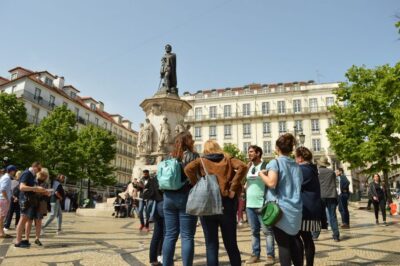
Lisbon: Starter Walking Tour to the highlights in German
Read our review →Browse the lists this tour appears in