

Reviewed · ALFAMA & OLD TOWN WALKS
Lisbon: Alfama and São Jorge Castle Quarters Walking Tour
Lisbon’s oldest quarter is best understood on foot, and this 150-minute Alfama walk takes you through the steep lanes, castle walls, courtyards, and small squares where the city’s story began. I like the route’s mix of major sights and easy-to-miss details, especially the Roman salting tanks at the Cetária and the fado traditions around Largo do Chafariz de Dentro. I also like that entry to Lisbon Cathedral is included.
The main catch is clear: São Jorge Castle is not included inside the tour. You’ll follow its walls and explore the surrounding quarter, but you must pay separately if you want to visit the castle itself. The hills, steps, and uneven lanes also make this a poor choice for anyone with limited mobility.
In This Review
- Key points to know before booking
- Starting at the Casa dos Bicos
- From Roman Olisipo to Moorish Al-Hamma
- The maze below São Jorge Castle
- Jewish Quarter, fado, and daily Alfama
- Lisbon Cathedral and its mixed architecture
- The Portas do Sol pause
- What the guiding is really worth
- Timing, meeting point, and practical planning
- Who should book this Alfama walk
- Should you book it?
- FAQ
- Where does the Alfama walking tour meet?
- How long does the walking tour last?
- Is São Jorge Castle entrance included?
- Is Lisbon Cathedral included?
- What languages are available?
- Is the tour suitable for people with mobility impairments?
- Can I cancel or pay later?
Key points to know before booking
- Casa dos Bicos meeting point: Find the guide at the spike-covered building in Campo das Cebolas, near Terreiro do Paço Metro.
- Roman Olisipo: See the remains of old salting tanks and hear how Lisbon’s thermal waters shaped the Alfama name.
- Lisbon Cathedral included: The 12th-century cathedral gives the tour one important interior visit.
- Portas do Sol views: The belvedere offers a fine pause above Alfama’s tiled roofs and the river.
- Castle walls, not castle rooms: The route explores the São Jorge Castle quarter but does not include castle admission.
- Small-group feel may be possible: Some departures have been very small, even a family group of three, though group size is not guaranteed.
Starting at the Casa dos Bicos
Your meeting point is Campo das Cebolas, beside Casa dos Bicos, also called the House of the Spikes. It is hard to miss. The building’s diamond-shaped stone points give it a curious, almost armored look, and it is a useful landmark near the river and Terreiro do Paço Metro station.
Casa dos Bicos was built around 1523 and survived the 1755 Lisbon Earthquake, one of the few older buildings in this part of town to do so. That detail gives the meeting point real meaning. You are not simply gathering outside a convenient address. You are beginning beside a surviving piece of Lisbon’s pre-earthquake past.
Look for a guide carrying a black bag marked with the Lisboa Autêntica logo. I would arrive a little early, especially if you are coming by Metro, since the riverfront streets around Campo das Cebolas can take a few minutes to orient yourself.
The tour is offered in English, Portuguese, Spanish, German, and French. Guides have included Ricardo, Agatha, Helena, Elena, Lucy, Fatima, and Beatrice on different departures. The strongest part of this experience is the guide-led storytelling, so your exact guide will shape the tone, pace, and amount of detail.
More Walking Tours in Lisbon
- Lisbon: History, Stories and Lifestyle Walking Tour
★ 4.8 · 10,902 reviews - Best of Lisbon Small-Group Guided Walking Tour
★ 5.0 · 4,869 reviews - Lisbon: Food and Wine Small Group Walking Tour
★ 4.9 · 4,082 reviews
From Roman Olisipo to Moorish Al-Hamma
The first part of the route gives you a useful timeline for Lisbon. Before Alfama became a maze of homes, laundry lines, small restaurants, and fado houses, the Romans knew the city as Olisipo.
At the Cetária, you can see traces of Roman salting tanks. These installations point to a practical side of ancient city life. Fish preservation was not a decorative craft. It connected the settlement to food, trade, and the nearby water.
The guide also explains the thermal waters of Alfama. The Romans found these springs, and later Muslim residents gave the area the name Al-Hamma, linked to warm or hot waters. This is a good example of how the tour connects a name on a modern map to older layers of Lisbon.
I appreciate this kind of context because it stops Alfama from becoming just a pretty collection of lanes. You begin to see why people settled here, why the streets developed as they did, and why the quarter carries Roman, Muslim, Jewish, and Portuguese traces at once.
The route does not attempt to cover all of Lisbon’s past. Instead, it gives you a basic framework that helps with the rest of your stay. Several past guides have also offered advice on what to visit later, which makes this a useful first-day activity.
The maze below São Jorge Castle

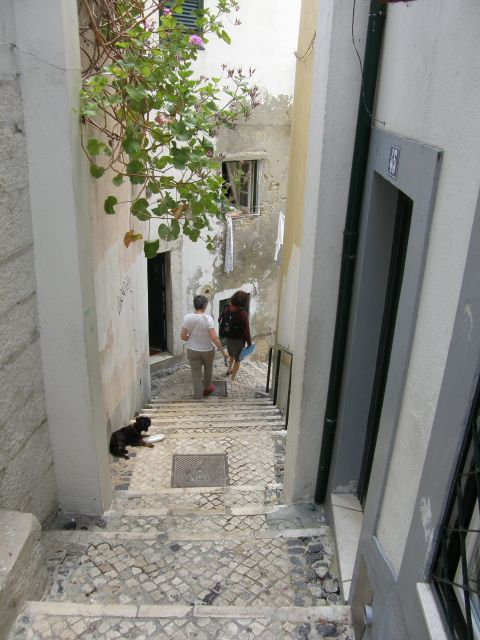
The walk then turns into the part most people picture when they think of Alfama: narrow alleys, stairways, interior patios, and small squares that appear around corners.
This is not a neighborhood built for fast sightseeing. The route follows the shape of the old city, with changes in level and passages that can feel confusing when you explore alone. A guide helps you understand that the maze is part of the story, not simply a problem to overcome.
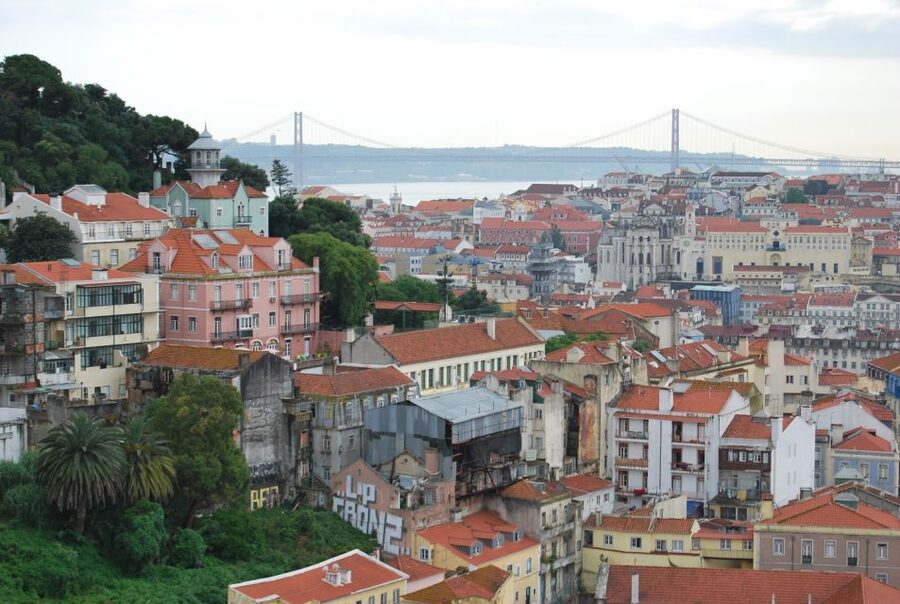
You will follow the path of the old city walls and explore the quarter around São Jorge Castle. The castle gives this part of Lisbon its high position and historic weight, but the experience here is about the streets around it as much as the fortress itself.
Be precise when booking: the castle entrance is not included. The walk reaches the castle walls and explains the quarter, but it does not take you inside São Jorge Castle. One past participant considered this the only real disappointment, since the tour title can make the castle sound like a full stop on the itinerary.
That does not make the walk poor value, but it changes how you should plan your day. If you want castle courtyards, ramparts, and interior exhibits, set aside extra time and budget for a separate visit.
Jewish Quarter, fado, and daily Alfama
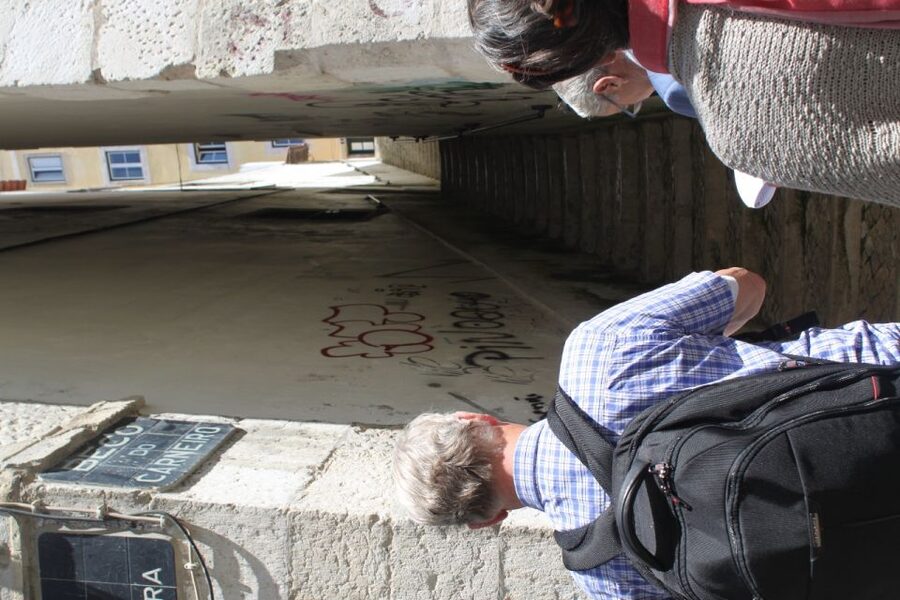
The route continues through what used to be Lisbon’s Jewish Quarter. Here, the guide points out hidden squares, interior spaces, and stairways that are easy to pass without noticing.
The value is in the connections. You are not only hearing that different communities lived in this area. You are seeing how a dense neighborhood could hold several traditions within a small patch of hillside.
Fado receives its own place in the story. The guide explains the birth and customs of this Portuguese music, rather than treating it as background music for dinner. The stop around Largo do Chafariz de Dentro introduces one of Alfama’s old customs and helps place fado within the life of the neighborhood.
You should not expect a fado performance as part of the tour. The advertised experience is a guided walk and explanation of fado’s origins and customs. If you want a full evening of music, ask your guide for suggestions for the rest of your stay.
This is also where the tour feels most connected to present-day Lisbon. Alfama is not only an archaeological zone. It is a residential quarter, and the route is designed to show daily life alongside old walls and historic buildings.
More old-town wanders:
- Alfama Tour in Lisbon Old Town
★ 5.0 · 4,936 reviews - Private Lisbon Sightseeing Tuk-Tuk Tour: Alfama, Belém & More
★ 5.0 · 4,277 reviews - Lisbon: Hills, Alfama, and Mouraria Tour by Electric Bike
★ 4.8 · 3,438 reviews - Best of Lisbon Walking Tour: Rossio, Chiado & Alfama
★ 4.9 · 2,700 reviews
Lisbon Cathedral and its mixed architecture

The visit to Lisbon Cathedral is one of the clearest practical advantages of this tour because entrance and a guided visit are included.
The cathedral dates from the 12th century, but it has been changed over time. Its appearance brings together several architectural styles, reflecting repairs, additions, and the long life of the building.
A guide makes this stop more useful than a quick photograph outside. You can ask questions, learn what to look for, and understand why the cathedral does not present one perfectly uniform style.
The cathedral also gives your legs a brief change from the open-air route. Still, this is a walking tour, not a seated history talk. Wear comfortable clothes and sensible footwear. The activity is specifically not suitable for people with mobility impairments, and that warning matters in Alfama, where steps and uneven surfaces are central to the experience.
The Portas do Sol pause
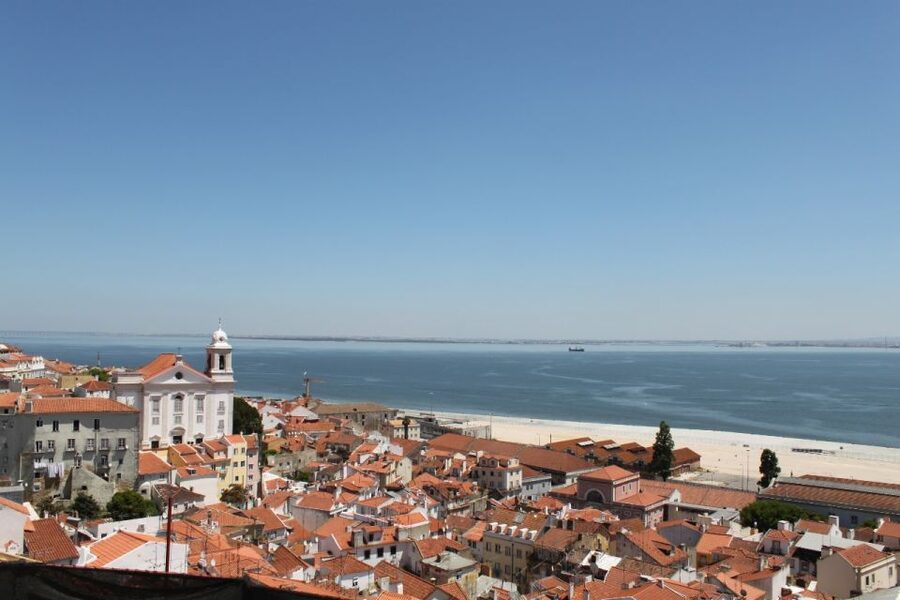
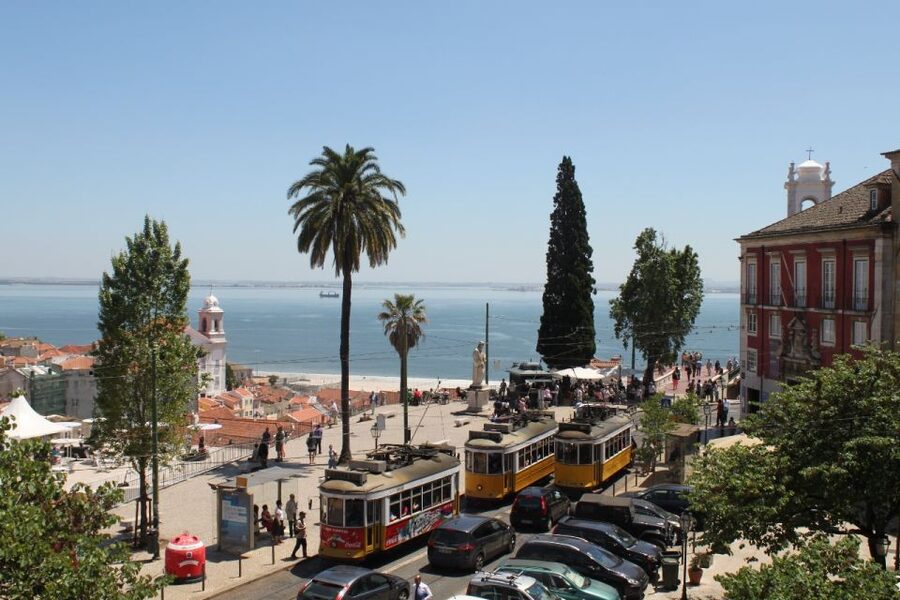
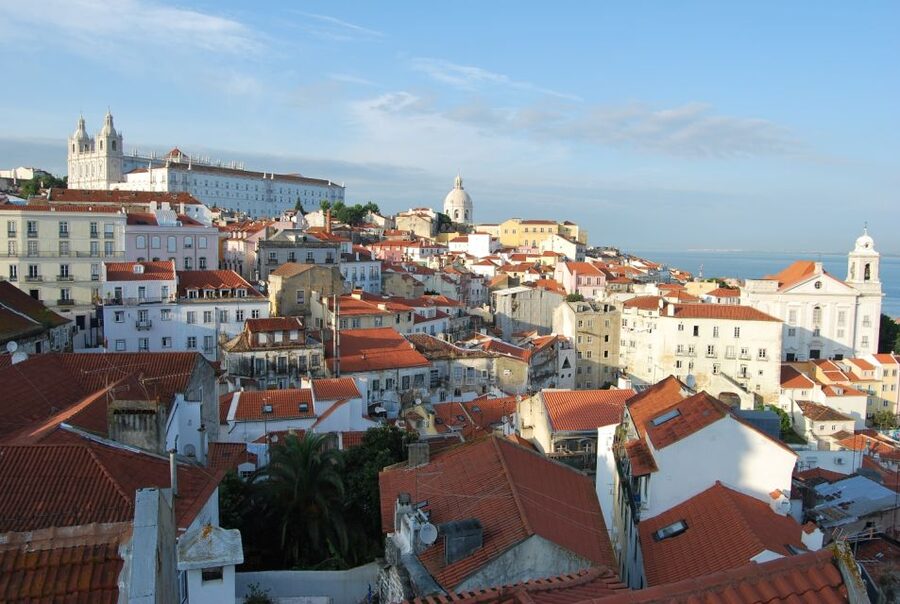
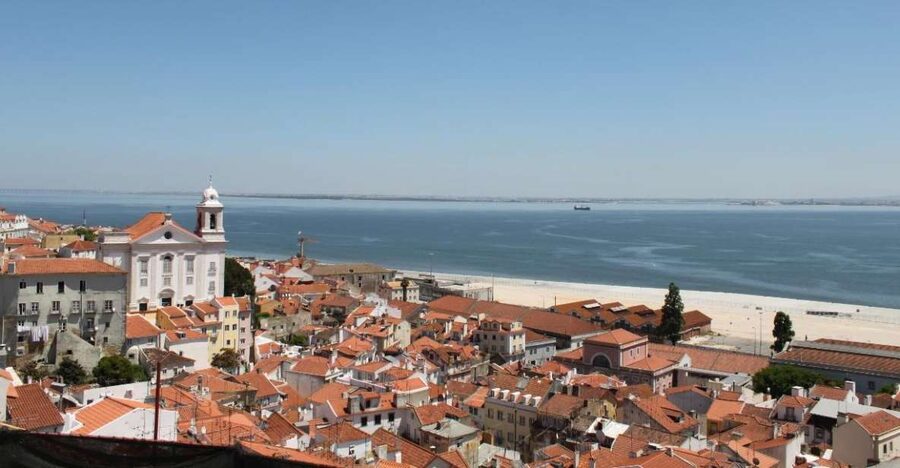
Portas do Sol is the route’s big view stop. From this belvedere, you get a broad look across Alfama, with the quarter’s roofs and the river opening out below.
This is a good moment to understand Lisbon’s hills. After walking through tight lanes, the sudden wider view shows how the neighborhood rises toward São Jorge Castle and drops toward the river.
The stop is useful for photographs, but it also gives you a sense of direction. One reason I would take this tour early in a Lisbon visit is that it helps you get your bearings. Later, streets and sights that seemed scattered begin to fit together.
Your guide can also suggest places to return to after the walk. That advice may be as useful as the formal route, particularly if you want to explore Alfama at a slower pace, visit the castle separately, or find a fado venue.
What the guiding is really worth
At $23 per person, this tour is priced as an affordable introduction rather than a full-day historical program. The value comes from the live guide, the structured route, the cathedral entry, and the explanations at places you could easily overlook.
A guide can point out the Roman salting tanks, explain the Al-Hamma connection, identify the old Jewish Quarter, and place fado customs in context. Without that help, you would still see the lanes and views, but much of the meaning would remain hidden.
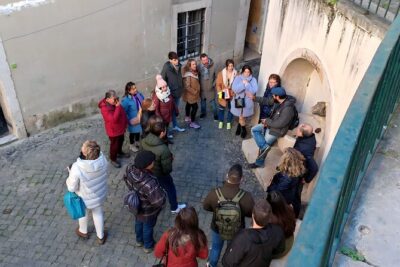
The strongest feedback has focused on the guides’ clear storytelling, friendliness, and flexibility. Ricardo, described as a history teacher, made the past accessible for one family that included a 15-year-old. Agatha was praised for her city knowledge and warm manner, while Helena adjusted the route slightly to suit the group.
That flexibility is worth noting, but do not assume every departure will become a private tour. One family had only three people, and other small-group experiences have also been reported. The activity information does not promise a fixed group size, so book it for the route and guide service, not on the hope of having a private guide.
The 4.8 rating from 136 reviews supports the idea that the guiding is consistently strong. Still, the castle limitation and physical demands remain important parts of the decision.
Timing, meeting point, and practical planning
The tour lasts 150 minutes, or two and a half hours. That is long enough to cover the main route without taking your entire day, though the hills can make it feel more demanding than the clock suggests.
There are different starting times, so check availability for your chosen date. A morning departure works well if you want the rest of the day for the castle, Baixa, or another Lisbon sight. It also makes sense as an early visit because the guide can help you choose what to see next.
You must arrange your own way to Campo das Cebolas. Transfers are not included. Terreiro do Paço is the nearest Metro station, and Casa dos Bicos is the visual landmark to use once you arrive.
Bring comfortable clothes, and plan for walking rather than standing in one place. The route includes alleys, stairways, slopes, and old streets. The activity includes personal protection equipment such as a mask and disinfectant gel, according to the tour details.
Cancellation is flexible: you can cancel up to 24 hours before the start for a full refund. You can also reserve now and pay later, which helps if your Lisbon plans are still shifting.
Who should book this Alfama walk
I would choose this tour if you want a clear introduction to old Lisbon without paying for a long, formal sightseeing program. It suits first-time visitors, families who enjoy stories, and anyone who wants to understand Alfama before exploring it alone.
It is especially useful for people who like culture explained through places. Roman industry, Muslim naming, the former Jewish Quarter, fado, the cathedral, and castle-era Lisbon all appear in one compact route.
Families may find the guide-led format easier than trying to hold a teenager’s attention through a self-guided walk. One 15-year-old particularly enjoyed the experience, and guides have made an effort to engage children.
I would hesitate if your priority is entering São Jorge Castle. You will need a separate ticket and more time. I would also avoid it if steep lanes, steps, or uneven paving are difficult for you.
Should you book it?
Book this tour if you want to get your bearings in Alfama and learn what the streets, walls, cathedral, and fado customs mean. At $23, the included cathedral visit and live multilingual guide make it a sensible value for a two-and-a-half-hour introduction.
Do not book it expecting a full São Jorge Castle visit. Treat the castle as a separate stop, and this walk becomes easier to judge on its real strengths: an atmospheric route, useful historical context, a fine Portas do Sol view, and guides who have generally brought warmth and strong local knowledge to the walk.
FAQ
Where does the Alfama walking tour meet?
Meet at Campo das Cebolas, beside Casa dos Bicos, the building covered in stone spikes. The nearest Metro station is Terreiro do Paço. Look for a guide carrying a black bag with the Lisboa Autêntica logo.
How long does the walking tour last?
The tour lasts 150 minutes, or two and a half hours. Starting times vary, so check availability for your preferred date.
Is São Jorge Castle entrance included?
No. The tour explores the streets and walls around São Jorge Castle, but castle entrance is not included.
Is Lisbon Cathedral included?
Yes. The price includes entrance to Lisbon Cathedral and a guided visit inside. The cathedral was built in the 12th century and has a mixture of architectural styles.
What languages are available?
The live guide service is available in English, Portuguese, Spanish, German, and French.
Is the tour suitable for people with mobility impairments?
No. The activity is not suitable for people with mobility impairments. Comfortable clothes are recommended because the route includes walking through Alfama’s lanes and stairways.
Can I cancel or pay later?
Yes. You can cancel up to 24 hours in advance for a full refund. You can also reserve now and pay later, so no payment is required today when booking under that option.
Fresh finds around Lisbon
- Sanctuary of Fátima and Coimbra City Tour★ 4.5 · 51 reviews
- Sintra/Lisbon: Sintra & Quinta da Regaleira Tour with Ticket★ 4.4 · 51 reviews
- Jeronimos Monastery Guided Tour – Small Groups – Tickets Included★ 5.0 · 51 reviews
- Lisbon: Private Christmas Lights Tour by Eco Tuk Tuk★ 4.9 · 51 reviews
- Peniche: Berlengas Island Catamaran Tour – Round Trip★ 4.6 · 51 reviews
- Half day Spa Water Therapy experience at THE SPA at Corinthia Lisbon★ 4.5 · 51 reviews
- Lisbon: Private Tuk-Tuk Tour for 2 hours★ 4.7 · 51 reviews
- Premium Lisbon Airport Transfer to Lisbon★ 5.0 · 51 reviews
Alfama & Old Town Walks, compared.

Private Lisbon Sightseeing Tuk-Tuk Tour: Alfama, Belém & More
Read our review →
Lisbon: Hills, Alfama, and Mouraria Tour by Electric Bike
Read our review →
Best of Lisbon Walking Tour: Rossio, Chiado & Alfama
Read our review →
Lisbon Small-Group Food Tour with 18 Tastings in Alfama District
Read our review →
Lisbon: Baixa District Food Tour with Dinner and Drinks
Read our review →
Lisbon E-Bike Tour Commerce Square, Mouraria and Alfama
Read our review →
Lisbon: Old Town TukTuk Tour and Scenic Viewpoints in Alfama
Read our review →Browse the lists this tour appears in