
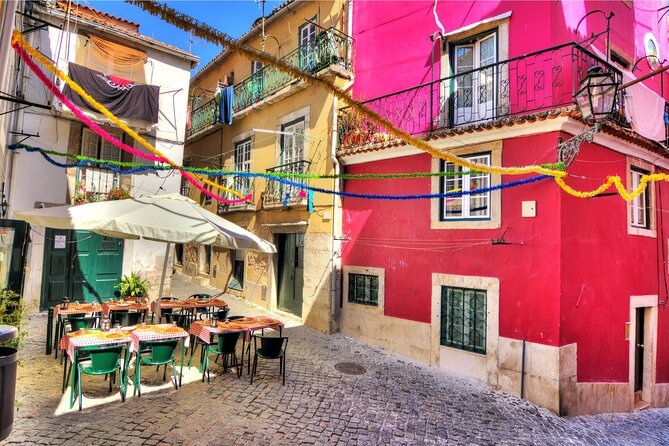
Reviewed · WALKING TOURS
Highlights and Secrets of Lisbon Private Walking Tour
Lisbon’s best introduction may be on foot, and this private tour packs a lot into three hours. You move from grand squares and churches to small food stops, old lanes, a hilltop viewpoint, and the sounds of Fado country. The route connects famous sights with local details that are easy to miss on your own.
I like the private format, since your group can ask questions and set the pace within the planned route. I also like the mix of pastéis de nata, coffee, and ginjinha, which gives the walk a taste of daily Lisbon rather than turning it into a parade of monuments. The main caution is the pace: this is a busy route with hills and plenty of standing, and the Santa Justa lift and Fado Museum may require extra payment.
In This Review
- Key points to know
- Starting at Praça Luís de Camões
- Pastel de nata and coffee on Rua do Loreto
- Gold and wood inside Saint Roch Church
- Trindade’s old brewery and tiled palace
- Carmo Convent and the earthquake that changed Lisbon
- Santa Justa and the Baixa view
- Rua Garrett, Rua Augusta, and rebuilt Baixa
- Praça do Comércio and the river gateway
- A surviving church and the Casa dos Bicos
- Lisbon Cathedral and the climb toward Alfama
- Santo Estevão viewpoint and a sip of ginjinha
- Ending at the Fado Museum
- What the $79.52 price means
- Who should book this walking tour?
- Should you book Highlights and Secrets of Lisbon?
- FAQ
- How long is the Highlights and Secrets of Lisbon Private Walking Tour?
- Is the tour private?
- Where does the tour start?
- Where does the tour end?
- Is admission to the Carmo Archaeological Museum included?
- Are the Santa Justa lift and Fado Museum included?
- Can I cancel for a full refund?
Key points to know
- A private three-hour route: Only your group joins the guide, making it easier to ask about food, neighborhoods, and local life.
- A generous central-Lisbon itinerary: The walk links Chiado, Baixa, Praça do Comércio, the cathedral, and Alfama.
- Three classic tastes included in the experience: You try a pastel de nata, local coffee, and ginjinha liqueur.
- Carmo Convent gets proper attention: A skip-the-line ticket is included for the Gothic ruins and archaeological museum.
- Rodrigo receives especially strong praise: He is described as fun, attentive, and excellent at answering questions.
- One service warning: A past booking involved a long wait and disagreement over the meeting point, so confirm the exact start location carefully.
Starting at Praça Luís de Camões
The tour begins at Praça Luís de Camões, a useful meeting point between Chiado and Bairro Alto. The square honors Luís de Camões, Portugal’s great poet and a central figure in Portuguese literature. It is also a practical place to begin because the route quickly leads into Lisbon’s historic core.
Give yourself time to reach the square. The tour offers a range of departure times, with booking times listed within half-hour intervals, but a private guide still needs a clear meeting. One unhappy booking involved a wait of more than 45 minutes and a dispute over where the guide was standing. The provider said the guide had tried to call and had sent proof of his location. The sensible move is to check your phone, know the exact meeting point, and contact the provider promptly if the guide is not visible.
From here, you head toward Rua do Loreto for a small but important Lisbon ritual: pastry and coffee.
More Walking Tours in Lisbon
- Lisbon: History, Stories and Lifestyle Walking Tour
★ 4.8 · 10,902 reviews - Best of Lisbon Small-Group Guided Walking Tour
★ 5.0 · 4,869 reviews - Lisbon: Food and Wine Small Group Walking Tour
★ 4.9 · 4,082 reviews
Pastel de nata and coffee on Rua do Loreto
At a traditional café on Rua do Loreto, you try a pastel de nata, Lisbon’s famous custard tart, with local coffee. This stop lasts about 20 minutes and is included as part of the walking experience.
The value is not the price of the pastry. It is the context. A guide can explain how this simple combination fits into Lisbon’s café culture, while you get an early break before the churches and uphill streets. If you have never tried a warm custard tart in Portugal, this is a useful first taste.
Do not expect a full breakfast or a long food tour. The information describes one pastry and coffee stop, not a spread of multiple dishes. If you need a larger meal, eat before the tour or plan something afterward.
Gold and wood inside Saint Roch Church
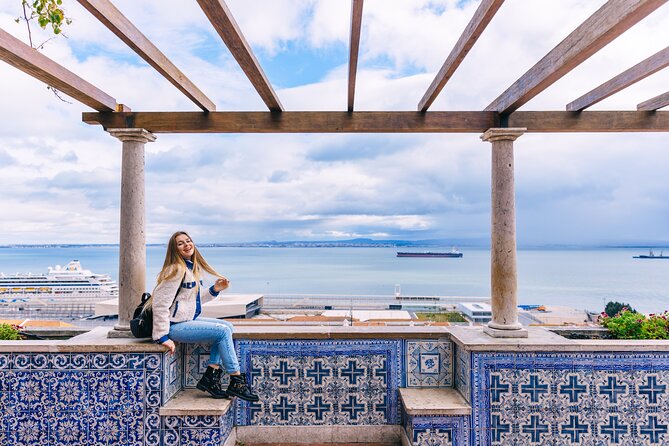
The Church of Saint Roch is a short stop, about 10 minutes, but it offers a sharp contrast with the open city streets. The church is linked to the Brotherhood of Misericordia and contains extensive wood and gold decoration.
Your guide can help you read the church as more than a pretty interior. The decoration reflects the wealth and influence of a powerful religious brotherhood. Look closely at the workmanship, then keep moving. Ten minutes is enough for an introduction, but not enough for a slow study of every chapel and artwork.
This is one reason a private guide helps. You can ask about the details that catch your eye instead of following a fixed speech meant for a large crowd.
Trindade’s old brewery and tiled palace
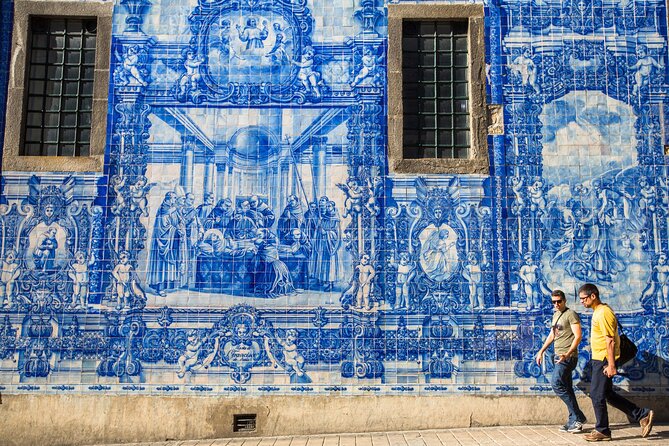
At Trindade, you see Lisbon’s oldest brewery and the palace that housed it. The building is known for azulejos, the painted tiles that appear throughout Portugal, including examples with Masonic symbolism.
This stop brings together food, architecture, and Lisbon’s drinking culture. It also breaks up the church visits. You are not simply moving from one religious building to another, but seeing how old buildings found new uses and how tilework carries visual clues.
The stop is scheduled for around 10 minutes, so treat it as an exterior and orientation visit unless your guide says otherwise. The tour does not promise a brewery tasting here. Your guaranteed food and drink experiences are the custard tart, coffee, and later ginjinha.
More walking routes in Lisbon:
- Best of Lisbon Walking Tour: Rossio, Chiado & Alfama
★ 4.9 · 2,700 reviews - Age of Discoveries Walking Tour in Belém
★ 5.0 · 1,513 reviews - Sintra & Cascais Day Tour with Pena Palace Entry and Gardens Walk
★ 5.0 · 962 reviews - Lisbon Roots – Small group Food & Culture Walking Tour w/tastings
★ 5.0 · 910 reviews
Carmo Convent and the earthquake that changed Lisbon
The Carmo Archaeological Museum is one of the strongest parts of the route. The former Gothic convent was damaged by the devastating earthquake of 1755, and its roofless arches remain an unforgettable reminder of that event.
You receive a skip-the-line ticket for the museum, and the planned visit takes about 25 minutes. That included entry matters because Carmo can be one of the most striking places in central Lisbon, yet a short city walk does not give you much spare time for queues.
The convent also connects to modern Portuguese history. It became a symbol of the Carnation Revolution, the peaceful military-led movement that ended the dictatorship in 1974. In one stop, you see both the physical damage left by the earthquake and a place tied to a major political change.
This is a good point to watch your footing and your energy. The route is outdoors for much of the time, and the uneven surfaces around old buildings can slow the group.
Santa Justa and the Baixa view

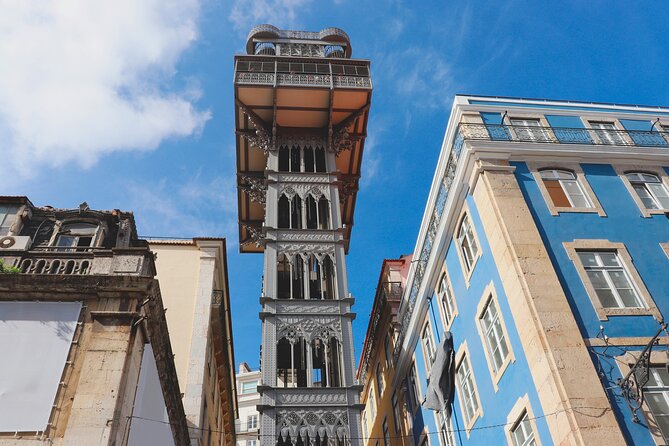
The Elevador de Santa Justa is an elegant piece of early twentieth-century engineering. The lift links the lower Baixa district with the higher streets near Carmo, and its viewing area looks across Baixa Pombalina toward Alfama and São Jorge Castle.
The tour includes a look at this landmark, but the admission ticket is not included. That distinction is important. You may see the lift without paying, while access to the lift or its panoramic point can involve an additional charge.
Do not build your budget around this visit being fully covered. If the guide suggests going up, ask what the current admission cost is before entering. The view is a useful payoff after the climb, but the walk itself already offers several viewpoints and open squares.
Rua Garrett, Rua Augusta, and rebuilt Baixa
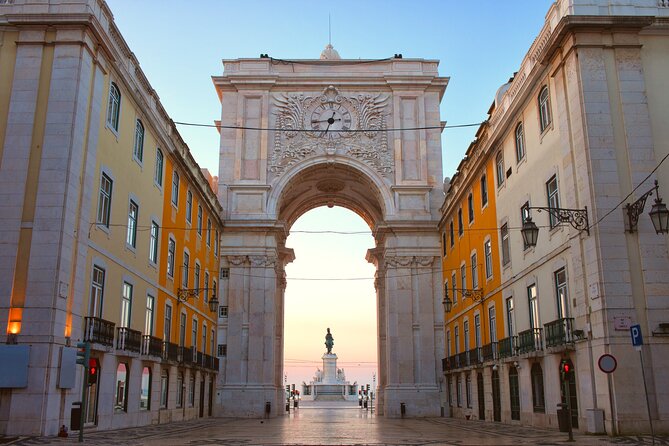
After Carmo and Santa Justa, the route passes along elegant Rua Garrett and continues into Baixa Pombalina. You then walk down Rua Augusta toward its monumental arch.
This section is about urban design. Baixa was rebuilt after the 1755 earthquake in a planned grid, with broad streets and orderly blocks. The change from the narrow upper streets to the straighter lower district helps you understand Lisbon’s shape without needing a long lecture.
The walk is also practical. You pass through one of the city’s main central shopping and café areas, then arrive at Praça do Comércio. If you plan to return later, note the streets where you might want more time. The tour gives you an overview, not a long shopping stop.
Praça do Comércio and the river gateway
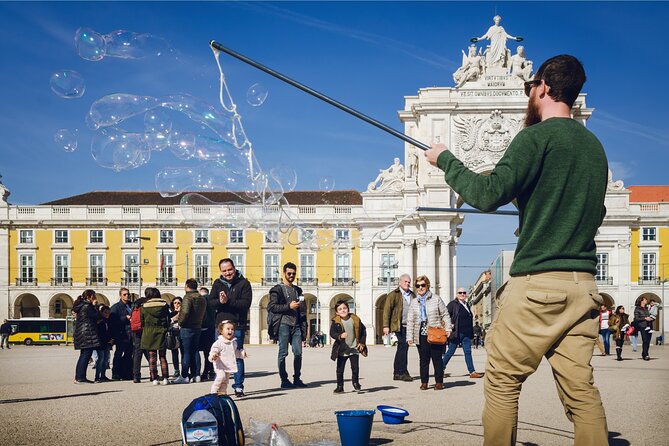
Praça do Comércio is one of Lisbon’s grandest open spaces. It was rebuilt after the earthquake and designed as a formal entrance to the city. The monumental buildings surround a wide square facing the river.
Your guide points out the square’s Masonic symbols and takes you to the Cais das Colunas, the marble landing used to welcome kings, queens, and presidents. This detail gives the waterfront a human purpose. It was not only a place for photographs, but also a ceremonial arrival point.
The stop lasts about 15 minutes. I would use it to take in the scale, listen to the guide’s explanation, and get photos before the group turns toward the older quarters.
A surviving church and the Casa dos Bicos
The Church of Nossa Senhora da Conceição Velha survived the earthquake. Its Manueline façade is the focus here, along with its connection to women and the church’s unusual past.
The visit is brief, about 10 minutes, but the building gives you another angle on Lisbon’s survival. Instead of seeing only the destruction caused by 1755, you see one of the structures that remained.
Next comes Casa dos Bicos, an unusual palace covered in diamond-shaped stone points. It once belonged to the first governor of the Indies and now houses the José Saramago Foundation, dedicated to the Portuguese writer who won the Nobel Prize in Literature.
The tour description lists this as a 10-minute stop, so expect an outside look and a short explanation rather than a full museum visit. Entry to the interior is not promised.
Lisbon Cathedral and the climb toward Alfama
Lisbon Cathedral, or Sé, was built on the site of a former mosque. Its exterior is Romanesque, while the interior includes Gothic and neo-Gothic elements. The tour allows about 15 minutes here.
That layered design makes the cathedral a helpful way to understand Lisbon’s changing religious and political past. Your guide can point out the different architectural periods, but you should not expect enough time for an exhaustive visit.
From the cathedral, the walk heads into Alfama. This is where the route becomes more intimate. Streets narrow, the city rises, and the formal squares of Baixa give way to an older neighborhood pattern. The uphill sections are real, so comfortable shoes are more useful here than stylish ones.
Santo Estevão viewpoint and a sip of ginjinha
At Miradouro de Santo Estevão, you pause for sweeping views and taste ginjinha, the sweet cherry liqueur associated with Lisbon. The drink is served in connection with the women of Alfama, adding a local human detail to what could otherwise be just another lookout.
This is one of the tour’s nicest combinations: a view, a neighborhood, and a small taste. You are not stopping at a generic bar removed from the city. You are drinking in the quarter where the guide is explaining local life.
The viewpoint stop lasts around 15 minutes, followed by more walking through Alfama while you continue tasting the ginjinha. If you do not drink alcohol, the supplied information does not specify an alternative, so ask the provider before booking if that matters to you.
Ending at the Fado Museum
The walk finishes at the Fado Museum in Alfama, at Largo do Chafariz de Dentro. The museum explains the story of Fado, Portugal’s mournful and expressive musical tradition.
Admission is not included. The tour gives you an introduction to the music, then leaves you near the museum so you can decide if you want to continue inside. This is a useful ending because the guide can help you connect the narrow Alfama streets with the music most associated with the neighborhood.
The tour ends near central Lisbon, and the guide can give advice about where to go, eat, or continue exploring. That final orientation may be especially helpful if this is your first afternoon in the city.
What the $79.52 price means
At $79.52 per person, the tour is not the cheapest way to see Lisbon. You are paying for a private guide, a three-hour route, a pastry and coffee stop, ginjinha, and admission to the Carmo Archaeological Museum. Group discounts may improve the price for larger parties.
The value depends heavily on group size. For two people, the cost buys personal attention and a route that would take effort to organize. For a larger family or group of friends, the per-person price may look more reasonable, especially since only your party participates.
Some costs remain outside the advertised price. The Santa Justa lift is not included, and the Fado Museum is also listed without included admission. Keep a little extra money available, and ask before entering either site.
The rating is 4.5 from eight ratings, with especially strong praise for Rodrigo. He is described as fun, excellent, and attentive to questions. That suggests the guide can make a major difference, as it does on any private city walk. The smaller number of ratings means you should treat that impression as useful but not definitive.
Who should book this walking tour?
I would choose this for a first visit to Lisbon when you want the main sights arranged into one clear route. It suits couples, families, and small groups who prefer to ask questions privately rather than join a large party.
It is also a good fit if you care about small food experiences but do not want a full food tour. The pastel de nata, coffee, and ginjinha are short tasting moments woven into a wider city walk.
I would think twice if you dislike hills, uneven streets, or a quick pace. The route includes central Lisbon, the Carmo area, Baixa, the cathedral, and Alfama in only three hours. You see a lot, but you will not have long inside each monument.
Free cancellation is available if you cancel at least 24 hours before the start time. Changes or cancellations inside that window are not accepted for a refund. Most people can take part, and the route is near public transportation.
Should you book Highlights and Secrets of Lisbon?
Book it if you want a private first look at Lisbon that combines major sights, local tastes, and a useful neighborhood-to-neighborhood route. Carmo Convent is the best included sight, while the Santo Estevão viewpoint and Alfama walk give the tour its strongest sense of place.
Before paying, confirm the meeting point and arrive with your phone ready. Ask about the Santa Justa and Fado Museum costs, wear shoes suited to hills, and do not expect a full museum tour at every stop. If those limits fit your plans, the tour offers a practical and personable introduction to Lisbon, especially with a guide such as Rodrigo.
FAQ
How long is the Highlights and Secrets of Lisbon Private Walking Tour?
The tour lasts approximately three hours.
Is the tour private?
Yes. Only your group participates in the private activity.
Where does the tour start?
It starts at Praça Luís de Camões, Largo Luís de Camões, 1200-243 Lisboa, Portugal.
Where does the tour end?
It ends at the Fado Museum in Alfama, at Largo do Chafariz de Dentro 1, 1100-139 Lisboa, Portugal.
Is admission to the Carmo Archaeological Museum included?
Yes. A skip-the-line ticket for the Carmo Archaeological Museum is included.
Are the Santa Justa lift and Fado Museum included?
No. Admission to the Elevador de Santa Justa and the Fado Museum is not included.
Can I cancel for a full refund?
Yes, if you cancel at least 24 hours before the experience start time. Cancellations or changes made less than 24 hours before the start are not refunded or accepted.
Fresh finds around Lisbon
- Lisbon: Tuk Tuk City Tour★ 3.6 · 7 reviews
- Fatima Full day Private Tour★ 5.0 · 7 reviews
- Lisbon: Highlights and Hidden Gems Tour★ 5.0 · 7 reviews
- Private Tour to Evora and Monsaraz from Lisbon★ 5.0 · 7 reviews
- Discover Sintra Beauty with a Guided Journey from Lisbon★ 5.0 · 7 reviews
- Private Half-Day Tour to Sintra★ 3.4 · 7 reviews
- Lisbon: Sunset and Wine Catamaran Tour★ 5.0 · 7 reviews
- Nazaré: Beaches of Nazaré Guided E-Bike Tour★ 4.9 · 7 reviews
Walking Tours, compared.
Lisbon: History, Stories and Lifestyle Walking Tour
Read our review →
Best of Lisbon Small-Group Guided Walking Tour
Read our review →
Lisbon: Food and Wine Small Group Walking Tour
Read our review →
Best of Lisbon Walking Tour: Rossio, Chiado & Alfama
Read our review →
Sintra & Cascais Day Tour with Pena Palace Entry and Gardens Walk
Read our review →
Lisbon Roots – Small group Food & Culture Walking Tour w/tastings
Read our review →
Lisbon: Starter Walking Tour to the highlights in German
Read our review →Browse the lists this tour appears in