
Reviewed · ALFAMA & OLD TOWN WALKS
Hidden Flavors of the Hillside: Mouraria & Graça
Lisbon’s best food discoveries often happen behind an unassuming door, and this small-group walk takes you into the hillside neighborhoods of Mouraria and Graça to find them. Along the way, you’ll connect everyday Portuguese food with church history, immigrant influence, tasca culture, and the city’s changing dining scene.
I like two things right away: the group is limited to seven people, and the route mixes food with real neighborhood context instead of treating lunch as a series of unrelated tastings. I also like the range, from traditional tascas and a cervejaria to a modern tasca. The main consideration is the hill walking. You’ll need moderate fitness, and the five-hour afternoon may stretch toward six hours when conversation and food are flowing.
In This Review
- Key points to know before booking
- Why Mouraria and Graça make such good food neighborhoods
- Starting at Igreja Paroquial de São Cristóvão e São Lourenço
- A snack break at Jardim da Cerca da Graça
- Praça Martim Moniz and the story around the station
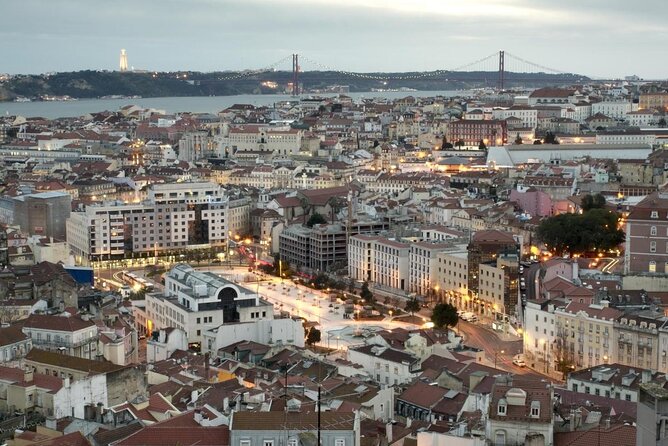
- Climbing to Miradouro da Graça
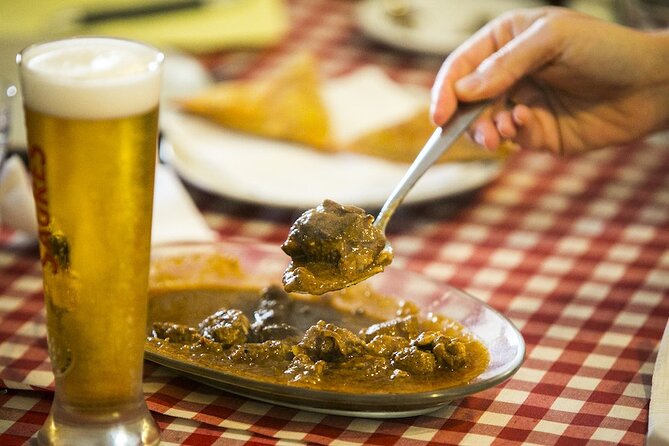
- The food: from tascas to modern Portuguese cooking
- The guides make or break the afternoon
- Is $150 a fair price?
- Timing, meeting point, and practical details
- Who should book Hidden Flavors of the Hillside?
- Should you book it?
- FAQ
- How long does Hidden Flavors of the Hillside last?
- Where does the tour start?
- Where does the tour end?
- What areas and sights are included?
- How many people can join the tour?
- What happens if the tour is canceled because of weather?
Key points to know before booking
- Four neighborhood stops connect food with place: You visit Igreja Paroquial de São Cristóvão e São Lourenço, Jardim da Cerca da Graça, Praça Martim Moniz, and Miradouro da Graça.
- The food is varied rather than narrowly traditional: Expect a mix of everyday comfort food, wine, classic tasca cooking, cervejaria fare, and modern Portuguese touches.
- The group size stays intimate: A maximum of seven people makes it easier to ask questions and enter small local establishments together.
- The guides shape the experience: Kika, Gisela, and Laura are specifically associated with warm storytelling, local food knowledge, and a welcoming approach.
- The route is uphill: The final section toward Graça and its viewpoint requires steady walking on Lisbon’s hilly streets.
- Book early in your Lisbon stay if possible: The food vocabulary and tasca customs can help you feel more comfortable eating independently afterward.
Why Mouraria and Graça make such good food neighborhoods
This route works because Mouraria and Graça are not simply backdrops for a meal. Their streets hold several layers of Lisbon life, and the food gives your guide a practical way to explain them.
Mouraria is associated with old Lisbon, close-set streets, and a mix of cultural influences. Graça rises above the city and feels more residential in places, with parks, cafés, local shops, and viewpoints. The walk uses both areas to show how Portuguese food can be traditional, social, modest, and inventive at the same time.
I especially like that the route does not promise a parade of famous monuments. Instead, you pause at a church, a public park, a station area, and a viewpoint. Those stops help explain where you are before you sit down to eat. You are not just tasting something and moving on. You are learning how a neighborhood functions.
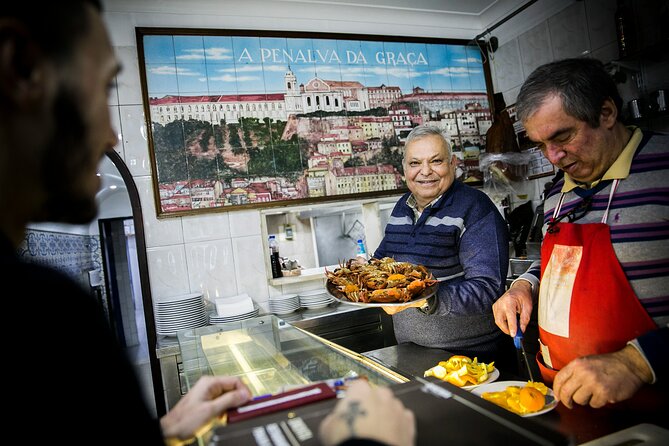
The food itself is presented through different kinds of local places. A tasca is generally a modest Portuguese eating house, often focused on familiar food and relaxed service. A cervejaria brings beer and food culture into the picture, while the modern tasca shows how the old format can be adapted. The result should feel more like a series of neighborhood encounters than a formal restaurant tour.
More old-town wanders:
- Alfama Tour in Lisbon Old Town
★ 5.0 · 4,936 reviews - Private Lisbon Sightseeing Tuk-Tuk Tour: Alfama, Belém & More
★ 5.0 · 4,277 reviews - Lisbon: Hills, Alfama, and Mouraria Tour by Electric Bike
★ 4.8 · 3,438 reviews
Starting at Igreja Paroquial de São Cristóvão e São Lourenço
The walk begins at 2:15 pm near Largo do Correio, on or close to Rua de São Mamede, in Lisbon. Your first listed stop is Igreja Paroquial de São Cristóvão e São Lourenço, where you spend about 45 minutes and have the first bite.
The church gives the tour an early dose of Lisbon’s religious and architectural character. More important, it sets the pattern for the afternoon: a local place first, then food connected to it. The church itself has no admission charge, so you are not paying for a chain of entrance tickets. Your money goes toward the guided experience and tastings.
Forty-five minutes is enough time to hear the background, look around, and settle into the group without turning the stop into a long lecture. If you are especially interested in Lisbon’s churches, you may wish the schedule offered more time for architectural detail. The focus here is clearly the combination of place and food.
This is also where a good guide matters. Gisela is described as energetic and warm, while Laura is associated with a personal understanding of the area and a strong sense of how food reflects Portuguese history. Kika is praised for keeping the route organized and for linking each tasting to its setting. The guide assigned to your departure may vary, but the experience depends heavily on that person’s ability to tell short stories while keeping the walk moving.
A snack break at Jardim da Cerca da Graça
The second stop is Jardim da Cerca da Graça, a park where you spend around 45 minutes with another bite. This is a useful change of pace. After walking through older streets, you get an open-air pause and a place to talk about what you have eaten so far.
The park stop also helps keep the food from becoming too much of a sit-down routine. You are likely to appreciate the chance to pause, take in the surroundings, and eat at a slower rhythm. The supplied information does not specify the snack, so you should not book this expecting a named dish or a fixed menu item. The point is the setting and the way the food fits into the route.
I like the balance here. A food walk can become tiring if every stop means standing in a crowded room or sitting at a table for a long stretch. A park break gives you time to compare flavors, ask about ingredients, and get a sense of the hillside neighborhoods.
The hill itself deserves attention. Lisbon’s slopes are part of the experience, not a minor inconvenience. Wear comfortable shoes and expect uneven streets or steady inclines. The tour asks for moderate physical fitness, so it is not designed as a level stroll. If you have trouble with hills, this is one of the most important factors in your decision.
Praça Martim Moniz and the story around the station
The third section takes about an hour around Praça Martim Moniz, a busy transport area where you learn about the station and may have one or two more bites. This is the longest listed stop, and that extra time makes sense. The square is a useful place to discuss movement, migration, commerce, and the way Lisbon’s food culture changes around transport links.
You should expect a livelier urban setting here than at the church or park. The area is not presented as a quiet dining quarter. Instead, it gives the guide a chance to explain how the city’s people and cuisines meet in public spaces. The food may include more than one taste, but no fixed dishes are provided, so the exact selection can change.
This is one of the most useful parts of the tour for anyone who wants to understand Lisbon beyond postcard views. Food traditions do not exist in isolation. They respond to where people live, work, shop, and meet. A station area can tell you plenty about the city’s present-day character, while the church and older streets point to earlier chapters.
The route also appears to move across a broad range of cooking styles. You may encounter a traditional tasca, a more formal traditional restaurant, a cervejaria, and a modern tasca during the afternoon. That range is valuable because it prevents a simplified idea of Portuguese food. You get to see how familiar dishes and social customs continue in different settings.
A handful more Lisbon ideas to compare
- Lisbon City Center Tour – The Unmissable Lisbon
★ 5.0 · 22,234 reviews - Lisbon: Sintra, Pena, Regaleira, Cabo da Roca & Cascais
★ 4.7 · 19,656 reviews - Lisbon: Jerónimos Monastery Entrance Ticket
★ 4.1 · 14,164 reviews - Lisbon: History, Stories and Lifestyle Walking Tour
★ 4.8 · 10,902 reviews
Climbing to Miradouro da Graça

The final listed stop is Miradouro da Graça, also known as Miradouro Sophia de Mello Breyner Andresen. You spend about 45 minutes near the viewpoint, with another bite just uphill from the scenic spot.
This is a smart ending. After several hours of food and neighborhood stories, you reach one of Lisbon’s best-known high viewpoints and get a broad look across the city. The view gives you a chance to place the hills, streets, and districts you have been discussing.
The final climb is also the clearest physical test of the tour. The route description specifically notes that the next food stop is uphill from the viewpoint. You should arrive ready for more than a gentle walk, particularly if the afternoon is warm.
A scenic finish can sometimes feel tacked on, but here it helps close the loop. You have spent the afternoon learning about local places at street level. From Graça, you can look back over Lisbon and understand the city’s slopes in a more practical way. Bring a phone or camera if you enjoy taking photos, since the viewpoint is singled out as a place for pictures.
The tour ends in Graça rather than returning you to the starting point. That is convenient if you plan to continue eating or exploring in the neighborhood, but you should make your onward plans from the end point, not the start.
The food: from tascas to modern Portuguese cooking
The strongest part of this experience is its range of food settings. You are not simply tasting one style of cooking in several restaurants. The route introduces the social world around Portuguese eating.
The traditional tasca matters because it is tied to ordinary dining rather than special-occasion dining. These places can feel informal and personal, and entering one with a guide removes some of the uncertainty you may feel as a first-time visitor. One of the most practical benefits of this tour is that you learn how to approach these small cafés and eating houses with more confidence.
The cervejaria adds another piece of the puzzle. It brings food, drink, and sociability together, with wine also part of the experience. The modern tasca then shows that local food culture is not frozen in the past. Traditional ideas can appear alongside newer combinations and updated cooking.
The exact menu is not stated, so I would not choose this tour if you need a guaranteed list of dishes. Instead, choose it for the way food is explained and for the chance to encounter several types of local establishments.
Food restrictions have been handled with care during the tastings described, but you should communicate your needs when booking or before the walk. The supplied details do not promise a specific dietary program, so it is wise to confirm what can be accommodated.
The guides make or break the afternoon
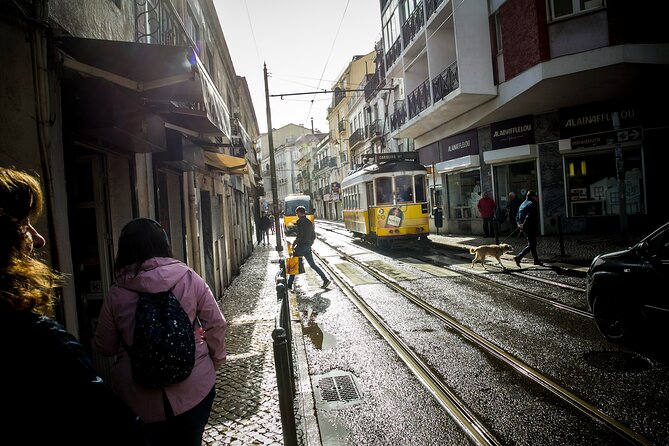
This is a guide-led experience, and the guide’s personality matters. Kika is described as prepared, organized, and good at keeping the pace and range of the route in balance. Gisela is associated with enthusiasm, a friendly group atmosphere, and a talent for pointing out places you might miss on your own.
Laura brings a particularly personal connection to the neighborhoods. Her background growing up in the area gives her a useful angle when explaining how local food and Portuguese history fit together. She is also described as gracious and attentive during food and wine stops.
You cannot necessarily request a particular guide, since the booking details do not state that guide selection is guaranteed. Still, these names give you a sense of the style to expect: storytelling rather than a dry lecture, food context rather than a list of ingredients, and conversation with the people in your group.
The small maximum of seven is a real advantage. In a group this size, you can hear the guide in narrow streets, ask about unfamiliar customs, and speak with the hosts at food stops. It also makes the afternoon feel more like a shared meal with new acquaintances than a large procession.
Is $150 a fair price?
At $150 per person, this is not a budget snack crawl. The value depends on how much you want from the experience beyond the food itself.
You are paying for approximately five hours, a small group, several food and drink stops, neighborhood guiding, historical context, and the chance to enter places that might feel intimidating on your own. Some meals on the route may cover the equivalent of lunch, dinner, and snacks, though the official duration is about five hours and the exact amount of food can vary.
If you only want to sample one or two dishes cheaply, $150 will feel high. If you want a guided introduction to Mouraria and Graça, plus enough food to replace a substantial part of your day’s meals, the price is easier to justify.
I would book it early in an extended Lisbon stay. The practical payoff is not only what you eat during the tour. You also gain a better sense of which local cafés and tascas you might enter later, how different establishments relate to one another, and how food fits into the city’s culture.
Timing, meeting point, and practical details
The walk starts at 2:15 pm and ends in Graça. Confirmation is provided when you book, and the starting area is near public transportation. The meeting point is listed as Largo do Correio, R. de São Mamede, 1100-171 Lisboa, so check the precise map pin before setting out.
Plan on five hours, but keep some flexibility. One account describes the experience lasting six hours, and food tours can run long when the group is enjoying the meal and conversation. Do not schedule a tight evening commitment immediately afterward.
The tour is offered in English and uses a mobile ticket. It requires moderate physical fitness, with hills forming a central part of the route. The maximum group size is seven, which helps with communication and access to smaller places.
Free cancellation is available up to 24 hours before the start time for a full refund. Changes or cancellations inside that window are not accepted for a refund. The walk also depends on good weather and a minimum number of participants. If the operator cancels for either reason, you are offered another date or experience, or a full refund.
Who should book Hidden Flavors of the Hillside?
I would choose this for a first or second day in Lisbon if food and local life are central to your trip. It gives you useful context early, and you can use that knowledge during the rest of your stay.
It suits people who enjoy walking, small-group conversation, and trying food without needing a fixed menu in advance. It is also a good birthday choice or a pleasant way to spend an afternoon with someone who likes history and restaurants equally.
I would hesitate if you dislike hills, need a fully specified menu, or prefer a short tasting with little walking. The route is not built around major-ticket sights, and the city views arrive after several hours on foot.
Should you book it?
Book this tour if you want Lisbon explained through neighborhood food and local stories, not just monuments. The combination of Mouraria and Graça, the small group, the range of tascas and cafés, and the final view from Graça give the afternoon a clear sense of place.
Skip it if $150 feels too high for a long food walk or if the hills will make the day uncomfortable. For the right person, though, this is a practical introduction to Lisbon’s eating culture, one that can make the rest of your meals in the city more relaxed and adventurous.
FAQ
How long does Hidden Flavors of the Hillside last?
The listed duration is approximately five hours. You should leave room for the walk to run longer, since the experience has lasted about six hours in some cases.
Where does the tour start?
The meeting point is listed at Largo do Correio, R. de São Mamede, 1100-171 Lisboa, Portugal. The start time is 2:15 pm.
Where does the tour end?
The tour ends in Graça, Lisbon. It does not return you to the original meeting point.
What areas and sights are included?
The route includes Igreja Paroquial de São Cristóvão e São Lourenço, Jardim da Cerca da Graça, Praça Martim Moniz, and Miradouro da Graça, also called Miradouro Sophia de Mello Breyner Andresen.
How many people can join the tour?
The maximum group size is seven people.
What happens if the tour is canceled because of weather?
If poor weather causes a cancellation, you are offered a different date or a full refund. The experience also requires a minimum number of participants, with the same options if that minimum is not met.
Fresh finds around Lisbon
- Sanctuary of Fátima and Coimbra City Tour★ 4.5 · 51 reviews
- Sintra/Lisbon: Sintra & Quinta da Regaleira Tour with Ticket★ 4.4 · 51 reviews
- Jeronimos Monastery Guided Tour – Small Groups – Tickets Included★ 5.0 · 51 reviews
- Lisbon: Private Christmas Lights Tour by Eco Tuk Tuk★ 4.9 · 51 reviews
- Peniche: Berlengas Island Catamaran Tour – Round Trip★ 4.6 · 51 reviews
- Half day Spa Water Therapy experience at THE SPA at Corinthia Lisbon★ 4.5 · 51 reviews
- Lisbon: Private Tuk-Tuk Tour for 2 hours★ 4.7 · 51 reviews
- Premium Lisbon Airport Transfer to Lisbon★ 5.0 · 51 reviews
Alfama & Old Town Walks, compared.

Private Lisbon Sightseeing Tuk-Tuk Tour: Alfama, Belém & More
Read our review →
Lisbon: Hills, Alfama, and Mouraria Tour by Electric Bike
Read our review →
Best of Lisbon Walking Tour: Rossio, Chiado & Alfama
Read our review →
Lisbon Small-Group Food Tour with 18 Tastings in Alfama District
Read our review →
Lisbon: Baixa District Food Tour with Dinner and Drinks
Read our review →
Lisbon E-Bike Tour Commerce Square, Mouraria and Alfama
Read our review →
Lisbon: Old Town TukTuk Tour and Scenic Viewpoints in Alfama
Read our review →Browse the lists this tour appears in