
Reviewed · WALKING TOURS
Half-Day Walking Tour about the African Presence in Lisbon
Lisbon’s African story is not confined to a museum. It runs through Alfama’s old lanes, the former port, grand Praça do Comércio, Rossio, and the streets around the river. This tour follows those connections on foot, linking Portugal’s medieval society, the slave trade, abolition, religion, and the African communities that shaped city life.
I like the small-group format, capped at 15 people, because it gives you room to ask questions. I also like the focus on places you will already pass during a Lisbon stay, but with a harder history brought into view. Guide Alcides, often called Al, is praised for clear storytelling and for drawing on his Cape Verdean background.
The main drawback is the price: $179.74 per person is a serious sum for a walking tour with no listed admission tickets. You also need solid walking shoes, patience for Lisbon’s hills and pavement, and a plan for restroom breaks, since the route moves through the city rather than stopping at a visitor center.
In This Review
- Key points to know before you book
- Why Lisbon’s African story needs a walking tour
- From Restauradores to Alfama’s older streets
- Chafariz D’El Rei and the social order around water
- Campo das Cebolas and Lisbon’s old port
- Praça do Comércio and the machinery of empire
- The central city after the 1755 earthquake
- Rua Rosa de Lisboa and the work of African women
- Time Out Market and the African labor behind a modern landmark
- Jardim Dom Luís and the debate over abolition
- The Brazilian consulate and the Atlantic connection
- Rossio, integration, and the making of colonies
- Igreja de São Domingos and African Catholic life
- Rossio Station and Portugal’s colonial self-image
- What the pace, price, and group size mean
- Who should book this Lisbon history walk?
- Should you book it?
- FAQ
- Where does the tour start?
- What time does the tour begin?
- Where does the tour end?
- How long does the walking tour last?
- How large is the group?
- Is the tour offered in English?
- Can I cancel for a full refund?
Key points to know before you book
- African history is the main subject: The route explains Lisbon’s links to Africa, the transatlantic slave trade, abolition, migration, religion, and colonialism.
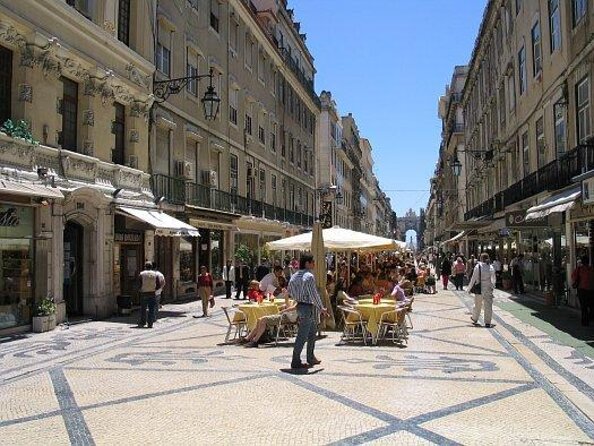
- The route crosses several central districts: You walk from Restauradores through Rossio, the Baixa area, the riverfront, and Alfama.
- Alcides, or Al, leads many departures: His personal connection to Cape Verde adds a human voice to the history.
- Expect a true walking tour: The experience lasts about 3 to 4 hours and requires a moderate level of fitness.
- Small groups help with discussion: The maximum is 15 people, though some departures have been much smaller.
- The price needs careful thought: It may suit history-focused visitors who value a private-feeling conversation, but it is costly for budget-conscious visitors.
Why Lisbon’s African story needs a walking tour
Portugal played a major role in the European slave trade, yet the subject can be easy to miss during a standard Lisbon sightseeing day. You see ornate churches, tiled buildings, lookout points, and grand squares, but the people and systems behind that wealth are not always explained.
This route makes those connections visible in ordinary city spaces. A fountain, a market, a church, and a railway station become prompts for discussing class, labor, faith, forced migration, abolition, and empire. That approach gives you a better sense of how history lived alongside daily life.
The tour also covers Moorish influence and Portugal’s long relationship with Africa. It is not limited to one period or one community. Instead, it moves from medieval Lisbon to the age of maritime expansion, then into later questions of integration, colonial rule, and African identity in Portugal.
Alcides is an important part of the experience. The information provided about his Cape Verdean ancestry gives the tour a personal angle, rather than presenting the subject as a distant textbook chapter. His English is described as excellent, and his style appears to favor questions and conversation.
More Walking Tours in Lisbon
- Lisbon: History, Stories and Lifestyle Walking Tour
★ 4.8 · 10,902 reviews - Best of Lisbon Small-Group Guided Walking Tour
★ 5.0 · 4,869 reviews - Lisbon: Food and Wine Small Group Walking Tour
★ 4.9 · 4,082 reviews
From Restauradores to Alfama’s older streets
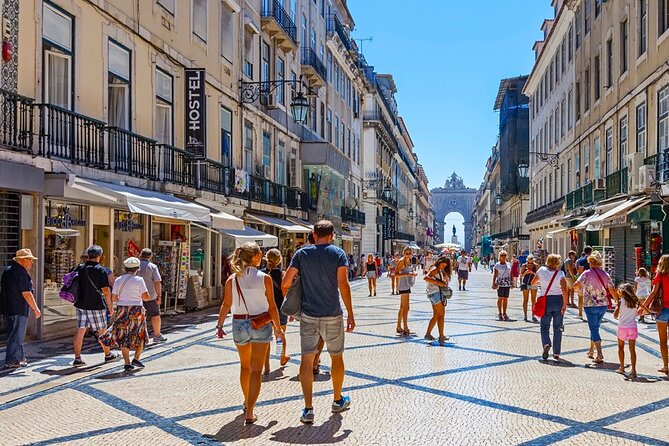
The tour begins at 9:00 a.m. in Restauradores Square and ends back at the same meeting point. Starting here places you near Lisbon’s central hotels, public transportation, and the busy heart of the city.
The first major stop is Alfama, Lisbon’s oldest neighborhood. Its origins are tied to Arab rule, making it a sensible place to begin a discussion of Africa, North Africa, and the many peoples who shaped the city before Portugal’s overseas empire reached its height.
You should expect only about 20 minutes here, not a full neighborhood tour. The value is the introduction: Alfama gives the guide a physical setting for explaining roots, connections, and the overlap between different cultures in Lisbon.
The streets can be uneven and steep. I would not choose sandals with thin soles for this route. A comfortable pair of walking shoes matters more here than smart clothing.
Chafariz D’El Rei and the social order around water
At Chafariz D’El Rei, the group stops at one of Lisbon’s historic fountains for about 10 minutes. The subject here is social class in the Middle Ages, including the place of Africans within that society.
A fountain may seem like a small sight compared with Lisbon’s monumental squares, but that is exactly why it works. Public water sources brought people from different levels of society into the same space, while also revealing who had power, status, and access.
This is one of the tour’s strengths. You are not only being taken to famous buildings. You are being shown how an everyday object can open a discussion about race, work, class, and city life.
Campo das Cebolas and Lisbon’s old port
The route then reaches Campo das Cebolas, a former port area associated with the arrival of the first enslaved Africans in Europe. The planned stop lasts around 10 minutes.
This is a difficult part of Lisbon’s past, and the setting matters. The port was not an abstract point on a map. It was a working part of the city where people, goods, and wealth moved through Lisbon.
You will not find an admission gate or a formal exhibit here. The guide’s explanation provides the context. That means the quality of the experience depends heavily on how clearly the story is told, which is why Alcides’s ability to explain connections is important.
More walking routes in Lisbon:
- Best of Lisbon Walking Tour: Rossio, Chiado & Alfama
★ 4.9 · 2,700 reviews - Age of Discoveries Walking Tour in Belém
★ 5.0 · 1,513 reviews - Sintra & Cascais Day Tour with Pena Palace Entry and Gardens Walk
★ 5.0 · 962 reviews - Lisbon Roots – Small group Food & Culture Walking Tour w/tastings
★ 5.0 · 910 reviews
Praça do Comércio and the machinery of empire
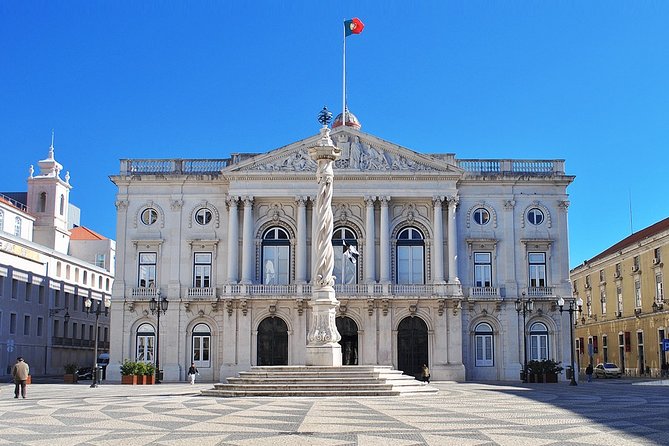
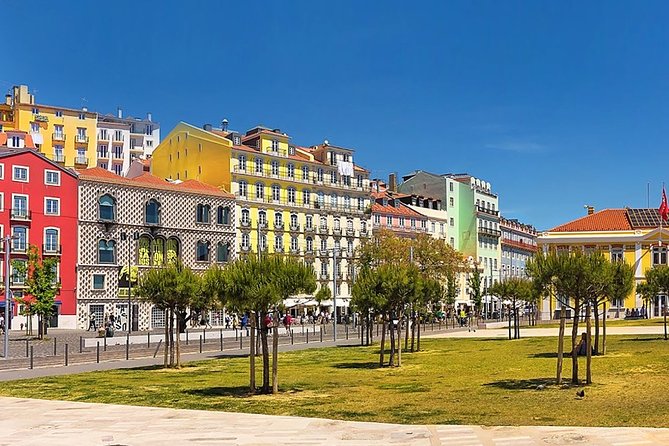
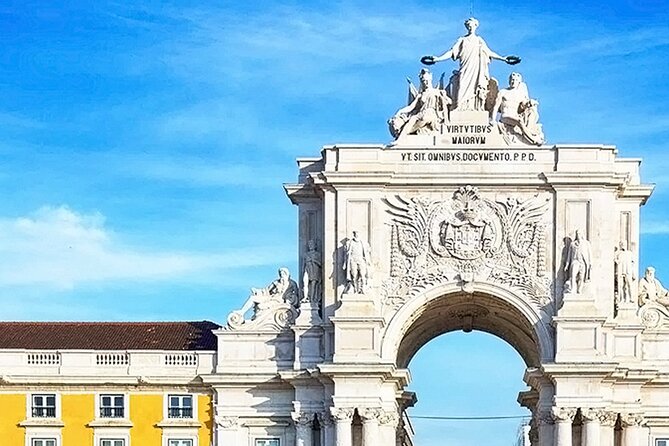
Praça do Comércio, also called Terreiro do Paço, receives about 20 minutes. This huge riverfront square is one of Lisbon’s most recognizable places, with its arcades, open space, and connection to the waterfront.
It is also a useful place to discuss the slave trade and the larger events of Portuguese history. The square’s polished appearance can hide the commercial and political forces that helped build Lisbon’s power. A good explanation here changes how you see the architecture.
The tour does not treat the square as just a photo stop. You look at it as a stage for government, trade, ceremony, and national memory. I find that useful because it ties the subject to the Lisbon most people come to see.
The central city after the 1755 earthquake
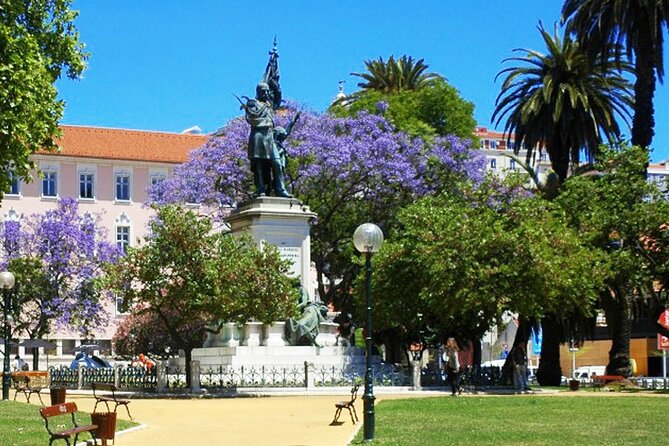
The route continues through Lisbon’s central neighborhood, an area heavily damaged by the 1755 earthquake and later rebuilt. The supplied itinerary does not give this stop a clear name or exact duration, but it is used to discuss the interaction of Africans with Portuguese society.
This section should help you place African lives within the wider city, not only at the port. Lisbon’s center was rebuilt according to new plans, and its streets became part of a changing commercial and social order.
Because this is a walking route rather than a museum visit, you may find the discussion strongest when you ask questions. If you want to understand how African communities lived, worked, worshiped, or were treated in different periods, use the pauses to ask the guide for specific examples.
Rua Rosa de Lisboa and the work of African women
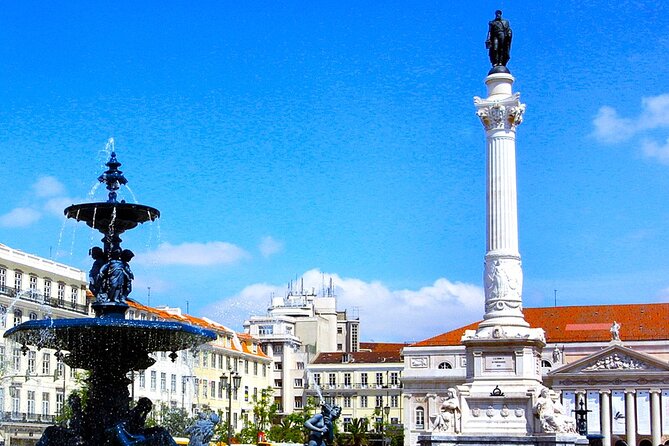
The stop called Calle Rosa de Lisboa lasts about 10 minutes. Here, the discussion turns to African women who provided services in the area.
This is an important shift in focus. Historical tours often concentrate on kings, merchants, laws, ships, and military leaders. A stop connected to women’s service work brings attention to the labor that kept urban life going, even when those workers left few monuments behind.
The location is part of the lesson. You are standing in a normal city street, not inside a preserved plantation or a grand palace. That can make the subject feel closer, though it also means the guide must supply much of the detail.
Time Out Market and the African labor behind a modern landmark
Time Out Market Lisboa is now one of the city’s best-known food destinations. The tour uses the site to discuss its earlier role as a workplace for many Africans, with roughly 10 minutes set aside.
This contrast is one of the more striking parts of the route. You see a popular modern market, then consider the workers and economic history connected to the same area. It is a reminder that urban places change names, uses, and reputations while older stories remain under the surface.
The short stop should give you a useful piece of context rather than a full history of the market. If you plan to eat there later, the guide’s explanation may change how you read the place.
Jardim Dom Luís and the debate over abolition
At Jardim Dom Luís, the group pauses for about five minutes beside the statue of Marquis Sá da Bandeira. He is presented as a figure responsible for abolishing slavery in Portuguese territory and colonies.
Five minutes is brief, so do not expect a long lecture at the statue. The stop works as a visual marker for the legal and political changes that followed centuries of Portuguese involvement in slavery.
The subject also deserves care. Abolition did not erase racial inequality, colonial control, or the economic systems built around forced labor. The route’s wider themes give the statue a place within that larger story rather than treating it as the end of the discussion.
The Brazilian consulate and the Atlantic connection
Near the Consulate-General of Brazil, the guide discusses the transatlantic slave trade and its consequences. The stop takes about 10 minutes.
This adds a wider Atlantic frame to the Lisbon story. Portugal’s relationship with Africa cannot be separated from Brazil, the movement of enslaved people, and the colonial economy connecting Europe, Africa, and the Americas.
You are likely to get more from this part if you already know a little about the Atlantic slave trade. If not, ask the guide to slow down and explain the links between Portugal, Brazil, African ports, and Lisbon’s role.
Rossio, integration, and the making of colonies
Praça Dom Pedro IV, usually called Rossio, is one of central Lisbon’s busiest public squares. The tour allows about 10 minutes here to discuss African integration and the creation of colonies.
Rossio is a good place for this topic because it is not a quiet historical enclosure. It is a working part of the capital, surrounded by transport links, shops, hotels, and daily city traffic. The past and present sit close together.
You may also hear more about migration and the presence of African communities in Portugal. The tour’s goal is not only to explain how people arrived, but also how they found work, religion, family networks, and a place in Portuguese society.
Igreja de São Domingos and African Catholic life
At Igreja de São Domingos, the guide explains how Africans integrated into Catholic religious life and highlights their achievements. The stop lasts around 10 minutes.
This is a valuable correction to the idea that Africans in Lisbon were present only as enslaved workers. Religious institutions could be places of control, but they could also become spaces for community, identity, and recognition.
The church adds a human and spiritual dimension to the route. You are not just tracing trade routes and laws. You are also considering how people adapted to, participated in, and sometimes reshaped the institutions around them.
Rossio Station and Portugal’s colonial self-image
The final major stop is Rossio Station, built in the 19th century in a Manueline style. The station’s ornate design reflects Portugal’s wish to connect itself with an earlier golden age and to claim a place among European powers.
The tour links the building to the colonial division of Africa and the Berlin Conference of 1884. That connection is worth pausing over. Architecture can express national pride, and national pride can depend on selective memories of exploration, empire, and wealth.
The itinerary also refers to a nearby square connected with Portugal’s restoration of independence from Spain, where many African slaves fought. The exact square is not named in the provided details, but the theme adds another layer to the discussion of African participation in Portuguese history.
What the pace, price, and group size mean
The advertised duration is about 3 to 4 hours. The listed stops add up to a little under two hours of formal stop time, leaving the rest for walking, transitions, explanations, and questions. In practice, this is a substantial morning on foot.
The maximum group size is 15, but some departures have been much smaller, including one group of four. A small group makes a real difference on narrow streets and during discussions. It also lets you ask about details that interest you instead of listening to a fixed speech.
The price of $179.74 per person is high for a tour without listed admission fees. You are paying mainly for the guide’s time, subject expertise, route planning, and personal interpretation. I would consider it reasonable only if African and colonial history is a major reason for your visit and you value a close, discussion-based experience.
The tour has a 4.9 out of 5 rating from 40 ratings, with 95 percent recommending it. The praise centers on Alcides or Al, his patience, his warmth, his strong English, and his ability to connect Portugal’s history with Spain, Africa, and the Americas.
There are also clear cautions. One experience had a late start, and one person found the guide hard to understand and the price too high. Another found the restroom planning weak. These are not reasons to dismiss the tour, but they are good reasons to arrive early, use a restroom before meeting, and confirm the meeting point at Restauradores Square.
A wine tasting has been included at the end of at least one departure, but it is not presented as a guaranteed part of the experience. Do not book this tour mainly for wine unless the provider confirms it for your date.
Who should book this Lisbon history walk?
I would recommend it to you if you want more than Lisbon’s postcard sights. It suits people who enjoy asking questions, listening to long explanations, and thinking about how slavery, migration, religion, and empire shaped a modern capital.
It is also a strong first-day activity for someone who wants a broader framework for Lisbon. You see Alfama, the riverfront, the central squares, Rossio, and several useful landmarks while learning what standard sightseeing often leaves out.
I would hesitate if you dislike walking, have limited mobility on uneven streets, or want a fast tour built around major monuments. I would also compare the price with private tours and museum visits before booking, since the cost is substantial.
The tour is offered in English, service animals are allowed, and the route is near public transportation. It requires a moderate fitness level, and good weather is necessary. If poor weather or too few bookings cancel the departure, you can receive a different date or a full refund.
Should you book it?
Book this walking tour if the African presence in Portugal is central to what you want to understand. The route gives you a thoughtful way to connect everyday Lisbon with slavery, abolition, African labor, Catholic life, migration, and colonial ambition, and Alcides appears to be the kind of guide who can make those links personal and clear.
Skip it if you are mainly seeking cheap sightseeing or a relaxed stroll. At $179.74, the tour needs to deliver real intellectual value, and it asks for several hours of steady walking. For the right history-minded visitor, that combination can be worthwhile. For everyone else, Lisbon offers less costly ways to see the same streets.
FAQ
Where does the tour start?
The tour starts at Restauradores Square, Praça dos Restauradores, 1250-001 Lisboa, Portugal.
What time does the tour begin?
The scheduled start time is 9:00 a.m.
Where does the tour end?
The activity ends back at the meeting point in Restauradores Square.
How long does the walking tour last?
The tour lasts approximately 3 to 4 hours.
How large is the group?
The maximum group size is 15 people. Some departures may be smaller.
Is the tour offered in English?
Yes. The tour is offered in English.
Can I cancel for a full refund?
Yes. You can cancel at least 24 hours before the experience’s start time for a full refund. Cancellations or changes made less than 24 hours before the start are not accepted for a refund. The experience also requires good weather and a minimum number of participants.
More Half-Day in Lisbon
- Lisbon: 7 Hills Half-Day Electric Bike Tour
★ 4.9 · 1,592 reviews - Lisbon Private And Customizable Half-Day Tour
★ 5.0 · 633 reviews - Sintra Half-Day Private Tour – A Journey through Wonderland
★ 5.0 · 601 reviews - Lisbon: Half-Day Sintra Tour with Pena Palace and Regaleira
★ 4.9 · 570 reviews
Fresh finds around Lisbon
- Lisbon: Tuk Tuk City Tour★ 3.6 · 7 reviews
- Fatima Full day Private Tour★ 5.0 · 7 reviews
- Lisbon: Highlights and Hidden Gems Tour★ 5.0 · 7 reviews
- Private Tour to Evora and Monsaraz from Lisbon★ 5.0 · 7 reviews
- Discover Sintra Beauty with a Guided Journey from Lisbon★ 5.0 · 7 reviews
- Private Half-Day Tour to Sintra★ 3.4 · 7 reviews
- Lisbon: Sunset and Wine Catamaran Tour★ 5.0 · 7 reviews
- Nazaré: Beaches of Nazaré Guided E-Bike Tour★ 4.9 · 7 reviews
Walking Tours, compared.
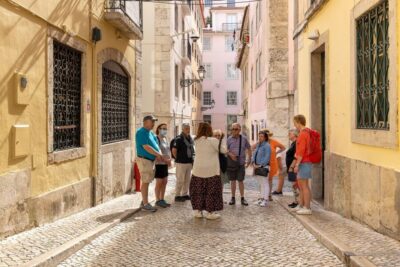
Lisbon: History, Stories and Lifestyle Walking Tour
Read our review →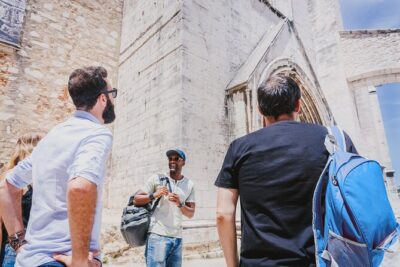
Best of Lisbon Small-Group Guided Walking Tour
Read our review →
Lisbon: Food and Wine Small Group Walking Tour
Read our review →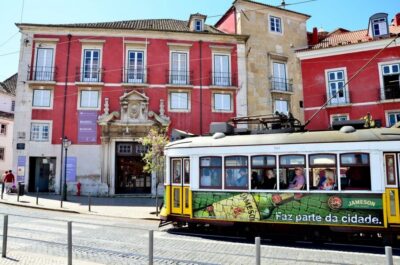
Best of Lisbon Walking Tour: Rossio, Chiado & Alfama
Read our review →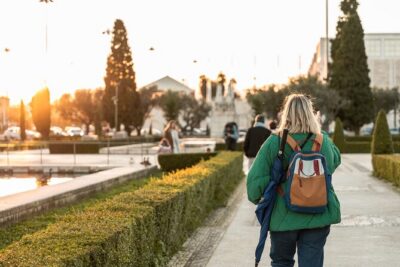
Sintra & Cascais Day Tour with Pena Palace Entry and Gardens Walk
Read our review →
Lisbon Roots – Small group Food & Culture Walking Tour w/tastings
Read our review →
Lisbon: Starter Walking Tour to the highlights in German
Read our review →Browse the lists this tour appears in