

Reviewed · ALFAMA & OLD TOWN WALKS
Discover Bairro Alto’s Hidden Gems and Stunning Viewpoints
Lisbon’s hills make more sense when you walk them with their story in place. This 2.5-hour route begins at Praça Dom Pedro IV, passes the fanciful Rossio Train Station, follows the trail of poet Luís de Camões, and works uphill toward Bairro Alto and the Carmo area.
I like the route’s strong historical arc. You move from a central square and railway station into an older neighborhood shaped by plague, population growth, royal planning, and religious foundations. I also like that the tour keeps admission costs low because the main sights are viewed from outside.
The main consideration is the extra contribution of 10 to 20 euros. The advertised price is only $3.61 per person, but the suggested guide contribution makes the real cost notably higher. Also, the route involves Lisbon hills and suits you best if you have moderate physical fitness.
In This Review
- Key points at a glance
- Why this Lisbon walking route works
- Starting in Rossio at Praça Dom Pedro IV
- Rossio Train Station and its theatrical façade
- Luís de Camões in Praça Luís de Camões
- Bairro Alto, from city edge to hilltop neighborhood
- Largo do Carmo and the promise of a beautiful church
- Views, walking pace, and what you actually receive
- Who should book this walk
- Is this Lisbon walking tour worth booking?
- FAQ
- Where does the tour begin?
- Where does the tour end?
- How long does the experience last?
- What language is the tour offered in?
- What is the advertised price?
- Is there an additional guide contribution?
- Is transportation included?
- Is entry to the Santa Justa elevator included?
- What level of fitness is required?
- Can I cancel for a full refund?
Key points at a glance
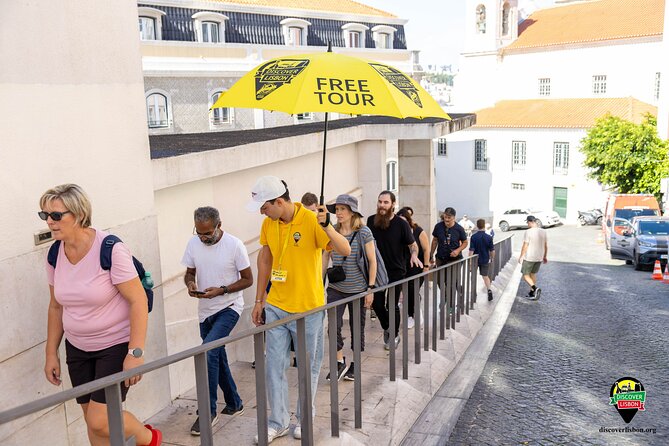
- Rossio Station’s horseshoe portals: See one of Lisbon’s most distinctive façades and learn why the building looks more like a grand monument than a railway station.
- A walk through Camões Square: Connect Portugal’s national poet with Vasco da Gama’s voyage to India and the Portuguese language.
- Bairro Alto’s changing purpose: Hear how city expansion, plague, a cemetery, and a church shaped this hilltop district.
- Carmo’s dramatic foundation story: Learn why general Nuno Álvares Pereira funded a Carmelite church after the Battle of Aljubarrota.
- History of Lisbon’s disasters: The guide discusses the earthquake and earlier destruction, giving the streets more meaning than a simple photo stop.
- An inexpensive English tour: The base price is very low, but you should plan for the stated 10 to 20 euro contribution.
Why this Lisbon walking route works
This is a history walk rather than a checklist of grand interiors. You will not spend the afternoon entering a long line of paid monuments. Instead, the guide uses squares, streets, façades, and viewpoints to explain how Lisbon grew and changed.
That approach suits me because Lisbon often reveals itself outdoors. A church façade, a steep lane, or an oddly placed square can tell you about royal power, religious life, earthquakes, and public health. With an English-speaking local guide, those details become easier to connect.
The experience lasts about two hours and 30 minutes, which is long enough for a proper introduction without taking your entire day. It is offered in English and uses a mobile ticket. The group can reach 50 people, so you should not expect a private stroll or a quiet, highly tailored conversation with the guide.
The tour is free at the main stops, but that does not mean the experience has no cost. The advertised booking price is $3.61 per person, while the stated contribution to the guide is 10 to 20 euros. Treat that contribution as part of your expected budget, not as a minor surprise at the end.
More old-town wanders:
- Alfama Tour in Lisbon Old Town
★ 5.0 · 4,936 reviews - Private Lisbon Sightseeing Tuk-Tuk Tour: Alfama, Belém & More
★ 5.0 · 4,277 reviews - Lisbon: Hills, Alfama, and Mouraria Tour by Electric Bike
★ 4.8 · 3,438 reviews
Starting in Rossio at Praça Dom Pedro IV
The walk begins at Praça Dom Pedro IV, commonly called Rossio, one of central Lisbon’s key gathering places. The square gives you a useful starting point because it sits close to several important streets, transport links, and major sights.
The first 25 minutes are spent getting oriented and moving through the central area. You can expect the guide to explain how this part of Lisbon connects with the route toward Bairro Alto, rather than rushing straight to a single monument.
Rossio is a good place to begin because it shows Lisbon as a city built around public spaces. It is not just a backdrop for photographs. From here, you start to see how the city’s central districts fit together and why this square has long been an important point of movement.
This opening section is also practical. If you arrive early, you have a clear landmark for finding the meeting point. The address is Praça Dom Pedro IV, 1100-581 Lisboa. Since the tour takes place in a busy central area, allow enough time to locate the guide before the scheduled start.
Rossio Train Station and its theatrical façade
The next stop is Estação do Rossio, reached after the opening section of the walk. You spend about 25 minutes learning about the station, which was designed by Portuguese architect José Luís Monteiro between 1886 and 1887 and completed in 1890.
The station was commissioned by the Portuguese Royal Railway Company and linked Lisbon with the Sintra region. Its location in Rossio is part of the story. This was not a remote transport shed built outside town. It was placed in one of the city’s important squares, giving rail travel a grand public face.
The building’s style is Neo-Manueline, a Romantic recreation of the exuberant Manueline style associated with early 16th-century Portugal. The most memorable detail is the pair of intertwined horseshoe portals at the entrance. They are so decorative that the façade can look more like a ceremonial building than a station.
I find this stop especially useful for visitors who might otherwise walk past without looking up. Lisbon has many ornate façades, and it is easy to treat them as decoration. Here, the guide gives you a reason to notice the design, the railway connection to Sintra, and the way later architects borrowed older Portuguese forms.
There is one limitation. The stop is primarily an exterior history lesson. The included tour does not list an interior visit or a train journey to Sintra. If you want to ride the railway or inspect more of the station, you would need to do that separately.
Luís de Camões in Praça Luís de Camões
The route then continues to Praça Luís de Camões for about 30 minutes. This stop introduces Portugal’s national poet, Luís de Camões, best known for Os Lusíadas, the epic poem about Vasco da Gama’s discovery of the sea route to India.
Camões matters far beyond literature. His work has influenced Portuguese culture so strongly that the Portuguese language is sometimes called the language of Camões. The guide also covers the story that he lost one eye in battle in Ceuta.
This is a worthwhile pause because it puts a human figure into the middle of the city walk. Instead of hearing only about kings, churches, and disasters, you get a connection to poetry, empire, war, and national identity.
The square also serves as a bridge between central Lisbon and Bairro Alto. You are no longer simply looking at monuments in Rossio. You are moving toward the hilltop district and learning how names, public spaces, and national memory shape the city.
You should keep your expectations realistic. The tour offers an introduction to Camões, not a full literary seminar. If Os Lusíadas is a major interest, use this stop as a starting point and plan your own reading or museum visit later.
A handful more Lisbon ideas to compare
- Lisbon City Center Tour – The Unmissable Lisbon
★ 5.0 · 22,234 reviews - Lisbon: Sintra, Pena, Regaleira, Cabo da Roca & Cascais
★ 4.7 · 19,656 reviews - Lisbon: Jerónimos Monastery Entrance Ticket
★ 4.1 · 14,164 reviews - Lisbon: History, Stories and Lifestyle Walking Tour
★ 4.8 · 10,902 reviews
Bairro Alto, from city edge to hilltop neighborhood
The Bairro Alto section lasts about 30 minutes and provides some of the most useful urban history on the route. In the late 15th century, Lisbon was drawing people from many parts of the world because of Portugal’s discoveries. As the population grew, the city needed more room.
The area around today’s Camões Square once marked an entrance to Lisbon. The old Fernandine wall and the Santa Catarina gate were part of this earlier edge. After the earthquake, two churches, Encarnação and Loreto, occupied the area on the other side of the former wall.
The guide also explains that land on the hill belonged to wealthy noble families, while a cemetery for victims of the Black Plague occupied part of the upper area. That combination tells you a great deal about how cities develop. Sacred land, elite property, public health, and housing needs often end up pressed together.
In 1506, King Manuel I requested a relic of Saint Roch from Venice and placed it in a hermitage near the cemetery. As the population increased and plague affected Lisbon, poorer residents and sick people moved closer to the church. An urban plan was then developed to receive them.
This is the kind of context that makes Bairro Alto more interesting than its nightlife reputation. The district is often associated with bars and late evenings, but this walk focuses on the forces that shaped its streets long before modern entertainment arrived.
The practical issue is the terrain. Lisbon’s hills are part of the experience, and you should wear comfortable shoes. The tour information calls for moderate physical fitness, so it is not the best choice if steep walking is a serious problem for you.
Largo do Carmo and the promise of a beautiful church
The listed itinerary gives Largo do Carmo about 15 minutes. The square is tied to the Carmelite church and convent founded by Nuno Álvares Pereira, a general who helped King John repel Castilian troops.
Before the Battle of Aljubarrota in 1385, Pereira vowed to build the world’s most beautiful church if the Portuguese defeated the Castilians. Portugal won, and he funded the Carmelite church and convent. Construction was completed in 1423.
The story has a strong personal ending. After the church was finished, Pereira joined the Carmelite order and spent the rest of his life in the convent. A military commander who became a religious brother gives the site more character than a simple date and architectural label.
The Carmo area is also important for understanding Lisbon’s destruction. The included material covers earthquakes and the damage caused by disasters in the past. That background helps explain why old Lisbon can feel both very old and strangely incomplete.
One point needs attention when planning your day. The itinerary highlights Largo do Carmo, while the stated end point is Miradouro de Santa Catarina, at 1200-262 Lisboa. These are not presented as the same place in the supplied details. Confirm the final stopping point with the guide when you meet, especially if you have a reservation or transport connection afterward.
Views, walking pace, and what you actually receive
The experience is promoted around hidden corners and viewpoints, but the clearest route details focus on Rossio, Rossio Station, Camões Square, Bairro Alto, and Carmo. You should expect viewpoints and city orientation during the walk, but the supplied information does not promise admission to a paid observation tower or a particular interior.
The Santa Justa elevator is specifically not included. That matters because it is one of Lisbon’s best-known vertical transport landmarks, and some visitors may assume it forms part of the tour. If you want to ride it, you will pay separately and arrange that outside the included experience.
You receive a local expert guide, cultural and historical explanation, facts about famous monuments, and a discussion of the earthquake and earlier destruction. The provider also offers discounts for other experiences booked for the rest of the day and night in Lisbon. The exact discounts are not specified, so ask the guide for the details before making another booking.
A group limit of 50 people keeps the tour from becoming unlimited, but 50 is still a substantial group for narrow streets and busy squares. If you prefer a quiet, highly personal walk, this format may feel broad rather than intimate. If you mainly want a low-cost introduction with a guide leading the way, the size may be acceptable.
Who should book this walk
I would choose this tour if you are visiting Lisbon for the first time and want a quick framework for the central neighborhoods. It is especially useful early in your stay, since the route links places you may later revisit on your own.
It also suits you if you care about history told through streets and buildings, not only museum collections. The route covers royal railways, Portuguese literature, plague, urban growth, religious orders, war, and earthquake damage in a compact period.
You should think twice if you want a food tour, a nightlife experience, extensive monument entry, or a private guide. Nothing in the supplied details promises tastings, evening entertainment, interior access, or one-to-one guiding.
The tour is available in English, and service animals are allowed. It is near public transportation, though private transportation is not included. Confirmation arrives at booking, and free cancellation is available up to 24 hours before the start time. Changes or cancellations made less than 24 hours before the start are not accepted, and the local time cutoff applies.
Is this Lisbon walking tour worth booking?
Book it if you want an inexpensive, guided introduction to Rossio, Bairro Alto, Camões Square, and Carmo, with a clear focus on Portugal’s past. The route offers good value when you count the guide’s explanations, the free outdoor stops, and the chance to understand Lisbon’s hills before exploring on your own.
Budget for the 10 to 20 euro guide contribution, wear shoes suited to uphill streets, and confirm whether the walk ends at Largo do Carmo or Miradouro de Santa Catarina. With those points clear, this is a sensible choice for a first look at central Lisbon.
FAQ
Where does the tour begin?
It begins at Praça Dom Pedro IV, 1100-581 Lisboa, Portugal.
Where does the tour end?
The stated end point is Miradouro de Santa Catarina, 1200-262 Lisboa, Portugal. The route also includes Largo do Carmo, so confirm the final stopping point with the guide.
How long does the experience last?
It lasts approximately two hours and 30 minutes.
What language is the tour offered in?
The tour is offered in English.
What is the advertised price?
The listed price is $3.61 per person.
Is there an additional guide contribution?
Yes. A contribution of 10 to 20 euros is not included in the advertised price.
Is transportation included?
No. Private transportation is not included, though the tour is near public transportation.
Is entry to the Santa Justa elevator included?
No. Entry to the Santa Justa elevator is not included.
What level of fitness is required?
You should have a moderate level of physical fitness because the route includes walking through Lisbon’s hill districts.
Can I cancel for a full refund?
Yes, if you cancel at least 24 hours before the experience start time. Cancellations or changes made less than 24 hours before the start are not accepted for a refund.
Fresh finds around Lisbon
- Sanctuary of Fátima and Coimbra City Tour★ 4.5 · 51 reviews
- Sintra/Lisbon: Sintra & Quinta da Regaleira Tour with Ticket★ 4.4 · 51 reviews
- Jeronimos Monastery Guided Tour – Small Groups – Tickets Included★ 5.0 · 51 reviews
- Half day Spa Water Therapy experience at THE SPA at Corinthia Lisbon★ 4.5 · 51 reviews
- Lisbon: Private Christmas Lights Tour by Eco Tuk Tuk★ 4.9 · 51 reviews
- Peniche: Berlengas Island Catamaran Tour – Round Trip★ 4.6 · 51 reviews
- Lisbon: Private Tuk-Tuk Tour for 2 hours★ 4.7 · 51 reviews
- Premium Lisbon Airport Transfer to Lisbon★ 5.0 · 51 reviews
Alfama & Old Town Walks, compared.

Private Lisbon Sightseeing Tuk-Tuk Tour: Alfama, Belém & More
Read our review →
Lisbon: Hills, Alfama, and Mouraria Tour by Electric Bike
Read our review →
Best of Lisbon Walking Tour: Rossio, Chiado & Alfama
Read our review →
Lisbon Small-Group Food Tour with 18 Tastings in Alfama District
Read our review →
Lisbon: Baixa District Food Tour with Dinner and Drinks
Read our review →
Lisbon E-Bike Tour Commerce Square, Mouraria and Alfama
Read our review →
Lisbon: Old Town TukTuk Tour and Scenic Viewpoints in Alfama
Read our review →Browse the lists this tour appears in