

Reviewed · HISTORICAL TOURS
Queer Lisbon Historical Tour
Lisbon’s queer story is not confined to a few bars. This four-hour walk links a memorial, revolutionary sites, old neighborhoods, immigrant communities, and a queer-owned venue in Graça. Along the way, you’ll look at how Catholic teaching, dictatorship, colonial attitudes, and modern activism have shaped daily life for LGBTQ+ people in Portugal.
I like two things right away. The route has a clear historical arc, moving from the first Pride demonstrations to present-day queer organizing. I also like the ending at Criolense Kitchen Club, where Black queer resistance and immigrant voices become part of the story rather than an afterthought.
The main consideration is the pace and subject matter. This is a walking tour with several uphill Lisbon streets, and it asks you to think about discrimination, privilege, patriarchy, colonial attitudes, and exclusion. It is not simply a nightlife stroll, and you should come ready for a serious conversation as well as a pleasant walk.
In This Review
- Key points to know before booking
- Príncipe Real begins the story at a memorial
- Bairro Alto, Bica, and Cais do Sodré show a changing city
- Largo Trindade Coelho examines the church’s influence
- Largo do Carmo connects queer lives with the 1974 revolution
- Martim Moniz brings immigration into the conversation
- Graça and São Vicente provide a meaningful final stop
- Why the four-hour format offers good value
- What the walking conditions mean for you
- Who will get the most from this Lisbon walk
- Booking, cancellation, and weather details
- Should you book the Queer Lisbon Historical Tour?
- FAQ
- Where does the Queer Lisbon Historical Tour start?
- Where does the tour end?
- How long does the tour last?
- What language is the tour offered in?
- What areas does the tour visit?
- Is dinner included in the price?
- What is included with the tour?
- How many people can join the tour?
- Is the tour suitable for someone with limited fitness?
- Are service animals allowed?
- Can I cancel for a full refund?
Key points to know before booking
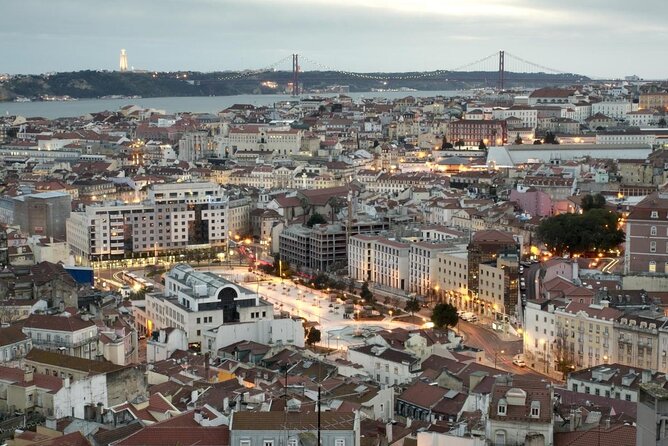
- Starts at Príncipe Real: Meet by the juniper tree arbor in Misericórdia, near the monument honoring victims of homophobia.
- Covers six Lisbon areas: The route travels through Príncipe Real, Bairro Alto, Bica, Cais do Sodré, Carmo, Martim Moniz, Graça, and São Vicente.
- Connects queer history with national history: You’ll discuss the first Pride March, Portugal’s dictatorship, the 1974 revolution, church influence, and current movements.
- Ends at a queer-owned venue: The final stop pays tribute to Black queer resistance at Criolense Kitchen Club in Graça.
- Includes a useful digital map: You receive an updated Queer Map of Lisbon as a PDF.
- Plan for a small-group walk: The maximum group size is 20, and a moderate level of physical fitness is recommended.
Príncipe Real begins the story at a memorial
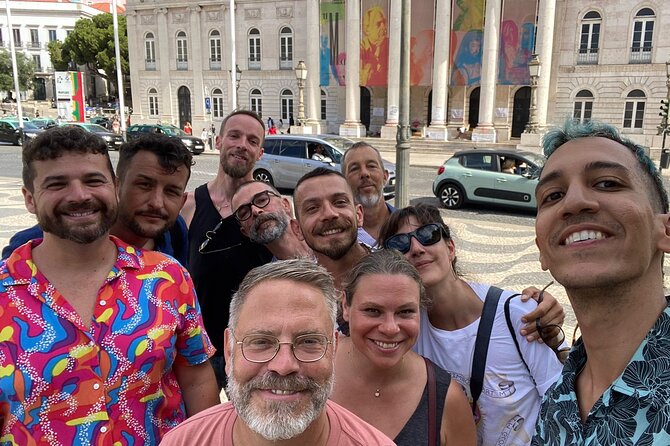
The meeting point is by a juniper tree arbor in Príncipe Real, in Lisbon’s Misericórdia district. The first stop is the monument honoring victims of homophobia, an appropriate place to begin because it makes the cost of prejudice visible before the tour moves into broader social and political questions.
The guide uses this opening to explain the early LGBTQ+ movement in Portugal, including the first Pride March and public demonstrations. That gives you a useful starting point: queer life in Lisbon is not just about current districts or nightlife. It also comes from organized protest, public visibility, and people willing to challenge accepted rules.
This first section lasts about 30 minutes and takes place outdoors. Admission is free, so the price of the tour pays mainly for the guide’s time, interpretation, route planning, and the access to a focused subject that is easy to miss on a standard Lisbon visit.
More history-first plans:
- Lisbon: History, Stories and Lifestyle Walking Tour
★ 4.8 · 10,902 reviews - Lisbon: Live Fado Show with Port Wine in Historic Center
★ 4.7 · 4,166 reviews - Lisbon: Fado Show with Wine in a Historic Venue
★ 4.8 · 1,294 reviews
Bairro Alto, Bica, and Cais do Sodré show a changing city
The route then moves through Bairro Alto, Bica, and Cais do Sodré, three areas that help explain how queer Lisbon changes over the course of a day. You’ll stop at a viewpoint in Bairro Alto for views across Lisbon’s hills, but the main point is social rather than scenic.
Here, the guide compares daytime and nighttime life in the queer neighborhood. The same streets can offer different levels of comfort and access depending on who you are, when you arrive, and how visible you feel able to be. That is a more useful way to think about inclusion than simply labeling a district LGBTQ-friendly.
The discussion also addresses patriarchal and colonial attitudes that remain present in social behavior. The tour asks direct questions about who is included in Portugal’s idea of progress and who still faces barriers. That makes this section more analytical than a typical neighborhood walk.
You should expect only about 20 minutes at this stop, with walking between areas. Lisbon’s hills matter here. The tour is not described as strenuous, but moderate physical fitness is recommended, and comfortable shoes are a sensible choice.
Largo Trindade Coelho examines the church’s influence
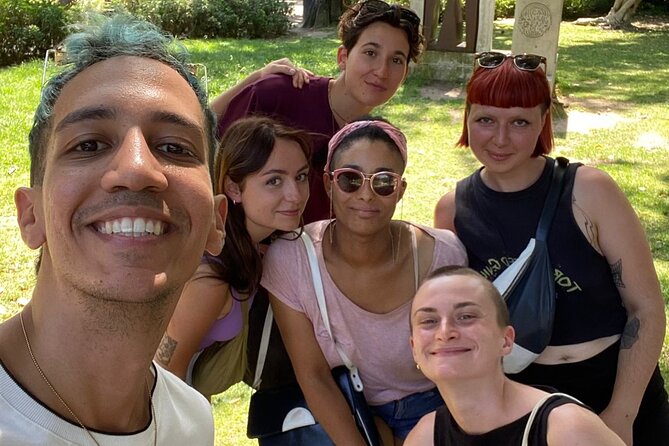
At Largo Trindade Coelho, you’ll see the monument to Padre António Vieira and consider the church’s role in regulating sexuality. The discussion is not limited to attitudes toward homosexuality. It also looks at the wider pressure placed on anyone whose identity or behavior falls outside a narrow social norm.
This stop helps explain why legal change does not instantly change public attitudes. Religious teaching, family expectations, and ideas about respectable behavior can continue to shape a society long after laws begin to shift.
The stop lasts around 20 minutes and is entirely free. Since the route uses public streets and squares rather than museum interiors, the guide’s explanation is central. If you prefer tours built around objects, documents, and indoor exhibitions, this format may feel less substantial. If you value conversation connected to the places around you, it works well.
Largo do Carmo connects queer lives with the 1974 revolution
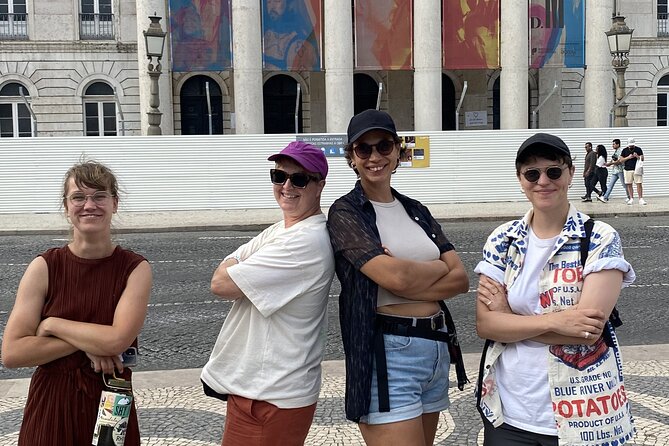
Largo do Carmo is one of Lisbon’s most important political sites. It is where the Portuguese revolution began, and the tour uses this setting to explain the country’s long dictatorship, described as the longest-lasting in Europe.
The focus is the family model enforced by the regime: a man, a wife, and happy children, with little room for anything outside that pattern. The tour also brings attention to LGBTQ+ figures who resisted during this period.
This is one of the route’s strongest ideas. Political history is often presented through leaders, soldiers, and governments. Here, you also consider the people whose private lives were controlled by official morality and social pressure.
Expect about 20 minutes at Largo do Carmo. The setting itself is memorable, but the tour’s value comes from linking the revolution to personal freedom. Portugal’s transition away from dictatorship was not only a change in government. It also created space for people to question the family and sexual norms that had been treated as fixed.
A handful more Lisbon ideas to compare
- Lisbon City Center Tour – The Unmissable Lisbon
★ 5.0 · 22,234 reviews - Lisbon: Sintra, Pena, Regaleira, Cabo da Roca & Cascais
★ 4.7 · 19,656 reviews - Lisbon: Jerónimos Monastery Entrance Ticket
★ 4.1 · 14,164 reviews - Lisbon: Sunset Boat Party Cruise with DJ and Open Bar
★ 4.5 · 10,378 reviews
Martim Moniz brings immigration into the conversation

At Praça Martim Moniz, the tour turns toward contemporary queer movements. The discussion centers on groups that challenge existing structures and ask who gets heard within LGBTQ+ politics.
A particularly useful part of this stop is the attention given to immigrants. New arrivals are described not simply as part of Lisbon’s changing population, but as people bringing fresh energy and new perspectives to queer organizing in Portugal.
This widens the tour beyond a single version of queer identity. It also helps you see why a movement can face its own internal questions about race, nationality, class, access, and representation. The route does not present inclusion as a finished achievement.
Again, the scheduled time is about 20 minutes. Praça Martim Moniz is served by public transportation, and the tour itself begins near public transit, which makes the start and end points practical for a day of sightseeing. The route finishes in Graça rather than returning to Príncipe Real, so plan the rest of your day from the eastern side of central Lisbon.
Graça and São Vicente provide a meaningful final stop
The final area is Graça and São Vicente, where the tour ends at Criolense Kitchen Club. This queer-owned venue is used to honor Black queer resistance in the neighborhood.
That ending gives the walk a concrete present-day focus. You begin with a memorial to victims of homophobia and finish in a place connected to active queer ownership, food, community, and resistance. The route therefore moves from remembrance to organizing and lived culture.
Dinner and drinks are not included. You pay for your own meal and beverages at the restaurant. That is worth keeping in mind when judging the $72.29 price. The cost is not a meal package. You are paying for approximately four hours with a local Portuguese and English-speaking guide, plus the PDF Queer Map of Lisbon and a carefully connected route through several districts.
The restaurant stop is listed as about 20 minutes, so do not assume it is a full dinner reservation or an extended meal. It is best understood as the closing point of the tour, with food and drinks available at your own expense.
Why the four-hour format offers good value
At $72.29 per person, this is more expensive than a basic orientation walk through central Lisbon. The comparison is not quite fair, though. A general city tour may show you landmarks, while this one builds a specialized story around places that can look ordinary without context.
You spend roughly four hours moving through six parts of the city, with each stop tied to a distinct theme. The route includes queer activism, public protest, church authority, dictatorship, revolution, immigrant organizing, and Black queer resistance. That is a lot of ground, but the short stop lengths keep the tour moving.
The maximum group size is 20. That is not an intimate private tour, but it is small enough to make a discussion-based walk workable. The strongest value comes if you want interpretation and conversation rather than only photographs.
The PDF map is another practical benefit. You can use it to understand Lisbon’s queer spaces after the tour, though the available information does not specify its exact contents or whether it includes recommendations beyond the route.
The tour has a five-star rating from 26 reviews, with 100 percent recommending it. One especially positive assessment describes it as an earnest and informative tour led by young entrepreneurs, with plenty of fun and a good group atmosphere. That matches the structure: serious themes, but not a grim four hours.
What the walking conditions mean for you
The tour is offered in English, with a Portuguese and English-speaking local guide. That makes it suitable if you want the discussion in English while still having a guide connected to Lisbon’s local setting.
The walking route includes hills and several historic districts. The supplied details recommend a moderate level of physical fitness. You do not need to treat this as a demanding hike, but Lisbon’s slopes and uneven streets can make a four-hour walk tiring, especially if you have already spent the morning exploring on foot.
The start is by the juniper tree arbor in Misericórdia, with Príncipe Real as the first area. The finish is in Graça, at Criolense Kitchen Club. Check the exact meeting instructions when you book, since the information gives the meeting place but not a specific departure time.
A mobile ticket makes the booking easy to carry on your phone. Service animals are allowed, and the route is near public transportation. The information does not provide a detailed accessibility assessment, so if you have mobility concerns, ask the operator about the hills, pavement, seating, and access at the final venue before booking.
Who will get the most from this Lisbon walk
I would choose this tour if you want to understand how queer life connects with Portugal’s larger political and social story. It suits first-time visitors who want more than nightlife suggestions, LGBTQ+ visitors interested in local history, and anyone who values a guide-led discussion about identity and public life.
It is also a good choice if you prefer a route that includes different voices. The attention to patriarchal and colonial attitudes, immigrant organizing, and Black queer resistance gives the tour a wider frame than a simple list of famous LGBTQ+ locations.
You may want a different activity if your priority is a relaxed evening out, a museum visit, or a food-focused tour. The themes can be challenging, and the tour does not promise a long meal or a return to the starting point.
The four-hour length works well as a substantial half-day activity. You can schedule it before an evening in Lisbon, though remember that it ends in Graça rather than Príncipe Real. Since the tour requires good weather, keep some flexibility in your plans.
Booking, cancellation, and weather details
You receive confirmation when booking, and free cancellation is available up to 24 hours before the start time for a full refund. Changes or cancellations made less than 24 hours before the start are not accepted for a refund.
The cut-off follows local Lisbon time. If poor weather cancels the walk, you can choose a different date or receive a full refund. The same applies if the minimum number of participants is not reached, with the option of a different date or experience.
Should you book the Queer Lisbon Historical Tour?
Book it if you want a thoughtful, place-based look at Lisbon’s queer past and present, and if you are comfortable with a walking tour that asks difficult questions. The route is strongest in its connections: Príncipe Real’s memorial leads to early activism, Carmo links dictatorship with personal freedom, Martim Moniz brings immigrants into the story, and Graça ends with Black queer resistance in a queer-owned venue.
At $72.29, the tour is not the cheapest way to see Lisbon. It offers fair value if you want a focused guide, a four-hour route, a small group of no more than 20, and a subject you would struggle to piece together on your own. Bring comfortable shoes, budget separately for food and drinks, and allow for the hills.
FAQ
Where does the Queer Lisbon Historical Tour start?
It starts at the juniper tree arbor in Misericórdia, Lisbon, near Príncipe Real.
Where does the tour end?
The tour ends in Graça, Lisbon, at a queer-owned venue connected with Criolense Kitchen Club.
How long does the tour last?
The tour lasts approximately four hours.
What language is the tour offered in?
The tour is offered in English and led by a local Portuguese and English-speaking guide.
What areas does the tour visit?
The route includes Príncipe Real, Bairro Alto, Bica, Cais do Sodré, Largo Trindade Coelho, Largo do Carmo, Praça Martim Moniz, Graça, and São Vicente.
Is dinner included in the price?
No. Dinner and drinks at the restaurant are paid for separately.
What is included with the tour?
The tour includes an updated Queer Map of Lisbon in PDF form and a Portuguese and English-speaking local guide.
How many people can join the tour?
The maximum group size is 20 people.
Is the tour suitable for someone with limited fitness?
A moderate level of physical fitness is recommended. The supplied details do not provide a full accessibility assessment.
Are service animals allowed?
Yes. Service animals are allowed on the tour.
Can I cancel for a full refund?
Yes, if you cancel at least 24 hours before the experience start time. Poor weather or failure to meet the minimum number of participants can also lead to a different date or a full refund.
Fresh finds around Lisbon
- Lisbon: Tuk Tuk City Tour★ 3.6 · 7 reviews
- Fatima Full day Private Tour★ 5.0 · 7 reviews
- Lisbon: Highlights and Hidden Gems Tour★ 5.0 · 7 reviews
- Private Tour to Evora and Monsaraz from Lisbon★ 5.0 · 7 reviews
- Discover Sintra Beauty with a Guided Journey from Lisbon★ 5.0 · 7 reviews
- Private Half-Day Tour to Sintra★ 3.4 · 7 reviews
- Lisbon: Sunset and Wine Catamaran Tour★ 5.0 · 7 reviews
- Nazaré: Beaches of Nazaré Guided E-Bike Tour★ 4.9 · 7 reviews
Historical Tours, compared.
Lisbon: History, Stories and Lifestyle Walking Tour
Read our review →
Lisbon: Live Fado Show with Port Wine in Historic Center
Read our review →
Lisbon: Fado Show with Wine in a Historic Venue
Read our review →
Explore Lisbon by Tuk Tuk: History and Viewpoints
Read our review →
Lisbon: Daytime or Sunset Boat Cruise with History and Wine
Read our review →
Private Tuk Tuk Tour Through Lisbon’s Historical Streets
Read our review →
Lisbon Sunset Sailing with Portuguese Wine and History
Read our review →
Lisbon: Guided Tuk-Tuk Tour Along the Historic Tram Line 28
Read our review →Browse the lists this tour appears in