
Reviewed · HISTORICAL TOURS
Queer Lisbon – A Treasure Hunt in LGBT History
Lisbon’s queer story is told best on foot, one street, bar, garden, church, and court building at a time. Alex’s tour links centuries of LGBTQ history with the places that shape Lisbon’s scene today, including the city’s first lesbian bar, oldest drag venue, long-running nightclubs, and a gay hotel where the walk ends. Josephine Baker’s wartime Lisbon story is one especially memorable stop.
I like the focused subject matter. This is not a quick pass by the usual monuments with a few rainbow references added on. I also like the small maximum of 15 people, the relaxed pace, and the useful PDF guide, normally valued at 15 euros, packed with LGBTQ Lisbon suggestions. Alex is warm, lively, and ready to answer questions.
The main drawback is simple: you will walk a lot. The route takes about three and a half hours and crosses several neighborhoods, with much of the learning happening outdoors. Wear good shoes, check the weather, and remember that the tour begins at 10 a.m.
In This Review
- Key points to know before booking
- Why this Lisbon walk feels different
- Starting in Príncipe Real
- Nightlife, cruising, and the places people built
- Bars, bears, and the city after dark
- From dictatorship to legal protection
- Scandal, literature, and lives that refused neat labels
- Igreja de São Roque gives the past more weight
- Ending at Late Birds Hotel
- Pace, group size, and physical demands
- Is $60.34 a fair price?
- Who should book this experience?
- Booking and cancellation details
- Should you book Queer Lisbon?
- FAQ
- Where does the Queer Lisbon tour begin?
- Where does the tour finish?
- What time does the tour start?
- How long does the experience last?
- What language is the tour offered in?
- How many people can join the tour?
- Is transportation included?
- What is included in the price?
- Can I cancel for a full refund?
Key points to know before booking
- A focused queer history walk: Connect Lisbon’s LGBTQ past to modern bars, clubs, health services, Pride, and legal rights.
- Twenty-four stops: Expect a steady series of short talks, with extra time at Igreja de São Roque.
- Alex leads with stories: The tone is personal, warm, funny, and serious when the subject demands it.
- A small group of up to 15: You get a more social walk, with time for questions and introductions.
- Useful finish at Late Birds Hotel: End in the lounge, bar, garden, or pool area with a pub quiz and prizes.
- Good value for a specialist tour: The $60.34 price includes the guide’s LGBTQ Lisbon PDF and a full afternoon of context, local advice, and conversation.
Why this Lisbon walk feels different
General sightseeing tours usually give you kings, explorers, churches, and grand plazas. This experience asks a more pointed question: where are the queer stories in those same streets?
That change in focus matters. You learn about Portugal’s movement from dictatorship-era values toward constitutional protection for LGBTQ people, but you also hear about nightlife, censorship, police surveillance, HIV services, drag, lesbian spaces, bears, cruising, and political protest.
The route is not presented as a museum lecture. Alex moves through ordinary Lisbon streets and uses them as prompts. A nightclub becomes a way to discuss queer social life. A court becomes a place to explain legal change. A church opens a window onto stories involving sex, gender, religious authority, and survival.
The result should suit you if you want history with a strong human angle. It also works for allies and for people who already know something about LGBTQ history but want to understand how it connects to Portugal.
More history-first plans:
- Lisbon: History, Stories and Lifestyle Walking Tour
★ 4.8 · 10,902 reviews - Lisbon: Live Fado Show with Port Wine in Historic Center
★ 4.7 · 4,166 reviews - Lisbon: Fado Show with Wine in a Historic Venue
★ 4.8 · 1,294 reviews
Starting in Príncipe Real
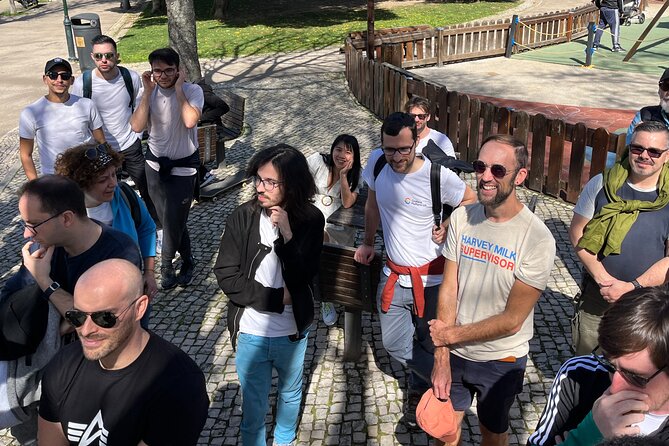
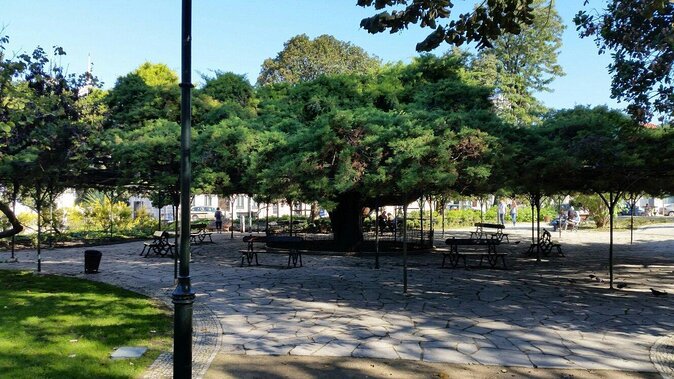
Meet Alex at the Príncipe Real Playground at 10 a.m. The opening gardens provide an easy place for introductions before the route turns to more serious material.
The first stops cover Lisbon’s memorial to victims of homophobia, Pride, and EuroPride. Príncipe Real is important not only as a pleasant public square, but also as the starting point for Lisbon Pride. You learn how Lisbon’s Pride differs from other celebrations and why EuroPride 2025 matters to the city.
This early section sets the tone. The tour recognizes violence and discrimination without treating queer life as a story that ends in suffering. The message is one of progress, but not a claim that every problem has vanished.
A useful practical point comes early: the tour includes information about GAT Checkpoint LX and Lisbon’s approach to managing HIV and AIDS. You can ask about health services for queer men and women, making this more useful than a sightseeing walk for anyone spending several days in the city.
Nightlife, cruising, and the places people built
From Príncipe Real, the route moves through places tied to queer nightlife. Construction Lisbon Club offers a starting point for discussing long-running dance venues and nearby lesbian spaces.
At the Botanical Garden of Lisbon, the tone shifts to older stories of cruising in the 1950s. You hear about men accused of offending public morals and the ways they tried to avoid police attention. These stories show how public parks could become meeting places when safer, open venues did not exist.
Trumps, Lisbon’s large queer nightclub, brings the story into the modern era. The club has operated since 1980 and has two floors with different moods. That detail is practical if you are deciding where to go out later, since the tour gives you more than a name. It gives you a sense of the venue’s place in Lisbon’s queer culture.
The former location associated with O Gato Verde, Lisbon’s first lesbian bar, adds another needed point of view. LGBTQ nightlife is not one single scene, and the tour makes room for lesbian spaces alongside clubs that are more broadly gay or queer.
At Praça das Flores, Alex tells the story of Lisbon’s first drag bar. The 1974 revolution opened a period of enthusiasm for drag, followed by renewed limits and setbacks. That rise and fall gives you a useful reminder that social change rarely moves in a straight line.
Bars, bears, and the city after dark
The middle part of the walk looks at a range of current and historic venues. Bar 106 is a place to leave a message for friends, while Shelter Bar and Bar TR3S introduce Lisbon’s bear scene.
Bar TR3S connects bear culture with Bear Pride, beach clubs, parties, a sauna, and sports sponsorship. These details help you see that the city’s queer life is made up of many overlapping communities, not simply one central nightlife district.
Finally! Club is presented as Lisbon’s oldest and best-known drag venue. The important practical warning is that its shows and opening times differ, so you should not treat a passing visit on the walk as a complete nightlife recommendation. Take notes, then check the timing before going out.
Purex adds another side of the nightlife story. It is a dance floor run by women, with a deliberately playful detail involving vagina jewelry. The humor here is part of the point. Queer spaces often survive through wit, reinvention, and a willingness to ignore polite expectations.
The route also includes the Maria Caxuxa area and the story of a woman who challenged conventions in the 1940s and dismissed intrusive journalists. It is a small but valuable correction to any idea that Lisbon’s queer past belongs only to men.
A handful more Lisbon ideas to compare
- Lisbon City Center Tour – The Unmissable Lisbon
★ 5.0 · 22,234 reviews - Lisbon: Sintra, Pena, Regaleira, Cabo da Roca & Cascais
★ 4.7 · 19,656 reviews - Lisbon: Jerónimos Monastery Entrance Ticket
★ 4.1 · 14,164 reviews - Lisbon: Sunset Boat Party Cruise with DJ and Open Bar
★ 4.5 · 10,378 reviews
From dictatorship to legal protection
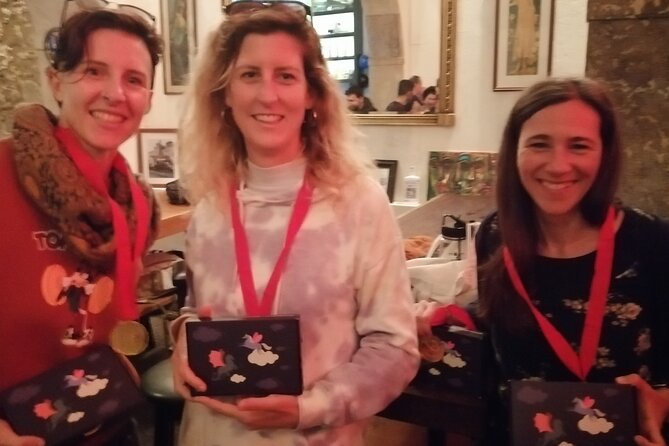
The Constitutional Court stop gives the political story a firm center. Portugal’s LGBTQ rights did not appear by magic. They developed through legal challenges and a long shift away from the values of dictatorship.
At Rua Luz Soriano, you hear about the first homosexual manifesto, the early efforts that were suppressed, and the eventual success of the movement. This is one of the stops that helps you connect personal stories with organized political action.
The tone is likely to be most useful here for anyone who knows Lisbon mainly as a relaxed, friendly city today. Modern acceptance can hide how recent many protections are. The route gives you a way to understand both the progress and the resistance behind that change.
Alex’s own connection to the subject also matters. The tour’s appeal is not only the information, but the sense that these stories are being kept in public memory by someone who cares about the community and its future.
Scandal, literature, and lives that refused neat labels

Some of the most memorable stops involve people who broke the rules of their time.
At Rua do Trombeta, the story of the Two Fernandes moves from nineteenth-century scandal and love nests to modern apartments and saunas. It is a steamy episode, but also a lesson in how private lives become public gossip, legal trouble, and later historical material.
At Travessa da Espera, you hear about the Marquis of Valada, who was reportedly found naked in the arms of a common soldier. The story includes disgraced politicians, political blackmail, and eventual survival. It has all the ingredients of a Lisbon scandal, but the larger value is seeing how class and power shaped the risks of queer relationships.
Teatro da Trindade brings in Josephine Baker. The bisexual performer used a public career and wartime appearances in Lisbon while also avoiding secret police attention and spying concerns. Her story is a highlight because it connects queer identity, performance, international fame, and wartime secrecy.
At Rua da Misericórdia, the subject turns to women in love with women, queer fiction, censorship, and censors whose own positions were not always as simple as the rules they enforced.
Near Hospital St. Louis, the tour discusses Fernando Pessoa and the line between literary interpretation and historical recovery. Pessoa is now linked to gay writing and reclaimed through a queer reading of his work. This stop should appeal to you if you like tours that connect literature with the social limits of its time.
Igreja de São Roque gives the past more weight
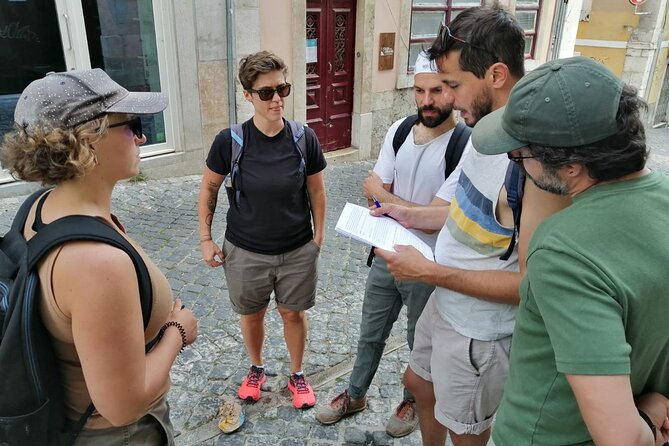
Igreja de São Roque is the longest stop, at about 15 minutes, and it covers material from the sixteenth, seventeenth, and eighteenth centuries.
The Portuguese Inquisition provides the setting for stories involving sex in church, lesbian nuns, a demonic penis, and a transgender love story. The subjects are unusual, but they are not included only for shock. They show how queer lives can survive in scattered court records, religious accounts, accusations, and stories shaped by institutions that wanted to control them.
This is also where you should expect the most serious historical discussion. Some listeners will love the detail and the old records. Others may find the material heavy after several hours of walking and talking. If you prefer a light nightlife tour, this is not that experience.
Ending at Late Birds Hotel
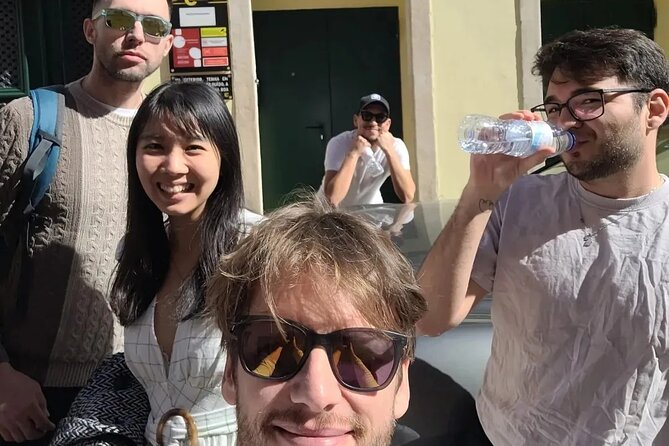
The final stop is Late Birds Hotel on Travessa André Valente. The walk finishes in the lounge, bar, garden, or pool area of Lisbon’s largest gay hotel.
If the weather is good, you can bring a swimming costume. The setting turns the end of the tour into a social hour rather than a quick goodbye. A pub quiz and prizes give the group an easy way to relax, compare notes, and meet people after the more formal storytelling.
This ending is one of the best design choices in the experience. You finish somewhere connected to Lisbon’s queer scene, with the chance to have a drink and make evening plans. The one limitation is that drinks are not listed as included, so plan to pay for anything you order.
You also receive Alex’s LONG LIST, a PDF guide to LGBTQ Lisbon that is normally priced at 15 euros. That guide can help you find bars, clubs, free activities, and other places after the tour ends. For a short visit, this may be more useful than another generic city map.
Pace, group size, and physical demands
The tour has a maximum of 15 people and is described as relaxed and social. That group size should give Alex room to explain the stories and take questions without turning the walk into a private tour price.
The route has 24 stops, most planned for about six minutes. Igreja de São Roque gets about 15 minutes. The short stops keep the story moving, but the total route is still extensive. One person who enjoyed the experience described it as a very active four hours, and that is a fair warning even though the official duration is about three and a half hours.
You need a moderate level of physical fitness. The tour does not include private transportation, so you move from one stop to the next on foot. Public transportation is nearby, and service animals are allowed, but the supplied details do not describe step-free access or the exact terrain.
Weather deserves attention. In poor conditions, umbrellas may be needed, although Alex has helped make the walk workable in bad weather. Still, Lisbon’s hills, outdoor stops, and long route are reasons to check the forecast and wear supportive shoes.
The minimum age is 16. You must be 18 to drink legally, so younger participants can join the tour but cannot take part in the drinking portion.
Is $60.34 a fair price?
At $60.34 per person, this is more expensive than a basic city walking tour, but it is not selling the same product.
You are paying for a specialist subject, a three-and-a-half-hour route, a small group, access to Alex’s own research and storytelling, current nightlife guidance, and the LGBTQ Lisbon PDF. The guide alone is normally valued at 15 euros, though the real value depends on how much you use it after the walk.
I see the price as fair if queer history is a main reason for your Lisbon visit, or if you want a focused introduction to the city’s LGBTQ scene. It is less compelling if you want a general overview of Lisbon’s top sights, since the route is designed around queer history rather than the classic monuments.
The 100 percent recommendation rate and five-star rating across 71 ratings point to a very strong response, but you should still match the tour to your interests and stamina. Strong ratings cannot remove the walking or make a serious history tour feel like a casual bar crawl.
Who should book this experience?
I would choose this tour if you want:
- A queer-centered view of Lisbon and Portugal
- Stories that include men, women, bisexual people, drag performers, writers, activists, and transgender history
- Practical ideas for nightlife after the tour
- A social small-group activity
- A guide who welcomes questions and shares personal connection to the subject
- A useful LGBTQ guide for the rest of your stay
It also suits allies who want more than a standard city tour. The material adds context to Portugal’s politics, literature, religion, nightlife, and social change.
I would think twice if you dislike long walks, outdoor touring, adult themes, scandal, or discussions of persecution and censorship. This is also not the best choice if you need a fully accessible route and require confirmed information about steps, slopes, or seating at every stop.
Booking and cancellation details
You receive confirmation at booking, and the experience is offered in English with a mobile ticket. It is usually booked about 23 days ahead, so reserving early is sensible if your dates are fixed.
Free cancellation is available up to 24 hours before the 10 a.m. start time for a full refund. Changes or cancellations inside that window are not accepted for a refund, and the local Lisbon time controls the cut-off. A minimum group size applies, so if the tour is canceled for that reason, you are offered another date or experience, or a full refund.
Should you book Queer Lisbon?
Book it if you want to understand Lisbon through the people and places left out of standard sightseeing. Alex’s route gives you political history, old scandals, nightlife advice, literary connections, health information, and a friendly finish at Late Birds Hotel.
The strongest reason to go is the combination of serious research and lively storytelling. The most useful extra is the LGBTQ Lisbon PDF, which lets you keep exploring after the walk. Just plan for a long outdoor route, bring good shoes, and leave room in your schedule for a drink and quiz at the end.
FAQ
Where does the Queer Lisbon tour begin?
It begins at the Príncipe Real Playground, Praça do Príncipe Real, 1250-184 Lisboa, Portugal.
Where does the tour finish?
It finishes at Late Birds Hotel, at Tv. André Valente 25, 1200-236 Lisboa, Portugal. The final area includes the hotel lounge, bar, garden, and pool.
What time does the tour start?
The tour starts at 10:00 a.m.
How long does the experience last?
It lasts approximately three hours and 30 minutes.
What language is the tour offered in?
The experience is offered in English.
How many people can join the tour?
The maximum group size is 15 people.
Is transportation included?
No. Private transportation is not included. You walk between the stops, and the tour is near public transportation.
What is included in the price?
The experience includes queer history stories, information about Lisbon’s modern LGBTQ scene, the small-group walk, the final stop at a gay hotel lounge, and a PDF copy of Alex’s LONG LIST, an LGBTQ Lisbon guide normally valued at 15 euros.
Can I cancel for a full refund?
Yes. You can cancel at least 24 hours before the local start time for a full refund. Cancellations or changes made less than 24 hours before the start are not refunded or accepted.
Fresh finds around Lisbon
- Sanctuary of Fátima and Coimbra City Tour★ 4.5 · 51 reviews
- Sintra/Lisbon: Sintra & Quinta da Regaleira Tour with Ticket★ 4.4 · 51 reviews
- Jeronimos Monastery Guided Tour – Small Groups – Tickets Included★ 5.0 · 51 reviews
- Half day Spa Water Therapy experience at THE SPA at Corinthia Lisbon★ 4.5 · 51 reviews
- Lisbon: Private Christmas Lights Tour by Eco Tuk Tuk★ 4.9 · 51 reviews
- Peniche: Berlengas Island Catamaran Tour – Round Trip★ 4.6 · 51 reviews
- Lisbon: Private Tuk-Tuk Tour for 2 hours★ 4.7 · 51 reviews
- Premium Lisbon Airport Transfer to Lisbon★ 5.0 · 51 reviews
Historical Tours, compared.
Lisbon: History, Stories and Lifestyle Walking Tour
Read our review →
Lisbon: Live Fado Show with Port Wine in Historic Center
Read our review →
Lisbon: Fado Show with Wine in a Historic Venue
Read our review →
Explore Lisbon by Tuk Tuk: History and Viewpoints
Read our review →
Lisbon: Daytime or Sunset Boat Cruise with History and Wine
Read our review →
Private Tuk Tuk Tour Through Lisbon’s Historical Streets
Read our review →
Lisbon Sunset Sailing with Portuguese Wine and History
Read our review →
Lisbon: Guided Tuk-Tuk Tour Along the Historic Tram Line 28
Read our review →Browse the lists this tour appears in