
Reviewed · HISTORICAL TOURS
Private Tour – African History in Lisbon
Lisbon’s postcard image of tiled facades and sunny plazas leaves out much of the city’s past. This private walking tour puts African heritage, slavery, colonial trade, and the lives of Black residents at the center, moving from Rossio through Alfama, Mouraria, and the waterfront.
I like the private format, which lets you ask direct questions and adjust the pace. I also like the route’s unusual stops, especially the old fountain at Chafariz D’El Rei and Campo das Cebolas, where the city’s commercial and maritime past comes into sharper focus.
The main consideration is that this is a serious history tour, not a light sightseeing stroll. The English has been praised by nearly everyone, but one group found it difficult to follow, so clear communication is worth confirming if that matters to you.
In This Review
- Key points to know before booking
- Why this Lisbon history walk matters
- Starting at Rossio and Praca Dom Pedro IV
- One hour through Castelo, Alfama, and Mouraria
- Chafariz D’El Rei and the details that change your view
- Praça do Comércio and Lisbon’s public face
- Campo das Cebolas and the commercial waterfront
- What the private format adds
- Price, timing, and overall value
- Who will get the most from this experience
- Should you book the African History in Lisbon tour?
- FAQ
- How long does the African History in Lisbon tour last?
- What is the price of the tour?
- Is this a private tour?
- Is the tour offered in English?
- Where does the tour begin?
- Where does the tour end?
- Which places are included on the route?
- Do the stops require admission tickets?
- Can I cancel for a full refund?
Key points to know before booking
- African history at the center: Learn how African people shaped Lisbon’s economy, culture, and daily life from the 16th century onward.
- A private walk with Filipa Oliveira: Your group travels alone, giving you room for questions and thoughtful conversation.
- Rossio to the waterfront: The route links Praca Dom Pedro IV, Alfama, Mouraria, Chafariz D’El Rei, Praça do Comércio, and Campo das Cebolas.
- Comfortable shoes matter: The outing lasts about two to three hours and includes an hour in the hilly Castelo, Alfama, and Mouraria area.
- A useful city introduction: The tour ends at Praça do Comércio, a handy place to continue exploring Lisbon afterward.
- Good value for a private experience: At $93.62 per person, the price makes the most sense for couples, families, or small groups who want a focused conversation rather than a standard group tour.
Why this Lisbon history walk matters
This experience asks you to look at Lisbon through a different lens. The city was deeply involved in the enslavement and transportation of African people, and that history was tied to commerce, labor, public life, and the growth of Portugal’s capital.
The aim is not simply to point out old buildings. Filipa Oliveira connects landmarks with the people who lived, worked, arrived, and suffered there. She also brings the story into the present by discussing immigrant communities and the continuing place of African heritage in Lisbon.
I value that approach because the subject can easily be reduced to a few dates or a solemn stop at a monument. Here, the route links history, anthropology, and contemporary city life. You get a sense of how the past is still present in neighborhoods, public spaces, and the way Lisbon tells its own story.
Filipa has a background in history and presents the subject with clear passion. Her strongest quality, based on the experience described by past participants, is her ability to connect details rather than treat each landmark as an isolated fact. She has also been praised for patience, warmth, and a willingness to allow extra time for questions.
That personal format matters. With no unrelated group members waiting for their turn, you can ask about Portugal’s colonial past, the African slave trade, modern identity, or anything that catches your attention along the route.
More history-first plans:
- Lisbon: History, Stories and Lifestyle Walking Tour
★ 4.8 · 10,902 reviews - Lisbon: Live Fado Show with Port Wine in Historic Center
★ 4.7 · 4,166 reviews - Lisbon: Fado Show with Wine in a Historic Venue
★ 4.8 · 1,294 reviews
Starting at Rossio and Praca Dom Pedro IV
The meeting point is Lisboa Rossio, at Rua 1º de Dezembro 125. This is a practical starting place in central Lisbon and is near public transportation, which makes it fairly easy to reach before the walk begins.
The first part introduces Lisbon as a city shaped by African history from the 16th century to the present. You can expect an overview of the role of enslaved people in Lisbon’s economy and public life, along with a broader explanation of how African heritage fits into the city’s story.
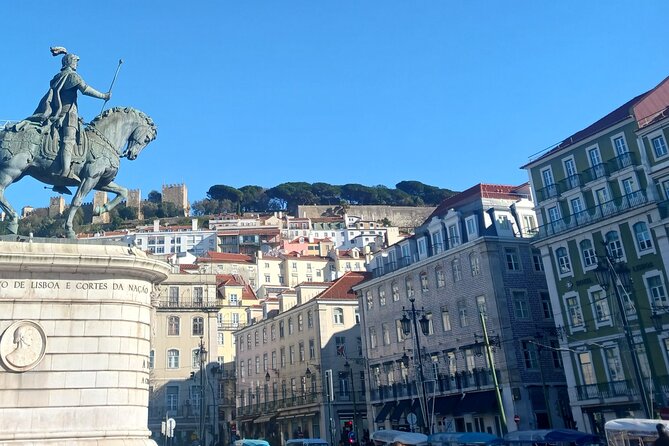
The short stop at Praca Dom Pedro IV, usually called Rossio, gives the discussion a public setting. The square has long been tied to movement, commerce, and everyday city life. Here, the focus turns to the presence of Black Africans and enslaved people in many forms of work and activity in this part of Lisbon.
This opening is useful because it gives you a framework before the route becomes more local and detailed. Instead of hearing a single dramatic fact and moving on, you begin to understand that slavery was not separate from Lisbon’s daily life. It was connected to the economy and to the functioning of the city.
Allow about 15 minutes at each of these opening points. They are not museum visits with indoor exhibits or admission queues. The value comes from the guide’s explanation and your chance to ask questions.
One hour through Castelo, Alfama, and Mouraria
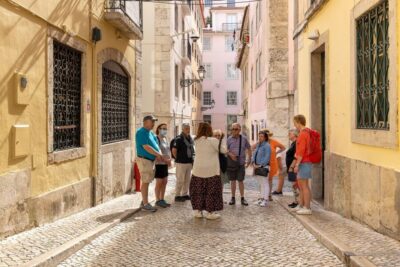
The longest section of the tour takes about an hour in Castelo, Alfama, and Mouraria. This is where the experience becomes less like a quick historical introduction and more like a neighborhood walk.
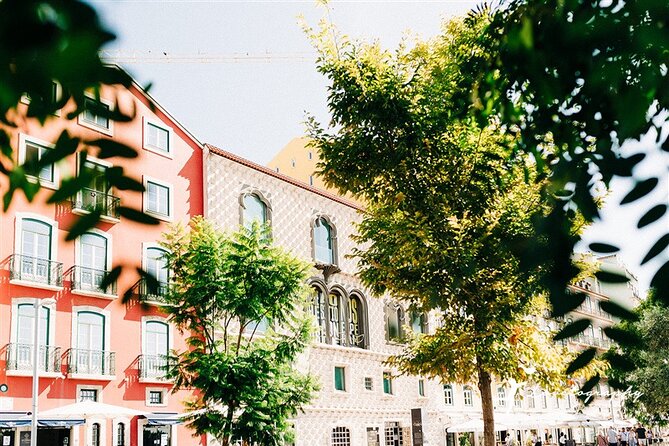
These areas are among Lisbon’s most recognizable old quarters, but the focus here is not simply on picturesque lanes, viewpoints, or traditional architecture. Filipa uses the streets and neighborhoods to discuss immigrants, African communities, and the ways different groups became part of Lisbon’s heritage.
You may find this section the most rewarding part of the route because it links large historical forces to ordinary urban space. The past is easier to understand when you are walking through the same parts of the city where people lived and worked, rather than viewing it only in a formal museum.
The terrain is an important practical point. Castelo, Alfama, and Mouraria are associated with steep streets and uneven walking conditions, and one participant specifically advised wearing comfortable shoes. The tour is described as a comfortable walk by another participant, but comfort depends on your footwear, mobility, and tolerance for hills.
Most people can take part, and service animals are allowed. Still, you should think honestly about the physical side of a two to three hour walking experience. The route is not presented as an indoor or fully flat activity.
This is also the part where the private format earns its keep. If you need a short pause, want to ask about a particular neighborhood, or would like Filipa to explain a point in more detail, you can have that conversation without holding up a large group.
Chafariz D’El Rei and the details that change your view
Chafariz D’El Rei is a short stop, about 10 minutes, but it carries a striking detail. This old Lisbon fountain had a separate tap used by enslaved people to draw water.
Small details like this can change the way you see the city. A fountain may look like an attractive piece of old urban infrastructure, but its use also reflects the social order of the time and the daily labor imposed on enslaved people.
I appreciate that this stop is not treated as a grand monument. Its importance comes from what it reveals about ordinary life. The history of slavery is not found only in royal buildings, ships, or trade records. It also appears in practical city features such as water access.
Because the stop lasts only about 10 minutes, you should expect a focused explanation rather than a long visit. That brevity keeps the walking pace moving, but it also means you may want to ask questions while the subject is fresh.
A handful more Lisbon ideas to compare
- Lisbon City Center Tour – The Unmissable Lisbon
★ 5.0 · 22,234 reviews - Lisbon: Sintra, Pena, Regaleira, Cabo da Roca & Cascais
★ 4.7 · 19,656 reviews - Lisbon: Jerónimos Monastery Entrance Ticket
★ 4.1 · 14,164 reviews - Lisbon: Sunset Boat Party Cruise with DJ and Open Bar
★ 4.5 · 10,378 reviews
Praça do Comércio and Lisbon’s public face
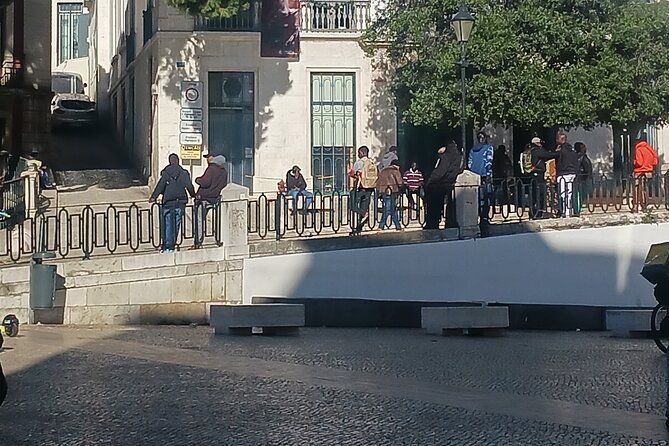
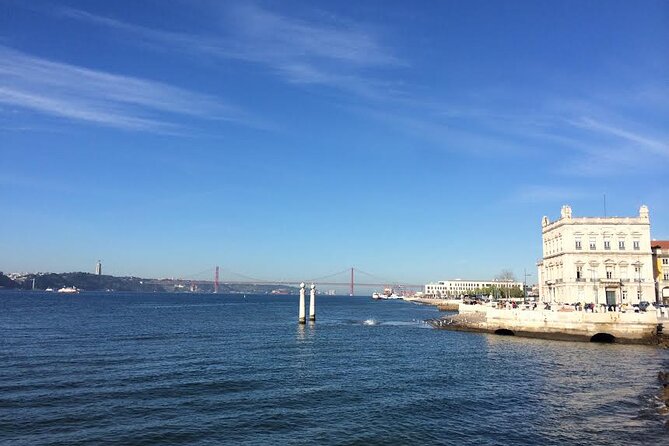
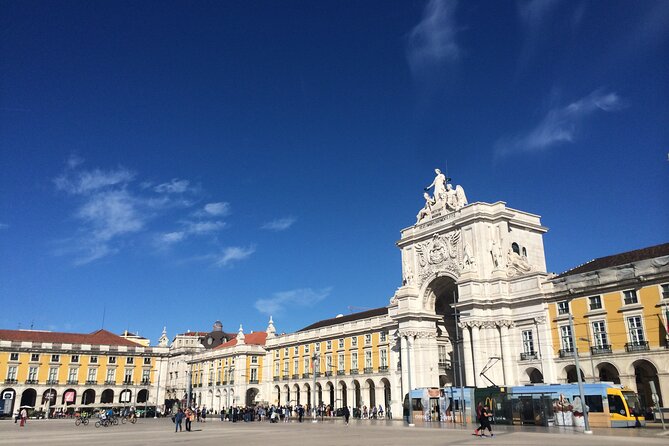
The route continues to Praça do Comércio, Lisbon’s broad main square beside the Tagus. This is one of the city’s most impressive public spaces, and it offers a useful contrast to the narrower streets of the old neighborhoods.
The discussion here returns to the larger history of Lisbon and the square’s place in the development of the city. It is a good location for connecting commerce, the waterfront, Portugal’s overseas activity, and the labor and exploitation that supported those systems.
The stop takes about 30 minutes, giving Filipa time to explain the setting without rushing. You can expect the square to function as both a historical site and a visual summary of Lisbon’s public image. The city presents itself with grand architecture and an open waterfront, while the tour asks you to consider who helped build that prosperity and who was left out of the official story.
The ending here is convenient. Praça do Comércio is not an isolated final stop, so you can continue walking along the river, explore nearby central Lisbon, or make your way to another appointment. One participant also described Filipa walking the group onward to a later wine tasting, though that should not be treated as a standard part of the tour.
Campo das Cebolas and the commercial waterfront
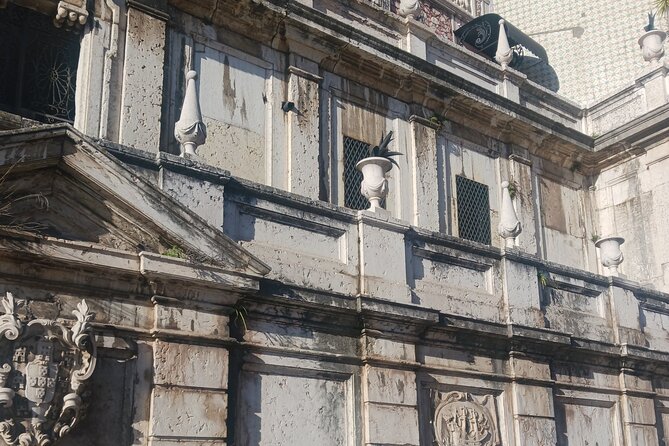
Campo das Cebolas takes about 20 minutes and adds another layer to the waterfront story. This area was a place of commerce in Lisbon, and enslaved people arrived here from Portuguese colonies, particularly from Africa.
The site also contains architectural remains and several layers of urban history. That makes it a fitting place to end a tour centered on movement, trade, labor, and memory. You are not just hearing about slavery as an event that happened somewhere else. You are standing in an area connected to the arrival and sale of human beings.
The waterfront setting can also help tie together the full route. You begin in the central city, move through older residential districts, and finish near the river, where Lisbon’s commercial and overseas connections become easier to picture.
The experience officially ends at Praça do Comércio, listed as 1100-148 Lisbon. Campo das Cebolas is included in the route, so confirm the exact walking order with Filipa when you meet. The supplied details place both areas in the closing section of the experience.
What the private format adds
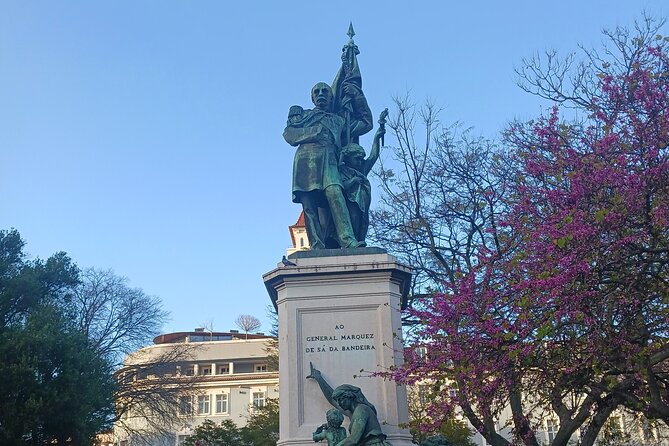
This is not a standard large-group history walk. Only your group participates, which changes the mood and the practical experience.
I would choose the private format if you want to discuss difficult subjects at your own pace. The history involves slavery, racism, colonialism, and the erasure of African contributions. Some people prefer to process that quietly, while others want to ask direct questions. A private guide can respond to your interests without turning the walk into a lecture for strangers.
The private setting also works well for families, couples, and small groups with different levels of prior knowledge. You can ask for more background if the subject is new to you, or spend more time on specific people, neighborhoods, and historical questions if you have already studied Portugal’s role in the slave trade.
Filipa has also included a coffee break with past groups, along with pastéis de nata. Another participant described a stop at a historic cafe in the commercial area. This is a pleasant touch, but it is not listed as a guaranteed itinerary item, so treat it as a possible addition rather than part of the fixed schedule.
Price, timing, and overall value
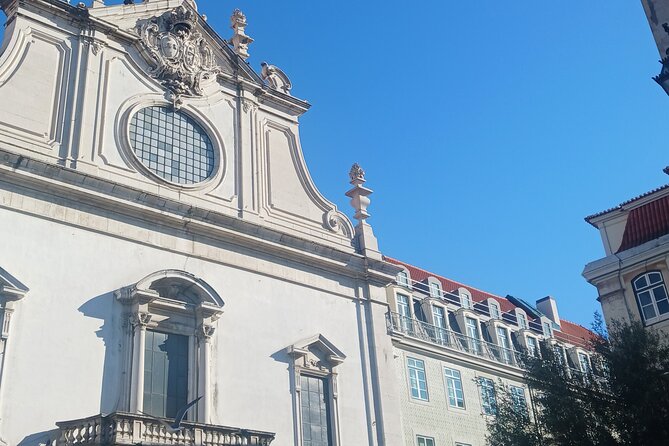
The listed cost is $93.62 per person. At first glance, that is more than a basic group walking tour, but the comparison is not quite fair. You are paying for a private guide, a focused subject, and a flexible conversation over roughly two to three hours.
For one person, the total may feel high. For a couple or a small group splitting the cost, it becomes easier to justify, especially if you want a serious introduction to Lisbon rather than another general walk past the usual sights.
There are no admission charges for the listed stops. That keeps the price focused on guiding rather than tickets. You should still plan for your own food or drinks unless Filipa offers a cafe stop during your visit.
The tour is booked, on average, 46 days ahead. That suggests planning early, particularly if you want a certain date or are visiting during a busy period. You receive confirmation at booking, and the activity is offered in English with a mobile ticket.
Free cancellation is available if you cancel at least 24 hours before the start time. Cancellations made less than 24 hours before the start are not refunded, and changes within that window are not accepted.
Who will get the most from this experience
I would recommend this walk to you if you want to understand Lisbon beyond its monuments and food. It suits anyone interested in African history, the Atlantic slave trade, Portugal’s colonial past, migration, public memory, or the relationship between historic neighborhoods and modern city life.
It is also a good choice if you prefer conversation over a formal museum visit. The walk has enough structure to cover important locations, but the private setup lets you raise questions as you go.
You should be ready for a serious subject. This is not the right pick if you want only scenic viewpoints, architecture, or light entertainment. The old streets provide atmosphere, but the central purpose is historical education and honest discussion.
Guide fit matters, too. Filipa Oliveira is the named guide associated with the experience, and she has been praised for her patience, clear explanations, warmth, and passion for correcting omissions in Lisbon’s public story. One poor assessment raised concerns about English clarity and whether an African history tour should be led by someone of African origin. Most of the available feedback describes the guide’s English and presentation in positive terms, but that criticism is worth noting for anyone with particular communication needs or expectations about the guide’s identity.
Should you book the African History in Lisbon tour?
Book it if you want a personal, thoughtful look at Lisbon’s African heritage and the city’s role in the enslavement of African people. The strongest parts are the private conversation, the route through Castelo, Alfama, and Mouraria, and the specific stops that reveal how slavery was tied to everyday city life.
At $93.62 per person, it is best value for a small group that will make full use of the guide’s time. Wear comfortable shoes, allow up to three hours, and arrive ready for a subject that may challenge the polished version of Lisbon’s past.
I would skip it only if you want a broad introduction to all of Lisbon’s major sights or prefer a short, cheerful orientation walk. For an honest look at the people and systems behind the city’s growth, this is a worthwhile choice.
FAQ
How long does the African History in Lisbon tour last?
The tour lasts approximately two to three hours.
What is the price of the tour?
The listed price is $93.62 per person.
Is this a private tour?
Yes. Only your group participates in the activity.
Is the tour offered in English?
Yes. English is the listed language for the experience.
Where does the tour begin?
The meeting point is Lisboa Rossio, at Rua 1º de Dezembro 125, 1249-970 Lisbon, Portugal.
Where does the tour end?
The listed end point is Praça do Comércio, 1100-148 Lisbon, Portugal.
Which places are included on the route?
The route includes Lisbon’s African history, Praca Dom Pedro IV, Castelo, Alfama, Mouraria, Chafariz D’El Rei, Praça do Comércio, and Campo das Cebolas.
Do the stops require admission tickets?
The listed stops have free admission, with no admission ticket required.
Can I cancel for a full refund?
Yes. You can cancel at least 24 hours before the experience start time for a full refund. Cancellations or changes made less than 24 hours before the start are not accepted for a refund.
Fresh finds around Lisbon
- Lisbon: Tuk Tuk City Tour★ 3.6 · 7 reviews
- Fatima Full day Private Tour★ 5.0 · 7 reviews
- Lisbon: Highlights and Hidden Gems Tour★ 5.0 · 7 reviews
- Private Tour to Evora and Monsaraz from Lisbon★ 5.0 · 7 reviews
- Discover Sintra Beauty with a Guided Journey from Lisbon★ 5.0 · 7 reviews
- Private Half-Day Tour to Sintra★ 3.4 · 7 reviews
- Lisbon: Sunset and Wine Catamaran Tour★ 5.0 · 7 reviews
- Nazaré: Beaches of Nazaré Guided E-Bike Tour★ 4.9 · 7 reviews
Historical Tours, compared.
Lisbon: History, Stories and Lifestyle Walking Tour
Read our review →
Lisbon: Live Fado Show with Port Wine in Historic Center
Read our review →
Lisbon: Fado Show with Wine in a Historic Venue
Read our review →
Explore Lisbon by Tuk Tuk: History and Viewpoints
Read our review →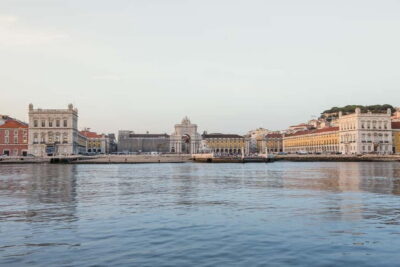
Lisbon: Daytime or Sunset Boat Cruise with History and Wine
Read our review →
Private Tuk Tuk Tour Through Lisbon’s Historical Streets
Read our review →
Lisbon Sunset Sailing with Portuguese Wine and History
Read our review →
Lisbon: Guided Tuk-Tuk Tour Along the Historic Tram Line 28
Read our review →Browse the lists this tour appears in