
Reviewed · WORKSHOPS
Portuguese Pastry Workshop in Lisbon
The best part of this Lisbon class is that you do not simply eat a pastel de nata, you learn what makes one work. In about two hours, you make the pastry by hand, prepare two classic sweets, and hear how Portuguese convent baking shaped these recipes.
I like the tiny group size, capped at six, because everyone gets a real turn with the dough. I also like the generous finish: your pastries come with coffee or tea and a small glass of Port wine or Ginja liqueur. The main thing to consider is the fixed afternoon start at 3:00 pm, plus the fact that class times can vary by day.
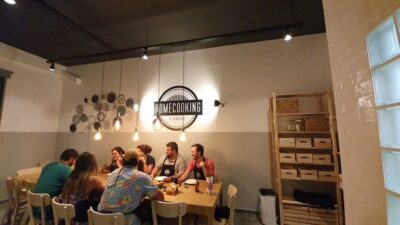
I also appreciate the setting. Casa dos Ovos Moles em Lisboa sits in an 18th-century building on Calçada do Sacramento, close to public transportation and central Lisbon sights. It feels more personal than a large cooking school, though the compact format means this is a hands-on lesson, not a long professional pastry course.
In This Review
- Key points about this Lisbon pastry class
- Making Lisbon’s famous custard tart by hand
- Travesseiro de Sintra adds a second style
- Casa dos Ovos Moles and the convent connection
- Why a maximum of six changes the lesson
- The final tasting with coffee, tea, Port, or Ginja
- Is $96.55 a fair price?
- Timing, booking, and cancellation details
- Who will enjoy this workshop most?
- Should you book the Portuguese Pastry Workshop?
- FAQ
- Where does the Portuguese pastry workshop take place?
- How long does the workshop last?
- What time does the workshop start?
- Which pastries will I make?
- Do I make the puff pastry from scratch?
- Are drinks included?
- Is transportation included?
- How many people can join the class?
- Can I cancel for a full refund?
Key points about this Lisbon pastry class
- Two regional pastries: Make pastel de nata and Travesseiro de Sintra from scratch.
- The puff pastry is part of the lesson: You work through the dough by hand rather than using a ready-made shell.
- Small groups matter: A maximum of six people allows for close help and plenty of questions.
- Portuguese food culture is part of the class: Learn about 500-year-old Ovos Moles traditions and the role of monasteries in pastry making.
- A proper tasting at the end: Eat your pastries with coffee, tea, Port wine, or Ginja liqueur.
- Useful for families: Previous sessions have worked well for children and teenagers, including ages 11, 13, and 14.
Making Lisbon’s famous custard tart by hand
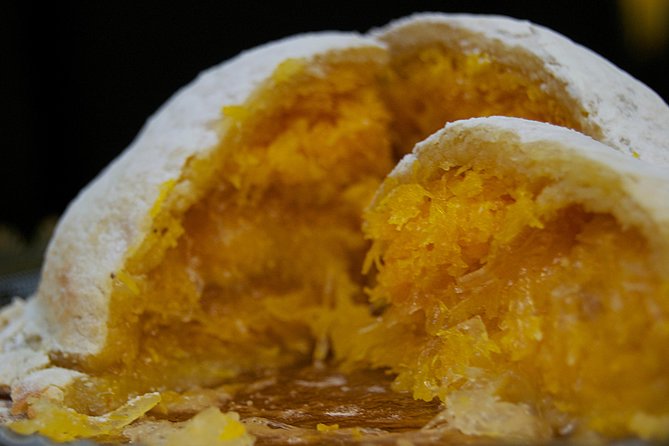
Pastel de nata is often treated as a quick snack, something you grab with an espresso between sights. This workshop gives you a better sense of why the pastry deserves attention.
You begin with the basic components and work through the process rather than watching a baker do everything. The puff pastry is made from scratch and handled by hand. That detail matters. It shows you how much care goes into the thin, flaky shell before the custard even reaches the oven.
You will also prepare the sweet filling. The lesson is designed for participation, so you should expect to mix, shape, and follow the method yourself. The exact pace depends on the group, but the small class allows the teacher to explain each step and correct your technique as you go.
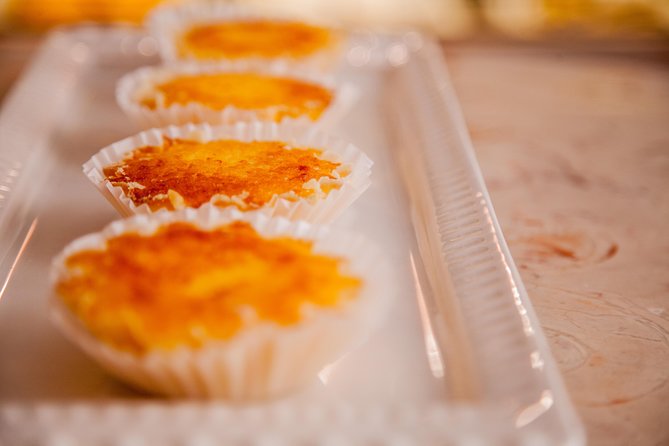
That is useful even if your finished tarts are not perfect. You leave with a practical understanding of the texture you want: crisp pastry outside, soft custard inside, and enough structure to hold together when warm.
The class also gives you a chance to see why pastel de nata can vary so much around Lisbon. A bakery may make the pastry shell thicker or thinner, bake the tops darker, or adjust the sweetness. Making your own version helps you notice those differences when you visit pastry shops later in your trip.
A handful more Lisbon ideas to compare
- Lisbon: Pastel de Nata Baking Class
★ 4.9 · 2,106 reviews - Lisbon: Traditional Portuguese Cooking Class
★ 4.9 · 592 reviews - Pastel de Nata Pastry Class: Bake and Enjoy Your Own Treats
★ 5.0 · 485 reviews
Travesseiro de Sintra adds a second style
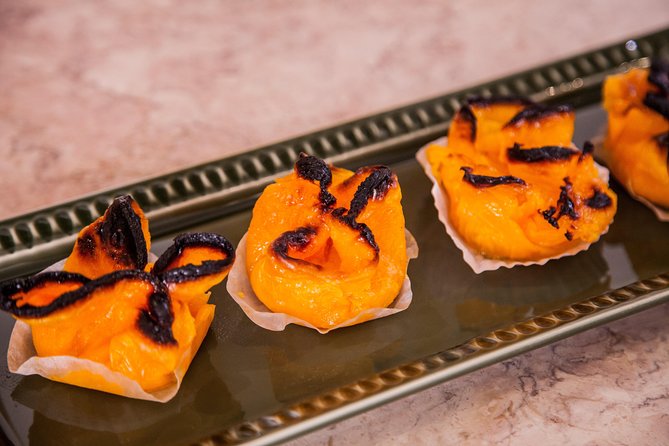
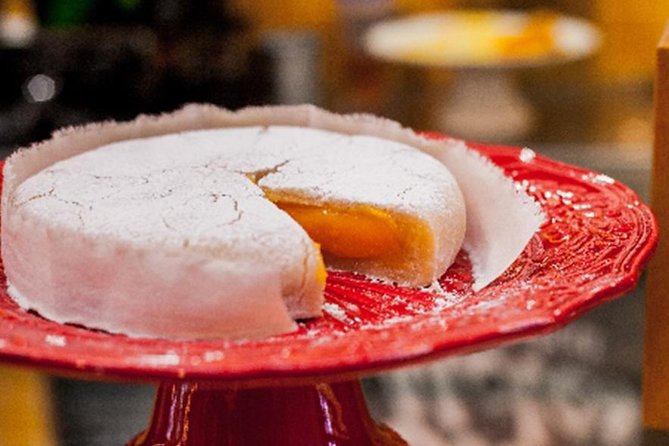
The second pastry is Travesseiro de Sintra, a specialty associated with Sintra, the hill town outside Lisbon. Its name means pillow, a fitting description for its soft, folded shape.
Including this pastry makes the class more useful than a single-recipe pastel de nata lesson. You work with another Portuguese sweet and see how puff pastry can be used in a different form. The two recipes share a connection to flaky dough, but they do not offer exactly the same bite or presentation.
The contrast is also helpful if you are booking the class with family or friends. One person may prefer the creamy custard of pastel de nata, while another may favor the sweet filling and pillow-like shape of the Sintra pastry.
The activity description says you learn both recipes from scratch, including the puff pastry. That is a strong point for anyone hoping to repeat the experience at home. You are not only assembling pre-made ingredients, so the method you take away has real value.
Several people have also received the recipes for home use. That is not just a nice souvenir. Portuguese pastry can be tricky, and a written recipe helps you remember quantities and steps once you are back in your own kitchen.
Casa dos Ovos Moles and the convent connection
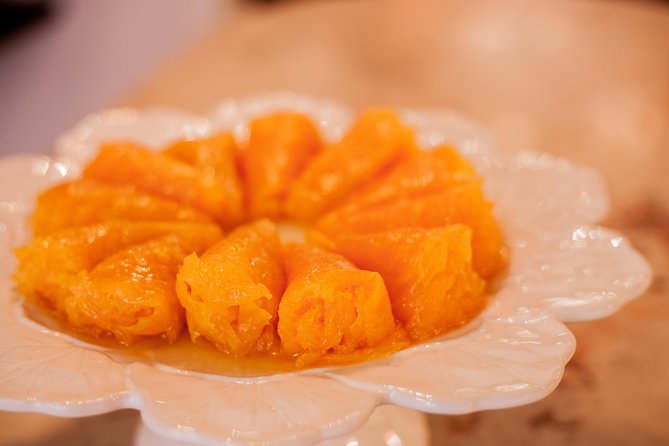
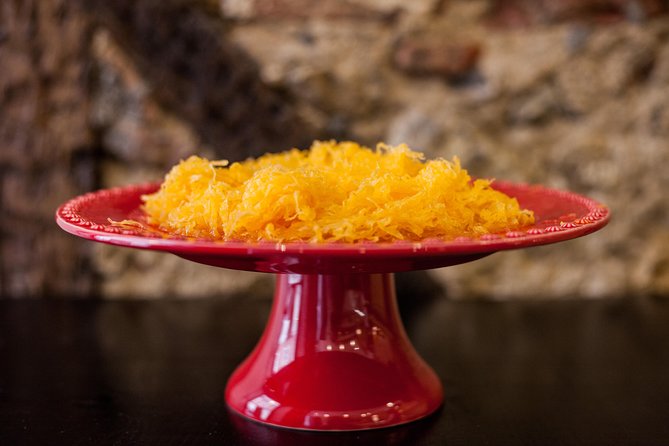
The class takes place at Casa dos Ovos Moles em Lisboa, a pastry shop specializing in Ovos Moles, a Portuguese tradition said to be 500 years old. The shop gives the lesson a direct link to local food culture rather than presenting pastries as generic cooking-school projects.
You will hear about the connection between Portuguese sweets and monasteries. Convent kitchens played an important role in developing egg-rich pastries, and the lesson uses that background to explain why these desserts became such a strong part of Portuguese cuisine.
That historical piece is brief enough to keep the afternoon moving, but it adds meaning to the recipes. You are not just learning how to fill pastry cups. You are learning how religious institutions, local ingredients, and generations of baking shaped the sweets you see across Portugal.
The setting is another part of the appeal. The shop is in an 18th-century building on Calçada do Sacramento, in central Lisbon. This is not a countryside farm visit or a large commercial school. It is a compact urban workshop, easy to pair with sightseeing in the center.
You should still plan your route in advance. Lisbon’s central streets can be steep, and the meeting point is at Calçada do Sacramento 25. The activity is near public transportation, but transportation to the class is not included.
Why a maximum of six changes the lesson
A six-person limit is one of the most important practical details here. In a bigger class, a pastry demonstration can turn into a spectator activity. With six or fewer people, you have a better chance to handle the ingredients, ask questions, and get help before a small mistake becomes a large one.
The class can also be much smaller. Past sessions have had four people, two families, or even one participant. A four-person group offers especially personal instruction. A solo booking could feel almost like a private lesson, though the exact group size depends on the date.
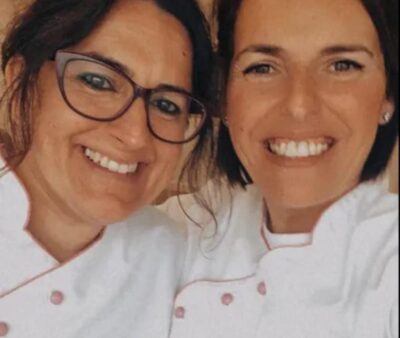
The small format suits beginners. You do not need to arrive with pastry experience, and the teaching is described as patient and clear. Hosts named in the experience include Maria, Filipa, and Filipe, so your instructor may vary. Each has been described as warm, encouraging, and willing to explain the technique carefully.
This is also a sensible choice for families. Children and teenagers aged 11, 13, and 14 have taken part successfully. The work is active enough to hold their attention, and the final tasting gives everyone a clear reward.
I would not book it expecting a highly technical course for advanced pastry professionals. The emphasis is on a relaxed cultural activity, shared work, and learning recipes you can try later. Experienced bakers may still enjoy the Portuguese approach, but beginners and mixed-age groups are the best fit.
Nearby in Lisbon, a different day entirely:
- Lisbon City Center Tour – The Unmissable Lisbon
★ 5.0 · 22,234 reviews - Lisbon: Sintra, Pena, Regaleira, Cabo da Roca & Cascais
★ 4.7 · 19,656 reviews - Sintra: Pena Palace and Park Entrance Ticket
★ 4.2 · 17,410 reviews - Lisbon: Jerónimos Monastery Entrance Ticket
★ 4.1 · 14,164 reviews
The final tasting with coffee, tea, Port, or Ginja
Once the pastries are cooked, you sit down to taste them. The menu includes two pastries, pastel de nata and Travesseiro de Sintra, along with coffee or tea and either Port wine or Ginja liqueur.
That final drink is more than a small extra. Port gives the pastries a mellow, fortified-wine pairing, while Ginja brings the cherry liqueur associated with Portugal. The class also includes snacks, food tasting, and alcoholic beverages.
If you do not drink alcohol, coffee and tea are included, so the tasting does not depend on choosing Port or Ginja. The supplied details do not specify nonalcoholic alternatives beyond coffee and tea, so you may want to confirm any special beverage needs before booking.
The timing works well for a 3:00 pm start. You get an afternoon activity without giving up the morning for sightseeing, and the class can lead naturally into an evening meal. It is also a good plan for a rainy-day schedule, although the stated policy says the activity requires good weather and may be canceled if conditions are poor.
Is $96.55 a fair price?
At $96.55 per person, this costs more than buying several pastel de nata in Lisbon. You should not compare the price with a bakery snack alone. You are paying for instruction, ingredients, two recipes, hands-on time, a small group, drinks, and a guided look at Portuguese pastry traditions.
The value is strongest if you want an activity rather than a tasting stop. You spend about two hours making the food yourself, and you may leave with recipes to repeat at home. For a family, that shared task can be more memorable than another museum visit, especially if everyone takes part.
The value is less convincing if you only want to eat the city’s best tart. Lisbon has many bakeries, and this is not the fastest or cheapest way to sample pastries. It also does not include transportation, so you must make your own way to and from Calçada do Sacramento.
For couples, families, and food-focused visitors, the price can make sense because it combines entertainment, a meal-sized tasting, and instruction. Solo visitors can benefit from the small group, particularly if the session has only one or a few participants.
Timing, booking, and cancellation details
The listed start time is 3:00 pm, but class times differ depending on the day of the week. Check the exact date carefully before planning dinner or another timed attraction.
Confirmation is provided when you book, and the experience is offered in English. The maximum is six people per booking and six participants overall, making early planning sensible. It is booked, on average, 94 days ahead, so last-minute availability may be limited.
You can cancel for a full refund up to 24 hours before the local start time. Changes or cancellations inside that 24-hour window are not accepted for a refund. If the minimum number of participants is not reached, or if poor weather causes a cancellation, you can receive a different date or experience, or a full refund.
The weather clause is worth noting because the class is indoors, but it is part of the stated booking terms. Do not assume that every cancellation decision is under your control.
Who will enjoy this workshop most?
I would choose this class for you if you meet one or more of these descriptions:
- You want a food activity with real participation, not just a guided tasting.
- You enjoy learning the story behind everyday dishes.
- You are visiting Lisbon with children or teenagers.
- You want to understand Portuguese pastries before trying them around the country.
- You like small groups and direct contact with the instructor.
- You want recipes you can attempt at home after the holiday.
It is especially useful for a repeat visitor who has already seen Lisbon’s main sights. The workshop gives you a different way to spend an afternoon and connects food with local history.
I would think twice if your schedule is tight, you dislike fixed start times, or you want a broad cooking course with several savory dishes. This class focuses on two pastries and takes about two hours. It is focused, sweet, and fairly specific.
Should you book the Portuguese Pastry Workshop?
Yes, if you want to do more than photograph a pastel de nata. The strongest reasons to book are the hands-on puff pastry work, the six-person limit, the two distinct recipes, and the chance to learn from hosts such as Maria, Filipa, or Filipe in a historic central shop.
The class is not the cheapest way to eat Portuguese pastries, and the fixed afternoon schedule may not suit every itinerary. But for roughly $96.55, you get a small-group lesson, drinks, food, cultural background, and a skill you can try again at home.
Book it well ahead if your Lisbon dates are fixed. For food lovers, families, and anyone looking for an activity with more substance than a quick snack, this is a smart two-hour choice.
FAQ
Where does the Portuguese pastry workshop take place?
The workshop takes place at Casa dos Ovos Moles em Lisboa, at Calçada do Sacramento 25, 1200-393 Lisboa, Portugal.
How long does the workshop last?
The experience lasts approximately two hours.
What time does the workshop start?
The listed start time is 3:00 pm. Class times can differ depending on the day of the week.
Which pastries will I make?
You will make two Portuguese pastries: pastel de nata and Travesseiro de Sintra.
Do I make the puff pastry from scratch?
Yes. The class includes the full process, including making the puff pastry by hand.
Are drinks included?
Yes. The experience includes coffee and/or tea, plus alcoholic beverages. The tasting menu lists Port wine or Ginja liqueur with the pastries.
Is transportation included?
No. You are responsible for transportation to and from the meeting point.
How many people can join the class?
The maximum is six people per booking, and the activity has a maximum of six participants.
Can I cancel for a full refund?
Yes. You can cancel at least 24 hours before the local start time for a full refund. Cancellations or changes made less than 24 hours before the start time are not refunded or accepted.
Fresh finds around Lisbon
- Sanctuary of Fátima and Coimbra City Tour★ 4.5 · 51 reviews
- Sintra/Lisbon: Sintra & Quinta da Regaleira Tour with Ticket★ 4.4 · 51 reviews
- Jeronimos Monastery Guided Tour – Small Groups – Tickets Included★ 5.0 · 51 reviews
- Lisbon: Private Christmas Lights Tour by Eco Tuk Tuk★ 4.9 · 51 reviews
- Peniche: Berlengas Island Catamaran Tour – Round Trip★ 4.6 · 51 reviews
- Half day Spa Water Therapy experience at THE SPA at Corinthia Lisbon★ 4.5 · 51 reviews
- Private Tour Romantic Sintra, Cabo da Roca & Cascais★ 5.0 · 51 reviews
- Lisbon: Private Tuk-Tuk Tour for 2 hours★ 4.7 · 51 reviews
Workshops, compared.
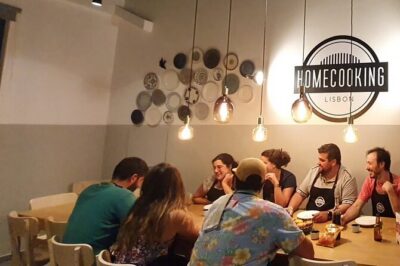
Pastel de Nata Pastry Class: Bake and Enjoy Your Own Treats
Read our review →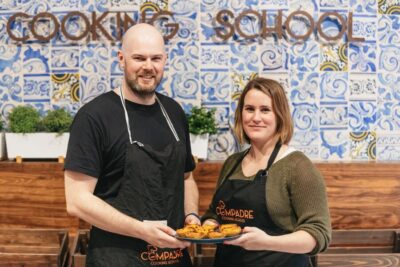
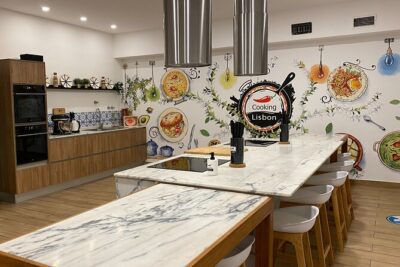
Lisbon Portuguese Cooking Class with 3-Course Dinner
Read our review →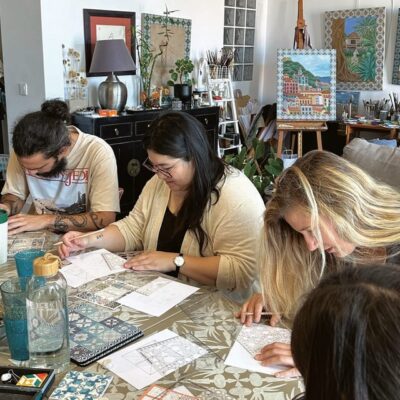
Lisbon: Azulejos’ Design Create Your Own Tile Workshop
Read our review →
Lisbon: Surfing Lesson on Costa de Caparica Beach
Read our review →
Traditional Portuguese Cooking Class in Lisbon
Read our review →Browse the lists this tour appears in