
Reviewed · WALKING TOURS
Óbidos: Medieval Tales & Secrets Spots Guided Walking Tour
Óbidos saves its best trick for the end of the lane. Beyond the famous main street, a good guide leads you into quiet corners, old religious buildings, bookshops in former chapels, and views away from the day-trip crowds. The two-hour walk finishes with ginjinha served in a chocolate cup, a small but memorable taste of local tradition.
I like the way this tour connects art, religion, royal history, and ordinary town streets instead of treating the castle as the whole story. I also like the guides’ personal touch. Ivo, JP, João Pedro, Bruno, Maria, Jorge, and others have been praised for clear explanations, patience, useful restaurant suggestions, and help with photos. The main drawback is the walking itself: uneven stone streets, slopes, and possibly slippery paths make this a poor fit for wheelchairs, recent surgery, or limited mobility.
In This Review
- Key points at a glance
- Why this two-hour walk works in Óbidos
- Starting outside the walls at the tourist office
- The Town of the Queens
- Churches, paintings, and Josefa de Óbidos
- Bookshops in former sacred spaces
- Moorish and Jewish quarters
- Entering the 1300-year-old castle
- Out beyond the walls for a different view
- Ginjinha, the sweet finish
- The guides make the difference
- Is $41 a fair price?
- Who should book this Óbidos tour?
- FAQ
- Where does the Óbidos walking tour begin?
- How long does the tour last?
- Which languages are available?
- Is the ginjinha tasting included?
- Is food included?
- What should I bring?
- Is the tour suitable for wheelchair users or people with mobility limits?
Key points at a glance
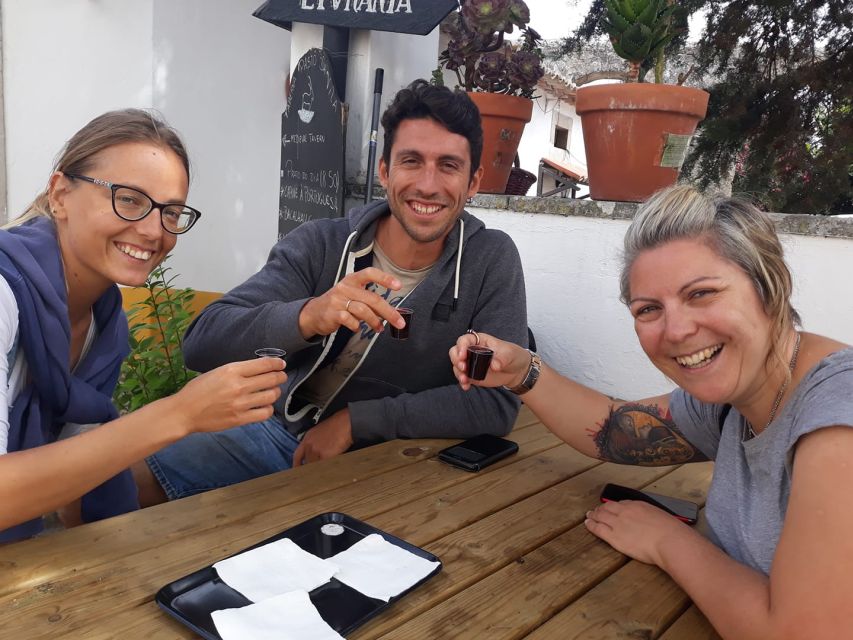
- Ginjinha in a chocolate cup: The tasting is included and gives you a classic Óbidos treat without adding a food tour to your day.
- Five Josefa de Óbidos paintings: You get a focused look at an important seventeenth-century Portuguese woman artist.
- A 1300-year-old Moorish castle: The castle visit anchors the walk in Óbidos’s earliest major chapter.
- Two unusual bookshops: Ler Devagar and São Tiago occupy former religious spaces, giving the town’s old buildings a modern use.
- Back lanes and quieter viewpoints: The route is designed to move beyond the main tourist street.
- Royal connections: You learn why Óbidos was called the Town of the Queens of Portugal.
Why this two-hour walk works in Óbidos
Óbidos is easy to admire and surprisingly easy to misunderstand. The whitewashed houses, flowerpots, tiled details, and crenellated walls can make the town feel like a stage set. A guide gives those pretty details a reason to exist.
The town’s story reaches from Muslim rule to the Portuguese monarchy, from medieval religious life to modern book culture. You hear about the old Moorish and Jewish quarters, the churches that shaped civic life, and the queens who left their mark here. The result is less a checklist of monuments and more a walking lesson in how a small fortified town changed over time.
The two-hour length is useful. You see a lot, but you are not committing half a day to a lecture on stonework. The pace has been described as relaxed and adjustable, with time for questions and photographs. At the same time, one person called the walk intensive, so you should expect a steady route rather than a long café stop.
I would take this tour near the start of an Óbidos visit. It gives you a map in your head, explains the buildings you might otherwise pass, and points out side streets worth returning to later.
More Silver Coast outings:
- Three Cities in One Day: Porto, Nazare and Obidos from Lisbon
★ 4.5 · 3,572 reviews - From Lisbon: Fátima, Nazaré, Batalha, and Óbidos Guided Tour
★ 4.7 · 3,060 reviews - From Lisbon: Fatima Batalha Nazaré & Óbidos Small-Group Tour
★ 4.7 · 2,563 reviews
Starting outside the walls at the tourist office
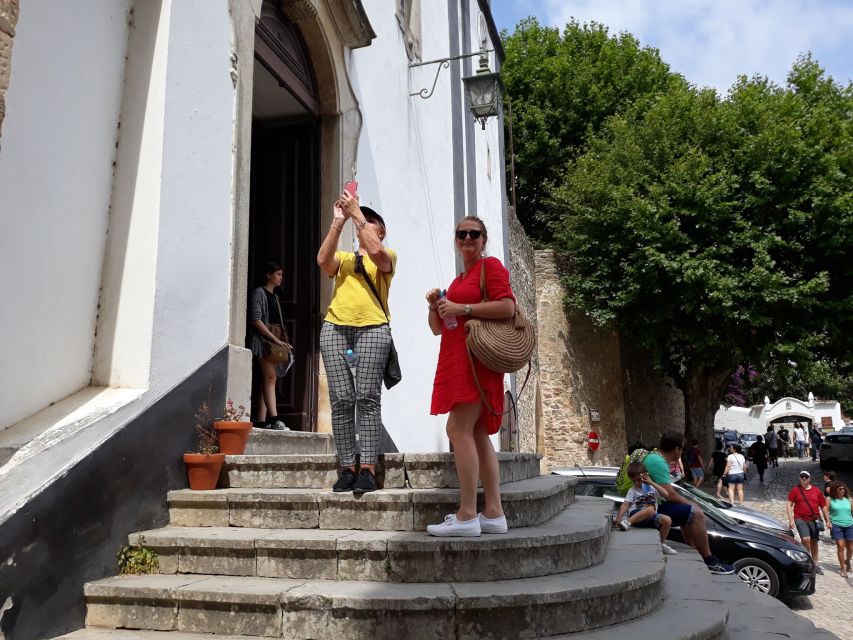
The meeting point is in front of the Óbidos Tourist Office, close to the main parking area and outside the walls. This is practical if you are arriving by car or bus, since you do not need to search for a guide inside the narrow lanes.
From there, the walk enters the old town and returns to the same tourist office after the castle section and the wider route. Wear shoes with a firm grip. Smooth stone, slopes, and wet surfaces can make the streets awkward, and one guide was specifically praised for helping people across slippery paths.
The tour is offered in English and Portuguese. Your guide may be Ivo, JP, João Pedro, Bruno, Maria, Jorge, or another member of the team. The names vary, but the strongest pattern in the feedback is clear communication, an easy manner, and a willingness to answer side questions rather than rush through prepared facts.
The Town of the Queens
One of the most useful themes on this walk is Óbidos’s royal connection. For centuries, the town was closely linked with the queens of Portugal. The guide introduces figures such as Catherine of Austria, Isabel of Aragon, also known as Queen Saint Isabel, and Leonor de Avis.
Leonor, the wife of King John II, helped establish an early branch of the Holy House of Mercy in Óbidos. The organization became a major network of hospitals and relief institutions, including branches overseas during the Portuguese Empire. This gives the Almshouse Church and related buildings a human purpose. You are not only looking at old façades. You are learning how royal patronage affected care, charity, and daily life.
This is where a good guide earns the fee. Without context, the royal label can sound like a decorative nickname. With explanation, you see why queens mattered to Óbidos and why local institutions survived for so long.
Churches, paintings, and Josefa de Óbidos
The art portion is one of the tour’s strongest features. You see five original paintings by Josefa de Óbidos, a major local artist of the seventeenth century. She was the first Portuguese female artist to have work exhibited at the Louvre in Paris, which gives her place in Óbidos more weight than a quick mention in a museum caption.
The tour visits the Museum of the Saint John the Baptist Church, where the paintings can be discussed in their local setting. That matters. You are not only learning an artist’s name, but also seeing how her work connects with the religious spaces and visual culture of the town.
You also visit Saint Peter Church, Saint Martin Chapel, the Almshouse Church, and Saint Mary Church. The exact time spent at each site can depend on the group and guide, but the route gives you a broad look at Óbidos’s religious architecture.
At Saint Mary Plaza and Saint Mary Church, the setting helps explain the town’s civic center. At the Saint John the Baptist Church, art takes the lead. The superb Renaissance pietà by Nicolau de Chanterene adds another layer, showing that Óbidos was not cut off from the major artistic currents of Portugal.
I like this balance between famous names and street-level observation. You get enough art to sharpen your eye, but you do not need specialist knowledge to follow the discussion.
More walking routes in Silver Coast:
- Lisbon: History, Stories and Lifestyle Walking Tour
★ 4.8 · 10,902 reviews - Best of Lisbon Small-Group Guided Walking Tour
★ 5.0 · 4,869 reviews - Lisbon: Food and Wine Small Group Walking Tour
★ 4.9 · 4,082 reviews - Best of Lisbon Walking Tour: Rossio, Chiado & Alfama
★ 4.9 · 2,700 reviews
Bookshops in former sacred spaces
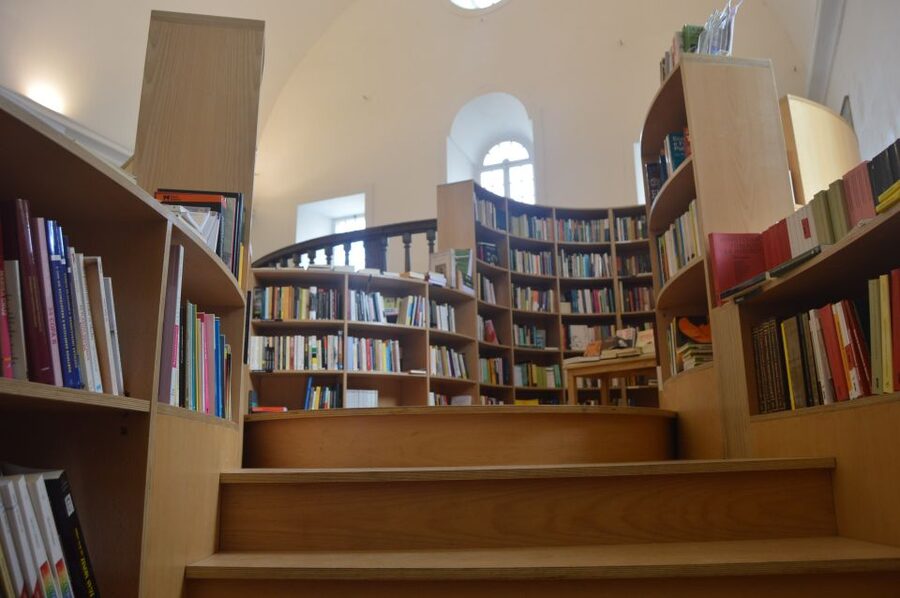
The two bookshops are a clever part of the route because they make old buildings feel useful rather than frozen in time.
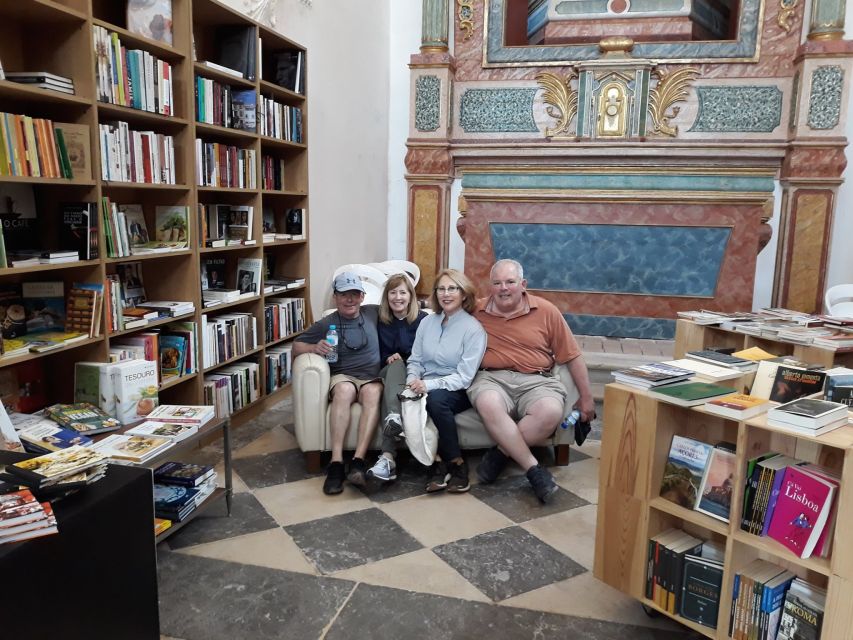
Ler Devagar is located in a former royal chapel. Its presence creates a striking contrast: shelves, books, and a modern cultural atmosphere inside a space once tied to the court and church. The Market Bookstore, or Livraria do Mercado, combines books with organic products and gives you another look at how Óbidos uses its older spaces.
São Tiago Bookstore occupies a former church and royal chapel. This stop is especially memorable because the building’s earlier purpose remains part of the experience. You can browse, but you are also looking at how a sacred interior has been adapted for contemporary life.
These are not ordinary retail stops inserted to fill time. They help explain why Óbidos continues to attract artists, readers, and cultural projects. If you love old buildings with an unexpected second life, allow yourself a little extra attention here.
Moorish and Jewish quarters
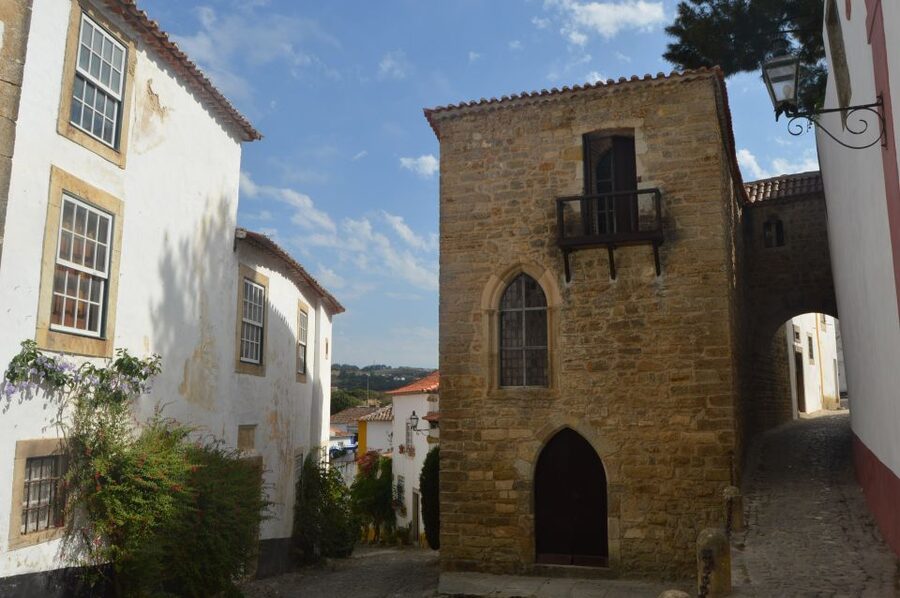
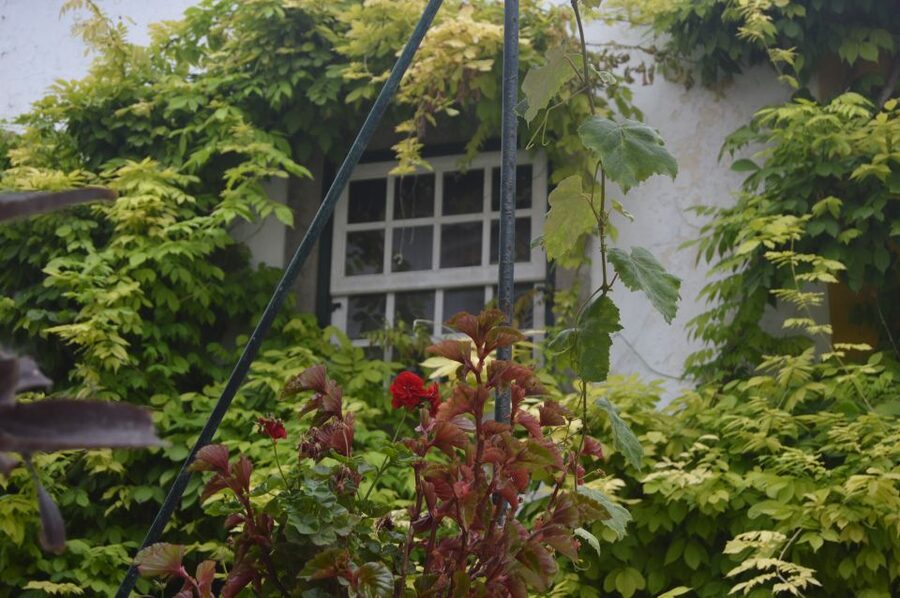
The walk through the Moorish and Jewish neighborhoods is less about a single grand monument and more about reading the town’s layout. Narrow alleys, changing street lines, and the relationship between homes, churches, and defensive walls begin to make sense when the guide explains who lived and worked in these areas.
This part is also where the secret-spots promise has practical value. The main route through Óbidos can become crowded, particularly during busy periods. Your guide can steer you into back streets where the medieval character is easier to appreciate and photographs are less likely to include a line of people.
Do not expect an untouched medieval town. Óbidos is a popular destination, and its shops and cafés cater to modern visitors. The value of the tour is that it helps you look past the postcard surface without pretending the town is something it is not.
Entering the 1300-year-old castle
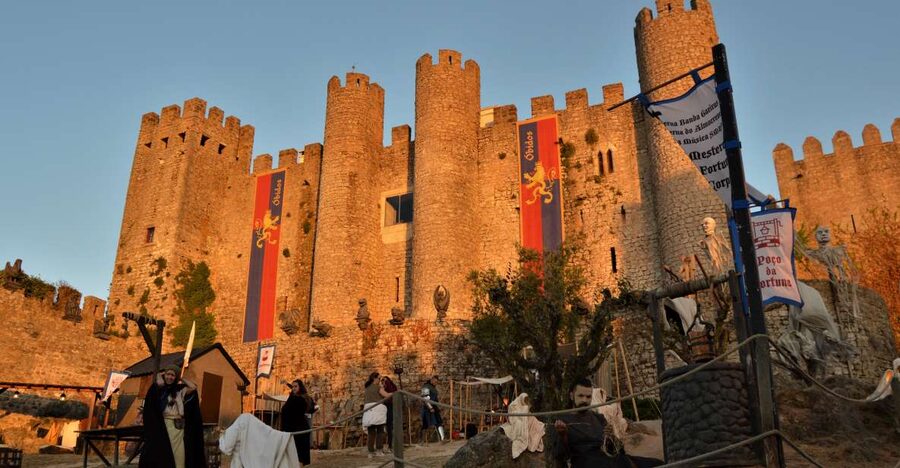
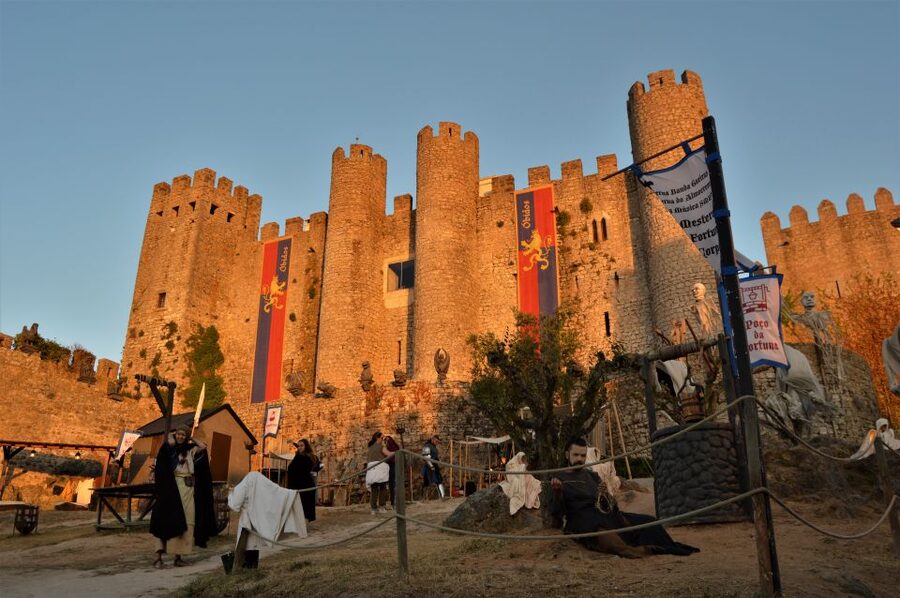
The castle is the dramatic center of the experience. Its origins are Moorish, and the site is described as about 1300 years old. The walls and towers give you the clearest sense of why Óbidos mattered: this was a fortified settlement with a strong defensive position and a close link to royal power.
The castle visit is guided rather than treated as a quick photo stop. You hear the story of the site and its role in the town’s growth. The Maney’s Tower is also part of the route, adding another defensive detail to the walk.
There is a physical tradeoff. Castle areas and old lanes are rarely level, and the route includes stone surfaces. If you have trouble with inclines or balance, you may find parts of the walk tiring or uncomfortable. The tour is not suitable for wheelchair users, people with mobility impairments, or people recovering from recent surgery.
For everyone else, the effort is part of the appeal. You feel the town’s defensive shape under your feet instead of seeing the castle from a distant viewpoint.
Out beyond the walls for a different view
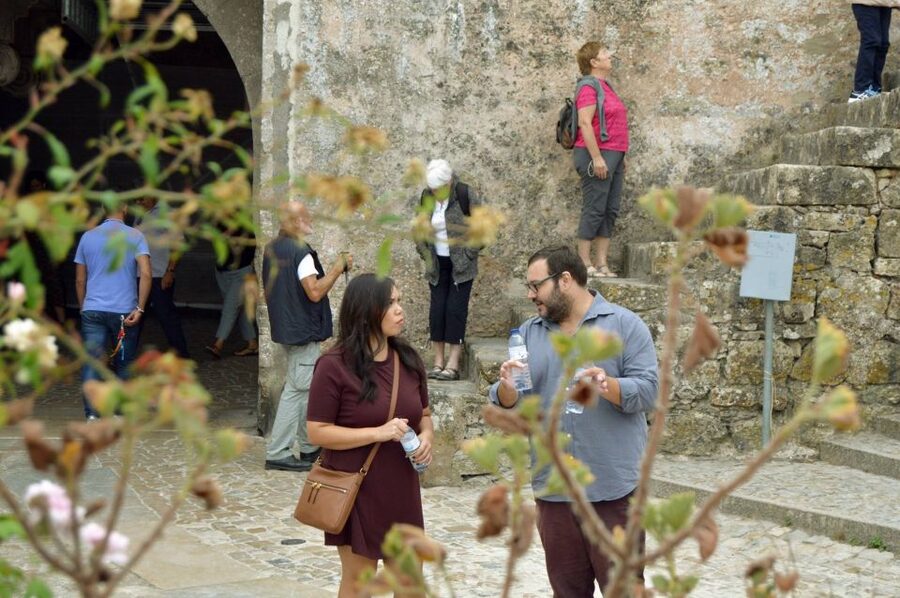
The out-of-the-walls walk gives the tour a welcome change of scale. Inside the walls, the experience is close and detailed: alleys, chapels, doorways, and small plazas. Outside, you get a wider sense of the fortified town and better chances for photographs without the tight crush of the central street.
Several guides have been praised for stopping at scenic points and offering to take photos. That is a small service, but it helps when you are traveling as a couple or family and want everyone in the picture.
Families and mixed-age groups may also benefit from the guides’ flexible style. One guide was praised for making the story clear for a multilingual, multi-age family, while others adjusted the pace for questions and photo breaks. I would still avoid treating this as a relaxed stroll if anyone in your group tires quickly. Two hours on old stone streets can feel longer than two hours on a flat pavement.
Ginjinha, the sweet finish
The included ginjinha tasting is a simple pleasure and one of the tour’s most distinctive details. Óbidos is known for ginjinha, a sour cherry liqueur, and here it is served in a small chocolate cup.
You get the drink and then eat the cup. It is sweet, playful, and tied to local food culture without taking up much time. It also gives the tour a clean ending: after castles, queens, churches, paintings, and bookshops, you finish with something you can taste.
Food beyond the liqueur is not included. If you want lunch or a full tasting experience, plan that separately. Guides have sometimes offered restaurant suggestions, which can be useful, but a meal is not part of the paid activity.
The guides make the difference
The strongest part of this experience is the guide. Ivo appears repeatedly as a warm, patient, entertaining presence who brings stories to the facts. JP and João Pedro are also praised for clear explanations and a friendly approach. Bruno is noted for his grasp of history, art, and culture, while Maria is described as bringing the past to life in an engaging way.
You should not expect every guide to have the same personality. That is normal with a small walking company. What you can reasonably expect is a live guide in English or Portuguese, a route with historical context, and room for questions.
The best comments focus on more than facts. Guides have helped with rebooking, suggested restaurants, taken photos, answered unexpected questions, and led groups away from the busiest streets. Those details matter because a walking tour succeeds through human contact, not just the number of buildings visited.
Is $41 a fair price?
At $41 per person, this is not the cheapest way to wander Óbidos. You can enter the town and see its streets without paying for a guide. The question is what you would miss.
The fee covers two hours with a live guide, the castle-focused walk, the art and church stops, two unusual bookshops, quieter lanes, and the ginjinha tasting. If you value context and want to make efficient use of a short visit, the price is reasonable.
I would be less enthusiastic about the cost if you prefer to explore at your own speed, stop often for shopping, or avoid organized walks. The schedule is compact and the route has plenty of ground to cover. You are paying for interpretation and local orientation, not for a meal or transport.
For a first visit, I think the value is strongest. You can return later to the places that caught your attention, now knowing what you are looking at.
Who should book this Óbidos tour?
I recommend it for first-time visitors, history fans, art lovers, couples, and families who want more than a quick walk along the main street. It is also a good choice if you have only a short window in Óbidos and want the major themes explained efficiently.
It suits people who enjoy questions and conversation. The guides have been praised for taking time with side questions and adapting explanations to different ages and backgrounds.
I would skip it if you need a fully accessible route, dislike uneven ground, or want a slow, unstructured afternoon. Weather can also cause cancellation, so keep some flexibility in your plans.
Book this tour if you want Óbidos to feel like a lived-in town rather than a pretty backdrop. The castle and ginjinha will get your attention, but the churches, queens, Josefa de Óbidos, bookshops, and quiet lanes are what give the visit its shape.
FAQ
Where does the Óbidos walking tour begin?
The meeting point is in front of the Óbidos Tourist Office, near the main parking area and outside the town walls.
How long does the tour last?
The walking tour lasts two hours and returns to the Óbidos Tourist Office.
Which languages are available?
The tour is offered with a live guide in English or Portuguese.
Is the ginjinha tasting included?
Yes. A tasting of Óbidos ginjinha, served in a chocolate cup, is included.
Is food included?
No. Food is not included, though a guide may offer restaurant suggestions during or after the visit.
What should I bring?
Bring comfortable shoes. The route includes old stone streets and walking around the castle and town.
Is the tour suitable for wheelchair users or people with mobility limits?
No. The experience is not suitable for wheelchair users, people with mobility impairments, or people with recent surgeries.
Fresh finds around Silver Coast
- Peniche: Berlengas Island Catamaran Tour – Round Trip★ 4.6 · 51 reviews
- Lisbon to Porto with stop Aveiro-Fátima-Coimbra-Tomar-Nazaré-Óbidos★ 5.0 · 52 reviews
- From Lisbon : Óbidos & Nazaré Giant Waves, Ginja & Small Group★ 5.0 · 54 reviews
- Fátima, Batalha, Nazaré and Óbidos Private Tour★ 5.0 · 55 reviews
- Tour Fátima Batalha Nazaré and Óbidos★ 4.5 · 57 reviews
- Fátima, Batalha, Alcobaça, Nazaré and Óbidos Private Tour★ 5.0 · 68 reviews
- From Nazaré: Self-Guided Half-Day or Full-Day E-bike Rental★ 4.9 · 68 reviews
- Nazaré – Jeep Safari★ 5.0 · 76 reviews
Walking Tours, compared.
Lisbon: History, Stories and Lifestyle Walking Tour
Read our review →
Best of Lisbon Small-Group Guided Walking Tour
Read our review →
Lisbon: Food and Wine Small Group Walking Tour
Read our review →
Best of Lisbon Walking Tour: Rossio, Chiado & Alfama
Read our review →
Sintra & Cascais Day Tour with Pena Palace Entry and Gardens Walk
Read our review →
Lisbon Roots – Small group Food & Culture Walking Tour w/tastings
Read our review →
Lisbon: Starter Walking Tour to the highlights in German
Read our review →Browse the lists this tour appears in