
Reviewed · DOLPHIN WATCHING
Meet the Lisbon Dolphins – Dolphin Watching in Lisbon
Seeing dolphins from a small boat is the main event here, but the setting makes it special. You begin on the Tagus River, then head toward the open ocean when conditions permit, with Lisbon’s waterfront and the 25 de Abril Bridge behind you.
I like the maximum group size of 10, which gives you a much better view than a crowded sightseeing boat. I also like the teaching: Francisco and the other guides explain how to recognize dolphin species, follow group behavior, and spot details such as markings. The main drawback is simple: wild dolphins do not follow a schedule, and the water can be cold, rough, and wet even in August.
In This Review
- Five things to know before you go
- Starting under the 25 de Abril Bridge
- Searching the Tagus for the first pod
- Heading toward the Atlantic coast
- What the dolphin watching is really like
- Learning from Francisco and the marine-life team
- Belém Tower from the water
- Padrão dos Descobrimentos and the riverfront
- Crossing beneath the 25 de Abril Bridge
- MAAT and the final waterfront views
- Is $78.61 a fair price?
- Who should book this boat trip?
- Should you book Meet the Lisbon Dolphins?
- FAQ
- Where does the dolphin tour depart from?
- What time does the tour start?
- How long does the dolphin-watching trip last?
- How many people can join the boat?
- What animals might I see?
- Is there a restroom on the boat?
- What should I bring?
- Can I cancel for a refund?
Five things to know before you go

- Dolphin watching begins on the Tagus: You may start seeing wildlife before the boat reaches the Atlantic.
- The boat carries no restroom: Use facilities before departure and plan accordingly.
- The group is limited to 10 people: This keeps the search more personal and gives you room to watch.
- Bring a jacket in summer: Wind and spray can make the ocean feel much colder than Lisbon’s streets.
- You may get an extra hour: If no dolphins are found during the planned search, the crew adds time when conditions and logistics allow.
Starting under the 25 de Abril Bridge
Your morning begins at 9:30 am at Doca de Santo Amaro, beneath Lisbon’s famous 25 de Abril Bridge. This marina sits near public transportation, making it a practical departure point from central Lisbon, though you should allow enough time to find the dock and get settled before the boat leaves.
The first minutes have a pleasant sense of occasion. You are not simply boarding a sightseeing vessel for a quick loop. The crew fits lifejackets, explains the trip, and sets out to search for living animals in their natural environment. That distinction matters. The crew can improve your chances, but nobody can promise a sighting.
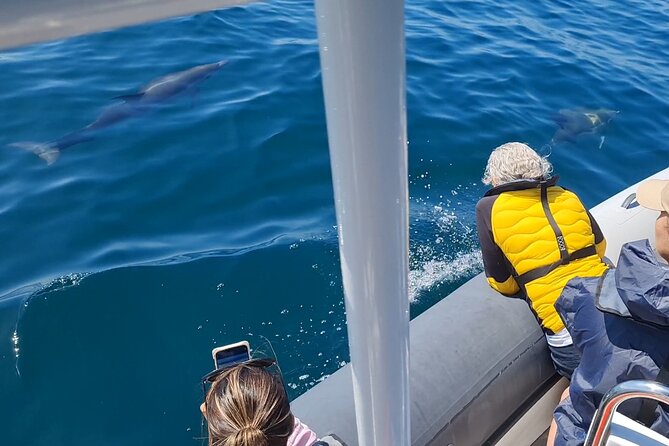
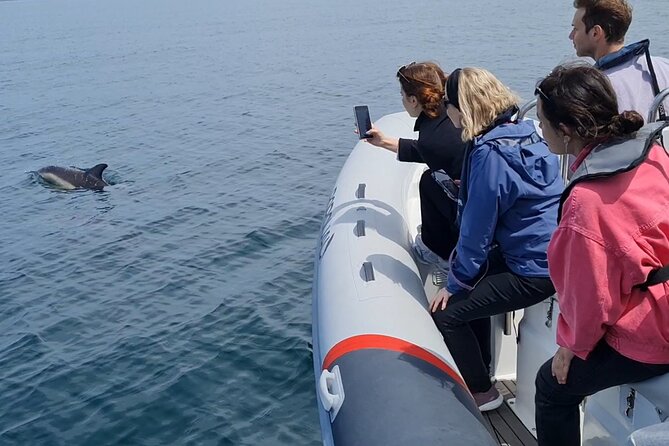
The boat carries a maximum of 10 people, and that small scale is one of the strongest reasons to choose this outing. You have a better chance of getting a clear view when a pod surfaces, and it is easier to hear the guide explain what you are seeing. The crew also tries to avoid crowding other boats and uses steady steering intended to encourage dolphins to remain nearby.
You should expect movement. The boat can hit waves, and one review compares the ride to a roller coaster. Keep bags off the floor, lift your feet when spray comes over the side, and wear clothing that can get damp. This is not the right choice if you cannot comfortably manage an impact-heavy boat ride.
More dolphin trips:
- Lisbon: Tagus River Cruise to the Ocean & Dolphin Watching
★ 4.0 · 3,019 reviews - Lisbon: Dolphin Watching with Marine Biologist
★ 4.9 · 1,853 reviews - Lisbon: Dolphin Watching with Marine Biologist – Small Group
★ 4.9 · 867 reviews
Searching the Tagus for the first pod
The search starts in the Tagus River rather than immediately heading offshore. That gives you a chance to settle into the boat while taking in Lisbon from the water. The river is also a real wildlife-search area, not just a scenic warm-up. Some outings have found large groups here, including one report of a pod containing more than 100 dolphins.
The crew watches for movement, surfacing patterns, and feeding activity. If dolphins appear, the guide does more than point and shout. You learn to notice how a group is arranged, how animals move together, and how to distinguish one species from another.
The wildlife can vary. Common dolphins and other dolphin species have been seen, along with harbor porpoises, seabirds, and, on some outings, whales or sharks. One particularly unusual sighting included two harbor porpoises, animals that are rare and endangered. That kind of encounter is never guaranteed, but it shows why careful observation matters.
Birdwatchers also have something to do while the crew scans the water. Gannets and other seabirds may gather around feeding fish. The guides can help identify species, so you do not need to arrive with a birding background.
Heading toward the Atlantic coast
If sea conditions permit, the boat leaves the river and searches offshore. The trip includes up to 40 miles of dolphin searching, a useful detail because it tells you the crew is prepared to cover substantial water rather than remain close to the marina.
The open-water section is also where the ride may feel most active. Wind, swell, and spray are part of the setting. You may find the motion exciting, but you should not expect a smooth cruise. Wear a secure hat, protect your phone, and keep a waterproof layer close at hand.
Bring sunscreen and water. The sun can be strong on the water, and there is little shade once you are offshore. A long-sleeved layer, fleece, or warm vest under a rain jacket is a smart combination. Several people have specifically wished they had brought warmer clothing, including during August. Lisbon can be hot on land while the ocean air feels sharply cool.
The crew adjusts the search based on what it finds. If dolphins are spotted early, the boat may continue toward areas where different species or whales are more likely. If the first sighting is brief, the crew can keep searching for a more interactive group, depending on conditions.
What the dolphin watching is really like
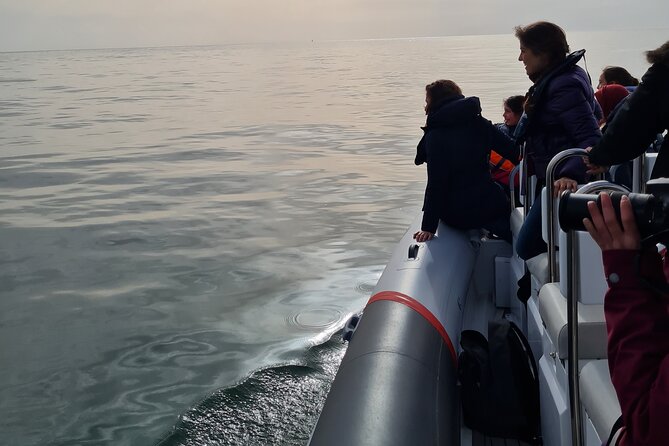
The most rewarding part is not simply seeing a fin. It is learning what you are looking at. The guides explain habits, group structure, and behavior, then encourage you to observe for yourself. You may begin by waiting for a splash and end up watching the spacing between animals, the way a pod changes direction, or the markings that help identify individuals.
That approach gives the outing more substance than a quick wildlife photo stop. You are still there for the excitement of dolphins swimming alongside the boat, but you also gain a better sense of how to watch responsibly and patiently.
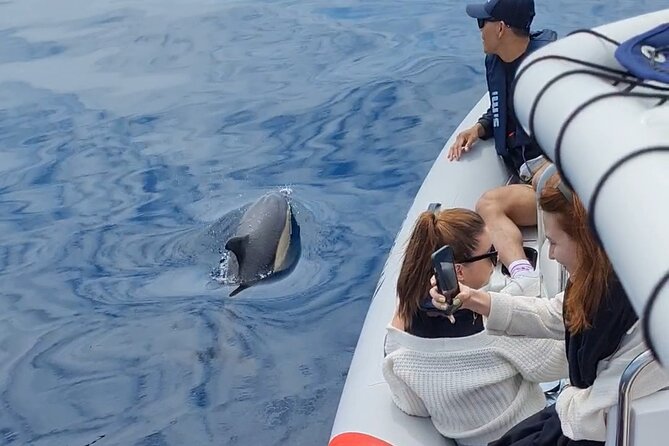
The crew aims to keep a consistent course and avoid excessive boat traffic around the animals. This can produce close views without turning the sighting into a noisy chase. Still, wildlife remains unpredictable. Dolphins may surface beside you, remain in the distance, or disappear before everyone gets a perfect photograph.
If the boat finds no dolphins during the planned search, the crew offers one additional hour of searching. This is a meaningful benefit, since a short unsuccessful outing would be especially disappointing at $78.61 per person. Even with extra time, there is no guarantee of dolphins, whales, turtles, or any other animal.
One outing went more than four hours because the crew kept searching, while the group eventually asked to return. That shows both sides of the policy. The team may work hard to find wildlife, but a long period at sea can become tiring, especially in cold or rough weather. If you value a fixed schedule above all else, this may not be your ideal excursion.
A handful more Lisbon ideas to compare
- Lisbon City Center Tour – The Unmissable Lisbon
★ 5.0 · 22,234 reviews - Lisbon: Sintra, Pena, Regaleira, Cabo da Roca & Cascais
★ 4.7 · 19,656 reviews - Lisbon: Jerónimos Monastery Entrance Ticket
★ 4.1 · 14,164 reviews - Lisbon: History, Stories and Lifestyle Walking Tour
★ 4.8 · 10,902 reviews
Learning from Francisco and the marine-life team
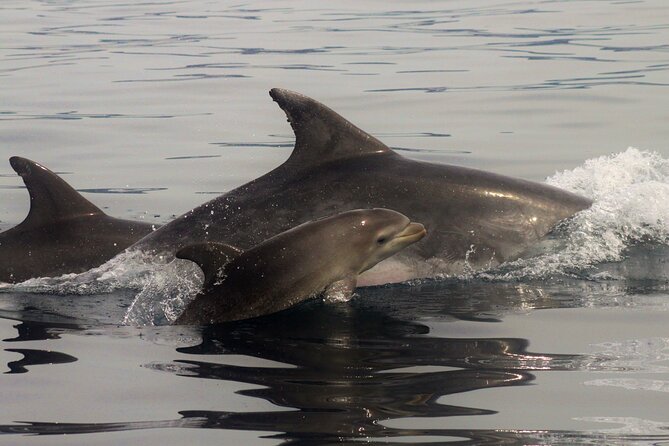
Francisco is specifically praised for explaining dolphin markings and helping people identify species. His role appears to go beyond basic commentary. He may ask you to look closely and work out what you are seeing rather than immediately supplying every answer.
That teaching style works well for families. An 11-year-old participant reportedly enjoyed spotting three pods of common dolphins, about 60 to 70 animals in total, and identifying three new bird species with help from the captain. Children must be accompanied by an adult, and parents should be ready for the physical motion of the boat.
The guides also add short facts about Lisbon’s monuments as the boat returns. This creates a useful change of pace after the wildlife search. You shift from scanning the horizon to looking at the city, with brief stories about the waterfront sights.
The strongest praise for this outing centers on the crew’s effort, animal knowledge, and willingness to keep looking. That is important because dolphin watching depends as much on the guide’s judgment as on luck. A good crew knows when to move, where to search, and how to turn a distant sighting into a useful lesson.
Belém Tower from the water
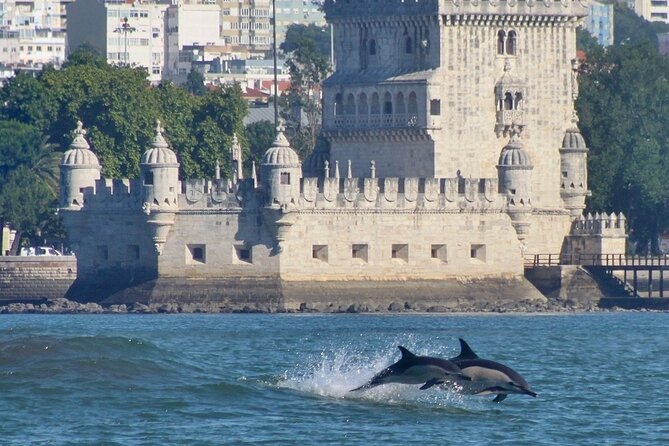
Before returning to the dock, the boat passes Torre de Belém. The tower is one of Lisbon’s most recognizable monuments, and it looks especially clear from the river, where you can see its position at the water’s edge.
This is not a full historical tour, so do not expect a long lecture or time to go ashore. Instead, you get a short fact or two while viewing the monument from the boat. After several hours focused on wildlife, that brief city tour makes a pleasant finish.
The river view also helps you understand Belém’s relationship with the water. You see the monument as part of Lisbon’s waterfront rather than as an isolated building reached through city streets.
Padrão dos Descobrimentos and the riverfront
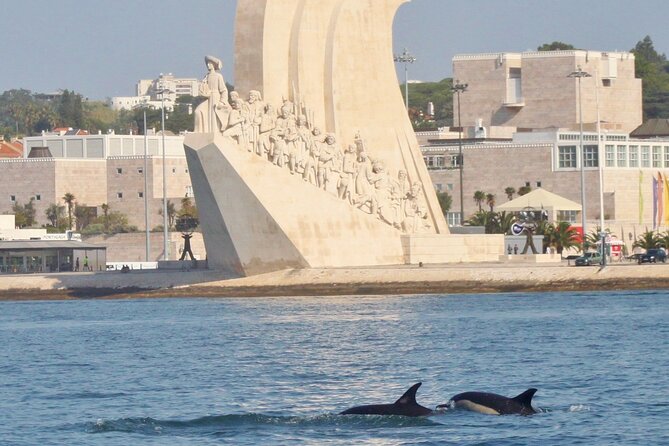
The boat also passes the Padrão dos Descobrimentos, the large monument celebrating Portugal’s maritime expansion. From the river, its shape and scale are easier to appreciate, and the position of the figures facing the water becomes clear.
Again, this is a passing view rather than a museum visit. The benefit is convenience: you see another major Belém sight without adding a separate stop to your day. If you want interior access or detailed history, you will need to return on your own.
For a visitor with limited time in Lisbon, this combination works well. You can pair an early wildlife outing with a later walk through Belém, or use the boat’s return route as a quick orientation to the district.
Crossing beneath the 25 de Abril Bridge
The 25 de Abril Bridge is hard to miss from Lisbon, but seeing it from the water gives you a different sense of its height and reach. The bridge stretches across the Tagus between Lisbon and Almada, and the boat’s low position makes the structure feel especially large.
Because the tour departs and returns near the bridge, this sight appears naturally within the route. You do not need to choose between wildlife and a city cruise, although the monument commentary remains short.
The bridge can also help you keep track of the journey. After the offshore search, returning beneath or near this landmark signals that you are heading back toward the marina.
MAAT and the final waterfront views
The last listed sight is MAAT, the Museum of Art, Architecture and Technology. Its distinctive riverside building is best appreciated from the water, where the curved exterior and relationship to the promenade come into view.
This is a quick visual stop, not an admission visit. If modern architecture interests you, note the museum’s position so you can return later by land. The boat gives you a useful first impression without taking time away from the wildlife search.
After reaching Doca de Santo Amaro, the crew offers a quick restroom break on land. There is no restroom onboard, so this stop matters. The team may also spend a little extra time helping you identify the species you saw and answering questions for anyone who wants to stay longer.
Is $78.61 a fair price?
At $78.61 per person, this is not the cheapest way to spend a morning in Lisbon. You are paying for a small group, a professional guide, lifejackets, taxes and fees, a search area extending up to 40 miles, and the possibility of an extra hour if dolphins are not found.
The value is strongest when you care about the quality of the wildlife search rather than simply taking a boat ride. A 10-person limit, steady approach around animals, and instruction on behavior give you more than a standard harbor cruise.
The value is weaker if your budget is tight or if you need a guaranteed attraction. Wild dolphins may not appear, and rough conditions can make the outing uncomfortable. The company does provide a new date or full refund when poor weather cancels the tour, but normal wildlife uncertainty remains.
The tour is usually booked about 13 days ahead, so reserve early if the date matters. Confirmation is normally immediate, though bookings made within six days of departure may take up to 48 hours and remain subject to availability.
Who should book this boat trip?
I would choose this outing for families with older children, couples who enjoy nature, birdwatchers, and anyone who wants a more active morning than a city sightseeing cruise. The small group and teaching style also suit people who want to understand animal behavior instead of collecting a quick photograph.
You should think twice if you get seasick, cannot manage a rough ride, dislike cold wind, or need to return at a precise time. The tour is about three hours in normal conditions, but the extra search time and changing sea conditions can make it longer.
Pack a warm layer even in August, sunscreen, water, and a waterproof bag for valuables. Eat beforehand or bring food for after the trip, since lunch and snacks are not included. Most people can participate, but the operator does not recommend the activity for anyone unable to handle impact from the boat.
Cancellation is free up to 24 hours before the 9:30 am start. Late cancellations and changes are not refunded, and missing the boat because a cruise ship arrives late is not covered. The tour also requires good weather and a minimum of five people. If the company cancels for weather or insufficient numbers, you can choose another date or receive a full refund.
Should you book Meet the Lisbon Dolphins?
Book it if you can accept the basic rule of wildlife watching: the crew can search skillfully, but nature makes the final decision. The chance to see several pods, porpoises, seabirds, whales, or even a shark can make this a memorable Lisbon morning, and the guides add real value by showing you how to read the animals.
Skip it if you want a smooth, predictable cruise with guaranteed sights. For everyone else, the small boat, extended search option, and return route past Belém’s monuments make this a strong choice, provided you bring warm clothes and are ready for spray, motion, and a little uncertainty.
FAQ
Where does the dolphin tour depart from?
It departs from Doca de Santo Amaro, 1300 Lisbon, beneath the 25 de Abril Bridge.
What time does the tour start?
The scheduled start time is 9:30 am.
How long does the dolphin-watching trip last?
The normal duration is approximately three hours. The crew may add one extra hour of dolphin searching if no dolphins are found.
How many people can join the boat?
The maximum group size is 10 people. The tour requires at least five participants to operate.
What animals might I see?
Possible sightings include dolphins, whales, sea turtles, harbor porpoises, and seabirds. Sightings are not guaranteed.
Is there a restroom on the boat?
No. There is no restroom onboard, though a quick restroom break is available after returning to the dock.
What should I bring?
Bring warm clothing, a jacket, sunscreen, water, and protection for belongings that could be damaged by spray. The water may feel cold even in August.
Can I cancel for a refund?
You can cancel for a full refund at least 24 hours before the local start time. Poor-weather cancellations or cancellations caused by the minimum group size can also result in a new date or a full refund.
Fresh finds around Lisbon
- Sanctuary of Fátima and Coimbra City Tour★ 4.5 · 51 reviews
- Sintra/Lisbon: Sintra & Quinta da Regaleira Tour with Ticket★ 4.4 · 51 reviews
- Jeronimos Monastery Guided Tour – Small Groups – Tickets Included★ 5.0 · 51 reviews
- Lisbon: Private Christmas Lights Tour by Eco Tuk Tuk★ 4.9 · 51 reviews
- Peniche: Berlengas Island Catamaran Tour – Round Trip★ 4.6 · 51 reviews
- Half day Spa Water Therapy experience at THE SPA at Corinthia Lisbon★ 4.5 · 51 reviews
- Lisbon: Private Tuk-Tuk Tour for 2 hours★ 4.7 · 51 reviews
- Premium Lisbon Airport Transfer to Lisbon★ 5.0 · 51 reviews
Dolphin Watching, compared.

Lisbon: Tagus River Cruise to the Ocean & Dolphin Watching
Read our review →
Lisbon: Dolphin Watching with Marine Biologist
Read our review →
Lisbon: Dolphin Watching with Marine Biologist – Small Group
Read our review →
Lisbon: Dolphin Watching with a Marine Biologist – Ocean Safari
Read our review →
Sesimbra: Arrábida Dolphin and Whale Watching tour with biologist
Read our review →
Observation of Dolphins and Whales with Marine Biologist in Arrábida
Read our review →Browse the lists this tour appears in