
Reviewed · DOLPHIN WATCHING
Lisbon: Dolphin Watching with Marine Biologist – Small Group
Wild dolphins are the main event here, but the marine research gives this three-hour speedboat trip more purpose than a simple sightseeing cruise. You head from the Tagus River into the Atlantic with a biologist, search for free-ranging dolphins, and help collect information for Oceanário de Lisboa and ICNF.
I like two things in particular: the crew treats the animals with care, slowing down when dolphins approach, and the return journey gives you fresh views of Lisbon’s waterfront monuments. The main drawback is simple: dolphins are wild, and even a reported 97 to 98 percent sighting rate is not a promise for your particular departure. The open-sea ride can also be rough and chilly.
In This Review
- Key points to know before booking
- From Doca de Santo Amaro into the Atlantic
- Searching for dolphins on the Tagus and beyond
- The marine biologist adds real value
- How the dolphin encounter usually feels
- Lisbon landmarks from the river
- The boat, comfort, and practical limits
- Is $61 good value?
- Who should book this dolphin tour?
- My verdict
- FAQ
- Where does the dolphin-watching tour start?
- How long does the experience last?
- Will I definitely see dolphins?
- What languages are available?
- Is a marine biologist included?
- What should I bring?
- Who should not take this tour?
Key points to know before booking
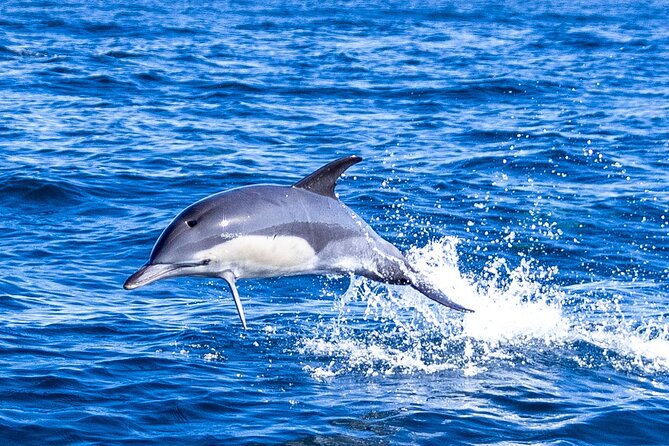
- Dolphins in the wild: Search for common and bottlenose dolphins in open water, with occasional chances of whales, sunfish, seabirds, and other marine life.
- Marine biologist on board: Guides such as Mariana, Vanessa, Maria, Raquel, and Inês have led trips, explaining dolphin behavior and local ocean life.
- Research with a purpose: The tour supports cetacean monitoring and data collection linked to Oceanário de Lisboa and ICNF.
- Three hours on a speedboat: The ride is lively and fun, but it is not ideal for anyone prone to seasickness or back pain.
- Lisbon from the water: You pass landmarks near Belém and continue toward the Fort of São Lourenço do Bugio and Cascais.
- Useful pre- and post-tour comforts: The Oceanic Lounge offers coffee, restrooms, a safety briefing, and a place to relax before and after the boat ride.
From Doca de Santo Amaro into the Atlantic
Your meeting point is the Mercedes-Benz Oceanic Lounge at Doca de Santo Amaro, Armazém 17, below the 25 de Abril Bridge. The lounge is more useful than a bare dock. You can sit down, use the restroom, have coffee, and get settled before the crew explains safety procedures.
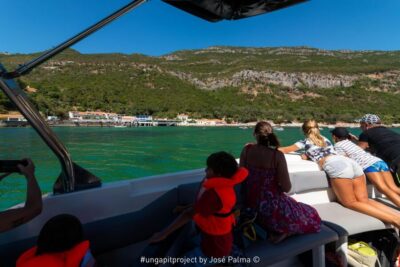
That calm start matters because the trip itself is active. Once you leave the marina, you travel along the Tagus and then out toward the open sea aboard a modern speedboat. The boat gives you a close-to-the-water feel, with plenty of wind and movement. It is much more exciting than a large, slow sightseeing vessel, but you should expect a genuine boat ride rather than a gentle cruise.
The crew includes a skipper and a marine biologist. The guide explains what kinds of dolphins may appear, how the team searches for them, and why sightings depend on weather, currents, and animal behavior. Guides named in the trip feedback include Mariana, Vanessa, Maria, Raquel, Inês, and others, so the exact person leading your departure can vary.
The tour is offered in English, Portuguese, and Spanish. A private group option is available if you want a more personal outing, though the standard format is designed as a small-group experience.
More dolphin trips:
- Lisbon: Tagus River Cruise to the Ocean & Dolphin Watching
★ 4.0 · 3,019 reviews - Lisbon: Dolphin Watching with Marine Biologist
★ 4.9 · 1,853 reviews - Lisbon: Dolphin Watching with a Marine Biologist – Ocean Safari
★ 5.0 · 812 reviews
Searching for dolphins on the Tagus and beyond
The first part of the route follows the Tagus River. This is not only a transit stretch. It gives you time to see Lisbon from a different angle and understand how quickly the urban riverfront gives way to open water.
As the boat moves toward the river mouth, the guide and skipper watch for signs of marine life. The crew may communicate with other boats about sightings, which helps the search but does not turn it into a guaranteed animal encounter. The purpose is to find wild dolphins without feeding them, touching them, or forcing them to stay near the boat.
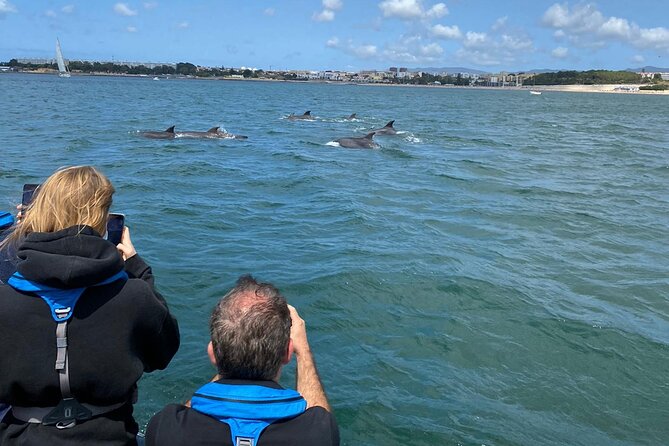
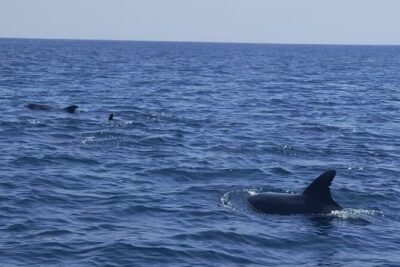
That distinction is important. You are not visiting a dolphin show. These animals are free to pass by, change direction, or remain out of sight. When a pod comes near, the crew may slow down and allow the dolphins to move at their own pace. One account describes staying with a pod of about 30 dolphins for roughly 20 minutes at a slow speed, while other outings have found several pods and more than one species.
The stated sighting success is between 97 and 98 percent based on the operator’s own records. That is unusually encouraging for a wildlife trip, but you should still read the figure correctly. It means the chances are strong, not that your boat has a fixed appointment with dolphins. Weather, swell, visibility, currents, and the animals’ location all matter.
The marine biologist adds real value
The strongest feature of this trip is the guide’s role. The marine biologist is not there only to point at a fin. You receive an introduction before departure, then learn about dolphin species, behavior, family groups, and the wider marine setting as the boat travels.
Several guides have been praised for their passion and clear explanations. Mariana is noted for her enthusiasm, Vanessa for detailed introductions and facts about underwater life, and Raquel for explaining how to respect nature. The exact style will differ by guide, but the format gives the animal encounter context.
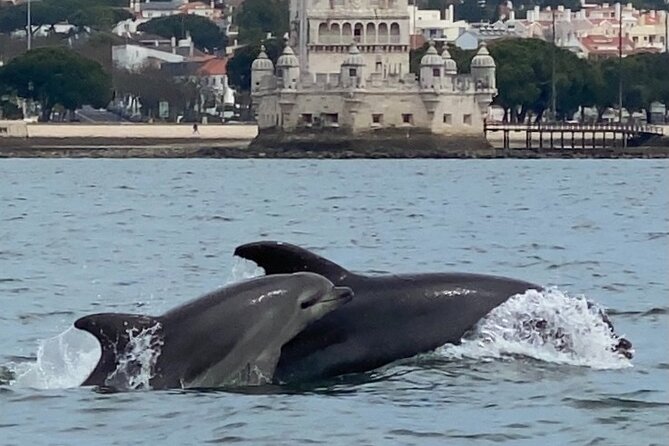
You may see common dolphins, bottlenose dolphins, and possibly less familiar species. Some outings have included mothers with very young calves, while others have produced sightings of whales, sunfish, seabirds, or even orcas. These are possibilities, not promised stops, so book this for the full search and sea experience rather than for one particular species.
The scientific side also makes the trip feel worthwhile. In partnership with Lisbon Oceanário and ICNF, the activity supports real-time cetacean monitoring and data collection. You are not simply consuming a wildlife sighting. Your trip contributes to a wider record of marine life in Portuguese waters.
That does not make the experience a research expedition. You will still get the fun of a fast boat, scenic views, and the thrill of animals surfacing nearby. But the research link gives the guide a sound reason to discuss responsible behavior and lets you see the ocean as a living system rather than a backdrop.
How the dolphin encounter usually feels
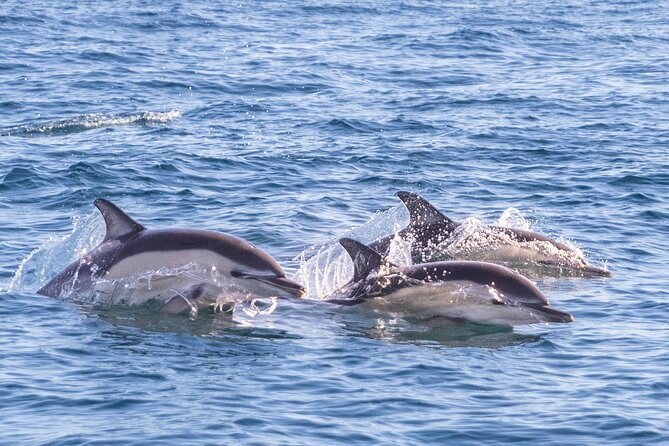
The search may be quiet at first. You might spend much of the outward journey scanning the water, listening to the guide, and watching for movement. If no animals appear right away, the crew continues looking and may check information from other boats.
That waiting is part of the deal. On one outing, the boat reached about three quarters of the way through the trip without a sighting, then found a pod of around 30 dolphins during the return. The lesson is useful: do not assume a slow start means the day has failed.
When dolphins appear, the mood changes quickly. You may see them traveling alongside the boat, crossing the wake, leaping, or moving in groups. Some pods stay close for several minutes. Others pass through and disappear. The crew’s restraint is a plus. The aim is to watch without chasing or crowding the animals.
The boat ride itself is part of the attraction. Some departures include fast turns or playful movement over the waves near the end, though sea conditions determine how lively the ride can be. If you enjoy speed and open water, you may consider the outing worthwhile even before the first dolphin appears.
If you get seasick, take the warning seriously. The advice is to eat a good breakfast beforehand and avoid milk and yogurt. Summer heat on shore does not mean warm conditions at sea. Windbreakers have been offered on trips, and a jacket can be useful even on a sunny day.
A handful more Lisbon ideas to compare
- Lisbon City Center Tour – The Unmissable Lisbon
★ 5.0 · 22,234 reviews - Lisbon: Sintra, Pena, Regaleira, Cabo da Roca & Cascais
★ 4.7 · 19,656 reviews - Lisbon: Jerónimos Monastery Entrance Ticket
★ 4.1 · 14,164 reviews - Lisbon: History, Stories and Lifestyle Walking Tour
★ 4.8 · 10,902 reviews
Lisbon landmarks from the river
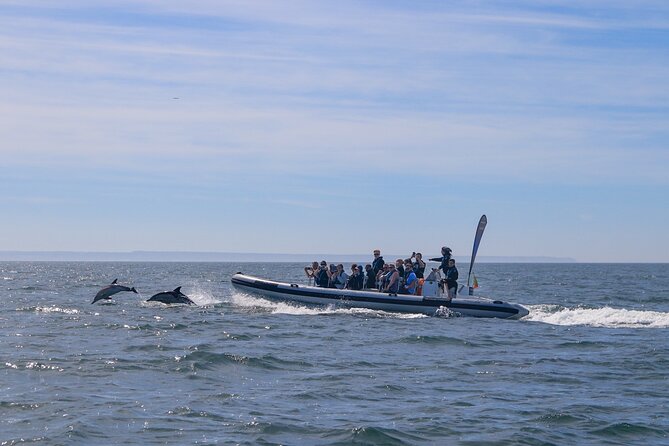
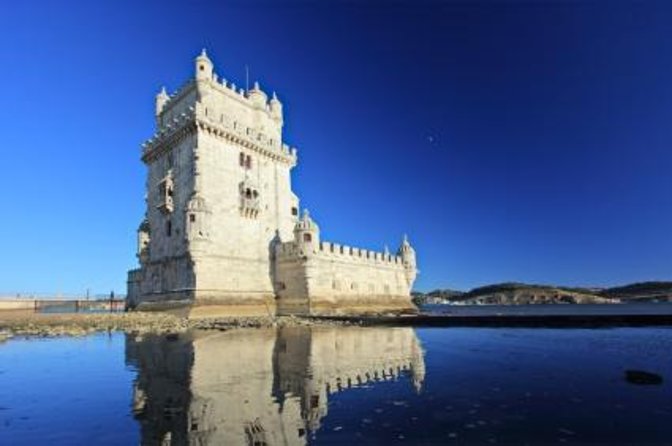
The return toward Lisbon brings a second type of sightseeing. From the water, the city’s waterfront monuments appear in a new order and scale. You pass the area around Belém, including views toward Belém Tower, and see the 25 de Abril Bridge from below and beyond.
This is a smart way to combine nature with city touring. The river section gives you scenic context without turning the trip into a standard monument-by-monument narration. The exact amount of history explained depends on the guide and conditions, but the route includes sightseeing as you pass the major waterfront landmarks.
The Fort of São Lourenço do Bugio is another marked point on the route. This round fort sits at the mouth of the Tagus, where the river meets the sea, and makes a natural photo stop from the boat. You do not get a conventional land visit, so think of it as a viewpoint and passing landmark rather than a guided fort tour.
The boat also reaches the direction of Cascais, listed around the JJC6+RP location. Here, the appeal is the sea view and coastal setting rather than a long stop on shore. The route is designed around looking for marine life, so you remain on the boat and continue observing the water.
The boat, comfort, and practical limits
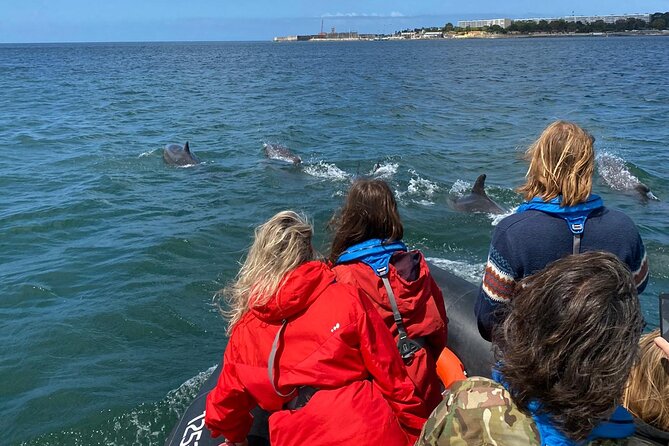
The included equipment is straightforward: boat transport, crew, fuel, insurance, and a life jacket. You also have access to the Oceanic Lounge before and after the trip. Food and drinks are not listed as included, though some trip accounts describe coffee, tea, and pastéis de nata being offered at the lounge. Treat those refreshments as a possible courtesy, not something to rely on for lunch.
Wear comfortable clothes and shoes, plus a windbreaker. High heels are not allowed, and sensible footwear is the better choice on a moving boat anyway. Smoking, alcohol, drugs, littering, feeding animals, and touching marine life are prohibited.
The speedboat can feel comfortable when conditions are mild, but it is still a small vessel exposed to wind and swell. Sitting for three hours may aggravate back pain. The activity is not suitable for children under five, pregnant women, wheelchair users, people with back problems, or anyone recovering from recent surgery.
The operator monitors the forecast closely, including wind, gusts, cloud cover, swell, wave height, and currents. If conditions make the trip unsafe or uncomfortable, cancellation may be announced at least 48 hours ahead, with a choice of another date or a full refund. You can also cancel your booking up to 24 hours before departure for a full refund, and the reserve-now, pay-later option keeps your plans flexible.
Is $61 good value?
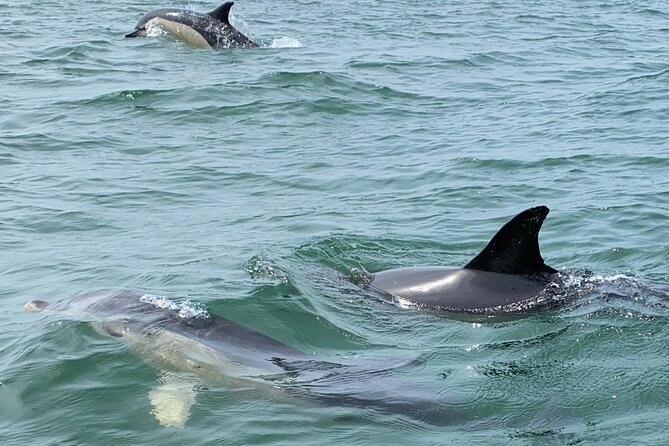
At $61 per person, this is not the cheapest way to see Lisbon from the water. It is also more than a basic river cruise, which usually focuses on monuments and photographs rather than marine life.
The value comes from combining several outings in one. You get a three-hour boat trip, open-sea scenery, a trained marine guide, a serious wildlife search, and a return route past Lisbon landmarks. The lounge access and safety setup add comfort at the edges of the experience, while the research partnership gives the trip a conservation purpose.
I would consider it good value if you want an active half-day and care about seeing animals in their natural setting. It is less compelling if you want a quiet boat ride, guaranteed sightings, or a fixed sightseeing route. You are paying for time on the water and for the crew’s effort to locate wildlife, not for a guaranteed show.
The activity has a listed rating of 4.9 from 867 reviews, with praise focused heavily on the crew, the marine biology explanations, the boat handling, and the quality of dolphin sightings. The most useful takeaway is not the number itself. It is that the trip seems to work best when you value the whole experience, including the search, the ride, and the education.
Who should book this dolphin tour?
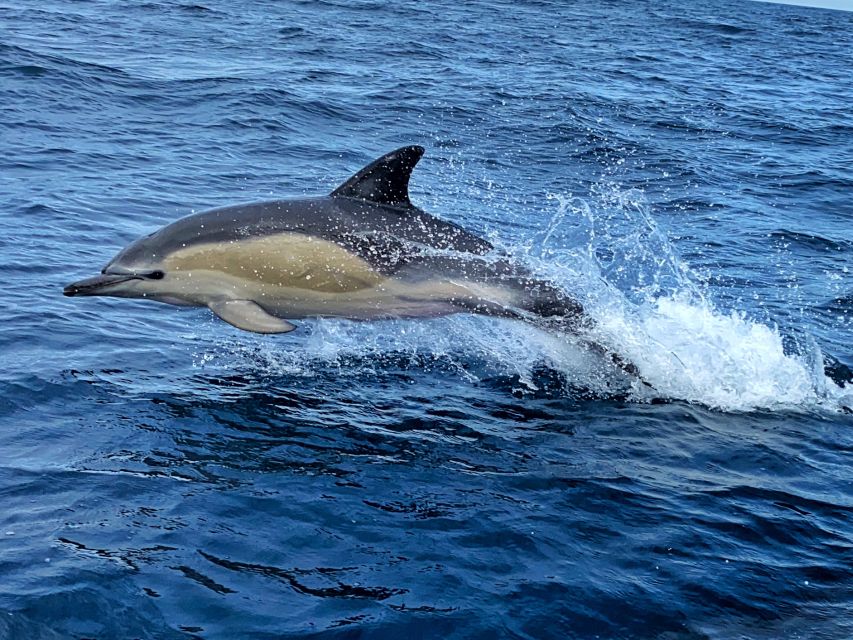
I would choose this outing for nature lovers, families with children over five, couples, and anyone who wants a break from Lisbon’s tiled streets and museums. It also suits people who enjoy a little speed and do not mind wind, spray, or an uncertain wildlife schedule.
It can work well for children who are curious about animals. One account describes children enjoying close views of dolphins, while another notes that a normally easily bored child stayed interested throughout. Still, young children can become seasick, and the boat’s movement is not right for every family.
You should think twice if you have back problems, recent surgery, mobility needs that make boarding difficult, or a strong tendency toward seasickness. One person with mobility issues received careful assistance, but the official restrictions remain important. Contact the operator before booking if your physical condition is unclear.
My verdict
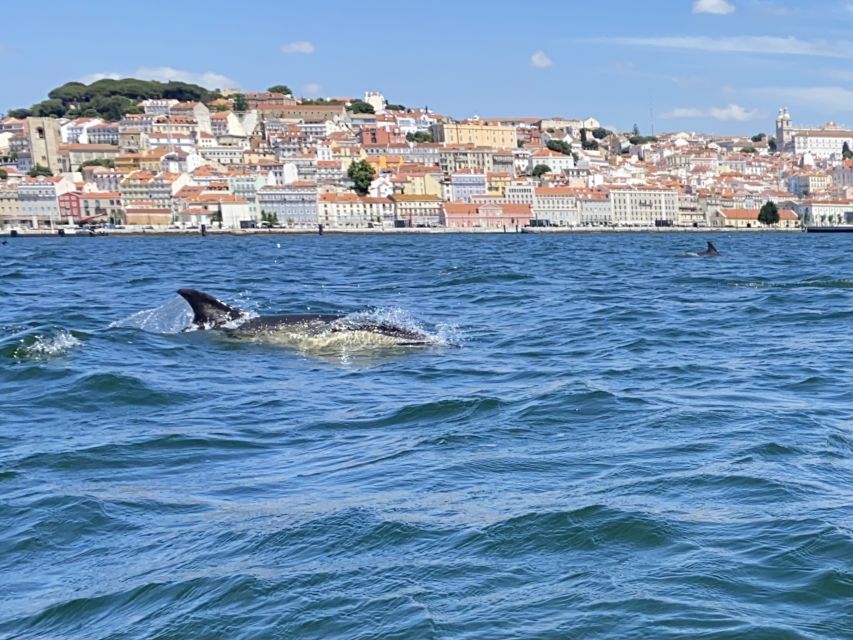
Book this if wild dolphins matter more to you than a guaranteed schedule. The mix of marine science, careful animal viewing, fast-boat excitement, and Lisbon’s waterfront makes it a memorable use of three hours.
Skip it if you want a calm sightseeing cruise or cannot tolerate open-water movement. Otherwise, bring warm layers, eat sensibly before departure, keep your expectations honest, and enjoy the search. The dolphins are free, and that is exactly what makes the encounter special.
FAQ
Where does the dolphin-watching tour start?
It starts at the Mercedes-Benz Oceanic Lounge at Doca de Santo Amaro, Armazém 17, below the 25 de Abril Bridge.
How long does the experience last?
The boat tour lasts three hours. Starting times vary, so check availability when booking.
Will I definitely see dolphins?
No. Dolphins are wild animals and sightings are not guaranteed. The operator reports a sighting success rate of 97 to 98 percent based on its own logs.
What languages are available?
The live tour guide is available in English, Portuguese, and Spanish.
Is a marine biologist included?
Yes. A marine biologist joins the boat tour and explains dolphin behavior, species, marine life, and conservation work.
What should I bring?
Bring comfortable shoes, comfortable clothing, and a windbreaker. Conditions at sea can feel cool and windy even on a sunny day.
Who should not take this tour?
The activity is not suitable for children under five, pregnant women, wheelchair users, people with back problems, or people with recent surgeries. It may also be uncomfortable if you are prone to seasickness.
Fresh finds around Lisbon
- Sanctuary of Fátima and Coimbra City Tour★ 4.5 · 51 reviews
- Sintra/Lisbon: Sintra & Quinta da Regaleira Tour with Ticket★ 4.4 · 51 reviews
- Jeronimos Monastery Guided Tour – Small Groups – Tickets Included★ 5.0 · 51 reviews
- Lisbon: Private Christmas Lights Tour by Eco Tuk Tuk★ 4.9 · 51 reviews
- Peniche: Berlengas Island Catamaran Tour – Round Trip★ 4.6 · 51 reviews
- Half day Spa Water Therapy experience at THE SPA at Corinthia Lisbon★ 4.5 · 51 reviews
- Lisbon: Private Tuk-Tuk Tour for 2 hours★ 4.7 · 51 reviews
- Premium Lisbon Airport Transfer to Lisbon★ 5.0 · 51 reviews
Dolphin Watching, compared.

Lisbon: Tagus River Cruise to the Ocean & Dolphin Watching
Read our review →
Lisbon: Dolphin Watching with Marine Biologist
Read our review →
Lisbon: Dolphin Watching with a Marine Biologist – Ocean Safari
Read our review →
Sesimbra: Arrábida Dolphin and Whale Watching tour with biologist
Read our review →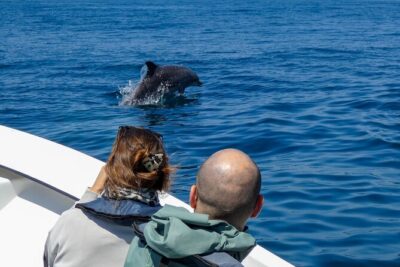
Observation of Dolphins and Whales with Marine Biologist in Arrábida
Read our review →Browse the lists this tour appears in