
Reviewed · LISBON FOOD TOURS
Lisbon’s Post-Colonial Feast
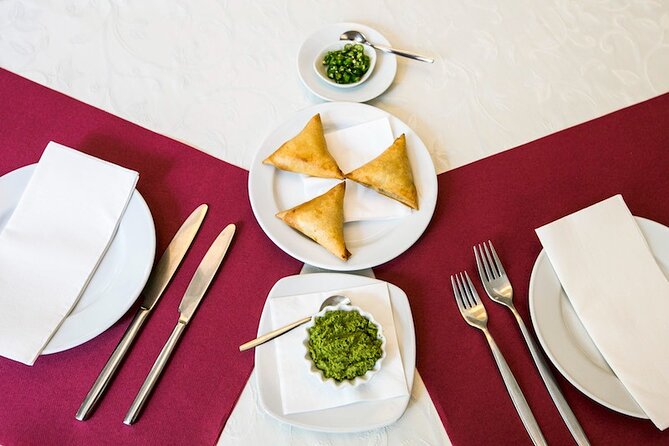
Lisbon’s Post-Colonial Feast is not a standard pastry crawl. It uses food to explain how Portugal’s former empire shaped the city, while also facing slavery, repression, and exploitation. You move through several central neighborhoods, stopping for regional specialties and learning how ingredients and cooking traditions traveled in both directions.
I like the small maximum of seven, which gives you a real chance to talk with your guide and fellow diners. I also like the range of food, from chocolate and chorizo stew to Brazilian and Goan dishes. The main consideration is the serious subject matter, plus the fact that one Angolan restaurant recently closed, so the food lineup can change.
In This Review
- Key points
- Why This Lisbon Food Walk Feels Different
- Praça do Chile Starts the Story
- Campo dos Mártires da Pátria Adds the City’s Past
- Avenida da Fonte Luminosa Connects Food and Empire
- Jardim do Torel Brings Another Bite
- Largo de São Domingos Holds the Biggest Food Section
- What You Are Really Paying $150 For
- A Small Group Changes the Conversation
- The Food Is the Hook, But Context Is the Point
- Who Should Book This Lisbon Food Tour
- Final Call: Book It for Food With a Point
- FAQ
- How long does Lisbon’s Post-Colonial Feast last?
- Where does the tour start?
- Where does the tour end?
- How many people can join the tour?
- What food can I expect to try?
- Is the tour offered in English?
- Can I cancel for a full refund?
Key points
- Five-hour food and history walk: The tour connects Lisbon’s streets with Portugal’s colonial past.
- Small group of seven or fewer: You get a more personal setting than on a large city tour.
- Food beyond the usual Portuguese menu: Expect chocolate, stew, Brazilian flavors, Goan specialties, and other regional bites.
- A frank look at difficult history: Slavery, repression, and exploitation are part of the discussion.
- Guide-led and English-speaking: Guides such as Celia bring the food and cultural context together.
- Good value for serious eaters: At $150 per person, you are paying for several tastings, five hours, and focused historical interpretation.
Why This Lisbon Food Walk Feels Different
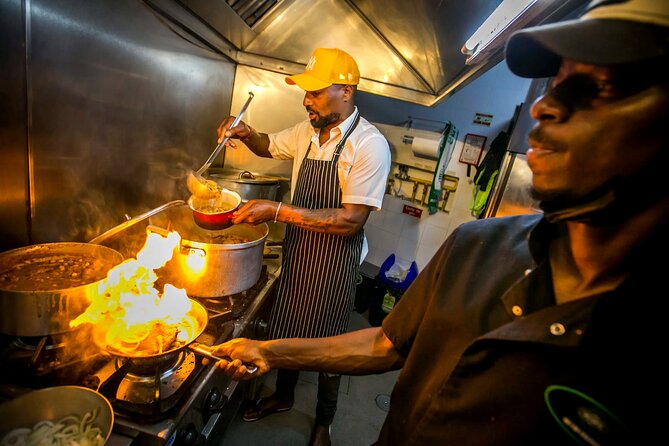
Many Lisbon food tours focus on familiar Portuguese staples. This one asks a more interesting question: how did food from Brazil, Goa, Angola, and other former Portuguese territories become part of life in Portugal?
That makes the experience useful for two kinds of people. If you plan trips around meals, you get a chance to taste dishes you may not find on a typical Lisbon menu. If you care about history, the food gives you a concrete way to think about Portugal’s empire and its lasting effects.
I appreciate that the tour does not treat colonial connections as a simple story of shared culture. The discussion includes slavery, repression, and exploitation. That matters because food can soften difficult subjects if it is presented only as a cheerful exchange of flavors. Here, the aim is to connect the pleasure of eating with the harder facts behind those connections.
The walk lasts about five hours and starts at 11:00 a.m. at Praça do Chile 2. It ends back at the same meeting point. That timing makes this a substantial part of your day, not a quick morning snack stop, so avoid booking it immediately before another fixed appointment.
More Lisbon food crawls:
- Lisbon: Pastel de Nata Baking Class
★ 4.9 · 2,106 reviews - Lisbon Small-Group Food Tour with 18 Tastings in Alfama District
★ 5.0 · 1,967 reviews - Lisbon: Baixa District Food Tour with Dinner and Drinks
★ 4.9 · 1,870 reviews
Praça do Chile Starts the Story
The tour begins at Praça do Chile, a practical starting point near public transportation. From there, your guide leads the group through Lisbon rather than keeping the experience inside one restaurant or market.
The first listed stop is Paço da Rainha, where you spend about 45 minutes taking in the area before moving toward a lesser-known part of the route. The exact food served at this point is not specified, so you should think of it as an opening section of the walk rather than a promised tasting stop.
That is useful in a food tour because the first part gives the guide time to set up the central idea. You begin by looking at place and movement, then connect those surroundings to the people and cuisines that have shaped Lisbon.
Since the tour involves several stops and a total of five hours, wear comfortable shoes. The information provided does not state how much of the route is uphill or the exact walking distance, so anyone concerned about mobility should ask the operator before booking.
Campo dos Mártires da Pátria Adds the City’s Past
The next stop, Campo dos Mártires da Pátria, lasts about 45 minutes. Here, the focus turns more clearly to Lisbon’s history and culture.
The value of this stop is not just the square itself. It helps place the food discussion inside the city’s public spaces. Lisbon’s colonial past is not sealed away in a museum, and this kind of walk gives you a way to consider how power, trade, migration, and daily life overlap in the city.
You should expect interpretation rather than a long list of dates. The tour is built around conversation, tasting, and movement, so the guide’s ability to explain connections will shape your experience. Celia, one guide named in the feedback, was praised for being warm and well informed, which is encouraging for anyone who wants more than a surface-level food outing.
This is also where the serious tone may become clearer. The tour does not avoid Portugal’s role in slavery and colonial exploitation. If you prefer food tours with little historical discussion, this may feel heavier than expected. If you want context for what you are eating, it is one of the reasons to choose this walk.
Avenida da Fonte Luminosa Connects Food and Empire
At Avenida da Fonte Luminosa, another 45-minute stop focuses on the main theme of the day. The details of the tasting here are not fixed in the supplied information, so I would not book this expecting a particular dish at every location.
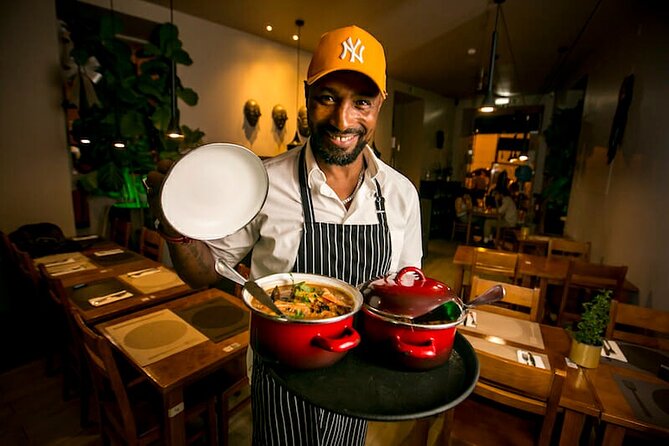
Instead, expect the guide to draw links between Portuguese cuisine and food traditions from former colonies. The tour specifically includes chocolate, chorizo stew, and a range of regional delicacies. It also introduces Brazilian and Goan food, two influences that may not be the first things you associate with eating in Lisbon.
That surprise is part of the appeal. A familiar Portuguese dish can look different once you learn how ingredients, techniques, and communities moved through the Portuguese-speaking world. The point is not to claim that all these cuisines are the same. It is to show how contact and power changed what people cooked and ate.
The 45-minute format gives the guide enough time to explain the topic without making the entire walk feel like a classroom lecture. Still, the experience depends on your willingness to listen as well as eat. Come ready for a cultural discussion, not just a succession of snacks.
A handful more Lisbon ideas to compare
- Lisbon City Center Tour – The Unmissable Lisbon
★ 5.0 · 22,234 reviews - Lisbon: Sintra, Pena, Regaleira, Cabo da Roca & Cascais
★ 4.7 · 19,656 reviews - Lisbon: Jerónimos Monastery Entrance Ticket
★ 4.1 · 14,164 reviews - Lisbon: History, Stories and Lifestyle Walking Tour
★ 4.8 · 10,902 reviews
Jardim do Torel Brings Another Bite
Jardim do Torel is the fourth listed stop, with about 45 minutes set aside. The tour description points to finding the next bite here, along with taking in the site.
The setting adds a change of pace after the earlier history stops. You can expect the guide to keep the conversation going while introducing another food sample. Since the exact dish is not stated, the sensible approach is to regard the menu as part of the tour’s changing lineup rather than a guaranteed checklist.
One practical point: the tour is long enough that you should not eat a large lunch beforehand. The route includes several tastings and is described as a feast. One six-person group was already very full by the time an expected Angolan stop could no longer happen, so the food portions clearly add up.
Jardim do Torel is also a useful reminder that this is a walking experience first and a restaurant meal second. You are moving through Lisbon, stopping to taste and talk, rather than sitting down for one formal lunch.
Largo de São Domingos Holds the Biggest Food Section
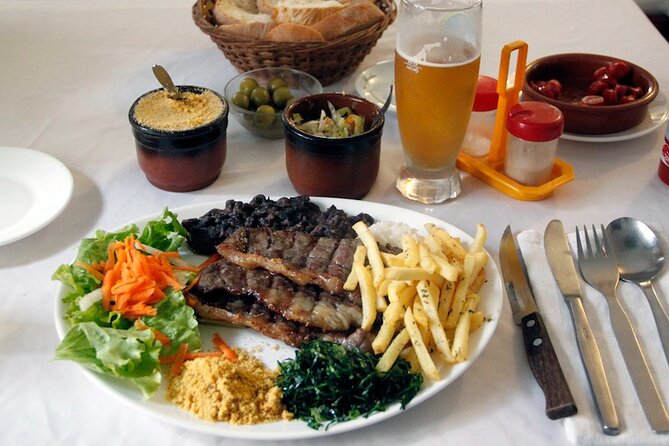
The final major stop is Largo de São Domingos, where the group spends about an hour sampling specialties. This is the longest stop on the route and likely gives the food discussion its fullest expression.
The square is connected with the tour’s broader look at Lisbon’s mixed communities and food traditions. You might find that the last stop brings several threads together: the city’s past, the role of former colonies, and the way those connections remain visible in what is cooked and served today.
The food may include Brazilian and Goan dishes, along with other regional tastes. Chocolate and chorizo stew are also named among the tour’s offerings. An Angolan restaurant had closed unexpectedly, so do not assume every advertised influence will appear in exactly the same form on your date.
That change is worth keeping in mind, but it does not make the concept less worthwhile. In fact, it shows why a food tour based on living communities cannot always operate like a fixed museum display. Restaurants close, menus shift, and the guide may need to adjust the route or tastings.
What You Are Really Paying $150 For
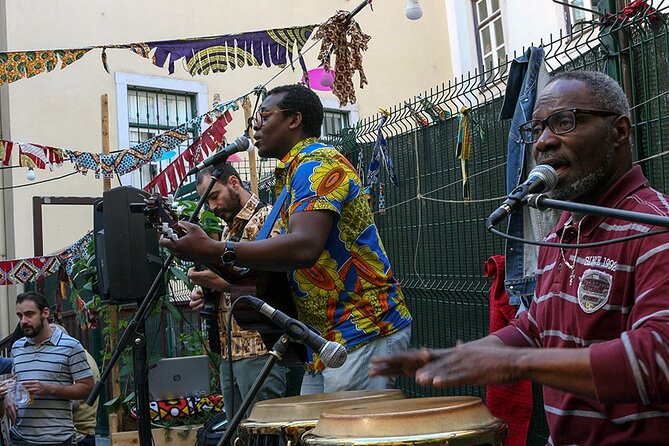
The price is $150 per person. That is a serious amount for a walking tour, but the comparison should be with a five-hour guided food and culture experience, not with a single Lisbon lunch.
You are paying for several food stops, an English-speaking guide, a very small group, and sustained discussion of a difficult historical subject. A maximum of seven means you are not lost in a crowd or waiting for a guide to repeat the same point to dozens of people. That intimacy has real value if you want to ask questions.
The price will make the most sense for people who normally spend freely on food experiences and want historical context with their meal. It may feel high if you mainly want to sample classic pastel de nata, bifana, or cod dishes. Those are not the focus here.
I would also consider how much you value access to a food story that is not obvious from a standard Lisbon itinerary. Brazilian or Goan cuisine may not be what you first picture when planning a Portuguese food tour, but that is precisely why this route can add something new to a city visit.
A Small Group Changes the Conversation
The maximum group size is seven. That is one of the strongest practical features of the experience.
A group this small makes it easier to introduce yourself, compare reactions to unfamiliar dishes, and ask direct questions. It also helps when the guide is discussing sensitive subjects. A conversation about slavery, repression, and colonial power can feel more thoughtful in a small circle than in a large group gathered around a busy street corner.
The group size does not guarantee a private tour. You may still be sharing the day with people whose interests and pace differ from yours. But it gives the guide a better chance to respond to the people actually present.
The tour is offered in English, and confirmation is provided when you book. Most people can participate, and the route is near public transportation. Because the activity returns to Praça do Chile, you can plan your next stop from the same general area, though you should allow extra time after the scheduled five hours.
The Food Is the Hook, But Context Is the Point
The strongest reason to choose this tour is the combination of eating and explanation. You are not simply trying food from former Portuguese colonies as exotic additions to a Lisbon menu. You are being asked to think about how those foods arrived, who carried them, and what colonial rule meant for the communities involved.
That framing can make a familiar bite more interesting. Chorizo stew is not presented in isolation, and chocolate is not just a sweet pause. Brazilian and Goan food help show the range of Portugal’s connections, while the discussion of Angola and other former colonies keeps the subject from becoming too narrow.
The experience also suits repeat visitors. One Portuguese father who had been visiting Lisbon for 50 years still found neighborhoods on the route that were new to him. You do not need to be a first-time visitor to get something from the walk.
At the same time, do not expect a complete history of Portuguese colonialism in five hours. The tour can introduce key themes and connect them to food, but it cannot cover every country, period, or community in detail. Think of it as a focused entry point.
Who Should Book This Lisbon Food Tour
I would recommend Lisbon’s Post-Colonial Feast to you if:
- You want food tied to history and culture.
- You are curious about Brazilian, Goan, Angolan, and other post-colonial influences.
- You prefer small groups to large scheduled tours.
- You are comfortable discussing slavery, repression, and exploitation.
- You want a five-hour experience rather than a quick tasting.
- You have already tried the standard Lisbon food circuit and want a different angle.
I would be more cautious if you want a predictable menu, a lighthearted food crawl, or a short activity between other bookings. The restaurant lineup can change, and the subject matter is not light.
Book early if your dates are fixed. This experience is often reserved about 55 days ahead, and the maximum of seven limits capacity. Free cancellation is available if you cancel at least 24 hours before the 11:00 a.m. start. Late cancellations and changes are not refunded or accepted, and poor weather or failure to meet the minimum group size can lead to a new date or a full refund.
Final Call: Book It for Food With a Point
Book this tour if you want Lisbon food to tell a larger story. The small group, five-hour format, and mix of chocolate, stew, Brazilian, Goan, and other regional foods give you more than a routine tasting menu.
The tradeoff is price and tone. At $150, it is not a bargain snack walk, and the discussion of empire may challenge you. But for an open-minded eater who wants to understand how Portugal’s past still shapes its table, this is a thoughtful and unusually focused choice. Remember to budget for a tip for your guide, especially if Celia or another guide makes the history and food connections work for you.
FAQ
How long does Lisbon’s Post-Colonial Feast last?
The experience lasts approximately five hours, including the walking route, historical discussion, and food stops.
Where does the tour start?
It starts at Praça do Chile 2, 1170 Lisboa, Portugal, at 11:00 a.m.
Where does the tour end?
The activity ends back at the meeting point at Praça do Chile.
How many people can join the tour?
The tour has a maximum of seven participants.
What food can I expect to try?
The experience includes chocolate, chorizo stew, and a range of regional delicacies. Brazilian and Goan food are also part of the culinary focus. An Angolan restaurant had closed, so the exact food lineup may change.
Is the tour offered in English?
Yes. The tour is offered in English and uses a mobile ticket.
Can I cancel for a full refund?
Yes, if you cancel at least 24 hours before the experience start time. Cancellations or changes made less than 24 hours ahead are not refunded or accepted. If poor weather or an insufficient minimum group causes the tour to be canceled, you will be offered another date or experience, or a full refund.
Fresh finds around Lisbon
- Sanctuary of Fátima and Coimbra City Tour★ 4.5 · 51 reviews
- Sintra/Lisbon: Sintra & Quinta da Regaleira Tour with Ticket★ 4.4 · 51 reviews
- Jeronimos Monastery Guided Tour – Small Groups – Tickets Included★ 5.0 · 51 reviews
- Lisbon: Private Christmas Lights Tour by Eco Tuk Tuk★ 4.9 · 51 reviews
- Peniche: Berlengas Island Catamaran Tour – Round Trip★ 4.6 · 51 reviews
- Half day Spa Water Therapy experience at THE SPA at Corinthia Lisbon★ 4.5 · 51 reviews
- Lisbon: Private Tuk-Tuk Tour for 2 hours★ 4.7 · 51 reviews
- Premium Lisbon Airport Transfer to Lisbon★ 5.0 · 51 reviews
Lisbon Food Tours, compared.
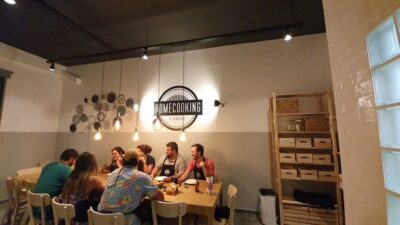
Lisbon Small-Group Food Tour with 18 Tastings in Alfama District
Read our review →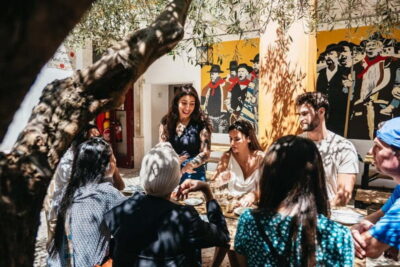
Lisbon: Baixa District Food Tour with Dinner and Drinks
Read our review →
Devour Lisbon: The Ultimate Portuguese Food Tour
Read our review →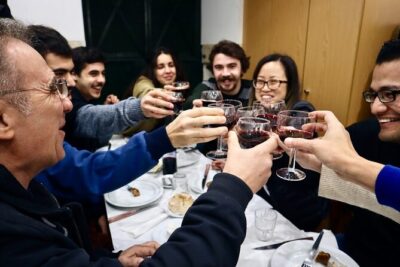
Lisbon Food Tour with 10+ Tastings of Local Delicacies & Wines
Read our review →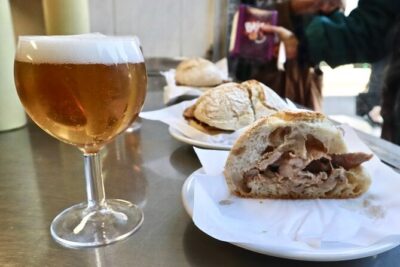
Lisbon Private Food Tour – Taste 10+ Local Dishes & Wines
Read our review →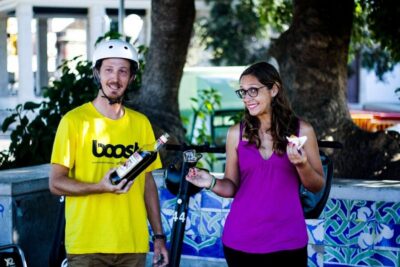
Lisbon: Segway Food Tour of Alfama and Old Town Lisbon
Read our review →
Lisbon Awakens: A Culinary Crossroads, Reborn.
Read our review →Browse the lists this tour appears in