Reviewed · MORNING
Lisbon: Portuguese School of Equestrian Art Morning Training
The Portuguese School of Equestrian Art gives you a rare look at Lusitano horses in training, not just a polished show from the audience. Riders in period costume work through warm-ups and agility exercises, while you follow a small interpretative route and watch the main session at the Henrique Calado Arena.
I like two things especially: you can get close to the stables and horses, and the $9 price includes both the Nora Pateo route and arena access. The main caution is that this is a short morning visit, and training may feel less dramatic than a full gala performance.
In This Review
- Key points
- Why Portuguese court riding still feels special
- Start at the Nora Pateo from 11am
- Watch the horses warm up before the main session
- Walk among the stable areas
- Henrique Calado Arena at noon
- What the $9 ticket really covers
- Meeting point and timing advice
- Who will enjoy this morning most
- How it compares with a full palace visit
- My practical verdict
- FAQ
- How long does the experience last?
- What time does the Portuguese School of Equestrian Art open for this visit?
- What happens at the Nora Pateo?
- What happens at the Henrique Calado Arena?
- Is the arena program different on Wednesday?
- Does the ticket include Queluz National Palace?
- Does the ticket include the National Gardens?
- What is included in the ticket?
- Is the activity wheelchair accessible?
- Is the ticket refundable?
Key points
- Watch real morning training: See riders and Lusitano horses practice balance, agility, and choreographed movements.
- Visit the Nora Pateo: Learn how Portuguese Equestrian Art grew from the traditions of the 18th-century court.
- See the Henrique Calado Arena: Training runs from noon to 1pm on most days, with an exhibition on Wednesdays.
- Get close to the stables: The route can let you walk among horses, riders, and stable areas, though some parts require stairs.
- Pay only $9: The ticket covers the equestrian school, arena, and interpretative route, but not Queluz Palace or its gardens.
- Plan for a two-hour window: The listed opening period is 11am to 1pm, so late arrival can mean missing part of the visit.
Why Portuguese court riding still feels special
At first glance, dressage can look like a quiet sport. Then a Lusitano horse turns on a tight line, lifts its feet with controlled rhythm, or responds to a nearly invisible signal from the rider. That is the appeal here. You are watching precision built through patience, not speed or spectacle alone.
The Portuguese School of Equestrian Art preserves riding traditions linked to the 18th-century Portuguese court. The aim is not simply to show off fine horses. It is to keep alive a formal style in which the rider’s posture, the horse’s balance, and the music or movement all work together.
You will see riders in authentic period costumes during the working session. That clothing helps connect the modern training to the older court setting, though the visit remains an active stable experience rather than a museum display.
The horses are Lusitanos, a Portuguese breed valued here for its elegant movements and ability to perform demanding exercises. The session lets you see the work behind the finished routine: warm-ups, agility practice, preparation, and careful handling.
A handful more Lisbon ideas to compare
- Sailboat Tour in Lisbon with drinks included | Morning and Sunset
★ 4.5 · 867 reviews - Lisbon: Tagus River Cruise, Morning, Day, Sunset, or Night
★ 4.9 · 640 reviews - Lisbon: Morning of Equestrian Art with Lusitano Horses
★ 4.4 · 87 reviews
Start at the Nora Pateo from 11am
The visit begins with the interpretative route at the Nora Pateo. This section is useful because it gives meaning to what you later see in the arena. Instead of watching horses move without context, you learn about the methods and traditions of Portuguese Equestrian Art first.
The Nora Pateo visits run from 11am to noon. That makes the schedule fairly clear, but it also means you should arrive ready to begin. If you wander in late, you may lose part of the explanatory route and have less time to look around before the arena session.
The route is also where the behind-the-scenes character of the experience comes through most clearly. You can see how the school connects its working spaces, horses, and performances. One useful feature is the chance to use an audio guide, which can help if you want more background while moving through the area.
This portion is not a full visit to Queluz National Palace. Your equestrian ticket does not include entry to the palace or the National Gardens. If those are on your Lisbon plan, budget for separate tickets and allow extra time beyond the morning horse visit.
Watch the horses warm up before the main session
The warm-up is one of the most valuable parts for anyone who wants to understand riding rather than simply watch a show. Riders guide the horses through exercises that build control, flexibility, and responsiveness. These movements may look easy from a distance, but the calm pace makes the fine details easier to spot.
Watch the rider’s hands, seat, and posture. The best work is often subtle. A horse may change direction or adjust its rhythm with very little visible effort from the rider. That quiet communication is central to the school’s style.
You may also see agility exercises. These are not presented as a noisy contest. They show how the horses develop the balance needed for more demanding routines and public performances. The emphasis is on control and elegance rather than raw power.
This is also a good time to consider the welfare side of the program. The session shows horses being prepared and exercised for high-level galas, with handlers focused on each animal’s health and training. You are not just seeing the final polished act. You are seeing the daily work that supports it.
The experience can be especially rewarding if you already like horses or have an interest in classical riding. If you are expecting constant action, the controlled pace may seem modest. I would approach it as a working practice session, not as a full theatrical production.
Walk among the stable areas
A major strength of this visit is the access around the stable areas. You may be allowed to walk among horses, riders, and working spaces rather than staying far away behind a barrier. That closeness gives the morning a more personal feel.
You can notice the scale and calm of the horses at close range. You also get a better sense of the preparation involved before a formal performance. The stable visit is less about one big moment and more about seeing the routine that supports the arena work.
The access is not unlimited. There are restrictions for reaching the cabin and south stall, and stairs are involved in those areas. The activity is listed as wheelchair accessible, but that does not mean every corner is step-free. If you need full access to all spaces, check the exact route before booking.
The stable areas may be more interesting than the training for some people. One strong way to use the visit is to take your time here, listen to the audio guide if available, and observe the horses before heading to the arena. The chance to see the animals at work and at rest gives the experience more depth.
Nearby in Lisbon, a different day entirely:
- Lisbon City Center Tour – The Unmissable Lisbon
★ 5.0 · 22,234 reviews - Lisbon: Sintra, Pena, Regaleira, Cabo da Roca & Cascais
★ 4.7 · 19,656 reviews - Sintra: Pena Palace and Park Entrance Ticket
★ 4.2 · 17,410 reviews - Lisbon: Jerónimos Monastery Entrance Ticket
★ 4.1 · 14,164 reviews
Henrique Calado Arena at noon
The arena session is scheduled from noon to 1pm, except on Wednesday. On most days, you watch training. On Wednesday, the program changes to an exhibition. Both formats show the school’s riding traditions, but they offer a slightly different feel.
Training gives you the clearest view of practice and preparation. You may see riders repeat exercises, work through movements, and bring the horses into the right rhythm. It can feel more authentic because you are watching the school at work rather than only seeing a finished presentation.
The Wednesday exhibition may provide a more polished performance. Stage lighting helps recreate the atmosphere of the Portuguese court, and the routines are performed to music. This gives the hour a stronger sense of theater and ceremony.
The arena is the visit’s central viewing point. Riders and horses perform choreographed routines that highlight posture, rhythm, and cooperation. The spectacle is elegant rather than loud. If you enjoy classical performances, the combination of music, costumes, lighting, and controlled movement should appeal to you.
Keep your expectations in line with the ticket price. At $9, you are not buying a long gala or an all-day guided tour. You are buying access to a short training or exhibition period, plus the route and equestrian school areas. Some people will find that excellent value. Others may feel the training alone is too brief to justify the cost.
For the best experience, treat the arena hour as one part of the visit, not the entire reason for going. The Nora Pateo route and stable access help make the morning feel complete.
What the $9 ticket really covers
The price is modest for Lisbon, especially if you are interested in horses, historic court traditions, or unusual cultural sites. The ticket includes:
- Entry to the Portuguese School of Equestrian Art
- Access to the Henrique Calado Arena
- The interpretative route at the Nora Pateo
It does not include food, drinks, hotel pickup, or drop-off. It also does not include entry to Queluz National Palace or the National Gardens. Those exclusions matter because the setting may tempt you to treat the equestrian visit as a palace ticket. It is not.
For $9, I see the strongest value in the combination of stable access and arena viewing. A single short training session might feel thin, but adding the interpretative route gives you more to see and helps explain the traditions behind the riding.
The activity is valid for one day, with starting times shown according to availability. The stated operating period is 11am to 1pm. Since the schedule is tight, do not assume you can arrive at any point during the day and receive the full experience.
The ticket is non-refundable. That makes careful planning more important than usual. Save your voucher before arriving, and make sure you can display it. A booking problem involving a missing app or voucher resulted in a new ticket being bought at the desk, which is an avoidable cost and frustration.
Meeting point and timing advice
The meeting point is on Calçada da Ajuda, near number 23. The experience information places the school in the Lisbon District and links it with the gardens of the National Palace of Queluz, so read your booking details closely and confirm the exact route to the stated meeting point before setting out.
The timing is the main practical issue. Nora Pateo visits run from 11am to noon, followed by the Henrique Calado Arena from noon to 1pm. Arriving at 11am gives you the best chance of seeing the full program.
If you only arrive for the noon arena session, you may miss the interpretative route and much of the behind-the-scenes material. If you arrive too early, you will still have a clear place in the schedule, but the information provided does not promise an earlier opening than 11am.
The activity is listed as wheelchair accessible, though stairs limit access to the cabin and south stall. If those areas matter to you, ask about the accessible route ahead of time rather than assuming every stable space can be reached.
Who will enjoy this morning most
I would recommend this experience to anyone who likes horses, traditional riding, or cultural sites that show a living practice rather than only objects behind glass. It also suits visitors who want a short activity that can fit into a busy Lisbon schedule.
Families with children may enjoy the close look at the horses, especially if children are curious about how animals prepare for performances. The calm pace may work better for older children who can watch carefully and listen to explanations.
It is also a good choice for photographers interested in costumes, horse movement, and the arena setting. The activity data does not promise specific photography rules, so check on-site before taking pictures.
You may want to skip it if you dislike equestrian displays or expect a large-scale show with nonstop action. The training hour is controlled and purposeful. Much of the pleasure comes from noticing small changes in rhythm, balance, and rider signals.
It is not the best pick if you need a flexible all-day attraction. The visit centers on a narrow two-hour window, and the non-refundable booking policy gives you little room for a last-minute change.
How it compares with a full palace visit
The equestrian school and Queluz Palace offer different experiences. The palace and gardens focus on architecture, rooms, decorative arts, and court life. The school focuses on living horses, rider training, and performance traditions.
You can combine them if your schedule and separate admission tickets allow. The equestrian ticket alone does not cover the palace or gardens, so plan the order carefully and leave enough time for both.
I like the school as a companion to a palace visit because it shows court culture in motion. The palace tells you where royal life happened. The arena shows one of the formal arts connected with that world.
Still, do not book this expecting a palace tour in disguise. The main event is the horse training, and the supporting route is compact. That focus is a benefit if you want something specific, but a limitation if you are looking for a broad historical attraction.
My practical verdict
The Portuguese School of Equestrian Art is a good-value morning for the right audience. The close stable access and the chance to watch Lusitano horses prepare for formal performances give it more character than a standard spectator show.
I especially like that you see both the working side and the polished arena side. The Nora Pateo route explains the tradition, the stable areas bring you close to the daily routine, and the Henrique Calado Arena adds costumes, music, lighting, and choreographed movement.
The main weakness is the short duration and narrow schedule. At $9, the price is fair, but you should not expect a long guided experience or a full gala. Arrive by 11am, protect your voucher, and remember that palace and garden admission costs extra.
Book it if you like horses and want a focused glimpse of Portuguese court riding. Skip it if you want a major theatrical performance or need an activity with flexible timing.
FAQ
How long does the experience last?
The listed validity is one day, but the scheduled visit runs from 11am to 1pm. The Nora Pateo route is scheduled from 11am to noon, followed by the arena session from noon to 1pm.
What time does the Portuguese School of Equestrian Art open for this visit?
The stated opening hours for the activity are between 11am and 1pm.
What happens at the Nora Pateo?
You follow an interpretative route that explains the history and techniques of traditional Portuguese Equestrian Art. Visits are scheduled from 11am to noon.
What happens at the Henrique Calado Arena?
You watch either a training session or an exhibition. Training takes place except on Wednesday, while Wednesday features an exhibition, both scheduled from noon to 1pm.
Is the arena program different on Wednesday?
Yes. On Wednesday, the Henrique Calado Arena presents an exhibition. On other listed days, it presents a training session.
Does the ticket include Queluz National Palace?
No. Entry to Queluz National Palace is not included.
Does the ticket include the National Gardens?
No. Entry to Queluz National Gardens is not included.
What is included in the ticket?
The ticket includes entry to the Portuguese School of Equestrian Art, access to the Henrique Calado Arena, and the interpretative route at the Nora Pateo.
Is the activity wheelchair accessible?
The activity is listed as wheelchair accessible. However, access to the cabin and south stall has restrictions because stairs are involved.
Is the ticket refundable?
No. The activity is non-refundable. Save your voucher and have it ready when you arrive.
Fresh finds around Lisbon
- Lisbon: Tuk Tuk City Tour★ 3.6 · 7 reviews
- Fatima Full day Private Tour★ 5.0 · 7 reviews
- Lisbon: Highlights and Hidden Gems Tour★ 5.0 · 7 reviews
- Private Tour to Evora and Monsaraz from Lisbon★ 5.0 · 7 reviews
- Discover Sintra Beauty with a Guided Journey from Lisbon★ 5.0 · 7 reviews
- Private Half-Day Tour to Sintra★ 3.4 · 7 reviews
- Lisbon: Sunset and Wine Catamaran Tour★ 5.0 · 7 reviews
- Nazaré: Beaches of Nazaré Guided E-Bike Tour★ 4.9 · 7 reviews
Morning, compared.
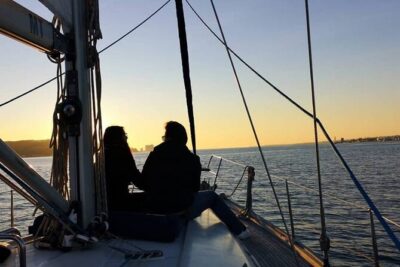
Sailboat Tour in Lisbon with drinks included | Morning and Sunset
Read our review →
Lisbon: Tagus River Cruise, Morning, Day, Sunset, or Night
Read our review →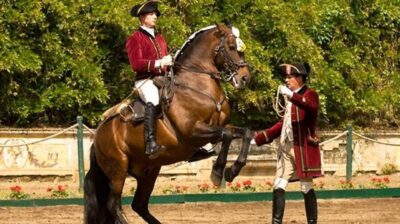
Lisbon: Morning of Equestrian Art with Lusitano Horses
Read our review →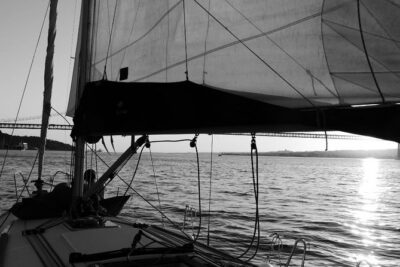

Lisbon Original Morning Food Tour by Food Lover Tour
Read our review →
Lisbon: Early Morning TukTuk Tour – hotel/cruise ship pickup
Read our review →