
Reviewed · HISTORICAL TOURS
Lisbon: Jewish History Private Tour
Lisbon’s Jewish story is easiest to grasp when you see it from above, then follow its traces through the old streets below. This private tour connects the city’s hilltop viewpoints, former Jewish quarters, Inquisition sites, medieval walls, and museum collections into one clear four-hour route. You’ll also hear about secret Jewish practice, the 1506 massacre, and Lisbon’s role as a refuge during World War II.
I like the private format, which lets your guide adjust the pace and explain difficult subjects without rushing through a large group. I also like the mix of walking and air-conditioned transport, especially since Lisbon’s hills can be demanding. The main drawback is that this is a history-heavy outing, and some of the evidence is fragmentary. It is not the right choice if you want a tour focused mainly on food, architecture, or easy sightseeing.
In This Review
- Key points to know before booking
- Why this tour gives Lisbon a different shape
- Starting above the city at Senhora do Monte
- Alfama and the remains of Small Jerusalem
- Baixa, Commerce Square, and the city rebuilt
- The medieval wall inside the Money Museum
- Rossio Square and the 1506 massacre
- Chiado and the families behind the kingdom
- Carmo Square and the Carmo Convent
- Crypto Judaism and Lisbon during World War II
- The guides and the value of a private group
- Is $152 per person a fair price?
- Who should book this experience?
- Should you book the Jewish History Private Tour?
- FAQ
- How long does the Jewish History Private Tour last?
- Where does the tour begin and end?
- Is transportation included?
- How many people can join the private tour?
- Which languages are available?
- Are entrance fees included?
- Is food included?
- Can I visit the Money Museum on any day?
- Can wheelchair users join the tour?
Key points to know before booking
- The tour links Jewish sites across Lisbon, from Miradouro da Senhora do Monte to Rossio, Chiado, and Carmo.
- You travel privately, with a driver-guide, hotel pickup and drop-off in central Lisbon, and a maximum group size of eight.
- The 1506 Jewish Massacre Memorial and Rossio Square provide the tour’s most sobering historical stop.
- Money Museum and Carmo Convent add physical remains and archaeological objects to the walking tour.
- Guide quality matters here, and named guides associated with the experience include Vasco, Diogo, and Daniel.
- Plan around museum closures: the Money Museum is closed Mondays and Tuesdays, while the Carmo Archaeological Museum cannot be visited Sundays.
Why this tour gives Lisbon a different shape
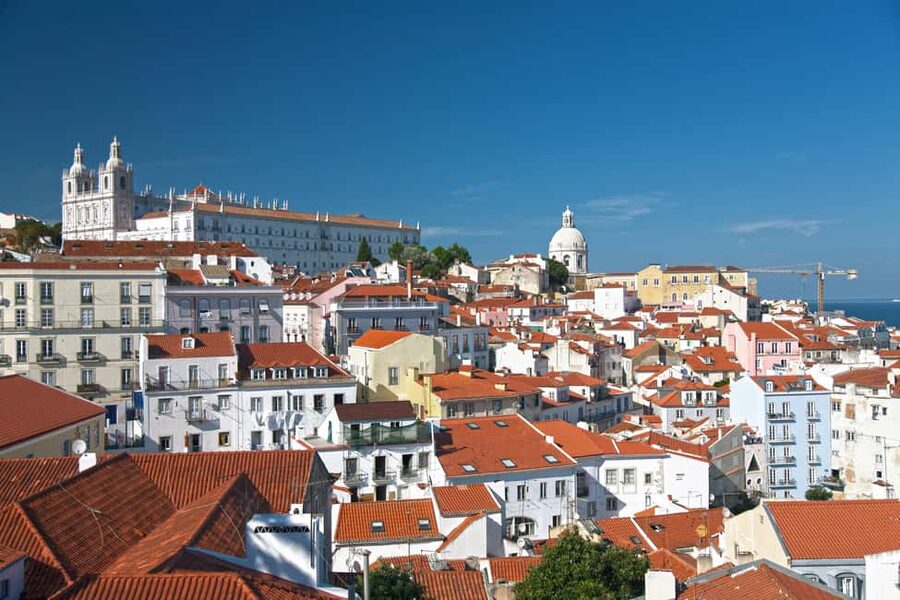
Most first visits to Lisbon center on tiled churches, river views, pastries, and grand plazas. This tour asks you to look at the city through the experience of its Sephardic Jewish community, whose presence shaped commerce, scholarship, medicine, mathematics, and religious life over many centuries.
You will not find a single preserved Jewish quarter that tells the whole story. Lisbon’s earthquake, rebuilding, persecution, conversion policies, and later urban changes scattered the evidence. That makes a guide especially useful. You need someone to connect a street corner, an old wall, a memorial, and a museum object into a larger picture.
The subject also requires care. The tour covers forced conversion and Crypto Judaism, the term used for Jews who practiced their faith in secret after official pressure to convert. It also explains the Portuguese Inquisition and the 1506 massacre. These are painful chapters, not decorative background for sightseeing, so expect a serious tone at several points.
At the same time, the route is not only about loss. You’ll hear how Jewish families contributed to Portuguese society and how Lisbon later became a place of passage and refuge for European Jews fleeing Nazi persecution during World War II.
More history-first plans:
- Lisbon: History, Stories and Lifestyle Walking Tour
★ 4.8 · 10,902 reviews - Lisbon: Live Fado Show with Port Wine in Historic Center
★ 4.7 · 4,166 reviews - Lisbon: Fado Show with Wine in a Historic Venue
★ 4.8 · 1,294 reviews
Starting above the city at Senhora do Monte
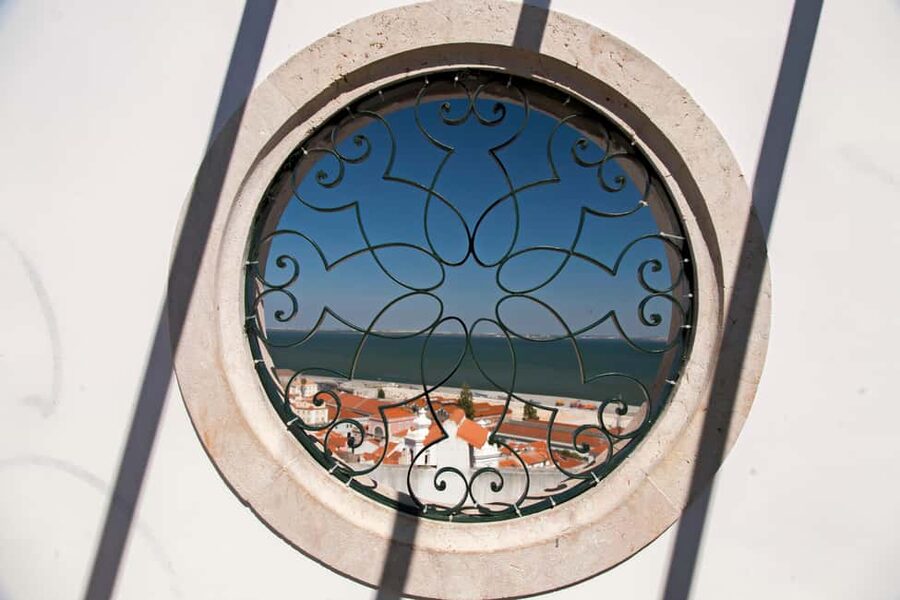
The first major stop is Miradouro da Senhora do Monte, one of Lisbon’s highest viewpoints. You spend about 20 minutes here with your guide, looking across the old quarters, monuments, and hills.
This is a smart opening. Before you walk into Alfama or Baixa, you get a sense of how Lisbon grew around steep slopes and the river. The view helps explain why separate neighborhoods developed distinct identities and why moving around the city can take more effort than a map suggests.
Your guide uses the panorama to set the Jewish story in place. From this height, Lisbon’s old districts become easier to read as connected parts of one city rather than unrelated sightseeing stops. Bring a camera, but give your attention to the explanation as well. The value of this stop is not simply the view. It is the orientation.
Alfama and the remains of Small Jerusalem
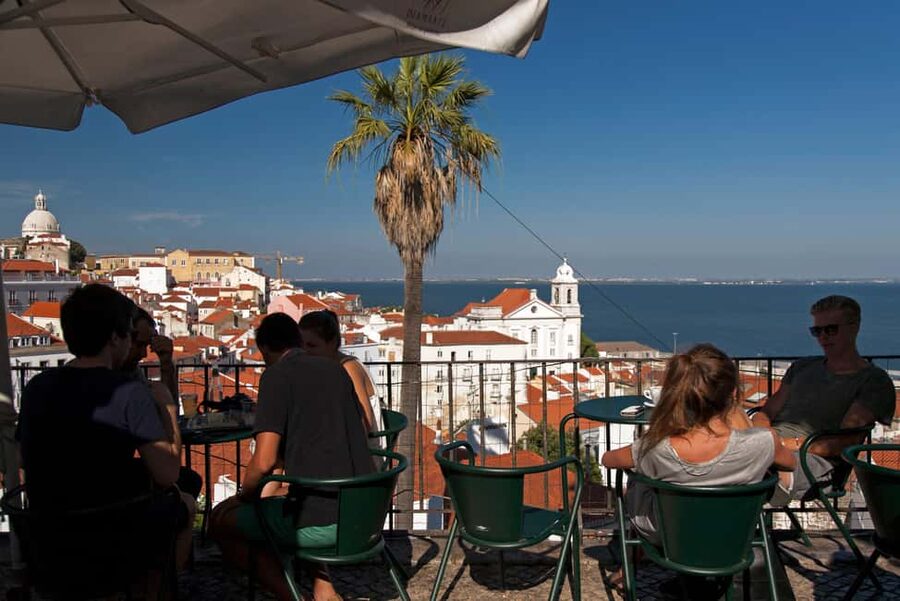
The tour then moves into Alfama for about 45 minutes. This is Lisbon’s second-oldest district in Europe, according to the supplied tour description, and its narrow streets and old buildings preserve some of the clearest physical clues to Jewish life in the city.
Alfama is a good place to discuss how communities lived within a medieval city. You’ll walk through an area where Jewish residents once lived and worked, while your guide points out what remains visible and what has disappeared.
The tour also introduces the former quarter known as Small Jerusalem. Before the 1755 earthquake, it was described as the largest Jewish quarter in Europe. The earthquake destroyed much of it, so do not expect a complete neighborhood preserved for visitors. Instead, you’ll be reading partial traces and using historical explanation to fill in the gaps.
That can be more rewarding than a perfectly restored attraction, but it demands attention. If you prefer obvious signs, labels, and reconstructed buildings, parts of this walk may feel subtle. Wear comfortable shoes, since Alfama’s lanes are steep and uneven.
Baixa, Commerce Square, and the city rebuilt
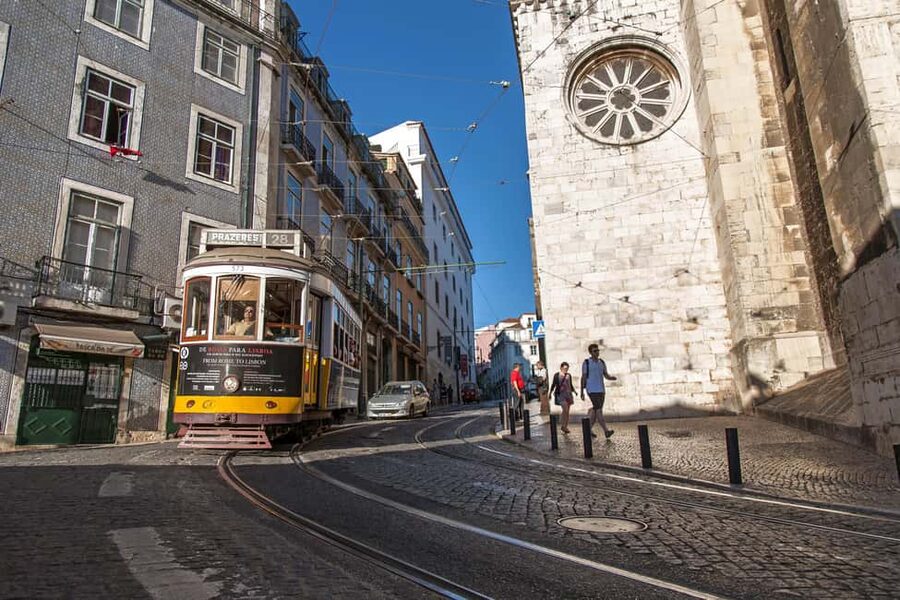
The route continues through Baixa for roughly 45 minutes, followed by about 10 minutes at Commerce Square. These areas help explain what happened after the 1755 earthquake and how Lisbon’s Jewish story fits into a city that was repeatedly damaged and rebuilt.
Baixa feels different from Alfama. Its broad streets and more orderly layout make a useful contrast with the older hillside lanes. Moving between the two gives you a physical sense of Lisbon’s changing urban design.
At Commerce Square, the visit is brief, so expect a focused explanation rather than a long stop. The square is a useful place to pause and consider how public spaces can carry several layers of memory. The tour does not treat Jewish history as something isolated from the rest of Portugal. It places that story within Lisbon’s political, commercial, and architectural development.
Because this part of the route includes transport, you avoid spending the full four hours climbing between districts. That is one reason the private vehicle adds real value.
A handful more Lisbon ideas to compare
- Lisbon City Center Tour – The Unmissable Lisbon
★ 5.0 · 22,234 reviews - Lisbon: Sintra, Pena, Regaleira, Cabo da Roca & Cascais
★ 4.7 · 19,656 reviews - Lisbon: Jerónimos Monastery Entrance Ticket
★ 4.1 · 14,164 reviews - Lisbon: Sunset Boat Party Cruise with DJ and Open Bar
★ 4.5 · 10,378 reviews
The medieval wall inside the Money Museum
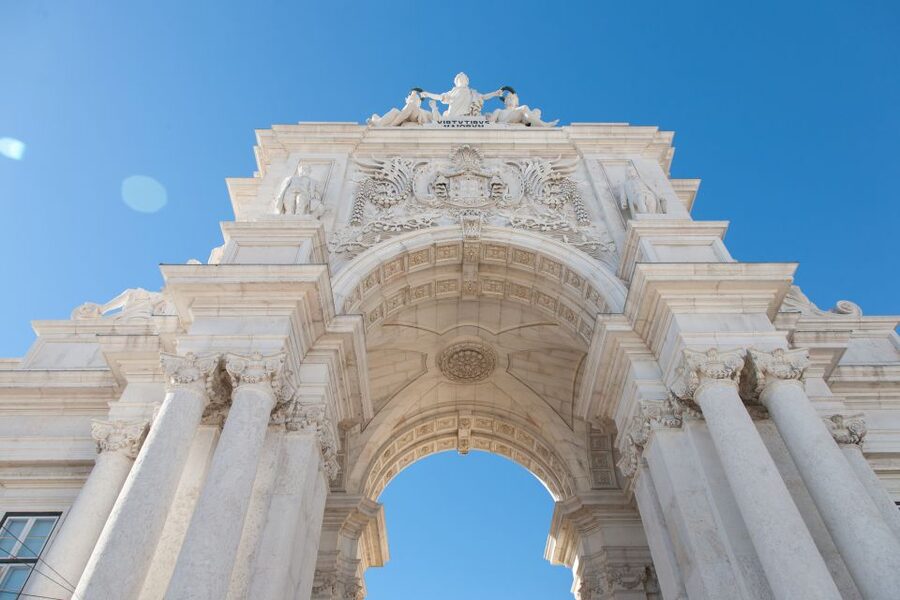
At the Money Museum, you spend about 20 minutes with a guide. The highlight is a medieval wall said to preserve 1,000 years of secrets, giving you a tangible piece of old Lisbon rather than only spoken history.
This stop works well for people who like archaeology and urban history. A wall can reveal how the city was defended, divided, and rebuilt, even when the original Jewish buildings are gone. The museum visit also gives the tour a change of pace after the street walking.
Check the day carefully before booking. The Money Museum is closed on Mondays and Tuesdays, so the full museum portion may not be available on those days. The tour information includes entrance fees, but museum opening days still affect what you can see.
Rossio Square and the 1506 massacre
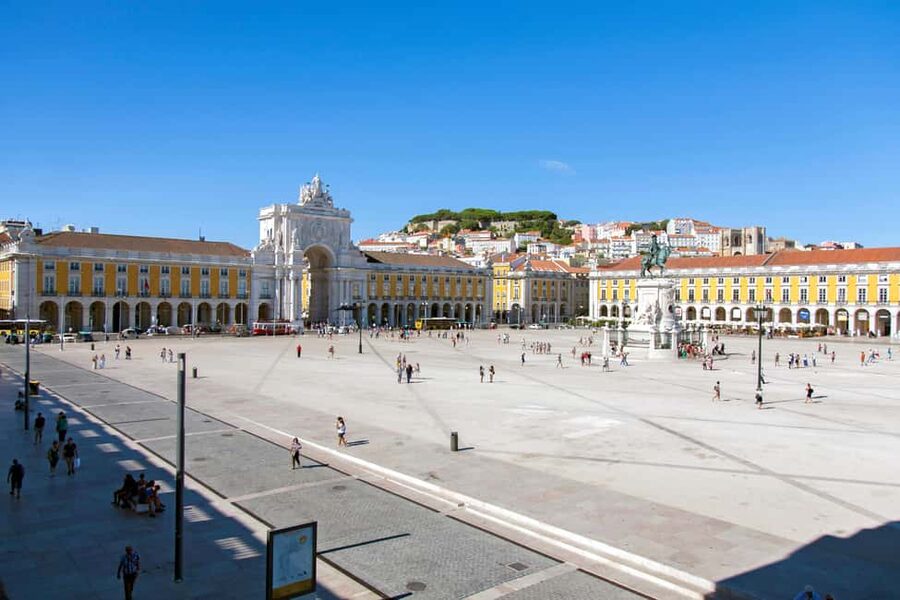
Rossio Square receives about 20 minutes of guided attention, followed by another 20 minutes at the 1506 Jewish Massacre Memorial. This is likely to be the most emotionally difficult part of the tour.
Here, your guide explains the Portuguese Inquisition, how it operated, and the events that led to the memorial. The subject is stark, and the short time at the memorial means the guide’s presentation matters. A clear, well-prepared explanation can help you understand the sequence of events without reducing it to a list of dates.
The memorial is one of the most important sites connected with Portuguese Jewish history. It gives the tour a specific place for remembrance, rather than leaving the massacre as an abstract historical episode.
I would not schedule this tour immediately before a carefree lunch if you need a mental break after serious subjects. The guide can keep the discussion focused, but the material itself is heavy.
Chiado and the families behind the kingdom
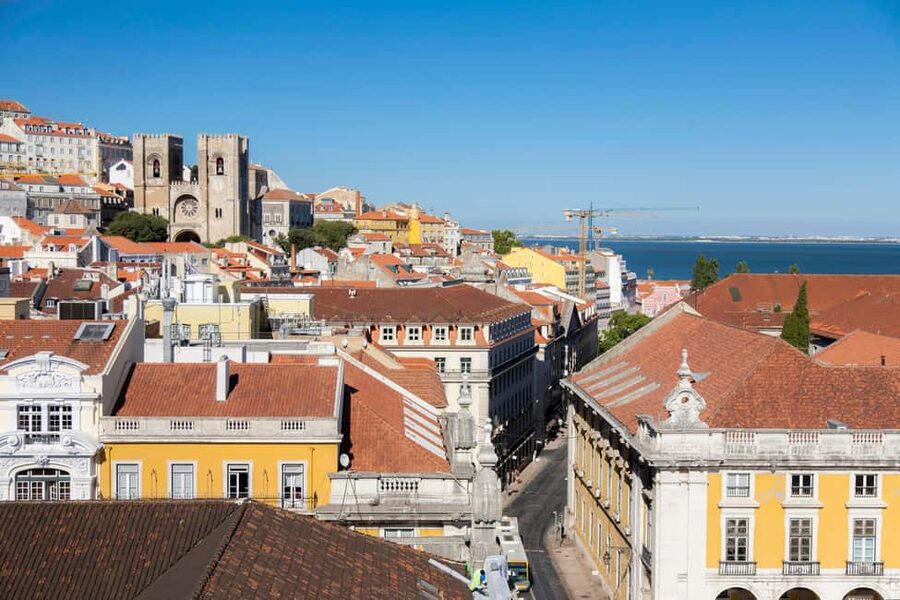
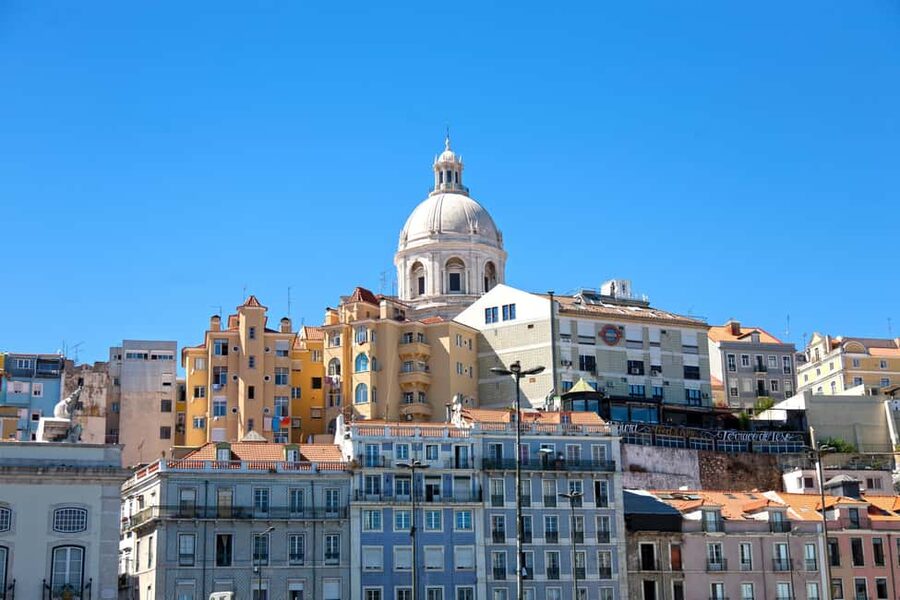
The 15-minute stop in Chiado shifts the focus toward influential Jewish families connected with the Portuguese Kingdom. You’ll see a district where old Lisbon and modern city life meet, while your guide explains how these families fit into the country’s political and social story.
This is a useful reminder that Jewish life in Portugal was not limited to one neighborhood or one profession. The tour presents Jewish residents as participants in a sophisticated society that included intellectuals, mathematicians, and cabalists during the Renaissance.
Since the Chiado visit is short, expect an overview rather than a family-by-family study. If you are especially interested in genealogy, you may want to ask your guide in advance how much time can be devoted to particular names or subjects.
Carmo Square and the Carmo Convent
The final major section centers on Largo do Carmo Square and Carmo Convent. You spend about 30 minutes at the square, then up to 45 minutes visiting the convent and its archaeological collection.
The Carmo site dates from the 14th and 15th centuries and provides a strong closing point for the tour. The archaeological material offers a direct connection to Jewish life, including objects and evidence related to everyday practices and spiritual life.
The convent itself is also a memorable historic setting, with its ruined structure adding a powerful sense of time and change. Here, the tour brings together the themes introduced earlier: destruction, survival, religious identity, and the physical remains left behind.
Pay attention to the calendar. The Carmo Archaeological Museum cannot be visited on Sundays. If your booking falls on that day, the Carmo portion will not offer the same museum access, so confirm the exact plan before you reserve.
Crypto Judaism and Lisbon during World War II
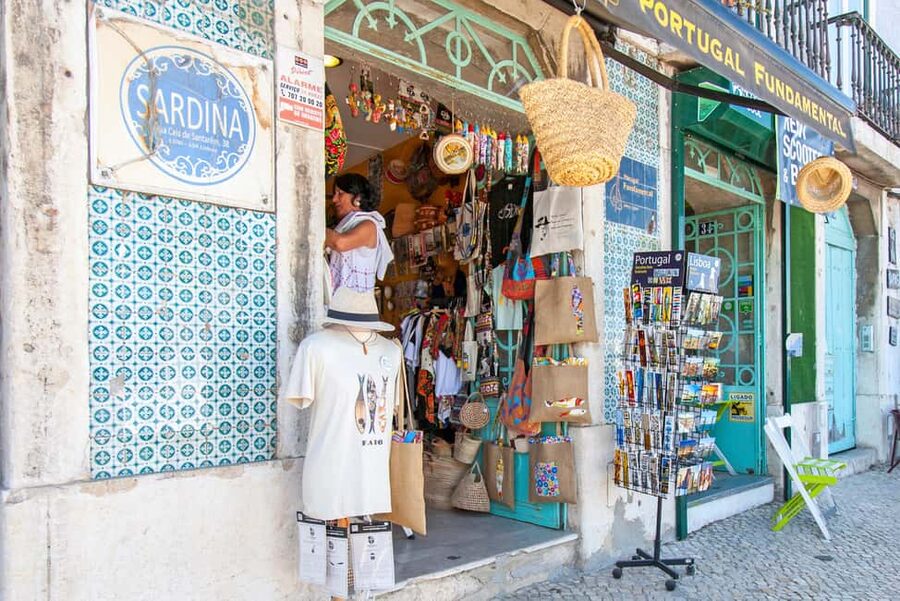
One of the most important ideas running through the tour is Crypto Judaism. After Jews were pressured or forced to convert, some continued Jewish customs privately for generations. The tour explains how secret religious practice became part of Portuguese identity and family memory.
This subject is difficult to see in the streets. There may be no obvious building or sign that proves what happened inside a particular home. Your guide’s job is to explain the social pressure and the ways faith could continue quietly when public practice was dangerous.
The tour also covers Lisbon during World War II. Portugal became a place of refuge and passage for European Jews trying to escape the Holocaust. This later chapter broadens the experience beyond medieval and Renaissance history, showing that Lisbon’s Jewish story did not end with the Inquisition.
The guides and the value of a private group
The guide can make or break a tour like this. The named guides connected with the experience include Vasco, Diogo, and Daniel. Diogo is described as personal and accommodating, while Daniel is noted for his strong recall of dates and facts, polished English, and personable manner. Vasco is praised for making the afternoon both informative and enjoyable.
You cannot assume which guide you will receive, but the pattern is clear: the strongest part of this experience is the human explanation. Even a guide who is not Jewish can present the subject well if properly prepared. One account specifically notes that Diogo had taken time to educate himself about Portuguese Jewry.
The private format is useful beyond comfort. You can ask about a family name, a historical period, or the meaning of a particular site. With a maximum of eight participants, the outing remains small enough for conversation, but it is still worth confirming that the guide can adjust the emphasis to your interests.
The tour is offered in English, Spanish, and Portuguese. Hotel pickup and drop-off are available from hotels in central Lisbon. Transport is by air-conditioned vehicle, with water provided.
Is $152 per person a fair price?
At $152 per person, this is not a bargain-priced walking tour. Its value depends heavily on how many people are in your private group and how much you value the guide’s time.
The price includes four hours, a private group, a driver-guide, central Lisbon hotel pickup and drop-off, air-conditioned transport, water, and entrance fees. Those inclusions matter because the route covers several districts and combines vehicle travel with walks. You are paying for a focused historical route, not simply a transfer between attractions.
For one or two people, the cost is easier to justify if Jewish Lisbon is a major interest or if you want a private guide rather than a general city tour. For a group of four to eight, the per-person cost becomes more attractive, especially when transport and admissions are included.
Food and drinks are not included. Plan to eat before or after, and do not bring food into the vehicle.
Who should book this experience?
I would recommend this tour if you want to understand Lisbon through Jewish history, enjoy serious historical subjects, and prefer explanations at the actual places connected with the past. It also suits families or small groups who want private transport and the ability to ask questions.
It is a good fit for visitors with limited time. Four hours gives you a concentrated introduction without requiring you to locate scattered sites on your own.
You should think twice if you need step-free access. The tour is not suitable for wheelchair users, and Lisbon’s historic hills and narrow streets can be physically demanding. Comfortable shoes and practical clothing are essential.
Children may join, but they must be accompanied by an adult. Infant seats are available if requested when booking. Portuguese law requires children under 12 years old and under 135 centimeters tall to use an approved restraint system in a car with seat belts. Baggage is limited to one standard suitcase and one small carry-on per person.
Free cancellation is available up to 24 hours before the tour for a full refund, and you can reserve now and pay later. That flexibility helps if your Lisbon plans are still shifting.
Should you book the Jewish History Private Tour?
Book it if you want a thoughtful, place-based introduction to Sephardic Jewish Lisbon and appreciate a guide who can connect scattered remains into a clear story. The strongest reasons are the private format, the combination of Alfama, Rossio, Chiado, and Carmo, and the chance to discuss subjects that ordinary sightseeing tours often skip.
Before booking, check the day of the week, confirm central hotel pickup, and ask which museums will be open. If you want an easygoing city overview, choose a broader Lisbon tour instead. If you want to understand the people and events behind the streets, this four-hour route is a strong choice.
FAQ
How long does the Jewish History Private Tour last?
The tour lasts four hours. Starting times depend on availability.
Where does the tour begin and end?
Pickup and drop-off are available from hotels in central Lisbon. The stated pickup and return location is Lisbon.
Is transportation included?
Yes. You travel in an air-conditioned vehicle with a driver-guide. Water is also included.
How many people can join the private tour?
The maximum is eight participants per tour.
Which languages are available?
The live guide is available in English, Spanish, or Portuguese.
Are entrance fees included?
Yes. Entrance fees are included in the tour price.
Is food included?
No. Food and drinks are not included, and food is not allowed in the vehicle.
Can I visit the Money Museum on any day?
No. The Money Museum is closed on Mondays and Tuesdays.
Can wheelchair users join the tour?
No. The experience is not suitable for wheelchair users. Comfortable shoes and clothing are recommended.
Fresh finds around Lisbon
- Lisbon: Tuk Tuk City Tour★ 3.6 · 7 reviews
- Fatima Full day Private Tour★ 5.0 · 7 reviews
- Lisbon: Highlights and Hidden Gems Tour★ 5.0 · 7 reviews
- Private Tour to Evora and Monsaraz from Lisbon★ 5.0 · 7 reviews
- Discover Sintra Beauty with a Guided Journey from Lisbon★ 5.0 · 7 reviews
- Private Half-Day Tour to Sintra★ 3.4 · 7 reviews
- Lisbon: Sunset and Wine Catamaran Tour★ 5.0 · 7 reviews
- Nazaré: Beaches of Nazaré Guided E-Bike Tour★ 4.9 · 7 reviews
Historical Tours, compared.
Lisbon: History, Stories and Lifestyle Walking Tour
Read our review →
Lisbon: Live Fado Show with Port Wine in Historic Center
Read our review →
Lisbon: Fado Show with Wine in a Historic Venue
Read our review →
Explore Lisbon by Tuk Tuk: History and Viewpoints
Read our review →
Lisbon: Daytime or Sunset Boat Cruise with History and Wine
Read our review →
Private Tuk Tuk Tour Through Lisbon’s Historical Streets
Read our review →
Lisbon Sunset Sailing with Portuguese Wine and History
Read our review →
Lisbon: Guided Tuk-Tuk Tour Along the Historic Tram Line 28
Read our review →Browse the lists this tour appears in