
Reviewed · HISTORICAL TOURS
Lisbon Jewish Heritage and History – Private Tour Van
Lisbon’s Jewish story is woven into the city’s oldest streets, medieval walls, grand squares, and steep hills. This private four-hour tour connects those places by van, so you can move from a hilltop viewpoint to Alfama, Baixa, Chiado, and Rossio without spending the whole morning climbing Lisbon’s famously demanding pavement.
I like the one-to-one attention and the way the tour places Jewish history within Portugal’s wider story. I also like the air-conditioned vehicle, hotel and airport pickup, and the chance to see several districts in a short time. The main consideration is important: no synagogue visit is included, and the walk through Alfama involves uneven ground.
In This Review
- Key points to know before booking
- Why this tour works for Jewish history in Lisbon
- Senhora do Monte: begin with Lisbon at your feet
- Alfama: Jewish traces on steep and uneven streets
- Baixa and Small Jerusalem after the 1755 earthquake
- The Money Museum and a medieval wall
- Chiado and the families behind Portugal’s Golden Age
- Rossio and the memory of the Inquisition
- Carmo Museum: archaeological evidence and everyday life
- What the private van adds to a four-hour route
- Price, timing, and the question of value
- The major limitation: there is no synagogue visit
- Who will get the most from this experience
- Should you book the Lisbon Jewish Heritage and History tour?
- FAQ
- How long does the tour last?
- Is the tour private?
- Is hotel pickup included?
- Is the tour offered in English?
- Does the tour visit a synagogue?
- Which museums are included?
- When are the museums closed?
- Is the tour suitable for people with mobility issues?
- What happens if I arrive late?
Key points to know before booking
- Start above the city at Senhora do Monte: Get an instant view of Lisbon’s hills, river, old quarters, and major monuments while your guide explains how the city grew.
- Follow Jewish Lisbon across several districts: The route links Alfama, Baixa, Chiado, Rossio, and a former small ghetto rather than focusing on one surviving building.
- Expect history from medieval times to World War II: The tour covers Sephardic life, the Portuguese Inquisition, forced conversion, secret religious practice, and Lisbon as a wartime refuge.
- Ride in a private air-conditioned mini van: Pickup and drop-off are available at central hotels, the cruise terminal, and Lisbon Airport.
- Meet guides with different strengths: Daniel, Diogo, and Vasco are praised for clear teaching, broad Portuguese history, patience, and friendly conversation.
- Plan around museum closing days: Carmo Archaeological Museum is closed Sundays. Money Museum is closed Mondays and Tuesdays.
Why this tour works for Jewish history in Lisbon
Lisbon can be a tricky city in which to trace Jewish heritage. Much of the physical record was damaged by the 1755 earthquake, altered by later construction, or connected to painful events such as forced conversion and the Inquisition.
That is why a guide matters here. You are not simply checking off a synagogue, cemetery, or museum. You are learning how Jewish communities helped shape commerce, scholarship, mathematics, medicine, government, and everyday life, then how that life was restricted and pushed into secrecy.
The tour presents Lisbon’s Sephardic past across more than one period. You hear about the Renaissance, the forced conversion of Jews in Portugal, Crypto-Judaism, and the role of Lisbon during World War II, when the city became a refuge for European Jews escaping Nazi persecution.
The subject is serious, but the format is not stiff. Daniel, Diogo, and Vasco are the guides most often identified in the tour feedback. Their styles differ, but the common thread is teaching ability. Diogo is especially noted for keeping a 14-year-old engaged, while Vasco is praised for answering wider questions about Lisbon and Portugal.
You should still expect a history lesson. This is not mainly a food walk, a synagogue service, or a casual photo tour. It is best for you if you want context and are willing to listen, ask questions, and walk a little.
More history-first plans:
- Lisbon: History, Stories and Lifestyle Walking Tour
★ 4.8 · 10,902 reviews - Lisbon: Live Fado Show with Port Wine in Historic Center
★ 4.7 · 4,166 reviews - Lisbon: Fado Show with Wine in a Historic Venue
★ 4.8 · 1,294 reviews
Senhora do Monte: begin with Lisbon at your feet
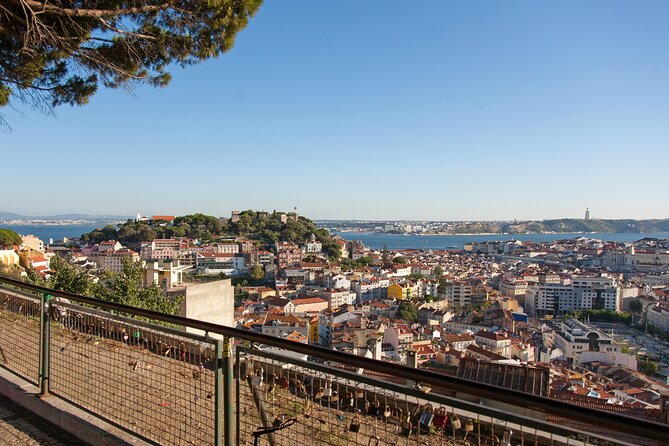
The first stop is Miradouro da Senhora do Monte, one of Lisbon’s highest viewpoints. You get about 20 minutes here, with no admission charge, to look across the city and understand its basic shape.
From this height, the old neighborhoods and major monuments make more sense. Your guide uses the view to explain how Lisbon developed and where its Jewish quarters once stood. This is a smart opening because the tour is about geography as much as dates. You begin by seeing the hills, the old center, and the river before moving into the streets where the story unfolded.
The viewpoint also helps you get your bearings early in the tour. Lisbon’s districts can feel like separate villages, especially when narrow lanes and steep slopes interrupt your sense of direction. From Senhora do Monte, the route ahead has a clearer frame.
There is one small trade-off. Twenty minutes is enough for orientation and photographs, but not for a long, relaxed viewpoint stop. The purpose is explanation, not lingering.
Alfama: Jewish traces on steep and uneven streets
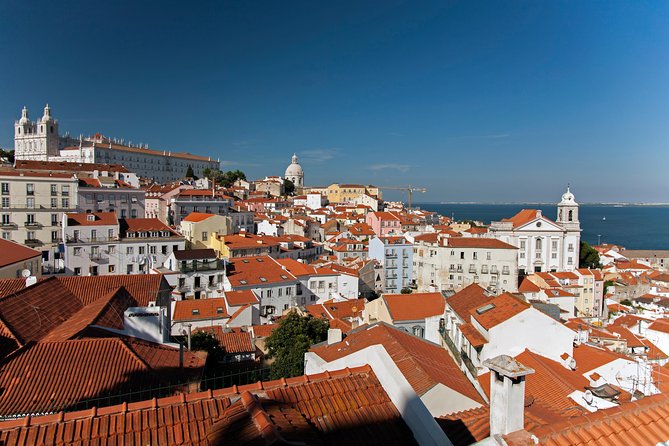
The tour then reaches Alfama, Lisbon’s oldest district, with about 45 minutes on foot. The area is famous for its narrow lanes and old buildings, and the Jewish story here is tied to the physical shape of the neighborhood.
Your guide points out the remaining signs and clues connected with Jewish life. Some may be easy to miss without explanation. That is the value of this stop: you learn to read a street, wall, or old building as part of a larger story rather than expecting a clearly marked Jewish quarter.
Alfama is also where the tour asks the most from your legs. The vehicle gets you close, but you still walk on uneven flooring through an old district. Comfortable shoes are essential, and the experience is not recommended for people with mobility issues.
The setting rewards patience. Alfama is not a polished open-air museum. Its character comes from narrow passages, ancient structures, and the feeling of a lived-in quarter. For a Jewish heritage tour, that makes the stop more personal than a display case alone, though it also means the evidence can be subtle.
Baixa and Small Jerusalem after the 1755 earthquake
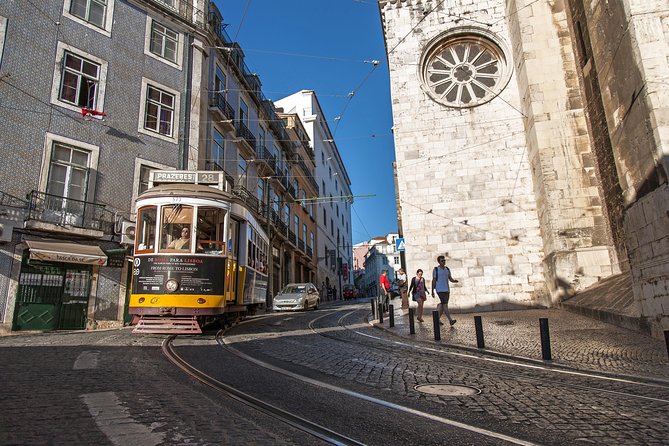
In downtown Baixa, you explore the area once called Small Jerusalem. The tour describes this as Europe’s largest Jewish quarter before the 1755 earthquake devastated it. Around 30 minutes here focuses on what was lost and what can still be understood from the surviving city plan and historical record.
The earthquake is not treated as an isolated disaster. It helps explain why Lisbon offers fewer intact Jewish buildings than you might expect from the size and importance of its former community. The city was rebuilt, and much of the old quarter changed beyond recognition.
This is also the point where Crypto-Judaism receives more attention. After Jews were driven out or forced to convert, some families continued Jewish practice in secret for generations. Your guide explains how private belief, family customs, and public identity could differ under pressure.
That subject deserves careful treatment. The story is not only about persecution, but also about survival, adaptation, and the ways people carried memory forward. A private guide can pause when you need clarification, which is especially useful with terms such as Sephardic, converso, and Crypto-Judaism.
A handful more Lisbon ideas to compare
- Lisbon City Center Tour – The Unmissable Lisbon
★ 5.0 · 22,234 reviews - Lisbon: Sintra, Pena, Regaleira, Cabo da Roca & Cascais
★ 4.7 · 19,656 reviews - Lisbon: Jerónimos Monastery Entrance Ticket
★ 4.1 · 14,164 reviews - Lisbon: Sunset Boat Party Cruise with DJ and Open Bar
★ 4.5 · 10,378 reviews
The Money Museum and a medieval wall
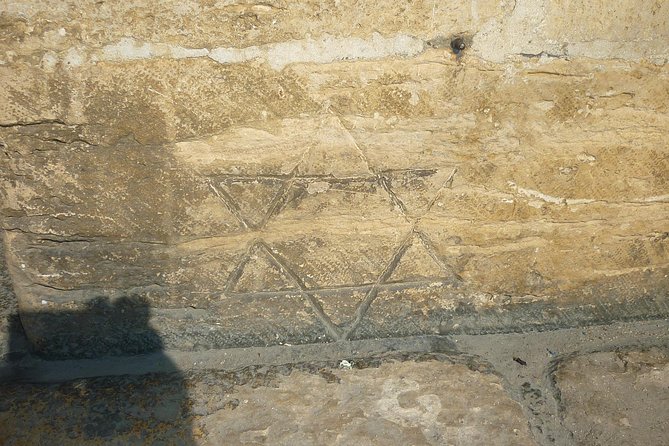
At the Money Museum, the tour spends about 30 minutes examining a medieval wall said to hold a thousand years of secrets. The museum adds a physical layer to the tour, giving you something solid to see after several stops where the Jewish past is marked mainly by location and explanation.
The stop is useful because it connects urban archaeology with social history. Walls, foundations, and reused structures can reveal how Lisbon changed over time, even when the original community buildings no longer survive.
You also continue on foot through the area that once held Lisbon’s smallest Jewish quarter. This portion is less about a single famous sight and more about imagining daily life in a compact community. Your guide helps connect streets and archaeological remains with the people who once worked, worshiped, traded, raised families, and maintained traditions there.
The schedule lists admission to two museums as included, though individual stop details show free admission at the Money Museum and an included ticket at Carmo. Check the current arrangements when booking, especially since the Money Museum is closed Mondays and Tuesdays.
Chiado and the families behind Portugal’s Golden Age
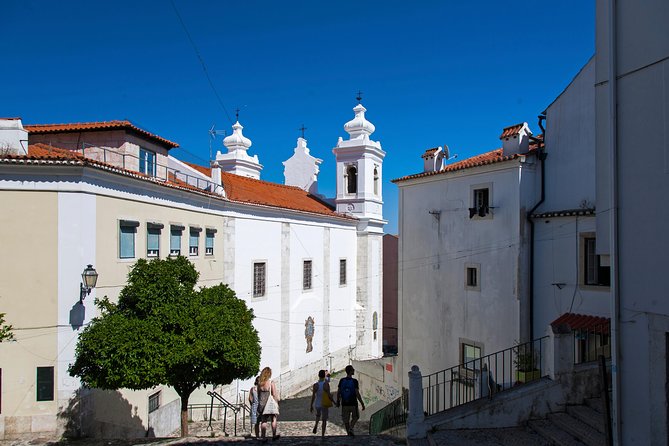
Chiado brings a different tone. Its streets combine older history with modern Lisbon, and the tour uses this district to discuss influential Jewish families in the Portuguese kingdom.
This stop helps correct a common misunderstanding. Jewish history in Portugal was not limited to a closed religious minority living apart from national life. Jewish families contributed to the country’s intellectual and economic development and were part of the sophisticated world of Renaissance Portugal.
The tour also links this period with the Golden Age. Your guide may discuss the roles of intellectuals, mathematicians, and cabalists, showing how Jewish thought and skill formed part of Lisbon’s wider society.
You spend about 30 minutes here. It is a good place to ask questions about how Jewish communities fit into royal Portugal, trade, education, and public life. Since Chiado has plenty of general sightseeing appeal, this stop may also interest companions who are less focused on Jewish heritage.
Rossio and the memory of the Inquisition
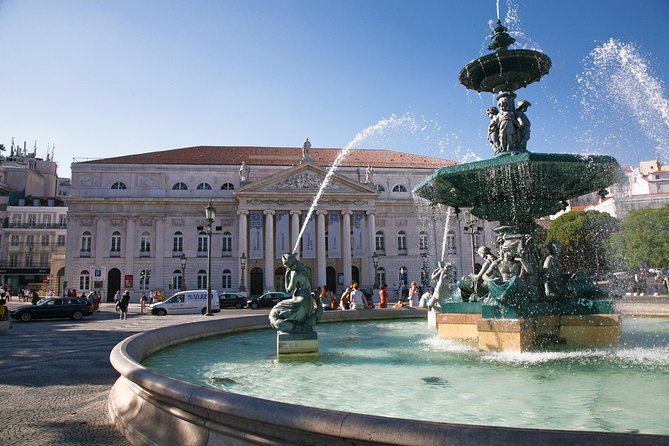
At Largo de São Domingos and Rossio Square, the tour turns to the Portuguese Inquisition. About 30 minutes are devoted to its operation and to the events that led to the Jewish Memorial in this area.
This is among the hardest parts of the tour, but it is central to understanding Lisbon’s Jewish past. The Inquisition was not simply a distant institution mentioned in passing. It affected identity, worship, family life, and the ability to speak openly about belief.
The memorial gives the story a present-day place of remembrance. You are standing in a busy central part of Lisbon, yet the site asks you to stop and consider the suffering connected with forced conversion and persecution.
I appreciate that the tour does not end with the expulsion or conversion of Portugal’s Jews. The itinerary continues into later periods, including secret practice and World War II. That longer view makes the history less like a single tragedy and more like a story of repeated change and endurance.
Carmo Museum: archaeological evidence and everyday life
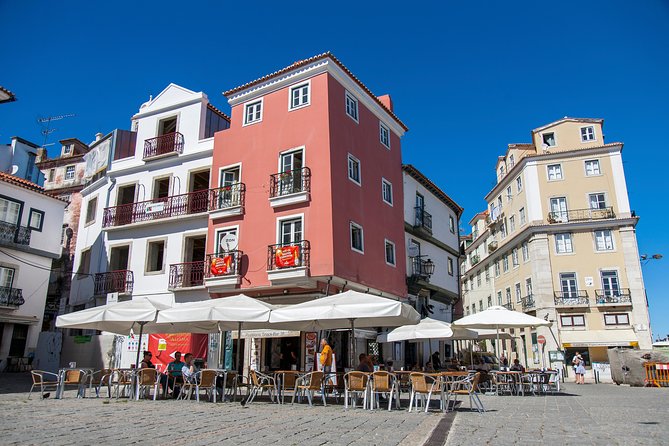
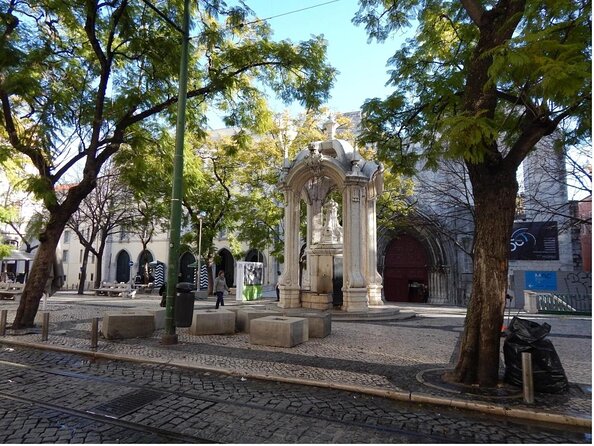
The final listed stop is the Carmo Archaeological Museum, with around 40 minutes inside. The museum occupies a former Carmelite setting dating from the 14th and 15th centuries and contains Jewish archaeological finds.
Here, the experience shifts from streets and memorials to objects. Artifacts can show details of ordinary life and spiritual practice that broad historical accounts often miss. You get a more tangible sense of the community’s contribution to Portuguese society and of the material world in which people lived.
Carmo is also a fitting final stop because its setting carries Lisbon’s own layers of destruction and survival. The museum connects medieval architecture, archaeology, and the Jewish past in one place.
The museum is closed Sundays, so do not assume the full itinerary operates unchanged on that day. The tour may still be available, but you should confirm how the stop is handled before paying.
What the private van adds to a four-hour route
The private air-conditioned mini van is more than a comfort feature. Lisbon’s Jewish sites are spread across districts with steep roads and limited space. A vehicle lets you cover more ground than a walking tour while saving your energy for Alfama and the other short walks.
Pickup is available from central Lisbon hotels, Lisbon Cruise Terminal, and Lisbon Airport. Drop-off is also included at those locations. You provide your hotel name, cruise ship, or flight number when booking.
The van has a full-time driver-guide, so you do not lose time transferring between a separate driver and a historian. Guides such as Vasco are also praised for handling narrow and hilly roads, a useful skill in Lisbon.
This format suits a family, couple, or small private group that wants flexibility. You can ask for explanations, stop for clarification, and shape the conversation around your interests. One guide even made room for a drinks and bathroom break, though food and drinks are not part of the published inclusions.
The tour is offered in English. Water is provided, and no eating or smoking is allowed inside the vehicle. Luggage transport is limited to four medium-sized suitcases, with extra luggage available only by request and subject to availability.
Price, timing, and the question of value
At $187.53 per person, this is not a budget activity. The value depends heavily on your group size and priorities.
For a solo visitor or a couple, the price buys a private vehicle, pickup and drop-off, a four-hour route through several districts, a dedicated guide, museum entry, and the ability to ask as many questions as time allows. That can be fair value if Jewish heritage is a main reason for your Lisbon visit.
For a larger private group, the per-person cost may feel easier to justify because the vehicle and guide serve only your party. Group discounts are available, though the exact savings should be confirmed before booking.
I would place this tour early in your stay, but not immediately after landing. One booking suggestion was to avoid doing it at the exact start of a trip, when jet lag can dull a demanding history lesson. The first or second full day is a better target. You will have enough energy for Alfama and enough time afterward to follow up on places or subjects that catch your attention.
The tour has a set start time. A delay of more than 30 minutes is treated as a no-show, so allow extra time if you are coming from the airport or cruise terminal.
From October through March, darkness arrives from about 6 p.m. onward. If you choose a late start in winter, some outdoor portions may feel rushed or less scenic.
The major limitation: there is no synagogue visit
You should understand this before booking. The tour does not include entry to a synagogue.
Lisbon has two synagogues, but visits are limited. The Sephardic synagogue is best arranged independently in advance, while the small Reform community relies on volunteer support and regular visits may not be practical.
If entering a synagogue is essential to your experience, this tour alone will not meet that need. Arrange a synagogue visit separately and treat this tour as a historical route through neighborhoods, memorials, archaeology, and museums.
That limitation does not make the tour pointless. It simply defines what you are buying. You are getting interpretation of Jewish Lisbon across several eras, not a religious-site visit.
Who will get the most from this experience
I would recommend it to you if you want:
- A private introduction to Jewish history in Lisbon and Portugal
- A guide who can explain the wider political and cultural setting
- A comfortable way to cover steep, separated districts
- A history experience that works for adults, families, and teenagers
- Help connecting Lisbon with Jewish heritage in other Portuguese cities
It may be less suitable if you want a relaxed sightseeing drive with little walking, a food-focused outing, or a tour centered on active Jewish institutions.
The subject matter can be emotional, especially around forced conversion, the Inquisition, and the Holocaust era. The benefit of a private guide is that the pace and explanation can respond to your group. Guides such as Diogo, Daniel, and Vasco are repeatedly praised for being patient, engaging, and able to answer questions beyond the basic itinerary.
Wear smart casual clothes and comfortable shoes. Children must be accompanied by an adult. Most people can participate, but the uneven Alfama walk makes mobility a real consideration.
Should you book the Lisbon Jewish Heritage and History tour?
Book it if you want a serious, well-connected account of Jewish Lisbon and you value private guiding more than a low price. The route covers a lot in four hours, from the city view at Senhora do Monte to Alfama’s lanes, Baixa’s lost quarter, Chiado’s leading families, Rossio’s memorial, and Carmo’s archaeological remains.
I would not book it expecting a synagogue tour. I would also avoid scheduling it when you are exhausted, rushing for a flight, or unable to manage uneven streets.
For the right visitor, this is a useful way to see Lisbon through a less familiar lens. You leave with more than a list of former quarters. You gain a clearer sense of how Jewish people helped shape Portugal, how persecution altered that life, and how traces of it remain in the city today.
FAQ
How long does the tour last?
The tour lasts approximately four hours.
Is the tour private?
Yes. Only your group participates in this private activity.
Is hotel pickup included?
Pickup and drop-off are included from central Lisbon hotels, Lisbon Cruise Terminal, and Lisbon Airport.
Is the tour offered in English?
Yes. The experience is offered in English.
Does the tour visit a synagogue?
No. Synagogue entry is not included in the tour.
Which museums are included?
The experience includes entrance fees to two museums. The route includes the Money Museum and the Carmo Archaeological Museum.
When are the museums closed?
The Carmo Archaeological Museum is closed Sundays. The Money Museum is closed Mondays and Tuesdays.
Is the tour suitable for people with mobility issues?
It is not recommended for people with mobility issues because the Alfama portion involves walking on uneven ground.
What happens if I arrive late?
The tour has a fixed start time. A delay of more than 30 minutes is treated as a no-show.
Fresh finds around Lisbon
- Sanctuary of Fátima and Coimbra City Tour★ 4.5 · 51 reviews
- Sintra/Lisbon: Sintra & Quinta da Regaleira Tour with Ticket★ 4.4 · 51 reviews
- Jeronimos Monastery Guided Tour – Small Groups – Tickets Included★ 5.0 · 51 reviews
- Lisbon: Private Christmas Lights Tour by Eco Tuk Tuk★ 4.9 · 51 reviews
- Peniche: Berlengas Island Catamaran Tour – Round Trip★ 4.6 · 51 reviews
- Half day Spa Water Therapy experience at THE SPA at Corinthia Lisbon★ 4.5 · 51 reviews
- Lisbon: Private Tuk-Tuk Tour for 2 hours★ 4.7 · 51 reviews
- Premium Lisbon Airport Transfer to Lisbon★ 5.0 · 51 reviews
Historical Tours, compared.
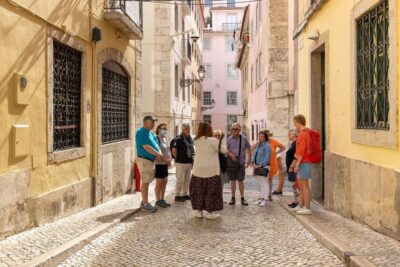
Lisbon: History, Stories and Lifestyle Walking Tour
Read our review →
Lisbon: Live Fado Show with Port Wine in Historic Center
Read our review →
Lisbon: Fado Show with Wine in a Historic Venue
Read our review →
Explore Lisbon by Tuk Tuk: History and Viewpoints
Read our review →
Lisbon: Daytime or Sunset Boat Cruise with History and Wine
Read our review →
Private Tuk Tuk Tour Through Lisbon’s Historical Streets
Read our review →
Lisbon Sunset Sailing with Portuguese Wine and History
Read our review →
Lisbon: Guided Tuk-Tuk Tour Along the Historic Tram Line 28
Read our review →Browse the lists this tour appears in