
Reviewed · HISTORICAL TOURS
Lisbon city tour on history, culture and current topics
Lisbon makes the most sense on foot, and this tour links four very different districts in one steady walk. You begin at Rossio Square, pass the Santa Justa elevator and Carmo ruins, climb through Chiado and Bairro Alto, then wind down through Alfama to the Tejo River. The changing city scenery is the main attraction.
I like the small group limit of 12, which gives guides such as Sara, Melina and Pedro room to answer questions. I also like the useful finish: you get restaurant and Lisbon tips, along with a taste of a local pastry or ginjinha. The drawback is the route itself: it includes hills, uneven streets and a fair amount of walking, so it is not a good choice if stairs or steep climbs are difficult.
In This Review
- Key points to know before booking
- A practical first look at the Lisbon walking tour
- Starting at Rossio Square and entering Baixa
- Seeing Santa Justa from below and above
- Carmo ruins and the literary streets of Chiado
- Climbing through Bairro Alto to São Pedro de Alcântara
- Rua Augusta and the route back toward the river
- Wandering through Alfama’s narrow streets
- Santa Luzia and the final view over the Tejo
- What the $45.86 price buys you
- Who will enjoy this route most
- FAQ
- What language is the tour conducted in?
- How long does the experience last?
- How large is the group?
- Where does the tour begin?
- Where does the tour end?
- Which Lisbon districts are included?
- Is transportation included?
- Is food or drink included?
- Can I cancel for a full refund?
- Should you book this Lisbon tour?
Key points to know before booking
- Four historic districts in one walk: See Baixa, Chiado, Bairro Alto and Alfama rather than staying in one compact center.
- German-speaking guides: Sara, Melina and Pedro are among the guides associated with the tour, with a focus on Portuguese history, culture and current life.
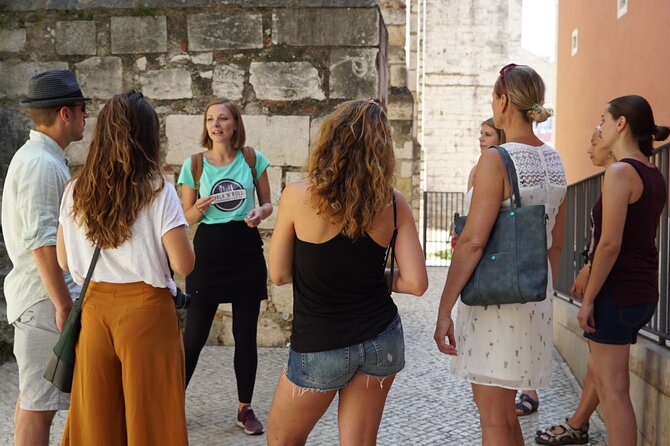
- Small group of up to 12: The size suits people who want to ask questions and keep a personal pace.
- Strong viewpoints: The route includes São Pedro de Alcântara and Santa Luzia, plus views toward Lisbon Castle and the lower town.
- A useful local finish: The included tasting and recommendation sheet add practical value beyond sightseeing.
- Plan for hills: This is a walking tour through Lisbon’s famous slopes, not a flat city-center stroll.
A practical first look at the Lisbon walking tour
Lisbon is a city of sudden changes. One minute you are in the broad, orderly streets of Baixa. Soon you are beside the open arches of the Carmo monastery, then in Chiado’s literary quarter, and later among Alfama’s narrow lanes. This route gives you that contrast without requiring separate planning for each neighborhood.
The tour costs $45.86 per person and lasts about three and a half hours. That is a fair price if you want a guide who can connect the sights, explain local customs and point out places to eat afterward. It is less appealing if you prefer a fast photo stop at major monuments or if you would rather explore independently with an audio guide.
The walk is conducted in German. That matters: you should book it only if you are comfortable following a long explanation in German, even though the route itself is easy to understand visually. The small group, capped at 12 people, is a real advantage for a city walk with many questions and frequent stops.
More history-first plans:
- Lisbon: History, Stories and Lifestyle Walking Tour
★ 4.8 · 10,902 reviews - Lisbon: Live Fado Show with Port Wine in Historic Center
★ 4.7 · 4,166 reviews - Lisbon: Fado Show with Wine in a Historic Venue
★ 4.8 · 1,294 reviews
Starting at Rossio Square and entering Baixa
Meet at the north fountain in Praça Dom Pedro IV, usually called Rossio, between the statue of the king and the National Theatre. This is a sensible starting point because Rossio gives you an immediate introduction to Lisbon’s grand public spaces and central location.
From there, you enter Baixa, the lower town. The district has a more regular street plan than the older quarters on the hills. I like this early section because it helps you understand Lisbon’s layout before the route becomes steeper and more winding.
The Baixa stop is brief, but that is appropriate. The tour is not trying to cover every shop, church or square in the district. Instead, you get the setting, then move toward one of Lisbon’s most recognizable structures.
Seeing Santa Justa from below and above
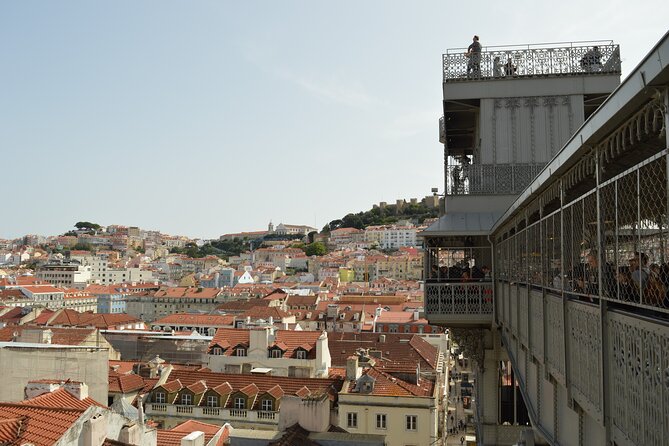
The Santa Justa elevator is one of the route’s cleverest stops. First, you see it from street level, where its tall iron structure rises above Baixa. Then the tour takes in the view from the observation platform, looking across the lower town toward Lisbon Castle.
This two-part approach is better than simply pointing at the elevator and moving on. From below, you appreciate its height and engineering. From above, you understand its purpose as a link between the lower streets and the higher quarters.
You should also know that the route does not promise a separate ride in the elevator. The focus is on seeing the structure and the city view. If riding Santa Justa is high on your list, you may need to arrange that independently.
Carmo ruins and the literary streets of Chiado
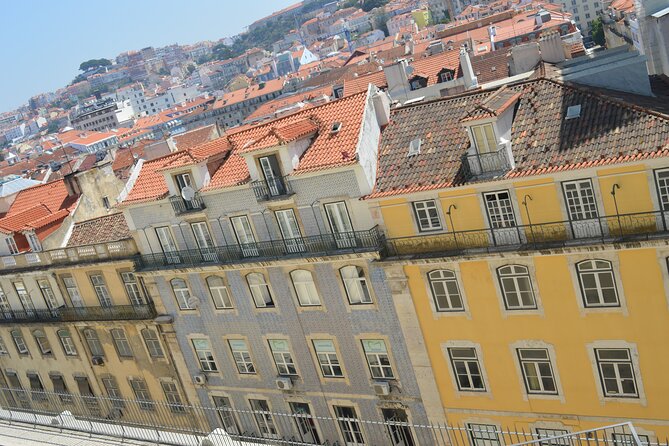
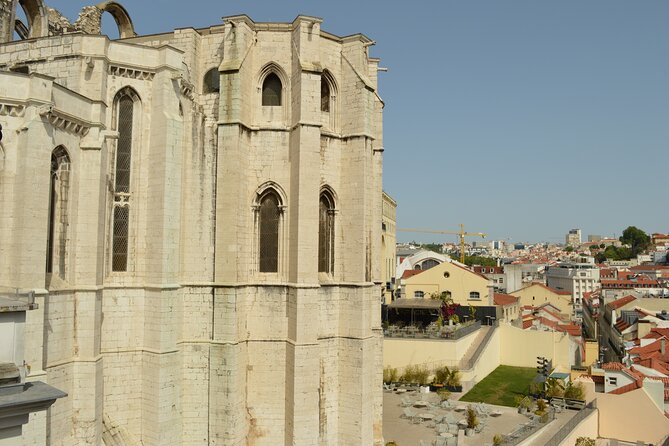
The walk continues to the Carmo monastery ruins. The damaged arches are especially striking because the open roof lets the sky show through the old church. The group admires the ruins from outside, so do not book this tour expecting a full interior visit.
From Carmo, you enter Chiado, known here as the poets’ quarter. This is one of Lisbon’s best areas for seeing how old cultural traditions and modern city life sit side by side. The stop lasts around 20 minutes, giving the guide time to explain the quarter without turning the visit into a long museum lecture.
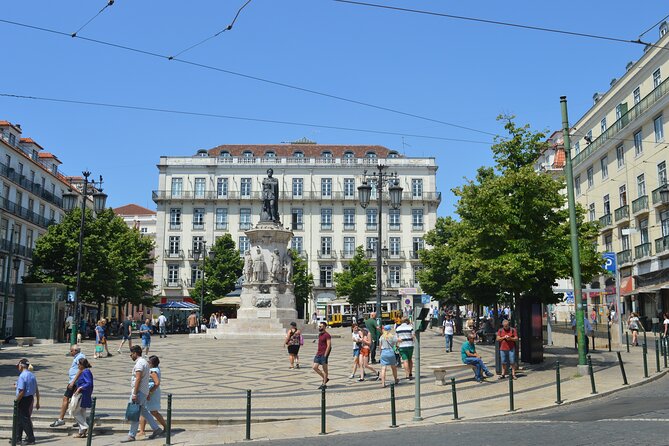
Praça Luís de Camões is the larger square in this part of town. It makes a useful pause point and helps mark the transition from Chiado to Bairro Alto. The tour’s historical and cultural focus is most useful here, where a good explanation can make otherwise ordinary streets feel more meaningful.
Guide quality matters a great deal on this portion. The feedback about Pedro, Sara and Melina repeatedly points to clear explanations, humor, local background and an ability to answer individual questions. Those qualities are more valuable than memorizing dates, especially in a neighborhood built around writers, artists and changing city life.
A handful more Lisbon ideas to compare
- Lisbon City Center Tour – The Unmissable Lisbon
★ 5.0 · 22,234 reviews - Lisbon: Sintra, Pena, Regaleira, Cabo da Roca & Cascais
★ 4.7 · 19,656 reviews - Lisbon: Jerónimos Monastery Entrance Ticket
★ 4.1 · 14,164 reviews - Lisbon: Sunset Boat Party Cruise with DJ and Open Bar
★ 4.5 · 10,378 reviews
Climbing through Bairro Alto to São Pedro de Alcântara
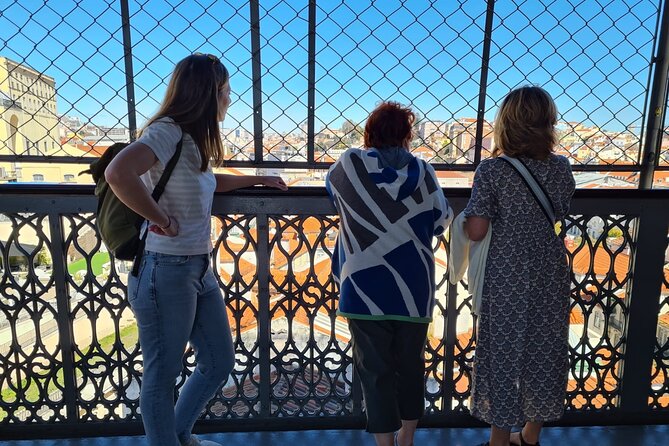
Bairro Alto is known for its evening bars, but during the day it is much quieter. That makes the daytime walk more relaxed than the district’s nighttime reputation suggests. You pass through a residential area before reaching the lookout at Miradouro de São Pedro de Alcântara.
The climb is the physical test of the route. Lisbon’s hills are part of its character, but they are not gentle. Wear shoes with a firm grip and expect a mix of uphill streets and uneven paving. The tour description recommends moderate to good fitness, and that advice should be taken seriously.
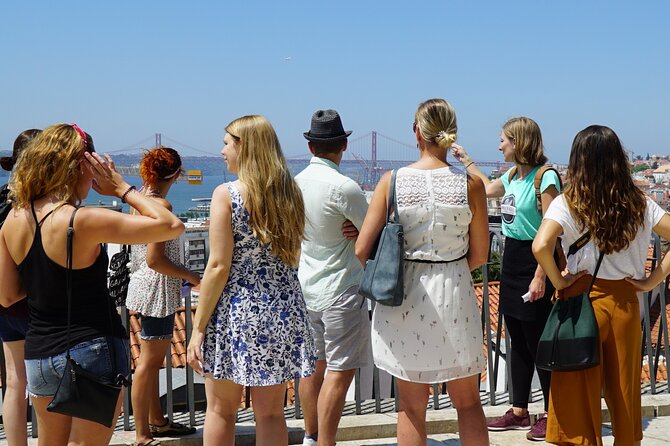
The reward is a generous 40-minute break at the viewpoint. That is a good length of time for photographs, questions and a short rest. You can look across the lower town toward the castle and hills beyond, giving you a clear sense of how Lisbon is arranged.
I especially like the timing of this break. After the climb, you have time to catch your breath rather than being pushed straight into another explanation. A local pastry or liqueur tasting is also included, and the feedback specifically refers to pastéis de nata and ginjinha. The tasting is small, not a full meal, but it gives the walk a pleasant local touch.
Rua Augusta and the route back toward the river
After the hilltop pause, the route returns through Rua Augusta, Baixa’s main shopping street. This section offers a taste of the city’s commercial center and provides a contrast with Bairro Alto’s residential lanes.
The stop is short, about 10 minutes. That is enough to orient you without spending a large part of a history walk browsing shops. If shopping is your priority, you can return later with a better sense of where Rua Augusta fits into the central city.
The route then heads toward Alfama. This change is one of the tour’s strongest features. You move from planned Baixa streets and a major shopping corridor into the oldest quarter, where the city feels much less orderly.
Wandering through Alfama’s narrow streets
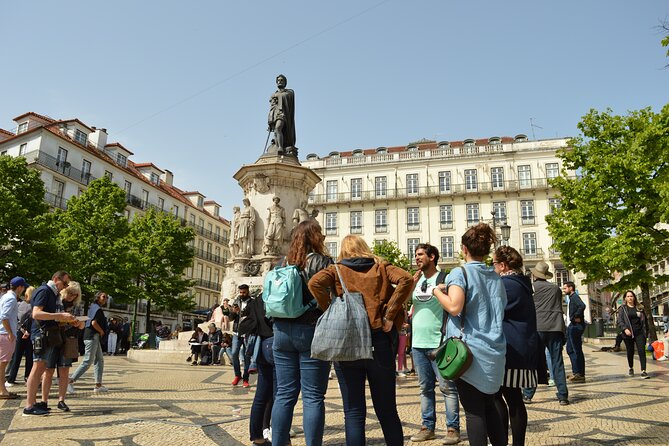
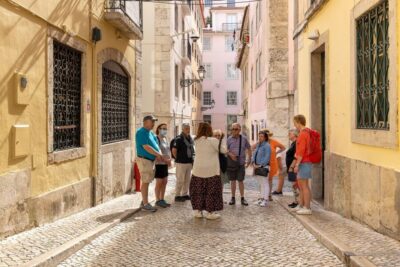
Alfama is the most atmospheric part of the walk. Its lanes twist and narrow, and the route brings you through the district rather than viewing it only from a main road. You should expect slopes, turns and uneven surfaces.
The guide’s role is important here because Alfama can seem confusing when you first arrive. A good explanation helps you understand how the quarter fits into Lisbon’s past and present, while local stories bring the lanes to life without reducing them to a string of postcard views.
The Alfama portion lasts about 30 minutes. That is enough for a useful introduction, though not enough to explore every corner. I would treat this tour as a first orientation. If you love the district, return later and spend more time there at your own pace.
The tour also connects Alfama with current topics and everyday Portuguese life, not only monuments. That balance is one reason the experience suits a first Lisbon day. You get background for the city, along with suggestions that can help shape the rest of your stay.
Santa Luzia and the final view over the Tejo
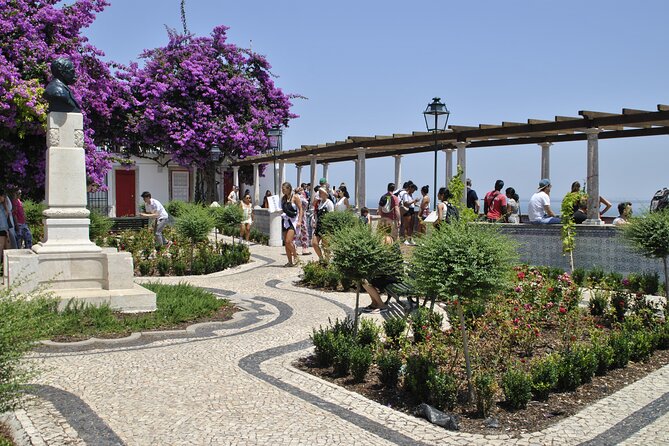
Miradouro de Santa Luzia is the last major viewpoint. It is widely regarded as one of Lisbon’s most beautiful overlooks, and the route gives you about 10 minutes there. This is a shorter stop than São Pedro de Alcântara, so have your camera ready before arriving.
The view and the setting provide a calm final look at Alfama before the descent. From here, the walk continues toward Praça do Comércio and the river.
The ending at Praça do Comércio is practical as well as scenic. The broad square opens directly onto the Tejo, with the triumphal arch forming a strong focal point. It is an easy place to continue sightseeing, find food or make your way to another part of central Lisbon after the tour.
Finishing at the river also gives the walk a clear shape. You begin in Rossio, cross the central hills and old quarters, then arrive at the waterfront. That progression makes the city easier to remember than a tour that simply circles a few central sights.
What the $45.86 price buys you
At $45.86, the tour sits above the price of a tip-based walking tour, but it offers more structure. You receive three and a half hours with a German-speaking guide, a group of no more than 12, a tasting and a recommendation sheet.
The advice may be the best practical value. Several comments connected the guides with restaurant suggestions that participants later used successfully. The route also comes with tips for the rest of your stay, which is useful when you are new to Lisbon and want help choosing where to eat or what to see next.
The price is easiest to justify if you want personal interaction. In a group of six, for example, the guide can answer questions without the delays common in a large walking tour. If the group reaches 12, it should still feel manageable, but it will naturally be less intimate.
Private transportation is not included, and none is needed for the planned route. You meet at Rossio and finish at Praça do Comércio, with the entire experience conducted on foot. Public transportation is nearby, but you are responsible for getting to the meeting point and continuing from the endpoint.
Who will enjoy this route most
I would choose this tour at the beginning of a Lisbon visit. It gives you a city-wide orientation, introduces the main central districts and leaves you with ideas for later meals and sightseeing.
It suits you if:
- You want history, culture and present-day context in German.
- You prefer a small group to a large city walk.
- You enjoy viewpoints and neighborhood streets more than long interior museum visits.
- You want restaurant suggestions and practical local advice.
- You have moderate to good fitness and are comfortable with hills.
I would choose something else if you have walking difficulties, want extensive time inside monuments or dislike uphill streets. The tour includes no private vehicle, and the route’s value depends on seeing Lisbon at street level.
Weather is another consideration. The experience requires good weather. If poor weather causes cancellation, you are offered another date or a full refund. For your own comfort, plan for conditions that can change during a long outdoor walk.
FAQ
What language is the tour conducted in?
The tour is conducted in German with a German-speaking city guide.
How long does the experience last?
The walking tour lasts approximately 3 hours and 30 minutes.
How large is the group?
The group has a maximum of 12 participants.
Where does the tour begin?
It begins at the north fountain in Praça Dom Pedro IV, also known as Rossio Square, between the King’s statue and the National Theatre.
Where does the tour end?
It ends at Praça do Comércio beside the Tejo River, near the square’s triumphal arch.
Which Lisbon districts are included?
The route explores Baixa, Chiado, Bairro Alto and Alfama.
Is transportation included?
No. The experience is a walking tour, and private transportation is not included.
Is food or drink included?
A tasting of a local pastry or liqueur is included. The experience information and comments specifically refer to pastéis de nata and ginjinha.
Can I cancel for a full refund?
Yes. You can cancel at least 24 hours before the local start time for a full refund. Cancellations or changes made within 24 hours are not accepted for a refund, and poor-weather cancellations offer either another date or a full refund.
Should you book this Lisbon tour?
Book it if you want a well-shaped introduction to central Lisbon, especially in German. The combination of Rossio, Baixa, Chiado, Bairro Alto, Alfama and two major viewpoints gives you a strong sense of the city in one morning or afternoon.
The biggest reasons to choose it are the small group, the friendly guides such as Sara, Melina and Pedro, and the practical advice that continues to help after the walk ends. The main warning is physical: Lisbon’s hills are not a footnote here. If you can manage the climbs and want more than a checklist of monuments, this is a useful and personable way to get your bearings.
Fresh finds around Lisbon
- Lisbon: Tuk Tuk City Tour★ 3.6 · 7 reviews
- Fatima Full day Private Tour★ 5.0 · 7 reviews
- Lisbon: Highlights and Hidden Gems Tour★ 5.0 · 7 reviews
- Private Tour to Evora and Monsaraz from Lisbon★ 5.0 · 7 reviews
- Discover Sintra Beauty with a Guided Journey from Lisbon★ 5.0 · 7 reviews
- Private Half-Day Tour to Sintra★ 3.4 · 7 reviews
- Lisbon: Sunset and Wine Catamaran Tour★ 5.0 · 7 reviews
- Nazaré: Beaches of Nazaré Guided E-Bike Tour★ 4.9 · 7 reviews
Historical Tours, compared.
Lisbon: History, Stories and Lifestyle Walking Tour
Read our review →
Lisbon: Live Fado Show with Port Wine in Historic Center
Read our review →
Lisbon: Fado Show with Wine in a Historic Venue
Read our review →
Explore Lisbon by Tuk Tuk: History and Viewpoints
Read our review →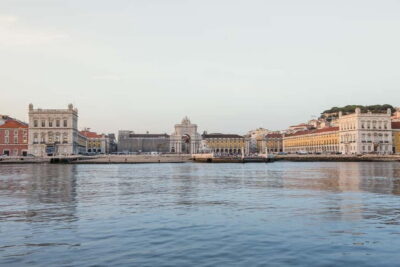
Lisbon: Daytime or Sunset Boat Cruise with History and Wine
Read our review →
Private Tuk Tuk Tour Through Lisbon’s Historical Streets
Read our review →
Lisbon Sunset Sailing with Portuguese Wine and History
Read our review →
Lisbon: Guided Tuk-Tuk Tour Along the Historic Tram Line 28
Read our review →Browse the lists this tour appears in