
Reviewed · HISTORICAL TOURS
Lisbon: 3-Hour The Slave Trade – An Historical Walking Tour
Lisbon’s grand squares, churches, and handsome waterfront tell only part of the city’s story. This three-hour historical walk connects familiar sights with Portugal’s role in the Atlantic slave trade, slavery in Lisbon, Brazil’s importance, African colonies, and later liberation movements. It is serious subject matter, but the guide makes it clear and approachable.
I especially like the small group format, which is limited to six participants according to the activity information, and the chance to ask questions throughout. I also like that Rui Fernandes brings an African perspective and connects the subject to his own family history. The main consideration is the sheer amount of material: the tour can run three to three and a half hours, and some visitors may find the topic emotionally heavy.
In This Review
- Key points to know
- Starting in Alfama at Largo do Chafariz de Dentro
- Reading Lisbon’s monuments with different eyes
- From Iberian slavery to the Atlantic trade
- Daily life for enslaved people in Lisbon
- Brazil, abolition, and Portugal’s African colonies
- A guide who encourages questions
- Group size, walking pace, and the coffee stop
- Is $35 a fair price?
- Who will get the most from this walk?
- Practical tips before you go
- Should you book the Lisbon Slave Trade Historical Walking Tour?
- FAQ
- Where does the tour meet?
- How long does the tour last?
- What language is the tour conducted in?
- Who leads the tour?
- How many people can join?
- Is hotel pickup included?
- Is there a break during the walk?
- What should I bring?
Key points to know
- Alfama is the starting point: Begin at Largo do Chafariz de Dentro, in Lisbon’s oldest district, then connect streets, buildings, and public spaces to the city’s past.
- Rui Fernandes leads the walk: He is an African guide with a background in history, political science, and economics, and he conducts the tour in clear English.
- The focus goes beyond famous explorers: You learn about the birth of the Atlantic slave trade, daily life for enslaved people, abolition, Brazil, Portuguese Africa, and African resistance.
- The group is genuinely small: The published information gives a maximum of six participants, although another detail mentions eight, so check the current limit when booking.
- The route is manageable: The pace is relaxed, with little steep uphill walking according to detailed feedback, though comfortable shoes remain essential on Lisbon’s cobbled streets.
- A break is built in: Expect one coffee and one restroom stop, with past groups enjoying a café break and, in one account, a pastel de nata.
Starting in Alfama at Largo do Chafariz de Dentro

You meet the guide at Largo do Chafariz de Dentro, a square in Alfama. This is a useful starting point because the neighborhood is among Lisbon’s oldest, with narrow streets and layers of settlement that help place the city’s story in context.
The meeting point is not a hotel pickup. You need to make your own way there, so allow time to locate the square. Alfama’s streets can be confusing, and its cobbles reward sturdy shoes rather than fashion footwear.
From here, the walk uses both back streets and larger avenues. The value is not simply seeing another Lisbon monument. It is learning to ask what happened in and around these places, who financed them, who worked there, and how people of African origin were present in the city.
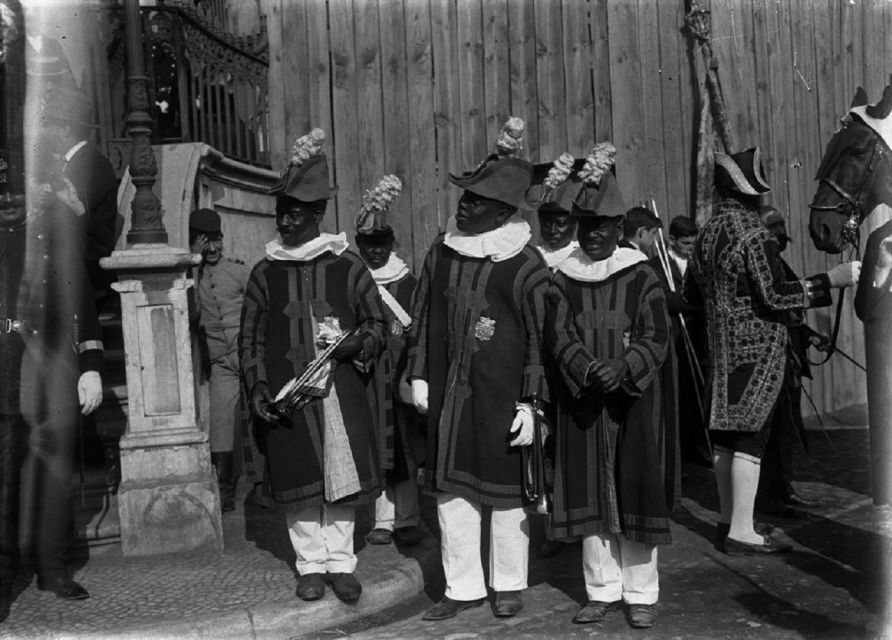
Rui uses visual material during parts of the tour. This matters because the subject covers several centuries and many locations. A picture can help you understand a building’s former use or picture a person and event that would otherwise remain abstract.
More Walking Tours in Lisbon
- Lisbon: History, Stories and Lifestyle Walking Tour
★ 4.8 · 10,902 reviews - Best of Lisbon Small-Group Guided Walking Tour
★ 5.0 · 4,869 reviews - Lisbon: Food and Wine Small Group Walking Tour
★ 4.9 · 4,082 reviews
Reading Lisbon’s monuments with different eyes
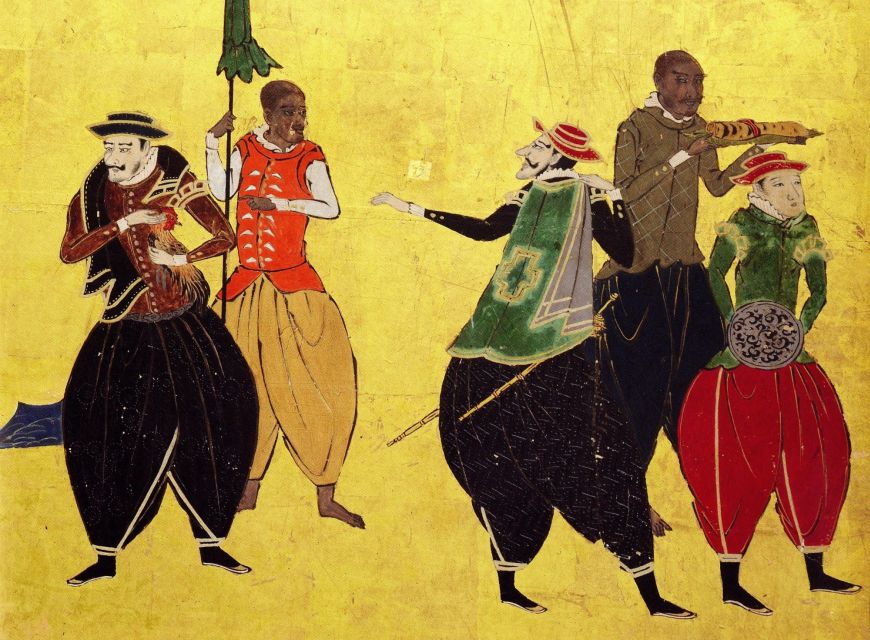
The tour visits monuments, churches, and public squares with links to slavery and Portugal’s overseas expansion. The exact order can vary, but the method is consistent: familiar sights become evidence in a larger story.
Lisbon is often presented through the Age of Discovery, maritime achievement, and imperial wealth. This walk adds the human cost to that familiar account. Portugal helped begin the Atlantic slave trade in the first half of the 15th century, under the direction of Prince Henry the Navigator. Over the following four centuries, an estimated 12 to 14 million Africans were sold into slavery and carried across the Atlantic to the Americas.
That figure can be difficult to grasp on its own. The guide makes the subject more tangible by linking broad events to Lisbon’s buildings, streets, commerce, religion, and politics. You are not only hearing that slavery existed. You are examining how it helped shape Portugal’s development and the wealth visible in its capital.
I appreciate the attention to language and context here. The subject is not treated as a side note to exploration. It is presented as a system involving economics, law, religion, politics, and individual lives.
From Iberian slavery to the Atlantic trade
One section covers the origins of slavery in the Iberian Peninsula before the Atlantic trade took shape. That background is important because it prevents the story from beginning too neatly with ships sailing to West Africa.
You then move into the birth of the Atlantic slave trade and Portugal’s role in its growth. The discussion includes the Age of Discovery, but it does not stop at navigation or imperial ambition. It examines how voyages, trading networks, and colonial expansion were tied to the buying and selling of human beings.
This is where Rui’s academic background is useful. He has training in history, political science, and economics, and the tour draws on all three fields. You hear not just a sequence of dates, but an explanation of how institutions and money supported the trade.
The pace helps. The guide gives time for questions and does not rush from one fact to the next. Several accounts describe his delivery as clear and evenly paced, with patience when the group wants to pause or ask for more detail.
Daily life for enslaved people in Lisbon

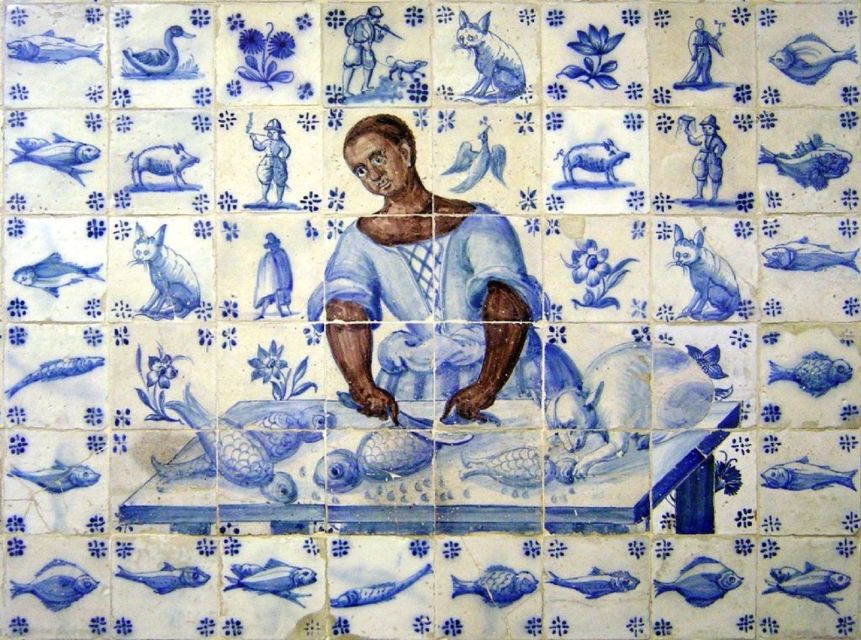
The walk also addresses what daily life was like for an enslaved person living in historical Lisbon. This is one of the most valuable parts for anyone who has already taken a general city tour.
Large political events can make slavery feel distant. Discussion of daily life brings it back to the people who were bought, controlled, forced to work, separated from family, and denied their freedom. The tour uses the urban setting to consider how enslaved Africans lived and worked within the city.
The information provided does not promise a museum visit or a single dedicated memorial, so do not book this expecting an indoor exhibition. The experience is an outdoor walking lesson, with places around Lisbon serving as prompts for stories and explanation.
That format has a clear strength. You see the city while learning how its past operated. It also has a limitation: a street corner or church cannot display every detail that a museum collection can. If you want objects, documents, or a large set of exhibits, add a museum visit separately.
More history-first plans:
- Lisbon: Live Fado Show with Port Wine in Historic Center
★ 4.7 · 4,166 reviews - Lisbon: Fado Show with Wine in a Historic Venue
★ 4.8 · 1,294 reviews - Explore Lisbon by Tuk Tuk: History and Viewpoints
★ 5.0 · 840 reviews - Lisbon: Daytime or Sunset Boat Cruise with History and Wine
★ 4.9 · 819 reviews
Brazil, abolition, and Portugal’s African colonies
Brazil receives special attention because it was central to Portugal’s Atlantic world. The tour explains why Brazil mattered and how the colony fit into the wider system of forced labor and trade.
The discussion then moves toward the abolition of the slave trade in Portugal. This is not presented as the end of the story. The tour also covers Portuguese colonies in Africa and the struggle for liberation by African nationalists.
That wider time span makes the experience more than a tour about one historical period. You begin with slavery in Iberia and the start of the Atlantic trade, then follow the subject through colonial rule and anti-colonial resistance.
If you have limited background in Portuguese history, the amount of information may feel substantial. I suggest taking notes afterward, especially if you want to remember place names or retrace the route. One useful improvement would be a take-home map of the stops, but the activity information does not indicate that one is provided.
A guide who encourages questions
Rui Fernandes is the heart of this experience. The supplied information identifies him as an African guide with a background in history, political science, and economics. Direct feedback repeatedly highlights his passion, clear English, patience, and careful research.
Those qualities matter more here than they would on a simple sightseeing loop. The subject raises difficult questions about responsibility, racism, economics, religion, and the way Portugal discusses its past today. You need a guide who can explain rather than deliver a memorized speech.
Rui also makes an effort to include everyone. He has been noted for remembering participants’ names, giving each person room to ask questions, and handling sensitive conversations with care. One account specifically describes his inclusive approach when a participant had ancestors connected to slavery.
The guide also offers practical Lisbon help. You can ask about restaurants, shops, public transport, and places to visit elsewhere in the city. That advice is a useful bonus, especially if you take the walk early in your stay and use it to shape the rest of your plans.
Group size, walking pace, and the coffee stop
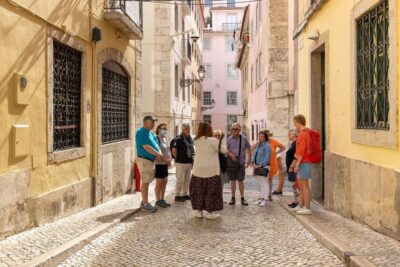
A small group changes the feel of the tour. With a stated maximum of six participants, you should have a better chance to hear clearly, ask questions, and stay connected to the guide than you would on a large city walk.
There is one inconsistency in the supplied details: one section says the group is limited to eight, while the specific know-before-you-go note says six. Check the current number when you reserve. Either limit is small, but the difference matters if you prefer a very intimate experience.
The route is described as relaxed and mostly flat or only gently inclined. That makes it suitable for many ages, but Lisbon’s cobbled streets still call for comfortable shoes. The activity specifically advises bringing them.
Weather also matters. In hot conditions, the guide has adjusted the pace and sought shade. Still, you are outside for around three hours, and the tour may last closer to three and a half hours. Bring whatever sun protection and water you normally need for a long city walk.
One coffee and one restroom break are included. A café stop can be welcome during a serious discussion, and one account specifically mentions coffee with a pastel de nata. Treat this as a short pause, not a full meal.
Is $35 a fair price?
At $35 per person, this is priced like an affordable specialist walking tour. The value depends on what you want from Lisbon.
If your goal is to tick off viewpoints and major monuments as quickly as possible, a standard sightseeing tour may cover more ground. This experience spends time on explanation, questions, and connections that a general tour usually cannot give equal attention to.
For the price, you receive a live English-speaking guide, local taxes and fees, a small group, and a focused subject rarely addressed in mass tourism. There is no hotel pickup or drop-off, so include the cost and time of reaching Alfama yourself.
I consider the tour good value for people who want a more honest understanding of Lisbon. You are paying for interpretation and discussion, not transport or entry tickets. The strongest benefit is that the tour changes how you read the rest of the city during your stay.
Free cancellation up to 24 hours before the start gives you some flexibility, and you can reserve now and pay later. Check the starting time when booking because availability varies.
Who will get the most from this walk?
I would choose this tour if you are interested in Portuguese history, colonialism, economics, African history, or the Atlantic world. It is also a strong choice if you have already seen Lisbon’s standard sights and want to understand the forces behind the city’s prosperity.
It suits families with older children and adults who are willing to spend several hours listening and asking questions. The slow pace and small group help, but the subject is not light entertainment.
People with family connections to Africa, Brazil, the Caribbean, or the history of slavery may find particular value in the tour’s personal and human focus. You do not need prior study, though a basic grasp of Portugal’s Age of Discovery may help you follow the timeline.
I would not choose it as your only Lisbon activity if you want a broad introduction to every major attraction. Nor would I book it if you are looking for a cheerful food walk or a relaxed photo tour. This is an educational experience built around a painful part of the past.
Practical tips before you go
Arrive at Largo do Chafariz de Dentro with time to spare. You are responsible for reaching the meeting point, and Alfama’s streets are not always straightforward.
Wear shoes with good support. The walk is not described as steep, but cobbles can be tiring, especially after several hours.
Ask questions. Rui welcomes them, and the small group makes conversation part of the experience rather than an interruption.
Take the tour early in your Lisbon stay if you want local suggestions for food, shopping, and public transport. Take it later if you prefer to understand the city’s famous sights first and then reconsider them through a new lens.
Allow three and a half hours in your schedule, even though the listed duration is three hours. This avoids a rushed departure for lunch, a museum booking, or an evening reservation.
Should you book the Lisbon Slave Trade Historical Walking Tour?
Yes, if you want to understand Lisbon beyond its postcard views. The tour’s greatest strengths are Rui Fernandes’s clear and passionate teaching, the small group, the relaxed pace, and the way it connects streets and monuments to Portugal’s role in slavery and colonialism.
Book it with the right expectations. You will hear difficult material, walk outdoors for several hours, and receive a great deal of information. You will not get hotel transport or a conventional sightseeing checklist.
At $35, it offers a focused, serious look at a part of Lisbon’s past that is often passed over. If you want a fuller picture of Portugal, this is a worthwhile addition to your itinerary.
FAQ
Where does the tour meet?
Meet the guide at Largo do Chafariz de Dentro, a square in Lisbon’s Alfama district.
How long does the tour last?
The listed duration is three hours, though it may run for three to three and a half hours.
What language is the tour conducted in?
The live tour is conducted in English.
Who leads the tour?
The guide is Rui Fernandes, an African guide with a background in history, political science, and economics.
How many people can join?
The specific know-before-you-go information gives a maximum of six participants. Another activity detail mentions eight, so confirm the current group limit when booking.
Is hotel pickup included?
No. Hotel pickup and hotel drop-off are not included.
Is there a break during the walk?
Yes. The tour includes one coffee break and one restroom break.
What should I bring?
Bring comfortable shoes. Pets are not allowed on the tour.
More 3-Hour Experiences in Lisbon
- Lisbon: 3-Hour Tour by E-Bike
★ 4.8 · 1,150 reviews - 3-Hour Lisbon 7 Hills Electric Bike Tour
★ 5.0 · 818 reviews - 3-Hour Guided Street Art Walking Tour of Lisbon
★ 5.0 · 278 reviews - 3 Hours Private Lisbon Food Tuk Tour
★ 5.0 · 145 reviews
Fresh finds around Lisbon
- Sanctuary of Fátima and Coimbra City Tour★ 4.5 · 51 reviews
- Sintra/Lisbon: Sintra & Quinta da Regaleira Tour with Ticket★ 4.4 · 51 reviews
- Jeronimos Monastery Guided Tour – Small Groups – Tickets Included★ 5.0 · 51 reviews
- Lisbon: Private Christmas Lights Tour by Eco Tuk Tuk★ 4.9 · 51 reviews
- Peniche: Berlengas Island Catamaran Tour – Round Trip★ 4.6 · 51 reviews
- Half day Spa Water Therapy experience at THE SPA at Corinthia Lisbon★ 4.5 · 51 reviews
- Lisbon: Private Tuk-Tuk Tour for 2 hours★ 4.7 · 51 reviews
- Premium Lisbon Airport Transfer to Lisbon★ 5.0 · 51 reviews
Historical Tours, compared.
Lisbon: History, Stories and Lifestyle Walking Tour
Read our review →
Lisbon: Live Fado Show with Port Wine in Historic Center
Read our review →
Lisbon: Fado Show with Wine in a Historic Venue
Read our review →
Explore Lisbon by Tuk Tuk: History and Viewpoints
Read our review →
Lisbon: Daytime or Sunset Boat Cruise with History and Wine
Read our review →
Private Tuk Tuk Tour Through Lisbon’s Historical Streets
Read our review →
Lisbon Sunset Sailing with Portuguese Wine and History
Read our review →
Lisbon: Guided Tuk-Tuk Tour Along the Historic Tram Line 28
Read our review →Browse the lists this tour appears in