
Reviewed · HISTORICAL TOURS
Historical Walking Tour of Lisbon
Lisbon’s story comes alive as you walk from Rossio Square to Carmo, passing the grand riverfront square, Chiado’s literary streets, and the ruins of Convento do Carmo. I like the way this tour links big events, from the 1755 earthquake to the 1974 Carnation Revolution, with places you can see under your feet. I also like that guides such as Logan, Nuno, Constança, Bruno, Kiara, and Andre bring their own storytelling styles and finish with useful food and sightseeing advice.
The main drawback is the walking itself. Lisbon’s sidewalks are made of often uneven cobblestones, and the route includes hills. You should wear sturdy, comfortable shoes, carry water, and allow nearly three hours for the full experience.
In This Review
- Key points to know before you go
- Why this walk is a smart first look at Lisbon
- Rossio Square and the first chapters of Lisbon
- Praça da Figueira and the 1755 earthquake
- Rua Augusta and the city rebuilt through reason
- Praça do Comércio and Lisbon’s river gateway
- Chiado, books, cafés, and Lisbon’s writers
- Largo do Carmo and the Carnation Revolution
- Santa Justa and a final view over downtown
- What the price tells you about the value
- Who will enjoy this Lisbon walk most
- Practical advice for a smoother experience
- Should you book this historical Lisbon tour?
- FAQ
- How long does the Historical Walking Tour of Lisbon last?
- Where does the tour begin?
- Where does the tour finish?
- What language is the tour offered in?
- How much does the tour cost?
- How many people can join the tour?
- Can I cancel for a full refund?
- What happens if bad weather cancels the tour?
Key points to know before you go
- Rossio to Carmo in one clear route: See central Lisbon’s main squares and districts without spending time figuring out the city map yourself.
- History with memorable turning points: Follow stories of early settlement, the Age of Discovery, the 1755 earthquake, and the Carnation Revolution.
- Small-group feel: The group is capped at 20 people, which gives you a better chance to hear the guide and ask questions.
- A useful first-day activity: The tour ends with local suggestions for food, viewpoints, shops, and things to do later in your stay.
- Cobblestones and hills matter: The route is manageable for most people, but good shoes and a steady pace are important.
- Very low price: At $3.62 per person, this offers an unusually inexpensive way to get oriented in central Lisbon.
Why this walk is a smart first look at Lisbon
Lisbon can feel confusing at first. The city rises sharply away from the river, streets change character within a few blocks, and important events are scattered across several districts. This walk gives you a simple route through the historic center, beginning at Rossio Square and ending above downtown near Carmo.
I like this kind of introduction because it gives you both a map and a timeline. You see where the city’s public life happens, then connect those places to Portugal’s royal struggles, overseas expansion, earthquake rebuilding, literary culture, and modern political change.
The tour lasts about 2 hours 45 minutes. That is long enough to cover a generous stretch of downtown without turning into an all-day march. The listed stops add up to about two hours, leaving time for the walk between them, questions, and the uphill sections.
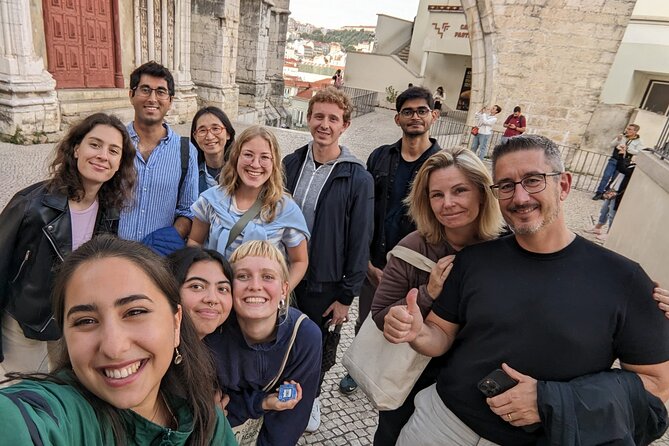
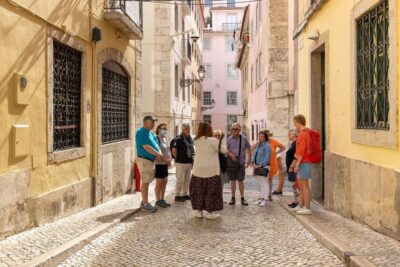
The guide speaks English, and the group can include no more than 20 people. That is not a private tour, but it is small enough to feel more personal than a large crowd gathered around a flag. The strongest part of the experience depends on the person leading it. Guides named in the feedback include Logan, Nuno, Constança, Bruno, Kiara, Andre, Antonio, Maria, Tomàs, and others. The most praised qualities are clear storytelling, patience, humor, and practical advice.
More Walking Tours in Lisbon
- Lisbon: History, Stories and Lifestyle Walking Tour
★ 4.8 · 10,902 reviews - Best of Lisbon Small-Group Guided Walking Tour
★ 5.0 · 4,869 reviews - Lisbon: Food and Wine Small Group Walking Tour
★ 4.9 · 4,082 reviews
Rossio Square and the first chapters of Lisbon
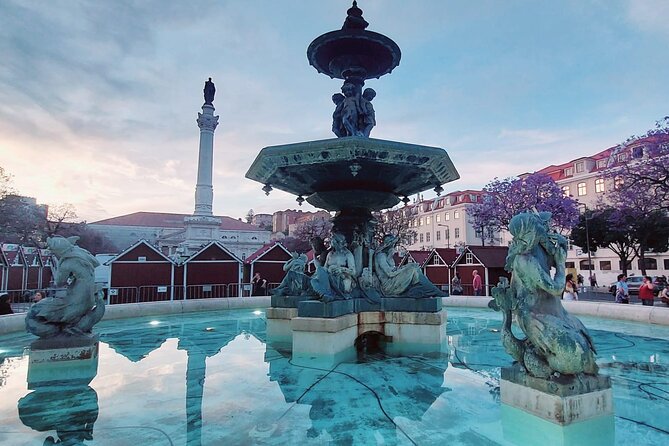
The meeting point is Praça Dom Pedro IV, better known as Rossio Square. This is a sensible place to begin because it sits at the heart of central Lisbon and is easy to find near public transportation.
The square’s patterned pavement gives you an immediate lesson in Lisbon style. Look down at the intricate stone work while the guide explains the first people who settled in the city around 3,000 years ago. That pairing works well: you get a visual detail to notice while the larger story begins.
You spend about 15 minutes here. It is enough time for orientation, but not so long that you are stuck listening to an opening lecture before the walk starts. Guides such as Logan and Nuno have been praised for making historical material easy to follow, and this first stop sets up the rest of the route.
Rossio is also a practical place to meet your guide. Get there early enough to identify the group without rushing. Since the square can be busy, pay attention to the exact meeting details when you book.
Praça da Figueira and the 1755 earthquake
A short walk brings you to Praça da Figueira, or Fig Tree Square. The square once held Lisbon’s largest public hospital, which was destroyed in the 1755 earthquake.
That detail helps you understand the scale of the disaster. The earthquake was not just a damaged building or a dramatic date in a history book. It reshaped the center of Lisbon and forced the city to rethink its streets, public spaces, and buildings.
The guide also covers the struggles over Portugal’s crown and the battles fought with neighboring powers. This is useful context because Portuguese history can seem like a string of kings, wars, and overseas voyages unless someone explains how the pieces connect.
You spend about 15 minutes here. The stop is short, so expect a brisk explanation rather than an extended visit. If political history is not your favorite subject, the guide’s storytelling style will matter. The strongest feedback consistently points to lively narration and the ability to make names and dates easier to remember.
Rua Augusta and the city rebuilt through reason
Between the early squares and the riverfront, you walk down Rua Augusta. This is Lisbon’s main artery through the downtown district and one of the city’s most recognizable streets.
The focus here is the Age of Enlightenment and its effect on architecture. After the earthquake, Lisbon was rebuilt with more order and planning than the old medieval city had allowed. As you walk, the street becomes a practical example of that change rather than an abstract lesson.
This part of the route is also a useful bridge. Rossio and Praça da Figueira introduce older urban life and disaster. Rua Augusta shows how the city responded. By the time you reach Praça do Comércio, you have a better sense of why central Lisbon feels so open and deliberate in places.
Stay aware of the walking surface. Beautiful calçada pavement can be slippery or uneven, especially if your shoes have thin soles. Several guide comments stress comfortable footwear, and that advice is worth taking seriously.
More history-first plans:
- Lisbon: Live Fado Show with Port Wine in Historic Center
★ 4.7 · 4,166 reviews - Lisbon: Fado Show with Wine in a Historic Venue
★ 4.8 · 1,294 reviews - Explore Lisbon by Tuk Tuk: History and Viewpoints
★ 5.0 · 840 reviews - Lisbon: Daytime or Sunset Boat Cruise with History and Wine
★ 4.9 · 819 reviews
Praça do Comércio and Lisbon’s river gateway
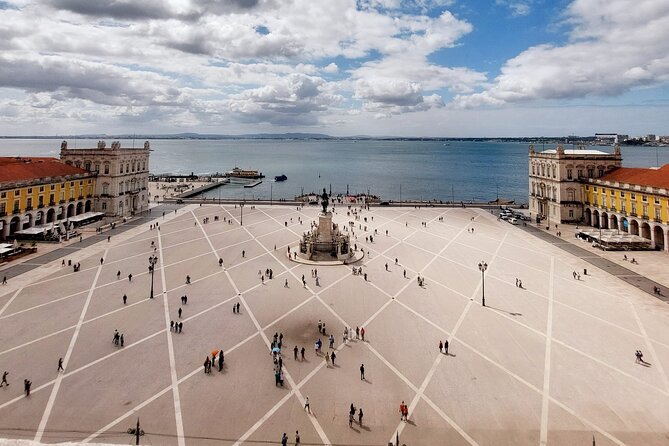
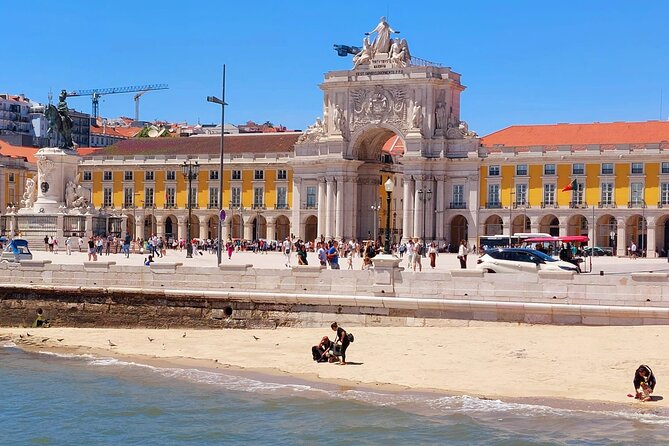
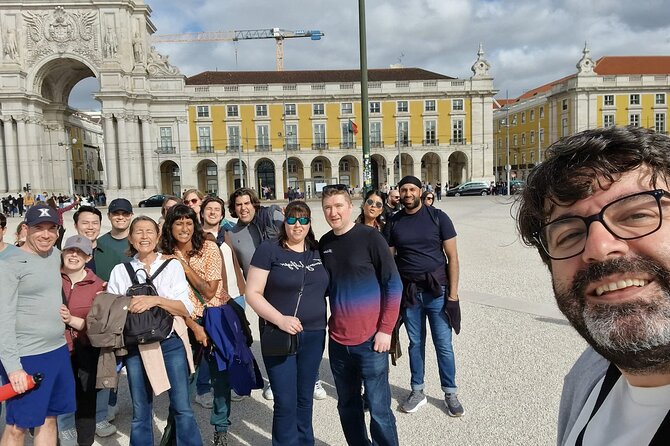
Praça do Comércio, also called Terreiro do Paço, is the largest and most dramatic open space on the walk. The square faces the Tagus and has served as an entry point to Lisbon for thousands of years.
You spend about 30 minutes here, the longest stop on the lower part of the route. That gives the guide time to explain the Age of Discovery, when Portugal’s ships carried explorers and traders far beyond Europe. It also allows room for the earthquake story to continue, including the rebuilding effort and the people credited with restoring the city.
This is one of the places where the tour’s structure makes sense. You are not simply moving from one attractive square to another. You are tracing Lisbon’s relationship with the river, royal power, trade, disaster, and reconstruction.
The square is wide and exposed, so sun protection is useful. Bring water, particularly in warm weather. The experience requires good weather, and poor conditions can lead to a new date or a full refund.
Take time to look across the square toward the water, but keep the group in sight. The guide may need to position everyone so the whole group can hear, and open spaces can make it easy to drift away while taking photographs.
Chiado, books, cafés, and Lisbon’s writers
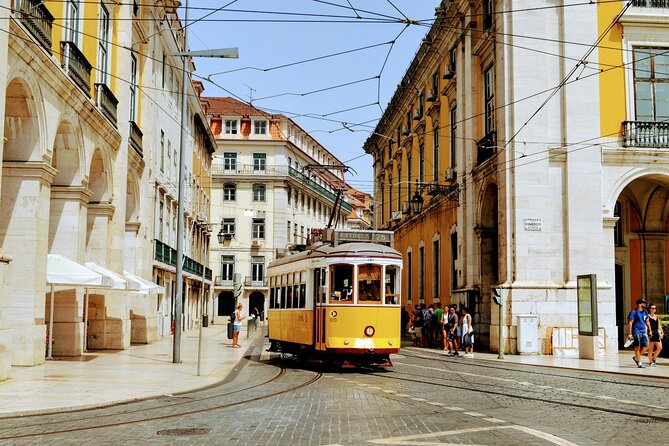
From the lower city, the walk continues to Chiado, Lisbon’s art and literary district. This area is filled with cafés, theaters, bookshops, and nightlife, giving the tour a welcome change of mood after the formal spaces of the Baixa.
You spend about 20 minutes here. The guide introduces important Portuguese poets and writers, and you may have the chance to visit what is described as the oldest bookshop in the world. That small stop adds a human scale to the tour. Instead of hearing only about monarchs and earthquakes, you get a sense of how Lisbon’s creative life shaped its streets.
The time is limited, so do not expect a long literary tour or a full shopping stop. Think of Chiado as an introduction. If a bookshop, theater, or café catches your attention, note it down and return later.
This is where practical recommendations can be especially useful. Guides have offered suggestions for restaurants, shops, and places to explore after the walk. Andre, Kiara, Constança, and others were praised for giving specific ideas that helped shape the rest of a Lisbon visit.
Largo do Carmo and the Carnation Revolution
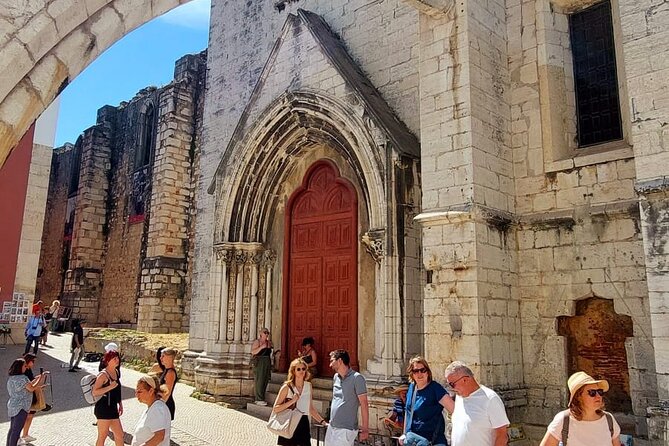
The route then climbs to Largo do Carmo, a square with one of Lisbon’s most striking historic sights: Convento do Carmo. The convent is described as the city’s second-oldest building and survived the 1755 earthquake, though its roofless ruins preserve the force of that event.
You spend about 30 minutes here. The ruined arches create a powerful setting, but the guide’s discussion of modern Portugal is just as important. Largo do Carmo played a major role in the 1974 Carnation Revolution, the peaceful military-led coup that ended decades of dictatorship.
Calling it the coolest coup in the world may sound playful, but the event deserves serious attention. The guide connects the square to Portugal’s transition into democracy, giving you a modern reference point after the earlier stories of kings, explorers, and natural disaster.
This stop is also a good test of the tour’s pace. The uphill walk can be tiring, especially for anyone with mobility concerns or a broad age range in the group. Guides have adjusted the pace and taken care with uphill sections, but you should still expect Lisbon’s slopes to be part of the experience.
Santa Justa and a final view over downtown
The last stop is the Elevador de Santa Justa. Here you take a break and enjoy a bird’s-eye view over central Lisbon. The tour ends nearby at the Carmo Archaeological Museum in Largo do Carmo, in the upper part of downtown.
The listed time at Santa Justa is about 15 minutes. That is enough for a pause, a view, and final questions, but it should not be confused with a full ride or an extended visit inside the elevator. The included experience is the stop and viewpoint, with no admission ticket listed.
This ending works well because it gives you a physical sense of the route. From above, you can see how far you walked and how the lower streets connect to the higher Chiado and Carmo districts.
The guide also uses this final break to share hand-picked suggestions for Lisbon. Food recommendations are a repeated strength of the experience, along with ideas for viewpoints and additional places to visit. I would keep your phone ready to record these tips. They may be more useful later than a long list of facts you forget by dinner.
What the price tells you about the value
At $3.62 per person, this is a remarkably inexpensive introduction to Lisbon. The price covers a professional English-speaking guide and the walking experience, while the stops themselves are public places with free admission.
That low cost does not mean you should expect a private guide or a highly specialized architectural seminar. You are paying for orientation, storytelling, and the chance to ask questions while moving through the city. For a first morning or afternoon in Lisbon, that is strong value.
The tour also helps you avoid a common city-break mistake: spending your first day wandering without understanding how the center fits together. After this route, Rossio, Praça da Figueira, Rua Augusta, Praça do Comércio, Chiado, Carmo, and Santa Justa should feel less like isolated sights.
The 4.9 rating from 73 ratings and a 97 percent recommendation rate support the idea that the experience usually delivers what it promises. Still, the guide makes a real difference. The most highly praised leaders, including Logan, Nuno, Constança, Andre, Bruno, Kiara, and Antonio, are described as animated, friendly, flexible, and good at answering questions.
There is one serious practical warning: a cancellation without notice was reported. That appears to be an exception rather than the normal pattern, but you should still check your booking messages and meeting details before setting out.
Who will enjoy this Lisbon walk most
I would choose this tour if you want a broad introduction before exploring Lisbon on your own. It suits people who enjoy history, city walks, and learning why a place looks the way it does.
It is also a good fit for families with older children and teenagers. One 13-year-old enjoyed the walk enough to share the historical material with family later, which suggests that the guides can make the subject accessible beyond a classroom setting.
You should be comfortable walking for nearly three hours. The route includes cobblestones, uneven pavement, and hills, so it is not the right pick if you need a completely flat or seated activity.
The tour works best for people who like stories rather than a rapid checklist of photo stops. You will hear about Portugal’s rulers, battles, explorers, writers, earthquake recovery, and democratic revolution. If you are not interested in history at all, the tour may feel talk-heavy.
Practical advice for a smoother experience
Wear shoes with solid grip and enough cushioning for stone pavement. Several parts of Lisbon’s center are easy to walk, but the cobbles can make a long route feel harder than its distance suggests.
Bring water, sunscreen, and a way to note restaurant and sightseeing suggestions. The tour takes place outdoors, and the weather can affect whether it runs.
Arrive at Rossio Square with enough time to find the group. The start point is Praça do Rossio, 1100-200 Lisboa, and the end point is the Carmo Archaeological Museum at Largo do Carmo, 1200-092 Lisboa.
The activity is near public transportation, service animals are allowed, and most people can participate. The group limit is 20 people. Free cancellation is available up to 24 hours before the start time for a full refund. A cancellation inside that window is not refundable, and changes are not accepted less than 24 hours before the start.
Should you book this historical Lisbon tour?
I would book it early in a Lisbon stay, especially if you want the city explained before you tackle it alone. The route covers the central squares and districts you are most likely to visit, while the guides add useful suggestions for food, viewpoints, and later outings.
Book it if you enjoy walking, want strong historical context, and value a very low price. Skip it if hills and uneven cobblestones will make nearly three hours uncomfortable, or if you prefer visiting museums and monuments at your own pace.
For most first-time visitors, the combination of central landmarks, memorable stories, small-group size, and practical local advice makes this a sensible start to Lisbon.
FAQ
How long does the Historical Walking Tour of Lisbon last?
The tour lasts approximately 2 hours and 45 minutes.
Where does the tour begin?
It begins at Rossio Square, officially Praça Dom Pedro IV, at Praça do Rossio, 1100-200 Lisboa, Portugal.
Where does the tour finish?
The tour ends at the Carmo Archaeological Museum in Largo do Carmo, in the upper part of downtown Lisbon.
What language is the tour offered in?
The tour is offered in English.
How much does the tour cost?
The listed price is $3.62 per person.
How many people can join the tour?
The group has a maximum of 20 travelers.
Can I cancel for a full refund?
Yes. You can cancel at least 24 hours before the experience start time for a full refund. Cancellations made less than 24 hours in advance are not refundable.
What happens if bad weather cancels the tour?
If poor weather causes the cancellation, you will be offered a different date or a full refund.
Fresh finds around Lisbon
- Sanctuary of Fátima and Coimbra City Tour★ 4.5 · 51 reviews
- Sintra/Lisbon: Sintra & Quinta da Regaleira Tour with Ticket★ 4.4 · 51 reviews
- Jeronimos Monastery Guided Tour – Small Groups – Tickets Included★ 5.0 · 51 reviews
- Lisbon: Private Christmas Lights Tour by Eco Tuk Tuk★ 4.9 · 51 reviews
- Peniche: Berlengas Island Catamaran Tour – Round Trip★ 4.6 · 51 reviews
- Half day Spa Water Therapy experience at THE SPA at Corinthia Lisbon★ 4.5 · 51 reviews
- Lisbon: Private Tuk-Tuk Tour for 2 hours★ 4.7 · 51 reviews
- Premium Lisbon Airport Transfer to Lisbon★ 5.0 · 51 reviews
Historical Tours, compared.
Lisbon: History, Stories and Lifestyle Walking Tour
Read our review →
Lisbon: Live Fado Show with Port Wine in Historic Center
Read our review →
Lisbon: Fado Show with Wine in a Historic Venue
Read our review →
Explore Lisbon by Tuk Tuk: History and Viewpoints
Read our review →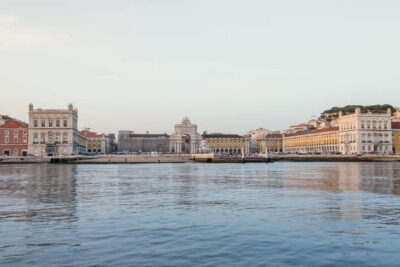
Lisbon: Daytime or Sunset Boat Cruise with History and Wine
Read our review →
Private Tuk Tuk Tour Through Lisbon’s Historical Streets
Read our review →
Lisbon Sunset Sailing with Portuguese Wine and History
Read our review →
Lisbon: Guided Tuk-Tuk Tour Along the Historic Tram Line 28
Read our review →Browse the lists this tour appears in