
Reviewed · ÉVORA TOURS
Half Day Megaliths Cromlech Tour from Evora by Archaeologists
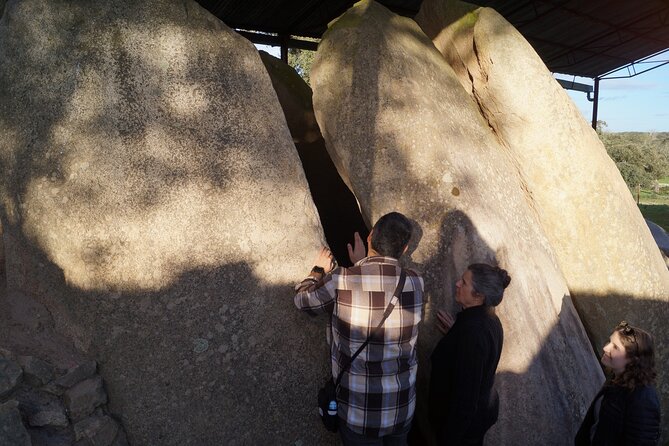
More than 7,000 years ago, people raised huge stones in the countryside outside Évora. This half-day outing takes you to the Menhir of Almendres, Almendres Cromlech, and Dolmen of Zambujeiro, with archaeologists Bianca and Gonzalo explaining what is known, what remains uncertain, and how these monuments fit into prehistoric Portugal.
I like the small group size, capped at six, and the chance to reach sites that are awkward to visit by ordinary rental car. I also like the guides’ calm, evidence-based approach. The main drawback is the rough access road and uneven footpath, so this is not a good choice if you have balance or mobility problems.
In This Review
- Key points at a glance
- Why these Évora megaliths are worth your morning
- Meeting Bianca and Gonzalo at Évora’s Roman Temple
- The Menhir of Almendres and its rough footpath
- Almendres Cromlech, Portugal’s great stone circle
- The third monument, Dolmen of Zambujeiro
- The Almendres interpretive center and gift shop
- What the $78.44 price gets you
- Morning or afternoon: choosing the better departure
- Who will enjoy this outing most
- Practical packing advice for the cork country
- Should you book the Almendres megalith tour?
- FAQ
- Where does the tour begin?
- Does the tour offer hotel pickup?
- Where does the tour end?
- How long does the experience last?
- Which monuments are visited?
- Is the tour available in English?
- How large is the group?
- Is the tour suitable for people with reduced mobility?
- What happens if the weather is poor?
Key points at a glance
- Three prehistoric monuments near Évora: See a solitary standing stone, a large stone circle, and an ancient burial monument.
- Archaeologist guides Bianca and Gonzalo: Get explanations based on archaeology rather than guesswork or dramatic myths.
- Small group of up to six: Ask questions easily and expect a more personal outing.
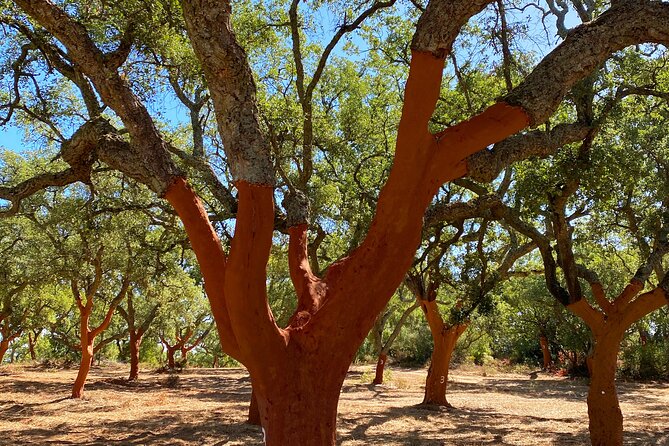
- Cork-tree countryside: The slow drive through the Almendres property is part of the experience.
- Rough roads and dirt paths: Wear sturdy shoes, and expect muddy ground after rain.
- Morning or afternoon departure: The tour lasts about two to four hours, including driving time.
Why these Évora megaliths are worth your morning
Évora is famous for its Roman Temple and medieval center, but the oldest human traces in the region sit outside town. The Almendres area introduces you to a much earlier Portugal, shaped by farming communities who built large stone monuments thousands of years before the Roman period.
I find that the age alone is not the most striking part. It is the scale of the stones, the quiet setting, and the unanswered questions. You can see the monuments clearly, but you cannot always know exactly why they were built. That uncertainty gives Bianca and Gonzalo room to explain competing ideas without pretending that archaeology has solved every mystery.
The setting adds plenty. The route passes through cork trees, open fields, and dirt tracks. You are not simply stepping out of a van at a polished museum entrance. The rough access helps preserve the feeling of reaching an old site in the countryside, although it can also make the trip less comfortable.
The guides are the main reason to choose this outing instead of going alone. Both have archaeology degrees, and they explain the Neolithic period, the people who made the monuments, construction methods, possible purposes, discovery, and conservation. Their style is more conversation than nonstop commentary, which gives you time to look around and form your own impressions.
More Arrábida coast days:
- Setúbal: Dolphin Watching Tour
★ 4.8 · 801 reviews - Sesimbra: Arrábida Dolphin and Whale Watching tour with biologist
★ 5.0 · 248 reviews - Observation of Dolphins and Whales with Marine Biologist in Arrábida
★ 5.0 · 224 reviews
Meeting Bianca and Gonzalo at Évora’s Roman Temple
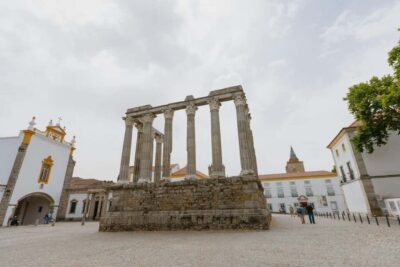
The standard meeting point is the Roman Temple of Évora, at Largo do Conde de Vila Flor. It is an easy landmark in the historic center and a practical place to begin if you are already exploring Évora on foot.
Hotel pickup is also offered, but the timing can change depending on the number of groups booked. If you choose that option, you may need to be ready up to 30 minutes before the stated departure. The operator sends your exact pickup time at least 24 hours beforehand, and the guide meets you outside the hotel.
From the Roman Temple, the drive to the path for the Menhir of Almendres takes about 25 minutes. That short ride begins to shift the mood from city sightseeing to rural exploration. The van is especially useful here because the access roads are described as being in poor shape. A rental car may manage them, but you should not assume the drive will be smooth.
The tour has a maximum of six people. That matters on an archaeology outing. You can ask why a stone was placed in a certain position, how archaeologists date a monument, or what remains uncertain without trying to speak over a large bus group.
The Menhir of Almendres and its rough footpath
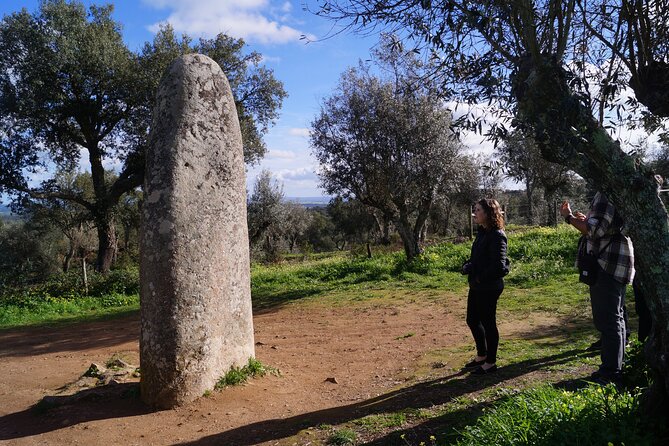
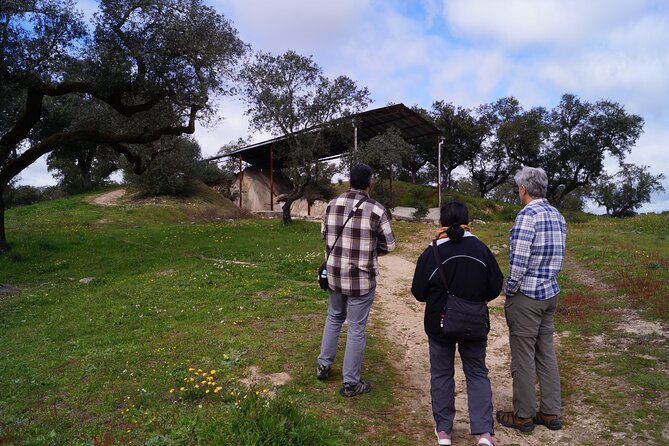
The first stop is the Menhir of Almendres, a single standing stone reached by a five to ten-minute walk. The path runs through attractive countryside, and the setting can include wildflowers among the cork trees, especially in the right season.
This is a simple monument, but it makes a useful opening stop. One upright stone gives you a direct sense of the labor involved. It also helps you look at the later sites with a better eye, since you have already considered how prehistoric communities may have selected, moved, and raised a large block.
The path is the least accessible part of the outing. It is in poor condition, can become muddy after rain, and may be difficult or impossible for anyone with reduced mobility. The activity is not recommended if you have balance problems, and a moderate level of physical fitness is expected.
Wear sneakers or hiking shoes with a solid sole. Sandals and smooth city shoes are a poor match for the dirt footpaths. The walk is short, but the surface matters more than the distance.
Almendres Cromlech, Portugal’s great stone circle
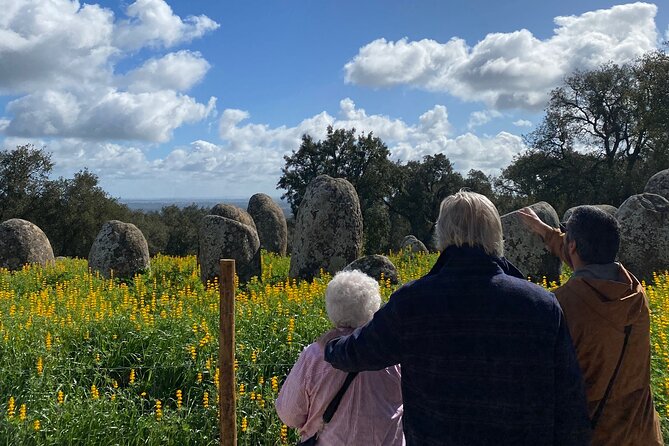
After the Menhir, the van continues through the Almendres property toward the Cromlech of Almendres. The slow pace is intentional. The road is rough, and the drive can take longer than you might expect for a relatively short distance.
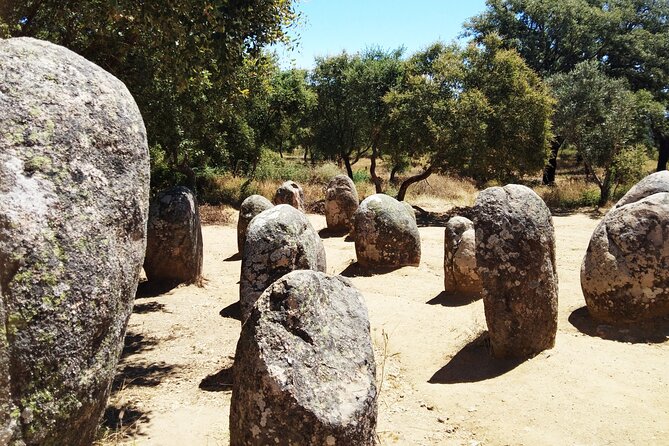
At the cromlech, the guides spend much of the tour’s teaching time. The site is often compared with Stonehenge, though the comparison can oversimplify what makes it special. The stones here belong to a much older period, and the setting feels far less built up. You see the arrangement in a rural environment rather than through a crowded monument complex.
Bianca and Gonzalo explain the Neolithic period and the main theories connected with the site. You can expect discussion of what is known about the builders, how large stones may have been transported, and why the stones were placed where they are. They also address the limits of the evidence, which is important when discussing prehistoric monuments.
The cromlech is not a place where every stone has a clear label and a settled explanation. That is part of its appeal. You are encouraged to observe the layout, ask questions, and consider the possibilities without being handed a neat story that archaeology cannot support.
The site also benefits from silence. One guide has a particularly good approach of allowing quiet moments between explanations. You get time to look across the stones and cork trees rather than hearing a speech every second you are outside.
More Évora and Alentejo days:
- Évora: Private walking tour with tickets to main monuments
★ 5.0 · 223 reviews - Évora: Private walking tour, By Local Guide
★ 5.0 · 87 reviews - Évora Walking Tour
★ 5.0 · 35 reviews - Skip the Lines & Sip the Wines: Évora’s Ultimate Walking Tour!
★ 5.0 · 19 reviews
The third monument, Dolmen of Zambujeiro
The experience is commonly described as a visit to three megalithic sites: the Menhir of Almendres, the Cromlech of Almendres, and the Dolmen of Zambujeiro, also called Anta Grande do Zambujeiro. The supplied timing lists the first two main stops and the interpretive center, so confirm the exact running order when you book.
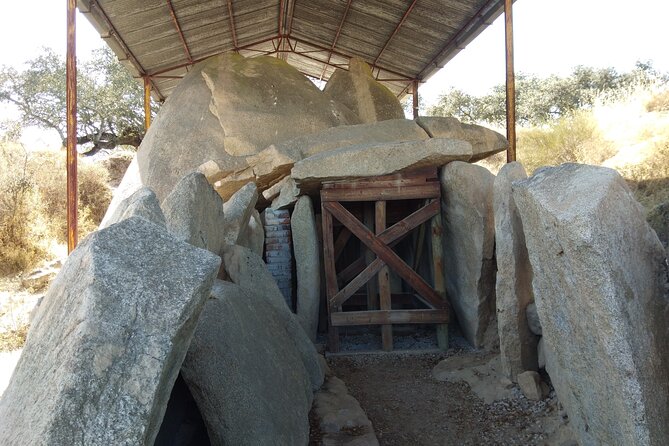
The dolmen is an enormous single-chamber burial monument. Its size makes it different from the upright menhir and the stone circle, giving the half-day trip a useful range rather than three versions of the same sight.
At the dolmen, the guides place the monument in the wider Neolithic setting and explain its likely role as a burial site. You can also ask about dating, construction, and the people who built these structures. The contrast between the three sites helps you understand that prehistoric megaliths were not one single type of monument with one single purpose.
The countryside around the dolmen is another part of the experience. The route is quiet and rural, with the surrounding cork country offering a strong sense of place. You are seeing archaeology in its original setting rather than inside a city museum.
The Almendres interpretive center and gift shop

After the monument visits, the van stops at the Centro Interpretativo dos Almendres. You have about 15 minutes to browse the interpretive center and gift shop before returning to Évora.
This is a brief stop, not a full museum visit. It works best as a final chance to gather your thoughts, look at supporting material, and browse local items. Do not expect it to replace the outdoor explanations from the guides.
The return to Évora is scheduled for approximately noon to 1 p.m. on the morning tour and 5 to 6 p.m. on the afternoon tour. Since the advertised duration is roughly two to four hours and includes driving, the exact length can vary with road conditions, group size, and the pace of the visits.
What the $78.44 price gets you
At $78.44 per person, this is not the cheapest way to see stones outside Évora. The value comes from the specialist guiding and the transport over roads that may be unpleasant or risky in a standard car.
Your fee includes entrance to all monuments visited, guided visits at each site, free time, and transportation from the meeting point. The group limit of six also makes the price easier to justify if you value personal attention and the ability to ask detailed questions.
A self-guided visit might cost less if you already have a vehicle and are comfortable finding the sites. But you would need to manage the rough roads, understand the site layout, and supply your own archaeological context. The guides also add regional information about cork forests, local flora, Évora, and the wider Iberian Peninsula.
I would consider this good value for anyone who has more than a passing interest in prehistory. If you only want a quick photograph beside an old stone, the price may feel high. If you want to understand what you are seeing, the professional guidance changes the experience.
Morning or afternoon: choosing the better departure
The morning tour returns between noon and 1 p.m. The afternoon tour generally returns between 5 and 6 p.m. Both follow the same general program, and either can work well with a day in Évora.
The morning is the safer pick during hot weather. The outdoor monuments have little obvious shelter, and one useful tip is to go early to avoid the strongest heat. It also leaves the rest of your day free for Évora’s Roman, medieval, and museum sights.
The afternoon may suit you if you prefer a slower start or want to visit the historic center first. Allow enough time before your evening plans, since the return window is approximate rather than a fixed minute-by-minute arrival.
Good weather is required. If poor weather cancels the outing, you are offered another date or a full refund. Free cancellation is available up to 24 hours before the start time. A cancellation caused by failing to meet the minimum number of participants also brings the choice of another date or experience, or a full refund.
Who will enjoy this outing most
This tour suits you if you like ancient sites, rural Portugal, and guides who explain evidence instead of filling every pause with jokes. It is a particularly good choice for anyone who wants more than a surface-level visit to prehistoric monuments.
You do not need specialist archaeology training. The guides explain the sites in accessible English, and they can also switch between English and Portuguese. Their approach works for curious first-time visitors as well as people already interested in Neolithic Europe.
Families should plan carefully. Children under 12, or children under 1.5 meters tall, must sit in the back seat with a suitable car seat or booster. The tour provider does not supply these, so you must bring your own. Infant and child car seats are not included.
The activity does not suit everyone. I would avoid it if uneven paths, muddy ground, or a bumpy vehicle ride would make you uncomfortable. Service animals are allowed, and the meeting point is near public transportation, but the actual monuments are reached along rural paths.
Practical packing advice for the cork country
Wear sneakers or hiking shoes. This is the single most useful preparation you can make. The walk to the Menhir is short, yet poor footing and rain can make it demanding.
Bring water, sun protection, and clothing suited to the day. The provided information does not list lunch, so plan to eat before or after the tour. There is no lunch included in the price.
Keep your schedule flexible around the return window. The drive is slow in places because of the road condition, and the tour includes free time at the sites and the interpretive center.
Also remember that this is an outdoor archaeology experience, not a polished attraction. You may encounter dirt, mud, uneven ground, and limited comfort. In exchange, you reach monuments in a peaceful rural setting that would be harder to visit without a guide and suitable transport.
Should you book the Almendres megalith tour?
I would book this tour if the idea of standing beside 6,000 to 7,000-year-old monuments appeals to you and you want solid explanations from working archaeologists. Bianca and Gonzalo bring useful context, speak excellent English, and make the visit feel like a thoughtful conversation rather than a memorized script.
The tour is also a smart choice if you do not want to risk a rental car on rough dirt roads. Choose the morning in hot weather, wear proper shoes, and be honest about your mobility before booking.
Skip it if your schedule is tight, you dislike bumpy rural drives, or you want a fully accessible activity. For the right visitor, though, this is one of the most distinctive day trips from Évora: ancient stones, cork trees, open countryside, and the chance to think about people who built lasting monuments long before written records.
FAQ
Where does the tour begin?
The standard meeting point is the Roman Temple of Évora at Largo do Conde de Vila Flor, 7000-863 Évora, Portugal.
Does the tour offer hotel pickup?
Yes. Hotel pickup is available if you provide the hotel name when booking. The pickup time can be up to 30 minutes before the tour start time, and you receive the exact time at least 24 hours beforehand.
Where does the tour end?
The activity ends back at the meeting point in Évora.
How long does the experience last?
The tour takes approximately two to four hours, including driving time. Morning returns are scheduled between noon and 1 p.m., while afternoon returns are scheduled between 5 and 6 p.m.
Which monuments are visited?
The experience includes the Menhir of Almendres, the Cromlech of Almendres, and the Dolmen of Zambujeiro, also known as Anta Grande do Zambujeiro.
Is the tour available in English?
Yes. The tour is offered in English. The guides can also switch between English and Portuguese.
How large is the group?
The maximum group size is six travelers.
Is the tour suitable for people with reduced mobility?
Not generally. The path to the Menhir is in poor condition, and the activity is not recommended for people with balance problems. Dirt paths may also be muddy after rain.
What happens if the weather is poor?
The activity requires good weather. If it is canceled because of poor weather, you are offered a different date or a full refund.
Fresh finds around Setubal District
- Dolphin Watching at the Arrabida (Lisbon region)★ 5.0 · 51 reviews
- Tour Arrábida / Azeitão★ 5.0 · 68 reviews
- Lisbon: Kayaking and snorkeling in Sesimbra with photos!★ 5.0 · 74 reviews
- Arrábida: Guided Transparent Kayaking Tour★ 5.0 · 81 reviews
- Sesimbra Discovery by Kayak★ 5.0 · 84 reviews
- Lisbon: Try Scuba Diving in Arrabida Marine Reserve with photos★ 5.0 · 99 reviews
- Arrábida Secret Beaches and Caves with Snorkeling Stop★ 5.0 · 109 reviews
- Coasteering in the Arrabida Natural Park (Lisbon region)★ 5.0 · 123 reviews
Évora Tours, compared.
From Lisbon: Évora and Monsaraz Day Tour with Wine Tasting
Read our review →
Évora and Monsaraz with Regional Wine Tasting from Lisbon
Read our review →
Évora: Private walking tour with tickets to main monuments
Read our review →
Private Day Tour With Guide to Évora and Monsaraz
Read our review →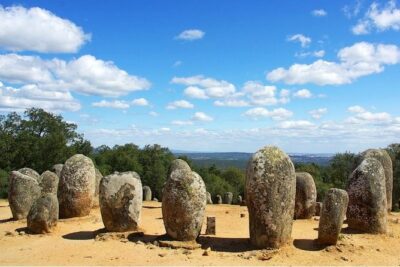
From Lisbon to Alentejo: Évora and Megaliths Full-Day Tour
Read our review →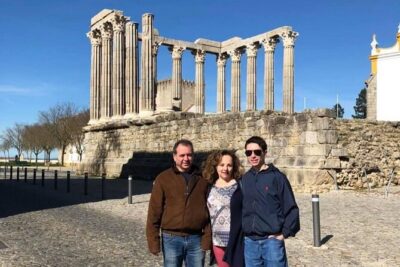
Browse the lists this tour appears in