
Reviewed · ÉVORA TOURS
Marble Tour in Vila Viçosa
Marble is not just a polished slab in Vila Viçosa. It is the local ground beneath your feet, cut from quarries, shaped by hand, and finished by machines. This tour follows that full journey, from quarry face to finished product, in about two hours.
I like the small group limit of 10, which should make it easier to ask questions, and I like the mix of geology, working machinery, and personal craft. Guides such as João and Juaquina bring an informal, enthusiastic touch. The main catch is that you need your own vehicle to move between the meeting point and the separate sites.
In This Review
- Key points at a glance
- Why Vila Viçosa marble is worth your time
- Starting at the marble center in Vila Viçosa
- At the quarry, where the work begins
- The traditional workshop and the human skill behind the stone
- Industrial processing, from block to finished product
- What the two-hour format really gives you
- Is $30.25 a fair price?
- Practical planning before you book
- Who will enjoy this tour most
- Should you book the Marble Tour in Vila Viçosa?
- FAQ
- Where does the Marble Tour in Vila Viçosa start?
- Where does the tour end?
- How long does the tour last?
- How much does the tour cost?
- Is the tour offered in English?
- Do I need my own transportation?
- What footwear should I wear?
- Can I cancel for a refund?
Key points at a glance
- See the marble process from start to finish: The tour connects extraction, handcraft, and industrial processing rather than showing only a quarry.
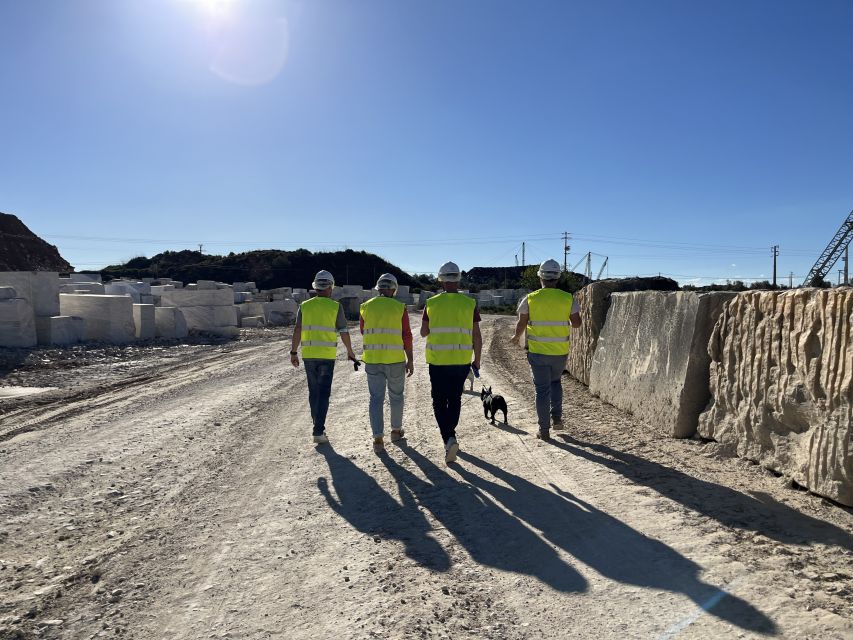
- Visit active working settings: You learn about cutting equipment, polishing, machinery, hazards, and finished marble products.
- Hear about traditional craft: The workshop visit covers manual techniques and the personal stories of the master craftspeople.
- Plan to drive between stops: Transport is not supplied, so your own vehicle is required.
- Expect a compact, small-group experience: The tour lasts about two hours and accepts no more than 10 people.
- Wear closed shoes: A moderate level of physical fitness is required, and open footwear is not allowed.
Why Vila Viçosa marble is worth your time
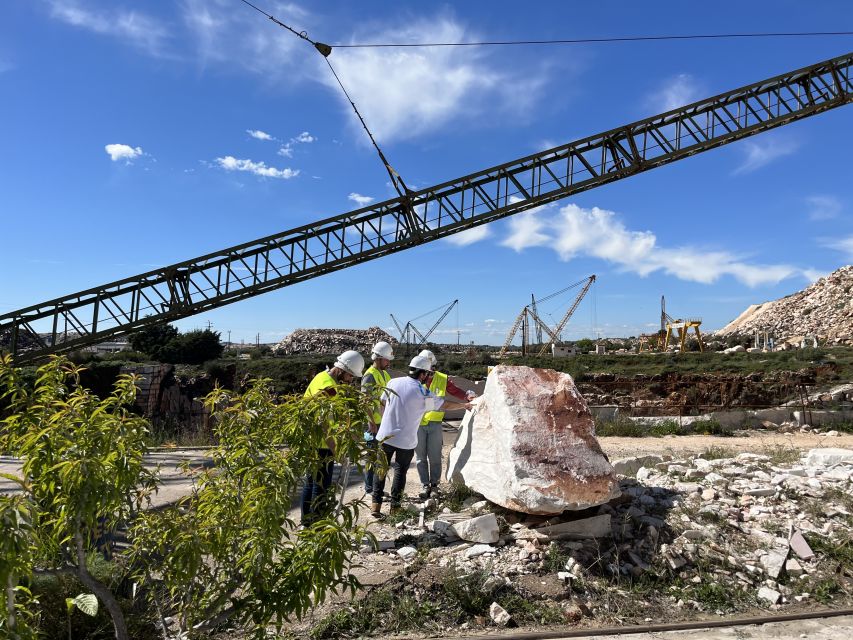
Vila Viçosa sits in Portugal’s Alentejo region, where marble extraction has shaped both work and local identity. You do not simply look at attractive stone here. You see the chain of labor behind it.
That chain begins below ground or at the quarry face. Large blocks must be cut, moved, and divided before anyone can turn them into a countertop, monument, tile, or decorative object. The tour gives you a useful way to connect those stages, so the finished stone no longer feels like a simple shop item.
I especially like the way the visit brings together three different kinds of work. At the quarry, the focus is geological and mechanical. At the traditional workshop, the emphasis shifts to hand skills. At the industrial facility, you see how larger-scale equipment changes the pace and output.
This is a good fit if you enjoy seeing how ordinary objects are made. It also suits anyone interested in geology, local industry, architecture, sculpture, or the practical side of Portuguese culture.
More Évora and Alentejo days:
- Évora and Megaliths Full-Day Tour from Lisbon
★ 4.7 · 456 reviews - From Lisbon: Évora and Monsaraz Day Tour with Wine Tasting
★ 4.8 · 279 reviews - Évora and Monsaraz with Regional Wine Tasting from Lisbon
★ 4.5 · 229 reviews
Starting at the marble center in Vila Viçosa
You begin at Rota do Mármore AE, Avenida Duques de Bragança 4, 7160-209 Vila Viçosa. This is both the meeting point and the place where the tour ends.
The guide introduces the marble area and explains the different stones connected with the region. You can expect an overview of extraction methods, the dangers involved, the machinery used, and the economic and artistic value of marble.
That opening matters because it gives the later stops a clear purpose. Instead of seeing a large machine and wondering what it does, you have a framework for understanding how each part fits into the production process.
The experience is offered in English. The named guides in the supplied information are João and Juaquina, and both are described as bringing energy and clear explanations to the subject. You should still think of this as a practical local tour rather than a formal lecture. The appeal is the direct connection to the work taking place around Vila Viçosa.
You will need to bring your own vehicle from the meeting point to the marble sites. This is the most important planning detail. The tour price does not include private transportation, hotel pickup, or hotel drop-off.
At the quarry, where the work begins
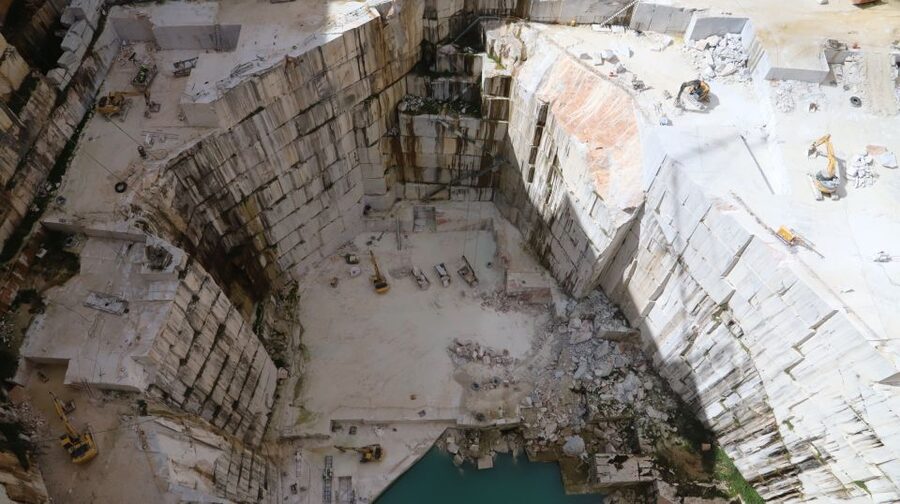
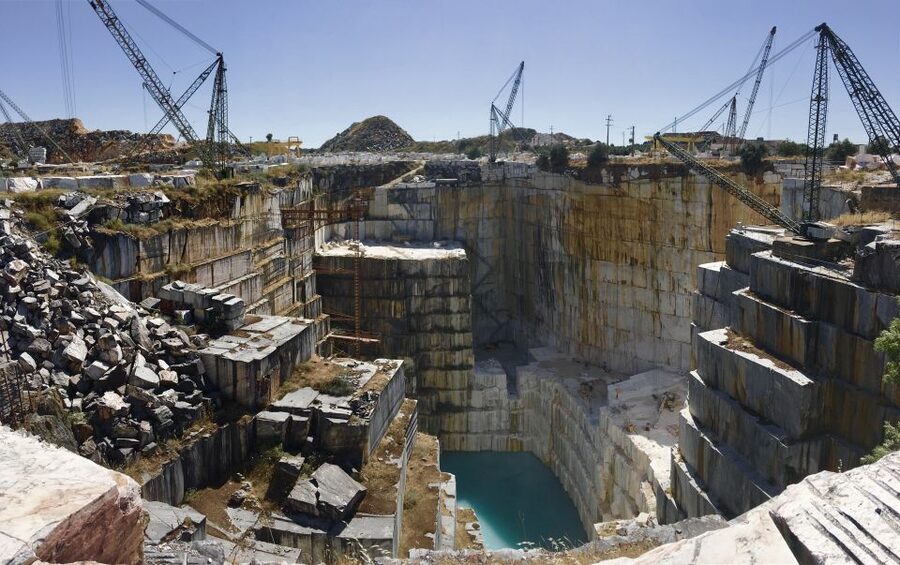
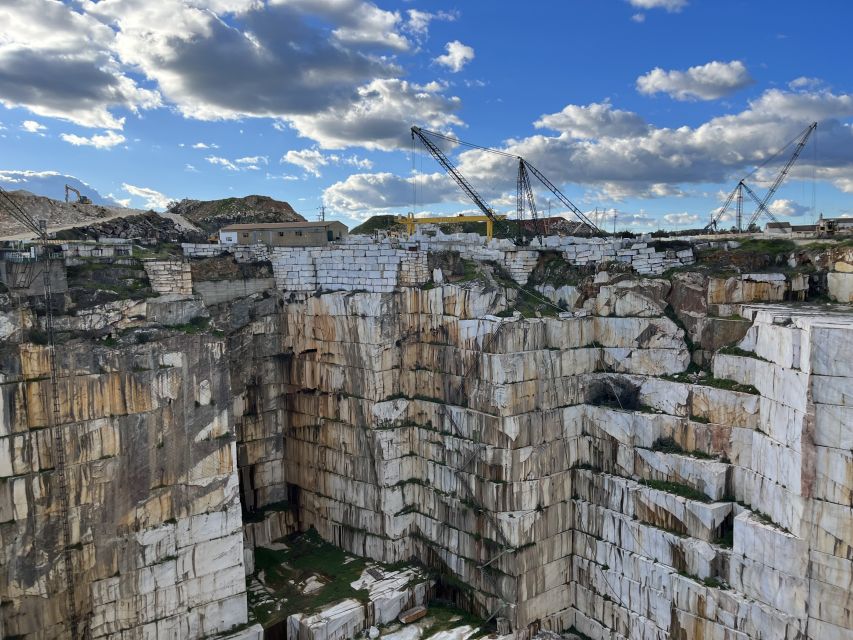
The first major stop takes you to the Nucleus of the Marble Quarries of the region. Here, the guide explains how marble is extracted and points out the machinery used in the process.
You learn about the hazards as well as the finished stone. That balance is useful. Quarrying is not a tidy decorative trade, and understanding the risks gives you a better sense of why the work requires careful procedures, specialist equipment, and trained workers.
The quarry also helps explain the economic side of marble. Stone is not valuable only because it looks good after polishing. It supports a chain of extraction, transport, cutting, finishing, and sale. The artistic side comes later, when the stone is selected and shaped for a particular use.
Expect a more industrial setting here than a scenic viewpoint. The attraction is the scale of the work and the chance to see where the raw material begins. If you are hoping for a leisurely walk through a polished exhibition, this is not that sort of stop.
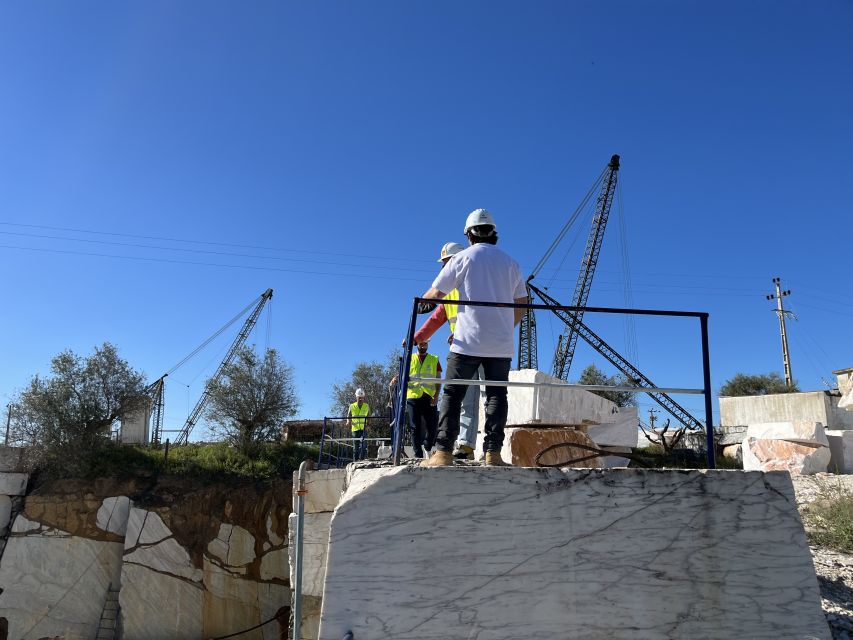
You should also follow the guide’s directions closely. The information supplied for the tour refers to existing hazards and requires closed footwear, so sturdy, fully enclosed shoes are essential.
The traditional workshop and the human skill behind the stone
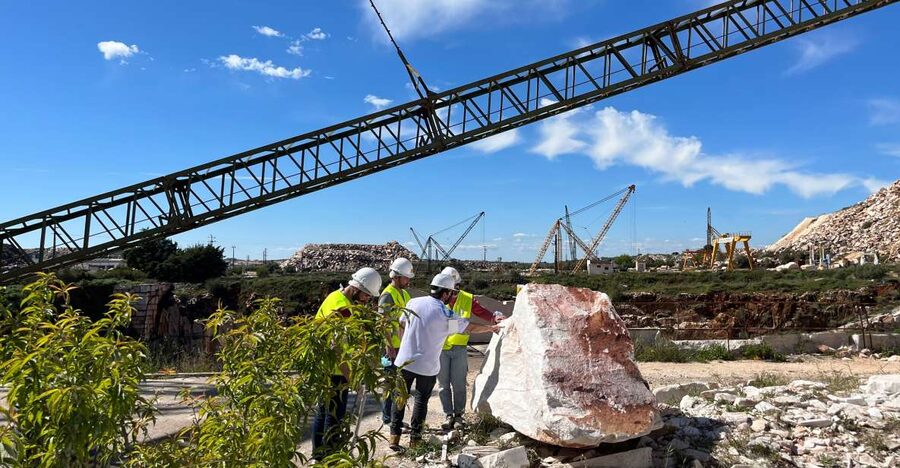
The workshop visit changes the mood. Instead of focusing mainly on extraction and large machinery, you see the manual and artisanal transformation of marble.
The guide explains the techniques used in the workshop, the risks involved, and the machinery that supports the work. You also hear personal stories connected with the master craftsperson. That human detail gives the visit more warmth than a simple demonstration of tools.
I like this part because it shows that marble production is not only about speed. A machine can cut and polish stone, but hand work calls for judgment, touch, patience, and experience. Small decisions can affect the final surface and shape.
The workshop also makes the finished object easier to understand. A polished piece of marble may look effortless, but it reflects several stages of selection, cutting, smoothing, and finishing. Seeing those stages in a working setting helps you notice the marks of labor in the final product.
The available information does not promise a hands-on activity, so you should expect to watch and listen rather than make your own marble object. The value comes from access to the process and the explanation of how traditional work is done.
Nearby in Évora, a different day entirely:
- Évora: Private walking tour with tickets to main monuments
★ 5.0 · 223 reviews - Private Day Tour With Guide to Évora and Monsaraz
★ 5.0 · 134 reviews - From Lisbon to Alentejo: Évora and Megaliths Full-Day Tour
★ 4.5 · 131 reviews - Tour Évora and Alentejo in a private tour
★ 5.0 · 124 reviews
Industrial processing, from block to finished product
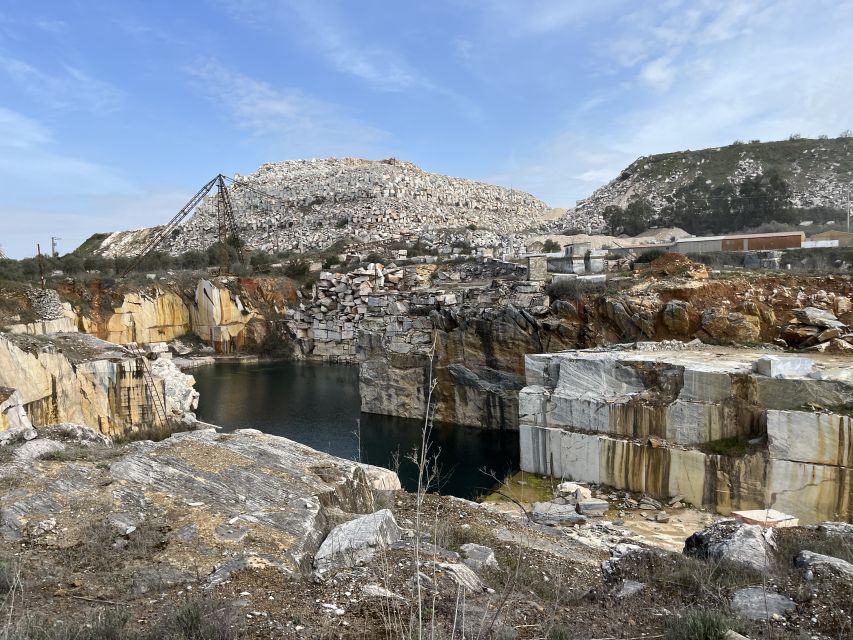
The final visit takes you to a marble milling or industrial processing workshop. Here, the emphasis is on mechanized production and the operational context of a larger facility.
You see the different machines used to process marble, along with examples of finished products. The guide also covers the hazards linked to the work. This is a strong ending because it brings together the raw material from the quarry and the craft ideas introduced at the traditional workshop.
The industrial stop is useful for understanding scale. Large equipment can handle stone in ways that would not be practical by hand, while different machines serve different purposes. Cutting, shaping, and polishing are separate parts of the process, and the facility shows how they work together.
You may find this stop especially interesting if you like engineering or manufacturing. It is less about artistic display and more about seeing the working system behind finished marble goods.
Do not expect a grand showroom or a retail shopping session. The stated focus is the machinery, safety, operational setting, and final products. That makes the stop educational and grounded, but perhaps less appealing if you want a purely decorative experience.
What the two-hour format really gives you
The tour lasts about two to three hours, with the itinerary itself listed at roughly two hours. That is a useful length for a morning or afternoon in Vila Viçosa.
You get enough time to cover three distinct settings without committing most of your day. The compact schedule also suits a wider Alentejo itinerary, especially if you are combining Vila Viçosa with other local sights.
At the same time, this is not a slow, open-ended visit. Moving between sites in your own vehicle takes part of the available time, and the tour has several subjects to cover. If you want long, detailed time at every machine or quarry area, the schedule may feel brisk.
The maximum group size is 10 people. That is small enough to keep the guide’s explanations personal and make questions practical, while still giving the tour a social group feel. Group discounts are available, which can improve the value for families or friends booking together.
Is $30.25 a fair price?
At $30.25 per person, the price is reasonable if you value access to working sites and a guide who can connect the separate stages. You are paying for local interpretation, organization, and entry into settings that would be difficult to understand on your own.
The listed admission for the stops is free, so the main value is the guide’s explanation and the coordinated route. João and Juaquina are specifically associated with clear, enthusiastic presentations, and the strongest part of the experience is the way the guide explains the full marble process rather than leaving you to look at equipment without context.
The price is less attractive if you already have detailed access to a quarry, workshop, or marble factory through another arrangement. It also does not cover fuel, meals, drinks, or transport from your hotel.
For a small group, a two-hour English-language introduction to one of Alentejo’s major local industries, I consider the cost fair. The group discount makes it a stronger choice for several people traveling together.
Practical planning before you book
The meeting point is in Vila Viçosa, and the tour ends there. You need your own vehicle for transport between the meeting point and the sites, so check your driving plan before booking.
The tour requires a moderate level of physical fitness. The supplied information does not describe exact distances, stairs, or surface conditions, so ask the operator if you have mobility concerns or need precise access details.
Closed footwear is mandatory. Choose practical shoes rather than sandals or thin slip-ons, since the tour includes quarry and workshop environments with machinery and stated safety hazards.
Food and drinks are not included. Bring what you need for the outing, but do not expect a meal stop to be part of the scheduled experience.
Confirmation is provided at booking. Free cancellation is available up to 24 hours before the local start time. If poor weather prevents the tour from running, you can be offered another date or a full refund. The same applies if the minimum number of participants is not reached.
Who will enjoy this tour most
I would choose this experience if you want to understand a place through its working life. It suits adults and older children who can pay attention around industrial settings, as well as anyone interested in stone, construction, sculpture, geology, or craft.
It is also a smart choice for visitors who prefer a local guide to a self-guided stop. The subject can seem technical at first, but a good explanation turns quarrying and milling into a clear story with a beginning, middle, and end.
The tour may be less suitable if you want a relaxed sightseeing trip with no driving between stops. It is also not the best match for anyone who dislikes industrial environments, machinery, or safety briefings.
Because the tour is offered in English and limited to 10 people, it works well for international visitors who want direct explanations without joining a large coach group. The guide’s informal style, along with the attention given to personal craft stories, keeps the subject from becoming too dry.
Should you book the Marble Tour in Vila Viçosa?
Book it if you want to see how Alentejo marble moves from extraction to handcraft and industrial finishing. The quarry, traditional workshop, and processing facility each show a different side of the same local trade.
I would also book it if you have your own vehicle, can wear closed shoes, and are happy with a practical two-hour visit rather than a polished sightseeing attraction. The strongest reasons to go are the full production story, the small group, and guides such as João or Juaquina, who make the technical material easier to follow.
Skip it if you need hotel transport, dislike working industrial sites, or want a longer artistic workshop with hands-on participation. For the right visitor, though, this is a focused and fairly priced way to understand why marble matters in Vila Viçosa.
FAQ
Where does the Marble Tour in Vila Viçosa start?
The tour starts at Rota do Mármore AE, Avenida Duques de Bragança 4, 7160-209 Vila Viçosa, Portugal.
Where does the tour end?
The activity ends back at the meeting point in Vila Viçosa.
How long does the tour last?
The tour lasts about two to three hours. The scheduled itinerary is listed at approximately two hours.
How much does the tour cost?
The listed price is $30.25 per person.
Is the tour offered in English?
Yes. The experience is offered in English.
Do I need my own transportation?
Yes. You need your own vehicle to travel between the meeting point and the marble sites. Private transportation, hotel pickup, and hotel drop-off are not included.
What footwear should I wear?
Closed footwear is mandatory. You should also expect to need a moderate level of physical fitness.
Can I cancel for a refund?
Yes. You can cancel at least 24 hours before the local start time for a full refund. Changes or cancellations made less than 24 hours before the start are not accepted for a refund.
Fresh finds around Évora
- From Lisbon: Small-Group Day Tour to Évora and Monsaraz★ 4.6 · 54 reviews
- Évora (with Sé & Bones), Evoramonte & Arraiolos: From Lisbon★ 4.7 · 57 reviews
- Évora: Private tour with entrance tickets to main monuments★ 5.0 · 57 reviews
- Half Day Megaliths Cromlech Tour from Evora by Archaeologists★ 5.0 · 69 reviews
- Marble Tour in Vila Viçosa★ 4.8 · 71 reviews
- From Lisbon to Alentejo: Évora and Megaliths Full-Day Group Tour★ 4.5 · 111 reviews
- From Lisbon to Alentejo: Évora and Megaliths Full-Day Tour★ 4.5 · 131 reviews
- Skip the Lines & Sip the Wines: Évora’s Ultimate Walking Tour!★ 5.0 · 19 reviews
Évora Tours, compared.

From Lisbon: Évora and Monsaraz Day Tour with Wine Tasting
Read our review →
Évora and Monsaraz with Regional Wine Tasting from Lisbon
Read our review →
Évora: Private walking tour with tickets to main monuments
Read our review →
Private Day Tour With Guide to Évora and Monsaraz
Read our review →
From Lisbon to Alentejo: Évora and Megaliths Full-Day Tour
Read our review →

From Lisbon to Alentejo: Évora and Megaliths Full-Day Group Tour
Read our review →Browse the lists this tour appears in